You can feel it before you see it—stale heat, lingering smoke, and that thin mist of grease hanging over the line. If that’s your nightly reality, it’s time to reset how your kitchen breathes. This complete guide to air quality improvement commercial kitchens breaks down what actually works, why it matters, and how operators across Ontario can lock in safer, cleaner air without missing service windows.
- What you’ll get right now:
- Plain-English fundamentals of commercial kitchen ventilation and make-up air
- Step-by-step maintenance program matched to NFPA 96 expectations
- Actionable checklists your team can run between certified visits
- Ontario-specific operational tips, including quick response realities in Southern Ontario
- Real case examples from restaurants, hotels, and institutional kitchens
Quick Summary
- Problem: Smoke spill, odors, and heat stress often come from clogged baffle filters, greasy ducts, underperforming fans, and unbalanced make-up air.
- Solution: Pair NFPA 96–certified hood, duct, and fan cleaning with daily filter exchange and routine grease trap service. Document everything.
- Outcome: Clearer air, lower fire load, happier staff, and smoother inspections—plus more predictable operations across shifts and seasons.
Quick Answer
For operators in All Over Ontario at All Over Ontario, the fastest air quality lift comes from NFPA 96–certified hood, duct, fan, and filter service on a reliable cadence, paired with daily baffle rotation and grease trap cleaning. Robinhood Cleaners delivers WSIB‑insured, 24/7 service across Ontario with quick response in Southern Ontario—restoring safe capture and airflow where it counts.
Table of Contents
- What Is Air Quality Improvement in Commercial Kitchens?
- Why Clean Air Matters (Health, Safety, Compliance)
- How Commercial Kitchen Ventilation Works
- Types of Improvements and Approaches
- Methods That Actually Work (Backed by NFPA 96 Practice)
- Step-by-Step Quarterly Program (With Daily/Weekly Tasks)
- Best Practices and Common Mistakes
- Tools, Checklists, and Resources
- Ontario Case Studies and Practical Examples
- FAQ
- Key Takeaways and Next Steps
What Is Air Quality Improvement in Commercial Kitchens?
In simple terms, air quality improvement commercial kitchens means reducing smoke, vaporized grease, humidity, and odors at the source, then conveying contaminants outdoors while bringing in balanced make-up air. When this system is clean and tuned, staff can breathe easier and fires are less likely.
- Capture: The hood’s job is to catch the heat plume and grease aerosol right at the cookline.
- Containment: Inside the hood and ducts, tight seams and access panels keep grease where it can be cleaned.
- Conveyance: Clean ducts and a well-running fan pull contaminants up and out.
- Replacement: Make-up air replaces what’s exhausted so the room doesn’t go negative.
When one element lags—say, plugged baffle filters—everything else suffers. That’s why certified cleaning and routine filter exchange are the backbone of any improvement plan.
Want more context on the life-safety impact of clean venting? We outline it in our clean vents save lives article.
Why Clean Air Matters (Health, Safety, Compliance)
- Fire safety
- Less grease aerosol and residue lowers ignition risk and reduces flare-ups.
- Degreased fan housings and ducts trim fire load above the ceiling.
- Worker health
- Fewer particulates, less eye/throat irritation, and reduced heat stress on the line.
- Better air helps with retention, especially on tough weekend shifts.
- Regulatory compliance
- NFPA 96 tagging, photo documentation, and access panels support inspections.
- Logs show due diligence and speed up visits from local authorities.
- See our Ontario-focused fire safety standards overview.
- Equipment uptime
- Clean fans draw better, vibrate less, and protect bearings and motors.
- Balanced belts and clear ducts stabilize airflow at the cookline.
- Guest experience
- Dining rooms smell neutral. No smoke rolling into service areas.
- Open kitchen concepts look—and feel—cleaner to guests.
How Commercial Kitchen Ventilation Works
You don’t need to be an engineer to manage it. But a few mechanics help you troubleshoot fast.
- Type I hoods handle grease and smoke from fryers, grills, and ranges; they use baffle filters.
- Capture velocity must overcome the updraft from hot equipment; plugged filters kill velocity.
- Ducts carry contaminant-laden air to the roof; internal grease must be removed on schedule.
- Exhaust fans (often upblast) need clean blades, correct rotation, and proper belt tension.
- Make-up air (MUA) replaces exhausted air so the hood isn’t starved; without it, smoke spills out.
- Grease traps don’t move air, but unmanaged FOG drives odors that staff (and guests) notice.
We explain these fundamentals in everyday language in our kitchen air quality explainer.
Types of Improvements and Approaches
Multiple levers contribute to cleaner air. The right blend depends on volume, menu, fuel type, and site layout.
1) Source Capture and Filtration
- Right-sized hood overhang: Equipment must sit fully within the capture zone.
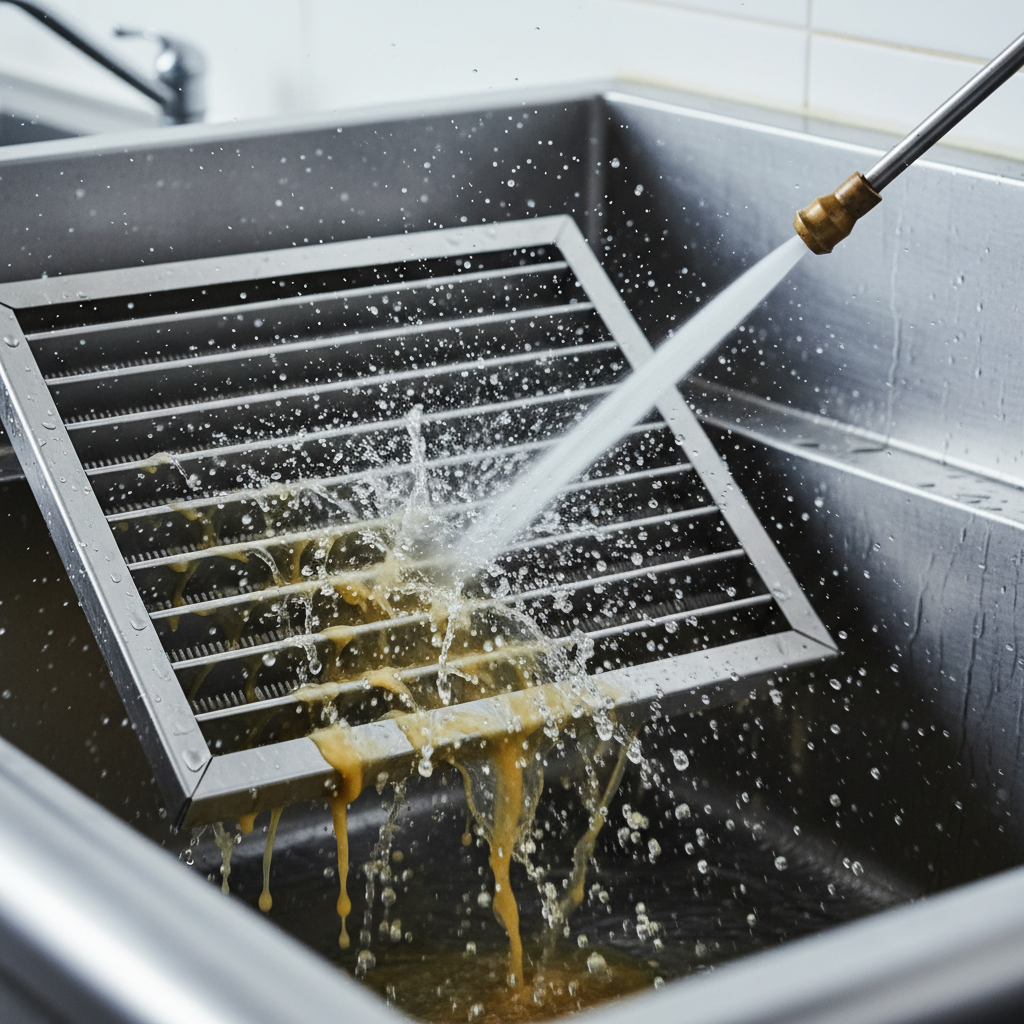
- Baffle filter care: Daily hot-soak or pressure-wash; rotate spare sets for peak periods.
- Filter upgrades: Replace warped or damaged baffles; consider spark arrestor baffles for solid fuel.
2) Conveyance Health
- Duct interior cleaning: Horizontal/vertical runs, elbows, and transitions degreased.
- Access panels: Installed and tagged so every duct section is reachable next time.
- Fan internals: Blade, housing, and discharge cleaning; verify rotation and RPM.
3) Make-Up Air and Balance
- Air volume: Verify design CFM and measure after cleaning to confirm draw.
- Distribution: Tempered supply should reach the cookline without cold drafts.
- Seasonal tuning: Cold snaps and heat waves in Southern Ontario can shift balance—re-check.
4) Odor and Hygiene Control
- Grease trap service: Regular pumping and washdown reduce sulfur odors.
- Housekeeping near the line: Degrease walls, ceilings, and hood undersides nightly.
- Power washing: Target exterior spill paths and back-of-house surfaces.
Methods That Actually Work (Backed by NFPA 96 Practice)
These actions consistently move the needle across Ontario operations we service.
- Certified hood and duct cleaning (NFPA 96)
- Degrease hoods, plenum, horizontal/vertical ducts, and rooftop fan housings.
- Install and tag access panels so each duct section can be cleaned and documented.
- Provide before/after photos and service reports; keep these for inspectors.
- Filter cleaning & exchange
- Rotate spare baffle sets; hot-soak or pressure-wash daily to maintain capture velocity.
- Replace bent or warped filters that create bypass and grease carryover.
- Exhaust fan cleaning and belt checks
- Scrape and degrease blades; verify rotation and RPM; check bearings for vibration.
- Replace slipping or cracked belts; confirm tension to specification.
- Grease trap service
- Routine pumping and complete internal washdown reduce odors and improve hygiene.
- Coach staff on correct skimming and solids disposal between services.
- Make-up air balance check
- If doors whistle or smoke escapes the hood, you likely need more MUA volume or filter care.
- Coordinate cleaning with your HVAC vendor to verify airflow while the system is clean.
- Cookline housekeeping
- Degrease adjacent walls and ceilings; wipe undersides of overhangs nightly.
- Keep fryers and grills centered beneath hoods to maintain overhang capture.
Quick Comparison: What Moves the Needle Most?
| Approach | Main Benefit | Air Impact | When to Use |
|---|---|---|---|
| Certified hood/duct cleaning | Fire risk reduction; restores airflow | High | Per NFPA 96 frequency; more often for solid fuel/heavy volume |
| Filter cleaning/exchange | Maintains capture velocity | High | Daily to weekly depending on load |
| Fan cleaning and belt replacement | Stable, reliable draw | Medium–High | With each duct cleaning or if performance drops |
| Grease trap service | Odor reduction; hygiene | Medium | On a set cadence; accelerated after peak seasons |
Want to go deeper on airflow optimization? Our brief on ventilation system optimization maps these actions to real cookline behaviors.
Step-by-Step Quarterly Program (With Daily/Weekly Tasks)
Use this cadence to stabilize performance across locations. Adjust frequency for solid fuel, charbroilers, and high-volume fryers.
Daily
- Swap to a clean baffle filter set before dinner rush.
- Soak, rinse, and dry the used set after close.
- Wipe the hood overhang undersides and nearby walls/ceiling tiles.
- Center fryers and grills fully under the capture zone.
Weekly
- Inspect filters for dents, warping, and heavy load.
- Check hood seams, lights, and grease cups; wipe clean.
- Quick rooftop look: verify grease containment and any spill paths.
Monthly
- Listen for belt squeal and fan vibration; visually inspect pulleys and bearings.
- Review make-up air comfort at rush: are doors hard to open? Any smoke roll-out?
- Grease trap service if odors increase or load builds faster than planned.
Quarterly
- Walk the line: Note smoke escape points, hot spots, and odor sources.
- Schedule NFPA 96–certified hood, duct, and fan cleaning: Confirm access panels and photo documentation.
- Verify fan belts: Replace worn belts; confirm rotation and RPM.
- Test capture: Simple incense/smoke test at the hood perimeter after cleaning.
- Balance check: Coordinate with HVAC technician for make-up air review.
- Binder update: File reports, NFPA 96 tags, access panel maps, and corrective notes.
- Spot audit: Visit during rush to observe capture behavior and staff habits.
- Adjust frequency: Use loading and inspection feedback to set next dates. For reference, see our cleaning frequency guide.
Best Practices and Common Mistakes
Best Practices
- Tag and track: Keep NFPA 96 tags visible and a central log with photo reports.
- Rotate spare filters: Hot-swap during rush; clean the dirty set post-shift.
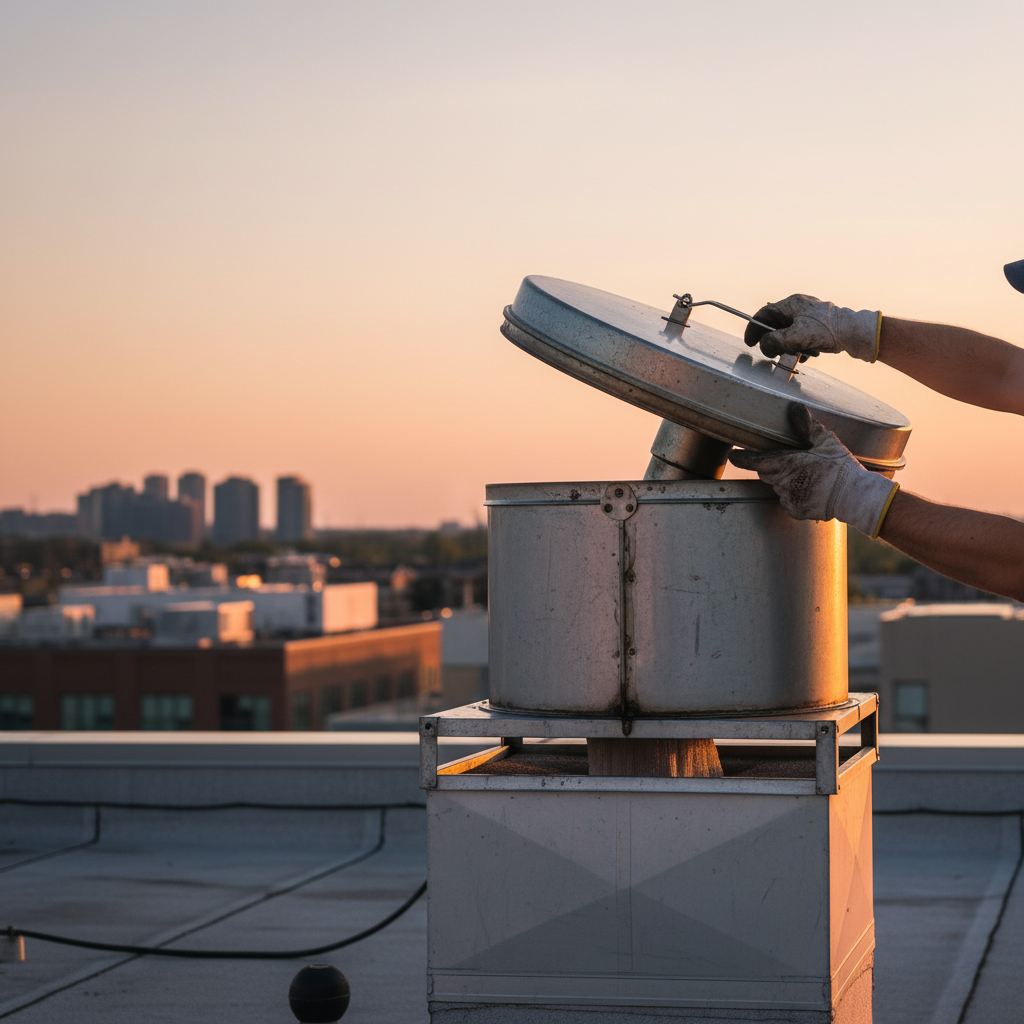
- Protect the roof: Use grease containment; clean spill paths, especially after storms.
- Coordinate vendors: Clean first, then validate airflow with HVAC while everything is pristine.
- Train for placement: Center equipment under hoods; avoid improvised side stations.
- Plan for peak season: Increase filter and trap cadence ahead of holidays and patio rush.
- Document thoroughly: Photos accelerate inspections and support staff training.
- Lean on certified partners: NFPA 96 and WSIB credentials ensure safe, compliant work.
Common Mistakes
- Letting baffle filters “air dry” without degreasing—residue blocks capture.
- Skipping fan interior cleaning—blade mass changes reduce RPM and draw.
- No access panels—sections of duct stay dirty and fail inspection.
- Assuming HVAC will fix a dirty system—air balance can’t overcome plugged filters.
- Forgetting the trap—odors hurt staff experience even when smoke is under control.
Need an expert hand?
Robinhood Cleaners provides NFPA 96–certified hood, duct, fan, filter, and grease trap services across Ontario with true 24/7 availability and fast response in Southern Ontario. See how certified service supports compliance in our NFPA 96 cleaning overview.
Tools, Checklists, and Resources
Daily Filter Checklist
- Swap to a clean baffle set before dinner rush.
- Soak, rinse, and dry used set after close.
- Inspect for dents, warping, missing handles.
- Store dry filters to prevent corrosion and odors.
Weekly Hood Perimeter Check
- Inspect seams, lights, and overhang undersides for residue.
- Confirm equipment is centered under the hood.
- Wipe backsplash walls and ceiling tiles above the line.
Monthly Fan and Roof Check
- Look for grease on curbs and membranes; confirm containment is in place.
- Listen for belt squeal; inspect pulleys and bearings.
- Verify rain caps and hinges function for safe access.
Quarterly Binder Update
- File cleaning reports, NFPA 96 tags, and photo evidence.
- Document any smoke tests or balance notes.
- Capture staff training sign-offs for filter handling.
Downloadable Templates (use these models)
- Filter rotation chart: dayparts x stations with spare set tracking.
- Rooftop inspection checklist: hinges, belts, containment, spill paths.
- Inspection binder index: tags, photos, access panel map, corrective actions.
Local Tips
- Tip 1: After busy nights near downtown cores, schedule quick filter swaps before morning prep—Southern Ontario rushes ramp fast, and clean baffles preserve capture.
- Tip 2: Winter doors stay closed longer; negative pressure spikes. Balance make-up air and keep filters clean during cold snaps across Southern Ontario.
- Tip 3: Patio season increases grill volume and smoke. Add an extra filter exchange and grease trap check each weekend to stay ahead.
IMPORTANT: Tailor cadence by location—mall food courts, hotel banquet kitchens, and high-volume independents load systems very differently.
Ontario Case Studies and Practical Examples
Here are real scenarios representative of kitchens Robinhood Cleaners services across the province. They showcase how air quality improvement commercial kitchens plays out in the field.
Mini Case Snapshots (14 Examples)
- GTA burger concept (multi-unit)
- Problem: Smoke spill at the pass and fryer odors in dining.
- Action: Certified hood/duct/fan cleaning; belt replacement; filter rotation plan.
- Result: Smoke eliminated; cooler line temps during rush.
- Hamilton hotel banquet kitchen
- Problem: Rooftop grease runoff risking membrane; odor near vents.
- Action: Fan interior degrease; new grease containment; staff training.
- Result: Odors resolved; added monthly roof checks.
- London corridor steakhouse
- Problem: Heavy charbroiler load; frequent flare-ups.
- Action: Increased NFPA 96 cadence; extra spare baffle set; nightly hot-soak.
- Result: Fewer flare-ups; inspection notes praised access panels.
- Mississauga food court tenant
- Problem: Persistent “grease smell” despite HVAC tune.
- Action: Duct interior degreasing; fan blade cleaning; trap cadence.
- Result: Odors dropped; better coordination with mall ops.
- Kitchener-Waterloo commissary
- Problem: Negative pressure making doors stick; smoke lingered.
- Action: Full exhaust cleaning; filter exchange protocol; MUA balance review.
- Result: Doors operate normally; capture restored at peak.
- Niagara catering hub
- Problem: Odor complaints from neighbors during events.
- Action: Extra filter rotations on event days; trap service pre-weekend.
- Result: Complaints ceased; smoother event load-outs.
- Downtown Toronto bistro
- Problem: Smoke spill with doors held open for patio traffic.
- Action: Filter swaps before patio rush; fan belt tension check.
- Result: Stable capture even with frequent door swings.
- Scarborough QSR chain store
- Problem: Fryer bank off-center under hood causing bypass.
- Action: Recenter equipment; add spare baffle set; nightly wipe protocol.
- Result: Noticeable cut in aerosolized grease near order counter.
- Brampton bakery-cafe
- Problem: Odors from trap drifting into front-of-house during morning bake.
- Action: Trap cadence reset; power wash of spill area; staff skimming training.
- Result: Morning service smells neutral; staff feedback improved.
- Oakville fine-dining kitchen
- Problem: High-heat saute line overwhelming hood edge during tasting menu nights.
- Action: Filter rotation mid-service; confirm MUA temperature and volume.
- Result: Edge spill eliminated; chef reports steadier temperatures.
- Guelph campus dining
- Problem: Weekend sports events spike volume; smoke control inconsistent.
- Action: Weekend filter swaps; extra fan and roof check Friday afternoons.
- Result: Consistent capture through peak traffic windows.
- Markham hot-pot restaurant
- Problem: High humidity and lingering odors after late service.
- Action: Increase filter exchange; schedule overnight certified cleaning.
- Result: Noticeably drier, cleaner air at open; happier morning prep crew.
- Barrie lakeside venue
- Problem: Wind patterns caused rooftop grease splashback near intake.
- Action: Adjust containment; clean spill paths; verify intake separation.
- Result: Odor drift solved; no more residues near air intakes.
- Windsor highway-adjacent diner
- Problem: Heavy truck dust compounding grease load at filters.
- Action: Accelerated filter washing; quarterly fan deep-clean.
- Result: Cleaner air on the line; steadier capture despite outdoor dust.
FAQ
- How often should commercial kitchen exhaust be cleaned?
Frequency follows NFPA 96 and depends on cooking volume and fuel type. High-volume frying or solid fuel often needs monthly service; moderate operations trend quarterly; low-volume sites may be semi-annual. Adjust cadence to observed loading and inspection history. - Will HVAC balancing fix smoke spill on its own?
Not if filters, hoods, ducts, or fans are dirty. Restore the exhaust path first (filters, hood, duct, fan), then verify make-up air and balance. Clean systems make balancing accurate. - Do mesh filters work as well as baffles?
For grease capture, baffle filters are preferred in Type I hoods. Mesh can load quickly and allow bypass. Damaged baffles should be replaced to maintain capture velocity and reduce carryover. - What documents should I keep for inspections?
Keep NFPA 96 tags, dated photo reports, access panel records, and corrective action notes. A tidy binder accelerates inspections and shows due diligence. - What if we operate 24/7?
Stagger service by line or bank. Use spare baffle sets for hot-swaps and coordinate overnight certified cleaning to avoid downtime. Consider rotating grease trap service to off-peak windows.
Key Takeaways and Next Steps
- Air quality improvement commercial kitchens starts with source capture and clean conveyance.
- Filter rotation, certified duct/fan cleaning, and grease trap service deliver the biggest gains.
- Document everything—tags, photos, access panels—to glide through inspections.
- Adjust cadence by season and site; Southern Ontario volume swings are real.