Restaurant compliance cleaning is the disciplined program of cleaning, maintenance, and documentation that keeps a commercial kitchen aligned with NFPA 96 and public health rules. It covers hoods, ducts, fans, grease traps, and equipment—plus signed logs as proof. In All Over Ontario, a tight plan prevents citations, downtime, and fire risk.
By Robinhood Cleaners • Last updated: 2026-07-10
| Service area | All Over Ontario |
|---|---|
| Availability | 24/7 scheduling |
| Certification | NFPA 96–certified professionals |
| Insurance | WSIB insured |
| Core services | Hood & duct cleaning, exhaust fan maintenance, filter cleaning & exchange, grease trap service, commercial appliance deep cleaning, ventilation system maintenance, power washing |
Summary
This restaurant compliance cleaning guide shows Ontario operators how to meet fire and health codes by tying each requirement to a bookable service and a simple log. Use the frequency matrix, inspection prep steps, and documentation tips to pass walkthroughs confidently and reduce fire hazards.
Here’s what you’ll get in practical terms:
- Clear NFPA 96 frequency guidance (monthly, quarterly, semi-annual, annual)
- What inspectors pull and check first—and how to preempt issues
- Checklists that focus on exhaust systems and grease control (your top risk)
- Real scenarios from kitchens we support across Ontario
Local tip for All Over Ontario operators
Plan exhaust service right after your busiest season. Grease loading spikes during rush periods, and inspectors often appear soon after. We schedule overnight to protect prep and service windows without disrupting revenue.
What Restaurant Compliance Cleaning Actually Requires (NFPA 96 + Health Code Breakdown)
Compliance cleaning means scheduling NFPA 96–standard hood, duct, and exhaust degreasing; maintaining grease traps; deep cleaning equipment; exchanging filters; and keeping signed, photo-backed reports. Inspectors verify both cleanliness and documentation that proves a consistent program.
You’re judged on two things: how clean the system is and whether you can prove a pattern of maintenance. We align requirements to real services you can book now: NFPA 96–certified exhaust cleaning, hood cleaning and degreasing, equipment deep cleaning, filter exchange, and grease trap service. Keep reports and photos together so any manager can produce them in seconds.
NFPA 96 to service mapping (process table)
| Requirement | What to book | Proof inspectors accept |
|---|---|---|
| Hoods and plenums degreased | Hood cleaning and degreasing | Service report + dated sticker on hood |
| Ductwork free of grease | Duct cleaning and fire hazard reduction | Before/after photos + technician sign-off |
| Exhaust fans functional | Exhaust fan cleaning; fan belt replacement | Maintenance log + part replacement note |
| Effective grease capture | Filter cleaning & exchange program | Exchange log with dates and initials |
Frequency guidance most inspectors expect
Set your baseline to match cooking intensity. This mirrors the cadence many insurers and inspectors recognize:
- Monthly: Solid fuel operations and heavy charbroiling; very high grease output.
- Quarterly: High-volume fryers, grills, woks; common for quick-service concepts.
- Semi-annual: Moderate-volume kitchens with steady but lower grease production.
- Annual: Low-volume or seasonal kitchens with minimal grease load.
Adjust up or down after we inspect baffle saturation, duct condition, and rooftop discharge. If filters darken fast or smoke lingers, you need a shorter cycle.
The Compliance Cleaning Checklist: Daily, Monthly, Quarterly, and Annual Tasks
Focus on exhaust risks and documentation. Check filters and seams daily, audit plenum dead zones weekly, book certified exhaust service quarterly (or as needed), and review ventilation performance annually. Keep a single binder or shared drive with signed reports and photos.
Operators already know sanitizer basics. What gets missed are the exhaust details that trigger citations and drive fire risk. Use this exhaust-first checklist.
Daily and weekly: quick exhaust controls
- Filters seated tight: No bypass gaps along the rails; replace bent baffles.
- Visible edges: Wipe plenum lips and ledges where aerosolized grease settles.
- Drip trays: Empty and clean; no overflow or foil patches.
- Fan noise & draw: Listen for belt squeal and watch for smoke hang-ups on the line.
- Weekly audit: Remove a center baffle; use a flashlight to spot sheen behind filters.
Monthly and quarterly: vendor work that moves the needle
- Commercial appliance deep clean (monthly): Ovens, grills, fryers, and hard-to-reach backs/bases.
- Certified exhaust cleaning (quarterly typical): Hoods, ducts, fans, and roof terminations with photo documentation.
- Filter exchange program: Keep spare sets and rotate; log every swap.
Semi-annual and annual: system health
- Fan belt replacement (semi-annual as needed): Replace cracked or glazed belts; record date and model.
- Ventilation system maintenance (annual): Confirm access panels, inspect verticals, check rooftop grease containment.
- Program review (annual): Compare inspection notes with service frequency; tighten schedules if needed.
We package these into a simple plan and supply the logs. If you need help setting baselines, our NFPA 96 requirements guide explains how we size cycles to output.
Hood, Duct, and Exhaust System Cleaning: The Inspection Flashpoint Most Operators Miss
Inspectors often start by pulling a baffle. If grease drips or the plenum lip is sticky, you’re in trouble. Certified quarterly cleaning with photos, access panel strategies, and a filter exchange program keeps airflow strong and violations rare.
We see the same pattern across Ontario kitchens: filters look fine up front, while grease pools in the first elbow of a vertical duct. One recent call in All Over Ontario involved a high-volume grill line that hadn’t had its vertical run opened in 14 months. Grease layered to about a quarter inch at the elbow. We installed an access panel, steam-degreased the run, replaced the worn belt, and documented the before/after. The re-inspection passed—fast.
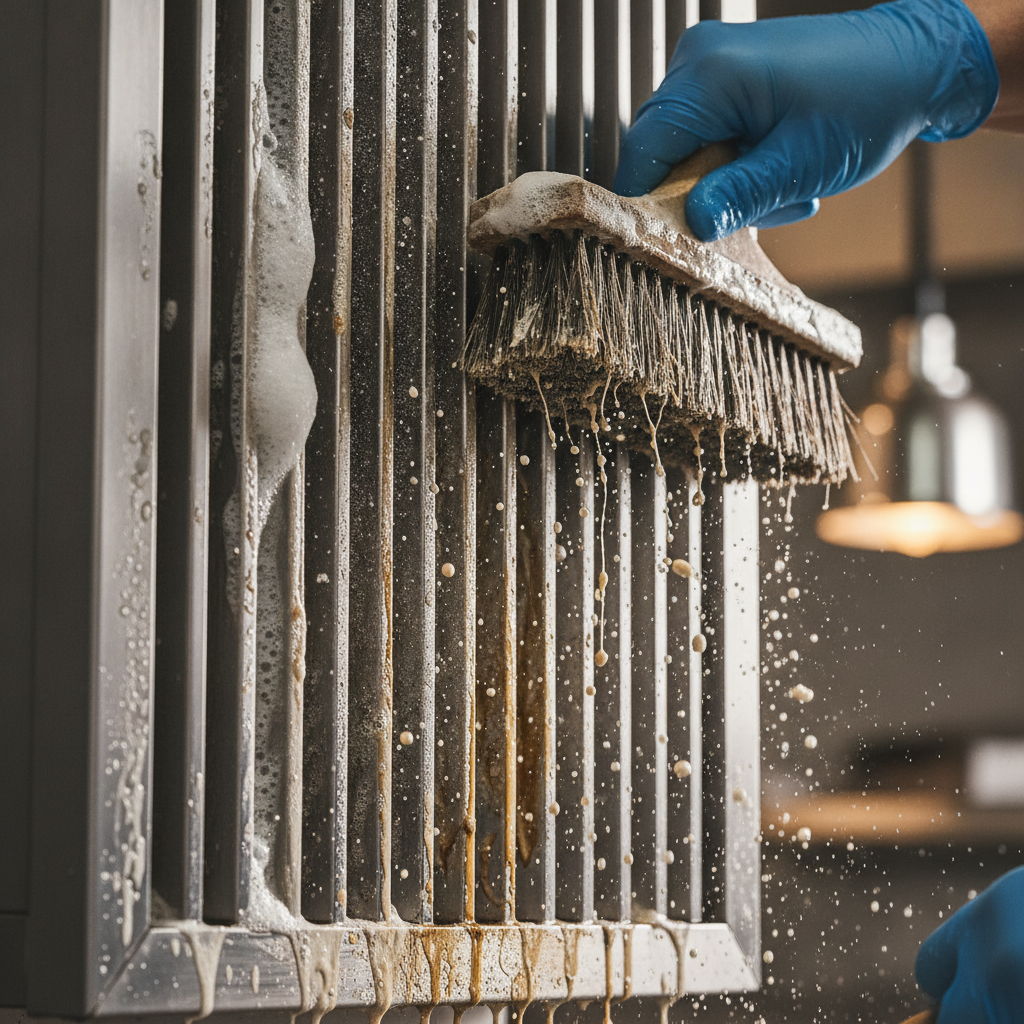
What we check and fix on every visit:
- Access to all runs: Panels positioned so cleaners can reach elbows, risers, and terminations.
- Filter fitment: No daylight along rails; we replace damaged baffles.
- Fan performance: Clean blades and housings; tension or replace belts; verify spin-down and vibration.
- Rooftop discharge: Grease containment in place; no staining that signals overflow.
- Photo proof: Before/after images attached to a signed report and a dated hood sticker.
Want a plain-English explainer of full-service exhaust cleaning with documentation? See our service overview.
Grease Trap Compliance: Pumping Schedules, Plumbing Codes, and What Inspectors Check
Grease trap compliance lives and dies on routine pumping and clean interceptors with disposal manifests. Inspectors check for overflows, odors, accessible lids, and intact gaskets. Train staff on FOG control and pump before capacity is reached.
FOG (fats, oils, grease) backs up drains, triggers odors, and leads to violations. We match pumping intervals to your menu and volume, then we leave you with a manifest for your compliance binder. Staff should skim solids with screens, wipe pans before washing, and never pour fryer oil into a drain.
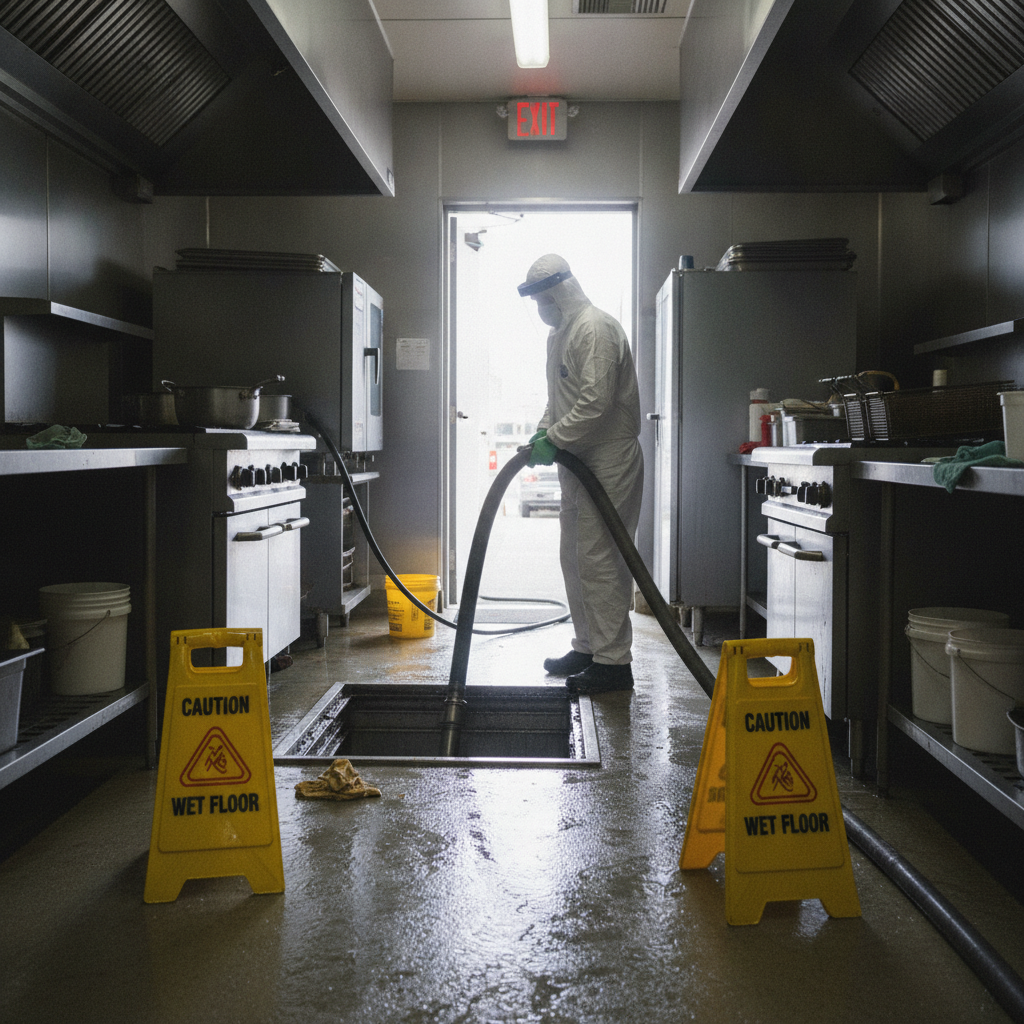
If your trap is hard to access or lids are seized, flag it before inspection week. Need a refresher on the documentation inspectors appreciate? Skim this short certification overview: hood cleaning certification basics.
Commercial Appliance and Equipment Cleaning: Ovens, Grills, and Refrigeration
Deep cleaning hot-side equipment and maintaining refrigeration coils improve food safety and air quality. Inspectors look for baked-on carbon, spill build-up under units, clean gaskets, and safe chemical storage with labels intact.
Our commercial appliance cleaning crews detail ovens (racks, decks, and walls), grills and fryers (surfaces, undersides, and splash areas), and the tough spots behind and beneath equipment. We brush and vacuum refrigeration coils so compressors aren’t fighting lint and grease. Partner services like scheduled equipment cleaning keep the line safe and efficient between inspections.
How to Prepare Your Kitchen for a Health Department Inspection (Step-by-Step)
Preparation beats panic. Walk the line with fresh eyes, correct labels and dates, verify temperature and sanitizer logs, touch up grease and floors, and lay out your maintenance binder with the latest exhaust and grease trap reports.
- Walkthrough (10 minutes): Start at the hood. Pull a center baffle, wipe plenum lips, and note any sticky seams or streaks.
- Fix fast: Swap saturated filters, degrease the underside of the hood, empty drip trays, and clear floor drains.
- Verify logs: Temperature charts and sanitizer test strips up to date; fill gaps and resume tracking.
- Stage documents: Place hood/duct reports with photos, grease trap manifests, and filter exchange logs in a single binder.
- Confirm ventilation: Fans run smoothly; replace worn fan belts if you hear squeal or see slippage.
For broader safety context, bookmark our fire safety compliance guide and the NFPA 96 FAQs and services.
Local Compliance Note: What All Over Ontario Health Inspectors Prioritize
Expect attention on grease capture, ventilation performance during peak volume, and complete documentation. Kitchens that keep logs current and book exhaust cleaning on a predictable cycle avoid most repeat citations.
Patterns we see during inspector walkthroughs in All Over Ontario:
- Grease capture: Filters seated with no bypass; drip trays intact; plenum lips wiped.
- Ventilation under load: Smooth fan performance during rush; no smoke roll-back on the line.
- Documentation: Signed reports with photos for hoods/ducts and manifests for traps—organized in one place.
- Rooftop containment: No staining below discharge; containment systems serviced.
Local considerations for All Over Ontario
- Schedule exhaust service right after your heaviest traffic periods so airflow is restored before routine checks ramp up.
- During colder snaps, watch make-up air balance; poor balance can trip smoke alarms and affect line temperatures.
- Keep one compliance binder with your latest hood, duct, and trap documents so any manager can produce proof immediately.
Tools and Resources for Compliance Documentation
Keep records simple and consistent: a master schedule, filter and temperature logs, vendor reports with photos, and grease trap manifests. Store them in a single binder and mirror everything in a shared drive for fast retrieval.
- Master schedule: Daily/weekly/monthly/quarterly/annual grid mapped to staff or vendor.
- Logs: Filter exchange, temperature checks, sanitizer tests, equipment deep-clean records.
- Vendor reports: Signed hood/duct reports with photos and a dated sticker; trap manifests with disposal details.
- Reference sheets: Internal pointers like our NFPA 96 overview and hood cleaning guide.
- Digital backup: Scan and store PDFs in a shared folder so any shift lead can retrieve proof.
For a plain summary of certified services and documentation discipline, see our short explainer: NFPA 96–certified hood cleaning.
Case Studies and Examples
Two Ontario kitchens improved inspection outcomes by pairing predictable exhaust service with better documentation and targeted equipment deep cleans. Results: stronger airflow, fewer nuisance alarms, cleaner re-inspections.
Quick-service burger concept
- Problem: Smoke hanging on the line during rushes; grease streaking at hood seams.
- Action: Quarterly hood, duct, and exhaust fan cleaning with a new access panel; filter exchange program with labeled spares.
- Result: Stronger draw, clean seams, and on-the-spot verification with photo reports in the binder.
Hotel banquet kitchen
- Problem: Odors near dish area and intermittent drain backups ahead of a planned inspection.
- Action: Scheduled grease trap pumping and maintenance and monthly commercial appliance cleaning behind the hot line.
- Result: Odors eliminated and a clean re-inspection with manifests on file.
FAQ: Restaurant Compliance Cleaning
Here are direct answers to the questions managers ask most about compliant cleaning schedules, documentation, and exhaust system performance.
How often should we clean kitchen hoods and ducts?
High-volume operations often run quarterly, very heavy solid-fuel or charbroil systems monthly, moderate volume semi-annually, and low volume annually. Watch filter saturation and smoke behavior—if filters darken fast or smoke lingers, shorten the cycle and document each service.
What documents do health inspectors usually ask to see?
Expect requests for hood/duct service reports with before/after photos, a dated hood sticker, grease trap manifests, filter exchange logs, and daily temperature and sanitizer logs. Keep everything in one binder and a mirrored shared drive.
How do I know if my exhaust fans are underperforming?
Watch for smoke roll-back, heat build-up, belt squeal, and saturated filters darkening quickly. A maintenance visit will clean fan housings, balance make-up air, and replace worn belts to restore draw and reduce motor strain.
Do we need a certified provider for NFPA 96 cleaning?
Yes—certified teams understand access, degreasing techniques, and the documentation inspectors expect. A signed photo-backed report and a dated sticker on the hood save time during walkthroughs and support insurance requirements.
Key takeaways
- Use this restaurant compliance cleaning guide to map each code rule to a scheduled service and a simple log.
- Prioritize exhaust cleaning and grease trap maintenance on a predictable cadence.
- Keep one compliance binder with photo reports, manifests, and filter logs.
- Schedule overnight to protect prep and service windows.
Next step: Book a certified compliance cleaning plan in All Over Ontario—hoods, ducts, fans, filters, grease traps, and equipment—so your next inspection is straightforward and stress-free.