Power washing kitchen equipment safety is the disciplined use of controlled water pressure, temperature, and food-safe detergents to clean appliances without damaging components or contaminating prep areas. In All Over Ontario, Robinhood Cleaners applies this approach to protect staff, reduce downtime, and align with fire, health, and sanitation standards for commercial kitchens.
By Robinhood Cleaners • Last updated: April 25, 2026
Summary
Safe kitchen equipment washing removes grease fast while protecting seals, sensors, and finishes. The core elements are pressure control, food-safe chemistry, splash containment, wastewater capture, and documentation aligned to NFPA 96 schedules. Done right, it reduces fire risk, improves air quality, and extends equipment life.
This complete guide distills what our Ontario teams do nightly in busy restaurants, food courts, and institutional kitchens. You’ll get definitions, method choices, step-by-step workflows, checklists for common equipment, and documentation tips inspectors accept. Use it to train staff, set expectations with vendors, and standardize cleaning across locations.
- Plain-English definition of power washing kitchen equipment safety
- Why safety-first cleaning cuts fires, injuries, and breakdowns
- How a repeatable “prep–protect–clean–confirm” workflow works
- When to choose manual, steam, or controlled-pressure washing
- Wastewater, FOG containment, and inspection-ready documentation
Table of contents
Jump to practical sections: what it is, why it matters, how it works, methods, best practices, tools, case examples, local considerations, FAQs, and conclusion with key takeaways and a coordination checklist.
- What is power washing kitchen equipment safety?
- Why safety-first washing matters
- How safe equipment washing works
- Methods and when to use them
- Best practices that prevent harm
- Tools, PPE, and resources
- Case studies and examples
- Local considerations for All Over Ontario
- Related articles
- Frequently asked questions
- Conclusion and next steps
Power Washing Kitchen Equipment Safety: What it means
Power washing kitchen equipment safety means cleaning with measured pressure, heat, and food-safe detergents while shielding electrical parts, capturing wastewater, and protecting workers. The outcome: zero injuries, zero equipment damage, and proof of compliance after every session.
In our experience across quick service restaurants and institutional kitchens, “safe” has three checkpoints: people, property, and proof. People wear PPE and work in a controlled zone. Property—controls, gaskets, sensors—gets masked and rinsed at the right distance. Proof comes from photos, service tags, and logs aligned with your hood and duct schedule.
- Pressure control: Use fan or turbo nozzles at conservative PSI; avoid needle jets on seals and seams.
- Temperature: Match heat to material; stainless tolerates hot water, many plastics do not.
- Chemistry: Food-safe degreasers at labeled dilutions and dwell times.
- Containment: Mats, berms, and splash shields keep spray and FOG where you want it.
- Documentation: Before/after photos, signed logs, and visible tags inspectors recognize.
For deeper hood and duct context, see how we approach kitchen exhaust safety and integrate it with line cleaning. Pairing both reduces re-soiling and keeps capture efficiency high.
Why safe equipment washing matters
Safe washing cuts fire risk, protects appliances, and reassures inspectors. Clean exhaust paths pull smoke and heat, floors stay grippy, and burners recover faster. Teams that standardize washing with hood service log fewer breakdowns and speed through inspections.
Grease is fuel. Thin films on hoods, ducts, fans, fryers, and grills elevate ignition and smoke events. Clear pathways improve airflow, reduce heat stress, and stabilize temperatures. We routinely see kitchens regain target oil temps quicker after a disciplined degrease-and-rinse—less scorching, more consistency, and fewer safety incidents on the line.
- Fire prevention: Removing accumulated FOG reduces potential ignition sources near active flames.
- Uptime and consistency: Clean heat exchangers and burners recover faster service after service.
- Worker safety: Non-slip mats, signage, and standoff distance prevent eye injuries and slips.
- Compliance and confidence: Clear logs and photos shorten health and fire inspection time.
If your teams also manage grills, our restaurant grill care guide outlines surface-safe methods that complement controlled pressure washing on exteriors and backsplashes.
How safe power washing works in a live kitchen
The safe cycle is prep, protect, clean, and confirm. Lockout power and gas, set containment, apply degreaser, rinse with controlled pressure, capture wastewater, and finish with photos and function tests. This loop keeps people, equipment, and documentation aligned.
- Lockout/tagout: De-energize appliances; shut gas where applicable.
- Cool-down: Bring surfaces below burn threshold before chemistry.
- Masking: Shield electronics, pilot assemblies, thermostats, and sensors.
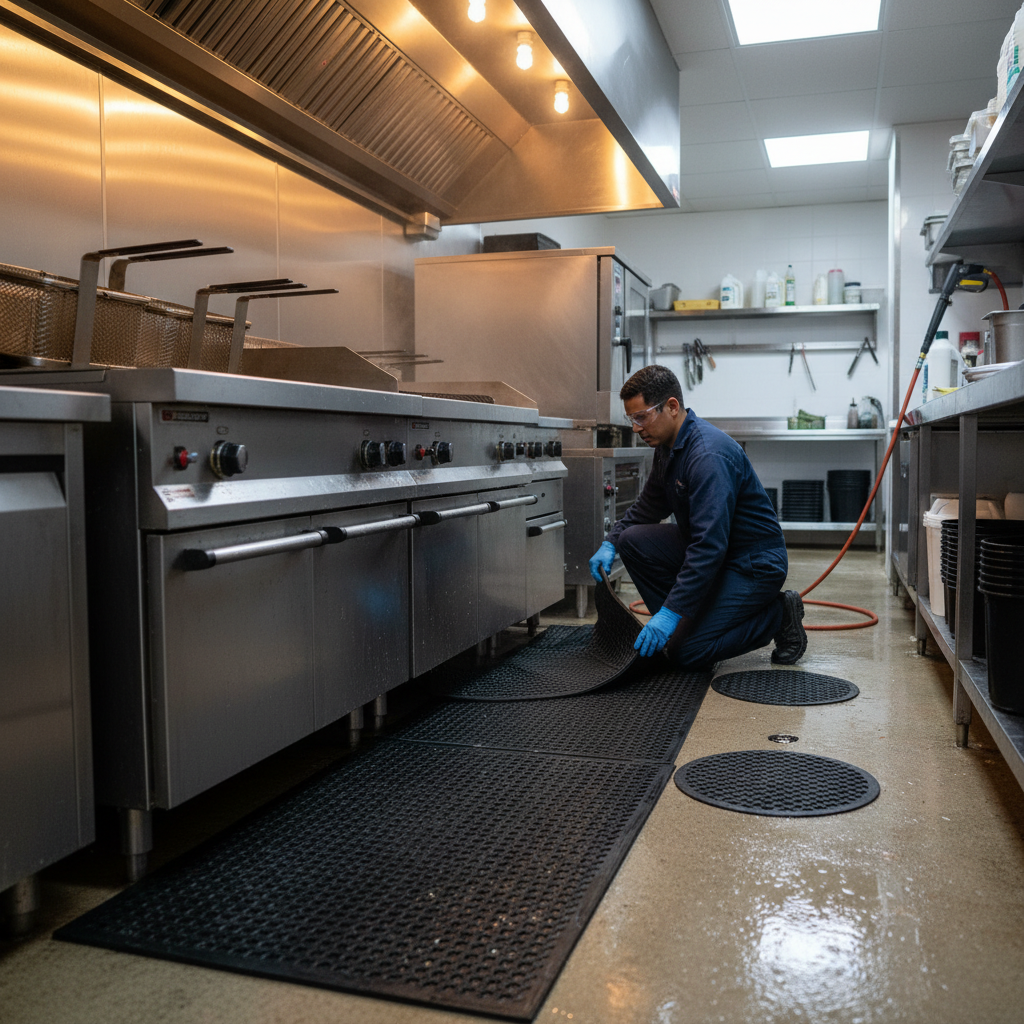
- Containment: Place berms, mats, and drain filters to capture fats, oils, and grease.
- Degreaser pass: Apply food-safe cleaner at correct dilution; honor dwell time.
- Rinse: Use a fan spray at conservative PSI and maintain standoff distance.
- Detailing: Hand tools for corners, flues, and rivet lines; steam for tight seams.
- Waste management: Pump out or decant to approved receptacles; never flood drains.
- Function check: Reconnect, relight, and verify normal operation.
- Documentation: Photos, tags, and logs that align with your NFPA 96 cadence.
We document 12–20 photos per session, including masked controls, drain protection, rinsing angles, and relight confirmation. This visual trail prevents disputes, supports training, and satisfies multi-site audits.
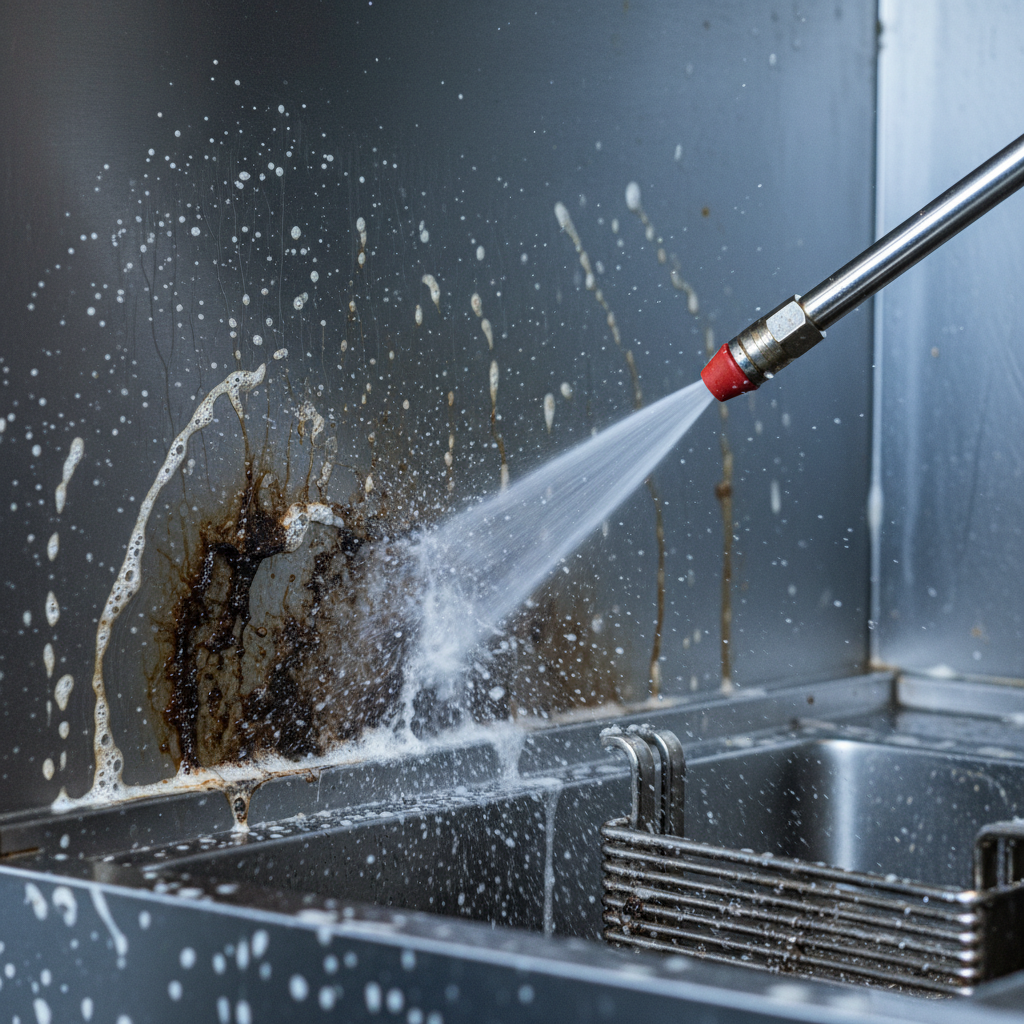
To see how deep oven work fits into this sequence, review our commercial oven deep cleaning process and note where pressure, steam, and manual detail divide responsibilities.
Methods and when to use them
Use the gentlest effective method: manual degreasing for controls and seals, controlled-pressure hot water for steel exteriors and floors, and steam detail for hinges and seams. Match PSI, heat, and chemistry to the substrate and soil to avoid damage.
Manual degreasing (most control)
- Best near electronics, thermostats, pilot lights, and delicate gaskets.
- Tools: food-safe degreaser, microfiber, nylon pads, scrapers, detail brushes.
- Tip: Ventilate and use eye protection; avoid overspray onto energized equipment.
Controlled-pressure hot water (fast film removal)
- Best for stainless exteriors, backsplash panels, and floor zones with FOG film.
- Settings: fan spray; conservative PSI; steady standoff distance.
- Tip: Keep the jet off seams and gaskets; let chemistry do the heavy lifting.
Steam detail (tight spaces, minimal runoff)
- Best for hinges, seams, and non-porous crevices near food-contact areas.
- Tools: commercial steam unit with controlled output and recovery cloths.
- Tip: Follow with dry wipes to prevent condensation near controls.
| Method | Typical use | Risk profile | Speed |
|---|---|---|---|
| Manual degreasing | Controls, burners, electronics | Lowest (if ventilated) | Moderate |
| Hot water pressure | Stainless exteriors, floors | Medium (seal intrusion) | Fast |
| Steam | Edges, hinges, crevices | Low (heat caution) | Moderate |
For whole-kitchen standards, our facility cleaning standards guide shows how to sequence tasks so degreasing, rinsing, and sanitizing happen in the right order without cross-contamination.
Best practices that prevent harm
Protect people first with PPE and boundaries, then protect equipment with masking and measured spray. Control wastewater with mats and drain filters, and finish with photos and function checks. These habits stop injuries, damage, and callbacks.
- PPE: Goggles or face shield, chemical-resistant gloves, non-slip footwear, and waterproof aprons.
- Zone control: Wet-floor signs and a taped perimeter keep traffic out.
- Masking: Plastic and tape over electronics; remove before relights.
- Nozzles: Favor fan or turbo for surfaces; avoid needle jets on gaskets.
- Distance: Keep a safe standoff to prevent forcing water into seams.
- Drain protection: Filter socks or baskets trap FOG before it hits plumbing.
- Proof of work: Time-stamped photos, hood tags, and signed logs.
To align this with broader compliance, see our health code compliance cleaning checklist that many Ontario operators keep on clipboards for nightly verification.
Tools, PPE, and resources
Choose adjustable-pressure washers with hot-water capability, food-safe degreasers, containment mats, splash shields, and drain filters. Back them with PPE for eyes and hands, and a simple photo-and-log app to document every session for inspections and audits.
- Adjustable-pressure washer with hot-water option and fan/turbo nozzles
- Food-safe alkaline degreasers and surface-safe descalers
- Containment berms, mats, and portable splash shields
- Drain filters or socks to capture fats, oils, and grease
- PPE: goggles/face shield, chemical gloves, non-slip boots
- Photo app and standard log template for proof
For a fast overview of emergency sequencing after flare-ups, review this short primer on power washing and degreasing commercial kitchens. It complements the nightly deep-cleaning cadence described here.
Case studies and examples
Ontario kitchens show the pattern: a structured wash plan reduces fire risk and downtime while improving airflow and line speed. With good containment and documentation, inspections move faster and equipment returns to target temps sooner.
QSR fryer bank at evening close
A multi-fryer line with heavy batter output had recurring smoke and slow recovery. We masked controls, applied food-safe degreaser with labeled dwell, used a fan-spray hot-water rinse, and pumped out captured runoff. Next service saw steadier oil temps and clearer hood capture—the line hit target in fewer minutes.
University commissary flat-tops
Large flat-tops and backsplash panels built up polymerized grease. We combined manual scrubbing for controls, controlled-pressure rinses for panels, and steam detail for seams. Air quality improved, and cleaning intervals synced with the hood schedule, cutting overnight labor overlap.
Food court oven bank
Convection ovens showed fouled door gaskets and cloudy glass. Manual degreasing protected seals while low-PSI rinses cleared exterior film. Photo documentation and a signed log supported both fire and health inspections in the same week without rework.
Want a system that scales across multiple sites? Our preventive maintenance guide explains how to coordinate hood, duct, grease trap, and equipment washing on one calendar.
Local considerations for All Over Ontario
Ontario kitchens deal with winter slush, busy patio seasons, and varied ventilation designs. Schedule deeper washes in off-peak months, protect drains from FOG year-round, and coordinate hood service with equipment washing to minimize downtime across dispersed locations.
- Winter track-in increases slip risk; double up on mats and plan floor-friendly rinses.
- Summer patios boost volume; sync hood cleaning and equipment washing to maintain capture.
- Institutional sites vary by wing; standardize logs so multiple kitchens pass inspections.
Related articles
These in-depth resources extend the guide: degreasing methods, sanitization standards, and whole-kitchen safety planning. They help you sequence work, train teams, and keep documentation consistent across shifts and sites.
For surface-safe solvent choices and sequencing tips, see our overview of equipment degreasing methods. To align rinsing and sanitizing steps with inspection goals, review our appliance sanitization standards. And for the big picture on airflow and fire risk reduction, tap our kitchen exhaust safety guide.
Frequently asked questions
Use these quick answers to coach staff and coordinate with service partners. They address method choice, pressure limits, food safety, and scheduling without slowing your line.
Can I pressure wash fryers and grills inside?
Yes—if you control spray and contain runoff. Mask electronics and seals, use food-safe degreasers, capture wastewater with mats and filters, then verify operation before relighting. Many operators schedule a professional crew to align with hood and duct service for documentation.
What pressure and nozzle should I use?
Use a fan or turbo nozzle with conservative pressure and a steady standoff distance to avoid forcing water past gaskets. For sensitive parts and controls, switch to manual degreasing or steam detail. Choose the gentlest method that still removes the soil.
How do I handle greasy wastewater?
Capture runoff with mats and drain filters, then send fats, oils, and grease through approved collection or interceptors. Don’t allow concentrated FOG to enter floor drains. Responsible handling prevents blockages and inspection issues.
How often should equipment be washed?
Match the frequency to cooking volume and grease output. Many high-volume lines pair nightly wipe-downs with weekly or biweekly deep washes, syncing quarterly exhaust service per NFPA 96 intervals. Always log dates, photos, and signatures.
Can we coordinate washing with grease trap service?
Yes. Pairing equipment washing with hood, duct, and grease trap service reduces re-soiling and consolidates documentation. It also ensures captured FOG is routed to approved interceptors instead of drains.
Conclusion and next steps
A repeatable, documented process is the safest way to power wash kitchen equipment. Prep, protect, clean, and confirm—then file your proof. Coordinate equipment washing with hood, duct, and grease trap programs to minimize downtime across sites.
- Standardize prep, masking, and containment before any spray.
- Use food-safe chemistry and the gentlest effective method.
- Capture wastewater and route FOG to approved interceptors.
- Photograph results and align logs with your exhaust schedule.
Key takeaways
- Safety-first steps protect people and equipment while speeding inspections.
- Controlled pressure and masking prevent seal and sensor damage.
- Containment and drain protection keep FOG out of plumbing.
- Photos and signed logs create inspection-ready proof every time.
If you manage multiple kitchens in Ontario and want one coordinated plan, we can align equipment washing with degreasing workflows and nightly checklists, plus emergency protocols like line-safe cleanup so you’re always inspection-ready.
Need a safety-first wash plan? Schedule a quick consultation with Robinhood Cleaners to coordinate equipment washing, hood and duct cleaning, and grease trap maintenance into one inspection-ready program across All Over Ontario.