Kitchen exhaust fan cleaning is the systematic removal of grease and residue from commercial hoods, ducts, and rooftop fans to cut fire risk and restore airflow. Most kitchens need service every 1–6 months based on cooking volume. In All Over Ontario, Robinhood Cleaners provides certified 24/7 service aligned with real-world restaurant schedules.
By Robinhood Cleaners • Last updated: June 15, 2026
Quick Summary
Commercial kitchen exhaust fan cleaning removes combustible grease from hoods, ducts, and rooftop fans, improving capture and reducing fire risk. Schedule service by cooking volume: high-volume 1–3 months, moderate 3–6, low-use 6–12. Document with photos and tags so inspections and insurance reviews go quickly.
Move fast? Here’s the gist you can act on today. Clean from the hood to the rooftop, verify airflow on restart, and log every service. For quick service restaurants and high-heat concepts, a filter cleaning and exchange between deep cleans keeps capture stable, cuts smoke on the line, and prevents emergency shutdowns mid-rush.
Robinhood Cleaners supports busy restaurants, food courts, and institutional kitchens with end-to-end degreasing, duct and fan service, and mechanical checks like fan belt replacement—delivered overnight or off-hours across Southern Ontario. Our NFPA96-minded approach helps teams pass inspections without scrambling and keeps comfort and air quality consistent for staff.
What Is Kitchen Exhaust Fan Cleaning?
Kitchen exhaust fan cleaning is a specialized, top-to-bottom degreasing of hoods, filters, ductwork, and rooftop fans. The outcome is clear: remove flammable residue, restore design airflow, and keep the kitchen compliant with recognized safety standards used by inspectors and insurers.
Let’s define scope. The “exhaust system” begins at the hood canopy above the cooking line and ends where an upblast fan discharges outdoors. Surfaces that collect aerosolized grease include baffle filters, hood plenums, horizontal and vertical ducts, fan bowls and blades, and the discharge area. When these parts are degreased on a proper cycle, capture efficiency stays high and odors stay out of the dining room.
Why does this matter? Grease is fuel. A thin film can ignite from flare-ups or high heat. Even 1–2 millimeters of residue insulates surfaces and traps heat, stressing motors and bearings. We’ve seen kitchens where neglected fans lost 30% of intended airflow within a quarter, which drove smoke back onto the line and set off nuisance alarms. The fix was straightforward: deep clean, belt check, and a documented restart verification.
Robinhood Cleaners’ core services map to this scope: Kitchen Exhaust Cleaning, Hood Cleaning, Duct Cleaning, Exhaust Fan Cleaning and maintenance, Filter Cleaning & Exchange, and Ventilation System Maintenance. Those services work together to protect staff, equipment, and your operating schedule.
Why Kitchen Exhaust Fan Cleaning Matters
Exhaust grease is a major restaurant fire risk and a drag on ventilation. Clean systems capture smoke and heat effectively, keep energy use reasonable, and support faster inspections. For high-volume Ontario kitchens, disciplined cycles cut downtime and stabilize back-of-house comfort.
Safety leads the list. If a flame touches a grease-lined surface, ignition can travel through ductwork quickly. Removing residue every 1–6 months limits that fuel source. There’s also occupational comfort: dirty hoods allow heat to spill back on cooks, raising line temperatures several degrees during peak periods. After a thorough clean, many teams report a 3–6°F drop at the fry or grill station, along with steadier make-up air balance.
Then there’s mechanical stress. Belts slip on greasy pulleys. Bearings run hot when blades are out of balance. Motors draw higher amperage fighting restrictions—an avoidable load that shortens component life. We frequently measure 10–20% better capture velocity after cleaning and basic tune-ups, which translates into less smoke at the pass and fewer customer complaints about odors in the dining room.
From a compliance standpoint, inspection-ready documentation reduces friction. A dated service tag on the hood and a photo report of hood, duct, and fan conditions provide clear evidence of care. Multi-site groups across All Over Ontario benefit even more; consistent records make it simple to prove that every location followed the plan during quarterly or semiannual audits.
For additional context on kitchen ventilation tuning and air quality priorities, review this resource on ventilation system optimization, which expands on balancing exhaust with make-up air for steadier temperatures.
How a Commercial Exhaust System Works
A hood captures vapors, baffle filters trap larger grease, ducts carry the aerosol to the rooftop, and an upblast fan discharges it outdoors. Make-up air replenishes what’s removed. When any stage is dirty, capture drops, heat rises, and components overwork.
Think of the line like a chain. The hood creates a capture zone over cooktops. Filters intercept heavy particles to keep ducts cleaner longer. Ducts must remain unobstructed; even small ridges of grease can accumulate into ridges that slow the airstream. At the roof, the upblast fan provides the pull that keeps the whole system moving at design CFM, which for many hoods ranges from 500 to 2,000+ CFM depending on size and cuisine type.
Two balances matter: capture velocity at the hood and the building’s overall air balance. If capture velocity dips 10–15%, smoke and heat drift back onto the line. If the building goes too negative because make-up air is insufficient, doors whistle and drafts upset diners. After each cleaning, our technicians perform a simple smoke test and a quick airflow check to confirm the system is operating as intended.
Want a deeper dive into how service offerings fit your kitchen type? This overview of commercial hood cleaning service outlines how capture needs change between quick service, full service, and institutional kitchens across Ontario.
Methods and Approaches (When to Use Each)
Use wet chemical degreasing on heavy soils, hot-water pressure for deep duct flushing, and hand-scraping for tight seams and edges. On rooftops, open the hinge kit, protect the membrane, clean the bowl and blades thoroughly, and ensure drains are clear before reassembly.
We select the method by soil load and system design. For hood interiors and plenums, foaming alkaline degreasers cling to vertical surfaces and break down polymerized grease. A 5–10 minute dwell window is typical for heavy films. Agitation with non-scratch pads lifts residue before a hot-water rinse. Horizontal ducts often benefit from rotary brushes followed by a hot-water washdown that pushes loosened soil to the service opening.
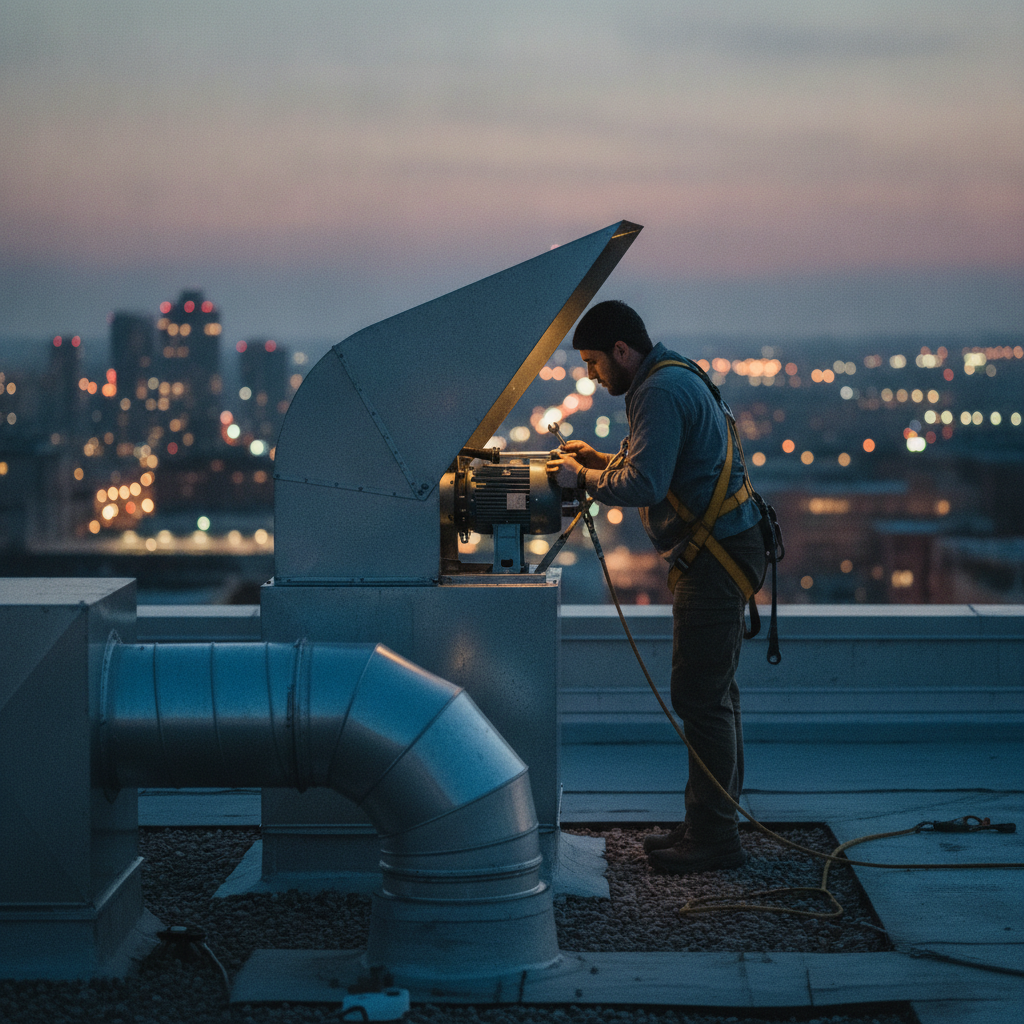
Rooftop fans deserve special care. Opening a hinged upblast fan keeps wiring intact and prevents strain on the stack. We lay out roof pads and containment to avoid damaging membranes and to catch runoff. Fan bowls, blades, and drain ports are scraped, foamed, and rinsed until clean metal shows. Before closing, we check set-screws, confirm rotation, and look for wobble indicative of balance issues.
For high-heat wok or charbroil concepts, vapor volumes can spike capture needs by 20–30% over a typical sauté line. We often pair quarterly deep cleans with a mid-cycle filter exchange to keep pressure drop low and capture steady. Bakeries and light-prep cafes may stretch to semiannual cycles but still benefit from routine filter service to avoid surprise performance dips during seasonal peaks.
Best Practices That Keep Teams Safe and Systems Reliable
Standardize your schedule, lock out power and gas, use food-contact-safe chemistry, and verify airflow before the team returns. Tag the system, save photos, and record belt and bearing observations so inspections, insurance renewals, and audits move quickly.
Build a repeatable playbook. Kitchens with high fryer throughput typically choose 1–3 month cycles; most restaurants succeed at 3–6 months; low-use operations land at 6–12 months. Solid-fuel concepts need tighter timelines. Put it on the calendar now so you’re never caught in a pre-inspection scramble.
Safety is non-negotiable. Lockout/tagout ensures fans and gas lines are off. Technicians use fall protection when opening rooftop fans and lay protective pads to shield membranes from equipment. Inside, appliances and floors are wrapped for splash control, and containment captures runoff. In our experience, disciplined prep shortens total downtime by 10–15% and prevents cleanup delays after the service window.
Documentation pays for itself. We tag the system with date and technician ID, and we attach a digital photo log showing before/after conditions. Many operators add a filter cleaning and exchange log at the point of use so weekly tasks don’t get skipped during rush periods. When a belt is replaced mid-cycle or tension is adjusted, the note becomes part of your maintenance history.
If you’re building an internal SOP, align it with this high-level air quality improvement guidance so front- and back-of-house comfort goals stay in sync with ventilation upkeep.
Tools and Resources We Rely On
Consistent results come from commercial foamers, low-foam alkaline degreasers, hot-water pressure units, rotary duct brushes, hinge kits, borescopes, and the right PPE. Keep SDS sheets accessible and train teams on lockout and rooftop safety.
On the chemistry side, alkaline degreasers attack polymerized fats quickly. For food-contact surfaces, we follow with a potable-water rinse and confirm no residue remains. Foamers improve cling and reduce chemical use by distributing a stable layer over vertical surfaces. Rotary brushes inside ducts break up hard ridges, and a hot-water rinse carries debris to the nearest service opening for removal.
Access and safety tools matter. Hinge kits allow safe opening of upblast fans without stressing wiring. Roof pads distribute weight and protect membranes. Fall-protection anchors, when available, and proper harness use keep techs secure. Inside the kitchen, temporary splash shields and floor protection keep your equipment and walkways clean so you can reopen on schedule.
Verification tools close the loop. Borescopes confirm duct cleanliness beyond the line of sight. Anemometers and simple smoke pencils check capture at several points along the hood. We aim for a consistent pull across the line; if one bay shows weak draw, we investigate filters, plenum obstructions, or fan issues before leaving.
Step-by-Step Kitchen Exhaust Fan Cleaning
Plan downtime, isolate power and gas, and protect cooking equipment. Work top-to-bottom: filters, hood and plenum, ducts, and rooftop fan. Apply foam, allow 5–10 minutes dwell, agitate, and hot-rinse. Finish with belt and bearing checks, restart, and airflow verification with smoke.
Here’s the exact workflow our crews follow across All Over Ontario. This sequence minimizes downtime, keeps runoff controlled, and ensures mechanical checks aren’t missed before we sign off.
- Prep the site: Wrap appliances and floors, stage containment, set roof pads and drip trays. Estimated time: 15–30 minutes per line.
- Lockout/tagout: Confirm fans and gas valves are off. Tag switches before any panels open.
- Filters first: Remove baffle filters, soak in degreaser 10–20 minutes, agitate, hot-rinse, and set aside to dry. Inspect for damage.
- Hood and plenum: Foam interior surfaces, allow dwell, scrub seams and edges, then rinse to bare metal.
- Ductwork: Use rotary brushes to break ridges, then hot-water flush from top to bottom so soils exit at a service opening.
- Rooftop fan: Open hinge kit, secure fan, scrape bowl and blades, foam, rinse, and clear drain pathways. Protect roof at every step.
- Mechanical review: Inspect and tension belts, check bearings and set-screws, verify rotation and balance. Replace worn belts on the spot.
- Reassemble and restart: Install dry filters, remove protections, power up fans and gas, and listen for abnormal noise or vibration.
- Verify capture: Use smoke and spot airflow checks. Record results in your service report.
- Tag and document: Apply a dated service tag, and deliver a photo report for your records and insurers.
Many operators pair this deep clean with a standing filter exchange program. Weekly or biweekly swaps prevent pressure drop from creeping up between services, which keeps capture stable during peak periods and reduces cooking odors near the pass.
DIY vs Professional: What’s Right for Your Kitchen?
DIY teams can handle filter cleaning and light hood wipe-downs. Full-system degreasing, duct flushing, and rooftop fan service require trained, insured technicians who provide lockout, fall protection, and inspection-ready documentation with mechanical checks included.
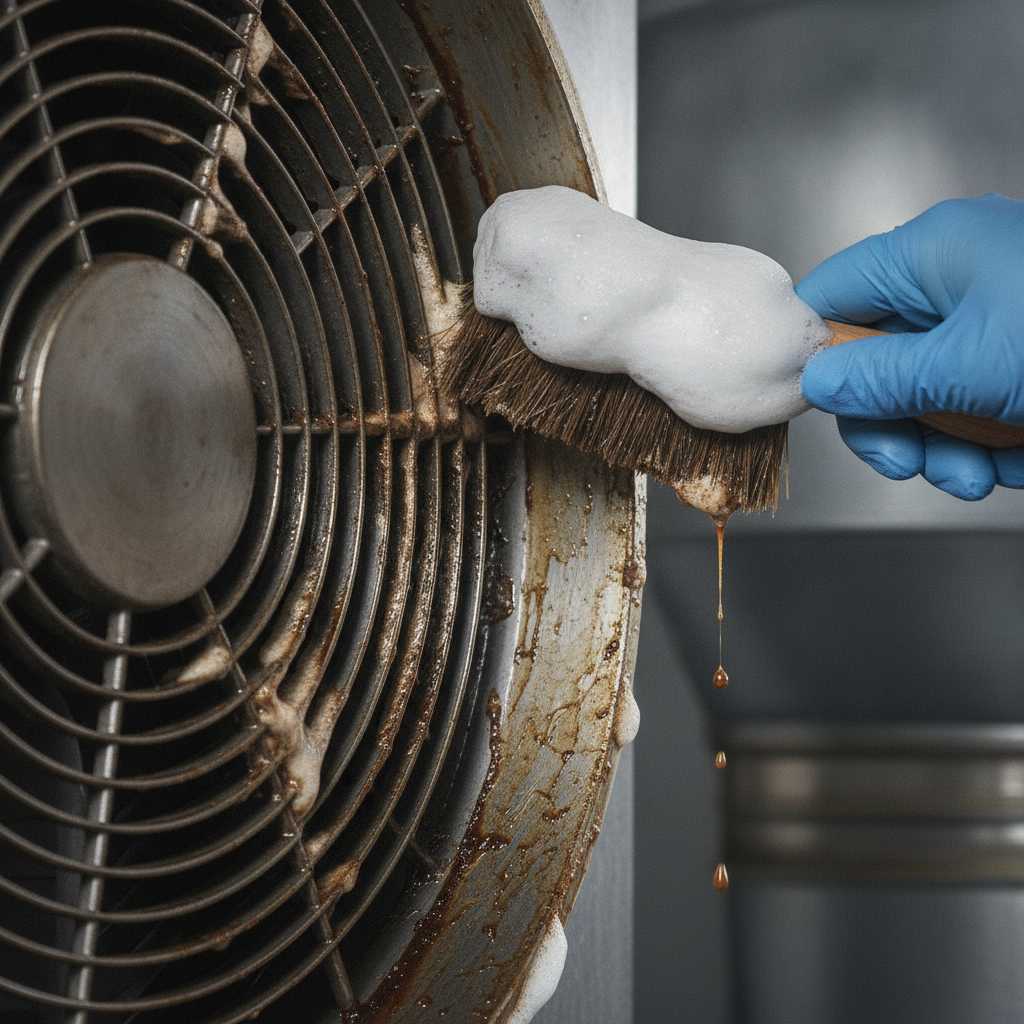
We encourage staff-led filter care. A weekly wash or an exchange program keeps pressure drop low, which maintains capture velocity. But full-system cleaning has real risks. Without a hinge kit, opening an upblast fan can damage wiring or the roof. Chemical overspray can create slip hazards. Duct interiors often require specialized access tools to reach and verify cleanliness.
Professional service brings structure: lockout/tagout, rooftop protection, chemistry selection, and a final verification step. It also delivers consistency across locations. Corporate or multi-site groups benefit from standardized reports and photo evidence. Even single-location restaurants find that documented cleanings simplify insurance discussions and support quicker inspection sign-offs.
| Aspect | DIY (limited) | Professional service |
|---|---|---|
| Scope | Filters, light hood wipe-down | Hood, ducts, upblast fan, rooftop protection, documentation |
| Safety | Basic PPE | LOTO, fall protection, chemical handling, containment |
| Compliance | Minimal notes | Tags, photo reports, inspection-ready records |
| Mechanical checks | Rarely done | Belts, bearings, rotation, vibration |
| Downtime | During hours | 24/7 off-hours scheduling |
If you’re weighing options, scan our focused page on exhaust fan cleaning for what’s included in our end-to-end process and how we structure service windows for minimal disruption.
Compliance and Cleaning Frequency
Match frequency to cooking volume and fuel type. High-volume frying or charbroil lines need service every 1–3 months; most restaurants run 3–6 months; low-use kitchens 6–12 months. Keep hood tags and a photo log to streamline inspections and insurer requests.
Cycles are not one-size-fits-all. Quick service fryers load filters rapidly and drive more grease into ducts, so quarterly deep cleans with mid-cycle filter swaps are typical. High-heat charbroil or wok lines may warrant monthly attention to keep capture consistent. On the other end, light-prep operations can extend to semiannual or annual schedules, provided airflow checks remain solid and filters are maintained weekly.
| Kitchen type | Typical frequency | Notes |
|---|---|---|
| High-volume (QSR, fryers, charbroil) | 1–3 months | Filters load fast; ducts grease quickly |
| Moderate (most restaurants) | 3–6 months | Adjust after airflow checks |
| Low-use (cafes, light prep) | 6–12 months | Watch seasonal spikes and holidays |
| Solid fuel (wood/charcoal) | Monthly | Tighter cycle due to embers and ash |
To translate these ranges into a program, see our complete exhaust cleaning guide, which shows how service windows change for chains versus independents and how documentation keeps corporate audits simple.
Ontario Examples and Mini Case Studies
From quick service to institutional kitchens, tuned cleaning programs restore capture, reduce smoke on the line, and pass inspections faster. These snapshots show what changed when exhaust systems were degreased end-to-end and paired with filter exchange and belt checks.
Quick service fryer line, Southern Ontario. Baseline checks showed visible haze during dinner rush and a faint grease odor near the pass. After a thorough hood, duct, and upblast fan clean plus a weekly filter exchange, capture visibly improved. Fry station temperatures fell about 5°F, and odors near the pass dropped noticeably within 48 hours.
Charbroil concept, multi-site group. The team struggled with smoke spikes during seasonal promotions. We added a monthly duct touch-up between quarterly deep cleans and installed hinge kits on all rooftop fans. Result: faster cleans (time on roof dropped ~20%), steadier capture, and smoother inspection sign-offs across locations.
Institutional kitchen, campus setting. Short service windows created scheduling challenges. Our 24/7 crew completed off-hours cleans with full photo documentation. The facilities manager reported that inspection walkthroughs shortened by 30–40% because evidence was obvious at the hood and in the digital log.
Bakery-cafe, light prep. Semiannual deep cleans paired with monthly belt checks eliminated mid-shift squeal and a persistent warm spot near the oven. A simple smoke test after each service kept everyone confident in capture.
For a broader view of how exhaust work ties into whole-restaurant comfort, our page on kitchen exhaust cleaning in Ontario connects the dots between duct hygiene, fan tuning, and make-up air balance.
Local considerations for All Over Ontario
- Weather swings can be abrupt. Plan rooftop fan service around wind and precipitation, protect membranes, and manage runoff with proper containment every time.
- Summer and holiday peaks raise cook volumes. Add a filter exchange between deep cleans so capture doesn’t slide during back-to-back rushes.
- Night work reduces downtime in busy corridors. Our crews operate 24/7 across Southern Ontario to align with your operating hours.
Frequently Asked Questions
Most commercial kitchens need professional exhaust cleaning every 1–6 months, while filters require weekly attention or a formal exchange. Always lock out power, protect the roof, and tag the hood with a dated service label and photo report to speed inspections and insurance reviews.
How often should a commercial kitchen schedule exhaust fan cleaning?
Match frequency to cooking volume and fuel: 1–3 months for high-volume frying or charbroil, 3–6 months for most restaurants, and 6–12 months for light-prep kitchens. Solid-fuel concepts typically require monthly cleaning. Keep hood tags and photo logs to simplify inspections.
Can our staff safely open and clean the rooftop upblast fan?
Exterior wipe-downs are fine, but opening the fan, cleaning the bowl and blades, and protecting the roof are best left to trained technicians. Pros use hinge kits, lockout/tagout, fall protection, and containment to avoid damage, injuries, and roof leaks.
What documentation proves we’re inspection-ready?
Keep a dated hood tag, a digital report with before/after photos, and notes on filters, belts, and any mechanical adjustments. These records speed walk-throughs and support insurer requests for evidence of maintenance.
Which warning signs mean we need service now?
Watch for persistent smoke on the line, greasy streaks at hood seams, dark filters after washing, rattling or whining from the rooftop fan, and weak capture on a simple smoke test. If you notice any, schedule a full-system cleaning immediately.
Key Takeaways and Next Steps
Set the right frequency, clean from hood to rooftop, verify airflow, and document thoroughly. Certified, insured professionals who work 24/7 and provide photo reports help you pass inspections faster and keep your kitchen safe and comfortable year-round.
- Program frequency by volume and fuel; keep filters on a weekly or exchange cycle.
- Follow a top-to-bottom process and always perform lockout/tagout before work.
- Use photo logs, service tags, and quick airflow checks to prove readiness.
- For multi-site operations, standardize reports to simplify audits.
Ready to organize your plan? Explore our hood cleaning and exhaust fan maintenance guide, then schedule a 24/7 slot. We service All Over Ontario with rapid response in Southern Ontario so your team can focus on hospitality, not ventilation.