Exhaust system maintenance warning signs are the specific sights, sounds, and smells that indicate your commercial kitchen ventilation needs service. Common red flags include visible grease on hoods, poor capture of smoke, unusual fan noise, and lingering odors. In All Over Ontario kitchens, catching these early helps prevent fire risk and health code violations.
By Robinhood Cleaners • Last updated: 2026-07-06
Above-Fold Overview: Why This Guide Matters
This guide shows how to spot kitchen exhaust problems before they become shutdowns. You’ll learn the top warning signs, what causes them, and how to fix issues fast. Use our checklists, step-by-step actions, and pro tips to keep your team safe, pass inspections, and protect uptime across All Over Ontario.
Running a busy line leaves little room for trial and error. That’s why we assembled a practical playbook you can scan in minutes and use the same day.
- See the signs: odors, smoke rollback, rattling fans, grease drip lines
- Know the risks: fire hazards, air quality issues, failed inspections
- Act quickly: what to do today, what to schedule this week
- Stay compliant: align with NFPA 96 cleaning and documentation expectations
Prefer to jump straight to action? Our team’s kitchen exhaust cleaning checklist and inspection requirements guide are built for shift managers.
What Are Kitchen Exhaust System Warning Signs?
Kitchen exhaust warning signs are observable changes—like smoke escaping the hood, heavy grease residue, loud fan vibration, and persistent odors—that indicate reduced ventilation performance or safety risk. These signals emerge before failures, letting you schedule cleaning, filter exchange, or repairs to prevent fires and downtime.
In our experience across restaurants, food courts, and institutional kitchens, warning signs cluster into five categories: air capture, grease control, noise/vibration, airflow balance, and compliance indicators.
- Air capture issues: smoke curling past the hood, heat lingering over the line
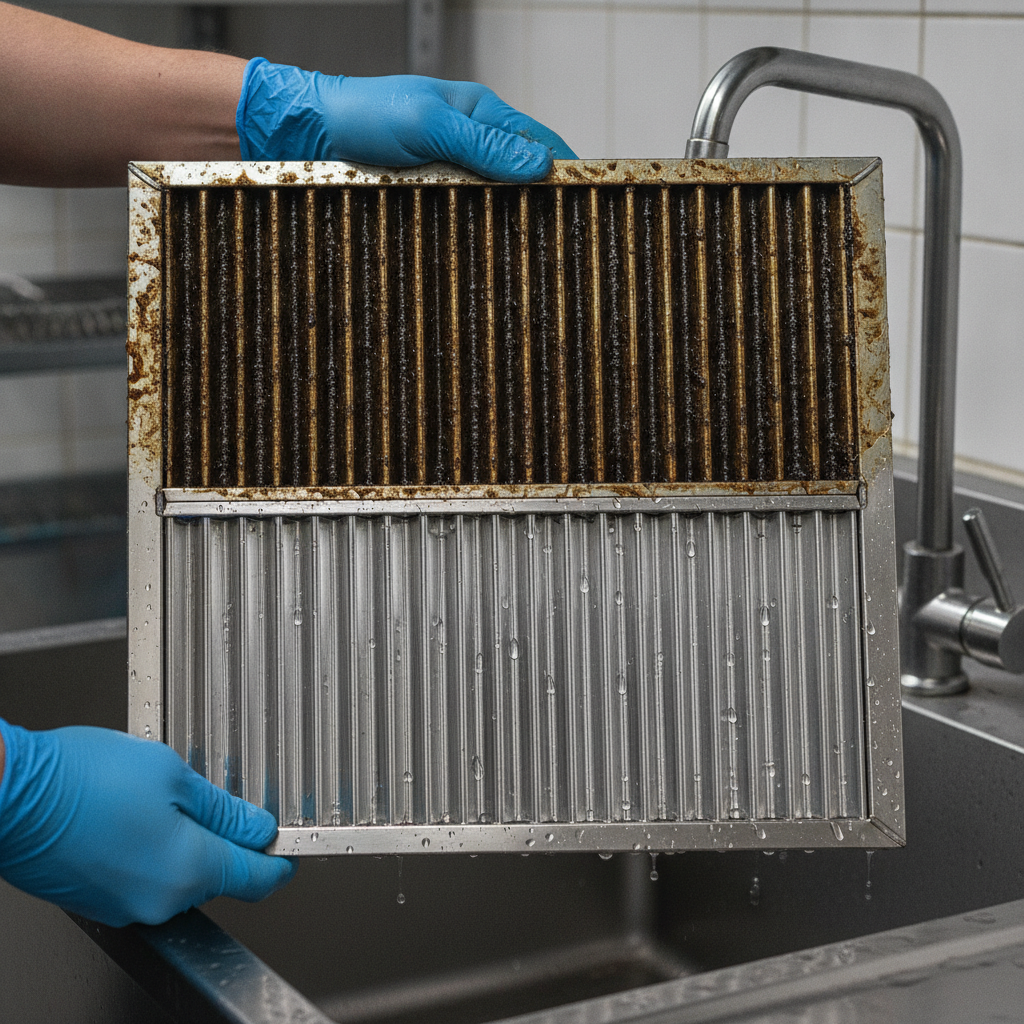
- Grease control issues: visible film on hoods/duct seams, dripping from baffles or fan
- Noise/vibration: new rattles, scraping, or fan startup stutter
- Airflow balance: doors slamming, drafts, or makeup air blowing flames
- Compliance indicators: missed cleaning tags, no recent documentation, stained ceiling tiles
Each category points to a root cause you can verify in minutes, then route to the right fix—cleaning, filter exchange, fan belt replacement, or duct/hood degreasing supported by our complete exhaust cleaning program.
Why Warning Signs Matter for Safety, Uptime, and Compliance
Ignoring small ventilation changes lets grease and heat accumulate, which elevates fire risk, slows cooks, and can trigger inspection failures. Acting on early signs keeps capture efficiency high, protects staff health, and preserves uptime—especially during peak service windows in All Over Ontario.
Here’s the thing: small symptoms compound fast on a busy line. A slightly clogged baffle raises resistance, which reduces capture at the hood, which spreads aerosolized grease to ducts and fans. Over a few weeks, that build-up can impair performance and set the stage for ignition.
- Fire hazard reduction: when buildup reaches ignition points, even a flare-up can travel
- Team productivity: cooks lose speed when heat and smoke linger around the line
- Air quality: lingering odors and haze point to poor removal of aerosols
- Regulatory posture: missed tags or stained hoods attract scrutiny during inspections
Practical example: A quick service location saw smoke escape the hood during rush. We found saturated filters and a loose fan belt. After fan maintenance and a filter exchange, capture improved and the odor complaints stopped the same day.
Local considerations for All Over Ontario
- Seasonal humidity shifts affect aerosol behavior; schedule filter exchanges more often in midsummer.
- Winter stack effect can alter makeup air balance; plan proactive hood and duct inspection before first freeze.
- High-volume weekend traffic in hospitality hubs calls for a Monday morning visual check and quick wipe-down routine.
How Commercial Kitchen Exhaust Systems Work (And Where Problems Start)
A kitchen exhaust system captures heat, smoke, and grease at the hood, moves it through baffles and ducts, and expels it via a rooftop fan while makeup air replaces what’s removed. Problems begin when filters clog, belts slip, or grease accumulates, reducing capture efficiency and increasing fire risk.
Understanding flow helps you diagnose fast. Air should move from cooler areas toward the hood, through clean baffles, up clean ducts, and out via a tuned upblast fan. Makeup air must match exhaust volume so doors don’t slam and flames don’t flicker.
- Hood and baffles: first line of grease capture; clogged baffles reduce airflow
- Ducts: transport aerosols; bends and seams often show the first grease lines
- Upblast fan: continuous removal to the roof; belts, bearings, and housings wear over time
- Makeup air: balances pressure; incorrect settings cause drafts and odor migration
We map these components during scheduled inspections, documenting grease accumulation and any mechanical drift for quick remediation.
Top 13 Exhaust System Maintenance Warning Signs
Watch for smoke escaping the hood, fresh grease lines, rattling or scraping from the fan, poor capture during rush, door pressure changes, odor hang-time, filter discoloration, visible drip points, fan slowdown at startup, heat pooling, frequent breaker trips, stained ceiling tiles, and missing cleaning tags.
Use this list as a daily/weekly walk-through and log what you see. Patterns reveal root causes.
- Smoke rollback near the cookline, especially during rush.
- New grease streaks on hood seams or along duct entry points.
- Fan rattles or scraping that weren’t present last week.
- Filters with persistent discoloration a day after cleaning.
- Odors that hang 10+ minutes after cooking stops.
- Door pressure changes: doors thud shut or are hard to open.
- Heat pooling around the line; staff complaints increase late in service.
- Fan slow start or momentary stall before reaching speed.
- Visible drips from baffles or from the rooftop fan housing.
- Stained ceiling tiles near duct paths or diffusers.
- Frequent breaker trips on the fan circuit.
- Makeup air blowing flames or pushing smoke out of the hood.
- Missing or outdated cleaning tags and logs.
If three or more appear at once, book a professional NFPA 96–aligned cleaning and mechanical check.
Root Causes and What To Do Next
Most warning signs trace back to saturated filters, grease-laden ducts and hoods, loose or worn fan belts, and makeup air imbalances. Confirm the symptom, isolate the cause, then schedule cleaning, filter exchange, belt replacement, or ventilation tuning to restore safe performance.
Match symptoms to likely causes and actions below. Tackle quick wins in-house, then bring in certified techs for anything involving ducts, fans, or compliance documentation.
| Symptom | Likely Cause | Action (Today) | Action (This Week) |
|---|---|---|---|
| Smoke rollback | Clogged baffles; makeup air off | Swap or deep-clean baffles | Schedule filter exchange and hood/duct inspection |
| Fan rattle/scrape | Loose belt; bearing wear | Power down and visually check belt | Book fan belt service |
| Grease drips | Heavy grease in plenum/ducts | Contain drips; note locations | Order hood & duct cleaning |
| Lingering odors | Low capture; imbalanced airflow | Check baffle seating; reduce cross-drafts | Request ventilation balancing |
| Door pressure swings | Makeup air mismatch | Temporarily lower exhaust speed | Schedule makeup air tuning |
Document your observations with photos and timestamps. When we arrive, that context speeds diagnosis and shortens the work window.
Step-by-Step: Front-of-House and BOH Triage
Use a three-step triage: verify safety (power down if needed), perform quick visual checks (filters, belt, fan housing), then stabilize operations (swap filters, reduce heat, log issues). Next, schedule certified cleaning or repairs to permanently fix the root cause.
- Stabilize safety: If you hear grinding or see live drips, power down the fan and cooking line.
- Visual checks: Confirm baffles are seated, inspect for grease lines, look at the fan belt tension.
- Contain and log: Place pans under drips, wipe accessible grease, log odors/rollback times.
- Swap filters: Use a clean set from your Filter Cleaning & Exchange inventory if available.
- Call pros: Book Hood Cleaning, Duct Cleaning, or Fan Belt Replacement as indicated.
We keep 24/7 availability for kitchens that can’t wait until morning. Fast fixes today prevent bigger problems tomorrow.
Recommended Cleaning and Maintenance Intervals
High-volume fry and grill lines benefit from monthly baffle service and quarterly hood/duct cleaning. Moderate operations often maintain safety with quarterly filters and semi-annual deep cleans. Always adjust cadence to production volume, menu mix, and inspection history.
- Baffle filters: rotate weekly to monthly based on soil load.
- Hood & plenum: quarterly for high-volume; semi-annual for moderate kitchens.
- Ducts & fan: quarterly to semi-annual; confirm with inspection photos.
- Grease trap: pump/clean on a fixed schedule to prevent backflow and odors.
- Makeup air tuning: re-check seasonally or after equipment changes.
If you’re ramping up seasonal volume, book ahead. Our fire code guide clarifies documentation inspectors often request.
Best Practices to Prevent Repeat Issues
Standardize a visual check-in at opening and close, maintain a clean filter exchange loop, document grease lines with photos, and schedule NFPA 96–aligned deep cleans. Consistent small steps keep systems efficient and extend mechanical life.
- Daily eyes-on: 60-second hood and baffle check during line setup.
- Weekly reset: swap or deep-clean baffles; wipe hood exteriors.
- Photo log: snap the same duct seam weekly to track changes.
- Service calendar: pre-book quarterly cleanings to lock dates.
- Turnover-proofing: keep a laminated mini-checklist at the line.
Teams that embed these habits report smoother rushes, fewer odor complaints, and faster post-service recovery.
Tools and Resources Your Team Can Use
Equip staff with spare baffle filters, degreaser, non-scratch pads, a small inspection mirror, and a camera for photo logs. Keep rooftop PPE and a basic belt-tension guide available for qualified personnel, reserving duct and fan work for certified professionals.
- Filter Cleaning & Exchange kit with labeled storage racks.
- Degreasing supplies that are food-safe and hood-compatible.
- Inspection mirror and flashlight for quick seam checks.
- Basic PPE: gloves, eye protection; rooftop PPE for trained staff only.
- Logbook or app to capture photos and service dates.
For deeper dives into fire readiness, see this general fire safety equipment overview for context on layered protection beyond ventilation.
Compliance Signals Inspectors Notice
Inspectors look for current cleaning tags, clear access to hoods and fans, no active drip lines, and logs that match visible conditions. Keep photo evidence, technician reports, and a predictable service cadence to pass quickly.
- Current tags at hood and fan with readable dates.
- Photo evidence of recent cleaning and mechanical checks.
- Accessible components (hinge kits on fans, clearances maintained).
- Aligned logs so records match what the eyes see.
We structure our documentation to mirror what inspectors review—making audits faster and less disruptive across All Over Ontario locations.
Case Examples from All Over Ontario Kitchens
Real kitchens show repeatable patterns: saturated filters causing smoke rollback, loose belts creating rattle and odor hang-time, and duct grease lines that progress from faint to drip within weeks. Swift filter exchange, belt replacement, and hood/duct cleaning restore capture and reduce complaints.
- Quick service grill line: smoke rollback fixed with filter rotation and a same-night hood cleaning.
- Banquet kitchen: odor complaints traced to a slipping belt; post-replacement, odor cleared immediately.
- Food court concept: drip line at a seam identified early; duct cleaning prevented a midweek shutdown.
Patterns like these are why our checklists and inspection cadence matter.
Need a fast assessment? We’re NFPA 96–aligned, WSIB insured, and available 24/7. Ask about Filter Cleaning & Exchange, Hood and Duct Cleaning, Fan Belt Replacement, and Ventilation System Maintenance—all delivered across All Over Ontario.

Quick Troubleshooting Checklists
Use a daily 60-second visual check for obvious issues, a weekly filter and hood reset, and a monthly mini-inspection with photos. If you spot multiple red flags, escalate to certified cleaning and mechanical service to close the loop.
Daily (60 seconds)
- Look for new grease lines at hood seams.
- Watch for smoke curling at the edges of the hood.
- Listen for new rattles or scraping at fan startup.
Weekly (10–15 minutes)
- Swap or deep-clean baffle filters.
- Wipe hood exterior and inspect for drips.
- Log any odors that linger after shutdown.
Monthly (20–30 minutes)
- Photograph the same duct seam for trend tracking.
- Confirm cleaning tags and dates are current.
- Verify makeup air supply settings haven’t drifted.
For a structured walkthrough, our 2026 cleaning checklist packages these steps into one printable page.
When To Call Certified Professionals
Call professionals when you see smoke rollback, live grease drips, fan vibration, or missing tags; when staff report headaches or strong odors; or when inspection is approaching. Certified teams clean hoods, ducts, and fans to NFPA 96 expectations and tune ventilation safely.
Some tasks are perfect for your team—others require certified techs, documentation, and rooftop safety protocols. Use this quick view.
| Do It In-House | Call Robinhood Cleaners |
|---|---|
| Swap/clean baffle filters; wipe hood exteriors | Hood, plenum, and duct degreasing |
| Basic odor logging and photo documentation | Rooftop fan service and Fan Belt Replacement |
| Check makeup air diffusers for blockage | Grease trap cleaning/pumping and plumbing compliance |
| Visual belt check with power off (trained staff) | Full Ventilation System Maintenance and balancing |
We align work windows to your off-hours and provide photo reports that stand up during inspections.
Helpful References and Context
Use general safety references to educate teams on layered protection. While your exhaust is central, electrical, plumbing, and fire equipment readiness all contribute to safe operations and faster recoveries after incidents.
For team refreshers beyond the scope of ventilation, these general resources can help contextualize risk:
- High-level electrical maintenance principles that support safe operations: overview of maintenance basics.
- Ventilation fundamentals in building systems explained through plumbing vent analogies: why venting matters.
- General fire safety equipment context for staff onboarding: fire safety equipment guide.
Remember: keep external learning general and bring ventilation-specific issues back to a certified kitchen exhaust team.
Frequently Asked Questions
These FAQs address the quickest ways to identify exhaust issues, what to handle in-house, and when to book professional help. Each answer is concise for shift leads and operators who need clear next steps.
What are the first signs my kitchen exhaust needs service?
Smoke curling out from the hood, a new rattle on startup, greasy baffle filters a day after cleaning, and odors that hang after shutdown are early signs. Log what you see, swap filters, and schedule an inspection if multiple issues appear together.
How often should a commercial hood and duct be cleaned?
High-volume fry and grill lines often need quarterly hood and duct cleaning, while moderate kitchens can target semi-annual deep cleans. Adjust cadence to your volume, menu mix, and inspection history, and keep photo logs to validate intervals.
Can my team replace a fan belt on the rooftop exhaust?
We recommend certified service for rooftop fans due to fall protection, lockout/tagout, and alignment requirements. Your team can perform a visual belt check with power off, but call professionals for replacement and balancing.
Why do odors linger even after the line is closed?
Lingering odors usually mean capture or airflow balance is off. Clogged baffles, makeup air mismatch, or a slipping fan belt can all reduce removal. Try a filter swap and check for drafts, then schedule ventilation tuning if the issue persists.
Key Takeaways
Spot small changes early, act the same day on quick wins, then schedule certified cleaning and service to eliminate root causes. Maintain logs and tags so your documentation matches what inspectors see. This rhythm keeps teams safe and service consistent.
- Smoke, odor, grease lines, and rattles are the top red flags.
- Filter exchange and belt checks restore performance quickly.
- Quarterly-to-semi-annual deep cleans reduce fire risk.
- Photo logs and current tags speed inspections.
Conclusion
Your ventilation is safety equipment. Treat warning signs as early alarms, not background noise. With a simple daily/weekly rhythm and NFPA 96–aligned cleanings, you’ll keep capture high, grease low, and operations predictable across All Over Ontario.
Robinhood Cleaners is WSIB insured, NFPA 96–aligned, and available 24/7. We deliver Filter Cleaning & Exchange, Hood and Duct Cleaning, Fan Belt Replacement, Grease Trap Cleaning, and full Ventilation System Maintenance across restaurants, hospitality, and institutional kitchens.
Ready to move from reactive to proactive? Book your assessment today and keep your next inspection simple.