A commercial kitchen preventive maintenance plan is a documented, recurring schedule of inspections, cleanings, and minor fixes across hoods, ducts, fans, filters, grease traps, appliances, and ventilation. It reduces fire risk, protects uptime, and supports NFPA 96 compliance by resolving issues before they trigger shutdowns or failed inspections.
Quick Answer
A commercial kitchen preventive maintenance plan sets firm schedules for hood, duct, fan, filter, grease trap, and appliance care to cut fire hazards and downtime. In All Over Ontario, Robinhood Cleaners builds NFPA 96–aligned plans, performs after-hours service, and documents results for audits and insurance.
At a Glance
Create your plan by listing every asset, ranking risk, setting daily-to-quarterly tasks, and documenting with photos and tags. Use NFPA 96 as the safety baseline, assign clear owners, and outsource high-risk items—hoods, ducts, fans, and grease traps—to certified technicians for audit-ready results.
- Who this helps: Restaurants, QSRs, hotels, food courts, catering, and institutional kitchens.
- What you’ll get here: Step-by-step build, zone checklists, a comparison table, and a vendor buying guide.
- Why now: Prevent fires, keep air clean, reduce unplanned downtime, and pass inspections faster.
- Local fit: Cadences tuned for Southern Ontario rush periods, patio season, and rooftop access.
- What it is
- Why it matters
- How it works
- Approaches
- Step-by-step build
- Zone checklists
- Tools & resources
- Sample schedule table
- In-house vs outsourced
- Buying guide
- Pricing factors
- Best practices
- Case examples
- FAQ
- Wrap-up
Local Tips
- Tip 1: Plan rooftop fan service on calmer weather windows common between lake-effect gusts in Southern Ontario; wind safety improves access and turnaround.
- Tip 2: Increase hood and duct checks during patio season and December rushes when fryers and grills run extended hours across All Over Ontario.
- Tip 3: Align grease trap service with municipal pickup windows to prevent odors from impacting neighboring venues and foot traffic.
IMPORTANT: Robinhood Cleaners supports 24/7 scheduling, WSIB-insured crews, and NFPA 96–aligned methods—ideal for after-hours work around service peaks.
What Is a Commercial Kitchen Preventive Maintenance Plan?
A commercial kitchen preventive maintenance plan is a living schedule of inspections, cleanings, and minor repairs across exhaust systems, grease control, appliances, and ventilation. It defines tasks, owners, and frequencies so fire risks drop, air quality rises, and inspections pass with verifiable documentation.
- Scope: Hoods, ducts, exhaust fans, baffle filters, grease traps, make-up air, and key appliances.
- Cadence: Daily line checks; weekly wipe-downs; monthly inspections; quarterly deep cleaning based on grease load.
- Standards: Align procedures with NFPA 96, insurer requirements, and local health inspections.
- Documentation: Photo evidence, dated hood tags, and service logs stored centrally.
For a deeper dive into exhaust-specific workstreams, see our kitchen hood cleaning guide and our safety inspection checklist for audit alignment.
Why a Preventive Plan Matters
A preventive plan prevents grease ignition, keeps ticket times steady, and proves compliance. With scheduled hood, duct, and fan cleaning, kitchens reduce unplanned downtime and sail through inspections because problems are fixed before they become violations.
- Fire safety: Grease accumulation in hoods and ducts is a common ignition path from flare-ups to ductwork; routine degreasing interrupts that path.
- Uptime and speed: Consistent airflow and clean equipment support reliable ticket times during peak service.
- Air quality: Balanced exhaust and make-up air reduce smoke and odors; staff retention often improves when air is clean.
- Compliance: Inspectors look for visible cleanliness and records. Photo-tagged service logs remove ambiguity.
- Insurance-readiness: Dated hood tags and before/after photos simplify claims and underwriting reviews.
If grease risk is your top concern, our grease fire prevention guide details practical countermeasures at the line and in the exhaust path.
How a Commercial Kitchen Preventive Maintenance Plan Works
Build the plan by inventorying equipment, ranking risk, setting frequencies, and assigning owners. Document every service with photos and sign-offs, then review a short scorecard monthly. Outsource high-risk cleaning—hoods, ducts, fans, grease traps—to NFPA 96–aligned providers.
- Inventory: List hoods, ducts, fans, filters, traps, appliances, access panels, and rooftop terminations.
- Risk ranking: Prioritize fryer and charbroiler lines, long duct runs, and rooftop bends.
- Frequencies: Daily to quarterly cycles tuned to grease load and service hours.
- Ownership: Staff handle light tasks; certified technicians handle duct and rooftop work.
- Evidence: Keep photo sets, dated tags, and signed work orders in a CMMS or shared drive.
For frequency benchmarks, reference our Ontario-focused hood cleaning frequency explainer and this NFPA 96 schedule overview for planning cadence.
Types and Approaches
Blend frequency-based tasks (daily, weekly, quarterly) with condition-based triggers (grease load, airflow, vibration) for a resilient plan. Choose in-house, outsourced, or hybrid staffing based on risk, skill, and after-hours access needs.
- Frequency-based: Fixed schedules for repetitive tasks like filter rotations and wipe-downs.
- Condition-based: Triggered by airflow changes, visible residue, or odor complaints.
- Predictive cues: Fan noise, belt wear, abnormal heat at duct bends, or rising ticket times.
- Staffing models: In-house (light tasks), outsourced (ducts/fans/traps), hybrid (split duties).
Self-contained takeaway: Combine fixed cycles with simple condition checks (airflow, odors, residue). This finds problems earlier without burdening staff with complex diagnostics.
Step-by-Step: Build Your Plan in 30 Days
Launch in 30 days with weekly sprints: map assets, set cadences, assign owners, schedule certified deep cleans, and start logging with photos and tags. A 15-minute weekly review keeps momentum without disrupting service.
- Week 1 – Map & assess: Inventory equipment, note duct lengths, rooftop access, grease-prone stations, and filter counts.
- Week 2 – Set cadence: Define daily/weekly/monthly tasks; book quarterly hood/duct service and grease trap intervals.
- Week 3 – Assign & train: Delegate light cleaning to staff; confirm vendor coverage for high-risk work.
- Week 4 – Launch & log: Start the schedule, capture photo evidence, affix dated hood tags, and hold a 30-minute review.
- KPIs to track: On-time task completion (aim 95%+), ventilation complaints (trend downward), and rework count (target near zero).
- Proof ritual: Photograph fan blades, duct interiors, and trap interiors after each service; store by date and asset.
Zone Checklists You Can Use Today
Standardize by zone: keep daily items quick and visible, bundle monthly inspections, and schedule quarterly hood, duct, fan, and trap work with certified pros. Update as menus and volumes shift.
Hood Cleaning & Degreasing
- Wipe hood exterior and edges at close; spot-check for streaks.
- Scrape heavy deposits around plenum and seams weekly.
- Quarterly deep clean to bare metal per NFPA 96.
- Affix dated service tag; file photo report and deficiency list.
Exhaust Duct Cleaning
- Check access panels monthly; look for drips or seepage at joints.
- Quarterly or semi-annual duct degreasing based on volume.
- Inspect rooftop terminations for residue and weather wear.
- Confirm complete grease containment and roof protection.
Exhaust Fan Cleaning & Fan Belt Replacement
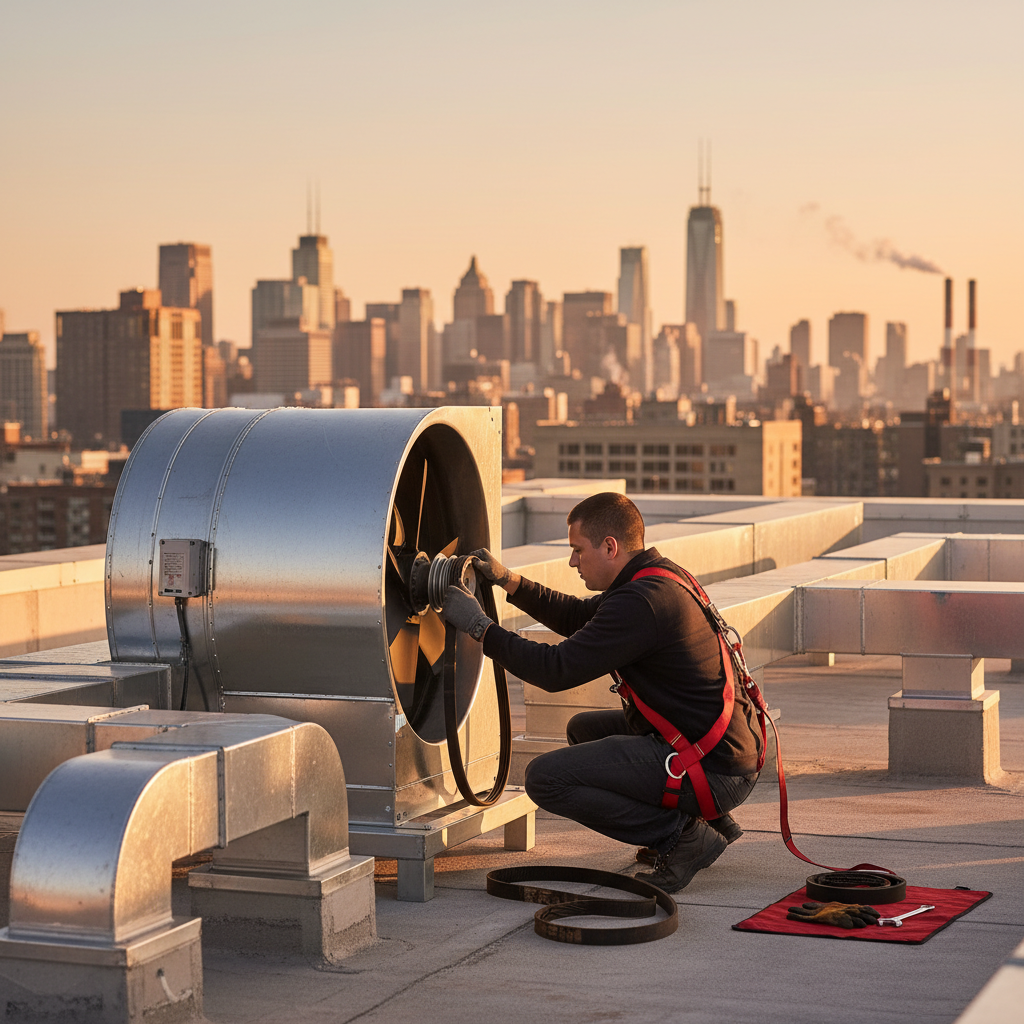
- Listen for rattles or vibration; note any airflow drop.
- Clean fan blades and housings during quarterly service.
- Inspect and replace worn belts; align pulleys.
- Lubricate bearings per manufacturer guidance.
Filter Cleaning & Exchange
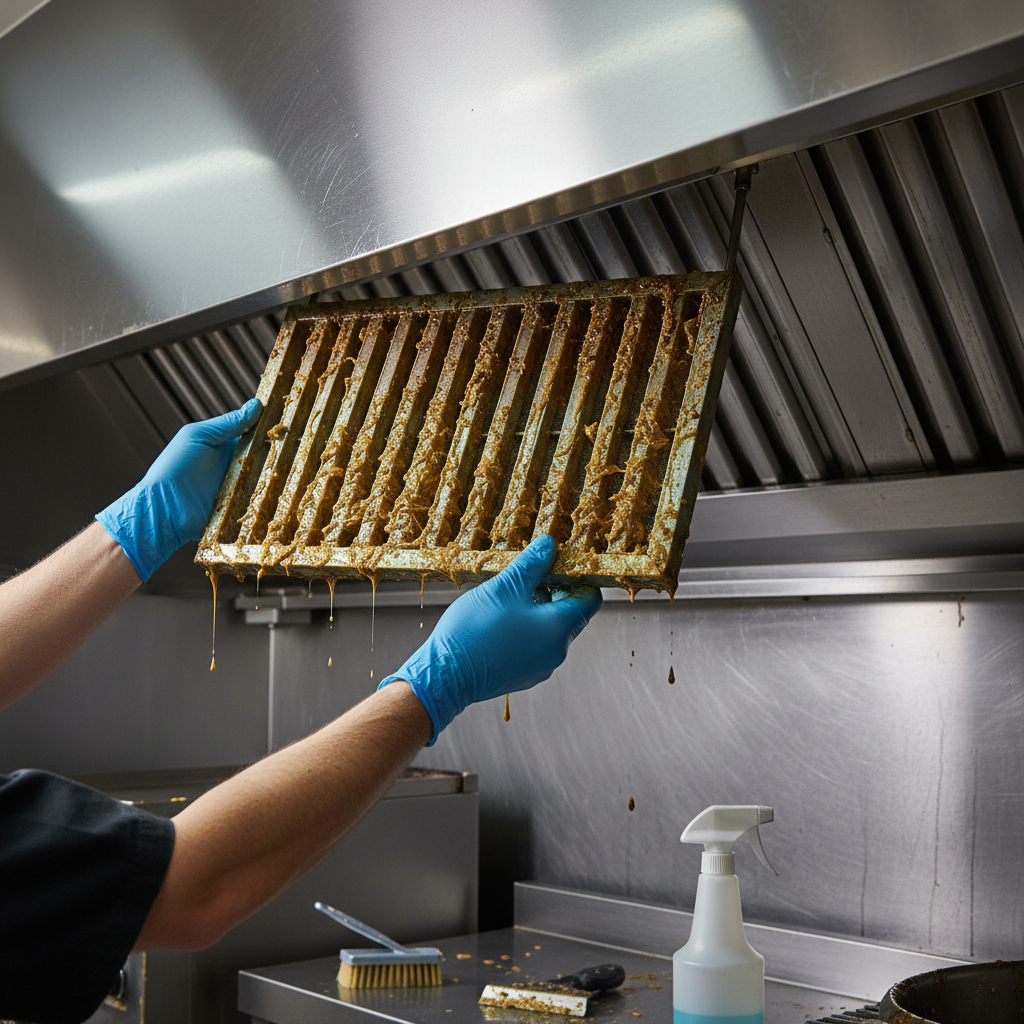
- Rotate, rinse, and dry baffle filters daily in high-grease lines.
- Weekly soak with degreaser; inspect for dents and warping.
- Exchange damaged filters; keep a labeled spare set for fast swaps.
- Re-seat filters correctly to maintain capture efficiency.
Grease Trap Cleaning & Service
- Skim solids daily; watch for slow drains or odors.
- Schedule pump-outs on a fixed cadence; confirm full interior scrape.
- Verify baffles and tees are intact; reseal lids properly.
- Record haul-away documentation and volumes if available.
Commercial Appliance Cleaning
- Deep clean ovens, ranges, fryers, and grills monthly.
- Pull equipment to clean behind/under; protect gas/electrical connections.
- Descale steam equipment per manufacturer intervals.
- Use food-safe, high-performance degreasers for baked-on residue.
Ducts, Rooftop, and Ventilation
- Inspect rooftop curbs, seals, and grease containment after storms.
- Confirm make-up air balance with exhaust to reduce smoke.
- Replace intake filters per pressure or timeline triggers.
- Document rooftop access challenges and seasonal constraints.
Floors, Walls, and Surrounds
- Daily degrease floors; squeegee to drains and sanitize.
- Power wash back-of-house quarterly to remove film.
- Wipe walls and ceilings near cooklines weekly.
- Verify drain strainers are present and clear.
Tools & Resources
Use digital checklists, photo logs, and NFPA 96–aligned SOPs to standardize work. Store vendor insurance, WSIB proof, and certificates with each service record. A simple CMMS or shared drive keeps everything searchable and audit-ready.
- Templates: Daily line check, weekly cleaning, monthly inspection, quarterly hood/duct service log.
- Documentation kit: Photo evidence, dated hood tags, vendor insurance and WSIB certificates, deficiency lists.
- References: NFPA 96 guidance, provincial fire codes, and local health inspection checklists.
- Software: Light CMMS or shared tracker with recurring schedules and attachments.
- Training aids: Short shift-change huddles and posted SOPs at each zone.
For cadence examples and inspector expectations, review our NFPA 96 compliance primer and this exhaust cleaning walkthrough.
Sample Preventive Maintenance Schedule
Start with this baseline and tune by grease load and inspection notes. Keep daily items quick, anchor monthly inspections, and lock quarterly deep cleans with certified vendors for NFPA 96–level results.
| Kitchen type | Daily | Weekly | Monthly | Quarterly |
|---|---|---|---|---|
| High-grease QSR | Filter rotation; hood wipe | Plenum scrape; floor degrease | Fan/belt inspect; appliance deep clean | Hood/duct to bare metal; trap service |
| Full-service grill | Filter rinse; line wipe | Access panel check | Make-up air filter swap | Duct/fan clean; roof check |
| Low-grease cafe | Light wipe-down | Filter soak (as needed) | Vent check; dust control | Semi-annual exhaust clean |
Comparison: In-House vs. Outsourced vs. Hybrid
Use in-house teams for daily and weekly items. Outsource high-risk hood, duct, fan, and trap work to certified pros. A hybrid model often wins: staff handle light tasks while a vendor ensures deep cleaning, documentation, and after-hours access.
| Model | Compliance certainty | Speed & uptime | After-hours access | Documentation | Liability/insurance | Best for |
|---|---|---|---|---|---|---|
| In-house | Variable; depends on training | Good for light tasks | Yes, if staffed | Basic logs | Employer assumes risk | Small, low-grease menus |
| Outsourced | High with certified vendor | Strong for deep work | Yes, standard | Photos, tags, reports | Shared/contractual | High-volume, multi-site |
| Hybrid | High on deep tasks | Best overall balance | Yes | Full vendor docs + staff logs | Shared | Most operations |
Buying Guide: Choosing a Maintenance Partner (Ontario)
Choose providers with NFPA 96–aligned methods, WSIB insurance, 24/7 availability, and photo-documented results. Confirm a full-service scope—hoods, ducts, fans, filters, grease traps, appliances, and power washing—so accountability stays with one team.
- Safety credentials: NFPA 96 alignment; WSIB insured; trained, supervised technicians.
- Availability: After-hours and rapid response across Southern Ontario.
- Documentation: Dated hood tags, before/after photos, deficiency lists, audit support.
- Scope: Exhaust systems, traps, appliances, floors/walls, and ventilation balancing.
- Proof: References from restaurants, QSRs, hotels, and institutional kitchens.
In our experience across All Over Ontario, consolidating exhaust, trap, and appliance care with one vendor shortens night work windows and improves inspection outcomes.
Pricing Factors (No Dollar Amounts)
Maintenance spend is shaped by grease load, duct complexity, rooftop access, and after-hours needs. Bundle services and standardize frequencies to reduce disruptions while maintaining safety and compliance.
- Grease load & hours: Fryer-heavy menus drive higher cadence.
- Duct length & access: Long or complex runs and tight access add effort.
- Rooftop conditions: Height, wind exposure, and containment requirements matter.
- After-hours service: Night work and holidays require additional coordination.
- Documentation depth: Photo sets and audit packs add preparation time.
Best Practices That Hold Up in Audits
Standardize frequencies, tag every hood with dates, and store photo reports centrally. Review deficiencies weekly and track closure. Run a 15-minute huddle before rush to confirm air balance, filter condition, and clear drains.
- Calendar discipline: Lock daily, weekly, monthly, and quarterly tasks on a recurring schedule.
- Visible proof: Dated hood tags and labeled filter sets for quick verification.
- Safety focus: Shut off fans and gas per SOP; use PPE for rooftop and chemical work.
- Metrics: On-time task rate (95%+), rework count (near zero), ventilation complaints (declining trend).
- Vendor management: Require certificates of insurance, WSIB coverage, and NFPA 96–aligned reports.
To align with inspector expectations, skim our health code compliance overview and this grease fire prevention guide.
Need a hand? Robinhood Cleaners provides NFPA 96–aligned hood, duct, fan, filter, grease trap, appliance, and power washing services across All Over Ontario—with 24/7 scheduling and WSIB-insured crews.
Mini Case Examples (Ontario)
Real-world scenarios show the plan’s impact: faster ticket times after filter rotation, fewer odors with trap scheduling, and reduced downtime after fan belt swaps. Consistent documentation also made health inspections quicker and less stressful.
- Busy QSR fryer line: Daily filter rotation reduced smoke and improved capture at the hood.
- Downtown bistro: Quarterly duct cleaning eliminated roof runoff, protecting neighboring patios.
- Hotel banquet kitchen: Fan belt replacement stabilized airflow before peak season.
- Campus cafeteria: Grease trap pump-out aligned with semester shifts to prevent odors.
- Food court grill: Nightly hood wipe-downs lowered next-day prep time.
- Casual chain: Photo-documented hood tags sped up insurance renewal.
- Steakhouse broiler: Condition-based duct checks caught a hotspot near a bend.
- Bakery cafe: Make-up air filter swaps reduced dust near pastry cases.
- Catering commissary: Monthly appliance deep cleans improved oven recovery times.
- Rooftop fan on high-rise: Seasonal inspection prevented wind-related vibration damage.
- Pizzeria: Quarterly power washing removed floor film, improving slip resistance.
- Healthcare kitchen: Tight logbook control supported stringent inspections.
- Resort property: Centralized CMMS aligned multiple venues on one schedule.
- New opening: Pre-opening duct and trap service cleared final occupancy steps.
Frequently Asked Questions
Most kitchens adopt daily, weekly, monthly, and quarterly cadences, then tune based on grease load and inspection notes. Certified pros tackle hoods, ducts, fans, and grease traps; staff focus on line-level cleaning and quick checks.
- How often should we schedule hood and duct cleaning?
- High-grease operations typically book quarterly service, while moderate-volume kitchens may extend to semi-annual. Adjust based on visible residue, airflow, and inspection results, and align with NFPA 96 guidance.
- What should be in our maintenance log?
- Include task name, date, responsible person, photos, deficiencies, and follow-ups. Keep vendor certificates, WSIB proof, and insurance info with each service report for audit readiness.
- What tasks can kitchen staff handle vs. a vendor?
- Staff usually manage daily wipe-downs, filter rinses, and light equipment cleaning. Certified vendors handle duct and fan degreasing, rooftop work, grease trap pumping, and documented deep cleans to bare metal.
- How do we prepare for after-hours service?
- Clear cooklines, cool equipment, confirm rooftop access, and stage a work area for mats and plastic. Provide a contact, lockbox codes, and instructions for alarm panels.
- How do we know if the job was done right?
- Look for dated hood tags, before/after photos, clean fan housings and blades, intact grease containment, and a signed report listing any deficiencies with a closure plan.
Wrap-Up and Next Steps
Document assets, set cadences, and schedule certified cleanings for hoods, ducts, fans, and traps. Track results with photos and tags, review weekly, and refine as volumes change. This keeps your kitchen safer, cleaner, and inspection-ready.
- Key takeaways: Plan the work, document everything, and align with NFPA 96.
- Action steps: Build your asset list today, set daily-to-quarterly tasks, and book your next hood/duct service.
- Where we help: Exhaust systems, grease traps, appliances, power washing, and ventilation balancing.