Commercial kitchen fire prevention checklist refers to a structured, routine set of tasks that reduce ignition sources and fuel loads in kitchens. It aligns daily habits with NFPA 96 style standards and maintenance cycles. For restaurants in All Over Ontario, using a written checklist keeps teams accountable and helps pass inspections without last‑minute scramble.
By Robinhood Cleaners • Last updated: 2026-07-05
Summary and Table of Contents
Use this commercial kitchen fire prevention checklist to organize daily, weekly, and scheduled cleaning that removes grease, verifies ventilation, and documents compliance. It covers hoods, ducts, fans, filters, appliances, and grease traps—plus staff training, buying criteria, and a DIY vs. professional comparison tailored to Ontario operations.
This complete guide is designed for restaurants, commercial kitchens, and institutional food service teams across Ontario. You’ll find definitions, why this matters, how prevention works, a full checklist, tools, a buying guide, and examples you can copy today.
- What is a fire prevention checklist?
- Why prevention matters
- How prevention works
- Hazards and control methods
- The complete checklist
- Cleaning frequencies
- DIY vs professional
- Tools and resources
- Buying guide (Ontario)
- Case studies and examples
- FAQ
- Key takeaways
- Conclusion
What Is a Commercial Kitchen Fire Prevention Checklist?
A commercial kitchen fire prevention checklist is a written, repeatable schedule of inspections and cleanings that targets grease, heat, and airflow risks. It combines daily operator tasks with periodic NFPA 96–style service intervals so kitchens stay safe, compliant, and open for business without emergency shutdowns.
Think of it as your “operating system” for safety. It ensures hood, duct, and exhaust fan cleaning, filter changes, grease trap service, and appliance deep cleaning happen on time. Documentation from each round becomes your audit trail for insurance and health inspections.
At Robinhood Cleaners, we build checklists around your menu, volume, and ventilation design. Our scope spans Kitchen Exhaust Cleaning, Filter Cleaning & Exchange, Fan Belt Replacement, Grease Trap Cleaning, Commercial Appliance Cleaning, Power Washing, Hood Cleaning, Duct Cleaning, and Ventilation System Maintenance—so nothing slips through the cracks.
Why Fire Prevention Matters for Ontario Kitchens
Fire prevention protects people, revenue, and licenses. Consistent hood, duct, and fan cleaning keeps grease from becoming fuel, while documented service demonstrates due diligence to inspectors and insurers. For busy Ontario kitchens, prevention minimizes downtime and supports dependable air quality and staff morale.
Safety isn’t abstract—you feel it during a Friday rush. Clear air, strong capture at the hood, and equipment that runs cool let your team focus on food, not fumes. Prevention also reduces emergency calls and helps you avoid after-hours surprises like a seized rooftop fan or overflowing grease trap.
In our experience, facilities that align their cleaning cadence with NFPA 96–style intervals face far fewer corrective actions. Photo reports, service tags, and signed checklists also show your diligence to managers, owners, and auditors. As a WSIB‑insured provider with 24/7 availability, we schedule work to fit your service windows—late nights, early mornings, or split shifts.
For a deeper dive on ventilation and inspection prep, see our internal guide to passing NFPA 96 requirements and our overview of commercial kitchen cleaning in Ontario.
How Fire Prevention Works Day-to-Day: The Core System
Effective fire prevention blends daily wipe-downs with scheduled degreasing of hoods, ducts, and fans. Capture heat and smoke at the source, move them through clean ductwork, and expel them via maintained fans—backed by grease trap care, filter programs, and photo-documented service.
Here’s the core system most kitchens rely on—and where our team plugs in to keep it tight and predictable.
- Hood and plenum: Remove grease film so flames and flare-ups don’t find fuel at the capture point.
- Ductwork: Keep interior metal surfaces free of residue; even thin films can ignite at cooking temps.
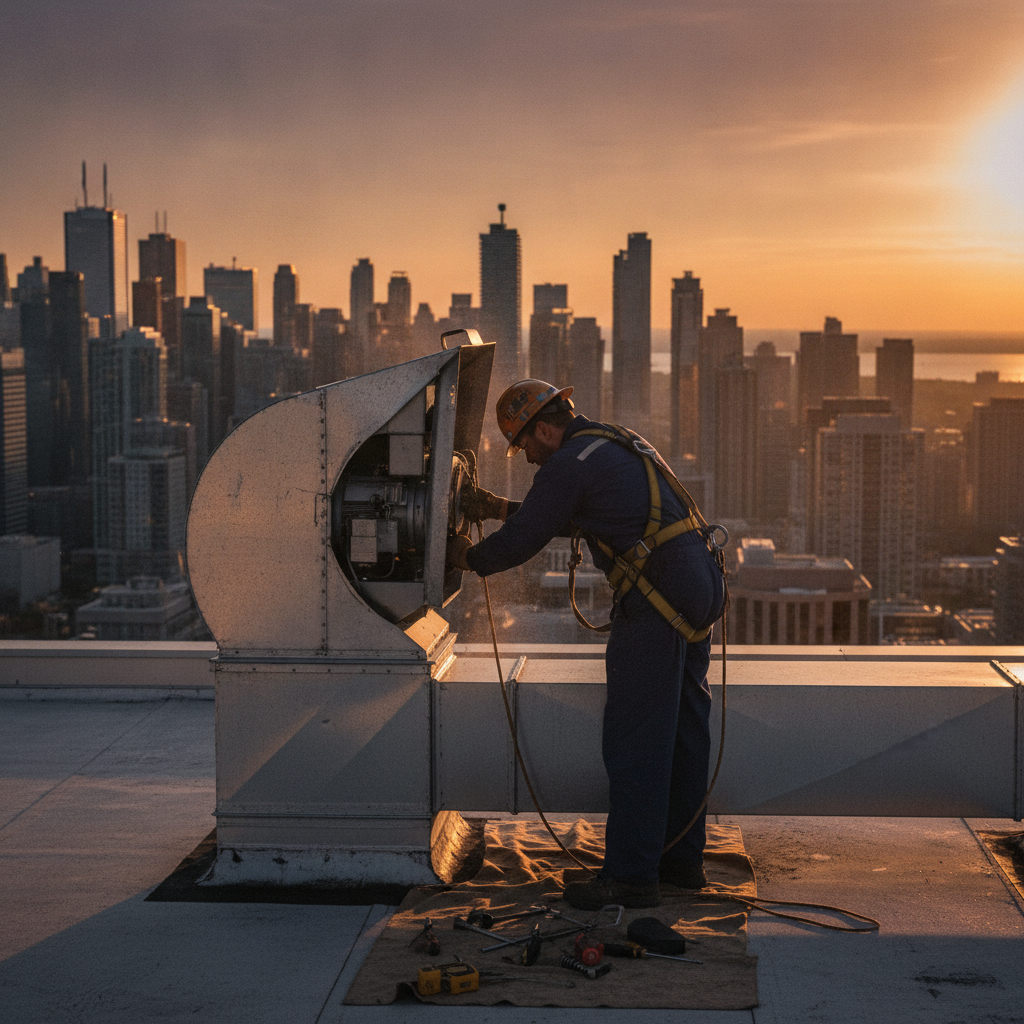
- Exhaust fan (upblast): Verify belts, bearings, and hinges; poor airflow leaves heat and vapor in the kitchen.
- Baffle filters: Clean or exchange so static pressure stays in range and capture efficiency remains high.
- Appliances: Deep clean ovens, ranges, grills, and fryers; degrease drip pans, undersides, and backs.
- Grease trap: Pump and scrape on schedule to prevent backups and odor; dispose responsibly.
- Perimeter and floors: Power wash and degrease to remove slip hazards and stray fuel sources.
We document each maintenance event with before/after photos and service tags. That paper trail helps you demonstrate compliance during inspections and keeps your team aligned shift to shift.
Types of Hazards and Methods to Control Them
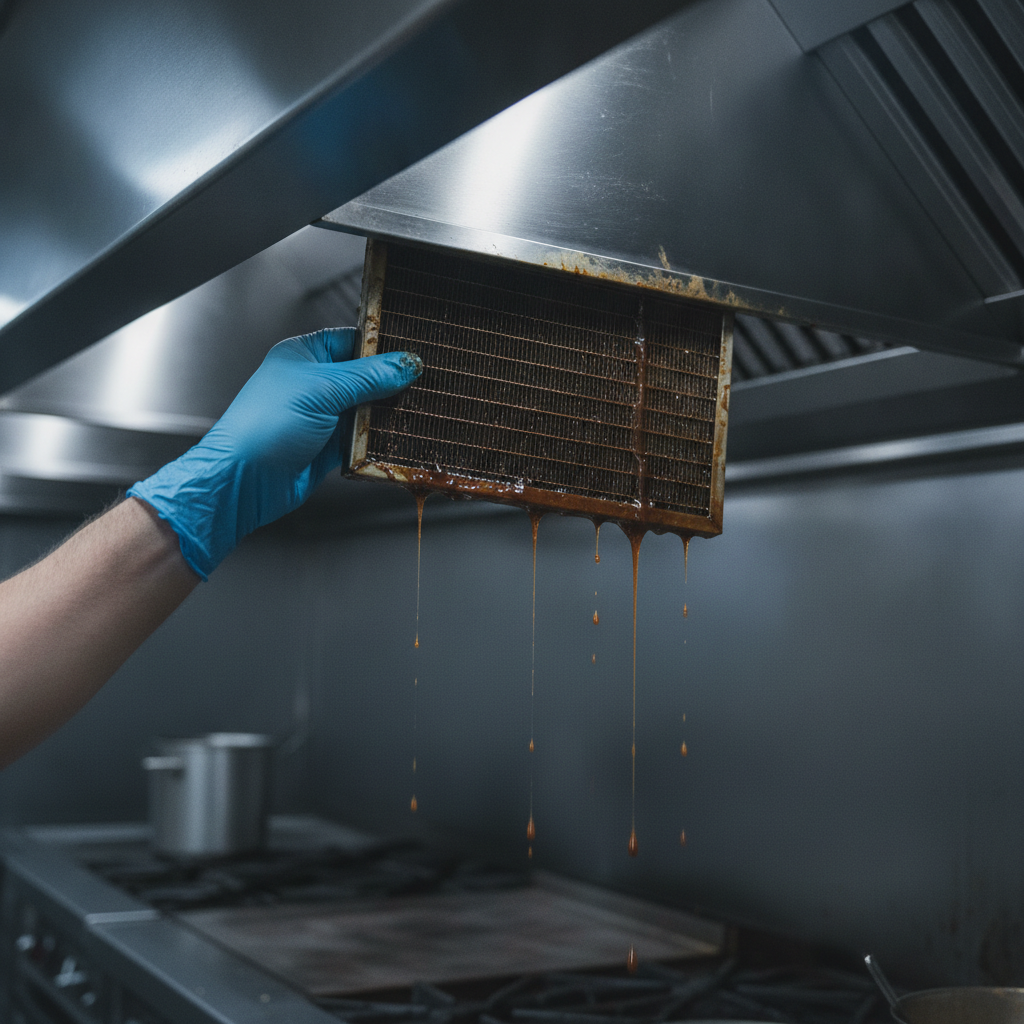
The biggest kitchen fire hazards are grease accumulation, high heat, electrical faults, poor ventilation, and human error. Control them with scheduled degreasing, temperature discipline, equipment inspections, strong capture airflow, and repeatable staff training with supervisor sign-off.
Fire risk lives where heat meets fuel with oxygen. Your checklist reduces that triangle on every shift—and locks in the habits that make it automatic.
Grease and residue
- Risk: Films in hoods, ducts, and fans can ignite from flare-ups or sustained heat.
- Controls: Scheduled hood and duct degreasing; proper hood cleaning steps; filter exchange cycles.
- Example: A burger concept in All Over Ontario moved from semiannual to quarterly degreasing and saw hood temps drop and smoke capture improve within a week.
Heat and ignition
- Risk: Fryers and grills run hot; open flames and splatter create frequent exposure.
- Controls: Lid discipline, splash guards, calibrated thermostats, and clean drip zones; documented shutdown procedures.
- Example: Fine dining sauté stations improved flare-up control after implementing end-of-shift splash-zone wipe protocols.
Electrical and mechanical faults
- Risk: Worn fan belts, failing bearings, and frayed cords reduce airflow or spark.
- Controls: fan inspections and belt replacement, hinge kits, cord checks, and tagged repairs.
- Example: A cafeteria avoided a rush-hour shutdown after a preventive fan belt swap during a scheduled service window.
Ventilation failure
- Risk: Low capture velocity holds heat and vapor in the line; grease settles where it shouldn’t.
- Controls: Clean ducts and fans, right-sized filters, damper checks, and ventilation optimization.
- Example: A quick service line cut visible smoke by standardizing weekly filter exchanges.
Human factors
- Risk: Inconsistent wipe-downs, oil management, and closing routines create variable outcomes.
- Controls: Simple checklists, zone ownership, supervisor sign-off, and refreshers during pre-shift huddles.
- Example: A catering team reduced near-miss flare-ups after instituting a two-person closeout for grill stations.
The Complete Fire Prevention Checklist (Daily to Annual)
Use this layered checklist to coordinate daily wipe-downs with weekly, monthly, quarterly, semiannual, and annual service. It blends staff routines with professional hood, duct, fan, filter, appliance, and grease trap programs for reliable risk reduction.
Print this section and attach it to your shift binder. Managers can initial each line to confirm completion.
Every shift (open/close)
- Wipe hood edges, splash zones, and backsplashes with a degreaser.
- Empty and clean drip trays; confirm lids on oil containers.
- Confirm filters are seated correctly; replace visibly saturated units.
- Check clearances: nothing stored on or under heat sources.
- Verify fire extinguishers are accessible and tagged.
Daily
- Clean floors with degreasing solution to reduce slip and fuel risks.
- Wipe fryer exteriors, grill faces, knobs, and handles.
- Inspect cords and plugs for damage; tag issues for manager.
- Record any flare-ups, smoke, or odor in the logbook.
Weekly
- Remove and clean baffle filters; or schedule filter exchange.
- Degrease accessible hood surfaces and the plenum interior lip.
- Deep clean appliances: oven racks, fryer cabinets, under/behind ranges.
- Check fan noise and vibration; note changes.
Monthly
- Inspect rooftop fan belt condition and tension; document wear.
- Verify hinge kit operation to protect fan housing during service.
- Check duct access panels for tight seals and intact gaskets.
- Schedule grease trap pumping and scraping as volume requires.
Quarterly (High volume) / Semiannual (Moderate) / Annual (Low)
- Professional hood, duct, and fan degreasing with photo reports.
- Fan belt replacement if worn; bearings and pulleys inspected.
- Power washing of walls, floors, and exterior pads where appropriate.
- Ventilation system check: capture at hood, visible smoke test, damper function.
Training and documentation
- New-hire orientation covers oil handling, lid discipline, and closeout routines.
- Supervisors review checklists weekly; managers sign monthly.
- Keep a binder (or digital folder) with photos, tags, and service certificates.
NFPA 96 Cleaning Frequencies Explained
Most kitchens schedule professional hood and duct degreasing every 1–6 months, based on cooking volume and fuel type. High-volume fry and grill lines lean quarterly; moderate lines semiannually; low-volume annual—verified by inspections and photo documentation.
Cleaning frequency is a function of grease production, hours of operation, and capture efficiency. If your filters saturate quickly or smoke lingers during rush, your interval is too long. When in doubt, shorten the cycle and reassess after two rounds.
| Operation type | Typical interval | Notes |
|---|---|---|
| High volume (QSR, grills, fryers) | Quarterly | Grease load accumulates fast; add weekly filter program. |
| Moderate volume | Semiannual | Watch hood temps and fan vibration between services. |
| Low volume or seasonal | Annual | Document inspections to validate the longer interval. |
For a practical walkthrough on intervals, see this hood cleaning frequency guide and our note on improving kitchen air quality.
DIY vs Professional: What to Handle In‑House (Comparison)
Handle wipe-downs, filter swaps, and clearances in-house. Hire certified pros for hood, duct, and fan degreasing; rooftop service; grease trap pumping; and documentation. This split keeps staff focused on food while experts remove hidden fuel loads and verify ventilation safety.
| Task | DIY (In‑house) | Professional Service |
|---|---|---|
| End-of-shift wipe-downs | Yes – simple degreasing, splash zones | Not required |
| Baffle filter cleaning/exchange | Yes – follow schedule | Exchange programs available |
| Hood and plenum degreasing | No – access and fire risk | Yes – documented service |
| Duct interior cleaning | No – confined space, specialized tools | Yes – photo verification |
| Exhaust fan maintenance | Inspect only (noise, wobble) | Yes – belts, bearings, hinges |
| Grease trap pumping | No – disposal compliance | Yes – pump, scrape, haul |
| Appliance deep cleaning | Partial – racks, trays | Yes – under/behind units |
| Compliance documentation | Logbook, staff sign-offs | Service tags and reports |
When kitchens in All Over Ontario follow this split, managers tell us the line runs cooler, air is clearer, and audits go faster. For scope and expectations, review our exhaust cleaning service overview.
Tools and Resources Used by Pros
Professionals use heated pressure washers, food-safe degreasers, rotary duct tools, access panel kits, fan hinge kits, belt gauges, and high-lumen inspection lights. They also deliver photo reports and service tags that prove compliance and support insurers and inspectors.
Our team standardizes tooling so results are predictable from site to site.
- Heated washers and foaming sprayers: Break down polymerized grease without harming finishes.
- Rotary duct scrubbing: Reaches deep duct runs with agitation and rinse capture.
- Access and safety: UL-listed access panels, roof-safe mats, and lockout/tagout routines.
- Fan hardware: Hinge kits protect housings; belt inspections and swaps keep CFM stable.
- Filter programs: cleaning and exchange calibrated to your volume.
- Documentation: Before/after photos, tags, and a signed service report every visit.
Buying Guide: How to Choose a Fire‑Prevention Partner in All Over Ontario
Choose a partner with NFPA 96–style expertise, WSIB insurance, 24/7 scheduling, and full-scope services: hoods, ducts, fans, filters, traps, and appliances. Demand photo-documented work and clear service tags. Prioritize providers who tailor intervals to your menu and hours.
Here’s a straightforward way to vet providers serving All Over Ontario.
- Credentials: Ask about NFPA 96–aligned training and inspection practices; review sample reports and photos.
- Insurance and safety: Confirm WSIB coverage and site-specific safety plans.
- Scope: Ensure one team can handle hood/duct/fan, filter exchange, grease trap service, and appliance deep cleaning.
- Scheduling: Look for 24/7 availability to avoid disrupting service.
- Proof of work: Require before/after photos, service tags, and signed reports.
- References: Speak with operators who run similar menus and volume.
For context on certification expectations in Ontario, see our note on NFPA 96–aligned hood cleaning.
Case Studies and Examples
These Ontario scenarios show how small changes drive outsized safety gains: shorter intervals on greasy lines, filter programs that stabilize capture, and documented rooftop service that prevents mid-rush failures.
Quick service grill line
- Challenge: Noticeable smoke during peaks; filters saturated midweek.
- Action: Moved to weekly filter exchange and quarterly degreasing.
- Result: Clearer air and cooler line; fewer flare-ups reported in logs.
Fine dining sauté and fryer battery
- Challenge: Hot, lingering odors after service; fan belt wear.
- Action: Belt replacement and semiannual hood/duct service with photo proof.
- Result: Quieter fan, better capture, and faster audit approvals.
Institutional cafeteria
- Challenge: Multiple stations created uneven maintenance accountability.
- Action: Zone ownership checklists and consolidated service windows.
- Result: Consistent outcomes and simpler inspection days.
Local considerations for All Over Ontario
- Plan rooftop fan service around seasonal wind and precipitation; build buffer windows during shoulder seasons.
- Increase filter exchanges during high‑volume tourist months; revisit intervals after menu changes.
- Coordinate grease trap pumping with trash pickup schedules to reduce back‑of‑house congestion.
Free planning call: Want a one‑page commercial kitchen fire prevention checklist tailored to your menu and hours? Our Ontario team can map a schedule and documentation kit you can start using this week.
Frequently Asked Questions
Here are concise answers to the questions Ontario operators ask most about checklists, cleaning intervals, and documentation. Use them to brief your team and standardize shift routines.
What should be on a commercial kitchen fire prevention checklist?
Include daily wipe-downs, end-of-shift splash zone cleaning, weekly filter service, appliance deep cleaning, grease trap pumping, and scheduled hood, duct, and fan degreasing. Add staff training, logbooks, and photo-documented professional service.
How often should hoods and ducts be cleaned?
Most high-volume lines schedule quarterly degreasing. Moderate operations go semiannually, and low-volume lines annually when inspections confirm low accumulation. If smoke lingers or filters saturate quickly, shorten the interval.
What can staff do in-house vs hire a professional for?
Staff should handle wipe-downs, clearances, and basic filter cleaning or exchanges. Hire certified pros for hood, duct, and fan degreasing, rooftop service, grease trap pumping, and compliance documentation with photos and tags.
How do I prove compliance during inspections?
Keep a binder or shared folder with service reports, before/after photos, and tags. Add staff checklists with supervisor signatures. This audit trail demonstrates due diligence to inspectors and insurers.
Key Takeaways
Focus on grease removal, airflow, and documentation. Standardize daily routines, align service intervals to volume, and use photo proof to satisfy auditors. This approach lowers fire risk and reduces unplanned downtime.
- Grease is your primary fuel—remove it on a schedule.
- Airflow is your friend—keep filters, ducts, and fans clean.
- Documentation protects you—photos, tags, and logs matter.
- Split duties wisely—operators handle wipes; pros degrease systems.
- Localize intervals—fit your All Over Ontario menu and hours.
Conclusion
A practical, written fire prevention checklist keeps crews aligned, systems clean, and inspections smooth. When you pair daily habits with scheduled degreasing and photo proof, you cut risk and protect uptime across Ontario kitchens.
Here’s the bottom line: make the checklist visible, keep the intervals realistic, and verify results with photos. If you want help tailoring your plan, we can align scope across hood, duct, fan, filters, traps, and appliances with 24/7 scheduling in All Over Ontario. Explore our exhaust cleaning services and step-by-step hood guide to get started.
Related Articles and Guides
Deepen your fire-prevention program with guides on hood procedures, ventilation optimization, and Ontario-focused compliance planning. These resources help you standardize training and scheduling.
For hands-on how-tos, see our kitchen exhaust cleaning checklist and this primer on commercial hood cleaning steps. For compliance planning, bookmark our NFPA 96 requirement overview and this Ontario-focused commercial kitchen cleaning guide.
If ventilation tuning is on your roadmap, our ventilation system guide explains airflow checks, capture at the hood, and simple smoke tests that crews can observe during service windows.
Operators also find value in our notes on NFPA 96–aligned hood cleaning and this concise frequency walkthrough paired with air quality improvements.