Commercial exhaust hood cleaning is the professional degreasing of hoods, baffle filters, ducts, and rooftop fans in commercial kitchens. NFPA 96 sets service intervals from one to six months based on cooking volume. In All Over Ontario, Robinhood Cleaners delivers certified overnight service that reduces fire risk and keeps inspections smooth.
By Robinhood Cleaners
Last updated: 2026-06-21
Quick Summary
Here’s the fast answer: schedule commercial exhaust hood cleaning on a cadence that matches cooking volume, verify “to bare metal” results with photos, and document each visit. In All Over Ontario, we handle this overnight—so your team returns to clear air, safe ducts, and a hood tag ready for inspectors.
- What you’ll get in this guide: how kitchen exhaust works, proven degreasing methods, and inspection-ready documentation.
- Who it’s for: restaurant owners, chefs, and operators running commercial kitchens across Ontario.
- Why it matters: grease in ducts and fans is a top ignition source on cooklines; cleaning breaks that risk chain.
- Outcome: fewer smoke/odor complaints, steadier make-up air balance, and faster fire/health inspections.
Above-Fold Overview and Table of Contents
Use this playbook to align team, schedule, and compliance. It covers what commercial hood cleaning is, why it matters, how systems move grease-laden vapor, the step-by-step process, frequency rules, and Ontario-specific tips—plus tools, examples, and FAQs for quick decisions.
- What it is
- Why it matters
- How exhaust works
- Methods that work
- Step-by-step process
- Frequency & compliance
- Best practices & mistakes
- Tools & resources
- Ontario operations
- Case studies
- FAQ
- Key takeaways
- Conclusion
- Related articles
What Is Commercial Exhaust Hood Cleaning?
Commercial exhaust hood cleaning is a certified process that removes grease to bare metal from hoods, baffle filters, ducts, and rooftop fans. It disrupts ignition pathways, restores airflow, and keeps documentation current for inspections. Cadence ranges from monthly to semiannual, matched to cooking volume and fuel type.
When we say “to bare metal,” we mean verifiable, photo-documented results inside verticals, horizontals, fan housings, and around fire suppression nozzles. Anything less leaves a combustible film. For Ontario restaurants, we align service with hours on the fryers, grills, woks, and charbroilers your team actually runs.
- Scope includes: hood interior/exterior, baffle filters, plenum, ductwork, access panels, fan blades and housings, grease containment.
- Outcome you can see: bright stainless in the hood, clean filters, and a quieter, steadier exhaust draw.
- Proof you can show: timestamped before/after photos, hood tags, and service logs.
New to the topic? Start with our practical primer on airflow and hood basics in our Kitchen Exhaust Hood & Vent Cleaning guide—then come back here for the deep dive.
Why Hood Cleaning Matters
Hood cleaning reduces fire risk, keeps insurance valid, and stabilizes air balance on the cookline. Clean systems move smoke and heat away faster, helping staff stay comfortable and focused. Documented, verifiable cleaning also speeds up fire and health inspections, preventing last-minute surprises.
- Fire risk reduction: grease films in ducts and fans can ignite from flare-ups or high heat. Removing the film eliminates fuel.
- Air quality and comfort: better capture of heat and vapor reduces smoke complaints and hot spots on the line.
- Operational uptime: inspections go smoother when tags, logs, and photos are ready; your doors stay open.
- Equipment protection: balanced air reduces strain on make-up air and HVAC systems.
In our experience across All Over Ontario, teams notice steadier temperatures at the grill and fewer odor issues within the first service after a thorough cleaning—especially when filters are exchanged before peak weekends.
How Commercial Kitchen Exhaust Systems Work
A kitchen hood captures hot, grease-laden vapor. Baffle filters knock out larger particulates while ducts move remaining aerosols to an exhaust fan that vents outdoors. Fire suppression protects the cookline. Grease buildup in any link increases ignition potential and degrades airflow.
Think of your exhaust as a chain:
- Hood canopy: captures rising vapor and radiant heat over appliances.
- Baffle filters: force rapid direction changes that separate grease from airflow; they’re your first line of defense.
- Duct runs: move air to the roof; access panels enable safe, thorough cleaning in verticals and horizontals.
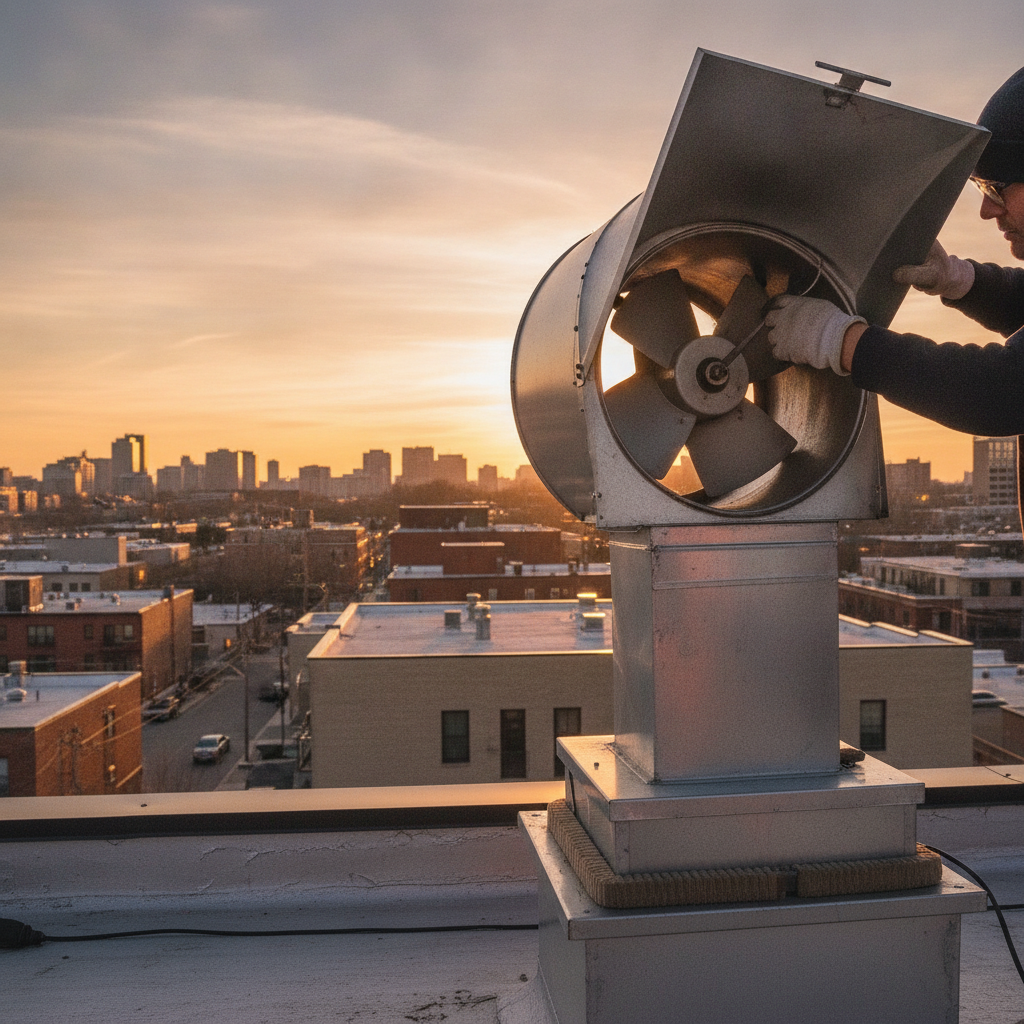
- Upblast fan: discharges air outdoors; hinge kits and grease containment prevent roof damage and speed service.
- Make-up air: replaces exhausted air; balance prevents drafts, smoke roll-out, and hot spots.
To see what a tuned system looks like, review maintenance considerations in our kitchen exhaust fan cleaning resource, then compare to your current setup.
Methods and Approaches That Actually Work
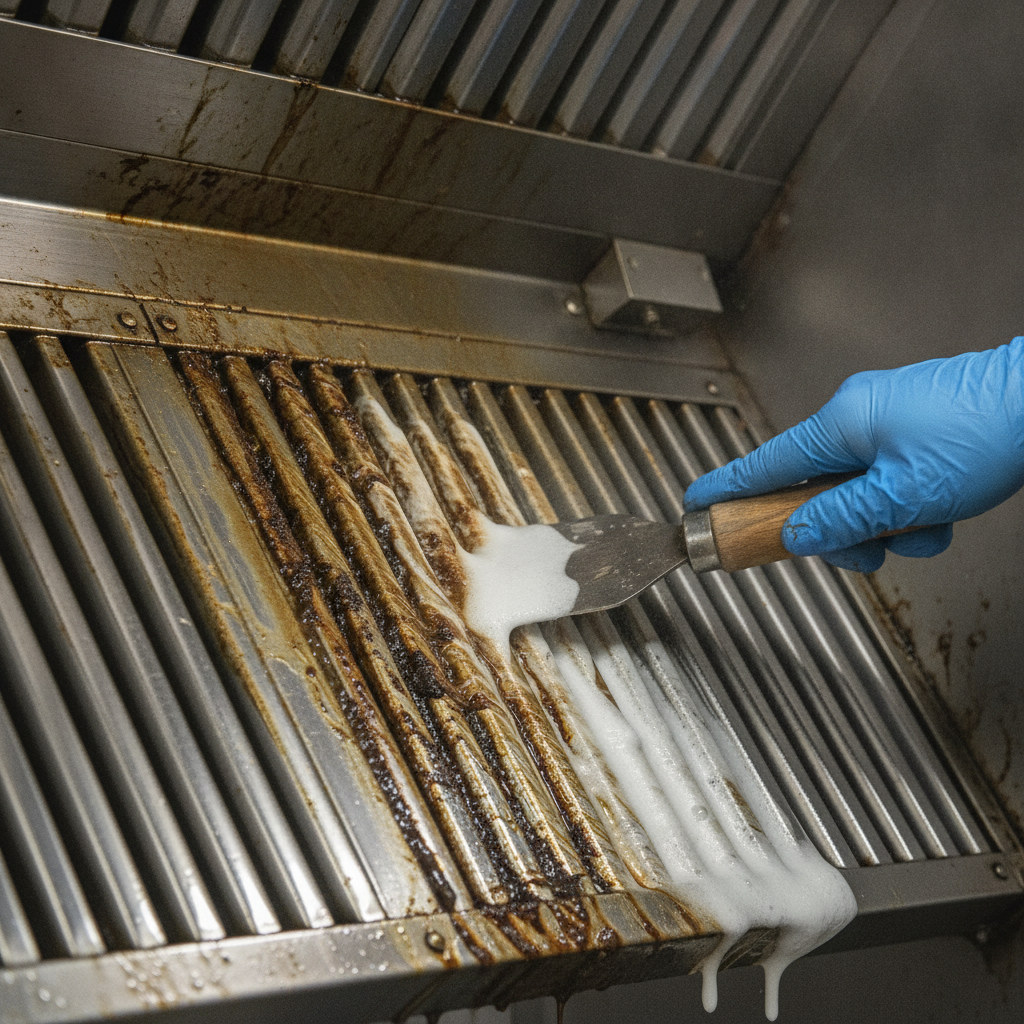
Effective hood cleaning blends pre-scraping, heated alkaline degreasers with proper dwell time, and hot-water rinse or steam. Access panels are opened, fans are hinged, and rooftop grease is contained. The result is clean metal, safer ducts, and a roof that stays stain-free.
Core degreasing sequence
- Pre-scrape: remove heavy deposits for chemistry access.
- Foam application: low-pressure, clingy foam increases dwell on verticals.
- Agitation: non-sparking scrapers and pads dislodge films.
- Hot rinse/steam: flushes loosened grease; recovery prevents floor/roof runoff.
- Final detail: polish visible stainless, reinstall filters, verify tags.
Process comparison at a glance
| Method | Best Use | Notes |
|---|---|---|
| Pre-scrape | Heavy grease in plenum/ducts | Speeds chemical action; reduces runoff volume |
| Foaming degreaser | Vertical ducts and hoods | Adheres well; needs proper dwell time |
| Hot rinse/steam | Final flush and shine | Use recovery to protect floors and roofs |
| Grease containment | Rooftop fans | Prevents stains and membrane damage |
Curious how this fits into a maintenance rhythm? Our practical tips in kitchen hood maintenance align methods with your weekly, monthly, and quarterly routines.
Step-by-Step Cleaning Process (What We Do Overnight)
A professional sequence protects your kitchen, isolates utilities, removes and soaks filters, degreases to bare metal, services the fan and rooftop containment, verifies fire-suppression clearances, and documents the visit with photos, tags, and logs—so you’re inspection-ready by morning.
- Prep and protection: cover equipment/floors; set up containment and wet/vac recovery.
- Lockout/tagout: safely isolate power to the fan and relevant appliances.
- Filter removal & soak: baffles in heated degreaser to dissolve films.
- Hood & plenum clean: scrape, foam, agitate, and hot-rinse to bare metal.
- Duct cleaning: open access panels; repeat foam/agitate/rinse through verticals/horizontals.
- Fan service: hinge open, clean blades/housing, check belt tension and bearings.
- Rooftop containment: refresh absorbents; verify drainage paths.
- Reassembly & polish: reinstall filters, shine visible stainless, restore power.
- Documentation: photos, hood tag, and service log handed off to management.
Need a zero-downtime plan? We schedule after-hours so you open on time. Explore our broader kitchen program in restaurant kitchen cleaning services and keep your cookline inspection-ready.
Service Frequency and Compliance (NFPA 96)
Match cleaning frequency to production. High-volume fryers, solid-fuel, and wok lines trend monthly; most busy kitchens run quarterly; moderate volume often goes semiannual. Keep logs, tags, and before/after photos accessible for health/fire inspectors and insurers.
- Intervals in practice: 1–6 months is the typical NFPA 96 range. Solid fuel runs hottest; go on the short end.
- Proof beats promises: verify duct interiors and fan housings with photos—not just shiny hood exteriors.
- Hood tags + logs: maintain dates, signatures, and scope notes in a binder near the cookline.
For scheduling specifics, see our overview on cleaning frequency by kitchen type and discuss any seasonal spikes that compress intervals—like patio season and holiday banquets.
Best Practices and Mistakes to Avoid
Standardize your cadence, require “to bare metal” with photos, and use hinge kits and access panels. Avoid hood-only wipe-downs, missing panels, unhinged fans, and rooftop runoff that stains membranes. The right setup shortens service windows and keeps inspectors satisfied.
Five practices we recommend
- Assign ownership: designate a manager to keep tags/logs current and confirm access windows.
- Filter exchange rhythm: rotate clean baffles before peak weekends to stabilize airflow.
- Hinge kits on fans: speed service and protect wiring and roofs.
- Access panels every 12–15 feet: enables thorough duct cleaning in long runs.
- Rooftop containment liners: prevent staining and protect warranties.
Common mistakes we still see
- Shiny hoods with untouched ducts—fire risk remains hidden.
- No access panels—techs can’t reach interior surfaces.
- Unhinged fans—risky lifts; damaged wiring and roofs.
- No photos—nothing to show inspectors or insurers.
For grease-specific insights, our note on grease buildup prevention explains how small daily habits make quarterly service faster and outcomes better.
Tools, Chemicals, and Resources
Pros use heated alkaline degreasers, foamers, non-sparking scrapers, hot-water rinse, wet/dry recovery, PPE, and rooftop grease containment. Build your program around NFPA 96 guidance and insurer expectations, and keep a clean, accessible documentation trail.
- Chemistry: high-performing alkaline degreasers with proper dwell outperform cold wipes.
- Application: foaming sprayers cling to verticals; agitation breaks films.
- Rinse & recovery: hot water clears residues; recovery protects floors and roofs.
- Safety: PPE, lockout/tagout, and non-sparking tools reduce risk during service.
- Rooftop protection: hinged fans and grease containment keep membranes clean.
Want to go deeper on standards and certification paths? Explore our Ontario-focused resources on NFPA 96–aligned cleaning, team credentials in hood cleaning certification, and planning for after-hours emergencies.
Operating in All Over Ontario: What to Know
Ontario kitchens juggle long winters, patio-season spikes, and late-night service. Book cleanings before peak weekends, protect rooftops from freeze-thaw cycles, and time filter exchanges to match traffic surges. These small moves keep airflow stable and the line cooking comfortably.
Local considerations for All Over Ontario
- Plan quarterly cleanings just before summer patio rush and again ahead of holiday banquets.
- Verify hinge kits and containment after freeze-thaw periods; check drain paths and gaskets.
- Coordinate after-hours access with building management for alarms and service corridors.
For duct-specific planning in regional sites, see our note on exhaust duct cleaning in Ontario and align routes with freight elevator access where available.
Case Studies and Real-World Examples
Across Ontario kitchens, we routinely restore airflow, cut smoke complaints, and speed inspections. Results follow consistent fundamentals: to bare metal, photo proof, tuned filter rotation, and rooftop containment that keeps membranes clean and service quick.
Fine dining with late service
- Challenge: smoke roll-out at grill during weekend rush; guests reported odor near front-of-house.
- Action: quarterly cleaning moved to monthly; filter exchange before Fridays; fan belt tension corrected.
- Result: noticeable odor reduction first weekend; steadier temperatures on the line.
High-volume quick service
- Challenge: heavy fryer use; grease leaks staining roof membrane.
- Action: added hinge kit and upgraded containment; monthly clean with photo documentation.
- Result: clean roof, faster service windows, and simple inspector sign-off with logs ready.
Institutional kitchen
- Challenge: long duct runs with few panels.
- Action: installed access panels every 12–15 feet; quarterly deep cleans.
- Result: verified bare metal throughout; quieter fan operation and improved airflow balance.
Frequently Asked Questions
These short answers help operators schedule smart, pass inspections, and keep teams safe. For anything unique to your site, we’ll tailor an overnight plan that fits your cookline and hours.
How often should commercial exhaust hood cleaning be done?
Match frequency to production and fuel type. Solid-fuel and very high-volume lines trend monthly. Busy restaurants commonly schedule quarterly. Moderate-use kitchens often go semiannual. Keep a logbook, hood tags, and photo evidence ready for inspectors.
What does “to bare metal” actually mean?
It means all grease is removed from hoods, ducts, and fans so surfaces are visibly clean metal. We verify with timestamped photos inside ducts and fan housings—not just the hood exterior. This standard reduces ignition risk and helps with insurance and inspections.
Do you clean the rooftop exhaust fan as part of service?
Yes. We hinge the fan open, clean blades and housing, check belt tension, and refresh grease containment. Rooftop protection prevents stains and speeds future service. It’s an essential step for a complete, inspection-ready clean.
Can cleaning be done overnight without affecting prep?
Absolutely. We schedule after-hours, protect equipment and floors, and restore the line before morning prep. Your team returns to a clean hood, documented results, and a tag that’s easy to present during inspections.
Key Takeaways
Clean to bare metal, document with photos, and set cadence by cooking volume. Use hinge kits, access panels, and rooftop containment. Partner with certified, insured techs who work after-hours and deliver verifiable proof for inspectors.
- Grease films are fuel—remove them entirely.
- Photos and logs make inspections faster and easier.
- Filter exchanges before peaks stabilize airflow.
- Hinged fans and containment protect roofs and shorten service.
Conclusion
Commercial exhaust hood cleaning protects people, property, and revenue. With an NFPA 96–aligned program and overnight scheduling, you’ll cook with clearer air, pass inspections faster, and avoid preventable downtime across All Over Ontario.
Ready to lock in a schedule that fits your volume and hours? Review our exhaust hood cleaning overview and we’ll map a simple, inspection-ready plan for your kitchen.
Related Articles for Ontario Kitchens
Deepen your program with resources on duct and fan maintenance, grease prevention, and inspection prep. Review frequency guidance, maintenance tips, and full-kitchen cleaning approaches tailored to the Ontario service rhythm.
To build a holistic plan, combine the exhaust fundamentals above with focused insights from our guides on hoods, ducts, fans, and whole-kitchen readiness. Link these habits to your opening and closing checklists so improvements persist between service intervals.