Commercial kitchen grease removal services are the professional cleaning and degreasing of hoods, ducts, exhaust fans, filters, appliances, and grease traps to eliminate flammable buildup. In All Over Ontario, Robinhood Cleaners provides this service to help restaurants and institutional kitchens stay compliant, reduce fire risk, and keep teams productive during busy service windows.
By Robinhood Cleaners • Last updated: 2026-04-27
Above-Fold Summary & Table of Contents
This guide explains how commercial kitchen grease removal works, why it matters for fire safety and compliance, and how to choose a schedule that fits your operation. You’ll see proven methods, checklists, tools, and Ontario-specific tips, plus examples from real kitchen scenarios to help you plan service without disrupting revenue.
Here’s what you’ll get from this complete guide, crafted for restaurant, QSR, hotel, catering, food court, and institutional teams operating across Ontario:
- Plain-English definition of professional grease removal and where it applies
- Safety, compliance, air quality, and uptime benefits you can measure in shifts
- Step-by-step walkthrough of our service process from prep to sign-off
- Methods compared: hot-water, caustic, agitation, scraping, pressure washing
- Best-practice schedules by cooking volume and fuel type (gas vs. solid fuel)
- Tool list: food-safe degreasers, foamers, rotary nozzles, hinge kits, FOG controls
- Mini case examples drawn from Ontario kitchen realities and constraints
- FAQ answers your managers ask before booking night-shift cleaning
Overview
Grease removal in commercial kitchens targets flammable FOG deposits wherever they collect—hoods, ducts, fans, filters, appliances, and traps. Done right, it reduces ignition risk, improves airflow, and supports regulatory compliance. The most reliable programs pair quarterly-to-semiannual service with daily line-clean routines and documented inspections.
Grease doesn’t spread evenly. It concentrates along airflow paths, horizontal duct runs, fan blades, and filter edges. That’s why a whole-system approach beats spot cleaning every time, especially during heavy grilling or frying seasons.
- System scope: hood canopies, plenum, baffle filters, vertical and horizontal ducts, fan housing and blades, rooftop containment, and nearby equipment skins.
- Adjacent hotspots: fryer stations, charbroilers, salamanders, combi ovens, ranges, and floors where slip hazards emerge.
- Documentation: post-clean photos, service tags at the hood, and a findings report managers can file for inspections and insurance.
Local considerations for All Over Ontario
- Plan night-shift service after last seating to avoid downtime; many Ontario kitchens run late Fridays and weekends, so schedule heavy degreasing early week.
- Winter ventilation loads rise with closed doors and windows; increase filter checks and exhaust fan inspections during colder months.
- Quick-service operations with constant fryers often need more frequent filter exchanges and rooftop containment checks due to higher mist carryover.
What Is Commercial Kitchen Grease Removal?
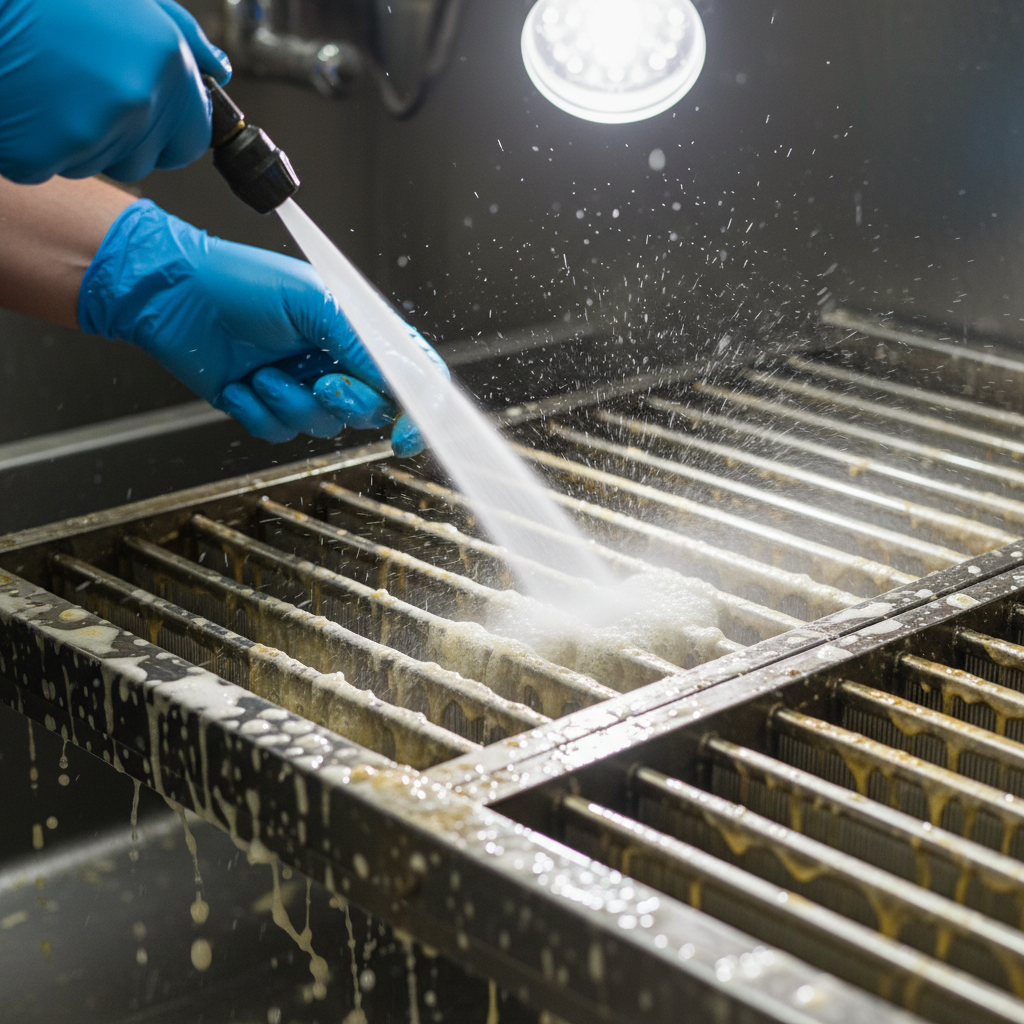
Commercial kitchen grease removal is the systematic elimination of fats, oils, and grease from exhaust systems, appliances, and grease management points. It includes hood and duct cleaning, exhaust fan service, filter exchange, appliance degreasing, and grease trap care—all documented for inspections and fire risk reduction.
In practice, this means treating every FOG pathway from the cook line to the roof. For Robinhood Cleaners, that spans exhaust canopies, ducts, fans, hinges, grease containment, filters, surrounding equipment, and the trap—so problems don’t migrate from one area to the next.
- Core scope: exhaust system cleaning, filter cleaning and exchange, exhaust fan cleaning and hinge maintenance, and grease trap management.
- Supporting scope: appliance degreasing (ovens, grills, fryers, refrigerators exteriors), targeted duct cleaning services, and grease fire prevention training aids.
- Service windows: overnight or off-hours to protect revenue and guest experience.
Commercial kitchens vary widely. A QSR with multiple fryers drives more vaporized oil into filters and ducts than a low-volume café. Solid-fuel pizza or charcoal grilling requires tighter intervals and fan inspections because embers and carbon dust add ignition sources.
Why Grease Removal Matters
Grease removal matters because it cuts fire risk, supports NFPA-style compliance, improves airflow and cooling, and reduces odors and smoke. Clean systems draw better, cooks breathe easier, and managers face fewer surprise shutdowns. Documented maintenance also satisfies insurers and health inspectors.
Here’s the thing: most kitchen fires start where heat, oxygen, and fuel meet. FOG deposits are concentrated fuel. Keeping that layer thin in hoods, ducts, and fans breaks the chain—lowering the chance a flare-up becomes an exhaust fire.
- Safety: Removing combustible films from ducts and fan blades reduces ignition points above the cook line.
- Compliance: Documented cleanings and service tags help demonstrate adherence to industry fire codes and health rules.
- Airflow and comfort: Clean fans move more air, keeping line temperatures steadier and odors down.
- Uptime: Fewer emergency callouts, less smoke recirculation, and steadier hood performance during peak periods.
- Reputation: Guests notice clean smells and clear air; staff retention improves when the line runs cooler.
Avoid the common trap of “filter-only” cleaning. Filters are the first defense, but grease sneaks past. Horizontal duct runs and fan housings often collect the heaviest layers and need periodic access-panel cleaning and blade degreasing.
How Professional Grease Removal Works
A complete service preps the site, protects equipment, applies degreaser, agitates, rinses with hot water or steam, and finishes with a compliance check. Technicians photograph before/after conditions, tag the hood, and deliver a report so you can prove maintenance during inspections.
Here’s our typical night-shift workflow for Ontario restaurants and institutions:
- Site prep and protection—Cover cook lines, electrical, and sensitive controls. Move smallwares. Place signage and set containment for runoff.
- Cool-down and lockout—Shut down gas/electric to safe temperature; verify switches and breakers are off. Open duct access panels.
- Degreaser application—Apply food-service-safe chemistry via foamers to hoods, plenums, baffle filters, ducts, and fan housings.
- Agitation and scraping—Use non-sparking scrapers, pads, and rotary brushes to break heavy layers without marring stainless.
- Rinse and recovery—Hot-water rinse or steam injection pushes residue to containment; technicians control flow to prevent back-splash.
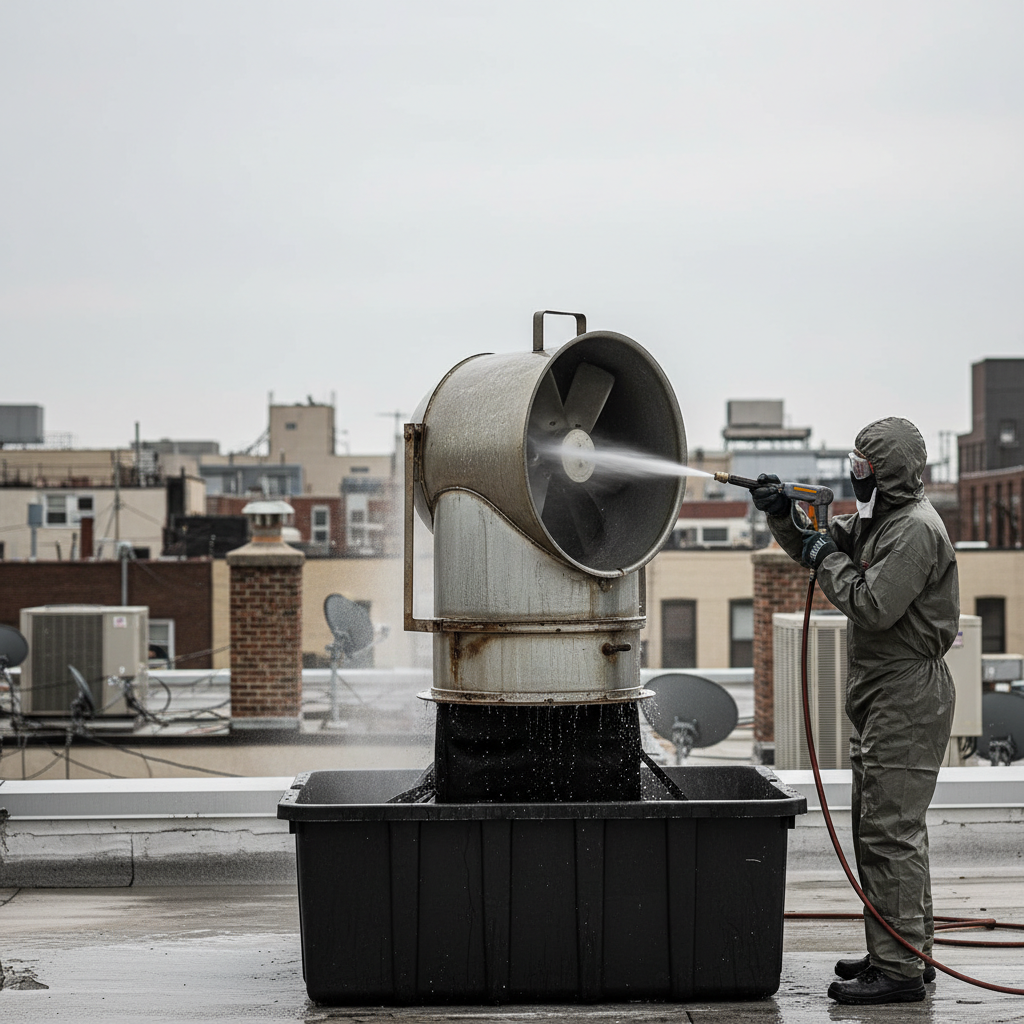
- Fan service—Lift with hinge kits, clean blades and shroud, check belt tension and bearings, and verify rooftop grease containment.
- Filter exchange—Deep-clean or swap baffles; confirm proper seating and air capture.
- Appliance and floor touchpoints—Wipe adjacent appliances and restore slip resistance near fryers and grills.
- Inspection and documentation—Measure remaining residue where required, take after-photos, tag the hood, and review findings with management.
Managers appreciate predictability. We coordinate around your last seating, keep noise down, and stage zones so the morning line can fire on time.
Methods, Materials, and Approaches
Effective grease removal combines the right chemistry with agitation and controlled rinsing. Hot-water or steam loosens films; caustic or enzyme degreasers break bonds; scraping and brushing remove heavy layers; and pressure washing restores ducts and fans when access allows.
Common methods you’ll see on a professional job
- Hot-water/steam rinsing: Elevates temperature to soften deposits fast; ideal for stainless interiors and baffles.
- Alkaline foaming degreasers: Cling to verticals, saponify oils, and lift soils before rinse—great for plenums and long duct runs.
- Agitation with non-sparking tools: Scrapers, pads, and rotary brushes for thick layers and corners.
- Pressure washing: Controlled nozzles where overspray is contained; valuable on rooftop fan housings and long horizontal ducts.
- Enzymatic treatments: Target residual films in traps or drains as part of an ongoing FOG program.
Quick comparison of grease removal methods
| Method | Best For | Strengths | Watch Outs |
|---|---|---|---|
| Hot Water/Steam | Baffles, hood interiors | Fast softening, good coverage | Condensation control needed |
| Foaming Degreaser | Vertical ducts, plenums | Clings well, lifts soils | Requires thorough rinse |
| Agitation/Scraping | Heavy layers, corners | Precise removal | Surface protection required |
| Pressure Washing | Fans, rooftops, long runs | Restores metal surfaces | Overspray/containment planning |
| Enzymatic Aids | Grease traps, drains | Ongoing FOG control | Not for heavy deposits |
Not every method fits every kitchen. For example, a mall food-court duct with long horizontal runs benefits from staged foaming and brush agitation before any rinse phase. A rooftop fan with a hinge kit and containment is safer and faster to clean than a unit without proper hardware.
Best Practices and Service Schedules
Match your cleaning frequency to cooking volume, fuel type, and menu. High-volume fryers and solid-fuel grills need tighter intervals; moderate line kitchens can extend to semiannual. Daily wipe-downs, weekly filter soaks, and quarterly-to-semiannual exhaust service keep risk low and airflow strong.
Operator checklist between professional visits
- Each shift: Wipe hood lips and appliance skins; check that baffles seat correctly; note unusual smoke or odors.
- Weekly: Soak baffle filters; clean light lenses and hood edges; check floor traction near fryers.
- Monthly: Inspect fan belt tension by sight; confirm rooftop grease containment is secure; review logs with managers.
- Quarterly to semiannual: Book full-system hood and duct service with documentation.
Scheduling tips that protect service windows
- Bundle tasks: filter exchange, fan service, and duct cleaning together to minimize downtime.
- Night shifts: Stage equipment and pre-protect after the last seating so your opener walks into a ready line.
- Seasonality: Add a mid-winter and mid-summer check when ventilation loads peak in Ontario’s cold snaps and heat waves.
Remember, commercial kitchen grease removal services are most effective as a program—routine line care plus documented professional cleanings. That rhythm keeps insurers satisfied and inspectors confident in your operation.
Tools and Resources Used on the Job
Professional crews rely on food-safe degreasers, foamers, non-sparking scrapers, rotary brushes, hot-water or steam systems, pressure-wash rigs, hinge kits, rooftop containment, and measurement tools. The right combination speeds removal while protecting stainless, fans, and roofing materials.
- Access and safety: Lockout tags, PPE, ladders, fall protection, and lighting for after-hours work.
- Chemistry: Alkaline foamers for verticals; neutralizing rinses; enzyme aids for traps; NSF-listed where applicable.
- Mechanicals: Rotary brushes sized to ducts; non-sparking scrapers; controlled-pressure nozzles; wet-dry recovery.
- Fan hardware: Hinge kits, grease boxes, and absorbent media to keep roofs clean and compliant.
- Documentation: Before/after photos, hood tags, and a findings report for your files.
For deeper technical context on inspection readiness and code alignment, see our explainer on NFPA 96 compliance requirements and how service tags and photos support audits.
Case Studies and Ontario Examples
Real kitchens prove the point: consistent grease removal improves airflow and reduces disruptions. From QSR fryer banks to hotel banquet lines, the teams that pair daily line checks with quarterly system service see fewer smoke events and smoother weekend rushes.
QSR with constant fry load
- Challenge: Two battery fryers driving oil mist past filters into horizontal duct runs.
- Action: Monthly filter exchanges; quarterly duct and fan cleaning with foam-agitation-rinse; hinge kit added for safe fan service.
- Result: Noticeably clearer air during lunch rush and fewer nuisance smoke alarms.
Fine-dining grill and salamander
- Challenge: High heat and occasional flare-ups creating sticky films in the plenum and on fan blades.
- Action: Bi-monthly baffle soaks; quarterly hood and duct cleaning; targeted grill degreasing service included in visits.
- Result: More stable draw at the charbroiler station and better line comfort on busy nights.
Institutional kitchen with long duct runs
- Challenge: Duct length and multiple turns collecting layers despite regular filter care.
- Action: Access-panel brushing and staged foaming; controlled-pressure rinse with floor and roof containment.
- Result: Verified removal at turns and transitions; inspection sign-off without follow-up requests.
For a deeper dive into root causes and prevention, review our notes on exhaust duct fire hazard prevention and common oversights in busy lines.
Frequently Asked Questions
Managers ask about frequency, scope, after-hours logistics, and documentation. The short answer: align service with cooking volume, cover the whole exhaust path plus grease traps, schedule night work, and keep photo-backed reports for inspections and insurance.
How often should a commercial kitchen schedule grease removal?
Match frequency to volume and fuel. High-volume frying and solid-fuel grilling usually need quarterly service. Moderate-volume kitchens can go semiannual. Keep daily wipe-downs and weekly filter soaks between visits for best results.
What areas are included beyond the hood?
A complete service covers the plenum, baffle filters, vertical and horizontal ducts, exhaust fans (with hinge kits), rooftop containment, nearby appliance skins, and the grease trap program. Spot cleaning just the hood lip isn’t enough for safety or airflow.
Can grease removal be done after hours without disrupting service?
Yes. We plan night-shift work after last seating. We protect equipment, control noise, and stage zones so your opener starts on time. Documentation and photos are delivered before the next shift.
Do you provide documentation for inspections and insurance?
Absolutely. You’ll receive before/after photos, a service tag at the hood, and a concise findings report. Managers keep these on file to demonstrate ongoing maintenance during inspections and policy renewals.
Key Takeaways
The safest kitchens pair daily line care with quarterly-to-semiannual grease removal across hoods, ducts, fans, filters, and traps. Night-shift service, proper fan hardware, and clear documentation protect airflow, compliance, and reputation without cutting into peak revenue.
- Think whole system, not just the hood lip or filters.
- Align frequency with cooking volume and fuel type.
- Use hinge kits and rooftop containment to improve safety and speed.
- Keep photo-backed reports and service tags ready for audits.
- Plan after-hours cleaning to protect guest experience and sales.
Conclusion
Commercial kitchen grease removal services reduce fire risk, stabilize airflow, and keep your team working comfortably. A program that blends daily line routines with scheduled professional cleanings—and clear documentation—delivers safer, more reliable operations year-round.
Ready to tighten up your program in All Over Ontario? Let’s align your schedule with volume, fuel type, and menu mix, then bundle filter exchange, exhaust cleaning, fan service, and grease trap care for fewer disruptions and stronger compliance posture.
Soft CTA: Book a night-shift assessment with our certified team to map your whole system and prioritize the highest-risk zones first.
Related Articles and Guides
For deeper operational playbooks, explore how scheduling and documentation support compliance in our resources on grease buildup prevention and practical grease fire prevention steps you can reinforce with staff training.
For code-alignment context and inspection prep, review our overview of NFPA 96 compliance requirements, background on grease buildup in kitchen exhaust, and region-specific removal techniques in Ontario.