Restaurant grill cleaning maintenance is the systematic, scheduled cleaning and inspection of flat-tops and charbroilers to remove grease, carbon, and food residue. This grill cleaning maintenance restaurant teams rely on protects food safety, keeps heat even, and reduces fire risk. In All Over Ontario, Robinhood Cleaners ties grill care to hood, filter, duct, and fan service to keep lines moving.
By Robinhood Cleaners | Last updated: 2026-04-23
Quick Summary
A complete grill maintenance program blends fast between-ticket wipes, end-of-day degreasing, and recurring deep cleans with hood and filter support. This cadence preserves flavor, keeps temperatures consistent, and reduces flare-ups while aligning with inspection-ready sanitation standards across busy Ontario kitchens.
Use this guide to build a reliable plan that line cooks, chefs, and managers will actually follow.
- Definitive steps for flat-tops and charbroilers, plus when to use pads vs. bricks
- Prerequisites most teams miss: PPE, lockout/tagout, chemistry compatibility, waste handling
- Best-practice schedules mapped to daily, weekly, and monthly routines
- Troubleshooting for hotspots, sticking, smoke, odors, and flare-ups
- Integration with hood filters, ducts, exhaust fans, and belt checks
Above-Fold: Hook + Table of Contents
If your grill runs more than six hours a day, adopt a layered plan: quick wipes during service, a nightly degrease, and a recurring deep clean with ventilation support. Jump to any section below to tighten your routine and keep Ontario service smooth and compliant.
- What Is Restaurant Grill Maintenance?
- Why It Matters for Food Safety and Performance
- How Grill Cleaning Works: Step-by-Step
- Prerequisites Before You Begin
- Grill Types and Cleaning Methods
- Best Practices and Schedules
- Tools and Resources
- Troubleshooting and Diagnostics
- Process and Frequency at a Glance
- Ontario Case Examples
- FAQ
- Key Takeaways
- Conclusion and Next Steps
What Is Restaurant Grill Maintenance?
Restaurant grill maintenance is planned cleaning, inspection, and reconditioning of flat-top and charbroiler surfaces and parts. It removes grease and carbon, restores heat transfer, and supports hood and exhaust hygiene. Strong programs connect daily routines to deep cleans and keep documentation ready for inspections.
Great food starts with a clean heat surface. Carbon and polymerized fats insulate heat, cause sticky proteins, and send smoke into the room. Maintenance also extends to the system that carries vapors out of your building—hoods, filters, ducts, and the rooftop fan.
- Scope: Plates, grates, radiants, briquettes, drip trays, grease troughs, valves, and pilots.
- System links: Hood filters, duct interiors, rooftop fans, and make-up air balance.
- Records: Simple logs for daily reset and periodic deep service for audit readiness.
In our experience across All Over Ontario, the best results come when grill upkeep is scheduled alongside hood filter exchange and an exhaust health check—one plan, fewer surprises. For broader context on inspections, see our overview of kitchen exhaust inspection requirements.
Why Grill Maintenance Matters for Food Safety and Performance
Clean grills cook evenly, reduce cross-contact, and control flare-ups. Carbon layers block conduction and harbor residues that affect flavor and sanitation. Pairing grill resets with filter exchange and exhaust checks cuts smoke and odors that guests notice and inspectors document.
Why should you care beyond appearances? Because build-up quietly taxes every service.
- Food safety and taste: Residue transfers off-flavors and can contaminate delicate proteins.
- Even heat, fewer returns: Removing carbon restores plate-to-food conduction and consistency.
- Fewer flare-ups: Clean trenches and trays starve grease fires of fuel.
- Cleaner dining rooms: Strong capture at the hood reduces visible smoke and odor drift.
- Inspection readiness: Logs and filter schedules demonstrate control to auditors.
When smoke lingers despite frequent wipes, airflow is a common culprit. Pair your grill plan with our hood cleaning frequency guidance and practical tips for reducing kitchen exhaust odors to close the loop.
For a fire-safety perspective that frames the full system, review this overview of Ontario standards: Restaurant fire safety requirements.
How Grill Cleaning Works: Step-by-Step
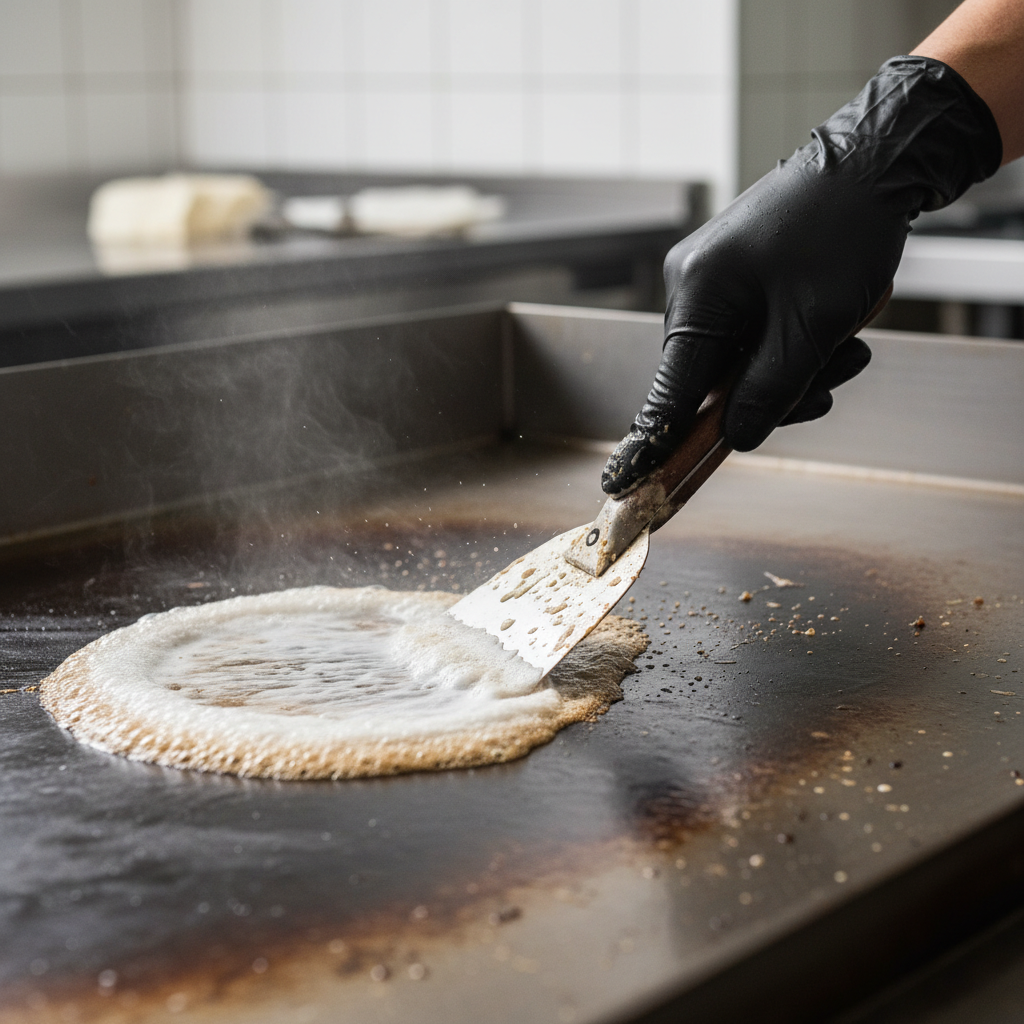
Effective grill cleaning follows a cadence: set a safe working temperature, scrape, apply food-contact-safe degreaser, agitate with stones or pads, rinse-wipe, and re-season when appropriate. For charbroilers, add grate removal, trench cleaning, and drip-tray service to stop flare-ups and smoke.
Use these sequences to streamline end-of-shift without slowing the line.
Flat-top (griddle) deep-clean sequence
- Temperature: Warm surface (not smoking) loosens fats without polymerizing residue.
- Scrape: Work back-to-front into the trough; keep the blade sharp and rigid.
- Degrease: Apply a food-contact-safe formula; avoid harsh caustics on mild steel.
- Agitate: Overlap passes with grill bricks or pads until the surface feels uniform.
- Rinse-wipe: Use controlled water; finish with clean towels or microfiber.
- Neutralize and season: Follow label guidance; apply a thin oil film to prevent flash rust.
Charbroiler deep-clean sequence
- Cool and isolate: Shut gas per site lockout/tagout policy.
- Remove grates and radiants: Soak in degreaser; scrub carbon from undersides.
- Scrub trenches and drip channels: Keep grease moving to pans; prevent pooling.
- Brush burners: Open clogged ports; confirm even, blue-tinged flame.
- Rinse, dry, reassemble, relight: Ensure parts are fully dry before ignition.
Integrate the line with ventilation. Our exhaust fan maintenance schedule explains how belt tension, bearings, and airflow interact with your grill’s smoke load.
Prerequisites Before You Begin
Set up PPE, confirm gas or power isolation, and match chemistry to your plate before degreasing. Stage pads, stones, and scrapers; line bins for solids; and schedule filter exchange so you don’t re-soil clean grills minutes after closing the line.
- PPE and safety: Heat-resistant gloves, eye protection, aprons, and non-slip footwear.
- Lockout/tagout: Control valves and breakers per policy; document when used.
- Chemistry: Food-contact-safe degreasers; avoid abrasives on chrome.
- Tools staged: Scrapers, pads, stones, neutralizer, microfiber, and liners.
- Waste handling: Strain solids; never pour fats to drains; align with your grease trap plan.
- Ventilation sync: Pair grill resets with filter exchange to maintain capture.
Teams that pre-stage tools and confirm isolation reduce rework and near-misses. For context on managing fire risks while cleaning, see this note on kitchen hood fire hazards.
Grill Types and Cleaning Methods
Match the method to the metal. Flat-tops need scraping, food-safe degreasing, and reseasoning on mild steel; chrome plates demand non-abrasives. Charbroilers require removal and soaking of grates and radiants, trench clearing, and burner port brushing for steady flames.
Flat-top (griddle) variations
- Mild steel: Accepts bricks and pads; reseason lightly after cleaning.
- Chrome plate: Heat-efficient but delicate; use soft pads and gentle cleaners.
- Composite/nonstick inserts: Follow OEM guidance; avoid high-alkali products.
Charbroiler configurations
- Radiant style: Remove and soak; inspect for warping or cracks.
- Rock/briquette style: Replace saturated stones; clear burner ports carefully.
- Modular sections: Clean one bank while another stays live during late rushes.
Method selection tips
- Temperature control: Warm surfaces accelerate fat release without burning residues.
- Right pad for right plate: Soft for chrome; bricks for heavy carbon on steel.
- Steam assist: Use cautiously on corners; avoid thermal shock on delicate coatings.
Unsure which route to choose? Align grill care with your inspection cadence. Our note on kitchen air quality improvements shows how better capture keeps grills cleaner, longer.
Best Practices and Schedules
Use a layered schedule: quick wipes between tickets, an end-of-shift degrease, and recurring deep cleans. Sync grill work with filter swaps and a basic exhaust check. Assign roles, log completion, and keep a labeled closing kit within reach on the line.
Daily end-of-shift checklist
- Scrape plate front-to-back; empty troughs and pans.
- Degrease, agitate, rinse-wipe, and light reseason.
- Brush charbroiler grates; pull and soak if saturated.
- Swap foil or liners; confirm drip flow to pans.
- Wipe splash guards, knobs, and control faces.
Weekly deep-clean tasks
- Disassemble charbroiler sections; soak grates/radiants.
- Brush burners; verify even, blue-tinged flames.
- Detail-clean under-units, casters, and adjacent walls.
- Inspect valves and igniters; note replacements.
- Exchange hood filters and confirm capture at the hood.
Monthly and quarterly items
- Check plate flatness with a straightedge; note hotspots.
- Inspect exhaust fan belt tension and bearing noise.
- Schedule hood and duct degreasing to inspection-ready standard.
- Audit logs and refresh training on PPE and chemistry.
Need help mapping windows that won’t disrupt service? See our Ontario-focused hood cleaning frequency guide and grease fire prevention checklist.

Local considerations for All Over Ontario
- Plan deep cleans around patio season and holidays so lines stay fast during lunch and dinner rushes.
- Account for humidity swings; damp air can amplify smoke. Pair grill resets with filter swaps during muggy weeks.
- For late-night quick service, rotate charbroiler sections so you can clean one bank while the other stays live.
Tools and Resources
Standardize your kit: rigid scrapers, food-contact-safe degreasers, grill bricks or pads, microfiber, liner foil, and a neutralizer. Add spare hood filters and a simple airflow check. Keep everything in a labeled bin at the line so closing tasks are predictable and fast.
- Scrapers and pads: Rigid blades for carbon; soft pads for chrome.
- Degreasers: Choose food-safe formulas compatible with your surface.
- Grill bricks/stones: Efficient for heavy carbon on steel plates.
- Steam assist: Spot-release heavy build-up; protect delicate coatings.
- Filters and liners: Stage spares; swap saturated media before service.
- Inspection log: Simple checklists create accountability and readiness.
For compliance framing that connects grills to ventilation, scan our Ontario overview of restaurant fire safety standards and this primer on NFPA 96 compliance expectations.
Troubleshooting and Diagnostics
If food sticks, smoke lingers, or heat bands appear, inspect plate condition, chemistry, and airflow together. Look for carbon layers, saturated filters, uneven burners, or a slipping fan belt. Adjust cleaning frequency, swap filters, and confirm even flames before changing recipes.
Common symptoms and quick fixes
- Hot and cold bands: Check plate flatness; reseat burners and verify gas pressure.
- Persistent smoke: Exchange filters and inspect ducts for grease film.
- Frequent flare-ups: Empty trays mid-service; scrub trenches weekly.
- Sticky proteins: Increase degreasing passes and reseason lightly.
- Lingering odors: Pair a grill reset with hood and duct service.
When symptoms persist, it’s a system issue, not just the cook surface. Our practical guide to reducing exhaust odors shows where to intervene for the fastest impact.
Process and Frequency at a Glance
Match your process to volume: busy kitchens need daily end-of-shift resets and weekly deep cleans. Pair charbroiler disassembly with filter exchange and an exhaust check to keep smoke down and heat steady during peak service.
| Grill Type | Daily Tasks | Weekly Tasks | Monthly+ |
|---|---|---|---|
| Flat-top (mild steel) | Scrape, degrease, rinse-wipe, reseason | Brick scrub corners; detail splash zone | Check plate flatness; assess hotspots |
| Flat-top (chrome) | Soft pad wipe; mild degreaser | Non-abrasive deep clean | Inspect for pitting; avoid bricks |
| Charbroiler (radiant) | Empty drip pans; quick grate brush | Soak grates/radiants; scrub trenches | Inspect burners; replace damaged radiants |
| Charbroiler (briquette) | Empty pans; brush grates | Replace saturated stones; scrub trenches | Check burner ports and flame uniformity |
Want an integrated plan that includes grills, hoods, and fans? Start with our practical exhaust fan schedule and Ontario-focused inspection requirements.
Ontario Case Examples
Small operational tweaks compound. Pairing nightly flat-top resets with weekly charbroiler soaks, filter swaps, and a quarterly exhaust service stabilized temperatures and reduced visible smoke at busy Ontario sites. Borrow what works and mold it to your menu and volume.
- Quick service grill line: We staged a labeled closing bin (scraper, pads, liner foil, degreaser) and defined a 12-minute end-of-shift cadence. Grease troughs stayed clear and proteins released cleanly.
- Casual dining charbroiler: Rotated sections for on-the-fly cleaning during late rush. Weekly trench scrubs cut flare-ups and kept steaks from charring unevenly.
- Institutional kitchen: Synced grill deep-clean with filter exchange and an exhaust fan check. Odors dropped and prep teams reported steadier heat across shift changes.
When routines become habit, cooks spend less time firefighting and more time plating. For a system-first view, see our overview on hood cleaning frequency to keep airflow predictable.
Frequently Asked Questions
Clean grills daily, deep-clean weekly, and support ventilation regularly. Use food-contact-safe degreasers, match pads to surface type, and keep simple logs. If smoke or hotspots persist, coordinate hood filters, ducts, and the exhaust fan to fix system-level issues.
How often should a restaurant clean its grill?
Do a quick scrape and wipe during service, a full degrease at close, and a weekly deep clean that includes grates, radiants, and trenches. Pair monthly checks with filter exchange and an exhaust inspection so smoke and odors don’t return the next day.
What products are safe for flat-top and chrome plates?
Choose food-contact-safe degreasers that match your surface. Mild steel tolerates grill bricks and stronger formulas. Chrome requires non-abrasive pads and gentle cleaners. Always follow the label and reseason steel plates with a thin oil film after cleaning.
Why does smoke linger even after I clean the grill?
The cause is often upstream. Saturated hood filters and grease film in ducts reduce airflow. Combine a grill reset with filter exchange, and if needed, book a hood and duct degreasing plus a fan belt check to restore ventilation performance.
Can I deep-clean during service without shutting down?
Yes—rotate charbroiler sections and clean one bank offline while the other stays live. For flat-tops, focus on the cool zone for quick scrapes and wipe-downs between tickets, then reserve degreasing and brick work for end-of-shift when surfaces are safer to handle.
Key Takeaways
Tie grill care to ventilation. Daily resets, weekly deep cleans, and periodic exhaust service keep heat steady, food safe, and inspections smooth. Stage tools on the line, log completion, and coordinate filter swaps to prevent immediate re-soiling and smoke.
- Daily scrape-and-degrease; weekly soak-and-scrub for grates
- Match pads and chemistry to plate type
- Sync with filter exchange and exhaust checks
- Keep a labeled closing kit on the cookline
- Use logs to drive consistency and readiness
Conclusion and Next Steps
A reliable grill routine reduces smoke, flare-ups, and rework. Coordinating with hood, filter, and exhaust service locks in results. If you’re in All Over Ontario, our certified team can align grill care with inspection-ready ventilation and give your line a calmer peak hour.
Want a plan built around your volume and menu? Start with our Ontario-focused notes on exhaust inspections and a practical fan maintenance schedule. Then book a service window that fits your rush.
Get a 15-minute maintenance mapping call: We’ll align grill routines with hood filters, duct degreasing, and a quick fan check so your next rush runs cleaner. For code alignment, skim our NFPA 96 compliance overview.