A restaurant equipment deep cleaning checklist is a step-by-step, appliance-by-appliance plan that defines what to clean, how to clean it, how often (daily to quarterly), who is accountable, and how to verify results. It aligns with NFPA 96 and health code standards so you reduce fire risk and pass inspections.
By Robinhood Cleaners • Last updated: 2026-04-12
Summary
Use a restaurant equipment deep cleaning checklist to standardize tasks across shifts, reduce grease-related fire hazards, and document compliance. Group tasks by frequency (daily/weekly/monthly/quarterly), assign responsible roles, and track before/after verification with photos or sign-off initials.
- What you’ll get: A complete, ready-to-use appliance checklist plus a buying guide and comparison tables.
- Why it matters: Consistency helps pass health and fire inspections while minimizing downtime.
- Who this is for: Restaurants and commercial kitchens across Ontario who need NFPA 96-aligned routines.
- How to use it: Start with daily items, add weekly/monthly tasks, then schedule quarterly exhaust cleanings.
Quick Answer
A restaurant equipment deep cleaning checklist organizes daily-to-quarterly tasks for ovens, grills, refrigerators, hoods, ducts, and exhaust fans. In All Over Ontario, Robinhood Cleaners structures checklists around NFPA 96 and local health codes and integrates services like hood, duct, and grease trap cleaning to keep inspections smooth.
Local Tips
- Tip 1: Schedule rooftop exhaust fan service before winter winds pick up across Southern Ontario—hinge kits and secure lids prevent wear and tear on blustery nights.
- Tip 2: Plan quarterly hood and duct cleanings after holiday rushes; December and summer patio seasons spike grease loading in Ontario kitchens.
- Tip 3: Align filter exchanges with delivery routes along Highway 401 corridors so your team swaps baffles at shift change without delaying dinner service.
IMPORTANT: These tips reflect how Robinhood Cleaners supports high-volume restaurants across Ontario with 24/7 scheduling and NFPA 96-certified crews.
What Is a Restaurant Equipment Deep Cleaning Checklist?
It is a standardized list of cleaning tasks, organized by equipment and frequency, detailing methods, chemicals, PPE, and verification steps. When tied to accountability and photo logs, it becomes the backbone of inspection readiness and fire-risk reduction for any commercial kitchen.
Self-contained unit: A restaurant equipment deep cleaning checklist names each appliance, assigns daily-to-quarterly tasks, specifies degreasers and water temperatures, and defines pass/fail criteria. With initials, timestamps, and photos, it doubles as compliance proof for insurers, AHJs, and internal audits.
- Scope: Cookline, ovens, fryers, grills, refrigerators, walk-ins, smallwares, hoods, ducts, exhaust fans, grease traps, floors, and walls.
- Frequencies: Daily (wipe-downs), weekly (detail degreasing), monthly (coil and gasket care), quarterly (exhaust system service aligning with NFPA 96).
- Ownership: Prep crew, line cooks, stewards, supervisors, plus third-party specialists like Robinhood Cleaners for hoods/ducts/fans/traps.
- Verification: Sign-off sheets, timestamped photos, ATP swabs (optional), and manager review.
In our experience across Ontario kitchens, checklists reduce rework because teams can see exactly what “clean” means, including grease-free baffle filters, clear drain lines, and polished stainless.
Why Deep Cleaning Your Equipment Matters
Deep cleaning protects staff, guests, and your brand by cutting fire risk, improving air quality, and extending equipment life. It also streamlines inspections—clear documentation and photo evidence help you pass health and fire audits without last-minute scrambles.
Self-contained unit: Grease accumulates faster than most teams expect during peak seasons. Documented deep cleaning stabilizes hood static pressure, prevents fryer flare-ups, improves walk-in recovery times, and reduces emergency callouts. When inspectors arrive, logs and photos speak for themselves.
- Fire safety: NFPA 96-compliant hood and duct degreasing limits ignition sources above the cookline.
- Air quality: Clean exhaust fans and make-up air paths reduce smoke and heat on the line.
- Food safety: Sanitized prep tables, slicers, and refrigeration coils help hold safe temps.
- Asset protection: Regular descaling and degreasing extend equipment uptime and warranty eligibility.
For regulatory context, see our internal overview of NFPA 96 compliance requirements and the kitchen safety inspection checklist.
How the Checklist Works Day-to-Day, Week-to-Week
Break tasks into shifts and frequencies. Daily covers wipe-down and spot-degrease. Weekly targets details like baffles and gaskets. Monthly handles coils and descaling. Quarterly brings in certified pros for hoods, ducts, exhaust fans, and grease traps with documented service reports.
Self-contained unit: A working schedule assigns closing shift to degrease fryers and grills, weekend stewarding for baffle filters, first-of-month coil dusting, and end-of-quarter NFPA 96 service. Managers review photo proof and sign offs, then file reports with insurance and fire safety documents.
- Daily: Cookline wipe-downs, splash zones, handles/knobs, smallwares wash/sanitize, floors squeegee.
- Weekly: Grill/griddle scrape and stone, fryer boil-out, oven rack soak, baffle filter wash.
- Monthly: Refrigerator coil dusting, gasket conditioning, ice machine cleaning cycle.
- Quarterly: Hood, duct, and exhaust duct cleaning, exhaust fan inspection, grease trap pumping.
Types of Cleaning Methods and When to Use Them
Choose methods based on soil load and material: alkaline degreasers for carbonized grease, enzymatic cleaners for drains, descalers for mineral buildup, and heat/steam for baked-on residues. Always match chemistry and tools to stainless, aluminum, or coated surfaces to avoid damage.
Self-contained unit: A method matrix maps soils (grease, protein, starch, scale) to chemistries (alkaline, enzymatic, acidic) and tools (nylon vs. stainless brushes). Correct pairing speeds removal, reduces scratches, and shortens downtime while keeping warranty terms intact.
- Degreasing: High-alkaline foam for hoods, baffles, and undersides; rinse with hot water.
- Descaling: Food-safe acidic descalers for kettles, coffee brewers, and dish machines.
- Thermal: Low-moisture steam for hinges, crevices, and electrical-adjacent zones.
- Mechanical: Scrapers, grill bricks, and non-scratch pads matched to metal type.
- Sanitizing: EPA-registered no-rinse sanitizers for food-contact surfaces post-clean.
The Complete Restaurant Equipment Deep Cleaning Checklist
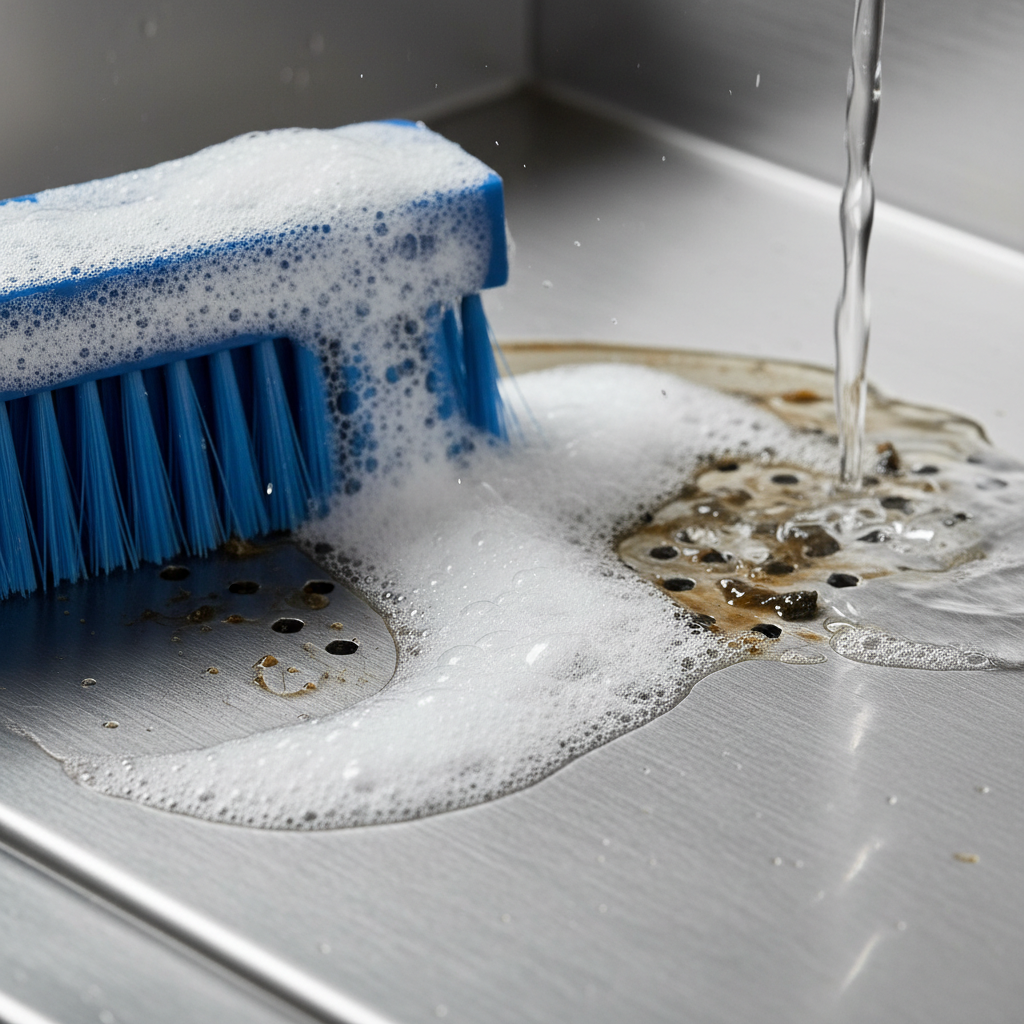
This master checklist organizes tasks by station and frequency so crews can execute quickly and verify results. Copy, customize for your menu and volume, and post near the time clock with laminated sign-off sheets and QR codes for photo uploads.
Self-contained unit: Use this list to assign who cleans what and when, specify chemicals and tools, and define pass/fail criteria (e.g., grease-free touch test, mirror finish, clear drains). Retain signed logs for audits and insurance renewals.
Daily (End of Shift)
- Grill/Griddle: Scrape while hot; apply grill brick; wipe with food-safe degreaser; polish splash guards.
- Fryers: Skim debris; filter oil; wipe exterior and handles; clean floor mats around fryers.
- Ovens: Remove crumbs; wipe door glass and gaskets; spot-degrease racks.
- Microwaves/Smallwares: Wash/sanitize; dry fully; store off floor.
- Refrigeration: Wipe handles, doors, and interior spills; check thermometer.
- Prep Tables/Slicers: Clean and sanitize food-contact surfaces; lubricate slicer rails as specified.
- Hood Exterior: Spot-degrease visible panels and backsplash; no drips.
- Floors/Walls: Sweep, wet mop, squeegee; degrease heavy splash zones; change mop heads as scheduled.
Weekly
- Baffle Filters: Remove; soak in hot alkaline degreaser; scrub; rinse; dry; reinstall with correct airflow orientation.
- Fryers: Full boil-out; clean baskets and lids; check high-limit sensors for debris.
- Ovens: Remove racks for soak; clean fan shrouds (if allowed); wipe probe ports gently.
- Grills/Charbroilers: Remove grates; degrease firebox; empty crumb trays; verify gas ports are clear.
- Refrigerators/Freezers: Clean door gaskets; sanitize shelves; purge expired labels.
- Sinks/Drains: Enzymatic treatment overnight; clean trap guards; sanitize splash zones.
- Dish Area: Delime dish machine; clean curtains and arms; empty scrap baskets.
Monthly
- Coils/Condensers: Vacuum and brush dust; straighten bent fins; ensure airflow clearance.
- Ice Machines: Run manufacturer cleaning cycle; descale; sanitize; replace filters as specified.
- Hot Holding: Descale wells; polish exteriors; check thermostat accuracy.
- Gaskets/Seals: Inspect all doors; condition with food-grade lubricant; replace if cracked.
- Storage Racks: Pull from walls; degrease backs; sanitize posts and feet.
- Grease Trap Topside: Wipe lids, edges, and surrounding floor to prevent slips.
Quarterly (with Certified Pros)
- Hood & Duct Cleaning: NFPA 96 service with documented before/after photos; polish hood canopy.
- Exhaust Fan Service: Open hinge kit; scrape and degrease blades and housing; inspect belt tension and bearings; verify drain paths.
- Grease Trap Pumping: Pump, clean baffles, scrape lids and edges; confirm downstream flow.
- Full Appliance Deep Clean: Ovens, ranges, and refrigeration exteriors and undersides; moveable equipment pulled forward and floors degreased.
Need a reference for oven detailing? See our internal guide to the commercial oven deep cleaning process.

Documentation, Compliance, and Inspection Readiness
Document every deep clean with sign-offs and photos. File NFPA 96 service reports, grease trap manifests, and coil maintenance logs. When the inspector arrives, present organized records and show grease-free, polished, and accessible equipment with safe clearances.
Self-contained unit: Keep a binder (or cloud folder) with daily/weekly sheets, quarterly exhaust certificates, and pump-out records. Cross-reference dates with shift schedules to prove accountability and continuity across staff turnover.
- Proof to retain: Hood/duct reports, before/after photos, fan belt/hinge checks, trap manifests, dish deliming logs, coil cleaning notes.
- Where to store: Front office binder and a shared drive folder mirrored for backup.
- During inspections: Offer your log first; it frames the walkthrough and builds trust.
Teams that standardize recordkeeping enjoy smoother visits and shorter re-inspections because everything is easy to verify on the spot.
Tools and Supplies: Buying Guide for Deep Cleaning
Build a kit that matches your menu and equipment: alkaline degreasers, non-scratch pads, grill bricks, enzymatic drain cleaners, food-safe descalers, PPE, and a hose or wet-vac setup. Add a labeled caddy and color-coded cloths to prevent cross-contamination.
Self-contained unit: A right-sized kit cuts cleaning time and helps retain staff because tasks feel easier and safer. Pair chemistry with the correct brush and water temperature to lift grease faster and reduce repeat scrubbing.
Core Chemicals
- Alkaline degreaser (hoods/baffles): Fast on polymerized grease; foam application reduces drips.
- Descaler (kettles/coffee/dish): Dissolves mineral scale; follow rinse instructions.
- Enzymatic drain cleaner: Gentle, overnight fat digestion; helps keep floors safe.
- Food-contact sanitizer: No-rinse options speed reopen after cleaning.
Essential Tools
- Nylon and stainless brushes: Match to metal to avoid scratches.
- Grill bricks and scrapers: For griddles and charbroilers.
- Baffle filter rack/tub: For safe soaking and rinsing.
- Wet-vac and squeegee: Control wastewater and slip hazards.
- PPE: Gloves, goggles, aprons; ventilation when using strong degreasers.
Quick Comparison: Degreaser Types
| Type | Best For | Pros | Watch Outs |
|---|---|---|---|
| High-alkaline foam | Hoods, baffles, undersides | Fast on heavy grease, clings well | Rinse thoroughly; protect aluminum |
| Solvent-boosted | Carbonized soils | Penetrates baked-on buildup | Ventilation and PPE required |
| Enzymatic | Drains, low-agitation areas | Gentle, overnight action | Not a replacement for degreasing |
For an extended internal rundown, see our commercial equipment checklist guide for deeper tool-by-tool suggestions.
In-House vs Professional Cleaning: Comparison Table
Handle daily and weekly tasks in-house; schedule certified professionals for quarterly hoods, ducts, exhaust fans, and grease traps. This split keeps labor focused on service while ensuring NFPA 96 documentation and fire safety evidence are airtight.
Self-contained unit: Most Ontario restaurants do wipe-downs and fryers internally. They bring in Robinhood Cleaners for hood/duct/fan cleaning, hinge and belt checks, and trap pumping so inspections pass on the first visit.
| Task | In-House | Professional (Robinhood Cleaners) | When to Choose |
|---|---|---|---|
| Daily wipe-downs, sanitizing | Yes | – | Routine closing duties |
| Fryer boil-outs | Yes | – | Weekly or biweekly |
| Baffle filter cleaning | Yes | – | Weekly soaking cycle |
| Hood & duct degreasing | – | Yes | Quarterly or per volume |
| Exhaust fan service (belts/hinges) | – | Yes | Quarterly inspections |
| Grease trap pumping | – | Yes | Per capacity and bylaws |
Our NFPA 96 overview for Ontario restaurants expands this split of duties: NFPA 96 Ontario playbook.
Free Kitchen Compliance Check (Soft CTA)
Need a second set of eyes on your checklist? Our certified team can review your hood, duct, and trap routines and flag gaps before your next visit from the AHJ.
Request a quick compliance review and we’ll align your schedule to inspection windows in Southern Ontario.
Best Practices and Common Mistakes
Standardize chemistry, tools, and verification. Protect aluminum, track fan belts and hinges, and avoid pushing grease into drains. Most failures stem from missing photo proof, skipped baffle cycles, and neglected coils that force compressors to overwork.
Self-contained unit: Make the checklist visible, train on the “why,” and audit monthly. Add QR codes for photos and keep spare PPE and brushes at every station so crews never skip tasks due to missing tools.
- Do: Color-code cloths and pads; post water temperature targets; label chemical bottles.
- Do: Keep spare belts and hinge pins; lubricate fan bearings during quarterly service.
- Avoid: Using steel wool on stainless (scratches harbor bacteria).
- Avoid: Rinsing degreaser into floor drains without wet-vac capture.
- Verify: Grease-free touch test on baffles and hood lips; mirror finish on stainless.
Tools/Resources You Can Reuse
Repurpose your checklist as a training module: laminate it, add QR codes to quick videos, and keep a caddy per station. Sync quarterly service dates with your calendar so nobody misses NFPA 96 windows or trap pump-outs.
Self-contained unit: Build a single source of truth—one binder and one shared folder. Keep SDS sheets next to chemicals, store PPE at eye level, and replace worn brushes on a set cadence.
- Templates: Daily/weekly/monthly sheets with signature lines and space for notes.
- Media: Short clips showing baffle orientation, grill brick motion, coil brushing.
- Scheduling: Calendar holds for after-hours hood service and trap pump-outs.
For duct work specifics, review our quick primer on exhaust duct cleaning and how it ties to kitchen air balance.
Case Studies: Ontario Kitchens in Action
Teams that adopt a clear checklist see fewer emergency callouts and cleaner inspections. With quarterly NFPA 96 service and weekly baffle cycles, grease loading stabilizes, air quality improves, and staff report cooler lines and less smoke.
Self-contained unit: In our Southern Ontario routes, we’ve seen busy quick-service kitchens cut re-clean time by standardizing baffle soaks and scheduling rooftop fan service ahead of winter winds. Managers report smoother AHJ visits and fewer follow-ups.
- Quick service example: Weekly baffle soaks reduced hood streaking between quarterly services; photo logs eliminated inspector concerns.
- Fine dining example: Monthly coil cleaning stabilized cooler temps during long tasting menus.
- Institutional kitchen example: Coordinated trap pump-outs with quarterly hood service to reduce downtime.
FAQ
These quick answers address common questions about checklists, frequencies, and professional services. Use them to align staff and plan your next inspection window.
How often should we deep clean baffle filters?
Weekly for most high-volume kitchens. If you run heavy fry/grill programs or notice streaking sooner, add a mid-week soak. Always reinstall with the correct airflow orientation and verify grease-free by touch.
What belongs on a restaurant equipment deep cleaning checklist?
List each appliance and area (grills, fryers, ovens, refrigeration, prep tables, hoods, ducts, exhaust fans, grease traps, floors/walls), assign daily-to-quarterly tasks, specify chemicals/tools, and add pass/fail criteria with sign-offs and photo proof.
When should we bring in professionals?
Quarterly for hood, duct, and exhaust fan cleaning aligned to NFPA 96, and per bylaw or capacity for grease traps. Pros also help with hard-to-reach undersides and moving equipment safely for full perimeter floor degreasing.
Is steam cleaning safe for kitchen equipment?
Yes, when applied correctly. Use low-moisture steam on hinges, crevices, and non-electrical areas. Always verify manufacturer guidance for coated surfaces and avoid forcing steam into electrical compartments.
How do we document cleaning for inspections?
Use daily/weekly sheets with initials, timestamps, and photos. File quarterly service certificates for hoods/ducts/fans and manifests for grease traps. Keep records in a binder and a shared drive for easy retrieval.
Conclusion
A clear, accountable checklist is the fastest route to safer kitchens and smooth inspections. Pair daily discipline with quarterly certified services and keep airtight records to show your work.
- Key Takeaways:
- Standardize tasks by frequency and station; make it visible.
- Match chemistry and tools to surfaces to speed results.
- Schedule NFPA 96 hood/duct/fan service quarterly; keep photo proof.
- Treat records as part of the job—they win inspections.
Ready to tighten up your program across All Over Ontario? Our team can align your restaurant equipment deep cleaning checklist with inspection calendars and staff schedules so you stay guest-ready year-round.