Fire hazards don’t wait for closing time. If your grills, hoods, and fryers are overdue for a true deep clean, risk climbs with every shift. This complete guide gives you a practical, commercial equipment deep cleaning checklist that aligns with NFPA 96 practices and what Ontario health inspectors look for—so your team knows exactly what to do, how often to do it, and when to bring in certified pros like Robinhood Cleaners.
- See a single, end-to-end checklist for every major piece of kitchen equipment
- Follow step-by-step deep cleaning methods that reduce grease and fire risk
- Know what inspectors check—and how to document proof of cleaning
- Use buying-guide criteria to choose an NFPA 96–certified partner in Ontario
- Get real-world examples from restaurants across Southern Ontario
Quick Answer
For a safe, compliant kitchen, use a commercial equipment deep cleaning checklist that covers hoods, ducts, fans, filters, appliances, floors, and grease traps. Robinhood Cleaners serves All Over Ontario at All Over Ontario with NFPA 96–certified hood, duct, and equipment cleaning—24/7 with quick response in Southern Ontario.
Overview
Here’s the short version of this guide. Keep it handy for shift briefs and weekly planning.
- Core goal: remove grease at the source (hood-to-roof) and break biofilm on food-contact/non-food-contact equipment.
- Scope: hoods, ducts, fans, baffle filters, cooklines (grills, fryers, ranges, ovens), refrigeration, floors/walls/ceilings, and grease traps.
- Cadence: daily wipe-downs; weekly detailed cleaning; monthly deep dives; NFPA 96–aligned hood/duct/fan service by certified techs at the right frequency for your volume.
- Proof: photos, logs, and service certificates. Keep them near the manager’s station for inspector review.
- Who does what: staff handle daily/weekly tasks; certified pros handle hood, duct, and fan cleaning—and any high-risk degreasing above the ceiling line.
Local Tips
- Tip 1: If your location sits along the Highway 401 corridor, plan rooftop exhaust fan access before rush periods—parking and delivery traffic can block lifts and ladders.
- Tip 2: Winter in Southern Ontario adds ice risk on rooftops. Schedule hood/duct/fan service during daylight when surfaces are warmer and safer for techs.
- Tip 3: Busy summer patios mean fryers run hotter and longer. Increase filter exchanges and spot-degreasing frequency to keep ventilation efficient and dining areas smoke-free.
IMPORTANT: Robinhood Cleaners provides 24/7 scheduling to work around service hours and seasonal rush.
What Is a Deep Cleaning Checklist?
A deep cleaning checklist is a structured, repeatable list of tasks, tools, and frequencies that map to every piece of commercial kitchen equipment. It separates daily wipe-downs from true degreasing, disassembly, soak, rinse, sanitize, and reassembly—so nothing gets missed and fire risk stays low.
- Why it exists: to reduce grease load, improve ventilation, prevent equipment failures, and pass health and fire inspections.
- Who relies on it: managers, shift leads, and certified service partners coordinating schedules and documentation.
- What it covers: hood-to-roof exhaust systems, cooklines, refrigeration, prep areas, floors/walls/ceilings, and plumbing (grease traps).
Why a Commercial Equipment Deep Cleaning Checklist Matters
Grease is fuel. Heat plus oxygen plus grease equals a kitchen fire. A checklist keeps preventive tasks on-time and on-record.
- Fire hazard reduction: routine degreasing along the hood–duct–fan path lowers ignition risk.
- Air quality improvement: efficient ventilation moves smoke and steam out, improving staff comfort and retention.
- Compliance: NFPA 96 practices and local health expectations align with documented cleaning and certificate displays.
- Equipment lifespan: clean coils, burners, and fans run cooler and last longer.
- Operational uptime: fewer breakdowns during peak service; faster recovery after rush.
Want the policy-level view? Our team breaks down timing and frequency in this short piece on hood cleaning frequency and a practical playbook for NFPA 96 compliance in Ontario.
How the Checklist Works in a Real Kitchen
Keep it simple: plan, prep, perform, prove.
- Plan: decide cadence by volume (solid fuel, high-volume fryer, 24/7 line, etc.). Map tasks to open hours vs. after-hours.
- Prep: post signage, lock out gas/electric where needed, cool hot surfaces, and stage PPE, pads, and degreasers.
- Perform: disassemble, degrease, rinse, sanitize, reassemble, function-test, and reset.
- Prove: capture before/after photos, log signatures, and file job sheets or certificates for inspector review.
Types, Methods, and Approaches
Different soils call for different tactics. Here’s the high-level view.
- Alkaline degreasing: breaks down polymerized fats on hoods, ducts, fans, and cooklines.
- Hot water/steam rinse: lifts residues after dwell time; prevents re-depositing.
- Soak tanks: submerge baffle filters and removable parts for complete degreasing.
- Food-contact sanitizing: post-clean sanitizer on surfaces like prep tables and slicers.
- Power washing (controlled): for exterior pads, dumpsters, and certain non-food-contact areas.
- Roof protection: use pads and grease containment under fans to protect membranes and drains.
For the exhaust path in particular, we always recommend an NFPA 96–aligned service visit at the correct frequency for your operation type. See our field note on kitchen fire safety and NFPA 96 for a plain-English explainer.
Commercial Equipment Deep Cleaning Checklist
Use this section as your master list. Assign owners, set due dates, and attach photos in your logbook or digital task app.
Hood, Duct, Fan, and Filters
- Hood canopies: degrease interior/exterior surfaces; wipe light lenses; inspect seams and rivets.
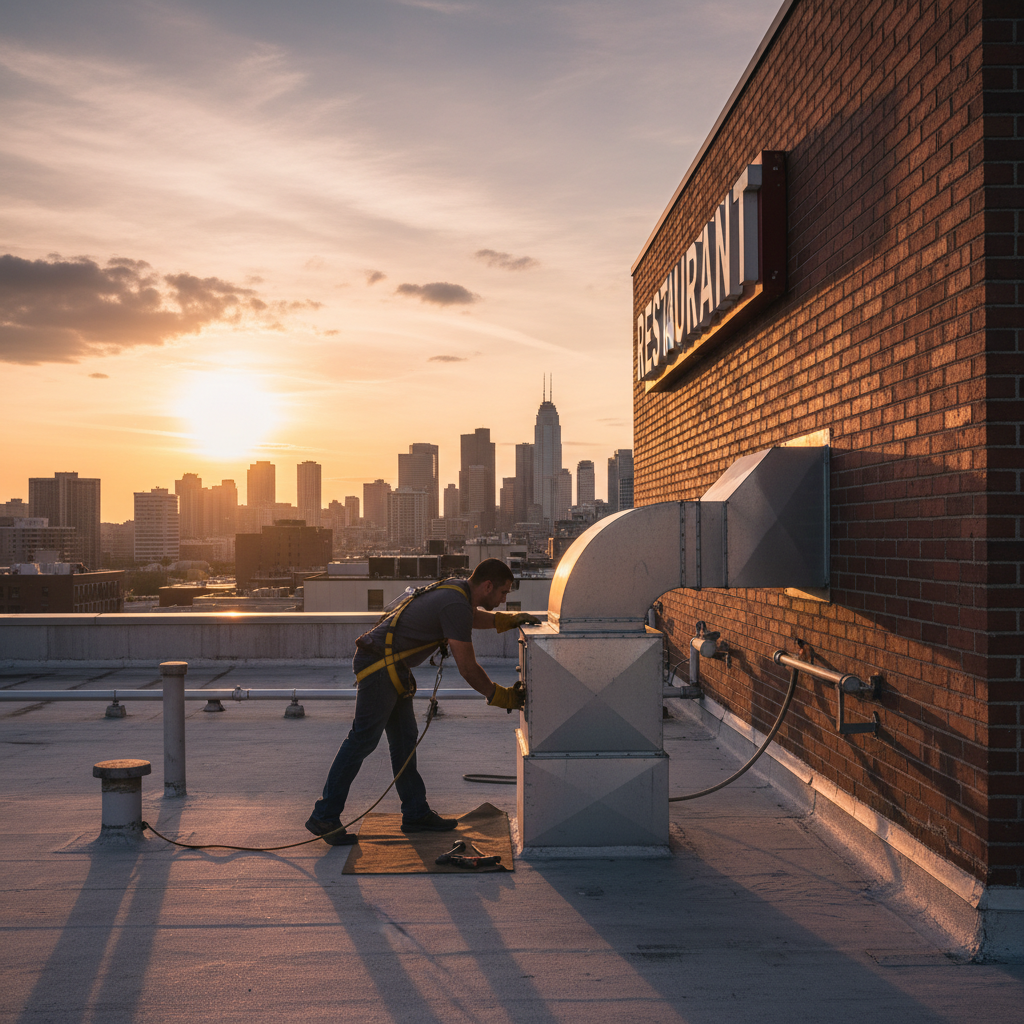
- Ducts (all the way to the roof): certified scraping and hot-water rinse where accessible; document access panel coverage.
- Exhaust fan blades/housings: degrease, rinse, balance check; verify rotation and belt tension.
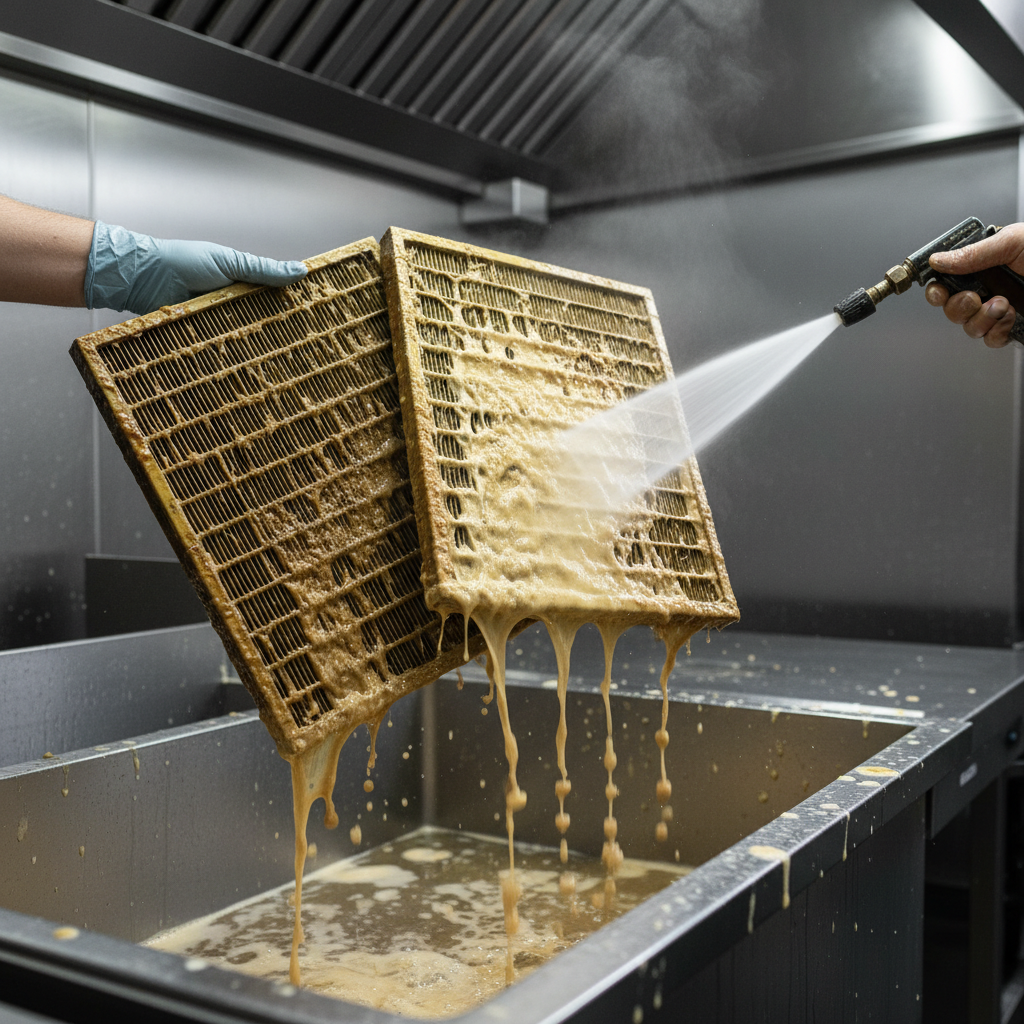
- Baffle filters: remove, soak in hot degreaser, rinse, dry, and reinstall; swap spares if needed.
- Grease containment: empty and reset rooftop units; replace pads as needed.
- Proof of service: affix service sticker near hood; file certificate and photo set.
Cookline: Grills, Griddles, Ranges, Ovens, Fryers
- Flat-top griddles: heat, scrape, degrease, rinse, season lightly.
- Charbroilers: lift grates, de-carbonize, clean radiants and drip trays; vacuum debris under burners.
- Open burners/ranges: remove grates, clean burner caps, wipe drip pans, check orifices for clogs.
- Convection/combi ovens: run cleaning cycle or manual degreasing; sanitize handles and gaskets.
- Deep fryers: perform boil-out, clean cold zones, rinse, dry thoroughly before refill.
- Salamanders/cheese melters: remove racks, degrease reflectors, wipe controls.
Refrigeration and Ice
- Reach-ins/undercounters: wipe gaskets, degrease handles, clean coils for heat transfer.
- Walk-ins: clean door sweeps/thresholds; sanitize shelves; inspect for mold or standing water.
- Ice machines: follow manufacturer’s cleaning and sanitizing cycle; wipe bin lips and scoops.
Prep, Smallwares, and Surfaces
- Prep tables and slicers: disassemble blade guards; clean and sanitize all food-contact parts.
- Mixers and processors: degrease housings; sanitize contact parts; re-lubricate per OEM guidance.
- Cutting boards: wash, rinse, sanitize; resurface or replace if heavily scored.
Floors, Walls, Ceilings, and Drains
- Floors: pre-scrape, hot-degrease, scrub, rinse; squeegee to drains; de-grease mats.
- Walls/ceiling tiles: degrease splash zones around cookline; wipe HVAC diffusers/grilles.
- Drains: flush and treat; clear grates; keep traps wet to control odors.
Grease Trap
- Access and inspect: note baffles, FOG levels (fats, oils, grease); plan safe pumping.
- Pump/clean: remove contents; scrape walls and baffles; flush lines.
- Reset: reseal, document date/volume; schedule next service based on usage.
Documentation and Sign-Off
- Daily logs: manager initials for line, surface, and floor tasks.
- Weekly checklists: photo proof attached to each item.
- Service certificates: hood/duct/fan cleaning certificate visible for inspectors.
Best Practices That Keep Kitchens Safe and Inspectors Happy
These are the habits we see in well-run kitchens across Southern Ontario.
- Schedule by volume: set hood/duct/fan frequency to your fuel and fry load; update seasonally.
- Stock spare filters: swap same-day; soak the dirty set without blocking service.
- Protect the roof: place containment and pads under fans to stop grease staining and drain clogs.
- Label chemicals and PPE: reduce near-miss incidents and rework.
- Close the loop: after any deep clean, perform a quick function test on fans and gas/electric.
- Train for turnover: keep laminated micro-checklists at each station to onboard new employees quickly.
- Centralize proof: store logs and certificates where managers and inspectors can reach them fast.
For a policy perspective, review our notes on Ontario restaurant fire safety standards—it pairs well with the checklist above.
Tools & Resources (What You’ll Use)
Match the tool to the soil and surface. When in doubt, ask your OEM or a certified partner.
- Alkaline degreaser: for heavy carbon and polymerized fats (hoods, ducts, fans, cooklines).
- Food-contact sanitizer: for prep areas and smallwares post-clean.
- Soak tank or high-temp sink: for filters, grates, and removable components.
- Scrapers, pads, nylon brushes: non-scratch options prevent damage.
- PPE: gloves, goggles, aprons, and cut protection.
- Rooftop protection: grease containment, absorbent pads, and deck plates.
- Lighting and access: headlamps, safe ladders, and roof access planning.
- Documentation tools: photo capture, logbook templates, and service stickers.
DIY vs. Certified Service: Side-by-Side Comparison
| Area | DIY (In-House) | Certified Partner (NFPA 96) |
|---|---|---|
| Hood/Duct/Fan | Surface wipe only; limited access above ceiling; high risk if done improperly. | Full-path degreasing to rooftop with documentation and service sticker. |
| Baffle Filters | Remove/soak/rinse; effective with spare set. | Same, plus inspection, replacements, and inventory planning. |
| Grease Trap | Limited by plumbing and disposal rules. | Pump, clean, reset, and document to local expectations. |
| Cookline | Good for daily/weekly; deeper carbon removal is labor-intensive. | Targeted de-carbonizing with proper dwell and rinse management. |
| Proof & Records | Photos/logs if someone remembers. | Certificate, photos, and reminder scheduling for next service. |
Buying Guide: How to Choose a Certified Cleaning Partner in Ontario (2026)
If you’re evaluating providers, use these criteria to separate “good enough” from “we’ve got your back.”
- Certification: NFPA 96 training and documented processes. Ask for sample certificates and photos.
- Insurance: WSIB coverage and proof of liability—protects your team and business.
- Availability: true 24/7 service that can work around late closes and early brunch turns.
- Scope: exhaust path, filter exchange, fan belt checks, equipment deep cleaning, and grease trap service.
- Documentation: service stickers, photo sets, and manager-friendly reports for inspectors.
- Response time: quick dispatch across Southern Ontario for urgent cleanups or inspection prep.
- Reputation: consistent testimonials from restaurants similar to yours.
Robinhood Cleaners offers NFPA 96–aligned kitchen exhaust cleaning, hood and duct cleaning, filter cleaning & exchange, fan cleaning, equipment cleaning, power washing, and grease trap service—delivered by certified, WSIB insured pros who work around your hours.
Mini Case Snapshots (Southern Ontario)
Real kitchens, real timelines, real outcomes—without naming names.
- High-volume burger concept, Windsor: increased fryer boil-outs to weekly and added spare baffle filters. Result: reduced smoke complaints and better AC balance in dining room.
- Busy brunch spot, Hamilton Mountain: shifted hood/duct cleaning to early morning with roof pads staged the night before. Result: no access delays and faster reopen.
- Hotel banquet kitchen, Kitchener–Waterloo: coordinated deep clean with a fan belt check. Result: prevented mid-event ventilation failure.
- Independent steakhouse, London: implemented monthly charbroiler de-carbonizing and quarterly rooftop grease containment refresh. Result: cleaner roof, fewer odor complaints.
- Quick-serve near Highway 401, Milton: adjusted schedule around night deliveries. Result: safer ladder placement and zero traffic conflicts.
- University cafeteria, Guelph: added documented weekly photos to logbook. Result: faster, smoother inspections.
- Caterer, Niagara region: standardized smallwares sanitizing steps with shift cards. Result: consistent prep safety across rotating crews.
- Food hall vendor, Toronto: stocked spare filter sets for swap-and-soak. Result: minimal downtime between rushes.
- Roadhouse concept, Cambridge: combined grease trap service with after-hours cookline de-grease. Result: single shutdown window, cleaner reopening.
- Pizzeria, Barrie: quarterly coil cleaning on undercounters. Result: steadier holding temps and fewer compressor calls.
- Bakery café, Oakville: set a monthly oven deep clean. Result: more even bakes and fewer hot spots.
- Seafood bar, Mississauga: introduced targeted drain maintenance. Result: eliminated weekend odors.
- Thai concept, Etobicoke: increased filter exchanges during patio season. Result: better capture of steam and reduced ceiling residue.
FAQ
How often should my hood, ducts, and fan be cleaned?
Frequency depends on volume and fuel. High-volume frying and solid-fuel cooking typically require more frequent service. Use your service stickers and logs to track timing, and adjust seasonally. When in doubt, schedule an NFPA 96–aligned inspection and cleaning with a certified team.
What’s the difference between routine cleaning and a true deep clean?
Routine cleaning focuses on visible surfaces to keep shifts moving—wipe, wash, rinse, sanitize. A deep clean disassembles parts, degreases hidden areas, and treats the full exhaust path to the roof. Both are necessary; routine cleaning maintains daily hygiene, while deep cleans reduce fire risk and extend equipment life.
Can my staff handle everything on this checklist?
Daily and weekly tasks are great for staff: wipe-downs, filter swaps, fryers, surfaces, smallwares, and floors. For anything above the ceiling line—hoods, ducts, and fans—bring in NFPA 96–aligned professionals. It’s safer, more thorough, and creates the documentation inspectors want to see.
Do I really need documentation and photos?
Yes. Inspectors in Ontario expect proof of cleaning and NFPA 96–aligned service. Photos, service stickers, and certificates make reviews quick and painless. They also help managers train new staff and verify that tasks were completed correctly.
What if our schedule is unpredictable?
Choose a 24/7 provider that can flex around late closes, brunch turns, or special events. Robinhood Cleaners services kitchens across Ontario with quick response in Southern Ontario, so you can book after-hours service and reopen clean.
Key Takeaways
- Use a single, documented checklist so nothing gets missed.
- Treat the hood–duct–fan path as a system; clean all the way to the roof.
- Match frequency to volume, and adjust seasonally.
- Capture proof: photos, logs, and service certificates.
- Partner with NFPA 96–certified, WSIB insured pros for high-risk work.
Next Steps
- Print or copy this checklist into your team’s task app.
- Set monthly reminders for deep-clean items and spare filter swaps.
- Book an after-hours exhaust system service to align with NFPA 96.
When you’re ready, we’ll meet you on-site, walk the line, and align a cleaning plan to your actual volume—so you reduce fire hazards, improve air quality, and keep inspections smooth.