Hood and filter maintenance tips are the practical steps restaurants use to keep exhaust hoods, baffle filters, ducts, and fans clean and reliable in All Over Ontario. Routine cleaning and inspection reduce grease fire risk, stabilize airflow, and help align with NFPA 96 intervals. Done right, you prevent breakdowns and keep service running on time.
By Robinhood Cleaners • Last updated: 2026-07-02
Quick summary
This guide turns hood and filter maintenance tips into a simple, auditable program. You’ll learn how kitchen exhaust works, what filters to use, exact cleaning steps from daily to quarterly, documentation habits for inspections, and Ontario-specific considerations so your kitchen runs cooler, safer, and complaint‑free.
Running a commercial kitchen means juggling speed, safety, and consistency. We built this guide for food service operators who need a realistic, code‑aligned playbook that staff can follow on busy shifts—and that a professional team can backstop with deep cleaning, photo reports, and service tags.
- Understand how hoods, filters, ducts, and fans work together
- Follow step‑by‑step cleaning routines your team can actually do
- Use filter exchange programs to keep capture strong on high‑volume lines
- Document everything for smoother inspections and insurance renewals
- Plan around All Over Ontario seasons and long service hours
What is hood and filter maintenance?
Hood and filter maintenance is the scheduled cleaning, inspection, and documentation of commercial kitchen hoods, baffle filters, ducts, and rooftop fans. It removes grease, restores airflow (CFM), and supports NFPA 96 alignment. The payoff is lower fire risk and fewer mid‑service shutdowns.
At its core, an exhaust program stacks three rhythms: daily wipe‑downs, weekly filter rinses, and professional hood‑to‑fan degreasing on a recurring cadence. Each layer protects the next. When staff routines meet certified deep cleaning, your system stays within design airflow and your reports satisfy inspectors and insurers.
- Daily: Wipe the hood exterior and splash zones; verify filters are seated correctly.
- Weekly: Remove and hot‑rinse baffle filters; check for dents, warping, or loose rivets.
- Professional: Hood, duct, and exhaust fan degreasing; fan belt inspection and replacement; rooftop grease containment checks.
For deeper background, see our practical primer on balanced systems in the kitchen exhaust hood cleaning guide and our broader commercial hood cleaning framework.
Why it matters: safety, air quality, and uptime
Grease deposits are combustible, and restricted filters choke airflow. Proper maintenance lowers fire risk, protects indoor air quality, and prevents fan stress and belt slippage. The result is steadier capture at the hood and fewer unplanned outages during peak service.
Grease‑laden vapors condense inside filters and along duct elbows. If left to build, these deposits can ignite at typical cooking temperatures. A dirty filter can also shed 20–30% of design airflow, forcing the fan to work harder and run hotter. Kitchens that pair staff routines with certified degreasing maintain more consistent CFM and cooler motor temperatures.
- Fire safety: Clean metal is far less likely to ignite than grease‑coated surfaces.
- Air quality: Restored capture minimizes smoke creep into dining rooms.
- Equipment life: Proper belt tension and clean blades reduce heat and vibration.
- Compliance: Photo reports and service tags demonstrate due diligence.
If you’re troubleshooting smoke during rush, review our kitchen hood maintenance checklist and consider a professional hood‑duct‑fan service aligned to your volume as outlined in our hood and duct cleaning guide.
How a commercial kitchen exhaust system works
A hood canopy captures hot, grease‑laden air. Stainless baffle filters knock out grease by forcing abrupt direction changes. Smooth, sealed ducts carry remaining aerosol to a rooftop fan, which creates negative pressure and expels the airstream. Any dirty or damaged link cuts CFM and raises risk.
Picture airflow as a chain. The canopy’s overhang and height set capture velocity. Baffle filters, typically with angled vanes, separate grease without combustible media. Straight duct runs keep friction losses low, while elbows become natural deposit hotspots. The rooftop fan maintains draw; clean blades and a properly tensioned belt keep design airflow steady.
- Hood geometry: A 6–12 inch overhang beyond cooking edges is common for capture.
- Baffle filters: Stainless steel units are fire‑resistant and dishwasher‑tolerant (with care).
- Duct layout: Fewer elbows and sealed seams reduce turbulence and leaks.
- Exhaust fan: Aligned pulleys and correct belt deflection prevent slippage and squeal.
- Make‑up air: Targeting roughly 80–90% of exhaust rate helps balance pressure.
For operators new to airflow mechanics, our exhaust hood cleaning explainer connects these parts to practical maintenance steps you can schedule.
Hood and filter maintenance tips: filters, methods, and approaches
Most Ontario kitchens use stainless baffle filters sized to hood slots. Clean with hot water, a stainless‑safe degreaser, and non‑abrasive tools—or use a filter exchange program so you never run clogged. Pair this with certified hood‑duct‑fan degreasing to keep capture strong end‑to‑end.
Choosing the right filter and cleaning method depends on menu and volume. High‑grease operations (fried chicken, burgers) load vanes quickly. Lighter sauté loads slower but still benefits from weekly rinses. If your hours run late, pre‑scheduled filter exchange keeps capture stable without tying up the sink during rush prep.
| Filter type | Best for | Pros | Watch‑outs | Cleaning approach |
|---|---|---|---|---|
| Stainless baffle | Most commercial hoods | Durable, fire‑safe, resists deformation | Can warp with extreme heat or harsh chemicals | Weekly hot rinse + stainless‑safe degreaser; air‑dry fully |
| High‑capacity baffle | High‑grease, high‑volume lines | Greater aerosol capture before ducts | Heavier; verify proper seating and orientation | More frequent exchange or soak cycle |
| Spark arrestor insert | Solid‑fuel appliances | Reduces ember travel into ducts | Clogs rapidly with ash/grease | Daily inspection; specialized cleaning protocol |
For a hands‑on walkthrough of filter care, see our step‑by‑step on cleaning exhaust filters and the end‑to‑end process in professional hood cleaning.
Step‑by‑step cleaning checklists (daily to quarterly)
Use a layered schedule: daily exterior wipe‑downs, weekly hot‑water filter rinses, monthly fan‑belt and rooftop checks, and professional hood‑duct‑fan degreasing on a set cadence. Consistency keeps airflow within spec and prevents surprise shutdowns during peak hours.
Daily (staff)
- Wipe hood faces, controls, and splash zones with a food‑safe degreaser.
- Confirm filters are fully seated with vanes upright (never laid flat).
- Empty grease cups and wipe down the channel; note unusual drips.
Weekly (staff)
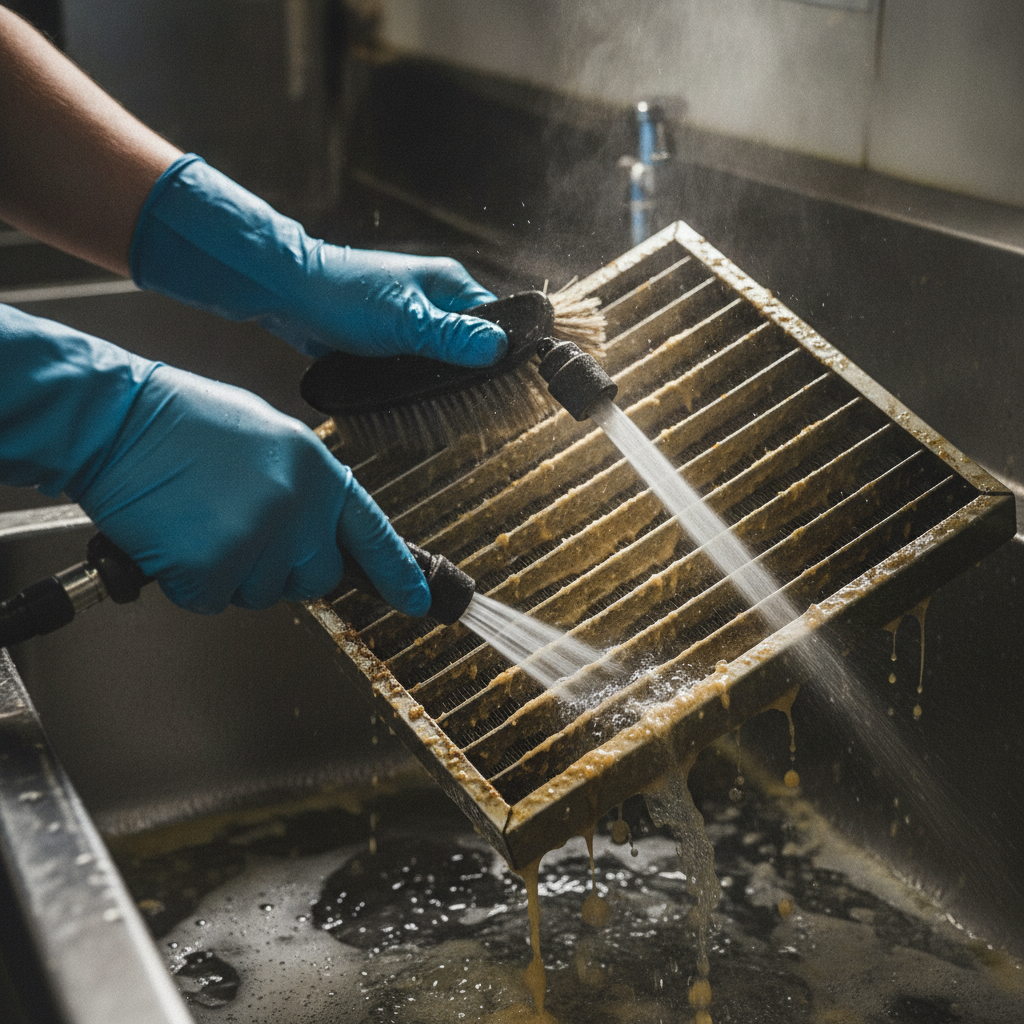
- Remove baffle filters; hot‑rinse both sides until water runs clear.
- Brush away residue with nylon pads; avoid steel wool or abrasives.
- Air‑dry completely to prevent streaking or mildew, then reinstall.
Monthly (manager walk‑through)
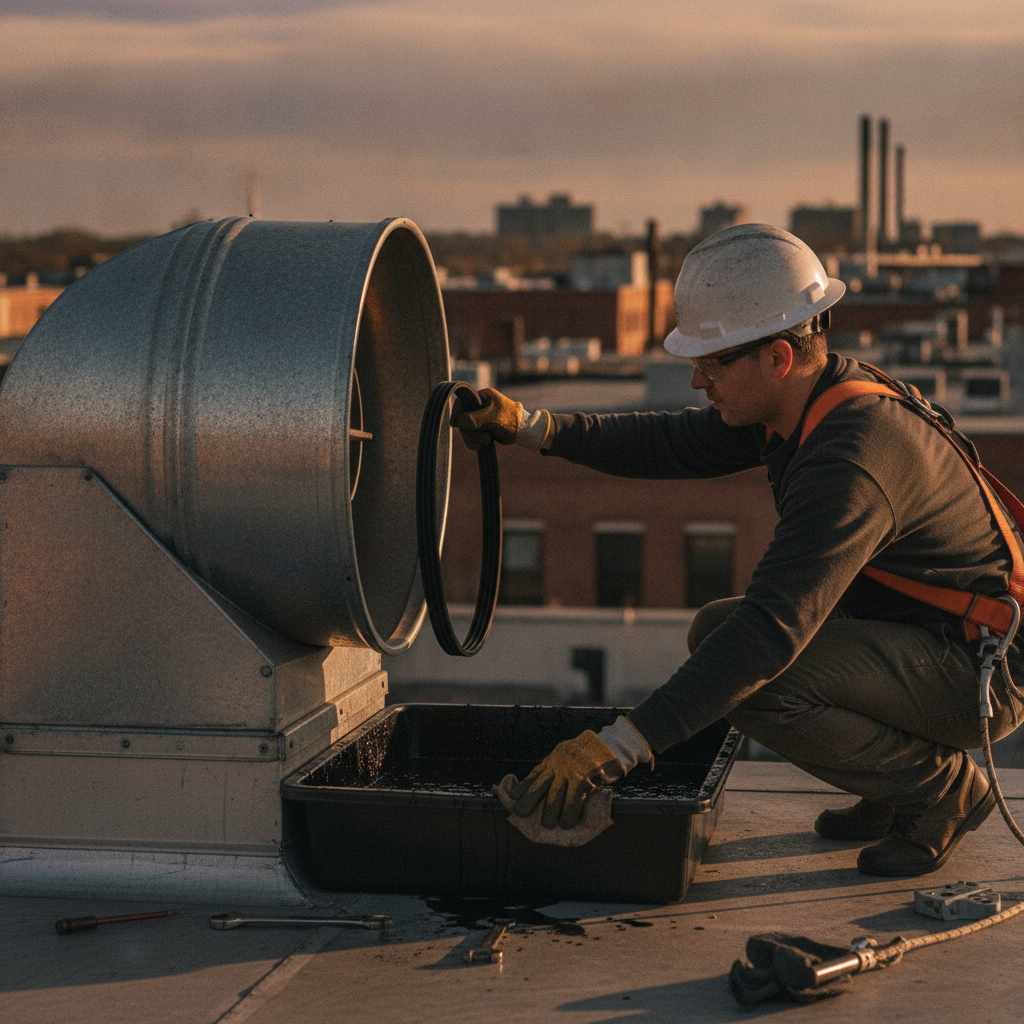
- Inspect fan belt for glazing, fray, or over‑deflection; note squeal or vibration.
- Verify rooftop grease containment pads and trays aren’t saturated.
- Check make‑up air screens; vacuum or replace if restricted.
Quarterly to semiannual (professional service)
- Hood, plenum, and duct degreasing from hood to fan (including elbows).
- Exhaust fan disassembly, blade cleaning, belt change if worn, bearing check.
- Photo documentation, service tag, and written scope for audit trails.
Not sure where to start? Our exhaust hood cleaning guide lays out the order of operations we use across Ontario kitchens every week.
Service planning and scheduling factors (no pricing)
Match cleaning cadence to cooking volume, grease load, and hours of operation. High‑throughput fry lines often need quarterly deep cleaning and weekly filter exchange. Mixed‑menu or lower‑volume kitchens may align to semiannual deep cleaning with weekly rinses.
While we don’t publish pricing here, decision factors are straightforward: menu type, daily hours, number of hoods, duct complexity, rooftop access, and documentation needs. The goal is a predictable program that keeps your system within design CFM and produces reports inspectors can trust.
| Cooking volume | Typical filter care | Deep cleaning (hood‑duct‑fan) | Notes |
|---|---|---|---|
| High (fried foods, long hours) | Exchange or hot‑rinse 1–2x weekly | About quarterly | Watch belt wear; keep rooftop pads fresh |
| Medium (mixed menu) | Weekly hot rinse | Semiannual | Spot‑clean elbows between services |
| Low (light sauté) | Weekly to biweekly | Semiannual to annual | Still log everything for inspections |
For a deeper dive on cadence planning, see this overview of cleaning frequency and inspection prep in our resource on preventing kitchen exhaust fires. For filter swap logistics across Ontario corridors, review this note on exhaust filter replacement programs.
Best practices and pro tips that pay off
Label filters by slot, standardize a rinse‑soak routine, and use exchange programs for high‑volume lines. Combine those with documented hood‑duct‑fan cleanings and rooftop containment maintenance to stop grease spread and stabilize airflow year‑round.
- Label by position: Mark filters (A1, A2…) so each returns to the original slot.
- Protect stainless: Use non‑scratch pads; avoid chlorine that pits steel.
- Exchange for volume: Heavy fry lines benefit from pre‑cleaned swaps.
- Dry thoroughly: Reinstalling wet filters reduces capture and streaks the hood.
- Contain rooftop grease: Change pads before saturation to protect membranes.
- Fan belts: Replace at first fray or glazing; slipping belts throttle CFM fast.
- Log everything: Date, initials, photos—the audit trail inspectors expect.
Want a simple team‑ready checklist? Our Ontario‑focused hood maintenance checklist covers labeling, orientation, and restart checks after cleaning.
Free compliance assessment (soft CTA): If you’re setting up a program in All Over Ontario, our certified team can review your hoods, ducts, and fans, then map daily/weekly routines and a deep‑clean cadence. We’ll leave a photo report and a service tag you can show any inspector.
Tools, cleaning agents, and documentation resources
Equip teams with PPE, stainless‑safe degreasers, and non‑abrasive tools. Keep daily/weekly logs and professional photo reports. Certified cleaners should tag the hood and leave a written scope so managers can verify timing, coverage, and next due date at a glance.
- PPE: Cut‑resistant gloves, eye protection, non‑slip shoes.
- Tools: Nylon pads, soft brushes, plastic scrapers, low‑pressure hot‑water sprayer.
- Cleaners: Alkaline degreasers compatible with stainless steel.
- Logs: Daily/weekly checklists; quarterly service certificates; before/after photos.
- Tags and labels: Service stickers with date, scope, and next due; slot labels for filters.
If airflow still struggles after a deep clean, schedule ventilation optimization. Our technicians can evaluate make‑up air and duct restrictions as part of exhaust services and hood cleaning.
Mini case studies from All Over Ontario
These brief examples show how consistent hood and filter maintenance improved capture, reduced smoke complaints, and prevented emergency downtime. Each site paired staff routines with professional hood‑duct‑fan service and left with photos, tags, and a clear next‑due date.
Quick‑service burger line
A high‑volume fry line reported smoky rushes and belt squeal. We set a filter exchange cadence, replaced a glazed belt, and refreshed rooftop pads. Result: steadier capture during lunch and no mid‑shift fan stalls the following quarter.
Institutional cafeteria
Mixed menus overloaded filters midweek. Training covered weekly hot rinses and slot labeling. Our scheduled hood‑to‑fan degreasing returned the system to spec, and smoke complaints from adjacent corridors dropped once airflow normalized.
Fine‑dining sauté station
Persistent residue near the hood lights flagged recirculation. We found warped filters seated poorly. True‑size baffles plus degreased elbows eliminated the issue and gave the line headroom during Friday service.
Local considerations for All Over Ontario
- Humidity swings change perceived capture; verify belt tension and balance before summer and winter peaks.
- Snow and freeze‑thaw cycles stress rooftop fans; inspect hinges and grease containment after storms.
- Extended hours common in busy corridors call for exchange programs so filters never run clogged overnight.
For a primer on how grease spreads and why consistent cleanup matters, see this explanation of exhaust system grease buildup.
Frequently Asked Questions
Most kitchens rinse stainless baffle filters weekly and schedule professional hood‑duct‑fan cleaning on a predictable cadence tied to volume. Replace warped or damaged filters immediately, and tag every service with photos, scope, and date for inspection readiness.
How often should we clean baffle filters?
For most menus, a weekly hot‑water rinse with a stainless‑compatible degreaser keeps vanes clear. High‑volume lines benefit from a filter exchange program so you never run clogged during peak service.
What are signs our exhaust fan needs attention?
Watch for belt squeal, vibration, motor housing heat, or smoke escaping the hood. These symptoms often trace to belt slippage, heavy grease on blades, or duct restrictions—book a professional inspection.
Can we use a dishwasher for baffle filters?
Some stainless baffle filters tolerate dishwashers, but harsh detergents and high heat can warp or pit steel. If you use a dishwasher, choose a gentle cycle, avoid chlorine, and air‑dry fully before reinstalling.
What documentation proves compliance?
Keep daily and weekly checklists, plus professional service reports with date, scope, and before/after photos. Service tags on the hood help inspectors confirm your last cleaning and scheduled cadence.
Key takeaways
Rinse filters weekly, deep‑clean hood‑duct‑fan on a set cadence, and document every step. Label filters by slot, maintain fan belts, and refresh rooftop containment to protect airflow and roofing.
- Small, consistent actions prevent big, costly breakdowns.
- Filters are the front line—keep them clear, undamaged, and correctly oriented.
- Documentation shortens inspections and supports insurance renewals.
Conclusion: turn tips into routines
Make hood and filter care routine, not reactive. Standardize daily wipes, weekly rinses, and certified deep cleaning. With documentation and small parts like belts handled on schedule, kitchens run cooler, safer, and complaint‑free.
Need a hand building a program for All Over Ontario? Our NFPA‑focused team handles hood cleaning, filter cleaning and exchange, fan belt replacement, duct cleaning, ventilation maintenance, grease trap service, power washing, and commercial appliance cleaning—end‑to‑end with photo proof and tags.
Next step: Book a compliance‑focused assessment, and we’ll map a schedule your team can follow and your inspectors will trust.