Food service facility cleaning standards are the written procedures that define how restaurants and commercial kitchens clean, sanitize, and verify every area to prevent contamination, reduce fire risk, and pass inspections. These standards specify who cleans what, how often, and with which tools and chemicals—covering hoods, ducts, grease traps, appliances, floors, drains, and ventilation.
Quick Answer
Food service facility cleaning standards set clear frequencies, methods, and verification steps for safe kitchens. In All Over Ontario, Robinhood Cleaners aligns SOPs with the FDA Food Code and NFPA 96, delivering kitchen exhaust cleaning, grease trap service, and appliance sanitization so quick-service and fine dining operations pass inspections without downtime.
At a Glance
Cleaning standards turn health and fire code requirements into checklists and routines your team can follow. Documented SOPs, schedule-based frequencies, and third-party specialists like Robinhood Cleaners help Ontario food service operators maintain safe, compliant, and audit-ready kitchens year-round.
- What you’ll learn:
- Core definitions and scope of food service facility cleaning standards
- Why standards matter for safety, inspections, and insurance
- How to build SOPs, assign roles, and verify work with logs
- NFPA 96-driven hood and duct cleaning frequencies and methods
- FDA Food Code-aligned sanitizing benchmarks and chemical ranges
- Checklists, tools, and training that hold up during surprise audits
- Who it’s for:
- Quick service restaurants, food courts, food halls, and ghost kitchens
- Fine dining, catering companies, hospitality venues, and institutional kitchens
- Multi-unit operators overseeing Southern Ontario facilities
- Why this guide:
- Maps standards to real kitchen zones you manage daily
- Step-by-step instructions you can implement this week
- Examples from Robinhood Cleaners’ NFPA 96–certified fieldwork
Local Tips
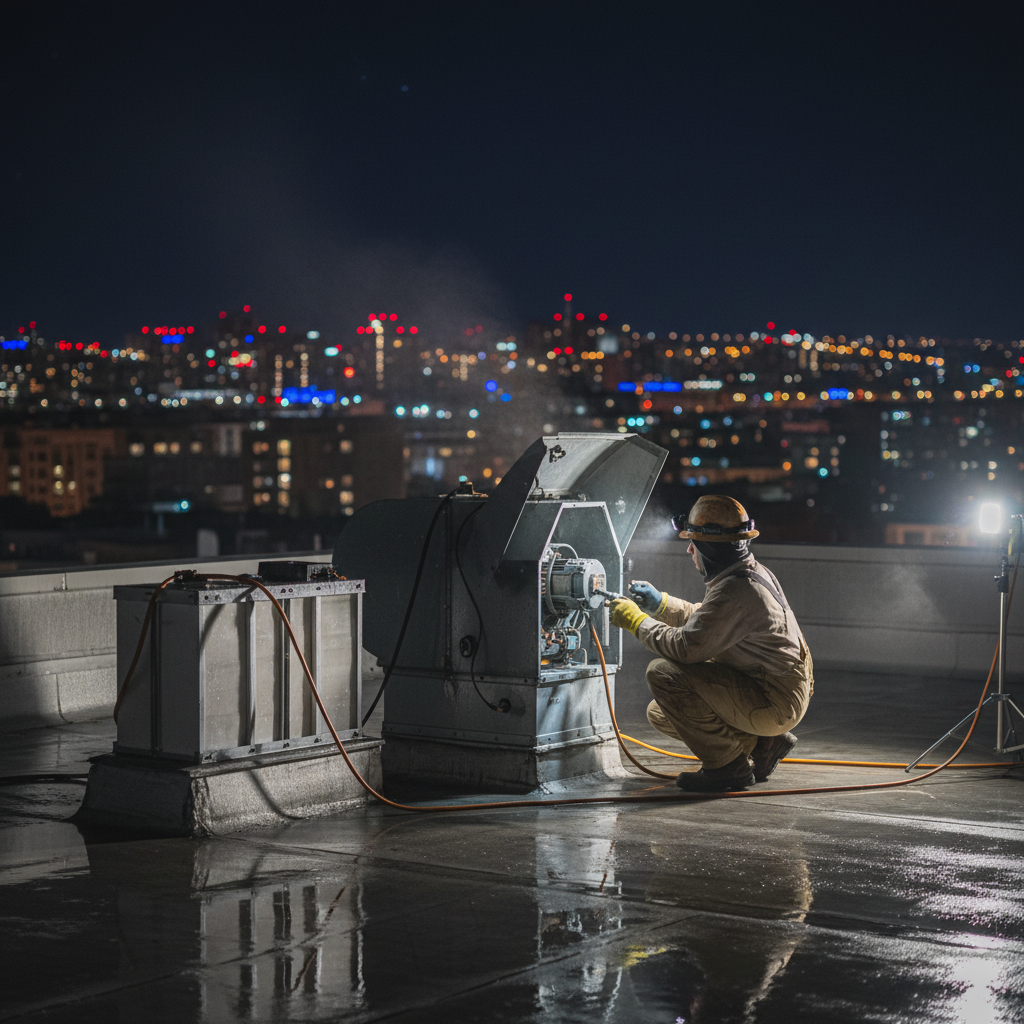
- Tip 1: Schedule hood and duct cleaning after close along the Highway 401 corridor to avoid rush-hour parking and roof access delays—technicians can service fans and containment safely overnight.
- Tip 2: Winter salt and slush increase slip hazards near back doors. Add daily power-wash touch-ups for loading areas in Southern Ontario and log them like any other sanitation task.
- Tip 3: During summer festivals in Toronto, Hamilton, and London, extend filter exchange frequency; heavy volume spikes grease accumulation faster than normal cycles.
IMPORTANT: These tips align with Robinhood Cleaners’ services (hoods, ducts, filters, exhaust fans, grease traps) across All Over Ontario and support real operating patterns in the region.
What Are Food Service Facility Cleaning Standards?
Food service facility cleaning standards are enforceable, written SOPs that define who cleans each zone, the method and chemicals used, the frequency, and the verification steps. They align with the FDA Food Code and NFPA 96 so restaurants can document compliance and demonstrate control during inspections.
- Core components:
- Scope by zone: Hoods, ducts, exhaust fans, grease containment, grease traps, appliances, floors/drains, work surfaces, and ventilation.
- Method and chemistry: Degreasing steps, sanitation temperatures, and chemical concentration targets that match manufacturer instructions and the Food Code.
- Frequency rules: Task cadence tied to risk and volume (e.g., daily line sanitation; quarterly or semiannual hood cleanings per NFPA 96 intensity bands).
- Documentation: Sign-off logs, digital checklists, corrective action notes, and photo evidence where appropriate.
- Why written SOPs:
- Convert codes into practical steps your team can repeat on a shift, daily, weekly, and monthly cycle.
- Make training faster and audits smoother—inspectors look for clear logs and consistent routines.
- Reduce liability by proving reasonable preventive controls were in place.
- Standards to mirror:
- FDA Food Code for cleaning and sanitizing requirements, warewashing, and surface classifications.
- NFPA 96 for commercial cooking ventilation systems, hood/duct/fan cleanliness, and fire safety controls.
In our experience, the strongest programs blend internal SOPs with third-party services. For exhaust systems and grease traps, Ontario operators rely on NFPA 96–certified partners like Robinhood Cleaners to hit code-grade results and provide compliance reports.
Why Cleaning Standards Matter
Standards reduce foodborne illness risk, prevent grease-fire hazards, and protect revenue by shrinking downtime after inspections. They also satisfy insurer requirements and create traceable logs that prove due diligence when something goes wrong. The outcome: safer staff, safer guests, and fewer surprises.
- Food safety protection:
- Separate cleaning vs. sanitizing steps on food-contact surfaces to stop cross-contamination.
- Use concentration checks (test strips) to verify sanitizers are in range on every shift.
- Fire hazard reduction:
- Grease in hoods, ducts, and fans is combustible; NFPA 96 requires routine removal at code-defined intervals.
- Roof discharge and containment must prevent grease-soaked roofing—common ignition source when neglected.
- Regulatory and insurance alignment:
- Health inspectors expect written SOPs, training records, and cleaning logs.
- Insurers often require proof of professional hood and duct cleaning to underwrite fire coverage.
- Operations and brand:
- Clean, odor-free kitchens retain staff and impress corporate auditors.
- Documented routines reduce turnover risk—new hires learn faster with checklists.
Here’s the thing—standards pay off quickly. Kitchens that implement disciplined exhaust and filter routines see steadier airflow, fewer smoke alarms, and better working temperatures on the line.
How Cleaning Standards Work in Practice
Effective programs assign zones, define daily-to-annual frequencies, and blend in certified specialists for high-risk systems like ventilation and grease traps. You verify with logs, photos, and service certificates, then train quarterly to keep methods sharp.
- Role clarity:
- Assign line staff to daily food-contact sanitation and floors.
- Schedule managers for weekly verifications and sign-offs.
- Book Robinhood Cleaners for NFPA 96 hood, duct, and fan cleaning; filter exchange; grease trap pumping; and appliance deep cleaning.
- Cadence by risk:
- Daily: prep tables, smallwares, sinks, floors, drains, and restrooms.
- Weekly: walls, backsplashes, refrigeration gaskets, and under-equipment degreasing.
- Monthly: fryer boil-outs, oven decarb, ice bin cleaning, and ceiling vents.
- Quarterly/Semiannual: hood/duct/fan service per NFPA 96 based on volume.
- As needed: grease trap pumping aligned to flow and FOG accumulation.
- Verification loop:
- Paper or digital logs signed by the performer and the shift lead.
- Photo proof for behind-equipment and rooftop work (attach to work orders).
- Certificates of performance from NFPA 96–certified vendors stored for audits and insurance.
Most Ontario operators combine in-house daily sanitation with scheduled professional services. That split keeps labor predictable and ensures high-risk systems meet code without guesswork.
Types of Standards, Methods, and Approaches
Build standards by kitchen zone and match each to a method: degrease, rinse, sanitize, and verify. For ventilation, apply NFPA 96 frequency bands. For food-contact, mirror FDA Food Code sanitizer ranges and dwell times. Track everything in a master schedule.
| Zone | Standard/Code | Frequency Benchmark | Method Snapshot | Verification |
|---|---|---|---|---|
| Hoods, ducts, fans | NFPA 96 | Quarterly–semiannual by volume | Scrape, hot-water degrease, polish; inspect belts/hinges; rooftop containment check | Certificate + photo set; tag on hood |
| Grease trap | Local FOG bylaws | Every few weeks to monthly (usage-based) | Pump, scrape baffles, rinse, recharge; record FOG volume | Service ticket + manifest |
| Food-contact surfaces | FDA Food Code | Between tasks and at shift change | Wash, rinse, sanitize (test strip to target range) | Log + strip reading |
| Floors & drains | Food Code (non-food-contact) | Daily; more often during rushes | Degrease, scrub, rinse; enzyme for drains; mats sanitized | Checklist sign-off |
| Appliances (ovens, fryers) | MFR + Food Code | Weekly–monthly; boil-outs as needed | Decarb, delime, degrease; reassemble & test | QA test + log |
Ventilation and Fire Safety (NFPA 96)
- Scope: Hoods, ducts, exhaust fans, filters, fan belts, and rooftop containment.
- Approach:
- Quarterly cleaning for high-volume, semiannual for moderate, annual for low-volume systems, adjusted by cooking type.
- Replace worn fan belts and add hinges for safe access; verify grease contains in rooftop systems.
- Example: A Mississauga QSR near 403 added monthly filter exchange; smoke alarms dropped and airflow stabilized after two cycles.
Food-Contact Surface Standards (FDA Food Code)
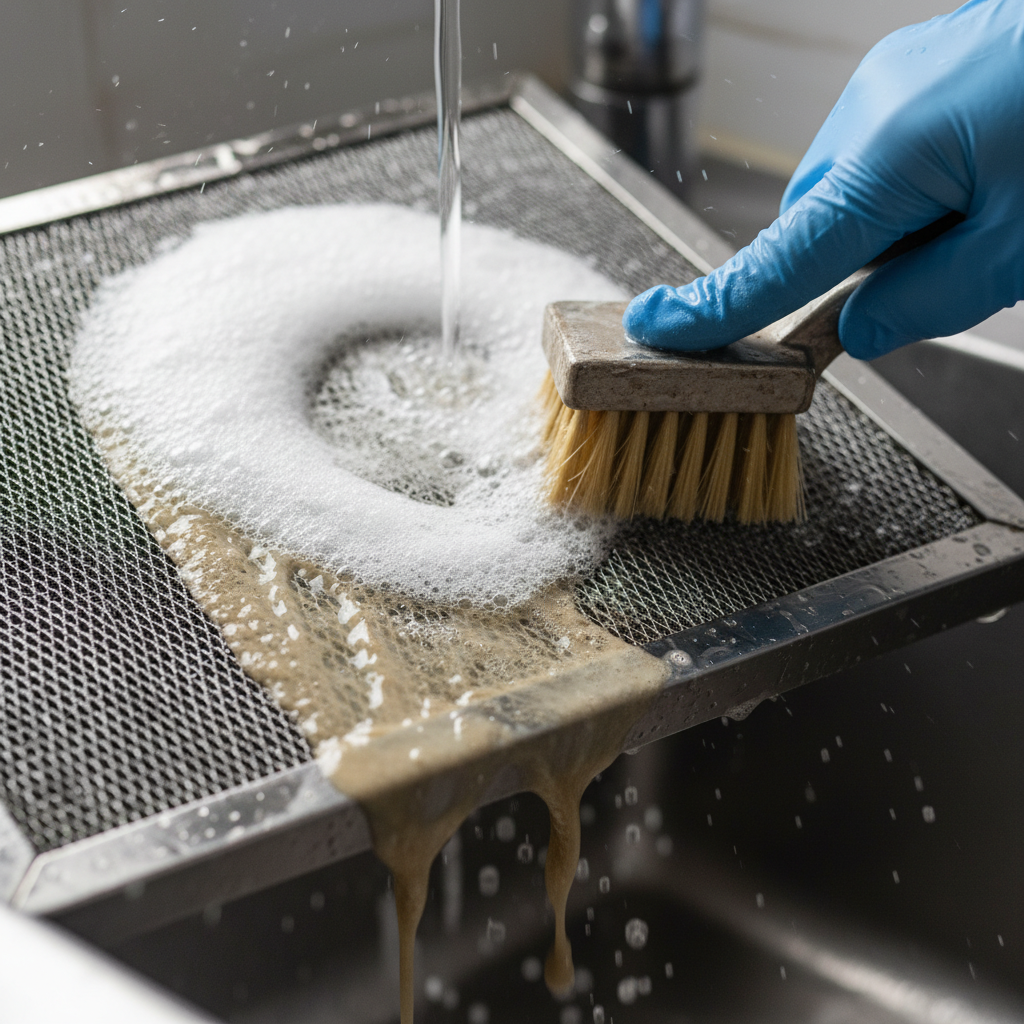
- Three-compartment sink method: Wash, rinse, sanitize with test-strip verification.
- Sanitizer benchmarks: Chlorine often validated around 50–100 ppm; quaternary ammonium compounds typically 200–400 ppm; follow label and Food Code tables.
- Example: A downtown Toronto bistro added timed sanitizer checks every four hours; re-inspection passed with zero corrective actions.
Grease Trap and FOG Control
- Why: Prevent backups, odors, pest pressure, and sewer fines; protect downstream plumbing.
- Method: Scheduled pumping, baffle scraping, and recharge; log FOG volumes.
- Example: A Hamilton food hall moved to four-week pumping and eliminated weekend backups completely.
Best Practices that Hold Up in Inspections
Turn standards into routines with checklists, labeled chemicals, test-strip logging, and vendor certificates. Train quarterly, audit monthly, and tag every hood after service. Keep documents accessible for surprise inspections and insurance reviews.
- Write it down:
- One-page SOP per zone: purpose, tools, method, frequency, and pass/fail criteria.
- Include photos of “clean” vs. “needs attention” for hoods, filters, and fans.
- Use checklists that match shifts:
- AM/PM close-down lists with initials and time stamps.
- Color-code bottles and label sanitizer concentrations.
- Verify like an inspector:
- Weekly manager walks to pull a random log and a random tool (e.g., test strips) to confirm usage.
- Monthly photo audit under equipment; quarterly roof photos with fan access tag.
- Leverage certified partners:
- Use NFPA 96–certified professionals to clean hoods/ducts and issue certificates.
- Ask for before/after photos and a written summary of issues discovered.
- Document training:
- Quarterly refreshers on sanitizer checks, PPE, chemical storage, and emergency response.
- New-hire onboarding includes a walk-through of each SOP.
When we conduct Ontario services, we leave a tag on the hood, attach a certificate, and store a digital copy—so your next inspection goes from stressful to straightforward.
Tools and Resources You Actually Need
Keep a compact toolkit: degreasers matched to surfaces, sanitizer concentrates with labeled spray bottles, test strips, PPE, scrapers and pads, drain enzymes, and service logs. Add specialized equipment via NFPA 96–certified vendors for ducts, fans, and power washing.
- Chemistry and test tools:
- Food-safe degreaser for stainless and tile; delimer for scale.
- Sanitizer concentrates with clear dilution charts; dedicated labeled bottles.
- Test strips (chlorine, quat) stored dry and replaced per manufacturer guidance.
- Mechanical tools:
- Scrapers, non-scratch pads, long-handle brushes, squeegees, and wet vac.
- PPE: cut-resistant gloves, splash goggles, nitrile gloves, and slip-resistant footwear.
- Specialist gear (via vendor):
- Hot-water pressure systems for ducts, rooftops, and fan assemblies.
- Fan hinges, access panels, and rooftop grease containment devices.
- Documentation:
- Printed logs in binders and mirrored digital copies for audits.
- Service certificates and photo evidence filed by date and location.
For deeper compliance on ventilation systems, review our NFPA 96 requirements guide and align your master schedule accordingly.
Step-by-Step: Build Your Cleaning Standards in One Week
Map zones, write one-page SOPs, set frequencies, and launch logs. Then schedule certified hood and duct service, set filter exchange cadence, and book grease trap pumping. In five workdays, you can move from ad hoc cleaning to an auditable program.
- Inventory your zones
- List hoods/ducts/fans, grease trap(s), appliances, sinks, floors, drains, ceilings, and vents.
- Note make/model for appliances and ventilation to match methods to manufacturer guidance.
- Draft one-page SOPs
- Purpose, tools/chemicals, steps (wash→rinse→sanitize), frequency, and pass/fail visuals.
- Include sanitizer ranges and NFPA 96 frequency notes on relevant pages.
- Create a master schedule
- Daily, weekly, monthly, quarterly, semiannual, and annual tasks on one calendar.
- Assign owners: line, porter, manager, or vendor (Robinhood Cleaners).
- Set verification and escalation
- Logs initialed by performer and checked by a supervisor at shift end.
- Escalate missed tasks to a corrective action form within 24 hours.
- Book certified services
- Hood/duct/fan cleaning and filter exchange aligned to your volume band.
- Grease trap pumping set to usage; request manifests and photo proof.
- Train and launch
- Walk the team through SOPs; demonstrate test-strip use and chemical labeling.
- Start logs and conduct the first weekly manager audit on day five.
This five-day sprint creates the backbone of a defensible program. From there, review and update quarterly to reflect menu or volume changes.
Ontario-Focused Considerations
Southern Ontario kitchens juggle high volume, seasonal weather, and dense rooftops. Build in winter slip controls, festival surge plans, and rooftop containment checks. Schedule overnight vendor work along the 401 to avoid logistics bottlenecks.
- Seasonality:
- Winter: extra mat sanitation, entryway degreasing, and daily mop-water changes.
- Summer: more frequent filter exchanges during patios and events; monitor odors in heat.
- Rooftop access:
- Coordinate key access and safety briefings for fans and containment systems.
- Request photos post-service to verify no grease discharge onto roofing.
- Multi-unit logistics:
- Stagger vendor visits and consolidate documentation in a shared folder by site.
- Use standard SOP templates across locations; tailor only for unique equipment.
Our team provides 24/7 availability across All Over Ontario, enabling overnight work that won’t interrupt lunch or dinner service.
Case Studies and Real-World Examples
Applying standards produces measurable wins: fewer fire risks, cleaner air, faster inspections, and happier teams. These Ontario snapshots show how codified cleaning paired with certified services changes daily operations.
- QSR near Toronto Pearson:
- Problem: Smoke and hot line temperatures during rushes.
- Action: Quarterly hood/duct cleaning, monthly filter exchange, and fan belt replacement.
- Result: Noticeably steadier airflow and no nuisance alarms in two months.
- Downtown bistro (Toronto core):
- Problem: Repeat corrective actions for sanitizer logs.
- Action: Introduced timed strip checks and laminated SOPs at each station.
- Result: Passed re-inspection with zero log issues; training time reduced for new hires.
- Food hall (Hamilton):
- Problem: Weekend backups and odors from shared grease trap.
- Action: Four-week pumping and better baffle scraping.
- Result: Backups eliminated; tenant complaints dropped to none.
- Institutional kitchen (Waterloo region):
- Problem: Audits flagged ceiling vent dust and poor rooftop containment.
- Action: Added monthly vent cleaning and quarterly rooftop photo audits.
- Result: Next audit closed with commendation on documentation quality.
If you’re building or refreshing your program, our health code compliance cleaning overview aligns daily sanitation with scheduled vendor services for a simpler, auditable path.
Need a sanity check on your standards?
Request a walkthrough of your current SOPs, logs, and rooftop systems. We’ll map gaps against NFPA 96 and the FDA Food Code and suggest a quarterly plan that fits your operation.
Frequently Asked Questions
Most questions focus on frequency, verification, and vendor roles. The short answers: follow risk-based schedules, verify with logs and test strips, and use NFPA 96–certified pros for hoods/ducts and complex grease systems.
- How often should we clean our kitchen hoods and ducts?
Follow NFPA 96 volume bands: high-volume systems typically quarterly, moderate semiannually, and low-volume annually. Cooking type (solid fuel vs. light-duty) can increase frequency. Ask your certified vendor to document the recommended cadence and tag each hood after service.
- What sanitizer ranges should we target?
Align with the FDA Food Code and label instructions. As a common reference point, many operators validate chlorine around 50–100 ppm and quaternary ammonium compounds around 200–400 ppm. Always verify with test strips and document readings on your shift logs.
- How do we prove compliance during inspections?
Keep written SOPs, shift logs with initials and times, sanitizer test-strip readings, and vendor certificates with photos. Store documents in a binder and a cloud folder by date/site. Inspectors appreciate quick access and clear traceability.
- When should we pump our grease trap?
Base it on actual usage and FOG accumulation. Many busy kitchens schedule every few weeks to monthly. Record service dates and volumes removed. If you notice slow drains or odors, tighten the cycle and check baffles.
- What tasks should stay in-house vs. with a vendor?
Keep daily food-contact cleaning, floors, and drains in-house. Outsource hoods, ducts, exhaust fans, rooftop containment, filter exchange, grease trap pumping, and deep appliance cleaning to certified specialists who can issue compliance documentation.
Conclusion: Make Standards Your Daily Operating System
Turn compliance into habit. With zone-based SOPs, risk-aligned frequencies, and certified partners for high-risk systems, you’ll protect staff and guests, pass inspections, and keep service on schedule—day after day.
- Key Takeaways
- Write one-page SOPs per zone and train quarterly.
- Follow NFPA 96 for ventilation and FDA Food Code for sanitizing.
- Use logs, test strips, and certificates to prove control.
- Schedule certified hood/duct and grease trap services proactively.
- Next Steps
- Build your master schedule and assign owners for each task.
- Book an NFPA 96 walkthrough to confirm your frequency band and rooftop containment.
- Run a two-week pilot with logs and a weekly manager audit.
Ready to tighten your program? Our commercial appliance sanitization standards guide and NFPA 96 cleaning schedule framework pair perfectly with the steps above.
Related Standards and Deep Dives
Explore code-aligned topics that plug directly into your SOPs: NFPA 96 requirements, Ontario fire safety expectations, and day-to-day health code cleaning. Use these to refine your master schedule and pass inspections consistently.
For fire-safety specifics, see this overview of NFPA 96 compliance guidance and the discussion on Ontario fire safety standards. Pair those with our in-depth health code compliance cleaning article to align daily routines with inspection criteria.