Fire safety compliance is the set of standards, maintenance tasks, and records that keep commercial kitchens within code and free from avoidable ignition risks. In All Over Ontario, Robinhood Cleaners supports compliance with NFPA 96–aligned hood and duct cleaning, grease control, and ventilation maintenance so restaurants pass inspections the first time.
By Robinhood Cleaners • Last updated: June 5, 2026
Running a busy line? This field-tested guide shows how to align daily operations with kitchen fire safety, document what matters, and schedule certified services without disrupting service windows.
- What fire safety compliance means for Ontario restaurants
- Exactly how inspections evaluate your kitchen
- Cleaning intervals, checklists, and documentation
- Where Robinhood Cleaners fits: hood, duct, fan, and grease systems
At a Glance: What You’ll Learn
This guide translates fire safety compliance into daily kitchen actions. You’ll see how NFPA 96–aligned cleaning, airflow checks, and grease control reduce ignition risk, support insurance requirements, and speed inspections. Use the checklists, intervals, and documentation tips to organize tasks and pass compliance audits with confidence.
Here’s the reality: you don’t have time for guesswork during a dinner rush. We turn requirements into a clear routine, with service-ready templates and examples tied to real Ontario kitchens we maintain.
- Practical definitions and evaluation criteria used in inspections
- Step-by-step kitchen compliance workflow from line to rooftop fan
- Cleaning intervals mapped to volume and menu style
- Photo documentation and logbook habits that remove audit friction
- When to call certified pros—and how we coordinate around service windows
What Is Fire Safety Compliance?
Fire safety compliance in commercial kitchens means maintaining hoods, ducts, fans, and grease systems to recognized standards, documenting each action, and proving that ignition sources and fuel loads are controlled. It turns code requirements into daily habits so inspections are predictable, insurance stays valid, and work continues without disruption.
In our experience maintaining kitchens across All Over Ontario, the cleanest pass-fail line is simple: control grease, preserve airflow, and prove it on paper. That’s why our teams combine detailed degreasing with before/after photos, service stickers, and a signed service report your manager can file immediately.
Core components of compliance
- Standards alignment: Follow recognized benchmarks for commercial cooking ventilation and fire protection (e.g., kitchen hood and duct hygiene, rooftop fan safety, and reliable fire suppression interfaces).
- Routine maintenance: Keep filters, hoods, ducts, fans, and grease traps clear so heat and vapors move out, not into surrounding surfaces.
- Documentation: Maintain a log of cleaning intervals, photos, and corrective actions—ready for health, fire, or insurance reviews.
- Training and signage: Line staff know where extinguishers and shutoffs are, what to do when smoke increases, and who to call.
Think of it as a closed loop: identify hazards, treat them on schedule, verify with photos and signatures, then set the next reminder. That loop is what inspectors want to see—clarity and control.
Why Fire Safety Compliance Matters
Compliance protects people, kitchens, and business continuity. Controlled grease and strong ventilation reduce ignition risk, preserve insurance eligibility, and keep inspections fast. The payoff is fewer shutdowns, less smoke inside the line, and predictable audits that don’t derail service windows.
Here’s why this is about more than “passing a check.” Kitchens move heat, oils, and vapor under pressure every shift. Without routine degreasing and airflow care, residue spreads and heat sources multiply. That’s when small flare-ups become incidents and a quick reset turns into hours of downtime.
- Safety first: Teams avoid burns and smoke exposure when surfaces are clean and air is moving.
- Business continuity: Documented maintenance supports insurance and reduces the chance of forced closures after a spot inspection.
- Food quality and morale: Strong ventilation keeps the line breathable and helps hold consistent temps during a rush.
- Equipment life: Clean fans and ducts run cooler and last longer, reducing surprise breakdowns mid-service.
We’ve found that kitchens with disciplined hood, duct, and filter routines not only pass inspections faster but also report smoother service during peak periods.
How Fire Safety Compliance Works in Commercial Kitchens
Compliance is a repeatable workflow: assess hazards, degrease hoods and ducts, maintain filters and fans, control grease traps, and document every step. Pair these tasks with a calendar tied to volume so the system stays clean, airflow stays strong, and inspection records stay current.
Below is a practical kitchen-to-rooftop workflow our Ontario crews use on night shifts to avoid service disruption.
- Pre-check and lockout: Verify gas/power interlocks, protect equipment surfaces, and set containment for washdown.
- Filter handling: Remove, soak, and deep clean or exchange filters; inspect frames and baffles.
- Hood degreasing: Apply warm degreaser, agitate, rinse, and wipe to bare metal; clean lights and plenum edges.
- Duct cleaning: Access panels open; mechanical scraping followed by hot-water wash to bare metal.
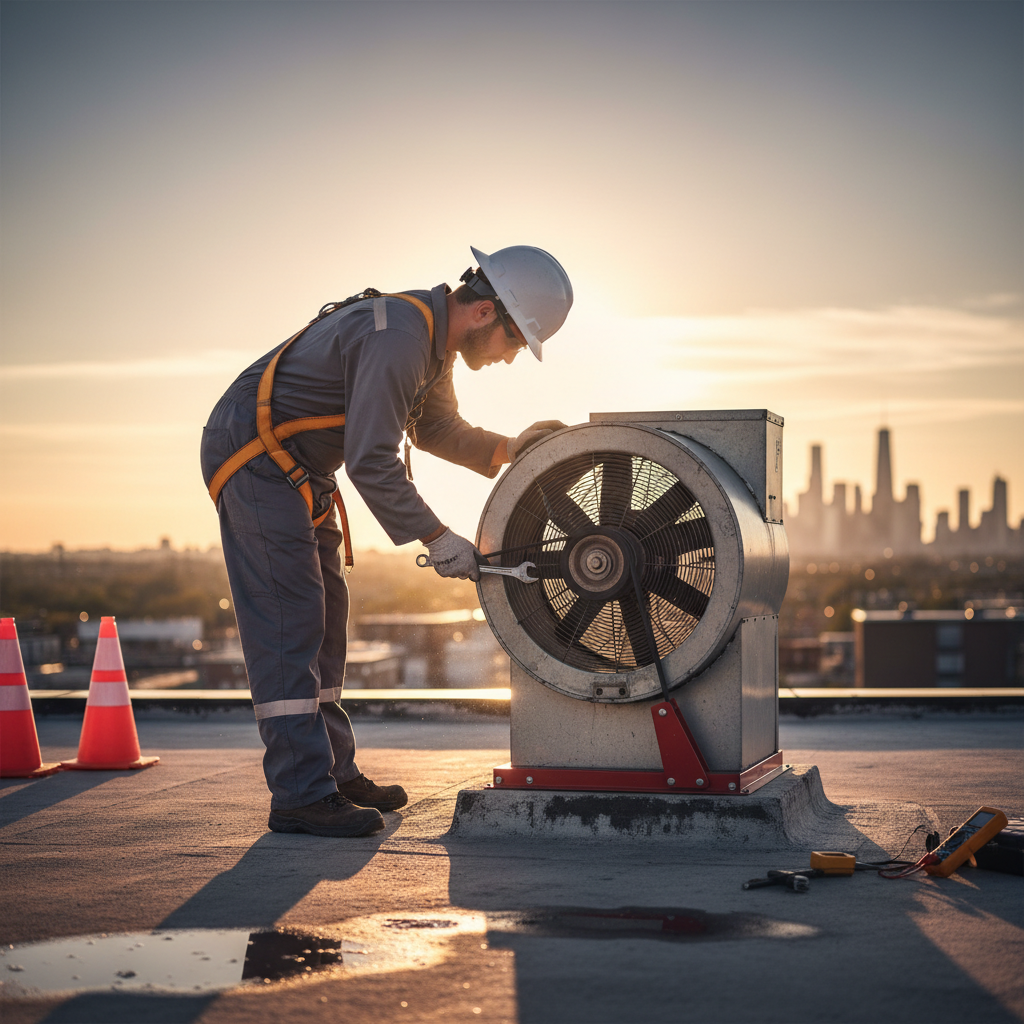
- Exhaust fan service: Hinge kit opened; clean blades and housing, check fan belt tension, confirm rotation.
- Grease containment: Replace saturated pads; verify rooftop drainage is secure and sealed.
- Grease trap maintenance: Pump and reset per schedule; remove solids and clean walls and tees.
- Verification and documentation: Time-stamped photos, service sticker, signed report, and next-due reminder.
| Requirement | Who handles it | Robinhood service | Proof kept on-site |
|---|---|---|---|
| Hood & duct bare-metal cleaning | Certified cleaners | Kitchen Exhaust Cleaning, Hood Cleaning | Photos, sticker, signed report |
| Fan inspection & belt tension | Technician | Exhaust Fan Cleaning, Fan Belt Replacement | Photo sequence, checklist |
| Filter condition & exchange | Kitchen staff + cleaners | Filter Cleaning & Exchange | Filter log, photos |
| Grease trap pumping & reset | Licensed service | Grease Trap Cleaning | Manifests, service report |
For a deeper dive into exhaust risks and mitigations, see our internal playbook on kitchen exhaust fire hazard reduction and this hands-on grease fire prevention guide.
Types of Controls and Approaches to Stay Compliant
Blend engineering controls, administrative routines, and certified cleaning to keep fuel and heat separated. Clean metal moves heat out, while logs, checklists, and photo evidence prove control. A schedule tied to volume keeps these elements working together so audits become predictable.
Engineering controls (the hardware)
- Hoods, ducts, and fans: Sized for your line’s appliances; clean metal and correct fan rotation protect airflow.
- Hinge kits and access panels: Safe, repeatable access ensures full-surface cleaning and protects rooftop equipment.
- Grease containment: Rooftop pads and guards stop runoff that damages roofs and attracts hazards.
Administrative controls (the routine)
- Shift checks: Filters seated, no visible drip lines, and vapor movement confirmed by hand at the hood.
- Weekly walkthroughs: Note any smoke rollback, unusual noise at the fan, or persistent odors on the line.
- Documentation: Maintain a binder (or digital folder) with service reports, photos, and next-due dates.
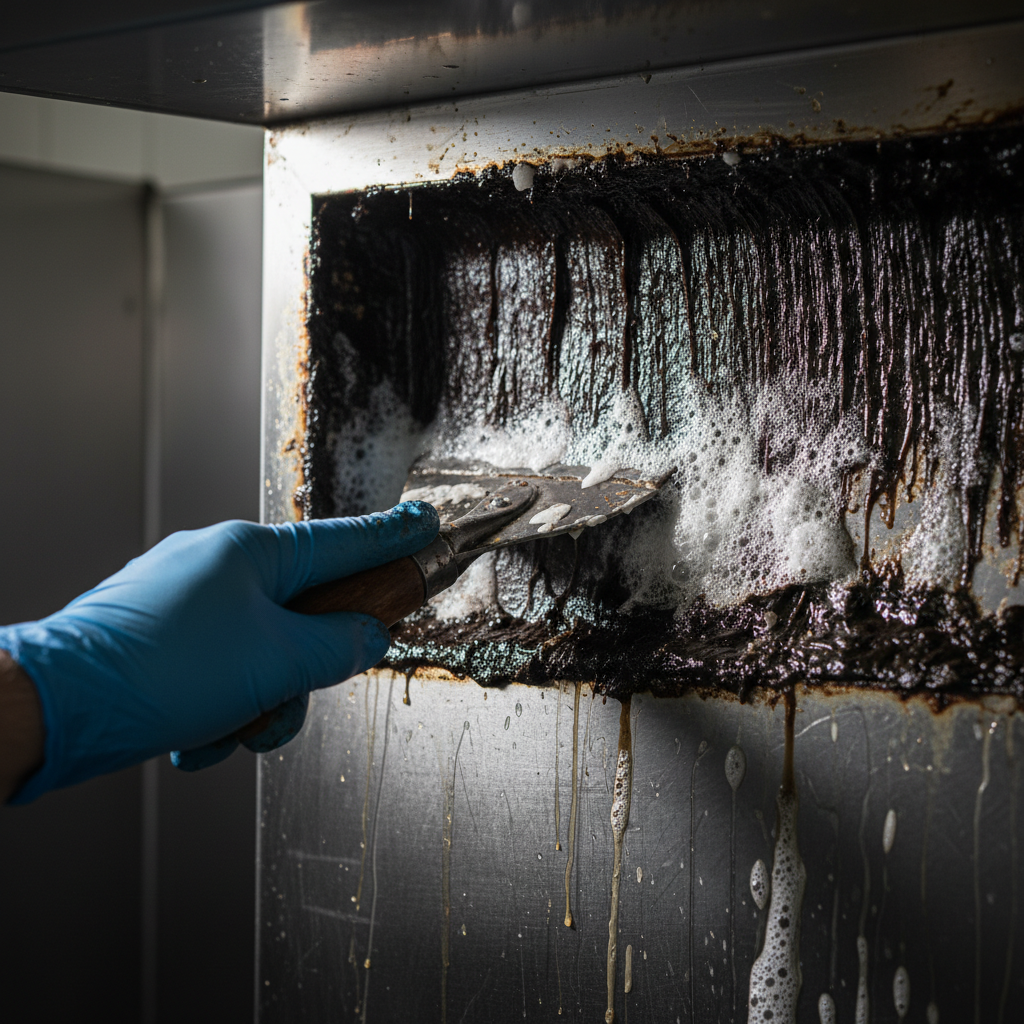
Certified cleaning (the reset to bare metal)
- Kitchen exhaust cleaning: Degrease hoods, ducts, and fans to bare metal on an agreed schedule tied to volume.
- Filter cleaning & exchange: Keep baffles open and capture efficiency high; swap out damaged filters promptly.
- Grease trap service: Stay ahead of backups and odors while maintaining plumbing compliance.
Many kitchens benefit from a standing schedule—high volume lines often need quarterly exhaust cleaning, while moderate volume kitchens usually hold at semi-annual. Low volume or seasonal operations may extend to annual, provided internal checks stay tight.
Best Practices for Kitchen Fire Safety Compliance
Set a cleaning cadence, keep photos and signed reports, and assign ownership for filters, fans, and traps. Train shift leads on smoke rollback response and fan belt checks. Partner with certified cleaners to restore bare metal and document each visit for inspections and insurance.
Daily and weekly habits
- Seat filters correctly; replace warped or clogged units before the rush.
- Check for smoke rollback when multiple appliances fire at once.
- Wipe visible hood edges; contain visible drips before they spread.
- Listen for fan belt squeal; report vibration or scraping immediately.
Monthly and quarterly routines
- Do a flashlight check of plenum and duct access doors; look for sheen or streaks.
- Verify grease containment on rooftops; replace saturated pads.
- Audit your binder: latest service sticker, photos, and signed reports ready for review.
Local considerations for All Over Ontario
- Winter brings colder rooftops—plan fan inspections earlier in the day and confirm hinge safety before opening housings.
- Holiday peaks increase heat and vapor; tighten filter exchanges and walk-through frequency during these periods.
- Quick service in Southern Ontario can run long hours; align exhaust cleaning windows with slower midweek blocks to avoid service impact.
For a structured audit flow, use our in-house commercial kitchen safety inspection checklist and the Ontario-focused fire safety standards guide to confirm nothing is missed.
Need a compliance tune-up? Our NFPA 96–aligned teams clean to bare metal, replace or exchange filters, check fan belts, and deliver a photo-rich report. We schedule 24/7 to fit your line.
Explore our commercial kitchen exhaust cleaning program or ask about a walkthrough.
Tools, Templates, and Resources
Equip your team with checklists, photo logs, and service stickers. Pair that with certified exhaust cleaning, grease trap maintenance, and ventilation optimization to keep airflow strong. These tools reduce surprise findings and turn inspections into quick confirmations.
- Photo log template: Capture before/after hood, duct, fan, and rooftop grease containment.
- Service binder: Latest sticker, signed reports, manifests, and next-due reminders in one place.
- Walkthrough checklist: Weekly prompts to flag smoke rollback, filter issues, and fan noise.
- Grease trap manifest folder: Keep regulatory documents accessible for spot checks.
To keep airflow optimized after cleaning, review our guidance on kitchen ventilation optimization and schedule a fan belt inspection during your next service window.
Case Studies and Real-World Examples
Ontario kitchens that align exhaust cleaning, filter exchange, and fan checks pass faster and run cooler. The pattern is consistent: fewer surprises in audits, steadier airflow during peak service, and cleaner rooftops that keep building managers happy.
Quick service line with heavy fry load
- Challenge: Persistent smoke at the hood edge during rushes.
- Actions: Quarterly bare-metal cleaning, monthly filter exchange, fan belt tension check.
- Outcome: Noticeable reduction in smoke rollback and smoother temperature control on the line.
Hotel banquet kitchen with seasonal peaks
- Challenge: Rooftop grease staining and recurring odors near events.
- Actions: Rooftop grease containment refresh, semi-annual duct cleaning, grease trap maintenance ahead of peak months.
- Outcome: Cleaner rooftop surfaces, improved guest experience around air intakes, and quicker compliance sign-offs.
Institutional kitchen with long service hours
- Challenge: Fan vibration and belt squeal creating airflow dips.
- Actions: Hinge kit inspection, fan cleaning, and belt replacement during an overnight window.
- Outcome: Stable airflow across shifts and fewer temperature swings in prep areas.
For more prevention context, see our primer on preventing kitchen grease fires and our Ontario-focused NFPA hood rules.
Frequently Asked Questions
These quick answers address how to schedule, document, and pass inspections without slowing your line. Share them in pre-shift huddles to reinforce consistent habits that support fire safety compliance day after day.
What does “bare metal” mean in hood and duct cleaning?
“Bare metal” means all combustible grease residue is removed from hoods, ducts, and fans until only clean, exposed metal remains. This standard restores airflow, removes fuel for ignition, and gives inspectors clear visual proof that cleaning reached every accessible surface.
How often should our kitchen schedule exhaust cleaning?
Tie frequency to cooking volume and menu. High-volume fry and grill lines often require quarterly service. Moderate-volume operations commonly run semi-annual cycles. Lower-volume or seasonal kitchens may extend to annual, provided weekly checks and filter exchanges remain consistent.
What proof do inspectors want to see during an audit?
Keep your service binder ready: latest service sticker, time-stamped before/after photos, signed reports, and grease trap manifests. Walkthrough notes showing smoke rollback checks and filter seating also help confirm daily control, speeding the inspection.
Can we reduce smoke inside the line without replacing equipment?
Often, yes. Restoring hoods and ducts to bare metal, exchanging clogged filters, and confirming fan belt tension noticeably improves airflow. Review our guidance on ventilation optimization and schedule a belt check during your next cleaning window.
Related Articles and Deeper Guides
Build a complete safety program by pairing this guide with deep dives on exhaust systems, NFPA-aligned scheduling, and grease fire prevention. These pieces reinforce daily habits and provide inspection-ready documentation frameworks for Ontario kitchens.
For tactical steps and checklists, explore our kitchen fire safety inspection tips. To understand how to spot and reduce risk in vents and fans, see our exhaust hazard reduction guide. When you need an end-to-end service path, review our commercial exhaust cleaning services.
If you’re building a compliance calendar, our Ontario series on NFPA 96 compliance requirements and this overview of fire safety standards show how to align intervals with line volume.
For warning signs that require immediate attention, review this primer on kitchen hood fire risks and coordinate a quick night window for service.
Key Takeaways
Make compliance routine, not reactive. Keep metal clean, airflow strong, and proof on file. When schedules align with volume and certified cleaners restore bare metal, inspections are quicker and kitchens run cooler—even during peak service.
- Grease control and airflow are the pass-fail line—restore to bare metal on cadence.
- Logs, photos, stickers, and manifests turn inspections into fast confirmations.
- Filter exchanges, fan belt checks, and rooftop containment prevent recurring issues.
- Schedule work overnight or midweek to avoid disrupting the line.
Conclusion and Next Steps
Focus on three things: clean metal, steady airflow, and airtight documentation. With those pillars in place, inspections turn predictable and teams work in safer, clearer air. Build your schedule now and lock in a service rhythm that fits your hours.
- Map your line volume and set cleaning intervals for the next 12 months.
- Assemble a binder with recent photos, stickers, reports, and manifests.
- Assign owners for filters, fan checks, and grease trap logs per shift.
- Book a certified night window for a full bare-metal reset.
Ready to align your kitchen with fire safety compliance? Review our exhaust cleaning program and our Ontario-focused note on NFPA hood rules, then schedule a walkthrough in All Over Ontario.
For background on warning signs and practical optimization ideas, see our overviews on kitchen hood fire risk signs, ventilation optimization, and NFPA 96–certified hood cleaning.