A fan belt in a commercial kitchen exhaust system is the looped belt that transfers power from the motor to the rooftop exhaust fan. It drives airflow that clears heat, smoke, and grease-laden vapor. For restaurants in All Over Ontario, a healthy fan belt protects uptime, air quality, and fire safety—so knowing the warning signs and upkeep steps is essential.
By Robinhood Cleaners • Last updated: 2026-06-16
Overview and table of contents
This guide explains what a commercial exhaust fan belt is, why it matters, how it works, the types you’ll see on rooftop fans, and the maintenance steps that prevent failure. Use it to spot issues early, reduce downtime, and keep your kitchen compliant and comfortable.
Here’s what you’ll find in this complete, service-backed guide from our kitchen exhaust specialists:
- What a fan belt does in your kitchen ventilation stack
- Why belts affect airflow, fire safety, and compliance
- How belts, pulleys, and motors work together
- Types of belts used on commercial exhaust fans
- Inspection, tensioning, and alignment best practices
- Tools and resources teams actually use on rooftops
- Ontario-focused examples and quick wins
- FAQs, a quick checklist, and next steps
Need a quick reference? Bookmark this playbook and share it with your back-of-house lead and facilities manager.
What is a fan belt?
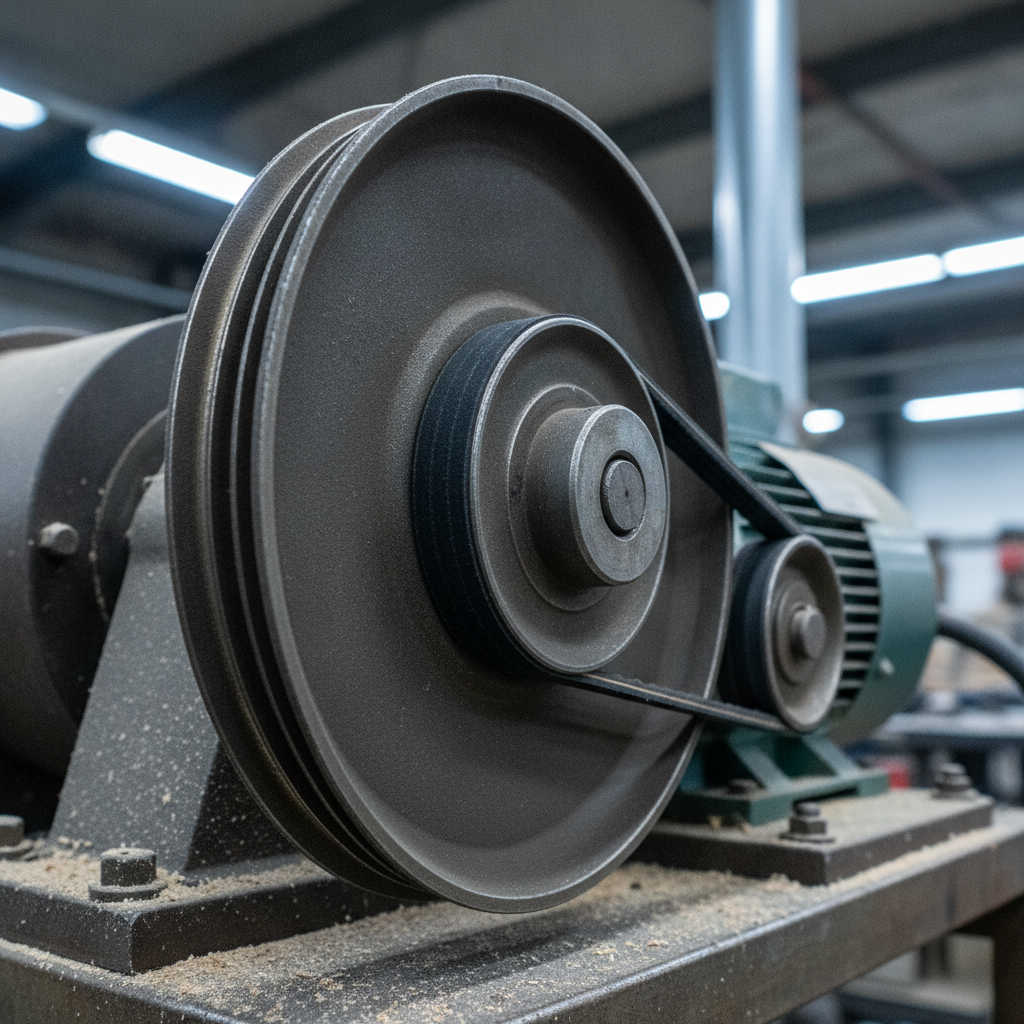
A fan belt is a flexible loop—often a V-belt or synchronous belt—that transmits power from an electric motor to a commercial exhaust fan. By maintaining the fan’s speed, the belt enables steady airflow that removes heat, smoke, and grease vapor from busy kitchens.
In practical terms, the belt is your airflow lifeline. When it slips, stretches, or snaps, airflow drops and cooking areas heat up fast. That’s when service grinds to a halt and safety risks increase. We see this across quick service, fine dining, and institutional kitchens—especially after heavy rushes and deep cleans.
- Primary function: Transfer motor torque to the fan wheel to sustain design CFM.
- Where it lives: Inside the rooftop fan’s drive section, connecting the motor pulley (sheave) to the fan pulley.
- Common materials: Rubber compounds with cord reinforcements, engineered for heat and oil resistance.
- Failure modes: Glazing, cracking, fraying cords, stretching, misalignment wear, or complete breakage.
For many operators, “fan belt” and “drive belt” are interchangeable. The takeaway: your belt’s health directly controls your hood’s performance—and that impacts compliance, comfort, and revenue.
Why fan belts matter for commercial kitchens
Fan belts keep exhaust airflow within design range. Stable airflow lowers heat, captures grease mist, and supports compliance with recognized fire safety standards. A worn or slipping belt reduces capture efficiency, overheats kitchens, and raises downtime and hazard risks.
Here’s why this small component deserves big attention:
- Air quality and comfort: Proper belt tension keeps fan RPM steady, improving capture at the hood and reducing smoke and odors in the line.
- Fire safety: Consistent exhaust helps remove grease-laden vapor before it deposits in ducts. Less buildup means lower ignition risk.
- Regulatory posture: Kitchens that follow recognized standards (like NFPA 96 cleaning intervals) pair clean ductwork with reliable airflow—belts are part of that reliability picture.
- Equipment protection: A slipping belt wastes energy as heat, glazing the belt and wearing pulleys. Left unchecked, it can damage bearings and shafts.
- Operational continuity: When belts fail mid-service, food quality and ticket times suffer. Proactive checks avoid emergency shutdowns.
In our experience supporting restaurants across All Over Ontario, many “mystery airflow” complaints trace back to a stretched or misaligned belt following a filter change or a deep clean. A 10-minute tension check often restores expected capture—no parts needed.
How a fan belt works (in kitchen exhaust systems)
The motor turns a small pulley, the belt transfers that motion to a larger fan pulley, and the fan wheel moves air through ductwork. Speed ratio equals driven diameter over driver diameter, so belt condition directly affects airflow and capture at the hood.
Think of the drive as a simple, robust transmission:
- Motor pulley (driver): Smaller sheave connected to the motor shaft.
- Fan pulley (driven): Larger sheave attached to the fan shaft.
- Belt path: Looped to wrap both pulleys with sufficient arc for grip.
- Speed relationship: Nmotor/Nfan = Dfan/Dmotor.
Two details make or break performance:
- Tension: Too loose and the belt slips; too tight and bearings overload. A common rule of thumb is roughly 1/64 inch of deflection per inch of span under moderate force.
- Alignment: Sheaves must be co-planar. Even slight angular or offset misalignment accelerates edge wear and noise.
When we replace belts during scheduled ventilation maintenance, we verify speed, listen for squeal, and check temperature at bearings. Most issues surface in those few, disciplined checks.
Types of fan belts used on commercial exhaust fans
Commercial exhaust fans typically use classic V-belts, notched/cogged V-belts for better flexibility, or synchronous (timing) belts where slip must be eliminated. The right choice balances grip, efficiency, noise, and maintenance in your specific kitchen environment.
Which belt fits your rooftop unit? It depends on pulley sizes, required RPM, ambient temperature, and duty cycle. Here’s a quick side-by-side to orient your team.
| Belt type | Where it shines | Pros | Watch-outs |
|---|---|---|---|
| Classic V-belt (A/B/C) | General-purpose drives on most rooftop fans | Widely available; simple to service; forgiving alignment | Some slip by design; can glaze if tension drifts |
| Notched (cogged) V-belt | Smaller pulleys; tighter wraps; improved efficiency | Runs cooler; better flexibility; reduced energy loss | Still subject to slip; check tension more often |
| Synchronous (timing) belt | Where slip is unacceptable; precise fan speed | No slip; consistent RPM; higher efficiency | Requires precise alignment; can transmit more vibration |
| Multi-rib (serpentine) | Compact drives; high power transfer in small space | Quiet; good grip; stable under varying loads | Requires clean sheaves; sensitive to debris and grease |
For heavy, continuous-duty kitchens, we often recommend notched V-belts for cooler running and easier starts. Where fans must hold exact speed for make-up air balance, synchronous drives earn their keep—provided alignment and tensioning are on point.
Best practices: inspection, tensioning, and alignment
Inspect belts monthly, after deep cleans, and any time you hear squeal or smell hot rubber. Check tension with a deflection gauge, confirm sheave alignment with a straightedge, and replace belts showing cracks, glazing, frayed cords, or uneven wear.
Inspection cadence you can stick to
- Monthly: Quick visual check for cracks, glazing, or dusting.
- After filter swaps and hood cleanings: Verify tension and alignment; belts often shift during service.
- Seasonal: Recheck in hot months—thermal expansion and rooftop heat can change behavior.
What to look, listen, and feel for
- Look: Cracks across ribs, shiny glaze, missing chunks, or uneven sidewear.
- Listen: Squeal on startup or during heavy load—often a tension or alignment issue.
- Feel: Excessive heat near bearings or sheaves suggests slip or overload.
Reliable tension and alignment methods
- Deflection method: About 1/64 inch per inch of span at the manufacturer’s recommended force.
- Frequency method: Use a belt frequency app or gauge to match recommended Hz for your belt length.
- Straightedge and laser: Confirm pulleys are co-planar; correct angular and offset misalignment.
As part of scheduled exhaust fan maintenance, our technicians document readings, photograph wear patterns, and note corrective actions. Those notes help facilities spot trending issues before they become emergencies.
How to replace a commercial exhaust fan belt (step-by-step)
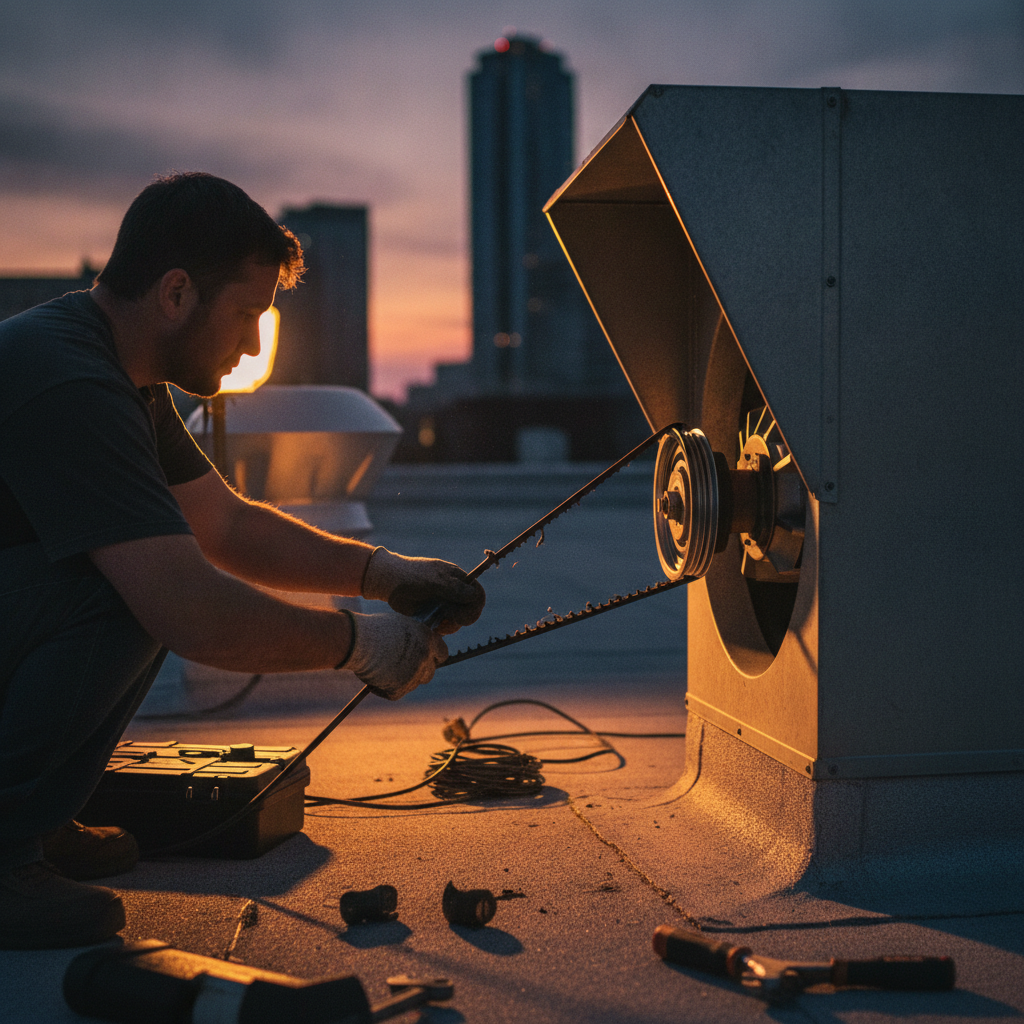
Lock out power, remove the guard, relieve motor tension, and slip off the old belt. Clean sheaves, install the correct new belt, set tension, verify alignment, spin by hand, then restore power for a test run. Recheck tension after 24–48 hours of operation.
- Confirm specs: Record belt designation (e.g., A42) and fan model. Match width, top width, and effective length.
- Isolate power: Use lockout/tagout. Never service a live drive.
- Remove guard: Keep fasteners collected to reinstall properly.
- Relieve tension: Loosen motor mount bolts and slide the motor inward.
- Inspect sheaves: Look for grooves, burrs, or oil contamination. Clean with a non-residue solvent.
- Install new belt: Avoid prying tools that damage cords; roll the belt gently over the sheave.
- Set tension: Use a gauge or frequency method; log your reading.
- Align: Straightedge across sheave faces; adjust motor base or shims as needed.
- Spin check: Rotate by hand; listen and feel for binding.
- Guard and test: Reinstall guard, restore power, verify smooth start and stable RPM.
- Recheck: After a day or two of service, fine-tune tension as the belt seats.
Our crews often pair belt changes with belt maintenance and fan inspections so everything is aligned, documented, and compliant in one visit.
Warning signs your fan belt is about to fail
Watch for squealing on start-up, rubber smell, visible cracks or frayed cords, belt dust near the guard, and poor capture at the hood. A sudden drop in airflow or hotter-than-usual line conditions often point to a slipping or stretched belt.
- Audible red flags: Squeal, chirp, or rhythmic thump as the splice passes.
- Visual cues: Glaze sheen, sidewall wear, cords poking out, or a belt riding low in the groove.
- Performance clues: Filters look clean but smoke hangs at the hood; make-up air balance feels off.
- After service events: Post-cleaning or filter changes when components were moved or removed.
If you see two or more of these at once, schedule service. Catching problems here is far cheaper than dealing with a snapped belt during a Friday dinner rush.
Maintenance schedule that keeps you compliant
Pair monthly belt checks with your hood and filter routine. Align belt service with recognized duct and hood cleaning intervals so airflow and grease removal stay in sync. Log readings and photos so trends are easy to spot.
- Every month: Visual belt check, listen test, guard integrity.
- Every quarter: Documented tension and alignment check; sheave cleaning.
- After deep cleaning: Verify tension and alignment. Re-seat guards.
- Annually: Replace belts that show wear, glazing, or stretching; inspect bearings and mounts.
We organize belt checks with kitchen exhaust maintenance and cleaning schedules so your team isn’t juggling separate calendars. That’s how All Over Ontario kitchens avoid surprises.
Tools and resources facilities actually use
Technicians rely on belt tension gauges, frequency meters, straightedges or lasers for alignment, non-residue cleaners, and documented checklists. Pair these tools with a simple rooftop kit and a clear maintenance log to speed safe, repeatable service.
- Belt tension gauge: Confirms deflection at the right force—no guessing.
- Frequency meter/app: Fast, repeatable tension verification by Hz.
- Laser or straightedge: Catches angular and offset misalignment instantly.
- Non-residue cleaner: Degreases sheaves without leaving slip-prone film.
- Hand tools: Wrenches, sockets, torque wrench for mount hardware.
- Safety gear: Lockout/tagout kit, gloves, eye protection.
- Documentation: A shared log with photos and readings.
For deeper ventilation performance context, see this overview of ventilation optimization and this Ontario-focused fan belt replacement guide. Operators use both as reference when standardizing PMs across locations.
Ontario case examples: quick wins from the field
Minor belt fixes deliver outsized results. We routinely restore capture by re-tensioning or aligning sheaves after filter swaps or deep cleans. Standardizing monthly checks across sites prevents peak-service failures and keeps hoods drawing as designed.
- Quick service line heat: A location reported rising line temps by mid-evening. Belt was riding low from stretch. Tensioned to spec and heat complaints vanished.
- Smoke at sauté: Post-cleaning, the fan guard was reinstalled touching the belt, creating drag and squeal. Repositioned guard, aligned sheaves, airflow stabilized.
- Weekend outage averted: Pre-rush check found frayed cords. We installed a new notched V-belt and logged readings. No downtime through the weekend events.
- Institutional kitchen consistency: Multi-venue team adopted a simple belt + filter monthly checklist. Air quality improved and emergency calls dropped noticeably.
Pairing belt care with scheduled replacement and drive inspections keeps airflow and cleanliness working together—exactly what compliance frameworks expect to see.
Local considerations for All Over Ontario
- Seasonal heat and cold: Rooftop temperature swings affect tension. Recheck belts after first heat waves and cold snaps to avoid slip or over-tension.
- Rush patterns: Belt wear accelerates around holiday traffic and festival weekends. Add a pre-event belt check to your prep list.
- After hood cleanings: Always verify belt tension and guard fit once cleaners leave. Movement during service can shift alignment.
Request a belt-and-vent checkup
If you’re hearing squeal, smelling rubber, or seeing weak capture at the hood, book a belt-and-vent checkup. We combine inspection, tensioning, and documentation in one visit—so your kitchen stays safe, comfortable, and compliant.
We’re WSIB insured, available 24/7, and staffed by NFPA 96–trained technicians. In one service window, we can review your fan belt, verify exhaust performance, and align maintenance intervals with your operations calendar.
See how we structure maintenance schedules and our step-by-step maintenance guide to reduce surprises during peak service.
Frequently Asked Questions
Common fan belt questions focus on lifespan, detection, and DIY vs. professional service. Belts last longer with correct tension, clean sheaves, and aligned pulleys. If you’re unsure about lockout or alignment, bring in a certified technician for a fast, safe fix.
How often should a commercial exhaust fan belt be checked?
Do a quick visual check monthly and after any hood or filter service. Perform a documented tension and alignment check at least quarterly. Recheck 24–48 hours after any new belt install as it seats into the sheaves.
What are the clearest signs a belt is slipping?
Listen for squeal on startup or under heavy load, watch for shiny glaze, and check for belt dust near the guard. If capture at the hood drops but filters are clean, a stretched or misaligned belt is a likely cause.
Can I switch from a V-belt to a synchronous belt?
Often yes, but you’ll need compatible pulleys and precise alignment. Synchronous belts prevent slip and hold RPM, which helps airflow consistency. A technician should confirm sheave compatibility and tensioning method before switching.
Why does belt tension change after hood cleaning?
During deep cleans, guards and mounts are moved. If the motor base shifts even slightly, tension and alignment change. Always verify belt setup once service is complete and guards are reinstalled.
Should I replace the belt at the same time as bearings?
Yes. Whenever bearings, pulleys, or the motor are serviced, install a fresh belt. New components change geometry slightly; a new belt ensures clean contact, proper tension, and quiet operation from the first run.
Conclusion and next steps
Healthy fan belts keep your exhaust airflow—and kitchen—steady. Build a simple monthly check, verify tension after each deep clean, and log readings. When in doubt, schedule a professional belt-and-vent check before peak service.
Key takeaways
- Fan belt health directly controls capture, comfort, and compliance.
- Monthly visuals + quarterly tension checks prevent most failures.
- Verify alignment and guard fit after hood or filter service.
- Choose belt types to match duty cycle and speed requirements.
- Document readings with photos to spot trends early.
Action steps
- Add “belt check” to your monthly hood and filter routine.
- Standardize a post-cleaning belt verification step.
- Create a shared log for tension, alignment, and notes.
- Book a professional check if you hear squeal or smell rubber.
Ready to align your schedule and stop surprise outages? Book a belt-and-ventilation assessment in All Over Ontario—our certified team is on call 24/7.
Related articles and deeper dives
Explore strategic maintenance topics that pair with belt care: maintenance calendars, rooftop inspection routines, and ventilation optimization. A holistic approach keeps airflow strong and grease removal effective during every rush.
For a deeper maintenance perspective, review our in-depth notes on belt replacement scheduling and the broader context of exhaust fan maintenance. Also see this reference on fan belt replacement for commercial hoods as you build your SOPs.