Commercial power washing services are the professional high-pressure cleaning of exterior and back-of-house surfaces to remove grease, grime, and contaminants. For restaurants and facilities operating All Over Ontario, routine power washing reduces slip hazards, protects building materials, and supports fire safety programs tied to kitchen operations. Robinhood Cleaners integrates this with exhaust, hood, and grease control services.
By Robinhood Cleaners • Last updated: 2026-06-10
Above the Fold: Hook + Guide Map
Stop grease before it becomes a problem. This guide maps how commercial power washing supports safer kitchens, cleaner walkways, and compliant operations. You’ll see where it fits alongside hood, duct, and grease trap programs—and how Ontario restaurants can schedule it around service hours without disrupting staff or guests.
Grease buildup sneaks into concrete, siding, dumpster pads, and loading zones. Left alone, it travels back onto shoes, floors, and even into hood systems. Here’s how to keep it under control without losing a single service window.
- What power washing is and when to use it
- Safety, compliance, and environmental guardrails
- Hot water vs. cold water vs. steam and surface cleaners
- Where it fits in a quarterly hood and grease program
- Actionable checklists and a vendor screening script
Quick Summary
Commercial power washing removes grease and soils from exterior and BOH surfaces using controlled pressure and temperature. For restaurants, pairing it with hood and grease trap maintenance cuts slip risks, odor, and recontamination. Schedule monthly to quarterly based on traffic, menu, and seasonality across All Over Ontario.
Here’s the short version for busy operators.
- Primary goal: Reduce slip/fall risk, odors, pests, and re-soiling of kitchen floors.
- Best cadence: Dumpster pads and walkways monthly; building exteriors and patios quarterly.
- Safety first: Post wet floor signs, divert foot traffic, and isolate electrical.
- Integrate: Align with exhaust system cleaning and kitchen cleaning to stop grease migration.
- Environmental: Capture wastewater; use oil separators and approved detergents.
What Is Commercial Power Washing?
Commercial power washing is professional high-pressure, often heated, water cleaning designed to remove grease, organic growth, salts, and grime from building exteriors and service areas. It protects surfaces, reduces slip hazards, and supports kitchen hygiene programs when paired with hood, duct, and grease trap services.
In our experience supporting restaurants All Over Ontario, “power washing” is the grease-control bookend to your indoor hood and floor program. It handles what mops and brooms can’t: embedded soils on concrete, patio pavers, siding, and dumpster pads.
Where it applies
- Front-of-house: Facades, awnings, signage surrounds (no text on images), patios, and sidewalks.
- Back-of-house: Dumpster enclosures, loading zones, compactor pads, and alley approaches.
- Grease-adjacent: Hood baffle filters during change-outs, rooftop grease catchers, and exhaust fan housings when appropriate.
Power washing complements deep cleaning. For example, after a commercial exhaust cleaning, we address rooftop grease splash and pad runoff so contaminants don’t track back inside.
Why Power Washing Matters for Restaurants and Facilities
Regular power washing reduces slip risks, pests, odors, and premature surface wear. It also limits grease recontamination of kitchens by removing residue from pads, alleys, and walkways. The result: cleaner guest areas, safer back-of-house, and fewer hygiene escalations during inspections.
Grease doesn’t respect doors. Shoes and wheels carry it into kitchens and dining rooms. We’ve seen facility slip incidents drop after aligning monthly pad washing with hood filter exchanges—because the grime path is interrupted.
- Safety: Cleaner concrete reduces slip/fall exposures on busy walk paths.
- Brand experience: Guests notice spotless patios and entryways.
- Surface protection: Oil and de-icing salts degrade concrete and masonry; washing extends life.
- Operational flow: Grease-free pads simplify nightly waste handling and deliveries.
Local considerations for All Over Ontario
- Winter sand and de-icers bond with oils. Plan a spring reset wash to lift residue from sidewalks and loading zones.
- Summer patios see spills and sunscreen transfer. A monthly rinse keeps stone from darkening and getting slick.
- Quick service peaks create narrow windows. Schedule overnight or pre-open bursts to avoid guest impact.
To keep these gains, tie exterior service to your power washing safety program and your ongoing restaurant kitchen cleaning.
How Commercial Power Washing Services Work
A trained crew inspects surfaces, isolates utilities, sets containment, and applies the right pressure/temperature with degreasers. Wastewater is captured or diverted per guidelines. Areas reopen after a final rinse and dry, usually within 30–90 minutes depending on airflow and weather.
Step-by-step process we follow
- Pre-inspection: Identify soil types (oil, gum, organic growth) and sensitive finishes.
- Safety setup: Cone and cordon. Post signs. Confirm exterior outlets are GFCI-protected or isolated.
- Containment: Lay berms, plug drains as required, deploy mats around grease-prone zones.
- Chemical application: Food-safe degreasers as needed; dwell times vary by temperature and soil load.
- Mechanical action: Use wands, rotary surface cleaners, or steam depending on substrate and grease.
- Rinse and reclaim: Capture wastewater where required and route to approved disposal.
- QC walk-through: Inspect joints, thresholds, and curbs; reopen traffic after dry-down.
For BOH pads, we often pair this with filter swaps and a quick check of rooftop fan housings so outdoor grease doesn’t undo indoor work. That’s part of our integrated exhaust cleaning and grease management approach.
Types, Methods, and Where Each One Wins
Choose methods based on soil and substrate. Hot water breaks oils faster, cold water is fine for dust and salt, steam lifts stubborn grease in tight areas, and rotary surface cleaners speed up large concrete pads while protecting the surface finish.
Common methods
- Hot-water power washing: Ideal for oils and proteins on pads and alleyways.
- Cold-water pressure washing: Great for dust, salts, and lighter soils on facades.
- Steam cleaning: Low-flow, high-heat for baked-on grease near equipment and thresholds.
- Rotary surface cleaners: Even, fast coverage on big concrete or paver areas.
Method selection table
| Method | Best For | Use With | Notes |
|---|---|---|---|
| Hot water (140–180°F) | Grease/oils on pads, drive lanes | Degreaser + rotary cleaner | Faster dwell and lift; monitor joints and seals |
| Cold water | Dust, mud, winter salts | Mild detergent | Lower energy; increase mechanical action for stains |
| Steam | Baked-on grease; tight thresholds | Spot wands | Low flow helps with containment |
| Rotary surface cleaner | Large flat concrete | Hot or cold water | Protects finish and reduces zebra-striping |
Method choice also depends on season. In Southern Ontario winters, cold water can flash-freeze; schedule midday slots or use warmed outputs and accelerated drying.
Safety, Compliance, and Environmental Controls
Treat power washing like any other safety-critical task. Control slip risk, shield passersby, protect electrical, and manage wastewater. Align service with your kitchen’s fire safety and hygiene routines so grease doesn’t migrate back onto floors or into exhaust systems.
- Worker safety: PPE, anti-slip boots, and eye/hand protection; isolate electrical near spray zones.
- Public safety: Clear detours and signage; protect vehicles and storefronts.
- Wastewater handling: Use berms, mats, and separators to keep oil out of drains.
- Kitchen alignment: Pair service with NFPA 96–aligned exhaust cleaning and food-safe cleaning.
For deeper tactical guidance specific to kitchens, see our in-depth note on power washing safety. It explains crew roles, cordoning layouts, and reopening criteria we use across Ontario facilities.
Where Power Washing Fits in Your Grease Program
Exterior cleaning is the first line of defense against grease migration. When pads, alleys, and walkways stay clean, indoor floors stay cleaner longer, and less residue reaches hoods and ducts. Pair monthly pad washing with filter exchanges to close the loop.
Cadence that works
- Monthly: Dumpster pads, loading zones, high-traffic walkways.
- Quarterly: Patios, signage surrounds, canopies, and facades.
- Semiannual: Rooftop grease containment areas and fan housings (with exhaust cleaning).
Integration workflow
- Schedule pad wash + filter exchange.
- Verify rooftop containment and fan belt tension during exhaust service.
- Recheck BOH thresholds and mats next morning; tweak cadence if soils rebound fast.
In high-volume quick service, this rhythm stabilizes floors and shortens nightly mop cycles—time your team notices immediately.
Tools and Resources We Trust
Professional results come from the right nozzles, surface cleaners, and temperature control—plus wastewater containment. Crews should carry GFCI protection, cones, berms, and mats, along with food-safe degreasers designed for oil separation and fast rinse-off.
- Nozzles and wands: Match fan angle to substrate; use turbo tips sparingly on durable concrete.
- Rotary cleaners: Faster, more even results on pads and patios.
- Heat control: Variable temperature units to tune lift without damaging sealants.
- Containment kit: Drain covers, oil-absorbent socks, and berms for responsible disposal.
For a kitchen-specific overview of degreasing techniques in exterior zones, our field note on power washing degreasing outlines detergency, dwell time, and rinse strategies we deploy on Ontario sites.
Case Studies and Real-World Examples
Power washing reduces hazards quickly when paired with hood and grease programs. The following snapshots show how timing, method, and coordination create cleaner guest paths and steadier BOH footing without interrupting service windows.
Quick service pad turnaround
- Challenge: Slippery compactor pad causing nightly cleanup delays.
- Action: Monthly hot-water rotary cleaning synced with baffle filter exchange.
- Result: Faster close, fewer slip alerts, visibly cleaner alley approach by morning.
Patio season reset
- Challenge: Spring salt film and darkened pavers on a busy patio.
- Action: Cold-water pre-rinse, mild detergent, and surface cleaner pass; spot steam at thresholds.
- Result: Restored color, less tracking into host stand, better first impressions for guests.
Rooftop containment assist
- Challenge: Grease stains around rooftop fan housing after a heavy season.
- Action: Steam detail on stains during exhaust cleaning; check containment and fan belt condition.
- Result: No runoff streaks, cleaner roof pad, less odor near intake vents.
For more kitchen-centered examples, see our overview of hood cleaning services that often pair with exterior resets across All Over Ontario.
Commercial Power Washing Services in Ontario: What to Expect
Expect a scheduled, low-disruption plan: site walk, safety setup, method selection, wastewater control, and a swift reopen. Providers should coordinate with your kitchen team, confirm pad access, and document service areas with before/after photos for accountability.
- Scheduling: Overnight, pre-open, or lull windows to protect guest experience.
- Documentation: Photos of alleys, pads, and patios; notes on stubborn stains and next steps.
- Integration: Align with restaurant cleaning and exhaust service.
Soft CTA: Want a no-obligation exterior hygiene assessment? Our team is WSIB insured, NFPA 96–aligned for kitchen systems, and available 24/7 across Southern Ontario to fit your schedule.
Checklists and Best Practices
Turn good intentions into repeatable results. Use a pre-service checklist, a live safety list, and a closeout check to verify drying times, access paths, and grease containment. Consistency keeps patios bright and BOH pads safe year-round.
Pre-service checklist
- Confirm service windows and access routes.
- Identify outlets, switches, and sensitive finishes to protect.
- Stage cones, signs, berms, drain covers, and reclaim gear.
- Verify detergent suitability and dilution for food-adjacent use.
Live safety list
- Cordon areas; set detours for guests, staff, and deliveries.
- Use anti-slip footwear and maintain clear egress paths.
- Keep wand sweep below knee height near glass and signage.
- Manage hoses to prevent trip hazards in alleys and patios.
Closeout check
- Rinse residues fully; remove standing water.
- Confirm dry-down at thresholds and host stand approaches.
- Restore utilities, remove cones, and document with photos.
- Note stain hotspots and update the next service plan.
Visual Examples: What “Clean” Looks Like
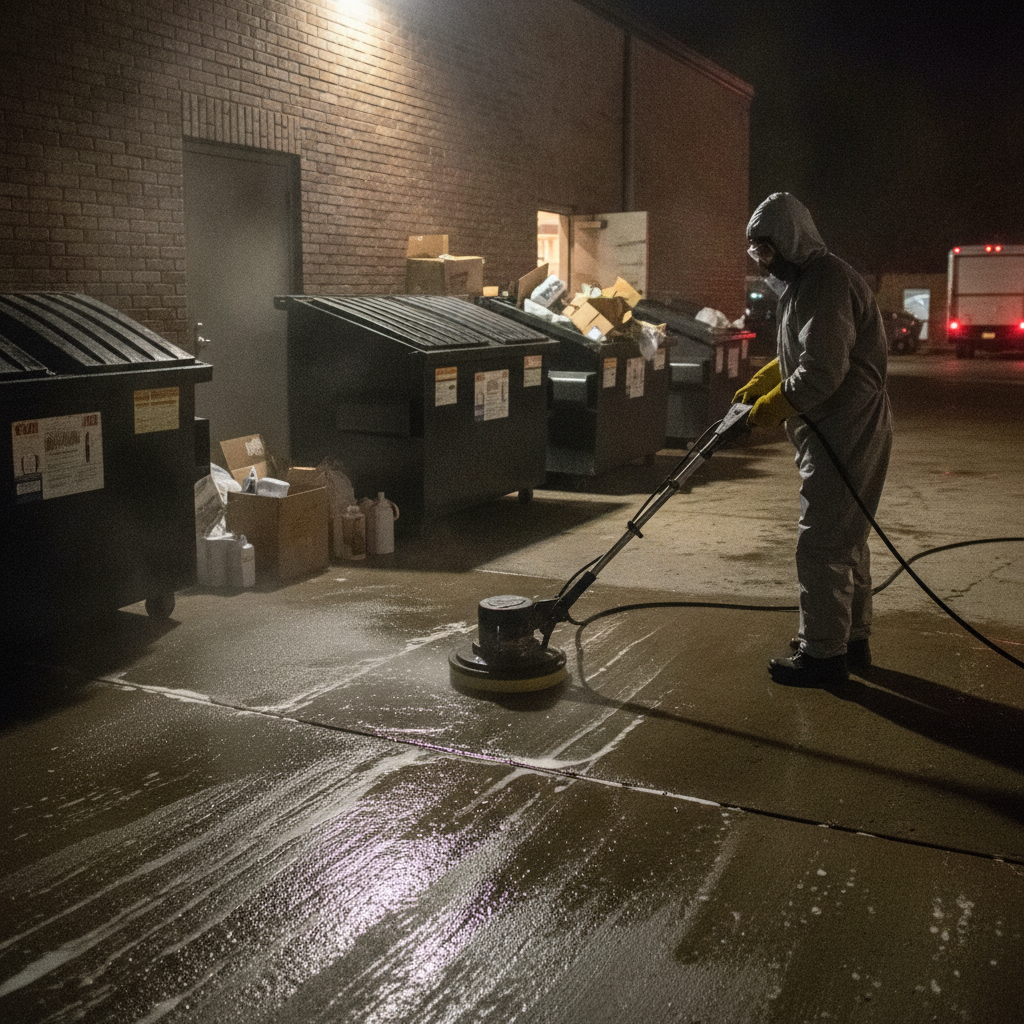
Clean concrete shows uniform color without dark pads or zebra-striping. Dumpster areas lose shine and odors, and patios regain even tone. Thresholds stop leaving black marks on mops. Those are the visible cues that your cadence, chemistry, and method match the soil load.
Detail matters. The photos below illustrate how nozzle control and even passes prevent streaks and surface damage in kitchen-adjacent zones.
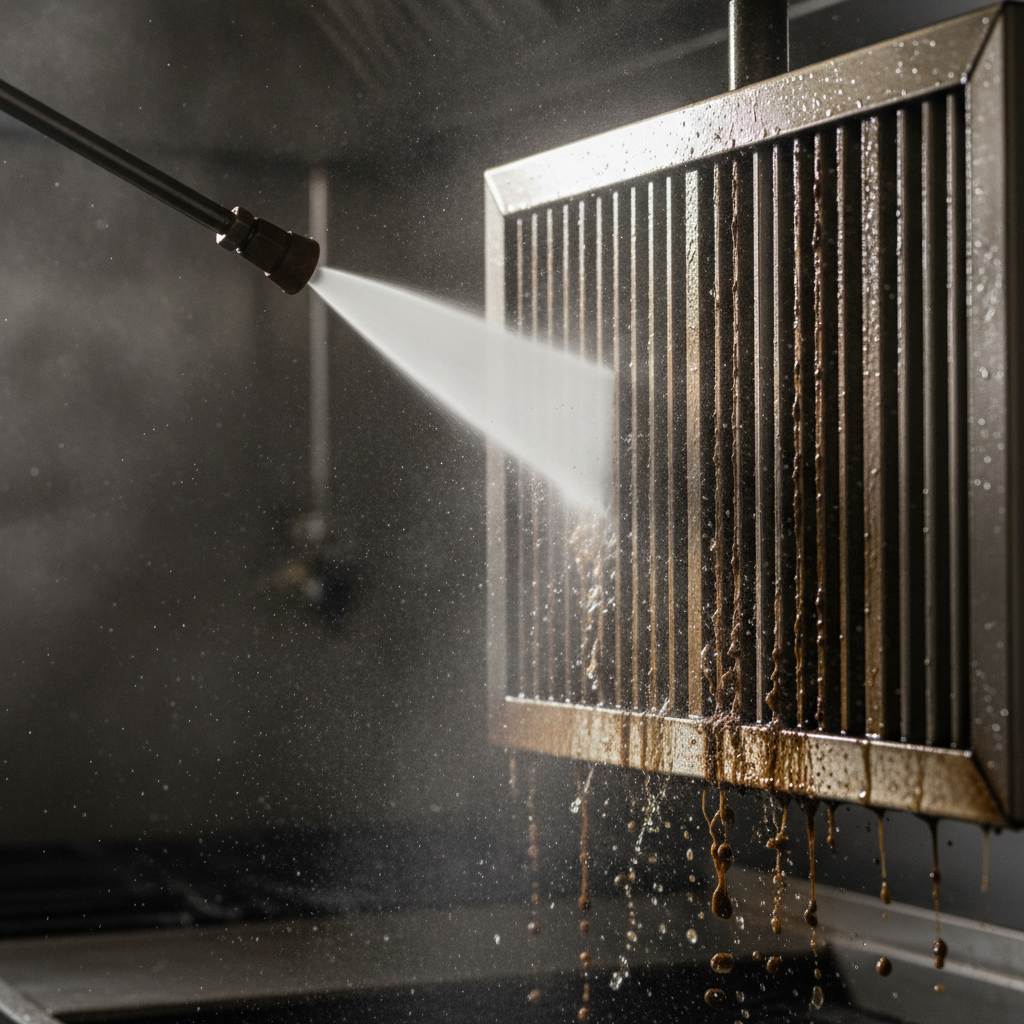
We finish with a final rinse to remove detergent films so foot traffic doesn’t carry residue into kitchens or dining areas.
How to Choose a Provider (And the Questions to Ask)
Select providers who integrate with your kitchen safety program, manage wastewater, and offer 24/7 scheduling. Ask about substrate protection, heat control, and documentation. Strong partners coordinate with hood, duct, and grease trap schedules so gains stick.
Screening script
- How do you isolate electrical and protect guests and staff during service?
- What’s your plan for wastewater and oil separation on our site?
- Which method will you use on our pads and pavers, and why?
- Can you align with our exhaust cleaning cycle and filter exchanges?
- Do you provide photos and a post-service checklist?
Providers should be insured and experienced with kitchen-adjacent grease. We align our crews with kitchen power washing safety methods used across All Over Ontario facilities.
Frequently Asked Questions
Operators ask about cadence, surfaces, seasonality, and reopening times. The answers below keep decisions simple and grounded in kitchen operations so exterior resets support food safety and guest experience without disrupting service windows.
How often should we schedule commercial power washing services?
Most restaurants benefit from monthly dumpster pad service and quarterly patios and facades. High-traffic quick service sites may prefer biweekly pads. Reevaluate cadence seasonally to address winter salts or patio season spills across All Over Ontario.
What surfaces can be safely power washed?
Concrete, sealed masonry, and most pavers respond well. Use lower pressure and wider fan tips near soft woods, painted trim, and aging sealants. Steam helps with baked-on grease in tight thresholds without flooding the area.
Do we need to close during service?
Not usually. We schedule overnight, pre-open, or lull windows and cordon routes to keep guests out of wet areas. Most pads and sidewalks can reopen 30–90 minutes after final rinse, depending on airflow and temperature.
How does exterior cleaning affect our kitchen hygiene?
It breaks the grease migration path. When pads, alleys, and walkways are clean, less residue tracks into kitchens and onto floors. Pairing monthly pad washes with filter exchanges and regular hood service keeps results stable.
Key Takeaways
Power washing is a strategic extension of kitchen hygiene. Align cadence with hood and grease trap programs, match method to soil and surface, and control wastewater. A good provider keeps guests safe, documents work, and opens access fast.
- Exterior grease control protects indoor floors and guest paths.
- Monthly pads; quarterly patios and facades work well for most sites.
- Hot water and rotary cleaners speed pad resets; steam excels at thresholds.
- Pair with kitchen exhaust cleaning for lasting results.
Next steps: If you operate All Over Ontario, we can align power washing with your existing hood, duct, and grease programs for a single, low-disruption service window.
Related Topics in Our Cleaning Program
Explore connected services that keep kitchens compliant and efficient. Linking exterior resets with hood, duct, and grease trap work closes the loop and prevents recontamination. These topics outline how we coordinate services into one efficient window.
For deeper kitchen-side detail, read our notes on exhaust system cleaning, our restaurant kitchen cleaning guide, and this field brief on power washing safety for crews and managers.