Cleaning exhaust filters is the systematic removal of grease and debris from commercial kitchen hood baffle filters to restore airflow, reduce fire risk, and support compliance. In All Over Ontario, Robinhood Cleaners uses NFPA 96–aligned methods so restaurants and institutional kitchens stay safe, efficient, and inspection‑ready.
By Robinhood Cleaners • Last updated: 2026-06-07
Above-the-Fold: Hook + TOC
Your kitchen’s hood filters are your first line of defense against grease fires and poor airflow. Clean filters capture grease more efficiently, keep fans from overworking, and help you pass inspections. This guide shows you how exhaust filter cleaning works and when to call a professional in Ontario.
If your hood filters look clean, they probably aren’t. Grease hides in seams and baffle channels, restricting airflow and stressing your exhaust fan. Here’s what you’ll learn today:
- What exhaust filter cleaning is and why it matters for safety
- How the process works step by step (DIY vs. pro)
- Methods, tools, and chemicals that actually remove grease
- Best practices that extend filter life and protect fans
- Ontario-focused tips for busy restaurant seasons
- What is exhaust filter cleaning?
- Why it matters
- How it works
- Types and methods
- Best practices
- Tools and resources
- Case studies and examples
- FAQ
- Conclusion & next steps
Quick Summary
Exhaust filter cleaning restores airflow, reduces grease fire risk, and supports compliance. In practice, it means removing baffle filters, soaking in hot degreaser, scrubbing, rinsing, drying, and reinstalling. High-volume Ontario kitchens benefit from a filter exchange program to keep airflow strong during peak hours.
Grease-saturated filters reduce capture efficiency, force fans to work harder, and transfer residue into ducts. A consistent program—daily wipe-downs, weekly soaks, and professional service on a fixed cadence—keeps systems within safe operating limits and extends equipment life.
Local considerations for All Over Ontario
- Plan filter exchange cycles around busy periods (summer patios, holidays). More volume means more airborne grease; increase soak frequency and schedule pro service before rush season.
- Humidity swings in Southern Ontario can slow drying. Use heated drying racks or rotate spare filters so moisture doesn’t trap debris and odors.
- Many Ontario inspections align with peak seasons. Keep logs, label filters by zone, and align cleanings with your kitchen exhaust cleaning schedule.
What Is Exhaust Filter Cleaning?
Exhaust filter cleaning is the systematic degreasing of hood baffle filters to maintain capture velocity, protect ducts and fans, and reduce fire risk. It combines hot-water soaking, safe degreasers, mechanical agitation, and full drying before reinstallation or exchange.
Clean filters do three jobs well: capture grease, keep airflow consistent, and act as a fire barrier inside the canopy. When they clog, smoke lingers on the line, make-up air feels off, and the fan draws more amps than normal. That extra load increases wear on belts and bearings.
For Ontario restaurants and institutional kitchens, we see results improve when filter care connects to the bigger picture—hood, duct, fan, and grease containment. That’s why our team pairs filter service with hood cleaning and scheduled exhaust maintenance.
Why Exhaust Filter Cleaning Matters
Clean filters reduce fire risk, stabilize airflow, and help pass inspections. Grease accumulates fast during high-heat cooking. Left in place, it compromises capture efficiency, migrates into ducts, and shortens exhaust fan life. A set schedule keeps risk measurable and manageable.
Here’s the thing: most hood issues start with neglected filters. We often measure weak capture at the grill, only to find baffles loaded with polymerized grease. Swap them out, and smoke migration drops right away. This simple step protects your entire exhaust path.
- Fire safety: Baffle pathways interrupt flame travel and trap aerosols; when clean, they perform as designed.
- Ventilation performance: Clean baffles preserve capture velocity and reduce fan strain.
- Compliance readiness: Filter logs and visible condition support inspections tied to your exhaust cleaning program.
- Equipment longevity: Lower amp draw and less vibration help belts and bearings last longer, reducing surprise downtime.
When we deploy our filter exchange on a quarterly-to-monthly rhythm (volume dependent), exhaust fans run quieter and makeup air balances more predictably. Teams also report less smoke at the pass and fewer odor complaints in dining areas.
How Exhaust Filter Cleaning Works
The cleaning sequence is remove, pre-rinse, hot soak with degreaser, scrub, rinse, dry, and reinstall. For high-volume kitchens, a professional filter exchange program keeps freshly cleaned baffles on hand while saturated ones are processed offsite.
Below is the hands-on workflow our Ontario teams follow during a standard service. Use it in-house for daily or weekly upkeep, then layer professional service on top.
Step-by-step process (in-kitchen)
- Lock out cooking zones and cool surfaces. Remove baffle filters carefully to avoid bending frames.
- Pre-rinse with hot water to remove loose grease. Aim for water at roughly 140–160°F to soften residues.
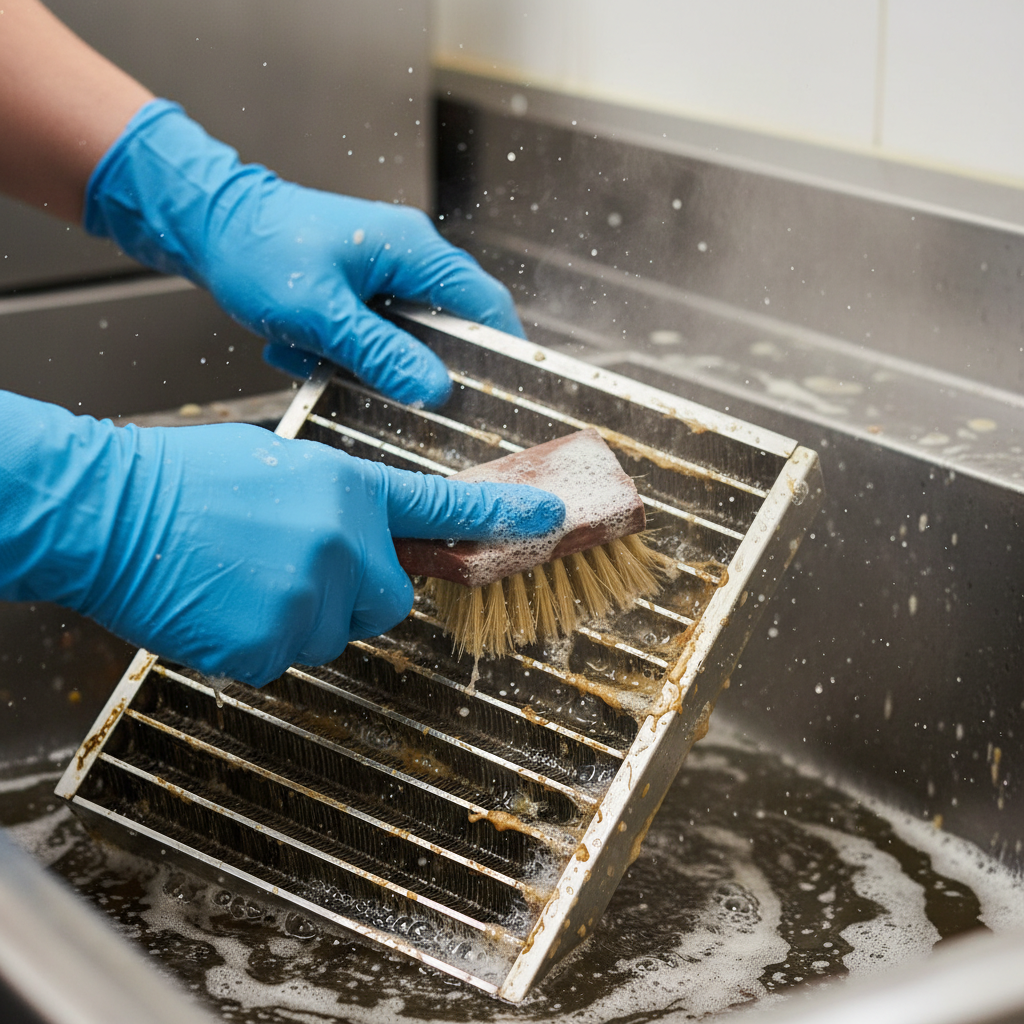
- Soak in degreaser using a non-caustic, aluminum-safe product for 10–20 minutes. Agitate halfway through to break polymerized layers.
- Scrub baffle channels with nylon or stainless brushes sized for your filters. Focus on seams and drain holes.
- Rinse thoroughly until runoff is clear. Residual detergent leaves films that attract new grease faster.
- Dry completely with heated air or racks. Moisture trapped in baffles can drip onto cooklines and slow capture.
- Reinstall with baffles vertical and drains oriented correctly so grease flows to the trough.
To make this stick, assign a named shift lead for filter checks. In our experience, clear ownership boosts compliance and keeps the hood looking inspection-ready between deep cleans.
Where DIY ends and pro service begins
- Good for DIY: Daily wipe-downs, weekly hot soaks, visual checks for dents and warping.
- Call the pros: Heavy polymerization, airflow complaints, persistent smoke, or filters that won’t drain after cleaning.
- Bundle benefits: Professional service can align with hood degreasing, duct cleaning, and fan inspections for one documented visit.
We also tie filter exchange to hood filter upkeep, so your team always has a clean set on the rack. That keeps airflow stable on double shifts and event weekends.
Types/Methods/Approaches
The main approaches are hot-soak and scrub, low-foaming spray-and-rinse, and ultrasonic cleaning. For high throughput, a filter exchange program ensures clean baffles are always available while saturated units are processed offsite.
Different kitchens need different methods. A quick-service line producing constant fry vapor loads filters faster than a banquet kitchen. Below are field-proven options.
Common cleaning approaches
- Hot soak + agitation: Most universal; 140–180°F water with non-caustic degreaser, 10–20 minute dwell time, mechanical scrubbing.
- Spray-and-rinse: Faster turnover during service lulls; low-foaming detergent, targeted spray, immediate rinse and dry.
- Ultrasonic baths: High-frequency cavitation removes embedded soils; best for restore-level cleans or periodic deep resets.
- Exchange programs: Keep spare, clean filters on-site. Swap in minutes, then we process the dirty set offsite to factory-bright condition.
Comparison: which method fits your kitchen?
| Method | Best For | Pros | Watch-outs |
|---|---|---|---|
| Hot soak + scrub | Most restaurants; daily/weekly care | Reliable, low equipment needs | Requires safe handling; proper drying time |
| Spray-and-rinse | Quick service during shift gaps | Fast, minimal disruption | Less effective on heavy polymerization |
| Ultrasonic | Restore-level deep cleans | Reaches seams and baffle interiors | Specialized equipment and setup |
| Exchange program | High-volume or multi-venue operations | No downtime, consistent airflow | Requires inventory tracking and labeling |
Not sure which path is right? Our Ontario team often blends hot soaks for routine care with periodic ultrasonic resets. Multi-site groups favor exchange programs to standardize results across locations.
Best Practices
Set a written filter schedule, label each baffle, and track soak/replace dates. Use aluminum-safe degreasers, control water temperature, dry completely, and verify airflow. Pair filter care with hood, duct, and fan maintenance for measurable improvements.
We’ve found consistent habits beat one-off deep cleans. Here’s a checklist your team can use starting tonight.
Filter care checklist
- Label filters by zone (grill, fryer, sauté) and track service dates with a simple tag.
- Document cadence (daily wipe, weekly soak, monthly inspection). Post it inside the chemical closet.
- Use the right chemistry: non-caustic, aluminum-safe degreasers to prevent pitting and discoloration.
- Control water heat: 140–180°F for efficient emulsification without warping.
- Dry fully before reinstalling. Residual moisture traps soils and drips onto the line.
- Inspect baffles for dents/warps that reduce capture efficiency. Replace damaged units promptly.
- Verify airflow at the hood after reinstall—look for improved smoke capture and quieter fan tone.
Bundle this with upstream and downstream care—scheduled hood degreasing, duct cleaning, and optional fan inspections—so small problems don’t become emergencies.
Tools/Resources
Effective filter cleaning needs heat, safe chemistry, and the right agitation. A deep sink, aluminum-safe degreaser, nylon/stainless brushes, PPE, drying racks, and spare filters form a reliable toolkit. For speed, use exchange programs to avoid downtime.
Here’s the core setup we deploy across Ontario kitchens and commissaries.
- Deep utility sink or soak tank sized for your largest filters.
- Hot water access at consistent temperature for better emulsification.
- Degreaser that’s non-caustic and aluminum-safe; follow dwell-time guidance.
- Brushes matched to baffle channels; nylon for soft metals, stainless for heavy soils.
- PPE: heat-resistant gloves, eye protection, nonslip footwear.
- Drying racks or heated cabinet to ensure full dryness before reinstall.
- Spare filters to support an exchange rotation during peak hours.
For comprehensive system care, align filter work with canopy cleaning and duct service. If you’re troubleshooting odors or smoke after cleaning, see our guide on extractor filter cleaning.

Case Studies/Examples
When Ontario kitchens add a labeled filter schedule and exchange program, airflow stabilizes and smoke complaints drop. Pairing this with hood and duct service yields longer fan life and fewer emergency calls. Here are realistic examples from our day-to-day work.
Quick service grill line
- Problem: Heavy fry and grill output led to nightly smoke near the pass.
- Action: Weekly hot soaks plus monthly exchange; coordinated hood degreasing the same night.
- Result: Noticeably better capture on rushes; quieter exhaust fan tone and steadier make-up air.
Institutional kitchen (multiple lines)
- Problem: Mixed menus and long hours led to uneven filter conditions across zones.
- Action: Labeled filters by station (fryer, grill, sauté) and rotated an exchange set every two weeks.
- Result: Balanced airflow between canopies; fewer odors in serving corridors.
Banquet operation with rooftop fan constraints
- Problem: Seasonal events caused spikes in grease load; rooftop access limited service windows.
- Action: Pre-event filter swaps with offsite ultrasonic processing; bundled duct and fan checks quarterly.
- Result: Stable capture during peak events and reduced emergency maintenance.
For more on air quality considerations, see our overview of commercial kitchen air quality. If filter frames are failing or warped, review our notes on filter replacement options and learn how to identify grease buildup patterns across your system.
Frequently Asked Questions
Most kitchens should clean exhaust filters weekly and perform a deeper reset on a defined cadence. Signs you need service now include smoky lines, visible drips, and loud or vibrating fans. Here are quick answers to common questions we hear in Ontario.
How often should I be cleaning exhaust filters?
Most Ontario kitchens benefit from weekly hot soaks and monthly inspections. High-volume fry or grill stations may warrant a filter exchange every 1–2 weeks. If smoke lingers or the fan sounds strained, increase frequency and schedule professional service.
What degreaser is safe for aluminum baffle filters?
Use a non-caustic, aluminum-safe degreaser designed for commercial kitchens. Follow dwell-time guidance and rinse thoroughly. Caustic products can pit or discolor aluminum, making soils stick faster and shortening filter life.
When should I replace instead of clean?
Replace filters that are warped, cracked, have broken welds, or won’t drain even after proper cleaning. If capture is poor despite clean baffles, inspect ducts and the exhaust fan—there may be downstream restrictions or belt issues.
Do clean filters really protect the ducts?
Yes. Clean baffles trap airborne grease before it migrates into ducts. When filters clog, aerosols bypass the baffles and stick to duct walls and the fan housing, raising fire risk and increasing maintenance needs.
Can I align filter cleaning with full hood service?
Absolutely. We coordinate filter exchange with hood, duct, and fan service in one after-hours visit. That approach keeps airflow consistent, minimizes disruption, and leaves you with documentation for inspections.
Conclusion
Exhaust filter cleaning keeps your kitchen safe, quiet, and compliant. Build a simple schedule, stock spares, use safe chemistry, and verify airflow after each service. For Ontario restaurants and institutions, an exchange program paired with hood and duct care delivers the most reliable results.
Key takeaways:
- Clean filters stabilize capture velocity and reduce fire risk.
- Label, schedule, and rotate baffles—especially before busy seasons.
- Use aluminum-safe degreasers and full drying to extend filter life.
- Bundle filter, hood, duct, and fan care for measurable improvements.
Next steps:
- Walk your line today and label each filter by zone.
- Set a weekly soak and monthly inspection on your staff calendar.
- Book a 24/7 after-hours visit in All Over Ontario to align filters with full exhaust cleaning.