Commercial kitchen cleaning cost factors are the variables that shape scope, frequency, risk, and labor for professional cleaning. For kitchens in All Over Ontario, the biggest drivers are cooking volume, grease load, system access, documentation needs, and add-on services such as grease trap care and exhaust fan maintenance. Understanding these inputs helps you plan confidently.
By Robinhood Cleaners • Last updated: 2026-06-30
Quick Summary and Contents
Commercial kitchen cleaning cost factors fall into six buckets: usage intensity, soil and risk level, access and preparation, compliance documentation, kitchen layout and materials, and optional services (filters, fans, grease traps, and appliances). Use the checklist below to scope work accurately and avoid mid-project surprises.
In this complete guide, you’ll learn how scope, frequency, and compliance influence your plan—and how our NFPA 96–aligned methods keep your operation safe and inspection-ready.
- What are the cost factors?
- Why these drivers matter
- How scoping and frequency work
- Types of cleaning that change scope
- Pricing factors and scoping checklist
- Best practices to control total cost
- Tools and resources
- Case studies and examples
- FAQ
- Conclusion and next steps
What Are Commercial Kitchen Cleaning Cost Factors?
Commercial kitchen cleaning cost factors are the inputs that determine labor, time, and materials for a safe, compliant clean. They include cooking volume, grease accumulation, equipment complexity, access to hoods and ducts, documentation needs, and optional services like grease trap, filter exchange, and exhaust fan maintenance.
When we scope a project in All Over Ontario, we evaluate the kitchen’s unique risk profile and workflow. That means looking beyond surface soil to fan belts, duct interiors, and filters that influence both safety and scheduling.
Primary drivers you should assess
- Usage intensity: Hours open, menu type, and production peaks drive grease load.
- Soil and risk level: Grease thickness, solid-fuel cooking, and heat levels raise fire risk.
- System access: Access panels, roof height, make-up air, and fan location change setup time.
- Compliance needs: NFPA 96 alignment and insurer documentation affect inspection steps.
- Layout and materials: Stainless, tile, walls, and floor drains impact methods and protection.
- Optional services: Filter programs, fan belt replacement, grease trap care, and appliance deep cleans.
For a deeper overview of hood and duct scope, review our commercial kitchen exhaust cleaning services and our step-by-step hood cleaning guide.
Why Cost Drivers Matter for Ontario Kitchens
Understanding cost drivers protects safety, uptime, and compliance. The right scope reduces fire risk, supports NFPA 96 alignment, prevents unplanned downtime, and avoids repeat callbacks. Clear planning also helps staff prepare, saving time and preventing rework during service windows.
Here’s the thing: a clean hood and duct aren’t just visual—they’re functional fire protection. Grease accumulation is a leading cause of kitchen fires, and ventilation performance directly influences heat and air quality. Well-defined scopes often cut rework while increasing inspection pass rates.
Operational benefits you’ll feel day one
- Safety margin: Removing combustible grease reduces ignition sources across hoods, ducts, and fans.
- Inspection readiness: Documented service with photos streamlines insurance and regulatory checks.
- Air quality: Ventilation optimization improves comfort for line cooks and reduces odors in dining areas.
- Predictable scheduling: Right-sized frequency prevents emergency shutdowns during service.
- Equipment longevity: Clean fans and aligned belts reduce strain and premature wear.
Explore practical scheduling guidance in our hood cleaning frequency overview and broader restaurant kitchen cleaning services.
How Cleaning Scopes and Frequencies Shape Your Plan
Cleaning scope defines what gets cleaned; frequency defines how often. High-volume, grease-heavy menus need more frequent NFPA 96–aligned service to keep hoods, ducts, and fans safe. Lower-volume kitchens can extend intervals but still require documented, end-to-end system cleaning.
In our experience, kitchens with fryers, woks, and charbroilers load ducts quickly, while prep-focused operations tend to extend intervals. Balanced programs match menu, hours, and ventilation design—then lock in documentation for audits and insurance.
Typical scoping elements
- Hood and plenum: Degreasing, scraping when needed, polish for stainless, and overspray control.
- Ductwork interior: Access panel use, rotary tools, and hot-water rinse based on grease thickness.
- Exhaust fan assembly: Fan blades, housing, hinges, drain pans, and fan belt tension/condition.
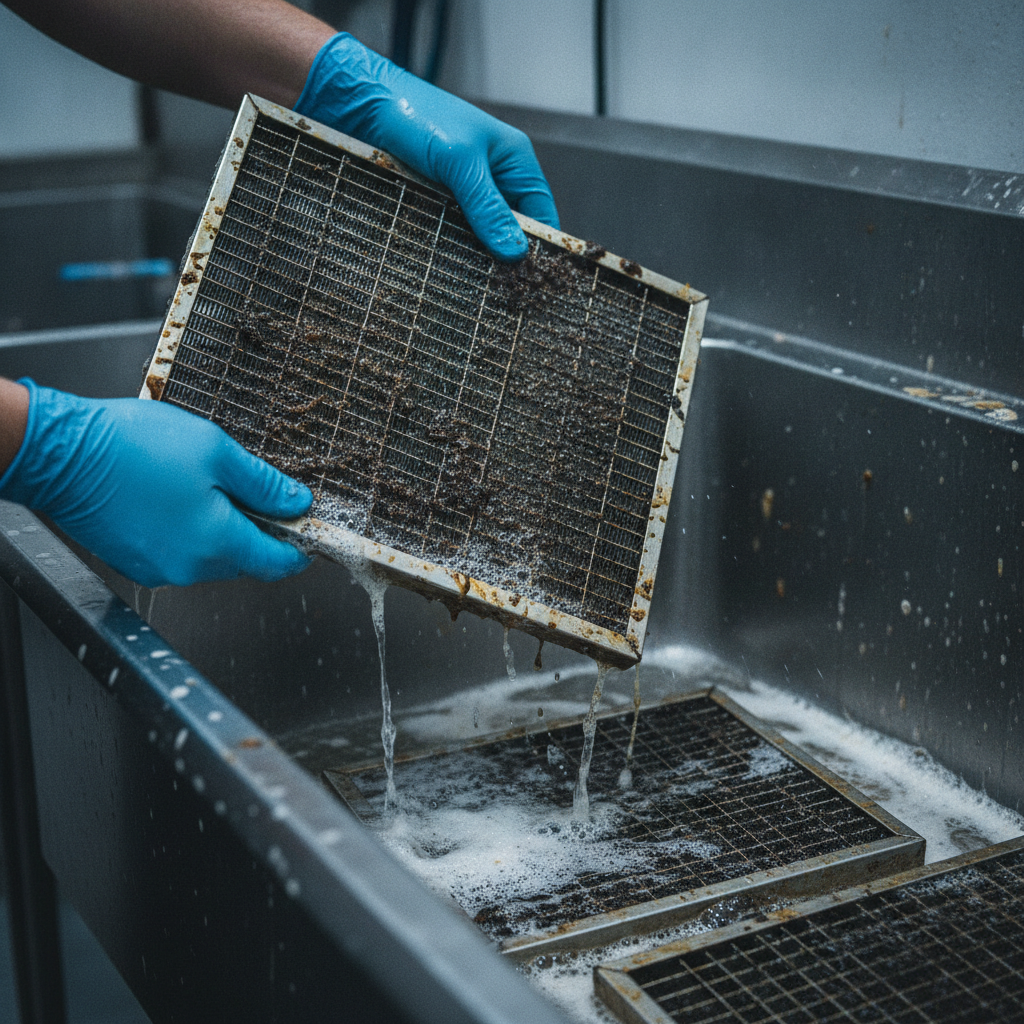
- Filters: Baffle filter removal, degreasing, hot rinse, and exchange programs.
- Containment: Floor protection, splash zones, and rooftop grease containment checks.
- Proof: Photo documentation and post-clean inspection notes for your records.
To see how scope translates to the line, compare our Ontario commercial kitchen services with your menu mix and hours.
Types of Cleaning and Their Impact
Different cleaning types change time, tools, and prep. Full-system NFPA 96 cleaning, grease trap service, filter exchange, fan belt replacement, and appliance deep cleans each add value—and each has its own setup, safety, and documentation requirements.
Not every visit includes every task. A smart plan pairs routine maintenance (filters, fan checks) with periodic deep work (duct interior, appliances) to keep risk low without disrupting service windows.
Core service categories we deliver
- Kitchen exhaust cleaning: Hood, plenum, ducts, and fans cleaned end to end for fire hazard reduction.
- Filter cleaning & exchange: Keep airflow steady while reducing grease migration to ducts.
- Fan belt replacement: Corrected tension and fresh belts protect CFM and motor life.
- Grease trap cleaning: Pumps, skimming, and maintenance reduce backups and odors.
- Commercial appliance cleaning: Ovens, grills, and refrigeration coils regain efficiency and hygiene.
- Power washing: Floors, back dock, and rooftop areas for sanitary, safe walking surfaces.
- Duct cleaning: Ventilation system maintenance improves kitchen air quality.
For a practical walkthrough of hood-specific work, see our exhaust cleaning services overview.

Pricing Factors and Scoping Checklist
The strongest predictors of kitchen cleaning investment are production volume, grease load, duct access, roof conditions, filter condition, and whether grease trap and appliance work are included. A clear pre-visit checklist eliminates surprises and sets accurate expectations.
We don’t publish prices because every kitchen is unique. Instead, use this scoping approach to define the work precisely, then align it with your operating hours and inspection timeline.
Pre-visit scoping checklist
- Menu and hours: Note fryers, woks, charbroilers, and service peaks.
- Grease indicators: Filter saturation rate; visible hood/duct residue; rooftop grease.
- Access logistics: Roof height, hatch, weather exposure, and fan hinge availability.
- Facilities readiness: Water temp/pressure for rinse; floor drains; electrical.
- Documentation rules: Photo documentation required; insurer or landlord standards.
- Add-on needs: Grease trap pumping, fan belt swap, or appliance deep clean windows.
Factor impact table
| Factor | Impact on Scope | How to Optimize |
|---|---|---|
| High grease menu | More duct interior time; stronger degreasers | Adopt filter exchange; schedule more frequent hoods |
| Limited access panels | Extra setup and tool time | Install compliant access panels for faster future service |
| Rooftop constraints | Safety rigging; weather buffers | Hinge kits, grease containment, weather-aware scheduling |
| Old or damaged filters | Reduced airflow; more hood residue | Move to a planned filter program |
| Grease trap overdue | Odors and backups risk | Bundle trap maintenance with hood nights |
| Documentation required | Photo and reporting steps | Share templates; align on proof-of-service needs |
For service standards and expectations, skim this service-focused primer on hood cleaning frequency and this overview on kitchen exhaust risk.
Best Practices to Control Total Cost of Cleanliness
Control total cost by pairing routine filter and fan checks with periodic deep cleaning, documenting every visit, and scheduling by risk—not by calendar alone. Small, consistent tasks prevent heavy grease layers, shorten deep cleans, and support continuous NFPA 96 alignment.
What most teams don’t realize: a disciplined filter program can stabilize airflow and reduce grease migration to ducts, which often trims future deep-clean time. Add in quick fan belt checks, and you’ll protect both CFM and motor health.
Actionable practices
- Risk-based frequency: Set intervals by menu and soil rate, then review quarterly.
- Photo-first documentation: Capture before/after at hoods, ducts, and fans for proof.
- Filter exchange cadence: Adopt weekly/biweekly exchanges for heavy fry lines.
- Rooftop readiness: Use hinge kits and containment to speed safe access.
- Bundle services: Combine grease trap, fan belts, and appliance windows with hood nights.
- Staff prep checklist: Clear lines, cover equipment, and confirm hot water access before arrival.
See how these habits align to our end-to-end exhaust cleaning approach.
Tools and Resources for Smarter Planning
Use a simple matrix to match menu risk to frequency, a pre-visit readiness checklist, and a photo log template to record proof. Pair these with a filter exchange calendar and a maintenance tracker for fans, belts, and grease traps.
We equip managers with practical tools to cut friction and keep kitchens inspection-ready. Start with the resources below and tailor them to your operation’s service windows.
Download-ready templates you can copy
- Risk-to-frequency matrix: Map menu types (fryer, wok, charbroiler) to cleaning intervals.
- Pre-visit readiness checklist: Validate access, water temperature/pressure, and protection.
- Photo documentation log: Standardize before/after captures at key points.
- Filter exchange calendar: Track weekly/biweekly swaps and stock levels.
- Rooftop safety list: Hinge kits, containment, and fall protection reminders.
For managers who prefer a guided approach, our expert hood cleaning guide and restaurant services overview offer step-by-step structure.
Case Studies and Examples from All Over Ontario
Real kitchens across All Over Ontario reduce risk and downtime by matching cleaning programs to menu and hours. These quick scenarios show how filter exchanges, fan belt checks, and bundled grease trap service stabilize airflow, speed inspections, and minimize overnight disruption.
We’ve helped quick service lines, fine dining teams, and institutional kitchens structure programs that fit their reality. Here are a few representative examples.
Quick service burger line
- Challenge: Heavy fryer and charbroiler output accelerated duct grease.
- Approach: Biweekly filter exchange; quarterly full-system cleaning; monthly fan belt checks.
- Result: Better airflow stability and fewer smoke complaints during rush periods.
High-end wok and grill concept
- Challenge: Intense heat and aerosolized oils raised fire risk and fan strain.
- Approach: Quarterly duct interior service; weekly filter exchanges; hinge kit install on rooftop fan.
- Result: Faster rooftop access, shorter service windows, and improved inspection pass consistency.
Institutional cafeteria
- Challenge: Long daily hours with varied menus complicated scheduling.
- Approach: Semester-based deep cleans; monthly hood touch-ups; bundled grease trap maintenance.
- Result: Predictable calendar blocks and quieter overnight work affecting fewer stakeholders.
For an operations-first perspective on scope planning, see this overview of Ontario hood cleaning services.
Local considerations for All Over Ontario
- Winter roof access can be challenging. Build weather buffers into service windows and confirm safe rooftop egress in advance.
- Summer volume spikes often increase grease load. Adjust filter exchanges and hood intervals during peak tourist and patio seasons.
- Late-night service helps busy kitchens. Our 24/7 availability supports off-hour cleaning with minimal disruption.
Need a fast, NFPA 96–aligned scope? Book a walkthrough and align your plan to usage, risk, and hours. Explore our end-to-end exhaust cleaning and restaurant services to get started.
Frequently Asked Questions
Operators ask about scope, frequency, downtime, documentation, and what’s included. The answers below clarify how to plan an NFPA 96–aligned program without disrupting service—and how filter, fan, and trap care fit into the picture.
What’s included in a full-system exhaust cleaning?
A complete service addresses hoods, plenum, duct interiors, and exhaust fans, plus containment, rinse, and photo documentation. We also inspect hinges, drain pans, and fan belts. Filters are removed and degreased, and we note any access upgrades that would improve future service.
How often should our kitchen schedule cleaning?
Set intervals by risk. Heavy fry, wok, and charbroiler lines need more frequent, documented cleaning. Lower-volume or seasonal operations can extend intervals but must maintain end-to-end system service. Review intervals quarterly and adjust for menu or staffing changes.
Can we clean during off-hours without disrupting service?
Yes. We operate 24/7 to fit your schedule. Most kitchens prefer late-night windows. We protect floors and equipment, coordinate water and electrical needs, and leave photo documentation so managers can review before opening.
How do filters and fan belts affect safety and airflow?
Clogged filters push grease into ducts and strain fans. Worn fan belts reduce airflow and can overheat motors. A filter exchange program and routine belt checks stabilize CFM, cut smoke and odor complaints, and reduce the depth of future cleanings.
Conclusion and Next Steps
Plan commercial kitchen cleaning around real risk: grease load, access, documentation, and optional services. Pair frequent light tasks with periodic deep cleans. Document everything. This approach strengthens safety, speeds inspections, and supports steady operations year-round.
Key takeaways:
- Define scope by usage and grease load; adjust intervals by risk.
- Invest in filter exchange and fan belt checks to stabilize airflow.
- Bundle grease trap and appliance windows to reduce disruption.
- Use photo documentation to simplify insurance and inspections.
- Schedule around seasons and peak hours for smoother operations.
Ready to build a kitchen-specific plan for All Over Ontario? Review our expert hood cleaning guide and align with exhaust cleaning services to get started.