Commercial exhaust cleaning is the professional removal of grease and combustible residue from hoods, ducts, and rooftop fans in commercial kitchens. Routine service every 1–6 months reduces fire risk, improves airflow, and supports health inspections. For kitchens operating All Over Ontario, Robinhood Cleaners delivers compliant, end-to-end service aligned with NFPA 96 practices.
By Robinhood Cleaners • Last updated: 2026-05-26
Overview and table of contents
This complete guide explains how commercial exhaust cleaning works from hood to roof fan, why it matters for fire safety and compliance, and the exact steps, schedules, and documentation your team needs. Use it to standardize cleaning routines, pass inspections, and keep your kitchen running safely.
If you manage a restaurant, food court stall, or institutional kitchen, you need clear standards, repeatable processes, and proof of compliance. This article gives you all three—designed for busy operations in Southern Ontario and across the province.
- What commercial exhaust cleaning includes (and what it doesn’t)
- Fire-risk drivers and cleaning hazards to control
- Methods and tools (hand scraping, foam, steam, hot water)
- Step-by-step workflow from prep to final polish
- Cleaning frequency by cooking volume and menu type
- Documentation for inspections and insurance
- Local considerations for All Over Ontario kitchens
What is commercial exhaust cleaning?
Commercial exhaust cleaning is a specialized service that removes grease and smoke residue from kitchen hoods, filters, ducts, and exhaust fans. The goal is to prevent fires, restore airflow, and keep systems compliant. It covers every accessible surface from the cooking line to the rooftop discharge.
In practice, a compliant clean means visible stainless steel from the hood plenum to the fan housing, with baffle filters, access panels, vertical shafts, and the upblast fan all degreased. We surface this end-to-end approach in our commercial kitchen exhaust cleaning services so your team knows exactly what to expect on service day.
Commercial exhaust cleaning is different from a nightly wipe-down. It tackles the hidden ductwork and fan where grease accumulates fastest. Done right, it reduces odor, heat, and smoke and supports better indoor air quality for your staff.
Why commercial exhaust cleaning matters
Grease is fuel. When it coats hoods, ducts, and fans, one flare-up can send flames into the system. Routine cleaning lowers ignition risk, protects staff and guests, and satisfies inspectors and insurers who expect documented NFPA 96–aligned maintenance.
Here’s the thing: kitchen fires rarely start in spotless systems. The two biggest triggers we see are neglected ducts and unbalanced fans that run hot. A predictable maintenance rhythm—quarterly for high-volume frying and grilling; semiannual for moderate use—keeps risks down and airflow steady.
If you need a quick refresher on the risk profile, review our primer on exhaust duct cleaning benefits and our field notes on fire hazard reduction.
How commercial exhaust cleaning works (step by step)
A complete service follows a defined workflow: protect the kitchen, isolate power and gas, degrease from hood to fan, rinse and polish, verify airflow and fan condition, and document results with photos and tags. Each step ensures safety, quality, and proof.
Pre-service prep and protection
- Cover equipment and floors with poly and absorbent mats; set splash guards around the hood.
- Lock-out/tag-out fan power; confirm gas shutoffs are accessible; check make-up air is functioning.
- Place wet-vacs and containment to keep rinse water off food-contact surfaces.
Hood, plenum, and filter zone
- Remove baffle filters for deep soak and rinse or exchange with clean spares.
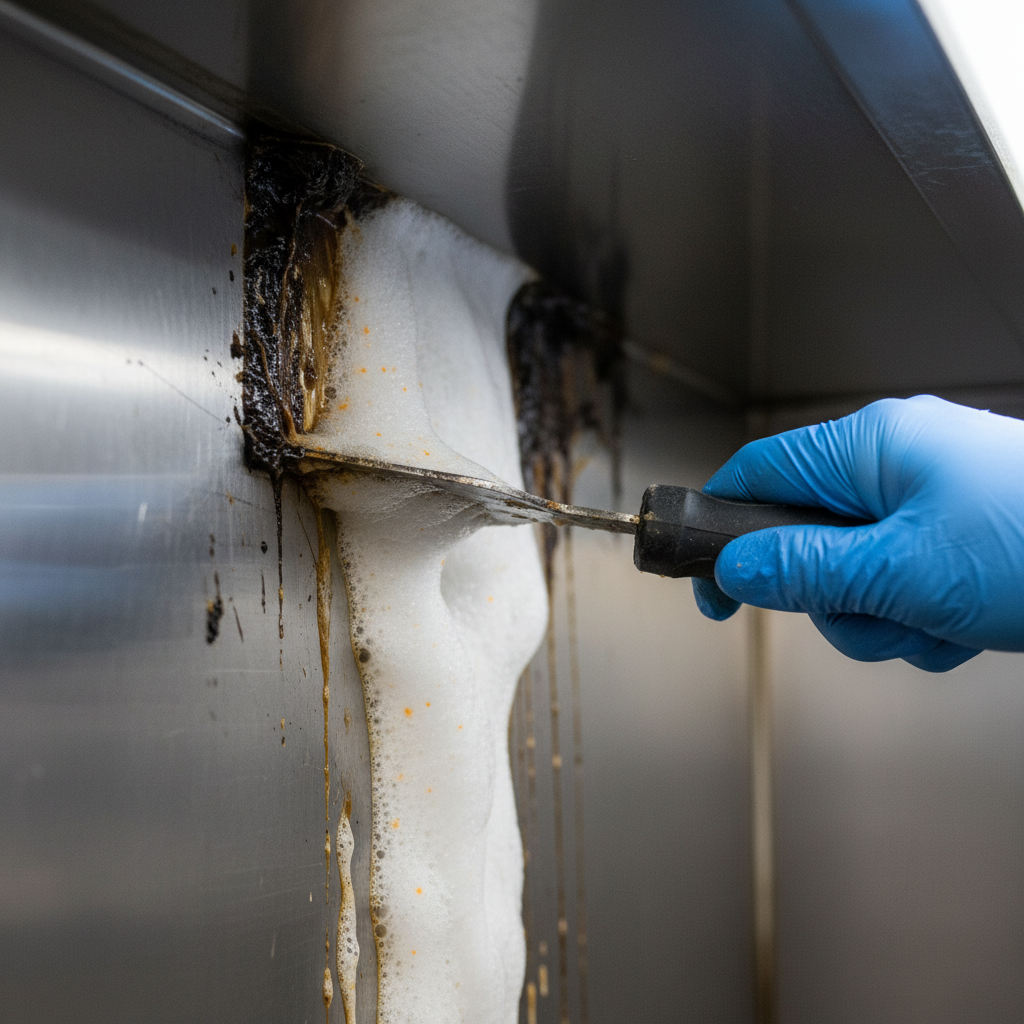
- Hand-scrape heavy deposits in the plenum; apply heated, food-safe degreaser; dwell 5–10 minutes.
- Rinse with low-splash hot water; polish stainless to restore reflectivity.
Ductwork and access panels
- Open access doors every 10–12 feet; brush and scrape to bare metal.
- Foam-apply degreaser in vertical shafts; capture runoff with drip trays.
- Rinse from top down to avoid pushing residue into the fan housing.
Rooftop fan and discharge
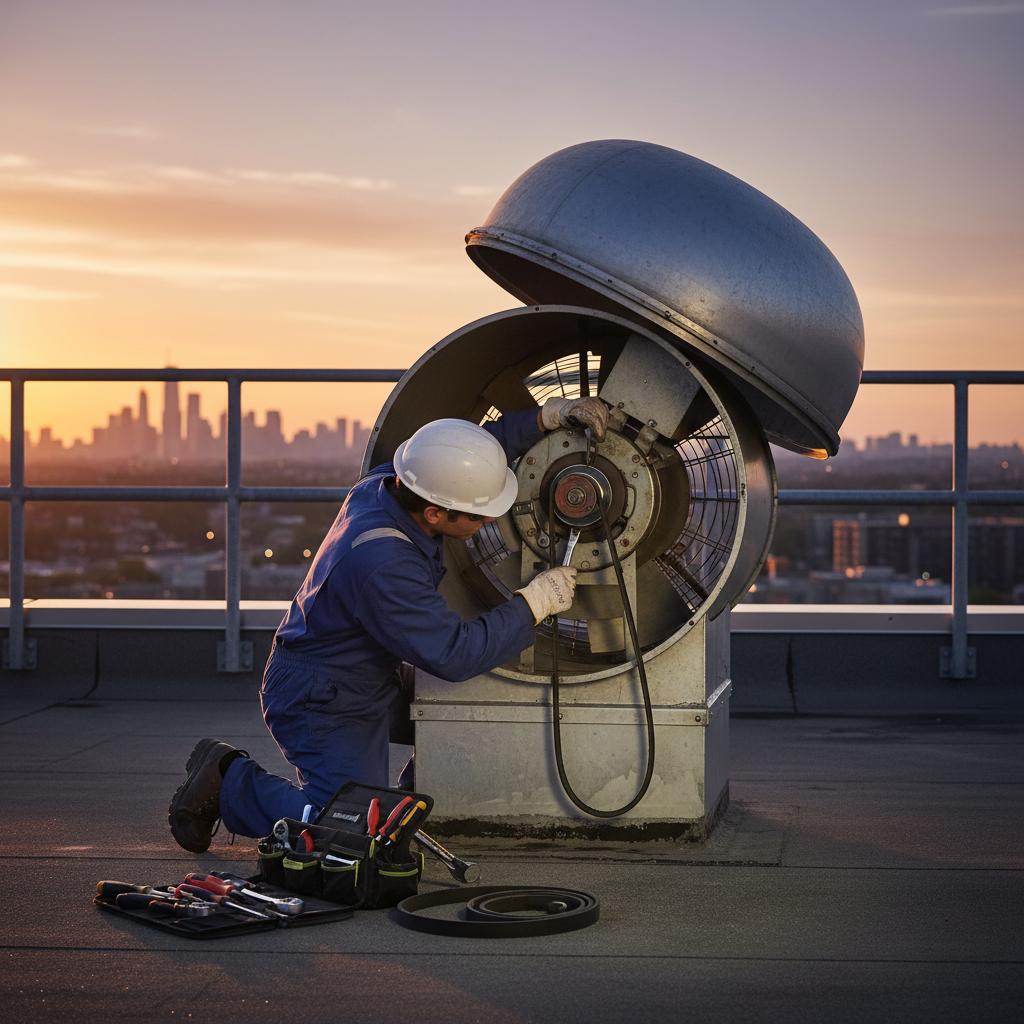
- Hinge the upblast fan; check bearings and wheel balance; replace worn belts as needed.
- Degrease the fan bowl, blades, and curb; verify grease containment is secure.
- Reassemble, test for vibration, and confirm clear, steady airflow at start-up.
We document with before/after photos and a service tag at the hood. For a deeper walkthrough of fan health checks, see our guide on exhaust fan maintenance.
Methods, chemicals, and approaches
Effective commercial exhaust cleaning combines mechanical removal and chemical breakdown. Teams sequence hand scraping, heated alkaline foam, steam, and hot-water rinsing to reach bare metal without damaging finishes. The right mix depends on grease load, duct design, and rooftop fan condition.
Common methods (when to use them)
- Hand scraping: Fast on heavy deposits; sets up surfaces for chemical dwell. Use scrapers with rounded edges to avoid gouging seams.
- Alkaline foam degreaser: Clings to vertical ducts; dwell 5–15 minutes. Always neutralize and rinse thoroughly.
- Steam/hot-water rinse: Lifts residue in tight corners and fan wheels; aim for consistent 180°F+ water temperature for best results.
- Filter cleaning & exchange: Keep a rotation to eliminate downtime. Explore filter replacement in Ontario to standardize swaps.
Process table: picking the right approach
| Condition | Primary Method | Assist | Target Outcome |
|---|---|---|---|
| Heavy, baked-on grease | Hand scraping | Heated foam degreaser | Bare metal surface |
| Vertical shaft cleaning | Alkaline foam | Brush agitation | Uniform dwell and rinse |
| Fan wheel and bowl | Steam rinse | Spot scraping | Balanced, clean fan |
| Light maintenance clean | Hot-water rinse | Quick foam pass | Polished, inspection-ready |
Schedules, documentation, and compliance
Match cleaning cadence to cooking volume: quarterly for high-use fryers and charbroilers, semiannual for moderate grills and ovens, and annual for low-use or seasonal kitchens. Keep photo reports, service tags, and fan-belt notes to satisfy inspectors and insurers.
We recommend posting a one-page schedule inside the mop closet with target months for the year. Update it after each visit. Many jurisdictions align with an every 1–6 month cadence; auditors want to see both evidence of service and a predictable plan. For details, see our overview of fire code requirements.
Suggested frequency table (by volume)
| Cooking Volume/Menu | Suggested Frequency | Notes |
|---|---|---|
| High (fryers, woks, charbroilers) | Every 3 months | Higher aerosolized grease; monitor fan belts monthly. |
| Moderate (grills, ranges) | Every 6 months | Quarterly filter exchange keeps airflow stable. |
| Low/Seasonal | Annually | Inspect after long closures before reopening. |
| Solid fuel (wood/charcoal) | Monthly+ | Combustibles increase soot; verify spark arrestors. |
Cleaning hazards to control
Exhaust cleaning has risks: slippery floors, hot water, chemical exposure, and rooftop fall hazards. Control them with containment, PPE, lockout/tagout, harnesses at elevation, and trained teams that follow documented procedures and work after-hours to avoid cross-traffic.
We train crews to stage the kitchen before any chemical is sprayed. Floors get anti-slip mats, and drains are protected. On rooftops, hinged fan kits prevent strained wiring, and grease containment stops roof damage. This aligns with our guidance on duct cleaning safety benefits.
Tools and resources used on-site
Professional teams bring purpose-built tools: hinged fan kits, variable-temp pressure washers, foamers, wet-vacs, access-door kits, and PPE. The right kit speeds work, reduces rework, and protects equipment and roofs from overspray and grease runoff.
- Hinged fan kit with secure hold-open device; protects wiring and roof curb seals.
- Degreaser foamers for vertical coverage; low-splash spray wands near the cookline.
- Wet-vacs and absorbent berms to capture rinse water and minimize slip hazards.
- Access-door kits to open long duct runs every 10–12 feet for complete removal.
- Replacement hood and filter components staged for swap-out when parts are beyond recovery.
Case examples from All Over Ontario
Across Ontario, we’ve helped quick-service lines, fine dining, and institutional kitchens reduce fire risk and stabilize airflow. These brief scenarios show how cadence, method selection, and small repairs (like fan belt replacement) prevent downtime and failed inspections.
- Quick-service grill line: Quarterly cleanings, monthly filter exchange, and a new fan belt reduced smoke alarms during lunch rush to near zero.
- Food court wok station: Monthly degreaser foam in vertical shafts plus steam on wheel blades restored draw and cut heat over the line.
- Institutional kitchen: Semiannual full-system service and documented reports satisfied a multi-site audit with no corrective actions.
- Fine dining charbroiler: Added spark arrestor checks and a 90-day schedule after a flare-up; no repeat incidents over four cycles.
Want to map your own plan? Our kitchen vent cleaning guide is a great starting point, and our service overview shows how we stage after-hours work to avoid service disruption.
Best practices checklist
Standardize the work: set a written frequency, define methods by zone, stage parts in advance, and verify the result with photos and a signed tag. This simple loop—plan, clean, verify—keeps kitchens safe, compliant, and ready for rush periods.
- Post a 12-month schedule with target service windows and backup dates.
- Keep a labeled bin of replacement baffles, gaskets, and extra fan belts.
- Use a 10-point end-of-job inspection, including airflow check and vibration test.
- Log hood tag details and file the photo report in your inspection binder.
- Rotate staff reminders: weekly filter rinse; monthly canopy wipe to reduce load.
- Review our summary of fire code requirements before inspection season.
Service menu and when to call a pro
Call a certified team when grease is visible beyond the baffles, airflow feels weak, or the rooftop fan vibrates. Pros clean the entire path, replace worn belts, and provide documentation that satisfies inspectors and insurance requirements.
- Kitchen Exhaust Cleaning: Full hood-to-fan degreasing with photo proof.
- Filter Cleaning & Exchange: On-the-spot swaps to avoid downtime; see our 24/7 kitchen exhaust cleaning guide.
- Fan Belt Replacement: Stop squeal and vibration; protect bearings and airflow.
- Grease Trap Cleaning: Reduce odors and backups; align with local inspections.
- Commercial Appliance Cleaning: Ovens, grills, and refrigeration gaskets prolong equipment life.
- Ventilation System Maintenance: Balance, make-up air checks, and rooftop containment.
We are NFPA 96–aligned, WSIB insured, and available 24/7 across Southern Ontario. If you’re coordinating multiple sites, we standardize reports so regional managers can compare locations at a glance.
DIY versus professional service
Nightly staff can wipe canopies and rinse filters, but only certified crews should open ducts and rooftop fans. Professional service reaches hidden grease, protects roofs and wiring, and verifies results with photos and signed tags.
| Task | Nightly Staff | Professional Crew |
|---|---|---|
| Wipe canopy and splash areas | Yes (daily) | Only during service |
| Rinse/rotate baffle filters | Yes (weekly) | Exchange/restore stock |
| Open access panels; clean ducts | No | Yes (to bare metal) |
| Hinge and clean rooftop fan | No | Yes (balance and belts) |
| Compliance photos and tag | No | Yes (standard) |
Get a free compliance walkthrough
Need clarity on your system’s condition? Request a walkthrough. We assess hood, duct, and fan access, review filters and belts, and map a cleaning cadence you can post on the wall—no disruption to service.
Our team will review your hood-to-fan path, check for access doors, and outline a maintenance rhythm tailored to your hours and menu. We’ll also flag missing fan hinges or containment early so your next cleaning is efficient and inspection-ready.
Local considerations for All Over Ontario
- Schedule roof work outside peak wind and rain months; rooftop grease containment performs best when inspected after every major weather swing.
- Plan quarterly services ahead of holiday rushes when grills and fryers run longer; build in extra filter exchanges during patio season.
- Coordinate access in shared commercial spaces; food courts and multi-tenant sites need after-hours windows and clear route protection.
Frequently asked questions
These short answers cover the questions we hear most from Ontario restaurant and facility managers. If you don’t see yours, ask—we’ll add it.
How often should a commercial kitchen exhaust be cleaned?
Match frequency to cooking volume. High-use fryers, woks, and charbroilers typically need quarterly cleaning. Moderate grills and ranges often do well on a semiannual plan, while low-use or seasonal kitchens schedule annually. Solid-fuel appliances may require monthly service.
What’s included in commercial exhaust cleaning?
A full service removes grease from the hood, plenum, baffle filters, ducts, and rooftop fan to bare metal where accessible. It also verifies belt condition, balances the fan, manages rooftop grease containment, and documents results with photos and a service tag.
How do I know if my exhaust fan belt needs replacement?
Watch for squealing, visible fraying, or weak airflow. If belts glaze or slip, the fan works harder, bearings overheat, and grease can accumulate faster. During service, a technician will check tension and install a fresh belt if wear is present.
Can our staff handle any parts of the job?
Yes. Staff can wipe the canopy nightly and rinse or rotate filters weekly. Leave duct interiors and rooftop fans to certified teams. They have the tools, access training, and documentation required for inspections and insurance.
What documentation should I keep for inspectors?
Keep a copy of the photo report, a signed hood tag with service date and provider, and a posted schedule showing the next planned cleaning. If a belt was replaced or access doors were added, note it in your log for the site audit history.
Key takeaways
Tie cleaning frequency to cooking volume, clean the entire hood-to-fan path, and keep photo-backed documentation. These three habits sharply reduce fire risk and make inspections predictable for your team.
- Commercial exhaust cleaning reduces ignition risk and heat load in the kitchen.
- Use a quarterly/semiannual/annual rhythm based on menu and volume.
- Combine scraping, foam, and hot water to reach bare metal throughout.
- Verify fan health—belts, balance, and containment—at every visit.
- Standardize proof with photos, hood tags, and a posted schedule.
Next steps
Map your cadence, stage spare filters and belts, and schedule your next service window after-hours. A short walkthrough now prevents rush-hour issues later and keeps inspections smooth.
Ready to lock in a safer, cooler kitchen? Review our exhaust cleaning services, skim the benefits of duct cleaning, and then post your service calendar so staff see it daily.