Kitchen vent cleaning is the professional removal of grease and debris from hoods, ducts, filters, and exhaust fans to restore safe airflow and reduce fire risk. For restaurants across All Over Ontario, Robinhood Cleaners delivers NFPA 96–aligned service that keeps systems compliant, odors down, and operations moving without disruptive downtime.
By Robinhood Cleaners · Last updated: 2026-05-25
Quick Summary
Kitchen vent cleaning protects your kitchen from fires, smoke, and airflow problems by removing combustible grease from hoods, ducts, and exhaust fans. This guide explains what it is, why it matters, how it’s done, DIY versus professional options, buying criteria, tools, best practices, and real examples from Ontario kitchens.
Here’s what you’ll get in this complete guide, tailored for restaurants and commercial kitchens across All Over Ontario:
- Plain-language definitions of kitchen vent cleaning and exhaust system components
- Fire-safety, compliance, and air-quality benefits you can act on immediately
- Step-by-step process checklists your team can use during service windows
- DIY versus professional comparison, plus a practical buying guide
- Maintenance timelines for filters, ducts, and rooftop fans by cooking volume
- Real Ontario examples from quick service to high-end hospitality
Local considerations for All Over Ontario
- Schedule quarterly to semiannual cleanings around tourism surges and patio season when grill and fryer use spikes.
- Plan rooftop fan access with weather in mind; spring and fall conditions reduce slip risks and speed up service.
- For multi-venue groups, coordinate after-hours service routes to cut downtime and keep kitchens synchronized across locations.
Navigate this guide:
- What Is Kitchen Vent Cleaning?
- Why It Matters
- How Systems Work
- Types and Methods
- Step-by-Step Process
- DIY vs Professional
- Buying Guide
- Best Practices
- Tools and Resources
- Case Studies
- FAQ
- Conclusion
What Is Kitchen Vent Cleaning?
Kitchen vent cleaning is the systematic degreasing and inspection of hoods, filters, ducts, and exhaust fans that capture and remove cooking vapors. It restores airflow, reduces fire risk, and supports compliance with widely recognized standards. For busy Ontario restaurants, it’s a routine safety control that keeps kitchens open and staff protected.
In commercial environments, “vent” usually means the complete exhaust system: canopy hood, baffle filters, ductwork, inline or rooftop fan, and their access panels and hinges.
- Scope: Hood interiors, plenum, filters, vertical/horizontal ducts, fan blades/housings, fan belts, and discharge area.
- Objective: Remove grease film and deposits before they become fuel for flash fires.
- Cadence: Industry schedules range from monthly to semiannual based on cooking volume and equipment.
For deeper context on system parts and airflow, see our ventilation system guide.
Why Kitchen Vent Cleaning Matters
Grease accumulates quickly in commercial kitchens and is highly combustible. Effective vent cleaning lowers fire risk, improves indoor air quality, and helps meet inspection standards. It also extends fan and duct life, prevents odors, and keeps hoods drawing steam and smoke away from staff and guests.
Grease-laden vapors adhere to metal surfaces, forming layers that can ignite when exposed to flame, embers, or hot appliances. Even a thin film restricts airflow and traps heat.
- Fire prevention: Removing deposits eliminates a primary fuel source in hood and duct pathways.
- Compliance support: Documented cleanings and tagged hoods align with standard inspection expectations.
- Air quality: Clear ducts and clean filters help exhaust smoke, particulates, and odors effectively.
- Equipment life: Balanced fans and tensioned belts reduce motor strain and premature failures.
To explore the broader safety context and cleaning hazards, review our piece on fire risks and compliance.
How Kitchen Vent Systems Work
A kitchen exhaust system draws grease-laden vapors into a hood, through baffle filters that capture droplets, then moves air through ducts to an exhaust fan that discharges outdoors. Correct capture, filtration, and airflow keep heat and smoke away from cooks while preventing grease from accumulating in the system.
Think of the pathway in three moves: capture, contain, convey.
- Capture: The hood’s canopy and overhang collect rising plumes from grills, fryers, and ranges.
- Contain: Baffle filters force air to change direction, causing grease droplets to fall out of the airstream.
- Convey: Ducts and fans move air outside; upblast fans throw exhausted air upward to protect the roof membrane.
When any link fails—warped filters, clogged ducts, loose fan belts—airflow drops and heat, smoke, and odours creep back onto the line. Our exhaust cleaning services focus on restoring the whole chain, not just the visible hood.
Types of Kitchen Vent Cleaning and Methods
Professional kitchen vent cleaning combines degreasing chemistry, agitation, and hot water rinse to remove flammable deposits across hoods, ducts, and fans. Methods vary by system layout, access, and buildup level, but always aim to leave bare metal and document the results for inspections.
Common approaches we use for Ontario restaurants and institutional kitchens:
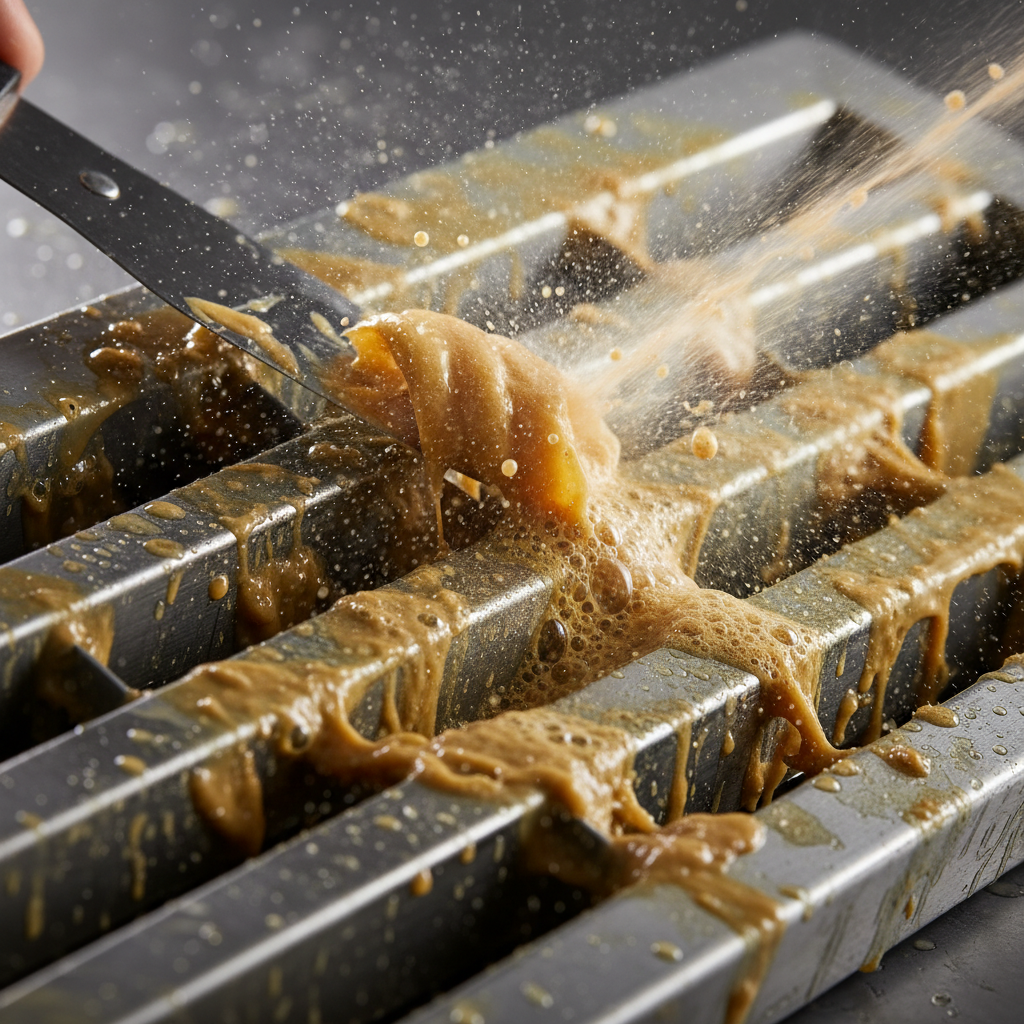
- Hood and plenum degreasing: Foaming or gel degreasers cling to verticals; agitation reaches seams and rivets.
- Filter cleaning/exchange: Swap baffles with pre-cleaned units or deep-clean and dry them on-site.
- Duct access cleaning: Use installed panels every 10–12 feet and at direction changes for thorough coverage.
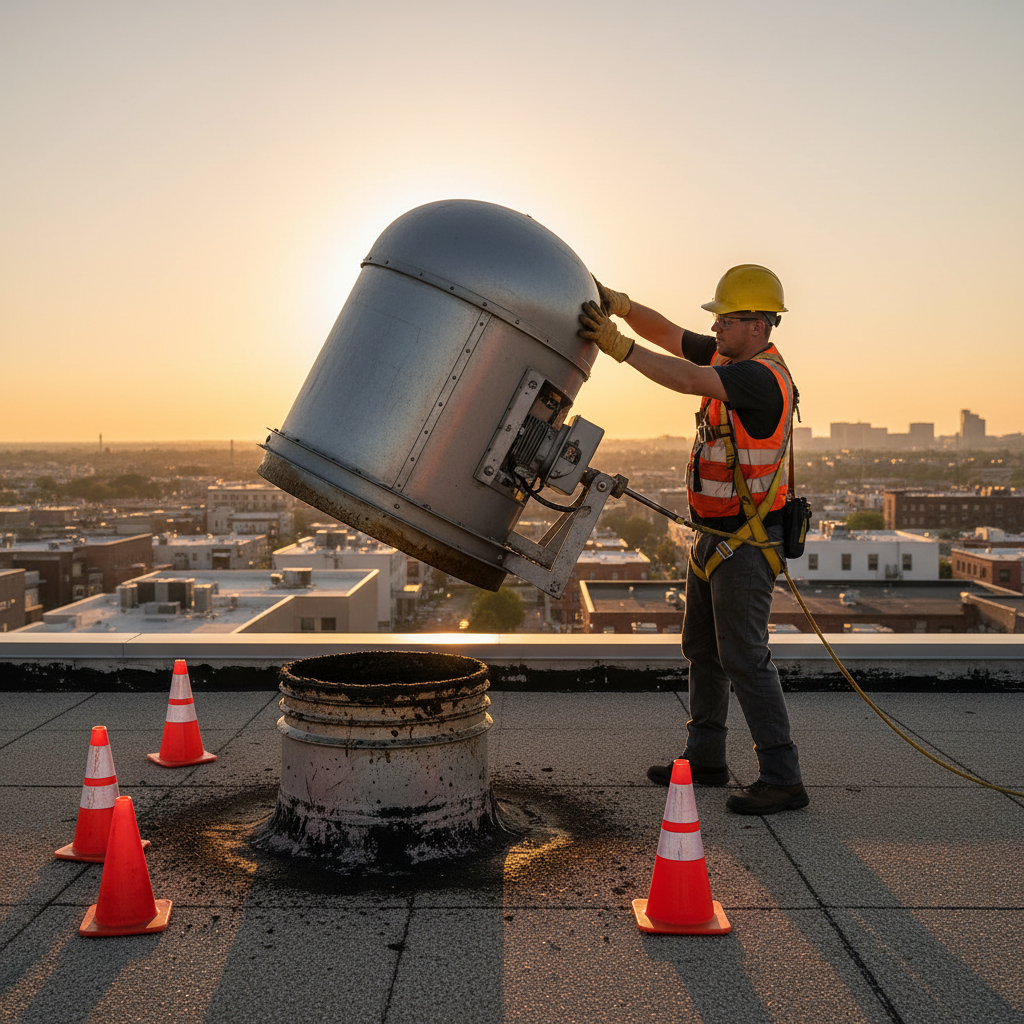
- Fan cleaning and balancing: Hinge kits allow safe lift; remove blades, scrape housings, and check belts.
- Rinse and recovery: Hot-water rinse with floor and roof protection, followed by wastewater capture.
- Tagging and reporting: Post-service tags and photo logs help you pass inspections with confidence.
If you’re assessing which system components need attention first, our exhaust duct cleaning overview explains typical bottlenecks that trigger smoke and odor complaints.
Step-by-Step: Our Professional Cleaning Process
A proven process protects your kitchen and delivers consistent results. We isolate the line, protect surfaces, degrease from hood to fan, rinse and recover safely, reassemble and test, then tag and document. Each step is designed to restore bare metal and reliable airflow with minimal disruption.
- Pre-service walk-through: Confirm equipment on the line, fan access, water and power, and service window.
- Site protection: Wrap appliances, lay mats, and rig runoffs for water capture; protect roof membranes.
- Hood and plenum: Apply foaming degreaser, agitate seams and channels, and scrape heavy deposits.
- Filters: Exchange with clean baffles or deep-clean and dry; verify correct orientation and fit.
- Ducts: Open access panels, degrease and rinse sections sequentially, capturing wastewater as required.
- Exhaust fan: Use hinge kit to lift; clean blades, housing, and discharge; check and tension fan belts.
- Final rinse and polish: Rinse to bare metal, wipe stainless, and remove protection materials.
- Functional test: Verify capture on the line; listen for vibration; confirm make-up air balance.
- Tagging and report: Place service tag with date and next interval; deliver photo log and recommendations.
Need a refresher before your next inspection window? Our Ontario-focused hood standards guide summarizes what inspectors commonly verify, from tags to access panels.
DIY vs Professional: What’s Best?
DIY crews can handle daily wipe-downs and frequent filter changes, but full system degreasing from hood to fan is a professional job. Pros bring access tools, degreasers, wastewater control, and documentation your insurer and inspectors expect.
Use the table below to decide what belongs in-house and what to outsource to a certified team.
| Criteria | DIY (In-House) | Professional Service |
|---|---|---|
| Scope | Exterior hood wipes, filter swaps | Hood, plenum, filters, ducts, fan to bare metal |
| Access | Limited; no rooftop fan lift | Hinge kits, access panels, confined-space readiness |
| Chemistry & Rinse | Light degreasers only | Industrial foams/gels + hot-water rinse, recovery |
| Documentation | Internal checklists | Service tags, photo logs, interval recommendations |
| Safety & Compliance | Basic PPE | Trained, insured, standardized procedures |
| When to Use | Daily/weekly tasks | Quarterly to semiannual cleanings; after heavy events |
If you’re weighing options across All Over Ontario, our 24/7 overview on nearby services outlines after-hours scheduling and crew readiness.
Buying Guide: How to Choose a Kitchen Vent Cleaning Service in Ontario
Choose a provider that proves compliance expertise, shows photo documentation, and schedules around your busiest hours. Look for trained teams, WSIB-insured coverage, 24/7 availability, and a full range from filter exchange to fan belt replacement so one visit resets your entire exhaust system.
- Compliance credibility: Verify training for hood, duct, and fan cleaning; request sample service reports and tags.
- Insurance and safety: Confirm WSIB-insured coverage and safe rooftop access with hinge kits.
- Scheduling flexibility: Overnight or early-morning availability minimizes lost covers.
- Scope in one trip: Filter exchange, duct cleaning, and fan belt replacement handled together.
- Proof of results: Before/after photos and clear next-interval recommendations.
- Regional experience: Familiarity with Ontario inspectors and multi-venue coordination.
For a primer on expectations and common inspection touchpoints in our market, see this Ontario hood cleaning service overview.
Best Practices and Maintenance Schedule
Pair professional cleanings with daily line habits and a simple schedule. Wipe hoods nightly, clean or exchange filters weekly, and book full-system service every 1–6 months based on volume. Add belt checks, hinge kit inspections, and access panel verifications to each service.
Simple schedule by volume
- High volume (grills/fryers running most hours): Filters daily to weekly; full-system cleaning every 1–3 months.
- Moderate volume: Filters weekly; full-system cleaning every 3–6 months.
- Low/seasonal volume: Filters biweekly; full-system cleaning twice a year.
Line habits that make a difference
- Keep baffle filters seated correctly; reversed baffles cut capture efficiency.
- Wipe hood edges and light lenses at close; grease here migrates into seams.
- Start fans 10–15 minutes before cooking; keep running after service to clear heat.
- Label spare filter sets and rotate; dry thoroughly to prevent streaking and odors.
We detail duct-side impacts in our Ontario duct cleaning explainer, including how access panels every 10–12 feet enable complete coverage.
Tools and Resources We Use
Professional crews rely on purpose-built tools. Expect foaming and gel degreasers, hot-water rinse systems, access panel tools, hinge kits, containment and wastewater recovery, plus PPE and fall protection for rooftop work. These are the essentials behind fast, safe, and thorough results.
- Degreasing chemistry: Foams and gels that cling to verticals and plenum seams.
- Rinse systems: Hot-water sprayers and controlled runoffs to capture wastewater.
- Access and lift: Panel keys, drivers, and hinge kits to safely open ducts and lift fans.
- Fan service: Belt gauges, tensioners, and replacement belts for smooth operation.
- Containment: Sheeting, floor mats, roof protection pads, and filtered recovery units.
- Safety gear: Gloves, eye protection, respirators as needed, and rooftop fall protection.
We bring these tools on every call so the visit ends with bare metal and a tagged hood, not a to-do list for later.
Case Studies and Real-World Examples in Ontario
Every kitchen is different, but the risks are similar: grease, heat, and time. These Ontario scenarios show how the right cadence and complete-system cleaning prevent fires, smoke complaints, and surprise shutdowns while improving fan reliability and line comfort.
- Quick service with heavy fry line: Filters clogged within days; we moved to nightly exchanges and bi-monthly full cleanings. Result: steadier capture and fewer odor complaints.
- High-end steakhouse: Grills produced vapor spikes; fan vibration signaled belt wear. We replaced belts during cleaning. Result: quieter operation and better draw.
- Food court cluster: Coordinated overnight service across multiple hoods and a shared duct riser. Result: consistent tags and an easier inspection week.
- Institutional kitchen: Seasonal volume with summer slowdowns; we aligned service before the fall ramp-up. Result: smoother startup after the break.
- Ghost kitchen hub: Mixed concepts, varied grease loads. We staggered filter exchanges and standardized reports. Result: fewer cross-tenant odor issues.
- Hotel banquet line: Event-driven peaks. We scheduled post-event deep cleans. Result: reliable airflow before the next block of banquets.
- Casual dining chain: Multi-site cadence drifted. We synchronized intervals and shared photos group-wide. Result: fewer last-minute reschedules.
- Busy brunch spot: Heavy griddle use; hood edges sticky nightly. Training the team on wipe-downs helped. Result: easier degreasing and faster service windows.
- University cafeteria: New staff turnover impacted filter seating. We labeled and oriented spares. Result: improved capture and less grease carryover.
- Vented pizza ovens: Flour dust plus grease formed stubborn films. A gel-first approach worked. Result: restored bare metal and better oven venting.
Mid-article check-in: Need help tonight?
We operate 24/7 across All Over Ontario. If you’ve got smoke rolling off the line or a fan that won’t keep up, we can route a crew after-hours. Start here: book a service window.
Frequently Asked Questions
Most operators ask about timing, what’s included, and what they can safely do in-house. These concise answers cover cleaning intervals, filter care, documentation, and signs that your system needs attention now.
How often should a commercial kitchen schedule kitchen vent cleaning?
Base intervals on volume and equipment. High-volume fryers and grills need full-system cleaning every 1–3 months. Moderate volume can go 3–6 months. Low or seasonal use typically schedules twice a year. Filters should be cleaned or exchanged more frequently—weekly or even daily for heavy fry lines.
What does a professional kitchen vent cleaning include?
A complete service covers hood and plenum degreasing, filter cleaning or exchange, duct degreasing via access panels, rooftop or inline fan cleaning, hot-water rinse, wastewater capture, reassembly, function testing, and documented tagging and photos for inspections.
Can my team handle any of this in-house?
Yes—daily wipe-downs, checking filter orientation, and regular filter cleaning or exchange are perfect in-house tasks. Leave duct interiors and fan cleaning to trained technicians with proper access tools, hinge kits, and wastewater control.
What are warning signs my system needs service now?
Smoke lingering on the line, hood edges that stay sticky after wipe-downs, rattling or squealing at the fan, frequent filter stains or drips, and noticeable odors are all indicators. If heat feels trapped under the hood during rush, your capture and airflow likely need attention.
Conclusion and Next Steps
Kitchen vent cleaning isn’t a once-a-year chore; it’s a safety system you manage year-round. Combine daily habits with a consistent professional cadence, and document everything. That’s how Ontario kitchens stay compliant, comfortable, and open for service—night after night.
- Key takeaways: Grease is fuel, airflow is protection, and documentation is proof.
- Match service intervals to your actual volume; don’t guess.
- Handle filters in-house; outsource ducts and fans to trained crews.
- Verify tags, photos, and recommendations after every visit.
Ready to lock in a safer, cleaner exhaust system across All Over Ontario? Request an after-hours assessment and we’ll align your schedule, filters, and fan maintenance in one visit.
For a quick refresher on intervals and safety expectations, review this short cleaning frequency explainer. If you’re comparing providers and scheduling options, our Ontario 24/7 service guide and this service overview provide additional context.