In commercial kitchens across All Over Ontario, a dirty kitchen exhaust fan is a fire hazard, a health risk, and a silent profit killer. Grease-laden fans choke airflow, spread odors, and fail inspections. Robinhood Cleaners helps restaurants prevent shutdowns with certified hood, duct, and exhaust fan cleaning backed by NFPA-96 know-how and 24/7 scheduling.
By Robinhood Cleaners • Last updated: 2026-05-17
Overview: At a Glance
A neglected exhaust fan reduces airflow, accelerates grease buildup, and heightens fire risk—leading to smoke, odors, and failed inspections. The fix is a routine, NFPA-96–aligned program: degrease hoods and ducts, clean or exchange filters, service the rooftop fan, and document results for insurers and regulators.
Here’s what you’ll get in this complete guide tailored to Ontario restaurants and institutional kitchens:
- Clear definition of a “dirty” exhaust fan and why it matters for safety and sales
- How grease moves from the cookline to the rooftop—and where risk concentrates
- Cleaning methods, tools, schedules, and documentation that satisfy inspectors
- Real Ontario examples plus a practical checklist you can use tonight
- When DIY makes sense—and when to call certified pros like Robinhood Cleaners
- Jump to: What it is • Why it matters • How it gets dirty • Cleaning methods • Best practices • Tools & resources • Ontario examples • FAQ
What Is a Dirty Kitchen Exhaust Fan?
A dirty kitchen exhaust fan is a grease-laden blower that can’t move air effectively. Grease films on blades and housings reduce airflow, throw off balance, and spread combustibles into ducts. Left alone, it triggers smoke, odors, noise, energy waste, and avoidable fire hazards at the hood and rooftop.
In practice, “dirty” means visible grease on baffles, fan blades, or housings; sticky drips on canopies or duct seams; or a fan that vibrates or wheezes. You’ll also notice reduced capture at the hood, more smoke in the line, or persistent odors after service.
- Common signs: yellow-brown film on stainless, rattling or wobbling fan, grease beads on edges, and rooftop oil stains.
- Operational clues: cooks reporting heat lingering over fryers or grills, or managers noting longer odor hang times after close.
- Compliance indicators: inspection tags overdue, no recent photo documentation, or incomplete service reports.
For restaurants and food courts, this is more than housekeeping. It’s about capture efficiency, fire safety, insurance, and uninterrupted service. That’s why our exhaust fan cleaning program documents before/after conditions and restores airflow.
Why a Dirty Exhaust Fan Matters
Dirty exhaust fans raise fire risk, degrade air quality, and shrink margins. Grease layers ignite faster, motors run hotter, and poor capture spreads smoke and odors to guests. Clean systems pass inspections faster, reduce downtime, and protect your brand during peak service.
Here’s the business reality: less airflow means more smoke at the cookline, higher temperatures, and staff fatigue. Guests smell it—and leave sooner. On the safety side, grease accumulates where flames and heat live. Fans then sling that grease into ducts, increasing ignition surfaces.
- Fire exposure: Grease-soaked surfaces can ignite from flare-ups, pilot lights, or hot surfaces within seconds when layers are thick.
- Air quality: Inefficient capture ups particulate and odor migration into seating and hallways; sensitive patrons notice quickly.
- Mechanical strain: Added mass on blades unbalances the fan, stressing bearings and belts and shortening component life.
- Compliance & insurance: Inspectors look for current tags, photos, and hood-to-rooftop proof. Lacking records, reinspections are common.
We help operators align cleaning with production cycles so fire risk reduction happens before busy weekends. The outcome is steady air movement, stable temperatures, and measurably better guest comfort.
How an Exhaust Fan Gets Dirty—and Creates Risk
Grease aerosols rise from cooking, get captured at the hood, slip through or around filters, and collect on duct walls and fan blades. Over time, sticky films thicken, airflow drops, and the system spreads combustibles from the kitchen to the rooftop—exactly where ignition is hardest to control.
Think of the path: cookline heat lifts fats and oils; baffle filters catch most, but not all; remaining particles travel the duct, impacting elbows and seams, then the fan. Every extra millimeter of grease adds drag and surface area for ignition, and it pulls more dirt from the air like a magnet.
- Typical hotspots: hood canopies, first duct elbows, behind filters, fan blades and housings, and under upblast fan caps.
- Fan behavior: residue accumulates asymmetrically on blades, causing vibration, noise, and belt wear.
- Rooftop risks: uncontained grease leaks damage roofing membranes and can channel flammable run-off.
For busy quick service lines, residue builds faster during summer and holidays. We adjust schedules using our maintenance schedule approach—more service when output spikes, less when it slows—so airflow stays consistent.
Cleaning Methods for Filthy Exhaust Fans
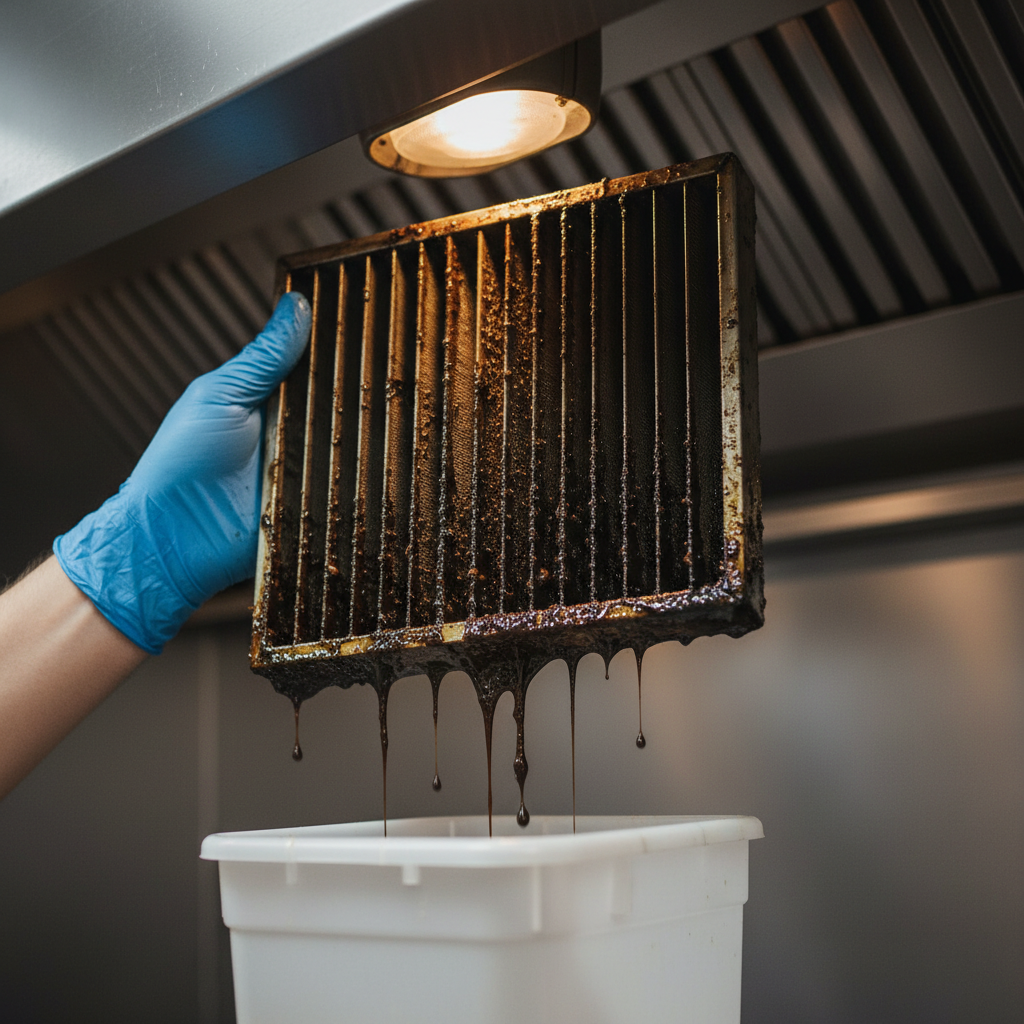
Effective exhaust fan cleaning pairs degreasing chemistry with mechanical action. Pros remove and soak filters, protect equipment, hot-wash hoods and ducts, open the rooftop fan on a hinge kit, and scrape, rinse, and polish all surfaces—ending with photos and updated inspection tags.
We tailor the method to volume, menu, and equipment age. The goal is complete grease removal from hood to rooftop with minimal downtime and no mess left behind.
Field-proven methods
- Manual scrape + hot wash: Breaks heavy deposits, then rinses with controlled pressure to avoid duct leaks.
- Heated chemical soak: Baffle filters and small parts sit in approved degreasers for thorough residue release.
- Steam-assisted rinse: Useful for stubborn films on stainless where pressure alone would overspray.
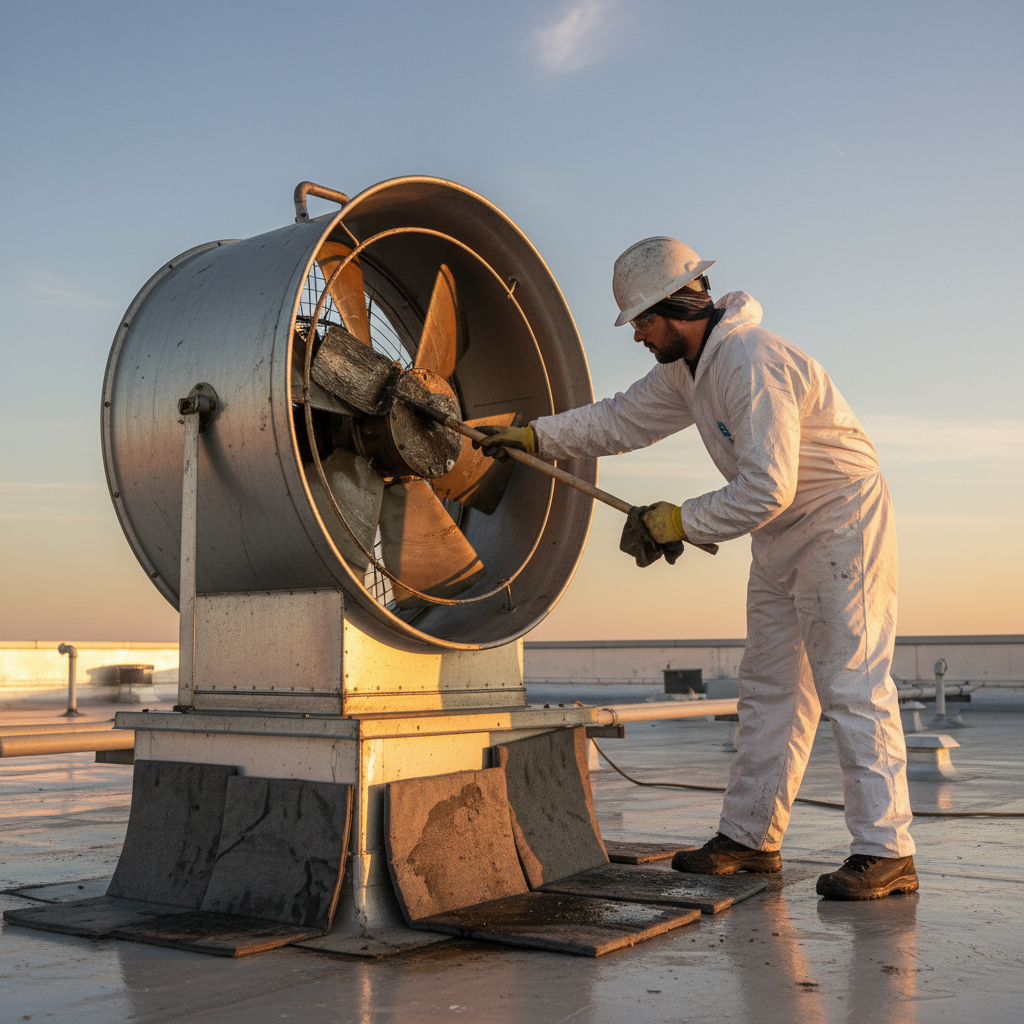
- Rooftop fan service: Use hinge kits, containment, and full blade/housing cleaning; verify spin balance.
- Filter cleaning & exchange: Swap clogged filters with clean spares to restore capture immediately.
Our technicians stage the site, cover cooking appliances, and manage run-off with containment. We also check fan belts while we’re there—combining cleaning with preventive maintenance to reduce surprise breakdowns.
Best Practices and Maintenance Schedule
The best program sets cleaning frequency by cooking volume and cuisine, verifies work with photos, and documents NFPA-96 alignment. High-output fryers and grills often need monthly hood and filter service, with ducts and fans on a quarterly cadence for reliable capture and compliance.
Maintenance schedule you can defend
- High volume (QSR, chicken, burgers, wok): filters weekly to biweekly; hood/fan/ducts monthly to quarterly.
- Moderate volume (casual dining): filters biweekly to monthly; hood/fan/ducts quarterly to semiannual.
- Low volume (institutions with light use): filters monthly; hood/fan/ducts semiannual to annual.
Beyond timing, build a simple visual inspection routine. If filters look glossy or are hard to lift, air capture is dropping. If the fan vibrates or the roof shows oil stains, it’s time for service regardless of the calendar.
Documentation that satisfies inspectors
- Tagged systems: fresh tags with date, tech initials, and next due window visible at the hood.
- Photo sets: before/after images of canopies, filters, ducts, and the rooftop fan interior and exterior.
- Service report: notes on belt condition, hinge hardware, rooftop containment, and any repairs recommended.
For code context tailored to Ontario operations, see our internal NFPA-96 alignment guide and this overview on spotting issues early from a partner resource: kitchen hood fire risk signs.
Local considerations for All Over Ontario
- Align heavy-clean cycles with tourist seasons and long weekends, when grills and fryers run longer and hotter.
- Schedule rooftop service windows around wind advisories and winter icing that make hinge access and containment tricky.
- Institutional kitchens should sync filter exchanges with shift changes to avoid lunch-rush capture dips.
Tools and Resources for Cleaning
A reliable exhaust cleaning kit includes PPE, degreasers, hot-water or steam rinse capability, hinge kits, rooftop grease containment, and photo documentation tools. Pair these with a clear checklist and a service log your manager can defend during any inspection or audit.
What our teams bring on-site
- PPE: cut-resistant gloves, goggles, waterproof footwear, and aprons.
- Chemistry: food-service-safe degreasers appropriate for stainless and aluminum filters.
- Rinse hardware: controlled-pressure hot water and steam attachments to avoid overspray.
- Access & safety: magnetic lights, hinge kits, lockouts, and non-slip rooftop pads.
- Containment: plastic sheeting, floor protection, and rooftop grease boxes or pads.
- Documentation: timestamped photos and signed reports stored for audits.
Process table: DIY vs. certified service
| Step | DIY Crew | Robinhood Cleaners |
|---|---|---|
| Site prep | Basic covers | Full containment, equipment shields, floor protection |
| Filter handling | Soap and water | Heated degreaser soak, rinse, or exchange program |
| Hood & duct | Wipe-down | Scrape + hot wash to bare metal where accessible |
| Rooftop fan | Exterior wipe | Hinged open, blades/housing cleaned, containment checked |
| Maintenance | Visual only | Belt check, hardware, bearings noted for follow-up |
| Proof | None or minimal | Tags, photos, and signed report for inspections |
If you need a quick refresher on duct care benefits, see our explainer on exhaust duct cleaning. For a broader sweep of services—including equipment and grease trap support—browse our commercial cleaning services.
Case Studies and Examples from Ontario Kitchens
Across Ontario, kitchens that tightened filter exchanges and rooftop fan service saw steadier airflow, fewer guest odor complaints, and smoother inspections. Pairing hood cleaning with duct and fan service in one visit reduces downtime and keeps documentation airtight for insurers.
Eight quick snapshots
- Quick service grill line: Greasy filters every 10 days; we moved them to an exchange program. Capture improved immediately, and the cookline ran cooler.
- Food court tenant: Intermittent smoke alarms traced to a vibrating rooftop fan. Blade cleaning and a belt check stabilized airflow.
- Fine dining kitchen: Low volume but high-heat searing. Quarterly duct and fan cleaning balanced odors with white-tablecloth expectations.
- Institutional cafeteria: Seasonal surges around holidays. We scheduled pre-peak hood and fan cleanings; inspectors passed them on first visit.
- Chicken-focused QSR: Heavy fryer output created roof stains. Containment pads and monthly fan service stopped staining and improved compliance photos.
- Catering commissary: Overnight production extended grease aerosol time. A midnight cleaning window avoided daytime odor carryover.
- Pizzeria: Flour dust compounded greasy films. Steam-assisted rinses restored stainless sheen without scratching panels.
- Hospital satellite kitchen: Older ducts with tricky elbows. Manual scraping at the first two elbows removed hidden accumulations the rinse couldn’t reach.
For managers in All Over Ontario, the common thread is simple: a predictable plan beats reactive scrambles. Start with an assessment, then lock months and menus to your maintenance schedule. For a regional view, this primer on restaurant exhaust cleaning in the GTA outlines typical operational rhythms.
Frequently Asked Questions
Operators ask about frequency, DIY limits, inspection readiness, and rooftop access. The short answers: set cadence by volume, clean to bare metal where accessible, document everything with dated photos, and use hinge kits and containment for safe rooftop work that inspectors will accept.
How often should a busy fry and grill line service the exhaust fan?
High-output lines often need monthly to quarterly fan and duct cleaning, with filter cleaning or exchange weekly to biweekly. If you see roof stains, vibration, or smoke lingering at the hood, move service up regardless of the calendar.
What are the biggest red flags of a dirty kitchen exhaust fan?
Look for sticky residue on blades or housings, rattling or wobble, reduced capture at the hood, and rooftop oil staining. If guests smell cooking odors in seating areas after service, airflow is already compromised and cleaning is due.
Can we just wipe the fan exterior and call it a day?
No. Exterior wipe-downs don’t remove internal grease on blades and housings, where airflow and ignition risk are concentrated. Open the fan on a hinge kit, clean blades and housing to bare metal where accessible, and document with photos and a tagged due date.
Do inspectors require photos and tags for kitchen exhaust cleaning?
Inspectors expect clear documentation: dated photo sets, current tags at the hood, and a signed service report. These records help insurers and AHJs confirm that hoods, ducts, and fans were cleaned to standard at the right frequency.
When should we call a certified service instead of DIY?
Call pros when filters clog fast, fans vibrate, rooftop stains appear, or inspection windows are approaching. Certified teams bring hinge kits, containment, heated soaks, and full documentation to keep you compliant without disrupting service.
Conclusion and Next Steps
Treat the dirty kitchen exhaust fan as a system problem—hood, filters, ducts, and rooftop—solved by a predictable schedule and proof of work. With the right cadence and documentation, you’ll reduce fire risk, stabilize airflow, and protect margins in every season.
Key takeaways
- Dirty exhaust fans spread combustibles and kill airflow; clean systems pass faster and run cooler.
- Match cleaning frequency to volume, cuisine, and seasonal surges for steady capture.
- Use hinge kits, containment, and filter exchanges to make rooftop service safer and faster.
- Document with photos, tags, and signed reports to satisfy inspectors and insurers.
Your next steps
- Walk the line today: check filters, hood edges, fan hum, and rooftop stains.
- Set a defensible cadence using our maintenance schedule.
- Book combined hood, duct, and rooftop service to minimize downtime.
Need help in All Over Ontario? Our NFPA-96–aligned teams are WSIB insured, available 24/7, and equipped for rooftop fan service, filter exchange, and full hood-to-roof cleaning. Start with an assessment and a photo-documented plan.
Explore program details on exhaust fan cleaning and duct cleaning benefits.