To clean an oven hood filter, remove the baffle or mesh panel, soak it in hot degreasing solution (140–160°F) for 10–20 minutes, scrub, rinse, and dry before reinstalling. For All Over Ontario restaurants, pairing DIY filter care with a professional Filter Cleaning & Exchange program from Robinhood Cleaners keeps airflow strong and fire risk low.
By Robinhood Cleaners • Last updated: 2026-05-08
Above-the-fold: Why this matters now + Table of contents
Clean hood filters stop grease from traveling into ducts, reduce smoke and odors, and keep exhaust fans working efficiently. In busy commercial kitchens, this is the single fastest maintenance task to cut fire risk, improve air quality, and keep inspectors happy—especially when paired with scheduled professional service.
Grease doesn’t take days to become a problem—it takes shifts. That’s why high-volume kitchens across All Over Ontario build a simple filter routine between full hood and duct cleanings. This guide blends practical DIY steps with the professional standards Robinhood Cleaners follows every night.
- What an oven/range hood filter does and how it protects your kitchen
- When and how to clean oven hood filters step-by-step (with pro tips)
- Which cleaning methods to use for baffle vs. mesh vs. charcoal
- How filter care connects to NFPA 96, ventilation performance, and fire safety
- Tools, supplies, and a printable checklist for your team
- Real-world examples from Ontario restaurants and institutional kitchens
Quick summary
Wash stainless baffle filters nightly to weekly depending on volume; soak 10–20 minutes at 140–160°F with degreaser, then rinse and air-dry. Replace dented or warped filters. Pair DIY care with quarterly to semi-annual professional hood, duct, and fan service to stay inspection-ready and reduce downtime.
If you remember one thing, make it this: consistent, small tasks beat occasional, heroic cleanups. A predictable filter cycle (clean, dry, reinstall, rotate spares) prevents greasy ductwork, protects fans, and keeps make-up air balanced. The payoff shows up in steadier airflow, fewer odors, and smoother inspections.
What is an oven/range hood filter?
An oven or range hood filter is a removable panel that captures airborne grease and particulates before they enter the exhaust plenum and ducts. By trapping grease close to the cooking line, it reduces fire risk, preserves fan performance, and helps kitchens meet ventilation and hygiene standards.
In commercial systems, stainless steel baffle filters are common because they’re durable, noncombustible, and dishwasher-safe. Mesh filters appear in some light-duty settings but clog faster. Charcoal (carbon) inserts are for odor absorption in recirculating hoods and are disposable rather than washable.
- Primary purpose: Intercept grease aerosols and sparks near the hood intake.
- Secondary benefits: Maintain steady airflow (measured in CFM), reduce smoke and odor drift, and slow duct grease buildup.
- Compliance connection: Clean filters are foundational to hood and duct cleanliness—the broader system addressed in our NFPA hood rules guide.
When teams ask how to clean oven hood filter panels “fast,” we start with design: baffles channel flames and grease away from the duct opening, lowering ignition risk; that’s why dented, warped, or missing baffles are a red flag.
Why cleaning filters matters for safety, airflow, and code
Clean filters are the front line against kitchen fires and poor ventilation. They reduce grease accumulation in ducts, keep fans within design airflow, and prevent odor complaints. Regular cleaning supports inspection readiness and extends the interval between intensive hood and duct degreasing.
Grease is fuel. When filters clog, grease-laden vapors bypass capture zones and settle deeper in the system. Fan static pressure rises, CFM drops, and smoke lingers on the line. That cascade leads to more residue in ducts and on the rooftop, higher motor load, and greater ignition potential during flare-ups.
- Fire risk reduction: Less fuel on surfaces equals fewer ignition opportunities during high-heat cooking.
- Performance: Keeping capture efficiency steady helps hold design CFM, cut fan strain, and stabilize kitchen temperatures.
- Compliance: Filter cleanliness supports the wider maintenance documented in our hood cleaning guide.
We see this weekly: teams that rinse baffles each night spend less time fighting smoke on Friday rushes. Clean filters also reduce neighbors’ odor complaints—explained step-by-step in our exhaust odor guide.
How hood filter cleaning works (the science in plain English)
Grease dissolves and lifts when hot water, alkalinity, and contact time work together. Aim for 140–160°F water, an appropriate commercial degreaser, and 10–20 minutes of soak time. Gentle agitation and a soft-bristle brush finish the job without scarring stainless steel surfaces.
Here’s the simple chemistry: fats liquefy with heat; alkalinity breaks the bond; time lets the solution penetrate; agitation removes the last film. Stainless stands up to heat and alkalis; aluminum and painted surfaces do not—so always confirm material before submerging a filter.
- Heat: Hotter water lowers grease viscosity; 140–160°F is a sweet spot for kitchen safety and cleaning speed.
- Alkalinity: Commercial degreasers saponify fats, turning residue into a rinseable solution.
- Time and agitation: 10–20 minutes of soak, then a soft-bristle brush reduces rework.
- Rinse and dry: High-volume rinse prevents redeposit; full air-dry avoids trapping moisture in the hood track.
In our experience serving restaurants and institutional kitchens across All Over Ontario, the best results come from a repeatable, posted SOP, paired with spare filters so nothing goes back wet.
Step-by-step: How to clean oven hood filter panels
Remove filters when the line is cool, soak in hot degreaser 10–20 minutes, brush, rinse thoroughly, and dry fully before reinstalling. Rotate with spare, clean filters to avoid downtime. Inspect gaskets and frames, and replace any dented or warped panels immediately.
- Cool and power safe: Let the cooking line cool to a safe handling temperature. Turn off the hood fan if your SOP requires it.
- Remove carefully: Lift the baffle or mesh filter up and tilt out. Note orientation arrows.
- Pre-scrape: Use a plastic scraper to remove heavy residue (reduces chemistry load).
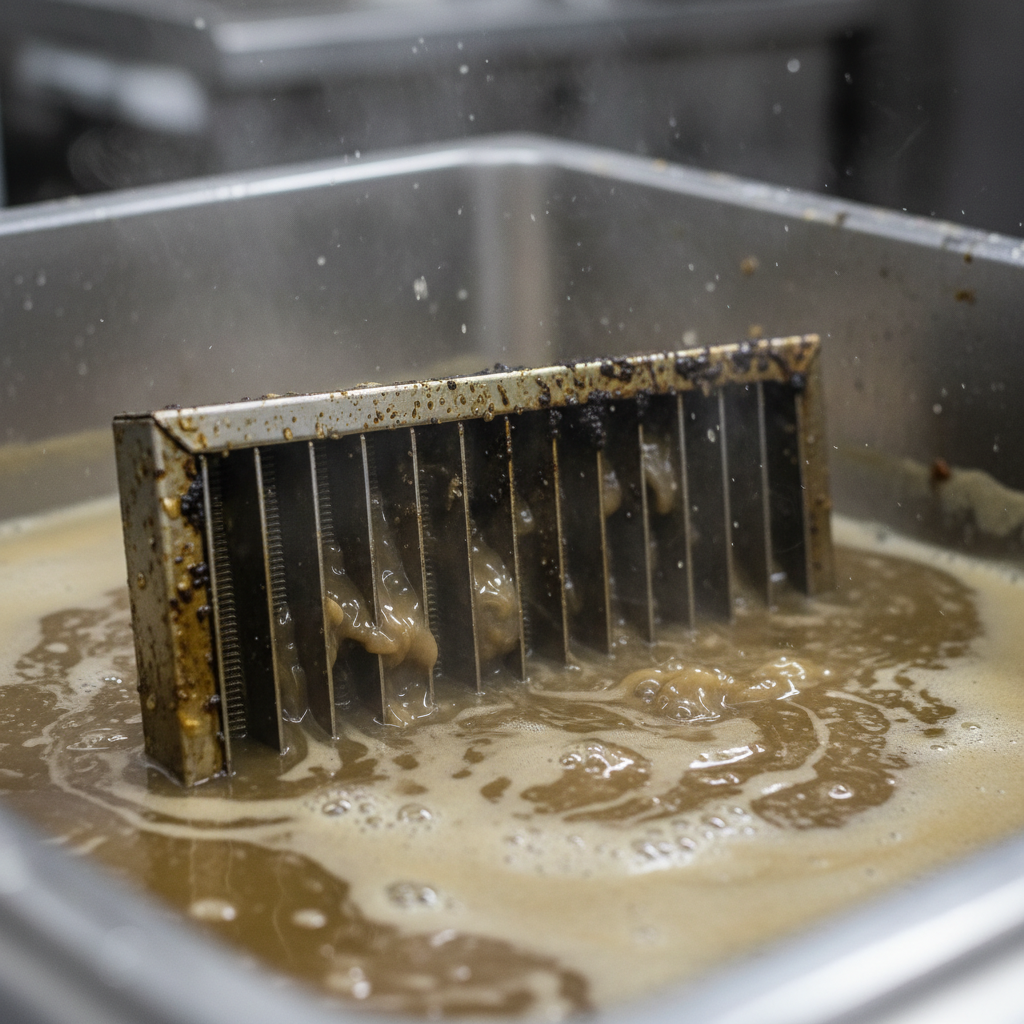
- Soak hot: Submerge in 140–160°F water with commercial degreaser. Contact time: 10–20 minutes.
- Brush smart: Use soft nylon bristles; scrub along the baffle direction to avoid damage.
- Rinse hard: Rinse with strong flow; many teams use a dedicated sink sprayer or 800–1,200 PSI at a wash station.
- Dry fully: Air-dry on a rack; never reinstall dripping filters (can carry grease back into the hood track).
- Inspect: Look for damaged corners, loose rivets, or warped frames; pull bad units from service.
- Reinstall + rotate: Insert dry filters with arrows facing correctly; rotate with clean spares nightly or weekly.
- Log it: Initials and date on a simple log keep teams accountable and inspectors satisfied.
Need a deeper reset? Our technicians combine filter care with full hood, plenum, duct, and fan degreasing—detailed in our exhaust cleaning services.
Methods by filter type (baffle vs. mesh vs. charcoal)
Wash stainless baffle filters in hot degreaser; rinse and dry. Light-duty mesh filters need gentler brushing and more frequent changes. Charcoal odor filters aren’t washable—replace per manufacturer guidance or during each exchange cycle.
Baffle filters (commercial standard)
- Stainless steel, noncombustible, designed to channel flames and grease away from ducts.
- Soak at 140–160°F for 10–20 minutes; scrub with nylon; rinse heavy; air-dry fully.
- Replace if dented, seams split, or baffles warped—the capture path fails when geometry is off.
Mesh filters (light-duty, some cafes)
- Often aluminum; avoid strong alkalis. Use warm water and mild degreaser.
- Brush gently to avoid fraying mesh; expect more frequent cleanings and replacements.
Charcoal/Carbon (recirculating hoods)
- Not washable; replace on schedule. Great for odor, not for grease capture alone.
- Pair with a grease-capture prefilter if using in any cooking area with aerosols.
For help choosing the right filter design and media, see our internal comparison notes in kitchen hood filter types.
Cleaning schedule and telltale signs it’s time
Set cleaning by volume: 1–3 days for heavy frying, 2–7 days for grills and sauté, and weekly for light-duty lines. If smoke lingers at the cookline, filters feel tacky, or the fan sounds strained, you’re overdue—clean or exchange immediately.
- Heavy-volume fryers: Nightly to every 2–3 shifts.
- Mixed lines (grill + sauté): Every 2–7 days.
- Low volume or prep-only periods: Weekly checks often suffice.
- Red flags: Visible sheen, sticky baffles, increased smoke at capture edge, odor complaints, or a sudden fan pitch change.
Teams across All Over Ontario often pair a nightly rinse with a weekly deep soak, then hand filters to us for periodic Filter Cleaning & Exchange during scheduled hood service windows.
Safety notes and cleaning hazards to avoid
Protect people and equipment: wear gloves and eye protection, confirm filter material before using strong alkalis, and never reinstall wet filters. Keep degreasers out of food zones, and prevent overspray near energized equipment to avoid shock and slip hazards.
- PPE and ergonomics: Nitrile gloves, eye protection, non-slip shoes; use proper lift technique for large filters.
- Chemical safety: Label bottles, never mix chemicals, ventilate the wash area, and use food-safe degreasers for kitchen environments.
- Electrical safety: Avoid spraying near powered appliances; use lockout/tagout if your SOP requires.
- Surface care: Aluminum and painted parts can scar with caustics; spot test first.
- Water management: Keep rinse water and runoff out of grease traps where possible to avoid overloads; schedule pumping through our Grease Trap Service when needed.
These cleaning hazards are part of the bigger picture we address in our hood and duct programs—see duct cleaning benefits for how upstream filter care reduces downstream risk.
Tools, supplies, and setup checklist
You need a deep sink or wash station, hot water (140–160°F), a commercial kitchen degreaser, soft nylon brushes, non-slip gloves, drying racks, and spare filters. A simple paper or digital log tracks who cleaned what and when—small effort, big compliance payoff.
- Deep sink or dedicated filter wash bay; floor drain protection.
- Hot water source (target 140–160°F) and measured degreaser dosing.
- Nylon brushes, plastic scraper, and microfiber towels for final wipe.
- Drying racks and labeled bins for “dirty,” “soaking,” “rinsing,” and “dry.”
- Spare filters sized for each hood section to keep service continuous.
- Printed SOP with step order and a quick sign-off log.
We stock and deliver common baffle sizes through our Filter Cleaning & Exchange program so your team can swap in seconds and keep the line moving.
Process table: Quick reference for line cooks
Use this quick reference to cut rework: hot water plus degreaser for 10–20 minutes, gentle brush, heavy rinse, full dry, and rotate with spares. Log completion to stay audit-ready and keep air moving during rush.
| Step | Target | Notes |
|---|---|---|
| Soak | 140–160°F, 10–20 min | Degreaser per label; agitate halfway |
| Brush | Soft nylon | Follow baffle direction; avoid metal scouring |
| Rinse | Strong flow | Sink sprayer or 800–1,200 PSI off-line |
| Dry | Air-dry fully | No drips back into hood track |
| Rotate | Swap in spares | Match arrows/orientation; log completion |
How filter care fits the bigger exhaust system
Filters are step one. Consistent filter cleaning slows grease accumulation in the plenum, ducts, and fan. Pair with scheduled hood and duct degreasing, belt and bearing checks, and rooftop cleanup to keep the full system safe and efficient.
Think of your hood like a chain: filters, plenum, ducts, fan, and discharge. Weak links cause smoke on the line and surprise shutdowns. Our teams combine Filter Cleaning & Exchange with full-system service windows, detailed photo reports, and recommendations when parts or access panels need attention.
- Full hood and plenum: Degreased during professional service intervals.
- Ducts to roof: Scraped and hot-washed; we document access panel condition.
- Fan and belts: Checked for vibration, alignment, and wear; replaced when frayed.
For the program-level view—including inspection cadence—see our exhaust fire hazard overview and exhaust cleaning services.

DIY vs. professional service: where each makes sense
Line teams should rinse and soak filters on a tight schedule. Professionals handle full hood, duct, and fan degreasing, along with documentation, access panel fixes, and rooftop cleanup. The best programs blend both: daily/weekly filter care plus scheduled service windows.
- DIY is ideal for: Nightly rinses, weekly deep soaks, quick inspections, and swapping spares.
- Professional service excels at: System-wide degreasing, fan belt replacement, hinge kits, photo documentation, and compliance reporting.
- Trigger a service visit when: Smoke persists after filter cleaning, fans rattle, or rooftop grease pads saturate.
Our technicians are NFPA96-trained and WSIB insured, and we’re available 24/7 to work around service hours across Southern Ontario.
Real-world examples from All Over Ontario
When teams post a simple filter SOP and rotate spares, smoke complaints and fan strain drop quickly. In Ontario quick-service, casual dining, and institutional kitchens, we see faster ticket times and fewer “smoke on the line” calls within the first week.
Quick-service fryer line
- Problem: Heavy aerosol from fryers created haze and neighbor complaints by midweek.
- Fix: Nightly rinse + midweek deep soak; added spare baffle sets.
- Result: Clearer capture edge in 48 hours; no odor complaints after 1 week.
Casual grill + sauté
- Problem: Filters felt tacky and the fan pitch changed on Fridays.
- Fix: Scheduled exchange before weekends; fan belt check during service.
- Result: Stable airflow through peak; fewer smoke alarms.
Institutional kitchen
- Problem: Inconsistent shifts left filters wet and reinstalled.
- Fix: Added drying racks and a sign-off log; trained night crew.
- Result: No more drips into the hood track; reduced duct residue at next service.
These are typical outcomes when teams treat “clean oven hood filter” as a standing task rather than an occasional chore.
Troubleshooting: If cleaning isn’t fixing the problem
If smoke lingers after cleaning, check filter orientation, gaps between filters, and fan operation. Look for dented baffles, saturated make-up air filters, or blocked ducts. Persistent issues point to a needed professional hood and duct service visit.
- Orientation errors: Arrows facing the wrong way reduce capture; reinstall correctly.
- Gaps and missing filters: Even a one-inch gap becomes a grease highway; fill every slot.
- Mechanical faults: Loose fan belts, failing bearings, or bent blades reduce CFM.
- Duct restrictions: Heavy deposits or blocked access panels need pro degreasing.
- Odor control: Consider carbon polishing if neighbors complain—see tactics in this odor guide.
Compliance, documentation, and inspections
Keep a cleaning log, photo evidence of hood and duct service, and invoices from certified providers. Inspectors look for proof of regular maintenance, safe chemical use, and clean, undamaged filters. Organized records speed walkthroughs and show due diligence.
We provide after-service photo reports and recommendations so managers can demonstrate care across filters, hoods, ducts, fans, and rooftops during audits or insurance reviews.
- Logs: Date, initials, and notes for each filter cleaning cycle.
- Photos: Before/after images of hood interiors and access panels.
- Certificates: Service records from trained technicians—see our NFPA-focused overview.
Regional tips: Running this program in All Over Ontario
Ontario kitchens juggle winter closures, summer heat, and holiday surges. Plan filter cycles around peak seasons, and align professional hood and duct service with seasonal menu changes. Keep outdoor wash setups winter-safe to maintain year-round consistency.
Local considerations for All Over Ontario
- Winterize outdoor wash stations or move indoors so hot-soak steps remain feasible in freezing weather.
- Schedule pre-holiday exchanges and a proactive hood service window before long weekends and summer patio rushes.
- Train new seasonal staff on the posted filter SOP; assign a lead to sign the cleaning log nightly.
Need a hand or a spare set?
If your team is short on time or spare filters, we can help. Robinhood Cleaners provides Filter Cleaning & Exchange, hood and duct degreasing, fan belt replacement, and detailed reports—scheduled around your service hours across Southern Ontario.
Grab an extra baffle set, set the weekly exchange on your calendar, and let our team handle the heavy degreasing. See our program overview in exhaust cleaning services and the system context in this hood cleaning guide.
Frequently asked questions
Here are quick, straight answers to the questions kitchen managers ask most about oven hood filter care—timelines, methods, and when to call for professional help.
How often should I clean oven hood filters in a busy fryer kitchen?
Nightly to every 2–3 shifts. Heavy aerosol from fryers saturates baffles fast. A quick rinse nightly with a deeper hot soak midweek keeps airflow steady and reduces smoke on the line.
Can I run stainless baffle filters through a commercial dishwasher?
Yes, if the manufacturer allows it and your detergents are compatible with stainless steel. Avoid aluminum in caustic chemistry. Always fully air-dry before reinstalling to prevent drips into the hood track.
What if filters are clean but smoke still builds up?
Check orientation arrows, fill every slot (no gaps), and listen for fan belt slip or bearing noise. Persistent issues point to duct restrictions or fan problems—time to schedule professional hood and duct service.
Are charcoal odor filters washable?
No. Carbon filters are consumables and lose effectiveness as they saturate. Replace on the manufacturer’s schedule or during each filter exchange cycle. Pair with a grease-capture prefilter for best results.
Key takeaways
Clean oven hood filter care is simple, fast, and high impact: hot soak, brush, rinse, dry, and rotate. Treat it as a standing task, pair with professional hood and duct service, and you’ll see steadier airflow, fewer odors, and safer operations.
- Hot water (140–160°F) + degreaser + 10–20 minutes beats brute force scrubbing.
- Rotate spare filters so nothing goes back wet; log each cleaning.
- Replace dented or warped baffles immediately; gaps invite grease into ducts.
- Blend DIY filter care with scheduled professional hood, duct, and fan service.
Ready to streamline filter care? Book a service window with Robinhood Cleaners and we’ll line up Filter Cleaning & Exchange, hood and duct degreasing, and fan belt checks around your schedule in All Over Ontario.