Plumbing compliance grease management is the set of practices that keep fats, oils, and grease (FOG) out of drains and sewer lines while meeting health and fire codes. For restaurants across All Over Ontario, it centers on grease traps/interceptors, exhaust systems, records, and trained staff. Robinhood Cleaners integrates these controls into reliable, inspection-ready programs.
By Robinhood Cleaners · Last updated: 2026-04-21
Start Here: Grease Management at a Glance
Grease management is a kitchen-wide system that controls FOG at the source, captures it in grease traps and filters, and documents maintenance for inspectors. Build a simple, repeatable routine: daily skimming, scheduled pumping, NFPA 96–aligned exhaust cleaning, and clear logs. This keeps sewers clear, prevents fires, and avoids penalties.
Here’s how to use this guide quickly. We cover the essentials operators ask for most and link to deeper how-tos as you go.
- Definitions: What “plumbing compliance grease management” really means for Ontario foodservice.
- Why it matters: Kitchen safety, inspections, sewer protection, and brand risk.
- How it works: Source control → capture → cleanout → disposal → documentation.
- Equipment: Grease traps/interceptors, hoods, filters, ducts, upblast fans, rooftop containment.
- Schedules: Daily-Weekly-Monthly service cadence and inspection-ready records.
- Action tools: Checklists, log templates, and training pointers you can implement today.
Want a quick safety refresher? Review our grease fire prevention playbook and exhaust duct cleaning benefits for context.
What Is Plumbing Compliance Grease Management?
Plumbing compliance grease management is the coordinated control of fats, oils, and grease in commercial kitchens to meet plumbing bylaws, food safety rules, and fire codes. It combines staff habits, engineered equipment (grease traps, filters), and scheduled cleanings with documented proof, so inspections pass without disruption.
In practice, it’s a kitchen program with four pillars:
- Source control: Scrape-before-wash, dry-wipe pans, and keep food solids out of sinks.
- Capture systems: Sized grease traps/interceptors, hood filters, and rooftop grease containment.
- Service cadence: Skimming, pumping, and NFPA 96–aligned exhaust cleanings on a set rhythm.
- Documentation: Log sheets, manifests, and photo reports to prove compliance anytime.
Robinhood Cleaners supports all four with duct and exhaust cleaning, grease removal, Ontario exhaust service, and grease trap programs tailored to your menu volume.
Why Grease Management Matters for Compliance and Safety
Effective grease management prevents sewer blockages, odors, and equipment downtime, while reducing fire risk in hoods and ducts. It also keeps inspection findings off your record. The best programs turn messy, reactive cleanups into predictable, calm routines with clear logs and verified service reports.
Why it matters to your operation in All Over Ontario:
- Fewer emergencies: Proactive cleanings avoid sudden backups and line closures during service.
- Better air quality: Clean ventilation and filters improve airflow and kitchen comfort.
- Inspector confidence: Organized records, tagged equipment, and photo reports show control.
- Fire risk reduction: Grease accumulation in hoods and ducts is fuel; removal breaks the chain.
- Team morale: Safer, cleaner spaces help retention and training.
For a standards overview specific to kitchens, see our Ontario-focused fire safety standards guide and NFPA 96 compliance checklist.
How Grease Management Works in Commercial Kitchens
Grease management works by controlling FOG at the sink and on the cookline, capturing it in traps and filters, then removing it on a recurring schedule. The process ends with proper disposal and documentation, creating a closed loop inspectors can verify in minutes.
Think of it as a simple pipeline from prep to paperwork.
- Prep & cookline habits: Scrape, dry-wipe, and keep solids out of drains.
- Grease trap/interceptor: FOG floats and separates; solids settle; clarified water exits.
- Hood and filters: Capture airborne grease before it coats ducts and fans.
- Scheduled removal: Skim daily; pump traps; deep-clean hoods/ducts per volume.
- Hauling & records: Use licensed disposal; store manifests and service tags.
| Process Stage | Main Risk if Ignored | Robinhood Cleaners Service | Proof of Control |
|---|---|---|---|
| Cookline & Prep | FOG down drains; odor; pests | Staff training pointers; filter exchange | Daily checklist; manager sign-off |
| Grease Trap | Blockages; backups; citations | Grease Trap Cleaning & maintenance | Pumping log; hauling manifest |
| Hood & Ducts | Fire hazard; airflow loss | Hood Cleaning; Duct Cleaning; Exhaust fan cleaning | NFPA 96 tag; photo report |
| Rooftop Fan | Grease on roof; environmental risk | Rooftop containment; Power Washing | Containment log; service ticket |
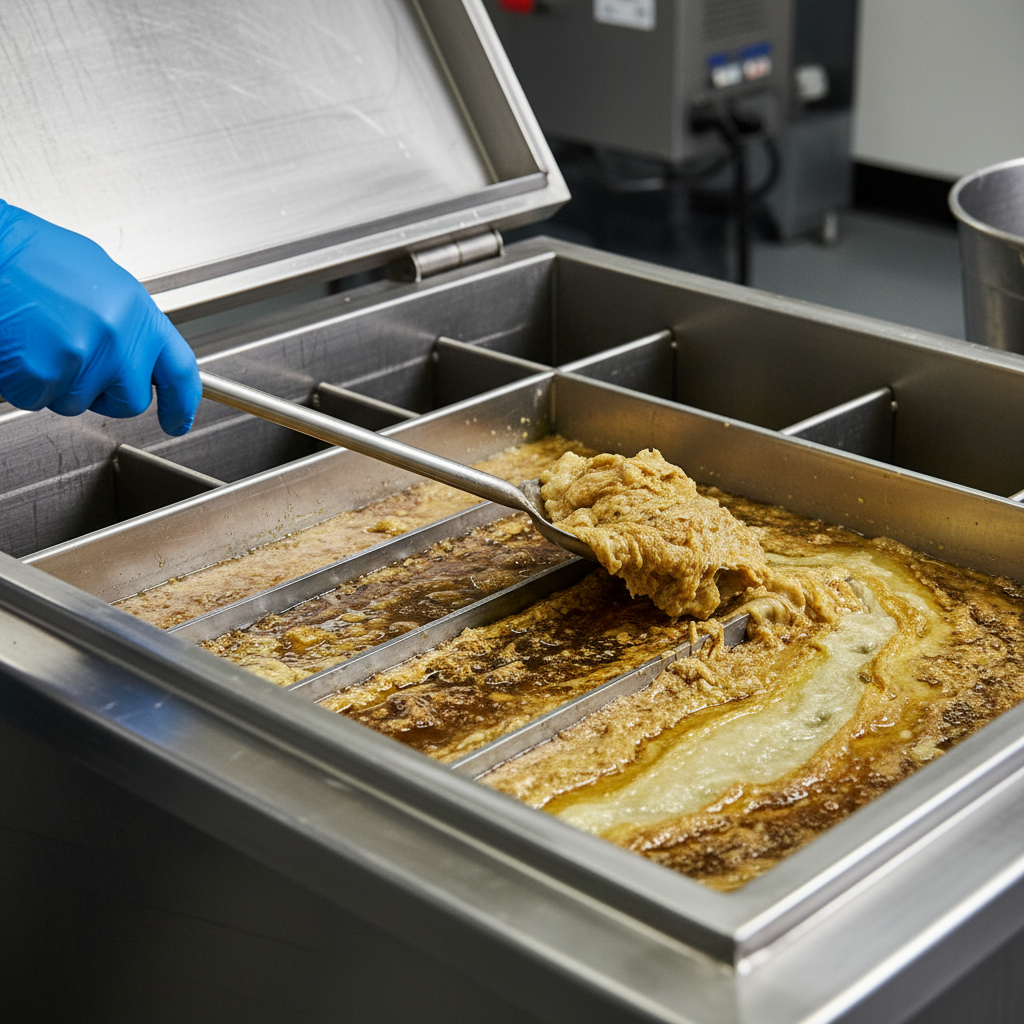
In our experience, kitchens that document each stage see faster inspections and fewer corrective orders. That’s the power of a visible, repeatable routine.
Types of Grease Control and Interceptors
Commercial kitchens use under-sink grease traps, in-ground interceptors, and hood filter systems to capture FOG before it reaches sewers or coats ducts. Choose based on volume and menu. The right sizing, plus scheduled pumping and filter exchange, makes compliance predictable.
Common capture options
- Under-sink traps: Compact units serving single fixtures; need frequent skimming and periodic pumping.
- In-ground interceptors: Larger capacity for high volume; require regular pumping and inspection of baffles.
- Hood baffle filters: Stainless filters that catch airborne grease; clean or exchange on cadence.
- Rooftop grease containment: Prevents fan drip and roof staining; combine with routine power washing.
Sizing and selection pointers
- Match to peak flow: Consider sink count, dishwasher discharge, and menu (fried vs. baked).
- Plan access: Ensure lids and cleanouts are reachable without disrupting service lines.
- Build the log first: Define how you’ll measure FOG levels and schedule pumps before day one.
- Pair with training: Source control habits extend time between service visits.
Need a systems review? Our team aligns traps, filters, and ducts into one fire hazard prevention plan that operators can run without guesswork.
Best Practices and Inspection Schedules
The best programs use a tiered schedule: daily skimming and wipe-downs, weekly filter cleaning or exchange, monthly inspections, and recurring trap pumping and NFPA 96–aligned hood cleanings. Put it on a calendar, tag equipment, and store proofs where inspectors can see them.
Daily
- Scrape and dry-wipe cookware and trays before washing.
- Skim under-sink trap surfaces; note condition in log.
- Wipe hood canopies and splash zones after service.
Weekly
- Clean or exchange hood filters; check for damage and fit.
- Inspect upblast fan grease cups and containment pads.
- Walk the cookline for drips, odors, and airflow issues.
Monthly/Quarterly
- Measure FOG depth in the interceptor and schedule pumping.
- Complete hood, duct, and fan deep-clean per volume.
- Review logs for gaps; refresh staff training as needed.
For detailed cleaning cadence and benefits, see our duct cleaning guide.
Tools, Logs, and Documentation You’ll Need
Compliance comes down to proof. Keep a simple binder or shared folder with daily checklists, trap pumping logs, hauling manifests, NFPA 96 tags, and photo reports. If an inspector asks, you can produce verification in seconds.
- Daily/weekly checklists: Who did what, when, and any issues found.
- Trap pumping records: Date, volume removed, and hauler details.
- Service reports: Hood/duct photos, fan belt condition, filter status, and recommendations.
- Equipment tags: NFPA 96 tags and service stickers visible and current.
- Training notes: Brief refreshers for new staff and seasonal changes.
Pro tip: Store a digital copy of every visit report. It prevents scrambling on inspection day and supports continuity across shift leads.
Need a starter pack? Our NFPA 96 compliance checklist pairs well with a simple pumping log and filter exchange calendar.
Soft CTA: Want a quick audit of your logs and schedule? Our certified team can review your binder and make a phased plan without disrupting service.
Rooftop Exhaust, Hoods, and Ducts: Keeping FOG Off Your Roof
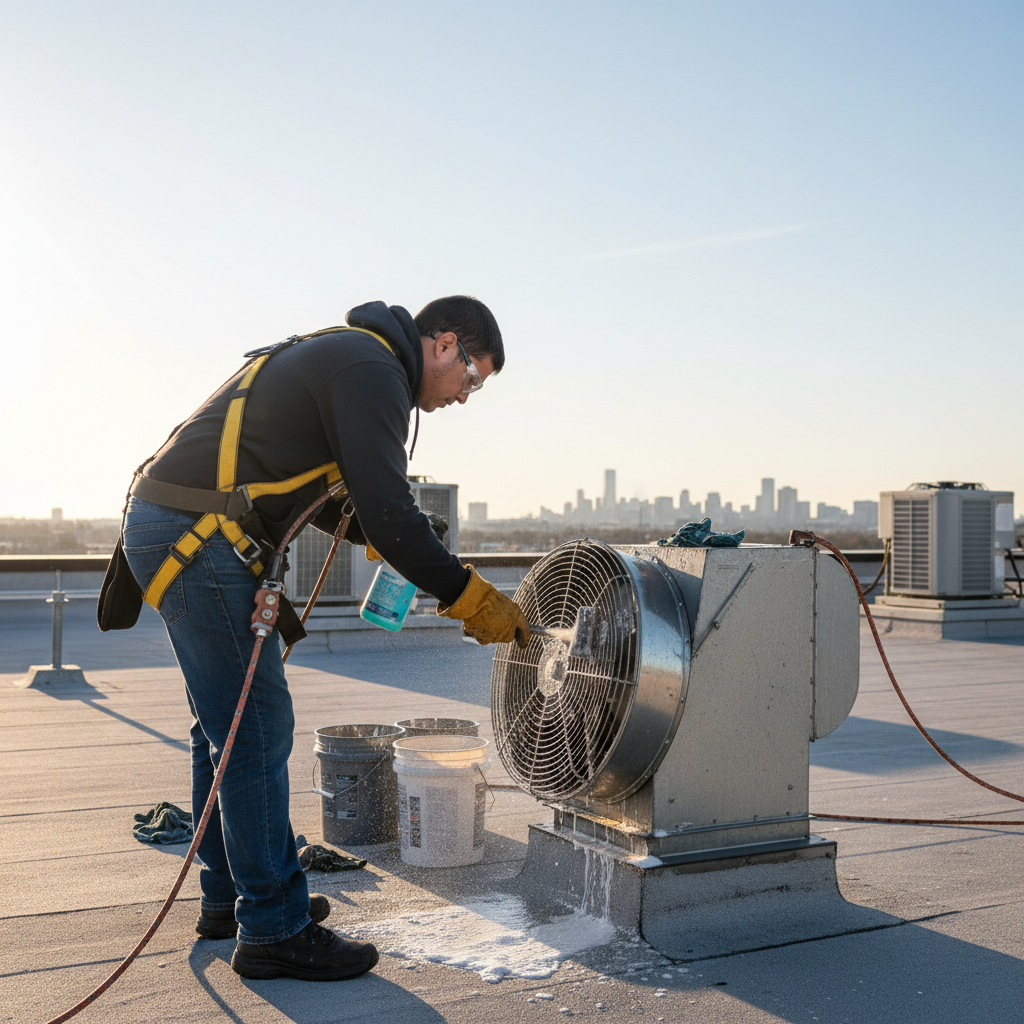
Exhaust fans and ducts move grease-laden vapors out of the kitchen. Without routine cleaning and rooftop containment, residue can drip onto roofs, damage membranes, and create hazards. A coordinated hood, duct, fan, and power-wash plan keeps air moving and surfaces safe.
- Hood Cleaning: Remove grease from canopies and plenum areas to prevent ignition.
- Duct Cleaning: Degrease accessible duct runs and access panels; verify clean-to-bare-metal where required.
- Exhaust Fan Cleaning: Clean blades and housings; confirm hinge kits and safe access.
- Fan Belt Replacement: Replace worn belts to restore airflow and reduce heat stress.
- Rooftop Containment + Power Washing: Capture drips; wash affected surfaces to protect roofing.
For a deeper walkthrough on risks and controls, review our article on exhaust fire hazard prevention.
Local and Seasonal Considerations for All Over Ontario
Ontario kitchens see seasonal volume shifts and weather swings that affect ventilation and interceptor performance. Plan your grease management schedule around holidays, heat waves, and winter ventilation changes to keep airflow steady and traps under control.
Local considerations for All Over Ontario
- Plan holiday surges with a pre-peak filter exchange and post-peak interceptor check to keep lines clear.
- Account for summer heat that thins grease and increases vapors; confirm fan belts and airflow before peak season.
- Use winter maintenance windows to complete deep duct cleanings and rooftop containment checks when roofs are safer to access.
Our crews provide quick service in Southern Ontario and coordinate around your busiest hours, including overnight service where appropriate.
Case Snapshots: Quick Wins from Ontario Kitchens
Small changes create big wins. Kitchens that combine source control, scheduled pumping, and NFPA 96–aligned exhaust cleaning reduce emergencies and pass inspections faster. These Ontario snapshots show how aligning people, equipment, and cadence delivers results.
- Quick service restaurant: Added dry-wipe bins and a weekly filter exchange. Result: steadier airflow and fewer smoke complaints during lunch rush.
- Fine dining: Moved to monthly photo-documented hood cleanings. Result: inspector cleared recheck on first visit.
- Institutional kitchen: Introduced FOG depth measurements and a simple pumping log. Result: no backups during peak production week.
- Food court vendor row: Coordinated after-hours exhaust cleaning for multiple stalls. Result: shared roof area remained clean with consistent containment.
These are representative of what we see when programs are built around the workday, not in conflict with it.
Common Mistakes and How to Avoid Them
Most grease issues trace back to skipped routines, missing documentation, or undersized equipment. Fix them with simple habits, a calendar, and a binder. If you’re inheriting an older system, start with an audit and a quick-win list you can complete this week.
- Skipping source control: Don’t rely only on traps; scrape and dry-wipe first.
- Letting filters run long: Exchange or deep-clean before odors and smoke creep in.
- No proof on hand: Keep manifests and photo reports where managers can retrieve them fast.
- Exhaust access panels sealed by grease: Make access routine so ducts can be cleaned correctly.
- Worn fan belts: Replace to restore draw; poor airflow accelerates grease deposition.
For remediation ideas mapped to risk levels, see our grease buildup explainer.
Compliance and Recordkeeping Checklist
Keep a single source of truth. Your binder or digital folder should include daily checklists, trap pumping logs, hauling manifests, NFPA 96 tags, and photo-documented reports. Review monthly to confirm there are no gaps before inspection day.
- Daily cooking and washing checklists initialed by staff.
- Weekly filter cleaning/exchange record with condition notes.
- Trap/interceptor FOG measurements and pump-outs.
- Hood/duct/fan service reports and tags.
- Rooftop containment checks and power-wash tickets.
- Licensed hauling manifests filed chronologically.
- Training notes for new hires and seasonal refreshers.
If you need a template set, our team can provide log sheets that align with how inspectors verify work.
In-House vs Professional Program: Comparison
In-house routines are great for daily tasks; professional services handle deep cleanings, pumping, and documentation. The most reliable programs combine both: staff habits for source control and scheduled vendor visits for heavy-duty work and proof.
| Aspect | In-House Focus | Professional Focus |
|---|---|---|
| Daily Controls | Scrape, dry-wipe, surface skimming, wipe hood canopies | — |
| Grease Trap | Visual checks; basic skimming | Full pumping, baffle checks, disposal manifests |
| Hood & Ducts | Filter rinsing or exchange as trained | Deep degreasing to bare metal, NFPA 96 tag, photo report |
| Rooftop & Fans | Visual checks for drips and noise | Containment, power washing, fan belt replacement |
| Documentation | Daily/weekly logs | Service reports, manifests, inspection-ready binder |
Our comprehensive services—commercial exhaust cleaning in Ontario, duct cleaning, and filter exchange—fit neatly into your calendar.
Scheduling and Service Scope Planning (No Prices)
Plan your cadence around volume and menu. High‑fry operations need more frequent filter exchanges and hood cleanings, while bake-forward menus can extend intervals. Align service windows with off-hours or overnight to protect guest experience and throughput.
- Menu-driven: Fryers and grills produce more aerosolized grease than ovens alone.
- Seasonal: Increase cadence during peak seasons; decrease during slower months.
- Evidence-based: If logs show rising FOG depth or sticky canopies sooner, tighten the schedule.
- Coordination: Combine pumping and exhaust service visits to reduce disruptions.
Explore our step-by-step overview of preventing grease fires to see how service planning ties into safety.
Frequently Asked Questions
Operators ask about cadence, what inspectors expect, and how to train new staff. Focus on a simple routine: daily source control, recurring pumping, NFPA 96–aligned exhaust cleaning, and a tidy binder. That’s the backbone of plumbing compliance grease management.
How often should a grease trap be serviced?
Service intervals depend on volume and menu. Many kitchens schedule routine pumping and use daily skimming with FOG depth checks. If you see faster buildup, tighten the cadence and document each visit for inspections.
What do inspectors look for first?
Inspectors check visible cleanliness, current service tags, and organized records. A clean hood and ducts, recent NFPA 96 tag, trap pumping logs, and hauling manifests show you’re controlling FOG and ventilation risks.
Does exhaust cleaning affect plumbing compliance?
Yes. Better airflow keeps grease vapors from condensing throughout the system and reduces deposits. When hoods, ducts, and fans are clean, the whole FOG load drops and plumbing stays clearer.
What’s the fastest way to start a program?
Begin with a quick audit: confirm trap access and logs, schedule an exhaust cleaning, and set daily scrape-and-wipe habits. Then build a calendar that combines pumping, filter exchange, and rooftop checks.
Key Takeaways and Next Steps
Successful programs are simple and visible: daily habits, scheduled pumping and exhaust cleaning, and clean records. Align the work to your busiest times, and use photo-documented service to create inspector-ready proof.
- Start with source control and a basic daily checklist.
- Set a recurring pumping and filter exchange cadence.
- Schedule NFPA 96–aligned hood, duct, and fan cleanings.
- Organize manifests, tags, and photo reports in one place.
Ready for a compliance tune-up? Book a quick assessment with Robinhood Cleaners. We coordinate after-hours, bring NFPA 96–certified techs, and document every visit—so you can focus on service, not citations.