Grease buildup removal techniques are the fastest way to cut kitchen fire risk, stay inspection-ready, and keep your team breathing easier. If you operate a commercial kitchen anywhere in Ontario—particularly high-volume lines in Southern Ontario—this complete, NFPA 96–aligned guide from Robinhood Cleaners explains how professionals remove grease from hoods, ducts, fans, filters, appliances, and grease traps safely and efficiently.
Quick Answer
For All Over Ontario restaurants, the most reliable grease buildup removal techniques combine mechanical scraping, food-safe foaming degreasers, and hot-water or steam rinsing across hoods, ducts, fans, filters, and grease traps—performed by NFPA 96 certified, WSIB-insured technicians like Robinhood Cleaners. Routine service reduces fire hazards and keeps you inspection-ready without disrupting service hours.
Overview
- What you’ll learn: Field-tested methods to remove stubborn grease from exhaust systems, appliances, floors, and traps—without damaging stainless or coatings.
- Who this helps: Restaurant owners, chefs, facility managers, franchise operators, and institutional kitchens across Ontario.
- Why it matters: Built-up grease fuels fires, restricts airflow, worsens odors, and triggers inspection failures.
- How this guide is different: Practical, step-by-step processes used by an NFPA 96–certified, WSIB-insured team serving all of Ontario with rapid response in the South.
Table of Contents
- What Is Grease Buildup?
- Why Grease Removal Matters
- How Professional Grease Removal Works
- Grease Buildup Removal Techniques (7 Proven Methods)
- Best Practices by Surface and Component
- Tools, Chemicals, and PPE
- Scheduling, Frequency, and Documentation
- Mini Case Studies: Ontario Kitchens
- FAQ
- Key Takeaways and Next Steps
What Is Grease Buildup?
In commercial kitchens, airborne oils and fats (aerosols) condense on cooler metal surfaces inside hoods, ductwork, and fan assemblies. Fryers, grills, woks, and ovens generate different aerosol profiles, but the result is the same: sticky layers that trap particulates, absorb heat, and ignite easily when neglected.
- Common hotspots: Baffle filters, hood interiors, horizontal duct runs, turning vanes, fan blades and cowls, and rooftop curbs.
- Contributing factors: High-BTU appliances, long service hours, menu mix (fried foods, wok cooking), humid air, and weak filter rotation.
- Inspection cues: Visible sheen, drips along seams, darkened filters, vibration from imbalanced fans, and persistent kitchen odors.
Why Grease Removal Matters
- Fire hazard reduction: Grease is fuel. Lower buildup lowers ignition risk and limits flame spread through ducts to the roof.
- Air quality improvement: Cleaner ventilation moves more air, reduces odors, and supports cooler, safer cooklines.
- Compliance confidence: NFPA 96–aligned cleaning helps you pass inspections and avoid disruptions. See the scope in our overview of NFPA 96 certified hood cleaning in Ontario.
- Equipment life: Balanced fans, clear ducts, clean coils, and healthy belts reduce wear and unplanned downtime.
- Team safety and morale: A clean line is easier to staff, train, and retain.
Want a cadence you can trust? Our evidence-based hood cleaning frequency guide explains how your menu and volume set the schedule.
How Professional Grease Removal Works
Certified crews treat the exhaust path as one system—from canopy to roof curb to trap—because missed sections simply re-contaminate the rest.
- Site prep and protection:
- Isolate equipment and power as needed; cover appliances and floors; set containment to control runoff.
- Verify make-up air and suppression status; lock out/tag out fans when required.
- Dry scraping of heavy deposits:
- Manual removal with non-sparking tools reduces chemical load and speeds later steps.
- Chemical application:
- Food-contact-safe alkaline degreasers and cling foams break bonds without damaging metal or finishes.
- Monitor dwell time so soils release fully without flash-drying.
- Hot-water rinse or steam:
- Pressure washing at controlled PSI and temperature flushes loosened grease from hoods, ducts, and fan housings.
- Steam is selected for tight spaces, sensitive areas, or reduced water use.
- Fan, curb, and roof detail:
- Open upblast fans; degrease blades and cowls; check bearings and vibration; clean curbs to stop rooftop hazards.
- Filters and traps:
- Soak or exchange baffle filters to restore airflow; pump and clean grease traps to protect plumbing.
- Verification and documentation:
- Before/after photos, service tags, and any noted deficiencies (belts, vibration, access panels) are delivered to your team.
Grease Buildup Removal Techniques (7 Proven Methods)
Professionals combine methods to match soil load, material, access, and downtime windows.
1) Mechanical Scraping
- Best for: Heavy, caked layers inside ducts and on hood seams.
- Tools: Non-sparking scrapers; rotary brushes with extension rods.
- Advantages: Reduces chemical use; speeds overall process.
- Watch-outs: Avoid gouging soft metals; collect debris to prevent re-depositing.
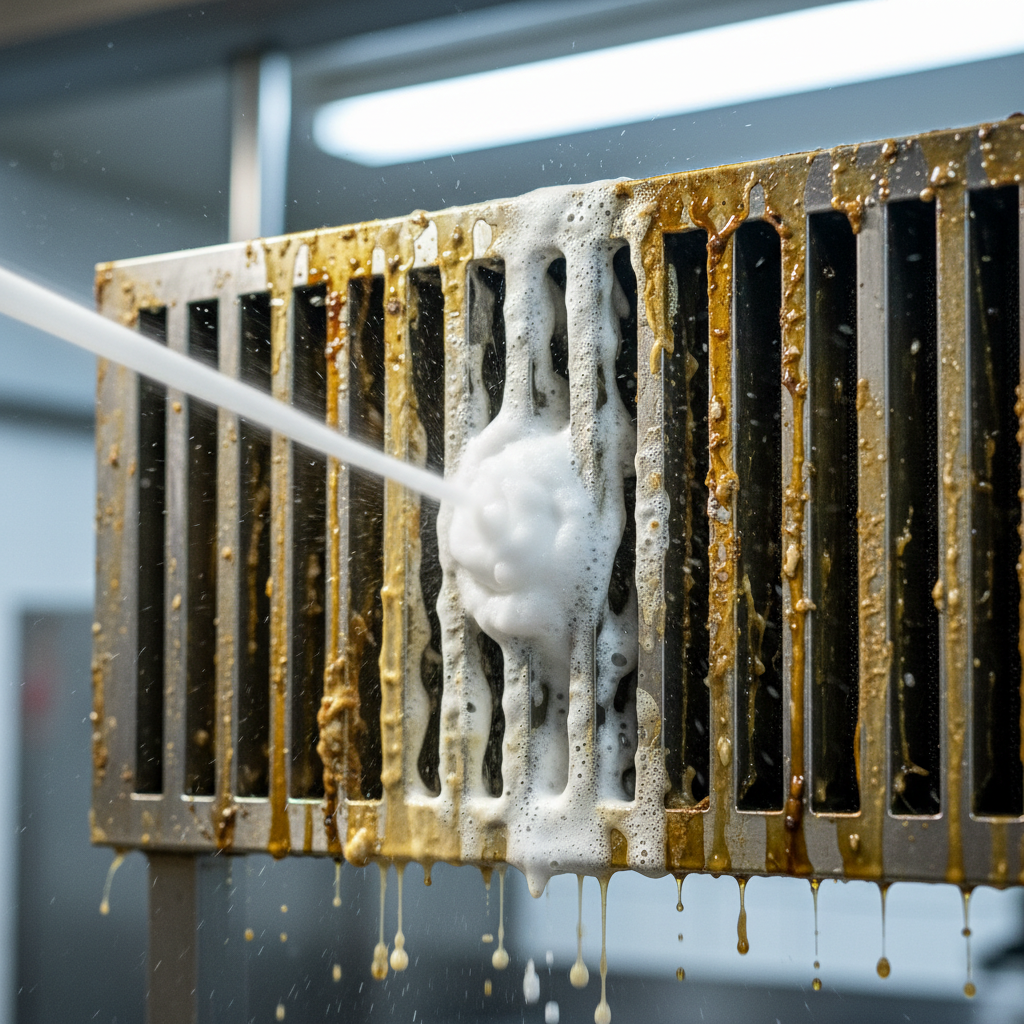
2) Alkaline Degreaser + Cling Foam
- Best for: Vertical hood walls, baffles, and fan housings where dwell time helps.
- Tools: Foaming sprayers; low-pressure applicators; food-contact-safe formulations.
- Advantages: Even coverage; consistent dwell; less runoff.
- Watch-outs: Rinse thoroughly to prevent residue and streaking.
3) Hot-Water Pressure Washing
- Best for: Flushing ducts, hoods, and fan assemblies after chemical breakdown.
- Tools: Adjustable-PSI hot-water rigs; specialized wands to manage overspray.
- Advantages: Fast soil removal; excellent for complex geometries.
- Watch-outs: Control pressure to protect seams, sensors, and finishes.
4) Steam Degreasing
- Best for: Tight spaces, sensitive surfaces, and water-limited sites.
- Tools: Commercial steamers; precision nozzles; moisture capture.
- Advantages: Low chemical load; excellent sanitation assist.
- Watch-outs: Condensate management is key; monitor nearby electronics.
5) Soak Tanks (Baffle Filters & Small Parts)
- Best for: Stainless filters, removable grease cups, and small parts.
- Tools: Heated soak tanks with safe alkaline solutions; agitation baskets.
- Advantages: Deep penetration; uniform cleaning without abrasion.
- Watch-outs: Verify material compatibility and rinse thoroughly.
6) Enzymatic/Bio-Based Degreasers
- Best for: Maintenance cleaning, floor films, and odor control support.
- Tools: Enzyme formulations that digest fats and oils over time.
- Advantages: Eco-forward; less harsh; helpful between deep cleans.
- Watch-outs: Not a replacement for NFPA 96–level exhaust cleaning.
7) Dry Ice Blasting (Specialized)
- Best for: Complex machinery housings and heavy soils when water is impractical.
- Tools: CO₂ pellet blasting equipment; containment; trained operators.
- Advantages: No secondary wastewater; minimal disassembly.
- Watch-outs: Requires strict safety protocols and trained personnel.
Best Practices by Surface and Component
Each surface demands a slightly different tactic to avoid damage and guarantee results. If you’re optimizing capture and airflow, see our ventilation optimization guide for additional tips.
Hoods (Canopies and Plenums)
- Pre-scrape seams and corners; apply cling foam to hold chemistry on verticals.
- Use controlled hot-water rinse to move soils toward containment without overspray.
- Wipe finishes to prevent streaks and restore stainless luster.
Ducts (Horizontal and Vertical Runs)
- Access panels every 12 feet and at each change in direction improve reach.
- Brush/foam/rinse sequence limits redeposit of loosened grease.
- Document interior cleanliness with mirror or borescope imagery.
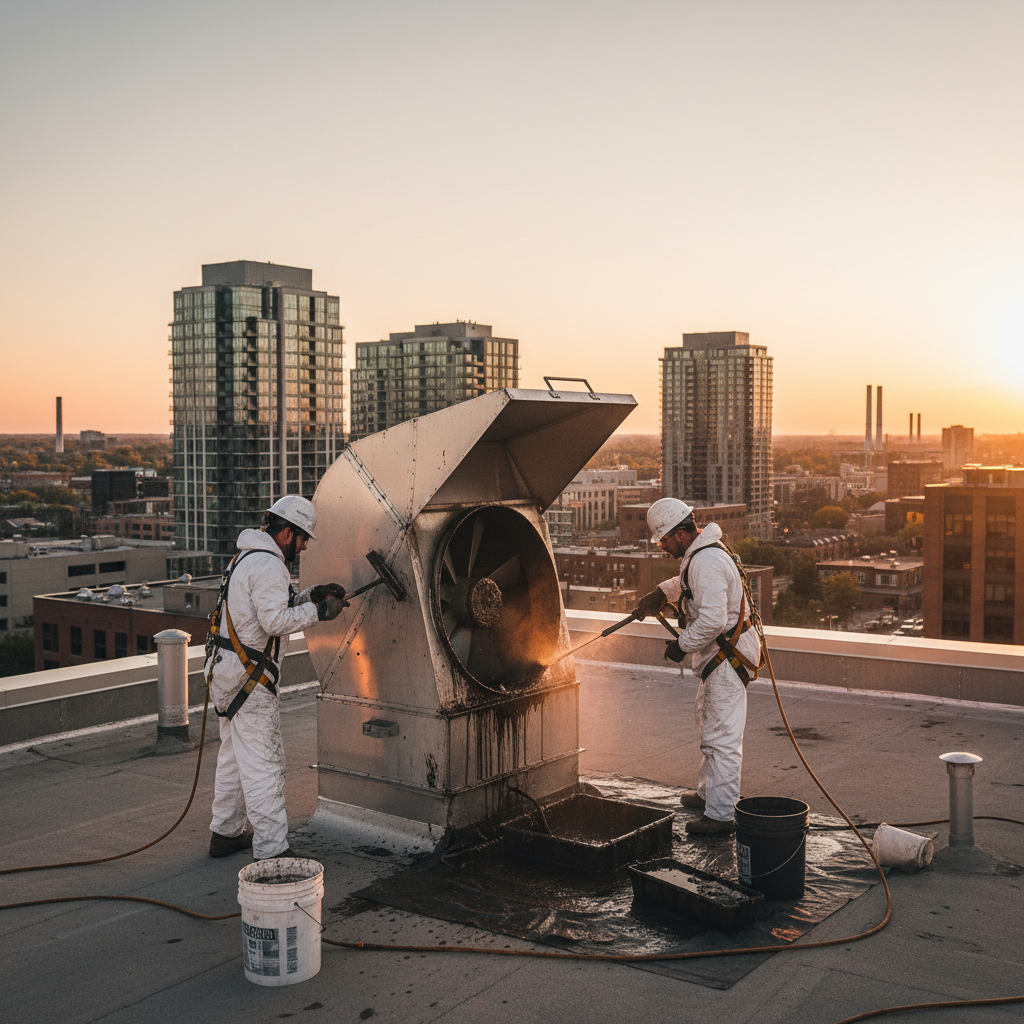
Exhaust Fans (Upblast, Utility Sets)
- Disconnect safely; open housings; clean blades, cowls, and drains.
- Verify belt condition and tension; check for vibration and bearing noise.
- Protect roof membrane; clean curbs to stop runoff and fire spread.
Baffle Filters
- Exchange heavily loaded filters; soak tanks restore flow and fire resistance.
- Keep spares on a rotation to maintain airflow between services.
- Inspect monthly; clean or swap based on cooking volume.
Grease Traps
Coordinating exhaust cleaning with trap service keeps odors and backups at bay. Learn what a thorough visit covers in our grease trap cleaning services in Ontario overview.
- Pump and clean traps on schedule; enzymes can help between services.
- Train staff on what not to pour down drains to reduce FOG loading.
- Record service dates to support inspections and avoid backups.
Appliances (Grills, Fryers, Ovens)
- Daily line wipes; weekly deep cleans using manufacturer-approved methods.
- De-carbon grills and oven racks; monitor gaskets, hinges, and seals.
- Coordinate appliance cleaning with exhaust service for best results.
Use our step-by-step equipment deep cleaning checklist to align staff tasks with your service calendar.
Technique Comparison Table
| Method | Primary Use | Pros | Considerations |
|---|---|---|---|
| Mechanical Scraping | Heavy deposits | Low chemical use; fast bulk removal | Requires careful technique to avoid surface damage |
| Foaming Degreaser | Verticals, filters | Great dwell; uniform coverage | Thorough rinse needed to avoid residue |
| Hot-Water Pressure | Duct and hood flush | Fast; effective on complex shapes | Control PSI to protect seams and finishes |
| Steam | Sensitive areas | Low chemical; sanitation assist | Condensate capture required |
| Soak Tanks | Filters, parts | Deep clean; minimal abrasion | Material compatibility check |
| Enzymatic | Maintenance films | Eco-forward; odor help | Not a substitute for exhaust cleaning |
| Dry Ice | Special constraints | No wastewater; less disassembly | Requires trained crew and safety controls |
Tools, Chemicals, and PPE You’ll See Pros Use
- Tools: Non-sparking scrapers; brush kits; adjustable-PSI hot-water washers; steamers; foamers; soak tanks; HEPA vacuums.
- Chemistry: Food-contact-safe alkaline degreasers; enzyme boosters; stainless-safe polishes for finishes.
- PPE: Eye and hand protection; slip-resistant footwear; respirators where ventilation is limited; fall protection on rooftops.
- Documentation: Service tags; photo logs; deficiency notes (fan belts, access panels, vibration anomalies).
Local Tips
- Tip 1: Along major Southern Ontario corridors, schedule exhaust service after the late dinner rush to avoid traffic delays and give systems full cool-down time.
- Tip 2: Winter stack-effect in Ontario buildings can pull more cooking aerosols into ducts—shorten your filter rotation and inspection intervals.
- Tip 3: Rooftop access can be icy; ensure safe ladder points and request WSIB-insured crews with fall protection training.
IMPORTANT: These tips reflect Ontario operating conditions and the realities of commercial kitchen exhaust systems.
Scheduling, Frequency, and Documentation
Right-sizing your cadence is the surest path to safer operations and easier inspections.
Setting Frequency
- High-grease operations (fried/wok): Monthly to quarterly deep exhaust cleaning; weekly filter exchange.
- Moderate load (grills/ovens): Quarterly to semiannual exhaust service; biweekly to monthly filter care.
- Lighter load (baking/low volume): Semiannual service; monthly filter checks.
Use observed soil rates, odor changes, and airflow feedback to fine-tune. For benchmarks and exceptions, see our internal hood cleaning frequency guide.
Documentation Package
- Before/after photos stored by location and hood ID.
- Service tags with date and technician signature for inspector review.
- Deficiency notes (fan belts, vibration, access panels) with recommended next actions.
Coordination Playbook
- Schedule after last ticket; allow sufficient cool-down for chemicals to work safely.
- Align grease trap service and appliance deep-cleans with exhaust visits to maximize downtime use.
- Keep spare baffle filters on rotation to maintain airflow between services.
Mini Case Studies: Ontario Kitchens
1) High-Volume Fried Chicken Concept, Southern Ontario
- Challenge: Heavy FOG load overwhelmed filters; odors and hot line conditions increased staff turnover.
- Approach: Weekly filter exchange; monthly hood/duct rinse; quarterly rooftop fan and curb detailing.
- Outcome: Noticeably cooler line; improved make-up air balance; fewer inspection notes.
2) Wok-Forward Casual Brand, Multi-Unit Across Ontario
- Challenge: Aerosolized grease from high-heat stir fry coated turning vanes and horizontal runs.
- Approach: Mechanical scraping plus foaming degreaser; controlled hot-water flushing.
- Outcome: Restored airflow; fan vibration minimized after blade cleaning and belt check.
3) Hotel Banquet Kitchen, Downtown Core
- Challenge: Inconsistent deep cleans created backflow odors from neglected traps.
- Approach: Coordinated grease trap service with exhaust cleaning; added enzyme maintenance plan.
- Outcome: Odor complaints dropped; inspection readiness improved.
FAQ
How often should commercial hoods and ducts be cleaned?
Frequency depends on cooking volume and type. High-grease operations often need monthly to quarterly service, while lighter-load kitchens may go semiannually. Inspections and filter rotations between deep cleans keep you safe and compliant.
Are enzymatic cleaners enough for exhaust systems?
No. Enzymes help with maintenance films and odor control, but they do not replace NFPA 96–aligned mechanical and hot-water/steam cleaning of hoods, ducts, fans, and filters.
What’s the safest way to clean rooftop exhaust fans?
Lock out/tag out power, open the housing, clean blades and cowls, and protect the roof membrane. Use fall protection and ensure technicians are WSIB insured and trained for rooftop work.
Can my staff handle deep exhaust cleaning?
Staff can manage daily line wipe-downs and basic filter care. NFPA 96–level hood, duct, and fan cleaning requires certified professionals with the right equipment, containment, and documentation.
Does proper cleaning improve air conditioning performance?
Yes. Restored airflow reduces heat load on the line and can ease strain on HVAC and make-up air systems, improving comfort and energy efficiency.
Key Takeaways and Next Steps
Key Takeaways
- Grease buildup removal techniques work best in combination: scrape, foam, rinse, and verify.
- Target hotspots—filters, ducts, fans, and curbs—to cut fire risk and restore airflow.
- Schedule services to match your menu and volume; inspect and rotate filters between deep cleans.
- Document everything for inspections and proactive maintenance planning.