Ventilation system optimization for restaurants is the targeted process of balancing exhaust, make-up air, and filtration to capture grease, control heat, and stabilize indoor air. Done right, it reduces fire risk, improves comfort, and lowers energy use. For kitchens operating All Over Ontario, optimized airflow also supports consistent compliance and smoother service.
By Robinhood Cleaners • Last updated: 2026-07-03
Quick Summary
Restaurant ventilation optimization means tuning hoods, ducts, fans, filters, and make-up air so cooking contaminants are captured at the source with minimal waste. The result is steadier temperatures, fewer odors, less grease carryover, and stronger compliance—without over-ventilating the space or straining HVAC equipment.
Here’s what you’ll learn in this complete guide, built from our hands-on work with restaurants All Over Ontario:
- What “optimization” really covers, in practical terms
- Why airflow balance affects safety, energy, and staff comfort
- How hoods, fans, belts, and filters work together
- Proven methods: demand control, maintenance cycles, and balancing
- Step-by-step checklists you can put to use this week
- Real examples from quick-service, full-service, and institutional kitchens
What Is Ventilation System Optimization for Restaurants?
Ventilation system optimization for restaurants is the process of engineering and maintaining kitchen airflow so exhaust hoods capture grease and heat effectively while make-up air stabilizes pressure and comfort. It aligns hood sizing, fan performance, filter condition, and duct cleanliness to deliver safe capture with minimal energy waste.
In plain terms, optimization aligns equipment capability with real cooking load. That means correct hood capture, clean ducts, right-size fan belts, and a make-up air stream that prevents drafts and negative pressure. When these variables move in sync, kitchens stay safer and cooler and smell better.
- Core goal: Capture contaminants at the source and keep the dining room neutral and odor-free.
- Key levers: Hood style and overhang, exhaust CFM, clean baffle filters, balanced make-up air, tuned fan belts, and sealed ductwork.
- Compliance lens: Follow recognized cleaning intervals for high-, moderate-, and low-volume operations to keep systems within spec.
- Operations win: Smoother shifts and less hot-cold complaints when air moves predictably.
For deeper fundamentals, see our commercial ventilation system guide and our practical kitchen ventilation cleaning guide.
Why Optimized Restaurant Ventilation Matters
Optimized ventilation reduces fire risk, stabilizes temperatures, and lowers strain on HVAC equipment. Kitchens benefit from cleaner air, fewer odors, and less grease migration. Teams work more comfortably, and inspections go smoother because hoods, ducts, and fans stay within safe, maintainable operating ranges.
There are three outcomes operators notice first: less heat at the line, fewer smoke and odor complaints, and steadier pressure at doors. These are direct results of right-sized exhaust and consistent filter and duct conditions. When airflow drifts—often from dirty filters or slipping belts—capture efficiency drops fast.
- Fire safety: Clean hoods and ducts limit grease fuel. Maintaining cleaning intervals for high-volume and solid-fuel operations is essential.
- Staff comfort: Balanced make-up air reduces drafts and hot spots. Cooler stations support better shift performance.
- Energy performance: Demand-matched airflow avoids over-ventilating, which keeps fan and conditioning loads in check.
- Food quality: Lower airborne grease helps maintain consistent fry and sauté performance by reducing recirculating vapors.
- Compliance & records: Documented cleanings and inspections support insurer and authority reviews.
Need a starting point? Our commercial kitchen exhaust cleaning services outline the core cleaning and inspection sequence we use across Ontario.
How Restaurant Ventilation Works (Airflow 101)
Kitchen ventilation works by creating localized capture under hoods while a make-up air unit supplies tempered replacement air. Exhaust fans pull hot, greasy air through baffle filters and ducts. Proper balancing prevents negative pressure, so doors close easily and dining rooms stay comfortable.
Think in flows: capture, convey, condition, and balance. Hoods capture. Filters and ducts convey. Rooftop fans provide motive force. Make-up air conditions and balances the space. Any weak link—like a clogged filter or worn belt—forces the rest of the system to work harder, and capture suffers.
System building blocks
- Hoods and overhang: Positioned to envelope plumes from fryers, grills, and ovens.
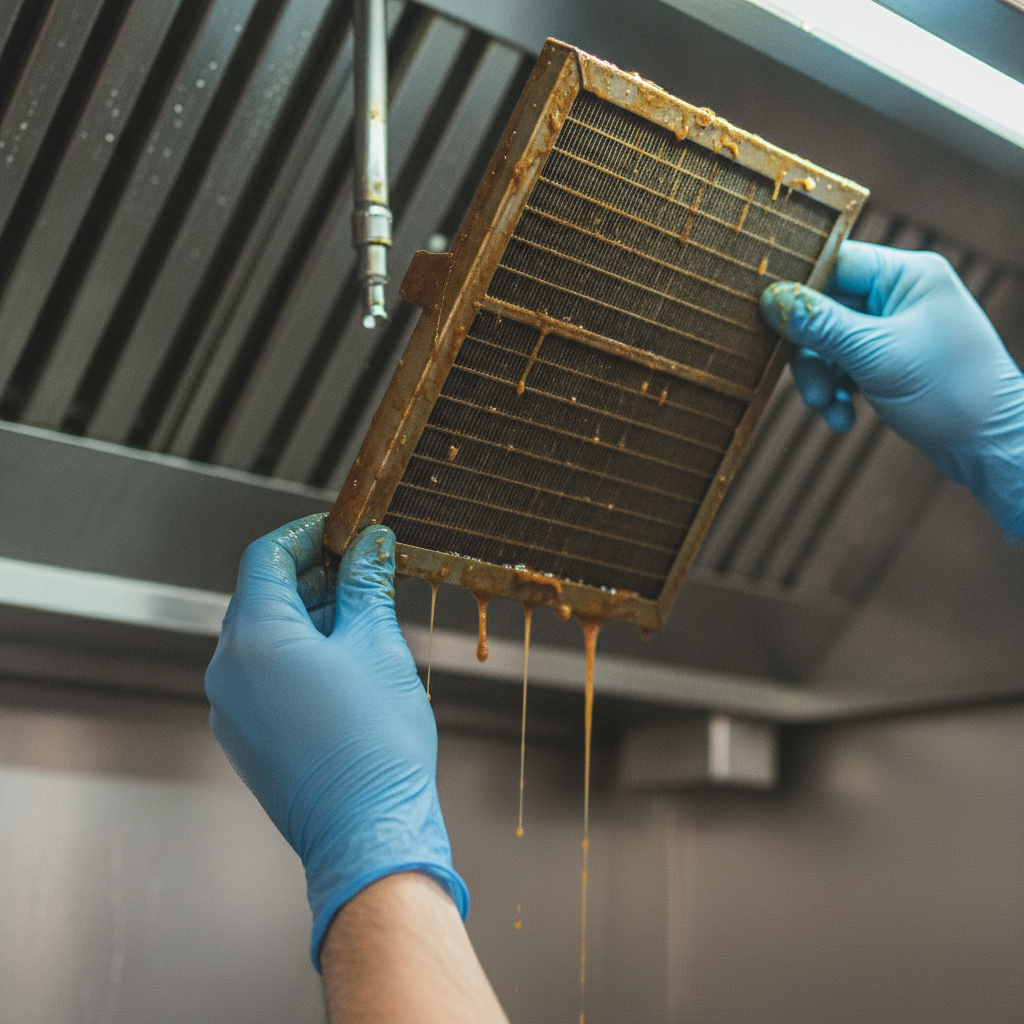
- Baffle filters: First-stage separation that protects ducts and fans from heavy grease.
- Ducts and cleanouts: Smooth conveyance path that requires accessible cleanout panels.
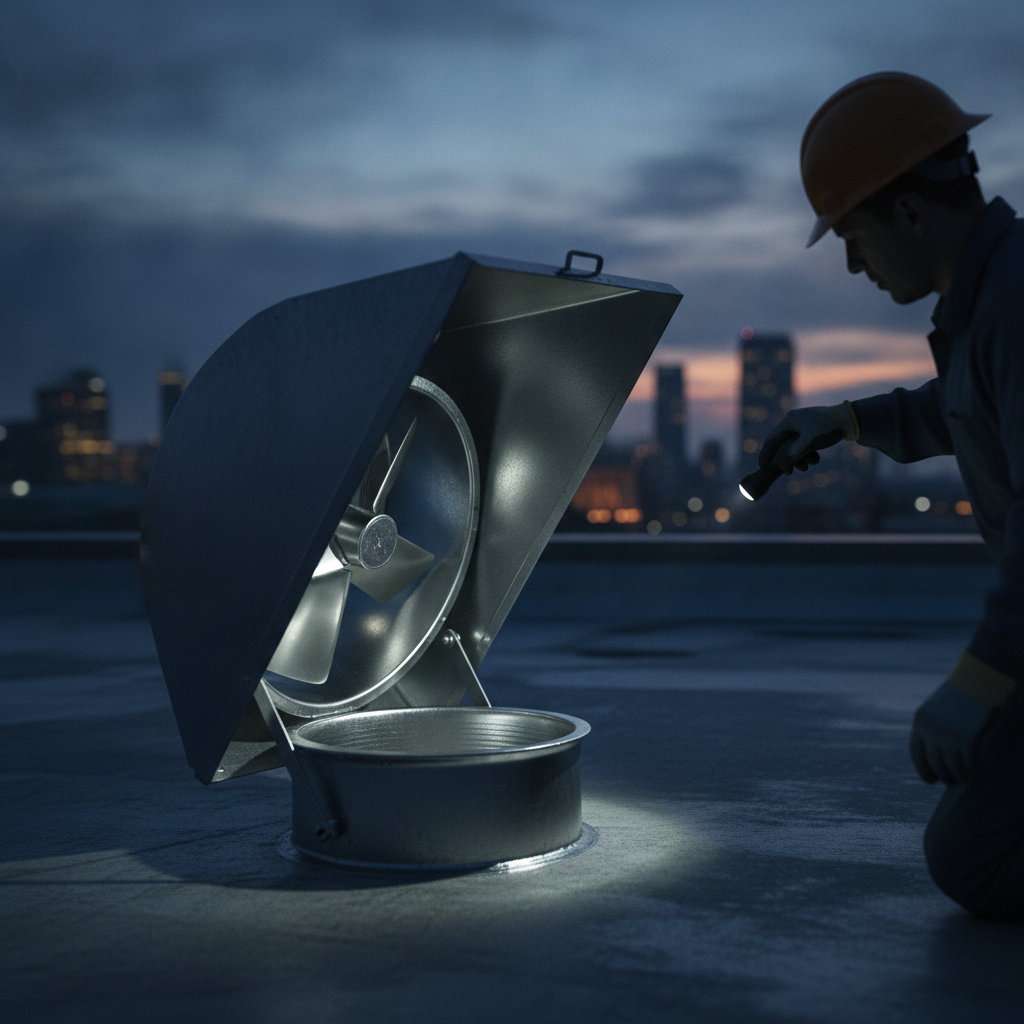
- Exhaust fans: Upblast or utility sets sized to required CFM with hinge and access for safe service.
- Make-up air (MUA): Tempered supply that offsets most of the exhausted volume to prevent negative pressure.
- Controls and sensors: From simple interlocks to demand-controlled ventilation (DCKV) that ramps fan speed to load.
Typical optimization targets
- Capture efficiency: Keep plumes under the hood edge—no roll-out, no spill.
- Pressure balance: Provide sufficient MUA (often most of exhaust volume) to avoid door pull and drafts.
- Fan health: Confirm belt tension and pulley condition so design CFM is actually delivered.
- Filter condition: Clean or exchange baffles before pressure drop starves capture.
- Duct cleanliness: Maintain accessible cleanouts and proper hinge kits for regular service.
| Component | Primary job | Optimization focus | Service interval (typical) |
|---|---|---|---|
| Hood & overhang | Enclose plume | Correct placement/height | Verify quarterly |
| Baffle filters | Trap grease | Clean/exchange on schedule | Daily–weekly (volume-based) |
| Exhaust duct | Convey effluent | Accessible cleanouts | Quarterly–annual |
| Upblast fan | Provide CFM | Belt/pulley alignment | Monthly visual; semiannual tune |
| Make-up air | Replace volume | Balance & temper | Semiannual filter/coil check |
| DCKV controls | Match load | Sensor calibration | Annual verification |
For a deeper airflow tune-up approach, review our ventilation efficiency best practices.
Types of Strategies and Methods
Effective optimization blends demand-controlled ventilation, disciplined cleaning cycles, filter exchange programs, and routine belt and fan inspections. Together, these strategies keep capture efficient during peak load, reduce grease migration, and prevent negative pressure and odor issues in the dining room.
- Demand-controlled kitchen ventilation (DCKV): Variable-speed fans modulate to heat/smoke load. Fans slow during light prep and ramp during searing and fry dumps, trimming wasted airflow.
- Filter cleaning & exchange: Clean baffles daily to weekly based on volume. Many operators enroll in exchange programs to guarantee consistent pressure drop and capture.
- Hood & duct cleaning: Maintain intervals based on cooking volume and fuel type. Solid-fuel lines need more frequent service to control residue.
- Fan belt replacement: Belts stretch and glaze. Replacing proactively preserves design CFM and reduces motor strain.
- Make-up air balancing: Ensure the supply stream offsets most of the exhaust volume. Poor balance shows up as door suction and drafts over the line.
- Rooftop integrity checks: Confirm hinge kits, grease containment, and weatherproofing so service is safe and residues don’t track onto the roof.
Many of these strategies are embedded in our restaurant kitchen exhaust cleaning program used across Ontario.
Best Practices Checklist (2026)
Focus on capture, balance, and cleanliness. Keep filters and ducts on cycle, verify belt tension, and maintain generous make-up air. Document cleanings and track hood performance trends. These habits lock in steady temperatures, safer ducts, and calmer dining rooms through busy services.
Daily to weekly
- Degrease baffle filters; run an exchange if they can’t be fully restored.
- Wipe hood canopies and undersides to stop streaking and drips.
- Log odors, door pull, smoke roll-out, and hot spots—simple checks catch drift early.
Monthly
- Inspect fan belts for glazing and slack; verify hinge function and safety pin.
- Confirm make-up air diffusers are clean and freely distributing supply air.
- Check rooftop grease containment and weatherproofing.
Quarterly to annual
- Schedule hood, duct, and fan cleaning based on volume and fuel type.
- Balance make-up air relative to exhaust so doors close easily without drafts.
- Calibrate demand-control sensors if installed; verify turndown during light prep.
Local considerations for All Over Ontario
- Plan more frequent summer inspections as kitchens run hotter during peak patio seasons.
- Ensure make-up air is tempered in colder months to protect staff comfort during long services.
- Account for regional humidity swings; clean coils and change filters to keep airflow steady.
Build your plan using our air quality improvement guide and the stepwise approach in our commercial kitchen optimization overview.
Tools and Resources You Can Use
You don’t need complex software to start. A hood performance log, a light meter or simple smoke test, filter exchange tracking, and routine belt checks cover most needs. Add demand-control retrofits and airflow diagnostics when your kitchen’s cooking profile and hours justify them.
- Hood performance log: Daily notes on smoke capture, odors, and door pull. Trends reveal when filters or belts slip out of spec.
- Filter exchange program: Guarantees consistent resistance so capture and energy stay predictable.
- Simple diagnostics: Use non-toxic smoke and a light source to visualize capture at the hood edge.
- Airflow checks: Confirm supply diffusers aren’t blocked and verify fan rotation and sound.
- DCKV retrofit path: Pair variable-speed fans with heat/smoke sensors to respond to real load.
For an at-a-glance explainer on how optimization ties back to safety, review this overview: kitchen ventilation system optimization. For a concise primer that walks through common risks from poor airflow, see Stop Grease & Fire Risk, and for broader health context, read air quality in commercial kitchens.
Case Studies and Ontario Examples
Across fast casual, full-service, and institutional kitchens, small airflow fixes compound into safer, cooler lines. Cleaning cycles, filter exchange, and belt replacements regularly restore capture to expected performance while tempering make-up air calms drafts and entry-door pull issues during peak periods.
Quick-service grill line
- Problem: Persistent smoke roll-out during lunch rush.
- Findings: Filters saturated; belt slack cut fan output.
- Fix: Enrolled in Filter Cleaning & Exchange; replaced belt and re-tensioned pulleys; verified make-up air diffusers.
- Result: Smoke capture restored; fewer odor complaints in dining area.
Full-service sauté line
- Problem: Hot spots at the pass and door suction.
- Findings: Negative pressure from under-supplied make-up air.
- Fix: Increased tempered supply; scheduled Hood & Duct Cleaning to reduce carryover resistance; added hinge kit inspection to routine.
- Result: Cooler expo area; doors stop slamming; steadier dining-room comfort.
Institutional kitchen
- Problem: Inconsistent capture between low-load prep and peak service.
- Findings: Fans ran full speed regardless of load.
- Fix: Implemented Demand-Controlled Ventilation and a quarterly Fan Belt Replacement check.
- Result: Quieter kitchen off-peak and steadier capture during surges.
These improvements align with our core services—Kitchen Exhaust Cleaning, Filter Cleaning & Exchange, Fan Belt Replacement, Hood Cleaning, Duct Cleaning, and Ventilation System Maintenance—delivered by NFPA96-aware, WSIB-insured teams All Over Ontario.
Want a fast read on your airflow? Book a quick assessment with our 24/7 team. We’ll review hood capture, filter condition, and fan health, then outline prioritized fixes you can stage around service windows.
FAQ: Restaurant Ventilation Optimization
Most kitchens can start optimizing ventilation by restoring capture: clean filters, verify belt tension, and check make-up air. From there, set cleaning intervals to cooking volume and decide whether demand-control retrofits are warranted based on hours and peak smoke loads.
How often should hoods and ducts be cleaned?
Frequency depends on cooking volume and fuel type. High-volume fry and grill lines benefit from quarterly service, moderate lines often run semiannual, and low-volume operations may extend to annual. Solid-fuel appliances typically require more frequent attention.
What causes smoke to roll out from under the hood?
Common culprits are clogged baffle filters, fan belt slippage, or excessive cross-drafts from poorly aimed make-up air. Restore filter condition, verify belt tension, and balance supply air so plumes stay captured at the hood edge.
Do I need demand-controlled ventilation?
If your fans run at full speed during low-load prep or off-peak hours, a retrofit can help. Variable-speed control pairs with sensors to match airflow to cooking intensity, easing fan wear and stabilizing temperatures in the kitchen and dining room.
How can I tell if my kitchen is under negative pressure?
Watch for strong door suction, drafts across the line, or odors being pulled into the dining area. If these show up, verify that make-up air is delivering most of the exhausted volume and that diffusers and filters are clean and unobstructed.
Conclusion and Next Steps
Start with what you can see: filters, belts, capture at the hood edge, and door behavior. Set cleaning intervals to your cooking volume and plan make-up air checks alongside routine service. Layer in demand-control and balancing once the basics are locked in.
- Key takeaways
- Capture, balance, and cleanliness are the foundation.
- Filter exchange and belt checks prevent most performance dips.
- Cleaning intervals should track cooking volume and fuel type.
- Demand-control adds stability and trims wasted airflow.
When you’re ready, we can coordinate around your service windows All Over Ontario. Explore our exhaust cleaning services or book a kitchen ventilation review with our NFPA96-aware, WSIB-insured team.