Kitchen extractor cleaning is the professional removal of grease and debris from commercial hood systems, ducts, filters, and exhaust fans. It reduces fire risk, improves airflow, and helps kitchens pass inspections. In All Over Ontario, Robinhood Cleaners performs extractor and hood cleaning to NFPA 96 standards so restaurants stay open, safe, and compliant.
By Robinhood Cleaners • Last updated: 2026-06-02
At a Glance
Kitchen extractor cleaning protects your business by removing flammable grease from hoods, ducts, filters, and fans. You’ll lower fire risk, improve ventilation, reduce odors, and meet inspection standards. This guide explains what it is, why it matters, how it works, and a proven step-by-step process used across Ontario kitchens.
Use this complete guide to align procedures with real-world restaurant operations in Ontario. It’s written for kitchen managers, chefs, and owners who need clarity, speed, and compliance without disrupting service.
- Clear, practical definition and how the system works
- Why extractor and hood cleaning impacts safety and uptime
- Step-by-step process you can follow or audit
- Best practices tailored to Ontario’s restaurant scene
- Tools, checklists, and links to deep-dive resources
- Mini case examples from food service environments
Guide Overview and Table of Contents
Jump to the topics you need: definitions, compliance benefits, system components, cleaning methods, a step-by-step workflow, tools and checklists, Ontario-specific tips, case snapshots, and a quick FAQ. Each section includes practical actions you can use today.
- What is kitchen extractor cleaning?
- Why it matters for safety and uptime
- How extractor systems work
- Types, methods, and approaches
- Step-by-step cleaning process
- Best practices for Ontario restaurants
- Tools, resources, and checklists
- Case studies and examples
- DIY vs professional service
- Frequently asked questions
- Conclusion and next steps
What Is Kitchen Extractor Cleaning?
Kitchen extractor cleaning is the systematic, professional removal of grease and contaminants from hoods, ducts, filters, and exhaust fans above cooking equipment. The goal is to prevent fires, improve airflow, and satisfy inspection requirements with photo-documented, end-to-end service.
In practice, extractor service covers every surface where aerosolized grease travels. That means baffle filters, interior hood plenum, horizontal/vertical duct runs, access panels, and rooftop fans.
- Scope: Hood canopies, filters, ducts, fan housings, fan blades, and grease containment.
- Standard: Clean to bare metal where required by accepted industry codes for fire safety.
- Frequency: High-volume fryers and grills need more frequent service than light-use kitchens.
- Documentation: Service stickers and photo logs help demonstrate compliance during inspections.
Robinhood Cleaners specializes in commercial extractor and hood cleaning for restaurants, food courts, and institutional kitchens across Ontario. Our teams clean ducts, fans, and filters, then verify performance and leave the space ready for morning prep.
Why Kitchen Extractor Cleaning Matters
Extractor and hood cleaning reduces fire hazards, stabilizes air quality, and helps you pass inspections. Clean systems move more air with less strain, which protects staff comfort and keeps equipment running during peak service.
Grease accumulation is combustible and can ignite from flare-ups or high heat. Clean systems lower that ignition load and limit how fast a fire can spread through ductwork.
- Fire safety: Removing grease films from hoods, ducts, and fans cuts a major ignition source.
- Compliance: Properly serviced systems align with inspection expectations and accepted codes.
- Ventilation: Less resistance means steadier capture of smoke and steam over the line.
- Uptime: Proactive cleaning avoids emergency downtime and after-hours surprises.
- Staff comfort: Better airflow reduces hot spots and odor complaints in the kitchen.
Teams in Southern Ontario often run long hours. In our experience, quarterly service for high-volume cooking balances safety and scheduling. For lighter use, semi-annual cycles work well, supported by monthly filter maintenance. See our commercial kitchen exhaust cleaning overview for planning ideas.
How Kitchen Extractor Systems Work
Extractor systems capture cooking effluent at the hood, trap grease in baffle filters, and pull contaminated air through ducts to an exhaust fan. Effective capture depends on airflow, filter condition, makeup air balance, and clean, unobstructed ducting.
Understanding each component helps you troubleshoot issues and set realistic maintenance intervals.
- Hood canopy: Sits above cooklines and captures rising heat, smoke, and grease aerosols.
- Baffle filters: Force airflow to change direction, shedding grease into a trough.
- Ductwork: Conveys air from the hood to the fan; horizontal runs are grease hotspots.
- Exhaust fan: Creates negative pressure to move air; worn belts reduce airflow.
- Makeup air: Replaces exhausted air; poor balance weakens hood capture.
When filters clog, fans labor and hoods spill smoke. When ducts hold grease, even small flare-ups can escalate. That’s why our cleanings include filter service, duct degreasing, and vent checks, plus fan belt inspection whenever access is safe.
Types, Methods, and Approaches
Professional extractor cleaning blends degreasers, heated rinsing, mechanical scraping, and filter maintenance. The best approach depends on cooking volume, system design, and access. In Ontario kitchens, combining chemical dwell time with hot-water rinsing gives reliable, inspection-ready results.
Different kitchens call for different tactics. Our technicians audit system layout, cooking loads, and access panels before choosing a plan.
- Degreasing chemistry: Food-service-safe alkaline degreasers break down polymerized grease films.
- Heated rinsing: Hot-water rinse improves removal and shortens dwell time.
- Mechanical scraping: For heavy buildup in ducts and behind seams.
- Filter cleaning & exchange: Swap baffle filters on-site or deep-clean and reinstall.
- Fan service: Clean blades, housings, and check belt tension and bearings.
- Containment & protection: Drip containment, floor protection, and food-contact surface shielding.
Explore our commercial hood cleaning guide for deeper technique comparisons, or review kitchen exhaust hood cleaning to see how we stage crews for overnight work.
Step-by-Step Kitchen Extractor Cleaning Process
A reliable workflow protects food, staff, and equipment while restoring systems to safe operation. This 10-step sequence mirrors how our All Over Ontario crews clean hoods, filters, ducts, and fans overnight so you’re ready for service the next day.
- Pre-inspection and photos: Verify access, note grease load, and document system condition.
- Protect and isolate: Cover equipment, shut down gas/power as required, and stage containment.
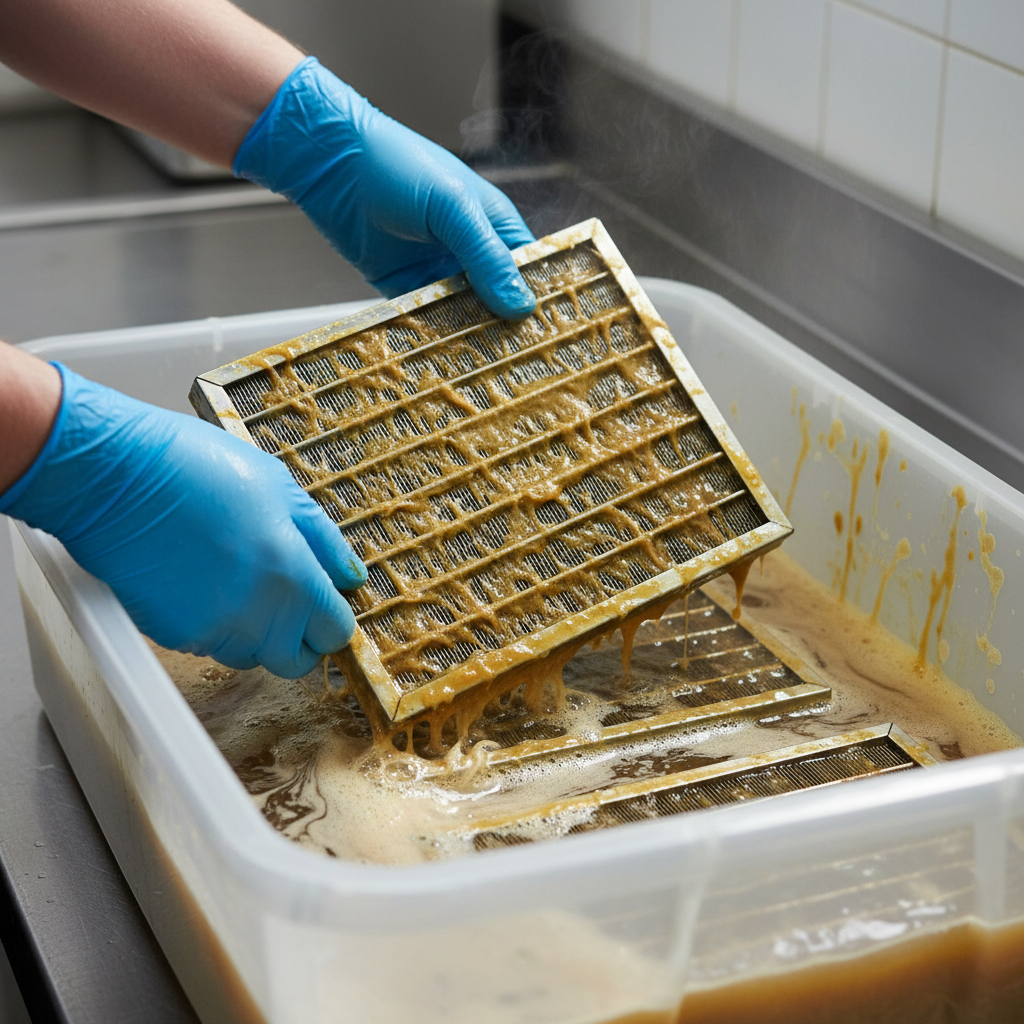
- Remove filters: Pull baffle filters for soaking or exchange; empty troughs.
- Apply degreaser: Use food-service-safe chemistry; allow proper dwell time.
- Scrape heavy deposits: Focus on duct elbows, seams, and plenum corners.
- Hot-water rinse: Rinse hoods, ducts, and fans, managing runoff and containment.
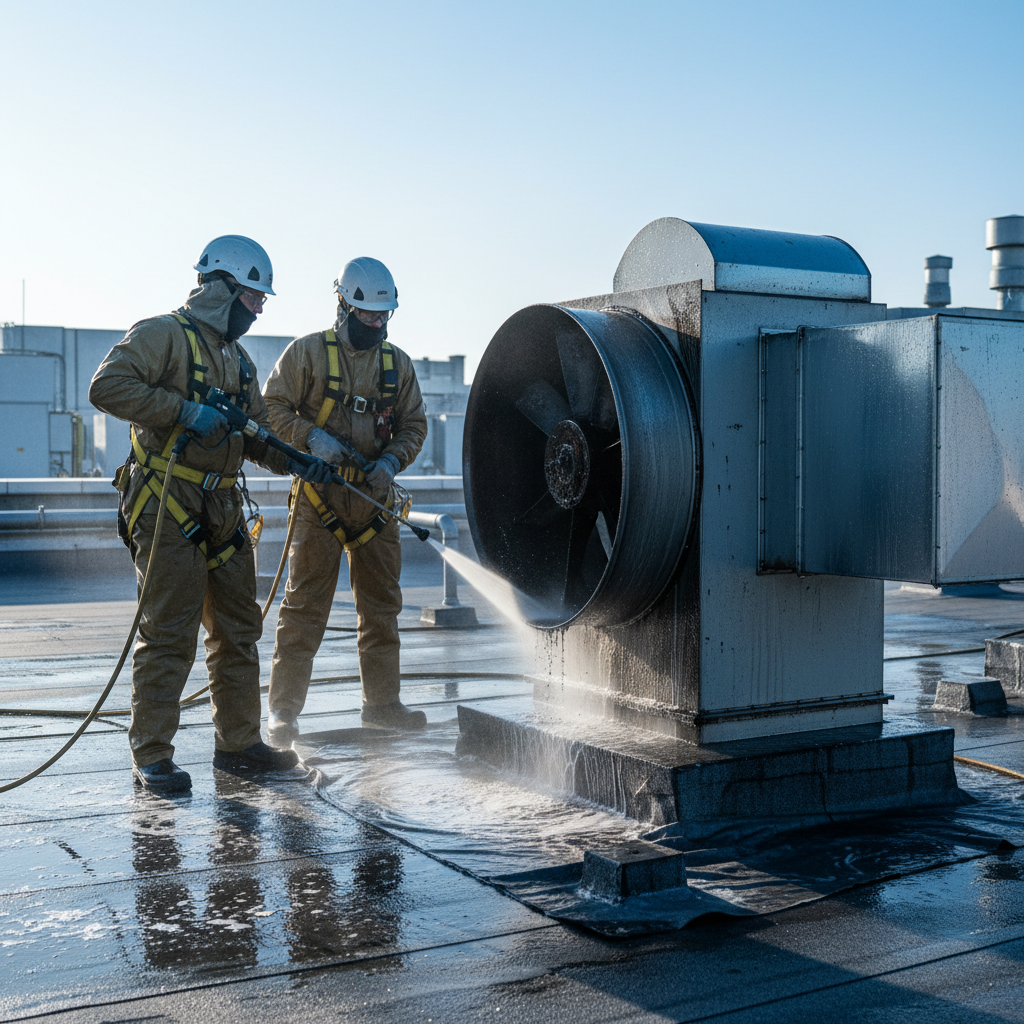
- Fan service: Clean blades and housings; check the belt; re-seat hinges and access panels.
- Filters back in: Reinstall deep-cleaned filters or provide a cleaned exchange set.
- Detail and polish: Wipe exterior stainless; remove coverings; restore utilities.
- Final QA: Take after-photos, affix service label, and brief your manager on findings.
Want a visual of the fan work? The rooftop fan and duct cleaning below shows safe setup and thorough degreasing during a scheduled overnight.
For a deeper dive into vent setups and airflow checks, review our kitchen vent cleaning guide. It pairs well with this step-by-step extractor workflow.
Best Practices for Ontario Restaurants
Set a service cadence matched to cooking volume, reinforce daily filter care, and schedule overnight extractor work to avoid downtime. Confirm photo documentation and a compliance sticker after each clean. These habits keep teams safe and inspections smooth across Ontario kitchens.
In our experience serving quick-service and fine-dining operations, the following practices consistently reduce fire risk and complaints about heat and odors.
- Match frequency to load: High-volume fryers and charbroilers often need quarterly whole-system cleaning; lighter kitchens may be semi-annual.
- Filter habits: Train staff to degrease baffle filters weekly; rotate spares if available.
- Fan belt checks: Add a quick look at belt tension during monthly walk-throughs.
- Schedule smart: Book overnight or off-day service and coordinate with closing tasks.
- Documentation: Keep service reports and photos on file for inspections and insurance.
- Whole-kitchen mindset: Pair extractor work with restaurant kitchen cleaning so floors, walls, and equipment stay in sync.
Local considerations for All Over Ontario
- Plan extractor service around extended summer hours when patios and QSR lines boost fryer and grill volume across Southern Ontario.
- Winter ventilation loads rise with closed doors and makeup air changes; schedule mid-season hood cleaning to keep capture steady.
- Institutional kitchens often have complex duct runs; confirm roof access and weather windows for safe fan servicing.
Tools and Resources
Reliable extractor results come from the right chemistry, heated rinsing, solid access, and trained techs. Use baffle filter spares, food-service-safe degreasers, hot-water equipment, access panel tools, PPE, and photo documentation to prove compliance.
Here’s a practical toolkit we apply nightly throughout Ontario:
- PPE: Gloves, eye protection, and slip-resistant footwear.
- Degreasers: Food-service-appropriate alkaline degreaser with clear dwell-time guidance.
- Hot-water system: Heated rinse with adjustable pressure for ducts and fans.
- Mechanical tools: Scrapers, brushes, and drill attachments for heavy buildup.
- Access gear: Hinges, latches, and panel tools for duct entry.
- Filter strategy: On-site deep clean or filter exchange to keep spares in rotation.
- Proof of service: Time-stamped photos, service sticker, and a brief manager debrief.
For a service-ready checklist and standards overview, see our Ontario-focused notes on NFPA for kitchen hoods. For a broader summary of scope and benefits, review our exhaust cleaning services page.
Free walkthrough and compliance check: If you manage a kitchen in All Over Ontario, we can audit your hood, ducts, and fan in one short visit. We’ll map access points, note grease load, and recommend a right-sized cleaning cadence.
Case Studies and Real-World Examples
Across Ontario, we’ve seen the same pattern: consistent extractor cleaning reduces hot complaints, eases inspection day, and prevents surprise shutdowns. These brief, anonymized examples show how cadence and method choices translate into safer, calmer kitchens.
High-volume quick service, Southern Ontario
A multi-fryer line produced heavy aerosolized grease. We set a quarterly full-system cycle with monthly filter deep cleans. Result: steadier capture at the hood and fewer odor complaints during rushes.
- Added fan-belt checks to catch slippage before it reduced airflow.
- Coordinated overnight work to avoid daytime prep conflicts.
- Left photo logs so managers could brief new shift leads quickly.
Institutional kitchen with long duct runs
Access panels were sparse, and elbows held stubborn deposits. We introduced targeted mechanical scraping before heated rinsing. Result: uniform bare-metal outcomes and faster future cleans.
- Installed additional access points for safer, faster maintenance.
- Staggered filter exchanges to minimize downtime.
- Validated airflow with post-clean smoke capture checks.
Fine-dining grill line
Charbroiler output created sticky films near the plenum and first elbow. We shortened the cadence from semi-annual to every four months. Result: fewer smoke rollouts and improved staff comfort on the line.
- Combined hood polishing with whole-kitchen detailing.
- Kept a spare set of baffle filters soaking during closing tasks.
- Documented each clean with before/after photos for inspection binders.
DIY vs Professional Service
Daily wipe-downs and filter care are in-house tasks; ducts and fans require trained professionals. The safest model combines staff-led filter maintenance with scheduled professional cleanings that reach hidden duct surfaces and rooftop fans.
Use this quick comparison to plan responsibilities with your team.
| Aspect | In-House (DIY) | Professional Service |
|---|---|---|
| Daily/weekly tasks | Wipe hood exteriors; rinse filters | N/A |
| Filters (deep clean) | Possible with soak and degreaser | Exchange or deep-clean to restore flow |
| Duct interiors | Not accessible/safe for staff | Access panels, scraping, hot-water rinse |
| Rooftop fan | Out of scope for staff | Clean blades, housing; check belt |
| Documentation | Basic logs, if any | Photo logs and service labels |
| Inspection readiness | Inconsistent | Predictable, inspection-ready |
For a province-wide perspective on certified service, you can also explore this overview of NFPA 96 certified hood cleaning and this note on restaurant hood cleaning certification. Our own commercial hood service in Ontario page outlines what to expect on service night.
Frequently Asked Questions
These quick answers help managers and chefs align maintenance with real kitchen workloads. For detailed guidance or an on-site walkthrough in All Over Ontario, contact Robinhood Cleaners.
How often should kitchen extractor cleaning be scheduled?
Match cadence to cooking volume. High-output fryers and charbroilers often need quarterly whole-system cleaning, while lower-volume kitchens can target semi-annual. Support both with weekly baffle filter deep cleans and daily wipe-downs to keep airflow steady.
What parts of the system must be cleaned?
The hood plenum, baffle filters, horizontal and vertical duct runs, access panels, and the rooftop exhaust fan (blades and housing). Exterior stainless should be detailed after interior work, and a service label plus photo documentation should be provided.
Can my staff clean the ducts themselves?
Staff should manage daily wipe-downs and routine filter rinses, but interior duct and fan work require trained professionals with proper access tools, containment, and safety gear. This ensures thorough degreasing and maintains inspection readiness.
What proof of service should I expect?
Expect before/after photos, a labeled service sticker near the hood, and a brief manager debrief that notes access points, fan belt condition, grease load, and any recommendations for cadence or minor repairs.
Conclusion and Next Steps
Set a realistic cleaning cadence, reinforce weekly filter care, and partner with a certified team for ducts and fans. With consistent extractor maintenance, you’ll protect staff, maintain airflow, and pass inspections without last-minute scrambles.
- Key takeaways: Grease is fuel; clean to reduce ignition risk. Filters drive airflow; keep them clear. Documentation smooths inspections.
- Next steps: Walk your line, check filter condition, note fan belt wear, and schedule an overnight cleaning window.
- Get help fast: We provide 24/7 scheduling and coverage across Ontario with quick service in the South.
Book a discovery session in All Over Ontario to align your extractor cleaning plan with real kitchen rhythms.