Health code compliance for commercial kitchens is the documented practice of meeting food safety, sanitation, ventilation, and fire protection standards set by public health and fire codes. It requires routine cleaning, verified procedures, and records that prove hoods, ducts, fans, filters, appliances, and grease traps are maintained to inspection-ready condition.
By Robinhood Cleaners • Last updated: April 14, 2026
Summary
This complete guide shows restaurant leaders how to pass inspections the first time—what compliance means, why it matters, and the exact steps to prepare. Use the checklists, maintenance calendar, and documentation tips to keep your hood, ducts, fans, filters, appliances, and grease traps compliant year-round.
- Clear definition of health code compliance for commercial kitchens
- What inspectors check—and how to show proof quickly
- Step-by-step pre-inspection workflow
- Maintenance calendar by kitchen type (heavy, moderate, light use)
- Best practices that consistently earn passing scores
- Pricing factors (no dollar amounts, just what drives scope)
- Ontario-operational tips from our WSIB-insured, NFPA 96–certified team
Table of Contents
- What Is Health Code Compliance?
- Why Compliance Matters
- How Compliance Works Day-to-Day
- Approaches & Service Types
- Best Practices Inspectors Reward
- Tools, Logs, and Resources
- Step-by-Step: Pre-Inspection Playbook
- Maintenance Calendar
- Pricing Factors
- Ontario Case Snapshots
- FAQ
- Key Takeaways & Next Steps
Quick Answer
Health code compliance for commercial kitchens means documented sanitation and fire-safety maintenance that meets local public health requirements and NFPA 96. In All Over Ontario at All Over Ontario, Robinhood Cleaners maintains hoods, ducts, fans, filters, and grease traps so inspections pass without disrupting service.
Local Tips
- Tip 1: Along Highway 401 and the QEW corridors, book after the late dinner rush so our crews avoid traffic and your team avoids downtime.
- Tip 2: Winter roof access gets icy. Schedule rooftop fan cleaning and hinge-kit checks before freezing temps; re-verify after major snowfalls.
- Tip 3: During patio and festival surges, add an interim filter exchange to keep airflow stable and smoke/odor complaints low.
IMPORTANT: These tips align with Robinhood Cleaners’ 24/7 scheduling, WSIB-insured teams, and NFPA 96–certified cleaning coverage across Southern Ontario.
What Is Health Code Compliance for Commercial Kitchens?
Health code compliance is the ongoing, documented proof that your kitchen’s food-contact surfaces, ventilation, and grease management meet public health and fire codes. It pairs routine cleaning with logs, certificates, and photo evidence that hoods, ducts, fans, filters, appliances, and traps are maintained to NFPA 96 and local standards.
Compliance is not a single cleaning; it’s a managed system supported by evidence. Inspectors want to see two things: conditions that are clean and safe today, and records that show you keep them that way.
- Scope includes:
- Food-contact surfaces (prep tables, cutting boards, smallwares)
- Hoods, ducts, and exhaust fans (capture, removal, and fire safety)
- Baffle filters (seated correctly, clean, oriented to maintain airflow)
- Grease traps (pumped, intact tees/baffles, sealed lids, odor-free)
- Floors/walls/ceilings, drains, waste and dumpster pads
- Documentation inspectors expect:
- Service certificates for hood/duct/fan cleanings (NFPA 96 alignment)
- Grease-trap logs showing volumes and dates
- Daily/weekly sanitation checklists and corrective actions
- Time-stamped before/after photos for exhaust system components
- Vendor insurance and WSIB proof ready to review
- Authorities involved: Public Health Inspectors (sanitation) and Fire Prevention Officers (exhaust fire safety).
Self-contained insight: A compliant kitchen can demonstrate, in 90 seconds, when the exhaust system was last cleaned, who performed it, what was done (to bare metal where required), and how grease-trap volumes are trending. If you can retrieve that proof quickly, you pass faster and avoid repeat visits.
Why Health Code Compliance Matters
Compliance prevents closures, reduces fire risk, protects staff and guests, and safeguards your brand. Landlords and insurers often require proof of NFPA 96–aligned hood and duct cleaning plus grease-trap maintenance to keep risk low and coverage valid.
- Fire safety: Cooking operations are a primary source of restaurant fires, per the National Fire Protection Association (NFPA). Degreased ducts and fans cut ignition pathways.
- Food safety: Consistent sanitation breaks cross-contamination pathways and reduces allergen carryover.
- Air quality and comfort: Balanced ventilation limits heat, smoke, and odors that trigger complaints and slow service.
- Regulatory & insurance: Many leases and policies reference NFPA 96 expectations for exhaust system care.
- Reputation & revenue: A single low inspection score circulates quickly on review platforms and delivery apps.
In our experience across Southern Ontario, sites that bundle exhaust cleaning, filter exchange, and grease-trap service score higher—because their documentation is unified and easy to show on the spot. For a deep dive on standards, see our internal primer on NFPA 96 compliance requirements.
How Health Code Compliance Works Day-to-Day
Compliance is a system: daily line checks, scheduled deep cleans, certified hood and duct service, and accurate records. Kitchens that standardize logs and bundle exhaust, filter, and trap service pass inspections faster and with fewer surprises.
- Daily:
- Sanitize prep and cookline surfaces; change sanitizer per label and test strips
- Rinse or rotate filters; verify airflow on low/medium/high settings
- Log cold/hot holding temperatures; correct variances immediately
- Empty grease pans into sealed bins; wipe splash zones before close
- Weekly:
- Degrease fronts/sides of appliances; pull and clean fryer and grill stands
- Scrub floors and walls near the line; confirm drain hygiene and traps
- QC walk: 10-minute end-of-shift inspection to catch tomorrow’s issues
- Monthly/Quarterly:
- Certified hood/duct/fan cleaning aligned to NFPA 96 (heavy use often quarterly)
- Hinge-kit checks and rooftop grease containment maintenance
- Document with certificates and time-stamped photos
- Ongoing:
- Grease-trap pumping/cleaning with volume tracking and maintenance notes
- Fan belt inspection and replacement if frayed or slipping
- Documentation hub: Keep service certificates, photo evidence, vendor insurance, and WSIB proof in one binder (or digital folder).
Want a blueprint you can act on this week? Our inspection-ready checklist aligns with this system in our commercial kitchen inspection checklist. Kitchens that follow it report fewer rechecks and smoother mornings after service.
Approaches, Services, and Cleaning Types
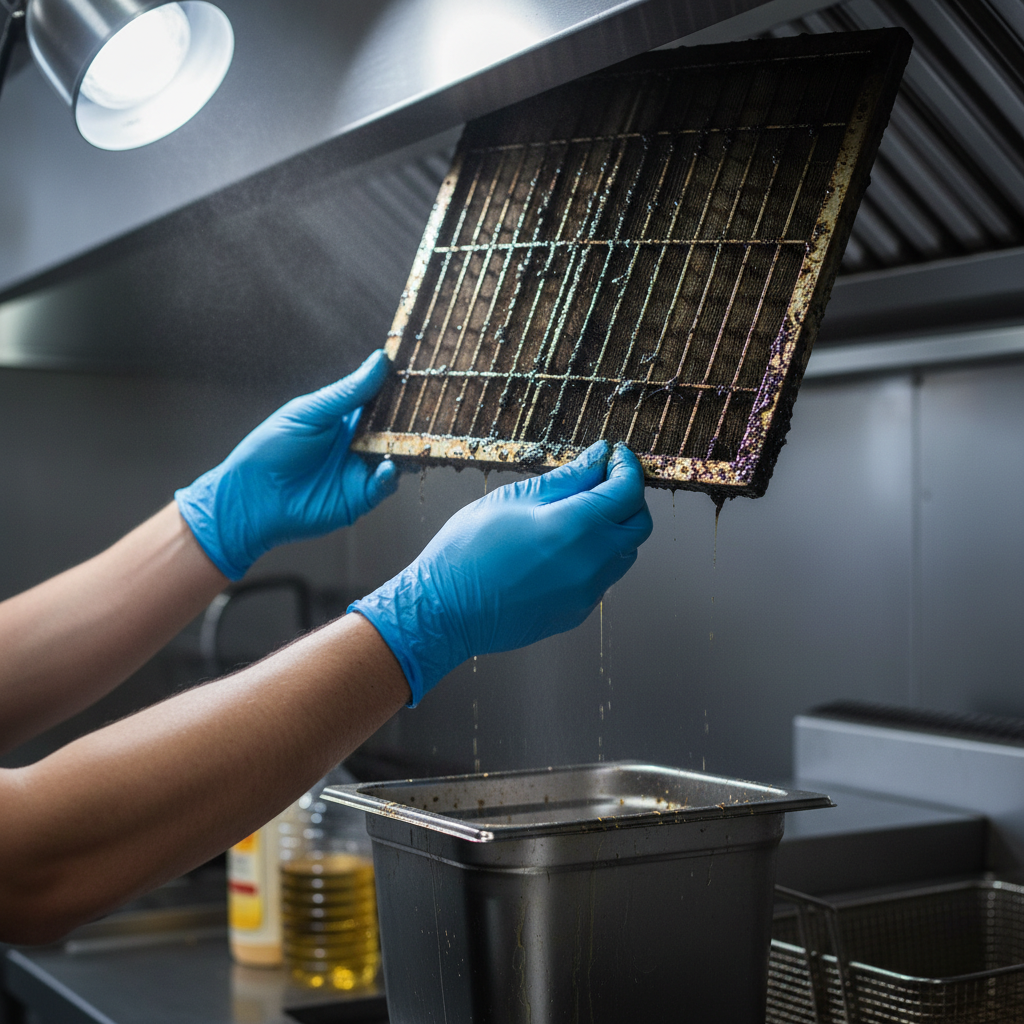
Pair in-house sanitation routines with certified vendor services: hood, duct, and exhaust fan cleaning; filter cleaning and exchange; grease-trap pumping; appliance deep cleaning; and ventilation maintenance. Match service frequency to volume, menu, and observed grease load.
- Hood, duct, exhaust fan:
- Degreasing to bare metal where required; plenum, risers, horizontal and vertical runs
- Fan wheel/bearing checks; secure electrical; verify vibration and spin
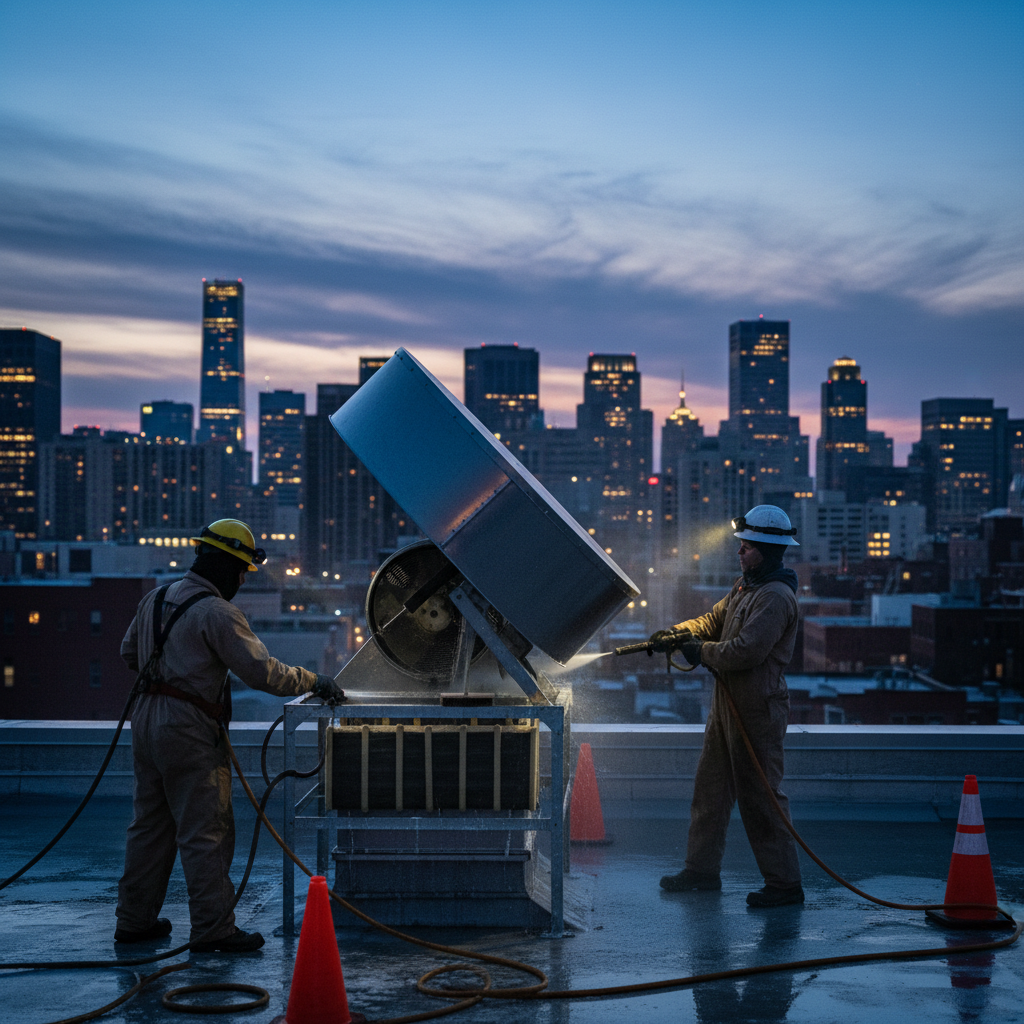
- Roof protection: hinge kits and grease containment to protect roofing
- Filter Cleaning & Exchange:
- Rotate or swap baffles to maintain capture efficiency and airflow
- Spare set on-site to keep the line running during deep cleaning
- Grease Trap Cleaning:
- Pump, scrape, and inspect baffles, tees, and seals; log captured volumes
- Seal lids; confirm no odors; document maintenance notes
- Commercial Appliance Cleaning:
- Ovens, grills, fryers, refrigerators—reduce soil load that feeds pests
- Fronts/sides detailed to stop residue migration onto food-contact areas
- Power Washing & Floors:
- Hot-water degreasing in back-of-house lanes, loading docks, and dumpster pads
- Lower slip risk and reduce pest attraction at the source
- Ventilation Maintenance:
- Belt inspection/replacement, tensioning, and vibration checks
- Airflow balance checks after filter exchanges and duct service
Robinhood Cleaners delivers end-to-end coverage—Kitchen Exhaust Cleaning, Filter Cleaning & Exchange, Grease Trap Cleaning, Commercial Appliance Cleaning, Hood and Duct Cleaning, and Ventilation System Maintenance—so your documentation chain stays intact. For duct specifics, see our internal primer on Ontario exhaust duct cleaning.
Best Practices That Inspectors Reward
Standardize cleaning logs, label equipment, and time-stamp photos. Keep the last two service certificates on-site. Train staff on filter rotation and spill control. Kitchens that document before/after hood cleanings and trap volumes consistently pass with confidence.
- Document everything: Service certificates, dated photo sets, and corrective-action notes in one binder.
- Label locations: Number hoods, map duct runs, and tag rooftop fans for easy reference.
- Train the line: Show baffle orientation, splash-zone wipe paths, and sanitizer test use.
- Grease control: Scrape pans into designated bins; keep lids sealed to deter pests.
- Rooftop readiness: Hinge kits, grease containment, clear pathways and lighting.
- Vendor coordination: Align cleaning with delivery schedules and off-peak prep times.
- Emergency plan: Small fire response, spill kits, and hood suppression basics.
Here’s the thing: your records are as important as the clean. To see how a bundled program supports both cleanliness and documentation, review our overview of commercial kitchen cleaning services that integrate logs and photo proof.
Tools, Logs, and Resources
Use simple, durable tools: a compliance binder or secure digital folder, labeled checklists, and a service calendar. Reference NFPA 96 and local food-code guidance. Keep vendor contacts, insurance certificates, and WSIB/coverage proof in the same place.
- Compliance binder (or digital folder):
- Tabs for daily logs, service certificates, photo evidence, training records
- Store WSIB and vendor insurance certificates with contact info
- Service calendar: Color-code exhaust, filters, grease traps, and appliance deep cleans.
- Templates: Opening/closing checklists, corrective-action forms, grease-trap log, fan-belt log.
- Standards on hand: Keep NFPA 96 excerpts and your local food-code summary within reach.
- Digital photos: Require date stamps; organize by hood-to-rooftop path.
For air balance and comfort impacts, see our note on commercial kitchen air quality improvements that tie airflow, odors, and guest comfort together.
Request a Compliance Walkthrough
Want an inspection-ready plan tailored to your menu and volume? Our NFPA 96–certified team will map your hood-to-rooftop path, check grease-trap access, and build a simple calendar you can post in the back office.
Step-by-Step: Pre-Inspection Playbook
Walk the inspector’s path: start at the hood, follow the duct to the roof, then check grease management and sanitation logs. Fix visible issues first, stage your certificates, and have a manager who can answer questions confidently with proof.
- Stage documentation: Latest hood/duct/fan certificate; grease-trap logs; daily/weekly sanitation records; staff training sign-offs.
- Hood & filters: Filters seated correctly; baffles clean; capture verified on low/med/high.
- Duct & fan: Access panels closed; fan spins true; belt tension right; rooftop containment in place.
- Appliances & splash zones: Fronts and deep sides clean; fryers and grills free of excess soil.
- Grease trap: Recent pump-out noted; lids sealed; no odors; tees/baffles intact.
- Floors & waste: Non-slip, degreased lanes; bins closed; dumpster pad clean.
- Final polish: Door handles, POS, prep tables wiped; sanitizer buckets dated and correct.
- Manager brief: Who cleaned what, when, and what’s scheduled next—answer with proof.
Prefer a one-page version? Our internal inspection cleaning guide condenses the essentials and aligns with our service certificates.
At-a-Glance Inspection Table
| Area | What Inspectors Check | Evidence to Show |
|---|---|---|
| Hood/Duct/Fan | Free of grease, access panels secure, fan safe to service | NFPA 96 certificate, dated photos, hinge-kit note |
| Filters | Baffles clean, correct orientation, adequate capture | Filter rotation log, spare set on-site |
| Grease Trap | Lids sealed, no odors, tees/baffles intact | Pump-out log with volumes, last service date |
| Appliances | Fronts/sides clean, no carbonized buildup | Deep-clean record with scope notes |
| Floors & Waste | Degreased aisles, sealed bins, clean dumpster pad | Power-wash log, pest-control notes |
Maintenance Calendar by Kitchen Type
Match cleaning cadence to risk. High-volume fry/grill lines accumulate grease faster than low-volume kitchens. Many authorities expect quarterly exhaust cleaning for heavy use; moderate and light use often follow semi-annual or annual cycles. Always align with your inspector’s guidance and observed grease load.
- Heavy use (QSR, high fry/grill): Quarterly hood/duct/fan service; frequent filter swaps; grease-trap checks escalate during peak seasons.
- Moderate use (casual, mixed menu): Semi-annual exhaust service; monthly trap reviews; quarterly photo checks.
- Light use (bake-forward, low grease): Annual exhaust service still requires logs and photos to show due diligence.
- Seasonal surges: Add interim filter/trap service and a quick rooftop check after major weather events.
For frequency planning grounded in NFPA 96 expectations, see our internal note on hood cleaning frequency and align it with your grease-trap log trends.
Pricing Factors (No Dollar Amounts)
Investment varies by grease load, equipment count, access complexity, rooftop conditions, documentation needs, and after-hours scheduling. Transparent scopes, photo proof, and bundled services keep compliance predictable without surprise add-ons.
- Grease load & menu: Fryers and charbroilers drive more frequent service.
- System complexity: Multiple hoods, long duct runs, and hard-to-reach fans expand scope.
- Access & safety: Rooftop height, hinge kits, containment, and winter conditions affect time-on-task.
- After-hours windows: Night or early-morning work to avoid disruption.
- Documentation needs: Detailed photos, certificates, and logs prepared for audits.
- Bundling: Combine exhaust, filters, traps, and appliances for efficiency and fewer rechecks.
Ontario Case Snapshots
Real kitchens in Southern Ontario pass faster with certified, bundled service and organized documentation. Coordinated exhaust, filter, and trap maintenance minimizes downtime and satisfies both health and fire authorities.
- QSR on the 401: Nightly filter rotation plus quarterly exhaust service stabilized airflow; a morning inspection cleared with no recheck after we staged certificates and photos together.
- Downtown bistro: Adding hinge kits and rooftop containment made access safer; odor complaints dropped and the next inspection praised documentation quality.
- Institutional kitchen: Grease-trap volume tracking flagged a failing tee; repair completed before an odor citation and the site kept regular intervals thereafter.
FAQ
Most kitchens pass consistently when they combine daily sanitation with scheduled, certified exhaust and grease-trap service—and keep organized records. Here are crisp answers to common questions from Ontario operators.
How do I know my hood needs service?
Check for visible film on baffles, smoke lingering on the line, or a fan that vibrates or whines. If your filter rotation no longer restores capture, book a certified exhaust cleaning and document before/after photos for your binder.
What proof should I show an inspector?
Provide the latest hood/duct/fan certificate, dated grease-trap logs, daily sanitation checklists, and time-stamped photo sets. Keep vendor insurance (including WSIB where applicable) and any corrective-action notes in the same folder.
How often should grease traps be cleaned?
Align frequency with actual grease accumulation and local guidance. Track captured volumes. If odors return quickly or backups occur, shorten the interval and document the change on your log.
Does NFPA 96 apply to my kitchen?
Yes if you cook with grease-producing equipment under a hood and duct. NFPA 96 sets exhaust system fire-safety benchmarks that many authorities and insurers reference. Keep certificates and photos ready to demonstrate alignment.
Can I combine services in one visit?
Yes. Many kitchens bundle exhaust cleaning with filter exchange and grease-trap service in one after-hours window. It reduces downtime and gives you a clean-slate morning with documentation ready for inspectors.
Key Takeaways & Next Steps
Make compliance visible and verifiable: standardize daily logs, schedule certified exhaust and trap service, and keep photo proof and certificates handy. Bundle tasks to minimize downtime and pass with confidence across Southern Ontario.
- Compliance pairs sanitation, ventilation care, and documentation you can retrieve in seconds.
- NFPA 96–aligned exhaust cleaning reduces fire risk and speeds inspections.
- Grease-trap logs and filter rotation keep airflow balanced and odors controlled.
- Organized records are as important as the clean itself.
Ready to pass your next inspection? Book a walkthrough anywhere in Ontario—our 24/7, WSIB-insured, NFPA 96–certified team will align service to your kitchen’s reality and provide the paperwork inspectors expect.