When your hood shrieks on startup, the line runs hotter, or smoke lingers at the canopy edge, you have an airflow problem—often a worn belt. For restaurants and institutional kitchens across Ontario, fan belt replacement commercial hoods is a small, scheduled task that prevents big headaches: fire risk, poor capture, and surprise shutdowns. This complete, service-focused guide shows you what matters, how to diagnose issues, and how Robinhood Cleaners coordinates belts with hood, duct, filter, and rooftop fan cleaning—24/7—to keep ventilation safe, compliant, and steady.
Overview
- Understand what a hood fan belt does, how it fails, and why failure shows up as heat, smoke, and odor.
- Learn a practical, NFPA 96–aligned replacement workflow that protects motors and bearings.
- Use Ontario-specific scheduling and rooftop access tips to cut time and disruption.
- Adopt best practices for tension, alignment, documentation, and seasonal checks.
- See case snapshots from kitchens like yours—fast-casual, hotels, and multi-unit groups.
Quick Answer
Across All Over Ontario at All Over Ontario, plan fan belt replacement commercial hoods every 6–12 months or sooner if you hear squeal, see glazing or fray, or notice odor creep. Robinhood Cleaners—NFPA 96–certified and WSIB-insured—bundles belts with hood, duct, filter, and rooftop fan cleaning around your hours to restore safe, compliant airflow.
Table of Contents
- What Is a Hood Fan Belt?
- Why Fan Belts Matter (Safety, Comfort, Compliance)
- How the Exhaust System Uses the Belt
- Belt Types, Materials, and Selection
- Diagnostics: Confirming Belt Issues
- 12 Signs It’s Time to Replace
- How-To: Planned Replacement (Step-by-Step)
- Fan Belt Replacement Commercial Hoods: Best Practices
- Tools, Resources, and Checklists
- Maintenance Schedule for Ontario Kitchens
- Common Mistakes to Avoid
- Troubleshooting: Symptom → Cause → Fix
- Comparison: Belt Types vs. Use Cases
- Coordination Plan: Belts + Cleaning = Design Airflow
- Pricing Considerations (No Specific Prices)
- Ontario Case Snapshots
- FAQ
- Key Takeaways & Next Steps
- Related Articles
What Is a Hood Fan Belt?
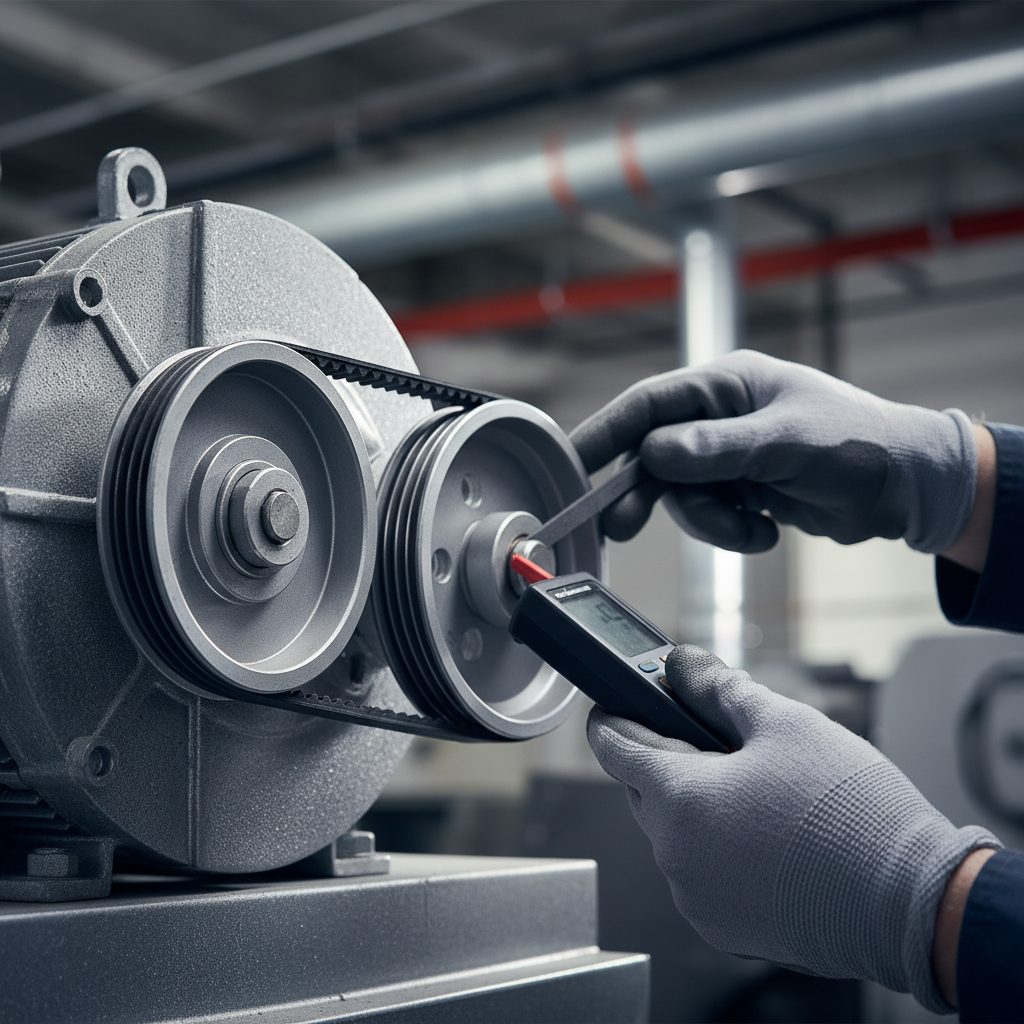
The fan belt is the flexible drive that links your motor shaft to the fan pulley. When the motor spins, the belt turns the fan wheel, creating capture and exhaust that pull grease-laden vapors through baffle filters, into the plenum and duct, and out through the rooftop fan.
- Where it lives: On the rooftop upblast or utility set fan, behind a guard or cover.
- Materials: Rubber compounds with tensile cords; choices include wrapped V-belts, cogged/raw-edge V-belts, narrow-section high-capacity belts, and synchronous (timing) belts.
- Function: Maintain design RPM so the hood meets capture targets and keeps heat, smoke, and odors in check.
- Failure modes: Glazing, cracking, fraying, stretch, oil/grease contamination, or sudden snap under load.
Why Fan Belts Matter (Safety, Comfort, Compliance)
- Fire hazard reduction: Reliable exhaust moves grease vapor away from open flames and hot appliances.
- Air quality improvement: Adequate capture reduces smoke haze, odor creep, and line heat—protecting teams and guest comfort.
- Compliance confidence: Stable ventilation supports maintenance practices consistent with NFPA 96—review our NFPA 96 certified cleaning approach for aligned documentation.
- Equipment protection: Correct tension reduces motor amps, minimizes bearing load, and prevents sheave damage.
- Business continuity: Planned swaps beat emergency shutdowns during the dinner rush.
Local Tips
- Tip 1: Along Highway 401, the QEW, and downtown cores, loading and rooftop access are tight—bundle belt swaps with filter exchange and duct cleaning to cut extra trips.
- Tip 2: Ontario winters are hard on elastomers. Cold starts squeal and slip; schedule a pre-winter inspection and keep a matched spare belt on site.
- Tip 3: If you operate late nights or 24/7 prep, coordinate after-hours replacement and airflow testing to protect service windows.
IMPORTANT: Robinhood Cleaners serves all of Ontario with particularly quick response in Southern Ontario—timing and access planning matter.
How the Exhaust System Uses the Belt
Commercial hood performance depends on a chain of parts working in sync. The belt is the mechanical link that keeps fan RPM at design values.
- Hood canopy + baffle filters: Trap grease at the source; clean filters reduce static pressure and improve capture—see our filter replacement guide for cadence and technique.
- Plenum: Collects air efficiently; heavy grease narrows passages and raises resistance.
- Ductwork: Clean ducts keep system resistance low so the fan meets target CFM.
- Motor and sheaves: The motor pulley drives the belt; the belt drives the fan pulley.
- Fan wheel: Spins to pull air; slip or stretch reduces RPM and capture.
- Make-up air: Balanced supply avoids negative pressure and backdrafts; improves edge capture.
When a belt slips, the hood “breathes” less. You’ll see smoke rollback, hotter ceilings, and odor creep. Motors pull more amps trying to compensate, bearings heat up, and failures come faster. Pairing belt work with filter exchange and hood/duct cleaning restores design static pressure and CFM in one coordinated visit—our team often implements the steps from Commercial Kitchen Exhaust Filter Replacement Ontario during the same window.

Belt Types, Materials, and Selection
Match belt type to load, pulley diameter, temperature, cleanliness, and service goals.
- Classic wrapped V-belts (A, B, C):
- Durable in greasy environments; forgiving of minor misalignment.
- Common on rooftop upblast and utility set fans.
- Cogged/raw-edge V-belts:
- Run cooler and flex better around small pulleys.
- Higher efficiency and slip resistance when tensioned to spec.
- Narrow-section high-capacity (3V, 5V):
- More power in less space; for heavier fans and longer duct runs.
- Require careful tension and alignment checks.
- Synchronous (timing) belts:
- No designed slip; hold exact speed ratios.
- Need matching toothed sheaves; cleaner enclosures to avoid debris damage.
- Matched multi-belt sets:
- On multi-groove drives, replace all belts as a matched set.
- Mixing old/new belts loads one belt unevenly and accelerates failure.
Diagnostics: Confirming Belt Issues
Rule out other causes and verify the belt is your root issue—fast.
- Visual: Glazing, cracks, fray, missing chunks, or rubber dust near guards.
- Sheaves: Nicked, rusted, or greasy grooves chew new belts; clean or replace.
- Alignment: Straightedge or laser across sheaves; even small offsets shorten belt life.
- Tension: Use a gauge, not “by feel”; follow span/deflection specs.
- Performance checks:
- Tissue test at hood edge; any smoke rollback?
- Measure motor amps vs. nameplate under steady load.
- Check RPM with a tachometer if available.
If capture is weak but the belt looks fine, look upstream: dirty baffle filters, grease-clogged plenum, or duct restrictions. Coordinating replacement with a full hood service returns the system to spec—our team often pairs belts with prevent kitchen fires service steps and keep staff safe checklists.
12 Signs It’s Time to Replace
- Squealing at startup or under fryer/grill load.
- Shiny sidewalls (glazing) or visible cracking.
- Frayed edges or missing chunks on the belt.
- Rubber dust/residue around guards or the fan base.
- Reduced capture—smoke/steam escaping the hood edge.
- Odors drifting into dining or lobby areas.
- Hotter ceiling tiles above the hood; line cooks feel more heat.
- Fan speed below expected; slow spin-down on stop.
- Breaker trips or higher-than-normal motor amps.
- Belt riding low in the sheave groove.
- Oil/grease contamination on the belt or sheaves.
- Age: 6–12 months in high-use kitchens (earlier for 24/7 operations).
How-To: Planned Replacement (Step-by-Step)
Use this safe, NFPA 96–aligned sequence. If you’re unsure, bring in certified techs—protect warranty, compliance, and uptime.
- Schedule off-hours. After close or pre-open minimizes disruption.
- Lockout/Tagout (LOTO). De-energize at the disconnect; verify zero energy.
- Open guards. Inspect motor mount, sheaves, guards, and belt path.
- Confirm belt spec. Note section (A/B/3V/5V) and length; match multi-belt sets.
- Inspect bearings and mounts. Correct wobble or looseness before installing.
- Degrease sheaves. Clean grooves; residue causes micro-slip and heat.
- Install belt(s) without prying. Loosen the motor base to fit; avoid damage.
- Set tension with a gauge. Follow span/deflection specs; document readings.
- Align sheaves. Straightedge or laser; lock set screws to spec.
- Hand spin test. Verify smooth rotation; no rubbing or scraping.
- Bump test. Restore power briefly to confirm rotation direction.
- Run test + documentation. Log amps, noise, final tension; schedule recheck in 24–48 hours as belts seat.
Process Snapshot (Technician Checklist)
| Stage | Action | Pass/Fail |
|---|---|---|
| Safety | LOTO verified; rooftop access secured | □/□ |
| Inspect | Sheaves clean; bearings sound; mounts tight | □/□ |
| Install | Belts fitted without prying; set screws tight | □/□ |
| Tension | Within spec with gauge; recheck scheduled | □/□ |
| Run test | Rotation correct; amps normal; quiet | □/□ |
Fan Belt Replacement Commercial Hoods: Best Practices
- Replace as a set: On multi-groove drives, change all belts at once.
- Use a tension gauge: Prevent slip, heat, and bearing overload.
- Re-tension after break-in: Recheck in 24–48 hours; belts seat into grooves.
- Document everything: Record size, date, tension, amps, and photos for inspection logs.
- Clean sheaves every visit: Degreasing stops micro-slip and glazing.
- Verify alignment: Small offsets create dust and shorten life.
- Carry matched spares: Keep labeled sets at each location for fast swaps.
- Bundle maintenance: Combine belt work with hood, duct, filter, and fan cleaning—review our hood cleaning service in Ontario for coordinated scheduling.
- Seasonal checks: Inspect before peak summer/winter periods.
- Coach staff: Train teams to call out squeal, smoke rollback, and odor creep early.
Tools, Resources, and Checklists
- Belt tension gauge sized to your section (A/B/3V/5V).
- Straightedge or laser for sheave alignment.
- Non-residue degreaser and lint-free rags.
- Wrenches and Allen keys for guards and motor mounts.
- Clamp meter for amps; tachometer for RPM (optional but useful).
- LOTO kit and rooftop safety gear suitable for Ontario weather.
- Camera for before/after documentation and inspection records.
Maintenance Schedule for Ontario Kitchens
Adjust cadence based on hours, menu, fryer/grill load, and air balance.
- Daily/Weekly (Staff):
- Listen for squeal at startup; note odor creep or smoke rollback.
- Verify baffle filters are clean and seated correctly.
- Monthly (Manager/Tech):
- Visual belt check under guard for dust, glaze, or fray.
- Quick wipe of sheaves to remove surface grease.
- Quarterly (Service Visit):
- Full belt inspection; gauge-based tension measurement.
- Alignment check; sheave cleaning; bearings/mounts verified.
- Filter exchange and hood plenum cleaning to lower static pressure.
- Biannual (Seasonal):
- Pre-winter and pre-summer inspections; matched spares on site.
- Confirm safe rooftop access across snow/ice seasons.
- Annual:
- Proactive fan belt replacement commercial hoods for high-use operations.
- Refresh NFPA 96–aligned documentation and photo logs.
Common Mistakes to Avoid
- Over-tightening: Shortens belt and bearing life—always use a gauge.
- Mixing old and new belts: Uneven load causes rapid failure.
- Skipping re-tension: Belts relax after seating; schedule the recheck.
- Ignoring greasy sheaves: Slippage and heat return quickly.
- Forgetting alignment: Minor misalignment accelerates wear and dust.
- Only replacing the belt: Dirty filters/ducts raise static pressure and defeat new belts.
- No documentation: Missing logs complicate inspections and handoffs.
Troubleshooting: Symptom → Cause → Fix
- Squeal at startup
- Likely: Low tension, glazed belt, greasy sheave.
- Fix: Clean sheaves; set tension to spec; consider new belt.
- Odor in dining room
- Likely: Slip reducing capture; overdue filters; makeup air imbalance.
- Fix: Replace belt; deep-clean/exchange filters; balance makeup air.
- Breaker trips; hot motor
- Likely: Over-tight belt; seized bearing; duct restriction.
- Fix: Set proper tension; inspect bearings; clean duct/hood.
- New belt failed quickly
- Likely: Misalignment; mixed belt set; no post-install re-tension.
- Fix: Align sheaves; replace as matched set; schedule recheck.
- Smoke rollback at hood edge
- Likely: Belt slip; dirty filters; high duct static pressure.
- Fix: Replace belt; exchange filters; degrease hood/ducts.
- Fan is quiet but capture is weak
- Likely: Belt okay; filters/duct/plenum clogged; makeup air off.
- Fix: Clean system; reset balance; verify RPM and amps.
Comparison: Belt Types vs. Use Cases
| Belt Type | Strengths | Watchouts | Best Use |
|---|---|---|---|
| Wrapped V (A/B/C) | Durable, forgiving, common | Lower efficiency than cogged | Standard upblast fans; typical restaurants |
| Cogged/Raw-edge | Cooler operation; better small-pulley flex | Needs precise tension; can be noisier if mis-set | Tight enclosures; higher slip resistance |
| Narrow-section (3V/5V) | High power in small footprint | Sensitive to misalignment and tension | Heavy-duty fans; long duct runs |
| Synchronous (Timing) | No slip; exact speed ratio | Requires matching sheaves; debris-sensitive | Controlled-speed systems; clean enclosures |
Coordination Plan: Belts + Cleaning = Design Airflow
Here’s what most teams don’t realize: new belts alone won’t fix weak capture if static pressure is high. Fan belt replacement commercial hoods works best when you also reduce resistance and correct airflow balance.
- Filter exchange: Clean baffles lower resistance—see our complete filter guide for cadence and technique.
- Hood and plenum degreasing: Heavy grease narrows passages, raising static pressure.
- Duct cleaning: NFPA 96–aligned degreasing removes combustible load and cuts resistance.
- Rooftop fan cleaning: Sticky residue on the wheel hurts efficiency and balance.
- Make-up air check: Balance supply to stop backdrafts and odor creep.
- Documentation: Photos, readings (amps/RPM), and belt specs create an inspection-ready trail.
Pricing Considerations (No Specific Prices)
While we don’t publish dollar amounts, these real-world factors shape scope and scheduling:
- System design: Single vs. multi-groove drives; fan size and horsepower; access guards.
- Access logistics: Rooftop ladders, escorts/keys, loading constraints along 401/QEW/downtown corridors.
- Belt selection: Wrapped vs. cogged vs. narrow-section vs. synchronous; matched sets.
- Bundled services: Adding hood, duct, filter, and fan cleaning improves outcomes and reduces return visits.
- After-hours windows: Night/early morning scheduling avoids service disruption.
- Multi-site coordination: Standardized SKUs and spare kits for groups cut downtime and variability.
- Documentation needs: Photo logs and NFPA 96–aligned records support inspections.
Ontario Case Snapshots
1) Fast-casual kitchen, GTA
- Problem: Heavy smoke at fryers; belt squeal at open.
- Findings: Glazed belt; greasy sheaves; overdue filter service.
- Fix: New matched belts, sheave cleaning, filter exchange, hood/duct degreasing.
- Result: Quiet startup; normal capture; cooler line at lunch.
2) Hotel banquet kitchen, Niagara corridor
- Problem: Odors reaching lobby during events.
- Findings: Belt slippage under load; negative building pressure.
- Fix: Belt replacement and alignment; make-up air reset; deep-cleaned baffle filters.
- Result: Odor complaints stopped; motor amps normalized.
3) Multi-unit restaurant group, Southwestern Ontario
- Problem: Frequent emergency calls for snapped belts.
- Findings: Mixed belt brands; skipped re-tension post-install.
- Fix: Standardized SKUs; spare kits onsite; 6-month checks.
- Result: Zero belt-related downtime across two cycles.
FAQ
How often should we replace a commercial hood fan belt?
Plan on 6–12 months in high-use kitchens, or sooner if you notice squeal, glazing, cracking, or fray. Life varies with hours, grease load, tension, alignment, and seasonal conditions. A quick look during every hood and filter service catches issues before they become downtime.
Is tighter always better for belt tension?
No. Over-tension increases bearing load, heat, and wear. Use a belt tension gauge matched to your belt section and follow span/deflection specs. Recheck after 24–48 hours as the belt seats.
Can switching belt types extend life?
Sometimes. Cogged V-belts run cooler and flex better; synchronous belts remove slip but need matching sheaves and cleaner enclosures. Confirm load, pulleys, and space before switching.
What should be serviced alongside the belt?
Degrease sheaves, verify alignment, measure motor amps, and deep-clean baffle filters and hood plenum. Pair with duct and rooftop fan cleaning to reduce static pressure and restore design airflow—see our filter replacement steps for complementary maintenance.
Do we need to shut down the kitchen?
Not usually. Most fan belt replacement commercial hoods can be done off-hours or between services. Coordinated scheduling keeps your line moving while meeting ventilation and safety goals.
Key Takeaways & Next Steps
- Fan belt replacement commercial hoods is small but critical for safety, comfort, and compliance.
- Use gauges, align sheaves, clean grooves, and document readings for inspections.
- Bundle belts with hood, duct, filter, and fan cleaning to fix root-cause airflow issues.
- Coach staff to report early signs: squeal, smoke rollback, odor creep, and heat.
Action Steps
- Schedule a proactive belt inspection during your next hood service window.
- Standardize belt SKUs across locations and keep matched spares onsite.
- Adopt a quarterly gauge-based tension check and after-break-in re-tension.
Related Articles
- How Filter Exchange Boosts Hood Capture and Lowers Heat on the Line
- Exhaust Fan Cleaning: Restore RPM and Reduce Odor Complaints
- Grease Trap Service: Prevent Backups and Protect Drains
- Kitchen Exhaust Cleaning: Build a Maintenance Calendar That Works