If you run a restaurant, hotel kitchen, or institutional foodservice operation in or around Milton, keeping your hood filters in top shape isn’t optional—it’s a safety system. Commercial kitchen exhaust filter replacement Milton reduces fire risk, restores airflow, and helps you ace inspections under real-world Southern Ontario rush conditions.
Overview
- Core purpose: Hood baffle filters capture grease-laden vapors at the source so they don’t load ducts and fans.
- Why replace: Warped, clogged, or corroded filters stop performing, raising fire hazards and stressing equipment.
- Local context: Milton’s breakfast rushes, fryer-heavy menus, and weekend peaks load filters fast.
- Compliance anchor: Clean, intact filters support NFPA 96 alignment and smoother health inspections.
- Who can help: Robinhood Cleaners—NFPA 96–certified, WSIB insured, 24/7—serves all of Ontario with quick response in Southern Ontario.
Quick Answer
For Milton kitchens, schedule commercial kitchen exhaust filter replacement every 3–6 months for high-volume lines, with weekly inspections. Robinhood Cleaners services All Over Ontario from All Over Ontario with NFPA 96–certified, WSIB‑insured techs who replace filters, clean hoods and ducts, and help you pass inspections fast.
Table of Contents
- What Is Exhaust Filter Replacement?
- Why It Matters in Milton
- How Replacement Works (Step-by-Step)
- Filter Types, Sizes, and Ratings
- Best Practices and Schedules
- Tools and Safety Gear
- Milton Case Snapshots
- FAQ
- Key Takeaways & Next Steps
Local Tips
- Tip 1: Plan swaps after the Highway 401 dinner rush to minimize downtime; Milton’s weekend family traffic spikes can load fryer lines quickly.
- Tip 2: In winter, expect heavier indoor cooking and longer service windows—filters load faster; in summer, patio season adds volume and heat.
- Tip 3: Coordinate filter replacement with hood, duct, and rooftop fan cleaning to align with Halton Region inspections and your NFPA 96 logbook.
IMPORTANT: Robinhood Cleaners serves all of Ontario with quick response in Southern Ontario and 24/7 availability, so your Milton kitchen can schedule maintenance outside service hours.
What Is Exhaust Filter Replacement?
Exhaust filters are the first line of defense in a commercial hood. They capture grease droplets before the air enters the ductwork, reducing grease spread and keeping fans efficient. Replacement means removing damaged, warped, or beyond-cleanability baffle filters and installing new, correctly sized UL‑listed units.
- Function: Force airflow to change direction; grease impacts metal baffles and drains to the trough.
- What they’re not: Air purifiers. Filters don’t remove odors or smoke gases; they catch grease droplets.
- Failure modes: Warping, dented frames, cracked welds, stuck-on polymerized grease, missing handles, poor fit.
- Replacement triggers: Rattling at startup, oily film beyond hood edge, fan pitch straining, persistent smoke curl, visible damage.
- Related maintenance: Hood cleaning, duct cleaning, exhaust fan cleaning, and grease trap service—services Robinhood Cleaners performs together for better inspection outcomes.
Why Exhaust Filter Replacement Matters in Milton
Here’s the thing: the menu and pace in Milton create real-world loading that pure theory misses. Keep it practical and local.
- Fire safety: Clean, square baffles slow internal flame travel. Clogged filters push grease deeper into ducts where ignition spreads faster.
- Air quality and heat: Restored face velocity keeps smoke at the hood edge and reduces line heat—better comfort and fewer complaints.
- Equipment life: A free-breathing system reduces strain on motors and belts. Pair replacements with regular hood and duct cleaning to protect the whole system.
- Compliance: Filters are a visible NFPA 96 alignment point and a common focus for local health inspectors.
- Local rhythm: Breakfast commuters, school sports nights, and weekend family dining produce predictable spikes—filters load faster on fryer-forward lines.
How Exhaust Filter Replacement Works (Step-by-Step)
Whether your team handles the basics or you call Robinhood Cleaners for a full-service swap, follow a consistent, safe process.
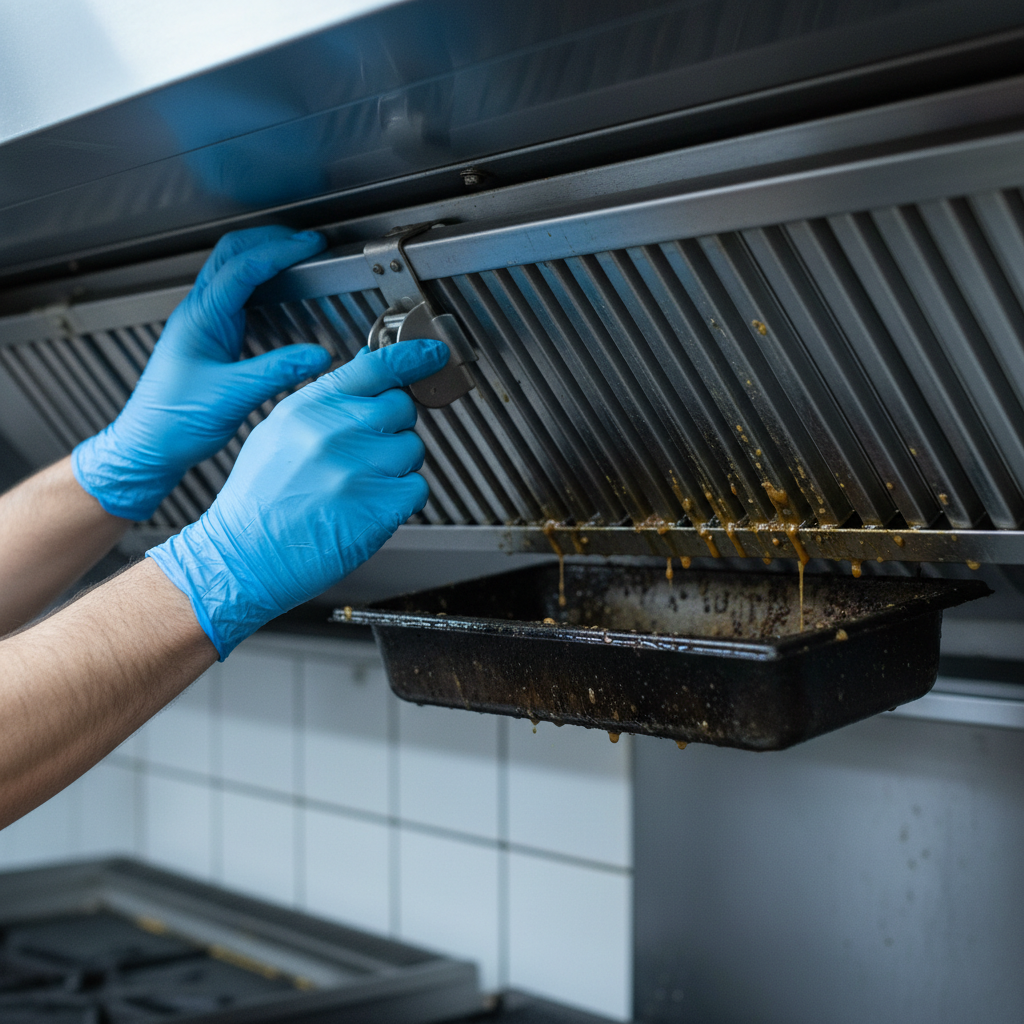
- Prep the line: Power down active burners/fryers; let surfaces cool. Clear the cookline of pans and utensils.
- Stage and PPE: Cut-resistant gloves, eye protection, non-slip shoes. Stage a cart with new UL‑listed filters, degreaser, rags, and trash bags.
- Remove old filters: Lift from bottom, tilt, slide along the track. Avoid bending frames or scraping the hood.
- Inspect condition:
- Baffles: dents, bowing, gummed fins, loose rivets.
- Frames: check square on a flat surface; wobble suggests warping.
- Handles/latches: secure and safe to grip?
- Decide clean vs. replace:
- Clean if stainless is straight, welds intact, and grease releases in a hot tank or high-temp washer.
- Replace if warped, corroded, cracked welds, missing handles, or re-soil occurs within hours.
- Install new filters:
- Orientation: baffles vertical; any arrows point with airflow.
- Fit: no gaps at sides or between filters; mix sizes only if the hood was designed that way.
- Seat: ensure stable; no rattle on fan start.
- Start-up checks: Run the fan; listen for pitch change; test capture with a paper strip at the hood edge.
- Document: Log date, sizes, serials, initials, and next target inspection. Tie notes to your hood/duct cleaning dates.
Want a technician to handle the entire workflow and documentation? Our team coordinates filter swaps with clean vs. replace assessments and complete exhaust system cleaning so you keep momentum with inspectors.
Filter Types, Sizes, and Ratings
Not all baffles are created equal. Choose materials that match heat load, cleaning chemistry, and durability expectations.
Common Filter Materials
- Stainless steel baffle (most common): Long life, high heat tolerance, compatible with hot-tank cleaning; heavier to handle.
- Aluminum baffle: Lighter and easier to lift; dents easier; avoid strong caustic degreasers.
- Galvanized baffle: Budget-friendly; can corrode faster with harsh chemicals; suited for light-duty or backup sets.
- Spark-arrestor variants: For solid-fuel or high-flare kitchens; added flame barrier and droplet control.
- Charcoal/mesh inserts: Odor aid only; never a substitute for UL‑listed grease baffles.
Sizing and Fit
- Heights: Commonly 10″, 16″, 20″.
- Widths: Often 16″, 20″, 25″.
- Depth: About 2″; confirm track clearance before ordering.
- UL listing: Match your hood’s airflow spec (CFM, face velocity) and manufacturer guidance.
Material Comparison (Quick Table)
| Material | Pros | Watch-outs | Typical Use |
|---|---|---|---|
| Stainless | Durable, heat tolerant, hot-tank safe | Heavier; needs proper handling | High-volume fryers and grills |
| Aluminum | Light, easy to handle | Dents easily; avoid strong caustics | Moderate-volume kitchens |
| Galvanized | Lower upfront investment | Corrosion risk with chemicals | Light-duty or backup sets |
Best Practices and Schedules
Build a routine your staff can follow, then let certified pros handle deep services that require specialized gear and documentation.
Weekly Walk-Through (Manager)
- Visual: uniform sheen, no dark sticky patches; no daylight through gaps.
- Touch: baffles not tacky; edges smooth; frames square.
- Listen: rattle at start/stop suggests poor seating or warped frames.
Cleaning Cadence by Volume
- Heavy fryer/grill (wings, burgers): Clean nightly to every 2–3 days; replace sets every 3–6 months if frames fatigue.
- Moderate mix (bake/sauté): Clean 1–2x weekly; replace 6–12 months depending on condition.
- Light volume/catering: Clean weekly to biweekly; replace when warping or weld fatigue appears.
Scheduling Cues for Milton
- Align swaps with Halton Region inspection cycles and seasonal events (e.g., Milton Farmers’ Market, fall fairs).
- Plan off-peak swaps after 401 corridor dinner rush; minimize line disruption.
- Bundle with full exhaust cleaning to capture documentation and rooftop checks together.
Stock and Label Strategy
- Keep one spare set per hood bank for instant swaps when a set goes for deep cleaning.
- Standardize materials and sizes across lines to reduce gaps and confusion.
- Label sets by line (Fryer 1–3) to spot uneven loading and training needs.
Process Table: Clean vs. Replace
| Condition | Action | Reason |
|---|---|---|
| Straight baffles, intact welds | Clean (hot tank/washer) | Restores airflow; extends life |
| Warped frame or bowing | Replace | Gaps and rattles break capture |
| Polymerized grease that won’t release | Replace | Residual grease reloads ducts quickly |
| Cracked welds or loose handles | Replace | Safety and sanitation concern |
| Mixed sizes causing gaps | Standardize and replace | Even capture and easy re-hang |
Tools and Safety Gear
Simple items keep you compliant and safe; pros add specialized equipment to finish the job faster and more thoroughly.
- Cleaning: Hot tank or high-temp dishwasher, compatible degreaser, nylon brushes, rinse wand.
- Replacement: UL‑listed baffles sized for each slot, track clips, extra handles, drip trays.
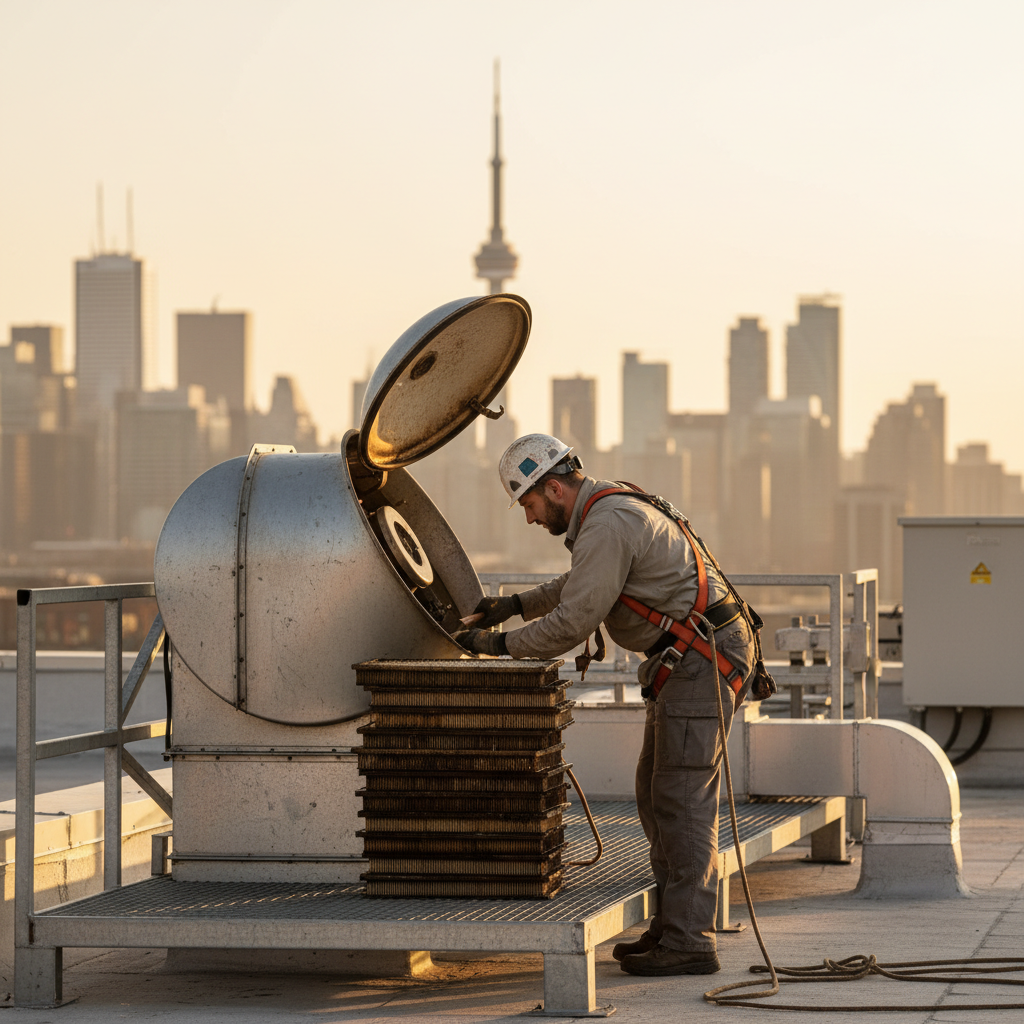
- Safety: Cut-resistant gloves, eye protection, non-slip footwear, rooftop fall protection if accessing fans.
- Pro gear (what we bring): Lifts, rooftop hinge kits, fan belt spares, compliant wastewater handling, and NFPA 96 documentation.
Milton Case Snapshots (Real-World Examples)
These quick scenarios mirror what we see across Milton and Southern Ontario. If one sounds familiar, you’re not alone.
- Burger line near James Snow Parkway: Filters re-soiled in hours. We added a spare set, tightened cleaning to every 48 hours, and standardized to stainless; airflow stabilized.
- Main Street East bistro: Occasional hood-edge smoke. Mixed filter sizes created gaps; we standardized to 20″×20″ stainless. Smoke issue resolved.
- Institutional kitchen off Derry Road: Staff struggled re-hanging clean filters. Color-dot labels by slot and a laminated diagram cut rework, and inspection passed smoothly.
- Food hall near Milton GO: Vendor turnover meant inconsistent maintenance. Centralized a replacement log and quarterly joint service—reduced fan strain and noise complaints.
- Wing concept by Steeles Avenue: Aluminum filters dented during nightly cleans. Switched to stainless; added protective storage rack—no more rattles.
- Breakfast diner along 401 corridor: Heavy grill use added heat; filters warped over time. Scheduled replacements every 4 months with tied-in belt checks—downtime dropped.
- Family restaurant in Beaty neighborhood: Seasonal hockey crowds spiked fryer use; we advanced winter replacement targets and documented changes for inspectors.
- Catering commissary near Trafalgar: Light daily volume but periodic surges. Policy set: inspect weekly, replace on condition—not calendar only.
- Pizza kitchen with solid-fuel oven adjunct: Added spark-arrestor baffles and coordinated hood and duct services to match solid-fuel risk.
- Fast-casual tacos off Thompson Road: Odor complaints despite cleaning. We found mixed materials causing turbulence; standardized and aligned with system cleaning.
- University cafeteria satellite: Warehouse dish machine struggled with grease. We shifted to hot-tank service pickups and added a spare set on site.
- Rooftop fan imbalance: Filters seated unevenly due to bent frames. Replacement solved vibration and extended belt life.
- Bar-and-grill game nights: Peak surges overloaded filters on wings/fryers. Mid-shift swap policy introduced for playoffs only; smoke complaints disappeared.
- Multi-site chain: Inconsistent logs across locations. We unified log templates, synchronized filter replacements with comprehensive cleanings, and sped up inspections.
FAQ
- How often should we replace versus clean?
Inspect weekly. Replace when frames are warped, welds crack, handles loosen, or grease won’t release after hot-tank cleaning. Many high‑volume Milton kitchens replace sets every 3–6 months and clean more frequently between. - Can we mix aluminum and stainless filters?
Standardize when possible. Mixed materials flex differently, create gaps, and complicate cleaning chemistry. Stainless is the durable choice for fryers and grills. - Do new filters really restore airflow?
Yes. Square, clean baffles restore face velocity and reduce smoke curling at the hood edge. You’ll hear your fan settle into a steadier pitch. - Does filter replacement help with NFPA 96 alignment?
Absolutely. Clean, intact, properly sized baffles reduce duct loading and underpin strong outcomes when paired with certified hood, duct, and fan cleaning. - What sizes do we need?
Measure the slot opening—height first, then width—and confirm depth/track clearance. Common sizes include 20″×20″, 20″×25″, and 16″×20″, but always verify against your hood spec.
Key Takeaways & Next Steps
- Treat filters as safety equipment. They protect your hood and ducts like PPE.
- Inspect weekly; clean on a menu‑driven cadence; replace on condition, not just calendar.
- Standardize sizes and materials; keep a spare labeled set on site.
- Document everything and align with hood, duct, and fan services for smoother inspections.
- For dependable scheduling and 24/7 availability across Ontario, partner with Robinhood Cleaners.
Soft CTA: Need a certified team to handle commercial kitchen exhaust filter replacement Milton plus full hood and duct cleaning in one visit? Our NFPA 96–certified, WSIB‑insured technicians can help—day or night.
Explore our NFPA 96 alignment approach in this guide to NFPA 96–certified hood cleaning or see how we support the GTA in restaurant exhaust cleaning.
Final step: Book a service window that matches your Milton rush patterns. We serve All Over Ontario with quick service in Southern Ontario and true 24/7 availability.