Cleaning equipment for a cleaning business is the complete set of machines, tools, and safety gear that delivers consistent, standards-compliant results at scale. The right kit reduces labor hours, supports fire-safety standards like NFPA 96, and protects teams—vital for restaurants and institutional kitchens across All Over Ontario.
By Robinhood Cleaners • Last updated: 2026-06-23
Above the Fold: Why this guide matters
This complete guide shows cleaning teams which equipment matters most, how to choose and maintain it, and how to keep operations compliant. You’ll get checklists, workflows, and real kitchen examples from All Over Ontario—drawn from Robinhood Cleaners’ daily hood, duct, exhaust fan, and grease-management work.
Use this as your field playbook. It connects practical selection tips with daily SOPs, so your team moves faster and stays safer while meeting health and fire-safety expectations.
- What equipment commercial teams truly need (kitchens first)
- How to stage, transport, and care for gear to avoid downtime
- Compliance cues: NFPA 96 intervals, PPE, and waste handling
- Real scenarios from restaurants, food courts, and institutional kitchens
Overview (at a glance)
- Essentials: foam sprayers, wet/dry vacuums, pressure washers, rotary brushes, HEPA filtration, and PPE.
- Kitchen exhaust specifics: baffle filter tools, duct scrapers/brushes, degreasers, rooftop containment, and fan belt kits.
- Management: color-coding, asset tags, pre-shift inspections, and monthly deep maintenance preserve uptime.
- Intervals: busy hoods often need quarterly service; moderate use can be semiannual. Align equipment readiness with that calendar.
What is “cleaning equipment for a cleaning business”?
Cleaning equipment for a cleaning business is the integrated system of machines, hand tools, chemical applicators, recovery gear, and PPE that enables consistent, inspection-ready results. For kitchens, it centers on hood, duct, and exhaust fan tools plus wet/dry recovery, rooftop containment, and verified safety gear.
In our experience serving food service teams, “equipment” is more than machines. It’s the whole ecosystem: compatible chemicals, pads/brushes, nozzles, containment, transport cases, and documentation tools that turn good work into trusted proof.
- Machines: hot-water pressure washers, steamers, auto-scrubbers, wet/dry vacuums, negative-air units with HEPA (99.97% at 0.3 microns).
- Task tools: scrapers, duct brushes/rods, baffle filter racks, foamers, adjustable nozzles (15°, 25°, 40°), telescoping poles.
- Safety: chemical-resistant gloves, splash goggles, respirators, fall protection, and lockout/tagout (LOTO) kits.
- Logistics: job boxes, spill kits, rooftop grease containment, drain covers, and “wet floor” signage.
Robinhood Cleaners focuses on commercial kitchen safety: kitchen exhaust cleaning, filter cleaning and exchange, fan belt replacement, grease trap cleaning, commercial appliance cleaning, power washing, hood cleaning, duct cleaning, and ventilation system maintenance. That scope shapes how we spec and maintain gear for teams working All Over Ontario.
Why the right equipment matters for safety, speed, and compliance
The right equipment shortens job time, reduces fire risk, and supports compliance. Clean hoods, ducts, and fans lower ignition hazards and match NFPA 96 expectations. Proper PPE, rooftop containment, and careful rinse/recovery protect staff and the environment in busy All Over Ontario kitchens.
Grease buildup in hood plenums, ducts, and fan housings is a known ignition source. Kitchens with heavy frying or solid-fuel cooking often require cleaning as frequently as every 1–3 months; moderate use can be 6 months. Matching tools to that cadence—foam applicators for dwell time, rotary brushes for agitation, and hot-water rinse—keeps work both fast and thorough.
- Throughput gains: calibrated foam sprayers deliver uniform dwell on vertical surfaces; teams often remove polymerized grease in fewer passes.
- Safety posture: rooftop grease containment pans and hydrophobic socks prevent discharge; harnesses and anchors mitigate fall risk.
- Quality control: consistent nozzle angles and rinse pressures create repeatable results, which inspection photos can verify.
- Documentation trail: standardized service tags, timestamps, and images help managers pass audits with less back-and-forth.
For deep context on fire-safety intervals, see our NFPA 96 compliance scheduling overview. Ventilation performance ties directly to air exchange, capture, and comfort in the line area; we discuss practical metrics in our kitchen air quality guide.
How professional cleaning setups work in the field
Professional teams run on repeatable SOPs: site checks, safe chemical setup, staged zones, mechanical agitation, controlled rinse and recovery, and documented close-out. These steps keep hood, duct, fan, and grease systems clean and verifiable—without disrupting service.
Field-tested workflow
- Pre-check and lockout: confirm access, power/water, and fan disconnects; tag out the exhaust fan; review last service notes.
- Staging: set “clean/dirty” zones; place rooftop pans and absorbents; set drain covers; position a wet/dry vacuum for recovery.
- Chemical control: pre-mix per label; foam vertical surfaces for 5–10 minute dwell; protect nearby electronics.
- Mechanical cleaning: scrape heavy deposits; brush ducts with properly sized heads; inspect and replace worn fan belts.
- Rinse and recovery: hot-water rinse; capture slurry with vacs; dispose grease/wastewater per local rules.
- Verification: before/after photos, service tag updates, and a brief walk-through with the kitchen manager.
People and safety
- PPE by task: splash goggles and gloves during degreasing; respirators in low-ventilation spaces; harnesses for rooftop access.
- LOTO discipline: de-energize the fan, lock and tag the disconnect, and verify zero energy before opening housings.
- Spill control: keep a spill kit at floor level and rooftop; bag and label used absorbents for proper disposal.
When this cadence is followed, we see shorter shutdown windows (often 30–90 minutes less on repeat visits) and clearer inspection findings. The win is reliability: same steps, same tools, same proof.
Types of equipment and approaches (kitchens and beyond)
Build your kit in layers. Start with hood/duct essentials, add recovery and containment, then expand into power washing and ventilation checks. Standardize parts where you can—shared hoses, O-rings, and nozzles simplify stocking and slash downtime.
Kitchen exhaust and hood cleaning essentials
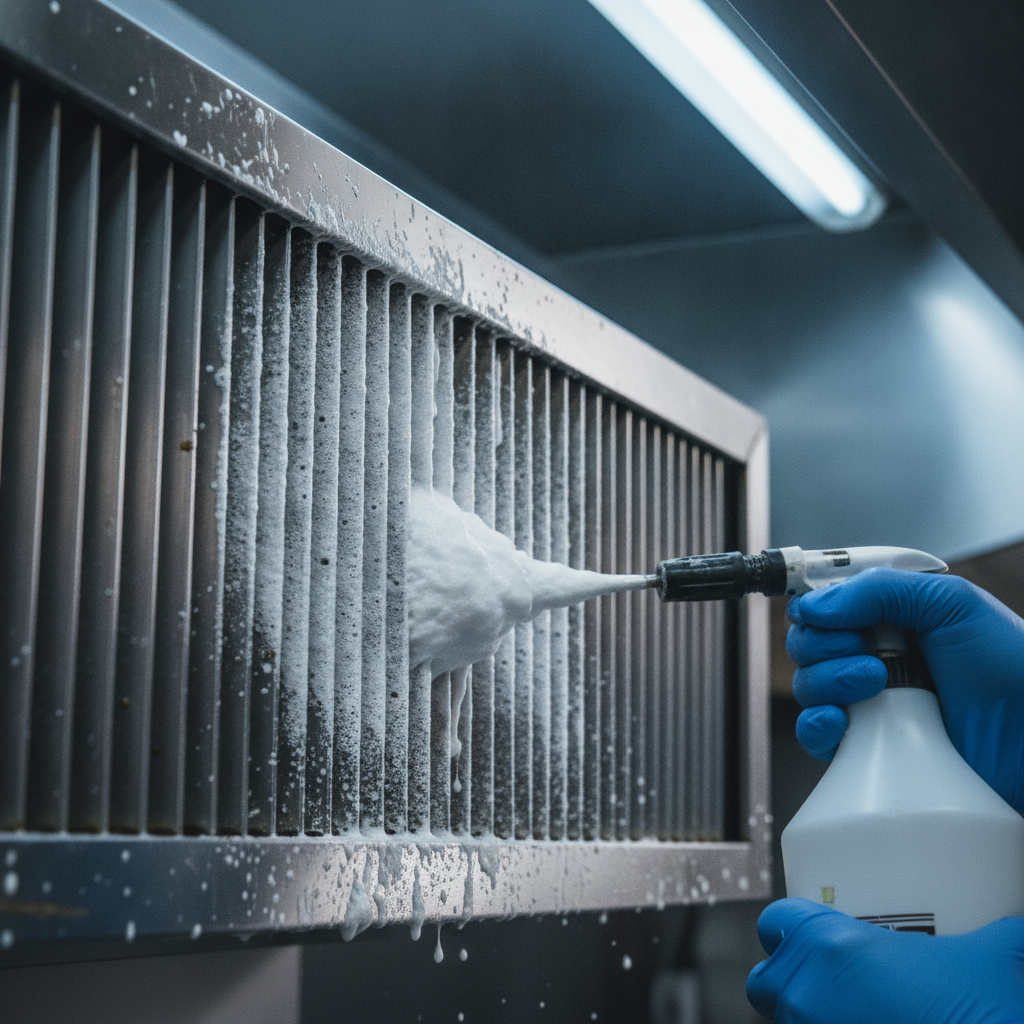
- Baffle filter tools: racks, scrapers, and low-pH/alkaline degreasers to break down polymerized grease.
- Foamers and sprayers: even, repeatable dwell on vertical hood plenums and duct runs.
- Rotary/rod brushes: match head to duct diameter and material; avoid over-aggressive heads on thin-gauge metal.
- Wet/dry vacuums: capture slurry during rinse; HEPA units are helpful when dry-scraping residue.
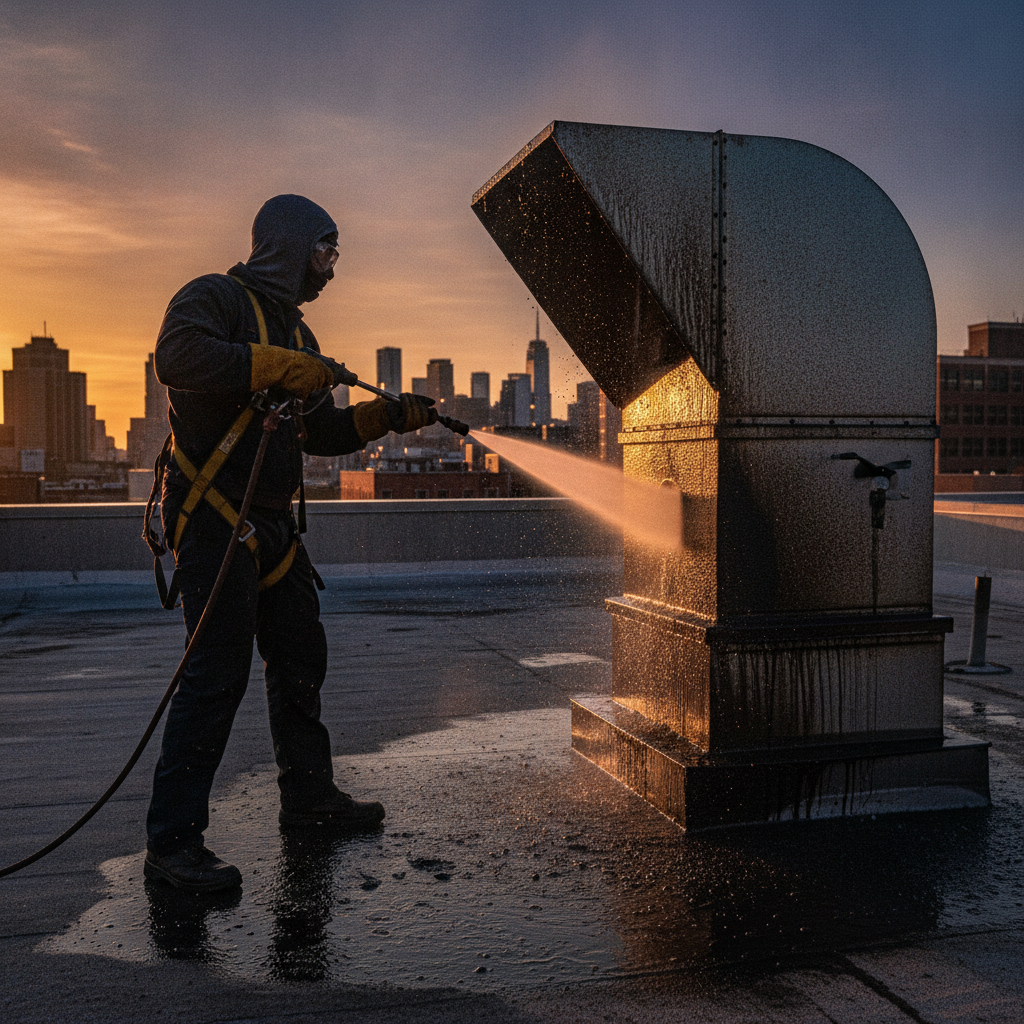
- Rooftop containment: pans, socks, and hydrophobic pads to stop grease discharge from fan housings.
- Exhaust fan service: hinge kits for safe access, belt tools, and motor covers to protect components.
These tools anchor our kitchen exhaust cleaning work and ensure repeatable results across different hood designs.
Power washing and surface restoration
- Pressure washers: hot-water units accelerate grease removal; choose nozzles (15°, 25°, 40°) for the surface.
- Surface cleaners: even coverage on concrete pads and back-of-house walkways reduces slip risk.
- Detergent injectors: controlled chemical dosing; always rinse to neutral to prevent residue.
We apply these methods in commercial exhaust cleaning projects to restore fan housings and concrete staging areas without overspray issues. For more degreasing tips, visit our power washing and degreasing explainer.
Waste and grease management
- Grease trap tools: skimmers, sludge judges, and seal-friendly scrapers reduce damage to internal components.
- Containment and transport: labeled drums, absorbents, and secondary containment bins prevent spills.
- Drain protection: temporary covers, strainers, and berms during rinse and recovery.
For recurring problems with line odors or backups, combine restaurant kitchen cleaning with planned grease trap cleaning and documented disposal pickups.
Ventilation and air quality
- Negative air machines: HEPA filtration helps when particulate is expected during dry-scrape phases.
- Air movers: speed drying; position to avoid aerosolizing degreasers toward prep areas.
- Meters: anemometers for airflow, IR thermometers for surface temperature, simple capture checks at the hood face.
Improving capture and comfort is covered in our ventilation optimization primer and this air quality checklist.
Safety and compliance tools
- PPE: gloves, goggles, face shields, respirators, and chemical-resistant aprons are non-negotiable.
- Fall protection: harnesses, anchors, and lanyards for rooftop fan work.
- Lockout/Tagout (LOTO): kits for exhaust fans and nearby appliances.
- Documentation: photo apps, service tags, and checklists to close the loop.
Teams that standardize PPE and LOTO steps see fewer near-misses and faster supervisor sign-off (often minutes, not hours).
Digital helpers
- Asset tags and QR codes: track equipment maintenance and last calibration.
- Scheduling apps: align NFPA 96 intervals and after-hours access windows.
- Photo documentation: standard angles for hood, duct, and fan verification.
Digital checklists reduce memory load and make training easier; a two-minute QR scan can replace a 10-minute phone call.
Best practices: selection, care, and uptime
Choose equipment that matches your service mix, then protect uptime with inspections, color-coding, and scheduled maintenance. Document each item’s checklist, track consumables, and train by task—especially for hood/duct cleaning, grease traps, and rooftop fan service.
Selection checklist
- Map services: kitchen exhausts, grease traps, appliances, power washing, and ventilation maintenance.
- Match tools: foamers, brushes, vacuums, containment, and pressure gear to each service line.
- Standardize brands where possible so hoses, seals, and gaskets interchange.
- Verify chemical compatibility with stainless, aluminum, painted surfaces, and local discharge rules.
- Plan transport: job boxes, tie-downs, rooftop carry solutions, and spill kits.
Maintenance rhythms
- Pre-shift: test sprayers, inspect hoses and belts, verify PPE, and check absorbent inventory.
- Weekly: descale foamers, rinse filters, sanitize vacuum tanks, inspect brush heads.
- Monthly: deep clean pressure coils, replace O-rings/gaskets, test anemometers and IR thermometers.
- Quarterly or per NFPA 96 frequency: align hood/duct equipment readiness with client schedules.
| Tool | Primary use | Great for | Avoid on |
|---|---|---|---|
| Foam sprayer | Even chemical dwell | Vertical hood interiors | Delicate electronics |
| Rotary duct brush | Mechanical agitation | Round metal ducts | Fragile flex ducts |
| Hot-water washer | Grease removal | Concrete, metal housings | Painted signage |
| Wet/dry vacuum | Recovery and rinse | Post-wash slurry | Live electrical panels |
Local considerations for All Over Ontario
- Plan rooftop access for winter: ice and wind change PPE and anchor choices; bring traction aids.
- Coordinate after-hours cleaning to avoid regional dining rushes and line downtime.
- Confirm grease disposal partners meet provincial requirements; document pickups for audits and health checks.
For a deeper skills refresh, see our commercial hood cleaning guide and this equipment deep-cleaning checklist.
Tools and resources you can use today
Lean on recognized ventilation and fire-safety frameworks, follow PPE guidance, and handle grease and wastewater responsibly. Pair those references with checklists, photo logs, and asset tags so every visit is consistent—and easily verifiable during inspections.
These resources underpin our own SOPs across All Over Ontario. In practice, that means using standard nozzle sizes, verified PPE, and scheduled filter exchanges while keeping photo logs and service tags to show work completed—especially on the hood, duct, and fan.
- Ventilation and hood/duct fire-safety timing: see NFPA 96 scheduling notes for interval planning.
- PPE selection and chemical splash protection: standardize gloves, goggles, aprons, and respirators by task.
- Grease/wastewater guidance: combine rooftop containment with labeled drums and verified pickup partners.
- Job aids: pre-shift checks, post-clean photos, and service tags close the loop between techs and managers.
For practical ventilation wins, our air quality improvement guide walks through quick capture checks and airflow sanity tests.
Case studies and field examples (All Over Ontario)
When equipment, chemicals, and workflow align, results are fast, clean, and verifiable. These snapshots mirror what our teams see across All Over Ontario—cooler hood surfaces, steadier fan draw, and cleaner walkways that pass inspections without surprises.
High-volume fryer line (quick service)
- Challenge: polymerized grease in the plenum and early fan belt wear.
- Approach: hot-water foam for 7–10 minutes, rotary brush in ducts, rooftop containment, and on-the-spot belt replacement.
- Outcome: steadier airflow and cleaner baffles; service interval confirmed at quarterly.
Institutional kitchen (catering hub)
- Challenge: inconsistent baffle cleaning and rinse-water control created slippery floors.
- Approach: standardized baffle rack process, wet/dry recovery during rinse, and drain covers.
- Outcome: predictable inspection results and shorter shutdown windows by 45–60 minutes.
Back-of-house concrete pads
- Challenge: greasy walkways behind the service area increased slip risk.
- Approach: detergent-assisted hot-water wash with a 15° nozzle and a surface cleaner; controlled rinse and recovery.
- Outcome: safer footing and better first impression for health checks.
Need a structured plan? Our restaurant kitchen cleaning guide and extractor fan checklist show exactly how we stage people, chemicals, and gear to minimize disruption.
Frequently Asked Questions
These quick answers cover the equipment fundamentals managers ask most—selection, maintenance, and safety. They’re concise and ready for training handouts or team chats.
What cleaning equipment does a kitchen exhaust team need first?
Start with foam sprayers, degreasers, rotary/rod duct brushes, scrapers, a wet/dry vacuum, rooftop grease containment, and full PPE. Add hinge kits and fan belt tools for exhaust fan service. This core kit covers most hood, plenum, duct, and fan cleaning tasks.
How often should hood and duct equipment be deployed?
Frequency follows cooking volume. Heavy-volume kitchens often need quarterly service; moderate volume can be semiannual. Keep brush heads, sprayers, and containment stocked to match that calendar, so you’re never scrambling for parts on service night.
What safety gear is non-negotiable?
Eye and hand protection, splash-rated aprons, and respirators for low-ventilation spaces are baseline. For rooftop fan work, use fall protection with anchors and lanyards. Include a lockout/tagout kit so exhaust fans are de-energized before cleaning.
How do I keep equipment uptime high?
Use pre-shift checks, weekly rinse/descales, and monthly deep maintenance. Standardize brands for shared seals and O-rings, label consumables, and track everything with asset tags. Document issues with photos and tag the next job’s prep list.
Key takeaways
Build a focused kit around kitchens—foamers, brushes, vacuums, containment, and PPE—then protect uptime with inspections and schedules. Align with ventilation and safety standards, and document every step for smoother audits and happier managers.
- Right gear = faster, safer, verifiable work.
- Kitchen exhausts demand specialized tools and documented intervals.
- Photo logs and service tags turn good work into passable proof.
- Local conditions in All Over Ontario shape access, waste handling, and timing.
Conclusion
Equip for the work you actually do—then systemize selection, care, and documentation. That’s how cleaning teams keep kitchens safer, audits simpler, and schedules predictable across busy service windows.
Here’s the bottom line: a tight kit beats a big kit. If your operation centers on kitchen exhausts, invest first in foamers, duct brushes, wet/dry recovery, rooftop containment, and safety systems. Pair that with service tags, photo logs, and a shared pre-shift checklist. Over time, expand into power washing, ventilation checks, and advanced diagnostics as your client mix grows. This method keeps crews productive and compliant while minimizing equipment surprises on service night.
If you run a restaurant, food court, or institutional kitchen, align your equipment with your real risks—hoods, ducts, fans, and grease systems. Need a hand? Robinhood Cleaners services kitchens All Over Ontario with NFPA 96–savvy teams and 24/7 scheduling.
Related articles
Explore more in our Cleaning cluster, including topics like hood and duct workflows, rooftop fan safety, and back-of-house surface restoration. Use our on-site search to find step-by-step guides tailored to kitchen exhausts, grease traps, and commercial appliance care.
Want a no-pressure walkthrough of your current setup—filters, ducts, fans, and grease controls? Our certified, WSIB-insured teams can highlight quick wins and build a maintenance rhythm that fits your calendar. For degreasing tips and pressure settings, see this power washing explainer.