Car fan belt replacement is the process of removing a worn drive belt from an engine and installing a new one to restore proper accessory function. The same core idea applies to commercial kitchen exhaust fans in All Over Ontario: replace aging belts to prevent breakdowns, meet safety standards, and keep hoods pulling grease-laden air effectively.
By Robinhood Cleaners • Last updated: 2026-05-31
Quick Summary & Table of Contents
If you searched “car fan belt replacement,” know this: restaurant exhaust fans also use belts that need timely service. Proactive belt inspections, tensioning, and replacements stop airflow loss, reduce kitchen fire risk, and prevent after‑hours shutdowns across Ontario. Use this guide to align maintenance with NFPA 96 and protect uptime.
Here’s what you’ll learn and how to use it today.
- What a car fan belt is—and how that compares to a kitchen exhaust fan belt.
- Why belt failures drive grease-laden vapor buildup and safety issues in commercial kitchens.
- Step-by-step belt inspection and replacement for rooftop upblast fans.
- Tools, resources, and maintenance intervals we use on Ontario kitchens.
- How Robinhood Cleaners integrates belts with hood, duct, and filter service.
- What Is Car Fan Belt Replacement?
- Why It Matters for Commercial Kitchens
- How Belts Work: Engines vs. Exhaust Fans
- Types of Belts & Replacement Methods
- Step-by-Step: Kitchen Exhaust Fan Belt Replacement
- Tools & Resources
- Case Studies & Examples (Ontario)
- Frequently Asked Questions
- Key Takeaways
- Related Topics in Cleaning
What Is Car Fan Belt Replacement?
Car fan belt replacement removes a worn serpentine or V-belt that drives engine accessories and installs a new, properly tensioned belt. In kitchens, exhaust fan belts play a similar role: transferring motor power to the fan pulley so hoods maintain required airflow and grease vapor capture.
Let’s define terms clearly, because many searches blur the lines between vehicles and ventilation.
- Automotive belt (serpentine/V-belt): Runs alternator, water pump, power steering, and AC in one or more loops.
- Kitchen exhaust fan belt: Transfers motor torque to the rooftop upblast fan that pulls grease-laden air through hoods and ducts.
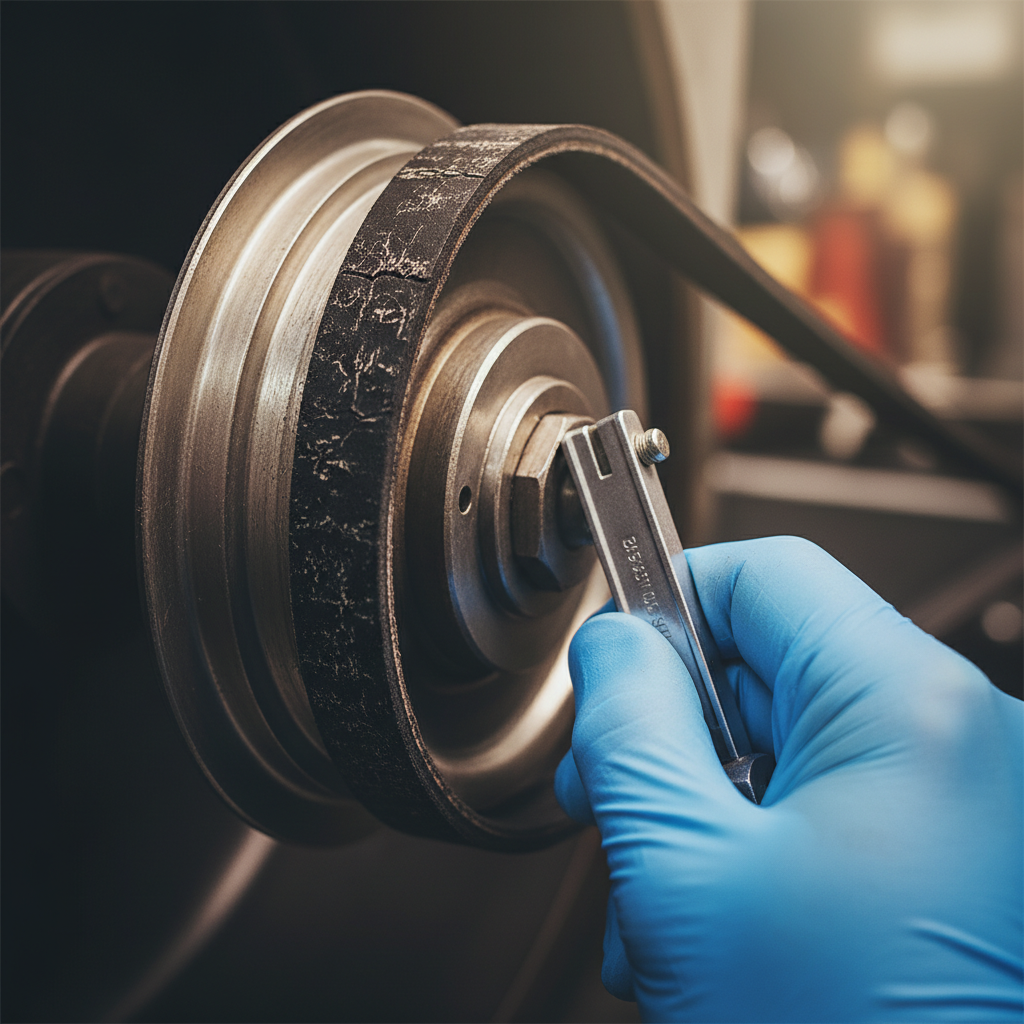
- Common failure modes: Cracking, glazing, stretching, misalignment, contamination with oil or grease, and bearing drag.
Why this matters to food service operators: belt slip quietly cuts airflow. Reduced capture equals more grease on hoods, baffles, ducts, and rooftop surfaces. That buildup raises fire risk and forces more frequent cleanings. A 10–15% airflow drop can be enough to see smoke escapes at the hood edge during rush periods.
In our day-to-day work across Ontario, the fastest way to stabilize airflow is simple: verify alignment, set correct tension, and replace fatigued belts before peak season. That small habit prevents callbacks and emergency visits.
Why It Matters for Commercial Kitchens
Exhaust fan belts keep your hood system moving the air that carries grease away from cooking surfaces. When belts slip or fail, airflow drops, grease accumulates faster, and safety compliance is jeopardized. Proactive belt service reduces fire risk and unplanned shutdowns.
For Ontario restaurants, consistent airflow is the backbone of safe, comfortable operations. Here’s why disciplined belt maintenance deserves a spot on your schedule.
- Safety first: Reliable capture reduces ignition sources and keeps grease off hot surfaces.
- Compliance alignment: Clean, functional ventilation supports the cleaning frequencies and performance expectations referenced in NFPA 96-focused programs.
- Uptime and labor: Fans that start, run quietly, and move the right air protect staff productivity, especially during rushes.
- Facility image: Less smoke and odor at the front of house, fewer rooftop stains, and cleaner building envelopes.
Robinhood Cleaners integrates belt checks into hood, duct, and filter service. Our team is WSIB insured, available 24/7, and trained to spot early warning signs—like belt dust around guards or a shiny glazed belt face—that predict a near-future slip.
Local considerations for All Over Ontario
- Plan belt checks before seasonal patio openings and holiday rush periods; increased cookline hours accelerate belt wear.
- Ontario’s freeze-thaw cycles affect rooftop fans. After cold snaps, recheck belt tension and bearing drag as rubber stiffens in low temps.
- Regional menus with heavy frying demand higher capture rates; verify belts before adding new equipment or changing hours.
How Belts Work: Engines vs. Exhaust Fans
Belts transfer motor shaft power to a driven pulley using friction and wrap angle. In cars, they drive multiple accessories. In kitchens, they spin the exhaust fan wheel. Correct tension and alignment prevent slip, heat, and premature wear that cut airflow or accessory output.
Whether under a car hood or on a rooftop, the physics are the same: torque moves across a flexible loop that grips pulleys. Two details govern success—tension and alignment.
- Tension: Too loose and the belt slips; too tight and bearings suffer. Technicians often use the rule of thumb of about 1/64 inch deflection per inch of belt span when using basic deflection checks.
- Alignment: Even a small sheave misalignment increases edge wear and noise. A straightedge or laser tool helps ensure pulleys are co-planar.
- Wrap angle and contact: A larger wrap on the small pulley improves grip and reduces slip under load.
Automotive belts are typically serpentine (single, multi-rib) with a spring-loaded tensioner. Rooftop upblast fans usually use one or two V-belts with an adjustable motor base. The symptoms of trouble—squeal on startup, odor of hot rubber, visible belt dust—are universal. The remedy is the same: inspect, adjust, replace as needed.
Types of Belts & Replacement Methods
Common kitchen exhaust drives use classic V-belts or notched V-belts sized to motor horsepower and fan load. Replacement involves lockout, guard removal, old-belt assessment, sheave inspection, installing matched belts, and tensioning the system to spec before test-running under load.
Knowing your hardware shortens service time and prevents repeat issues.
Common belt types you’ll see
- Classic V-belts (A, B, C sections): Durable and forgiving, widely used on rooftop fans.
- Notched/cogged V-belts: Better flexibility and heat dissipation for tighter sheaves.
- Matched sets: When using multiple belts, matched lengths ensure even load sharing.
Replacement approach we use in Ontario kitchens
- Lockout/tagout (LOTO): De-energize the motor and verify zero energy before touching guards.
- Guard removal and housekeeping: Clean belt dust and grease for clear visibility.
- Sheave inspection: Check groove wear and set-screw security; replace worn sheaves to avoid chewing up new belts.
- Install belts: Place belts without prying tools that can damage cords; seat them fully in the grooves.
- Tension and align: Adjust motor base evenly; confirm co-planarity with a straightedge.
- Run-in and recheck: After 10–15 minutes of operation, recheck tension as belts seat.
Many issues aren’t the belt at all. A dragging wheel or dirty bearings force over-tensioning to stop squeal. We pair belt service with wheel and bearing checks to solve root causes, not just symptoms.
Step-by-Step: Kitchen Exhaust Fan Belt Replacement
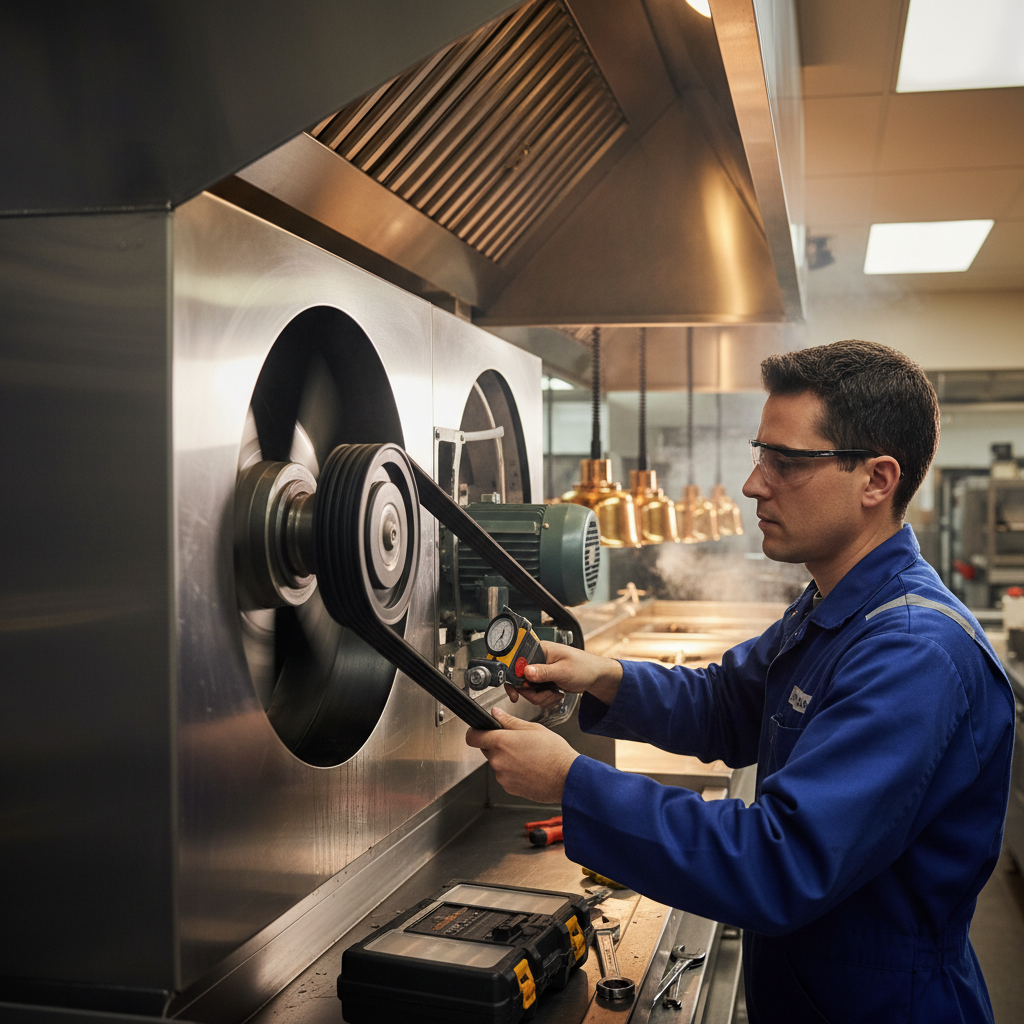
Safe belt replacement follows a strict sequence: lockout, access, inspect, align, install, tension, and test. When performed alongside hood, filter, and duct service, it stabilizes airflow, improves capture, and reduces grease accumulation on every cleaning cycle.
Use this practical sequence for rooftop upblast fans common to restaurants and institutional kitchens.
- Confirm lockout/tagout: Verify the disconnect is off and locked. Test for absence of power.
- Remove guards: Photograph existing routing for reference. Clean debris for a safe work area.
- Inspect the old belt: Note cracks, frayed cords, glazing, or contamination—these clues guide the fix.
- Check pulleys (sheaves): Look for groove wear and wobble. Tighten set screws and inspect keys.
- Assess alignment: Use a straightedge across sheaves; correct any offset or angular misalignment.
- Install the new belt(s): Fit by hand; avoid prying. On multi-belt drives, replace as a set.
- Set tension: Adjust the motor base until limited deflection is achieved; verify with a tension gauge if available.
- Spin test by hand: Rotate to ensure smooth travel without rubbing.
- Reinstall guards: Secure fasteners; ensure access doors are closed.
- Run test: Energize and observe startup. Listen for squeal, watch for vibration, and check airflow at the hood.
- Recheck tension after run-in: Belts seat during first operation; fine-tune if needed.
We bundle this procedure with filter exchange and hood cleaning so your belt starts life in a clean, low-resistance system. That pairing noticeably reduces belt dust and stretch during the first service interval.
Tools & Resources
You need basic safety gear, alignment and tension tools, and replacement parts sized to your fan. Keep matched belts, a straightedge, a tension gauge, anti-seize, and set-screws on hand. Pair tools with a simple log to track dates, readings, and observations per fan.
Field kit we carry on Ontario rooftops
- LOTO kit and voltage tester
- Gloves, eye protection, and slip-resistant footwear
- Straightedge or laser alignment tool
- Belt tension gauge and tape measure
- Common V-belt sizes (A/B sections) and matched pairs
- Allen keys, wrenches, nut drivers, and spare set-screws
- Anti-seize compound and threadlocker
Resource planning that prevents downtime
- Parts bin by fan: Label belt size and sheave details per location so night crews grab the right parts fast.
- Maintenance log: Track tension readings and run-in checks to anticipate re-tension needs after peak periods.
- Bundle work: Combine belts with filter replacement service to lock in airflow gains and cleaner ducts.
For a deeper process overview tailored to Ontario operations, see our note on belt-driven hood systems in this fan belt replacement overview. It pairs well with exhaust filter planning and rooftop housekeeping.
Comparison: Car Fan Belt vs. Kitchen Exhaust Fan Belt
Both belts transmit power by friction, but automotive serpentine belts use a spring tensioner and run many accessories, while kitchen exhaust V-belts use an adjustable motor base to drive a single fan. Service steps overlap, yet the environment, failure signs, and access points differ.
| Aspect | Car Fan/Serpentine Belt | Kitchen Exhaust Fan Belt |
|---|---|---|
| Primary function | Drives multiple engine accessories | Drives rooftop fan wheel for hood exhaust |
| Tensioning | Spring-loaded tensioner | Motor base adjustment (manual) |
| Common belt type | Multi-rib serpentine | Single or paired V-belts |
| Environment | Engine bay heat, fluids | Grease vapors, rooftop weather |
| Failure indicators | Squeal, battery/AC issues | Smoke escape at hood, oil odor, belt dust |
| Access | Front of engine | Rooftop fan housing/guard |
If your initial goal was car fan belt replacement, we hope this side-by-side helps you see why commercial kitchens need parallel care. Restaurants depend on consistent capture just as cars depend on alternator output.
Integrated Service: Belts, Hoods, Ducts, and Filters
The best results come from pairing belt service with hood cleaning, duct degreasing, and filter exchange. That integrated approach lowers resistance, stabilizes airflow, and extends belt life—so you see fewer squeals, fewer shutdowns, and safer operations.
Robinhood Cleaners offers a complete maintenance stack across Ontario:
- Kitchen exhaust cleaning: Hood, duct, and exhaust system checklists to reduce grease and fire risk.
- Filter cleaning & exchange: Maintain baffle efficiency; reduce fan load between services.
- Fan belt replacement: Inspect, align, and tension belts as part of scheduled visits.
- Grease trap cleaning: Keep plumbing flowing and odors down.
- Power washing and rooftop housekeeping: Remove residue that can contaminate belts.
Because we’re WSIB insured and available 24/7, scheduling after close or before open is simple. Our quick service in Southern Ontario means less waiting and more cooking.
Get a belt-and-hood assessment. If you’ve noticed startup squeal, smoke escaping the hood, or a burnt-rubber odor, it’s time to check alignment, tension, and filters together. We can align the whole system in one visit.
Explore our in-depth Ontario guide: belt maintenance and safety checklist.
Case Studies & Examples (Ontario)
Across Ontario kitchens, pairing belt service with filter and hood work eliminates squeal, restores capture, and reduces grease recurrence. These brief cases show how small mechanical fixes drive big operational gains—often within a single service window.
Quick service location, weekend rush
A quick service site reported smoke at the hood lip during lunch. Inspection showed a glazed V-belt and misaligned motor base. We installed a matched pair, realigned sheaves, and swapped filters. The result: stable capture through the peak and noticeably quieter startups.
Institutional kitchen, winter startup
Cold mornings produced a loud squeal for 30–60 seconds after energizing the fan. The belt had stiffened and stretched, and guards showed belt dust. We replaced the belt, verified bearing drag, and set fresh tension. Staff confirmed silent starts the next day.
Fine dining, new menu rollout
After adding a heavier sauté station, the existing belt began slipping. Our team sized a notched V-belt for improved flexibility, aligned the drive, and exchanged filters. Capture improved immediately, with less odor in front of house.
Frequently Asked Questions
Operators ask about intervals, warning signs, and whether car belt know-how applies to kitchens. The short version: inspect belts each service, listen for squeal, watch for dust or glazing, and handle tension and alignment with the same care you would on an engine accessory drive.
How often should we replace a kitchen exhaust fan belt?
Check belt condition during every hood service. Replace when you see cracks, glazing, frayed cords, or repeated retension needs. Many kitchens can run a belt through multiple cleaning cycles, but heavy use or misalignment shortens life. Always recheck tension after the first run-in.
What are the signs a belt is slipping?
Listen for squeal on startup, notice belt dust near guards, watch for smoke escaping the hood, and sniff for a burnt-rubber odor. A shiny belt face (glazing) or dishes lingering in smoke during rushes are strong signals of slip and low airflow.
Does car fan belt replacement knowledge help with kitchen fans?
Yes, the fundamentals carry over. Proper tension, good alignment, and clean sheaves matter in both cases. The differences are access points, environment, and parts types. Rooftop fans often use V-belts and manual motor-base tensioning rather than an automotive spring tensioner.
Should belts be replaced as a set?
On multi-belt drives, replace belts as matched sets so each shares the load equally. Mixing an older belt with a new one usually leads to premature wear and recurring slip because lengths differ under load.
Key Takeaways
Treat belt care as part of a system. Inspect, align, and tension during scheduled hood and filter work; replace belts before peak seasons. That routine stabilizes airflow, reduces grease deposits, and protects uptime across Ontario kitchens.
- Car or kitchen, belts fail for the same reasons: poor tension, misalignment, contamination, or wear.
- Kitchen exhaust fans rely on V-belts; small fixes prevent big service disruptions.
- Bundle belt checks with hood, duct, and filter service for durable results.
- Document belt sizes and tension readings per fan for faster night work.
Related Topics in Cleaning
Belt maintenance connects directly to capture efficiency and grease control. Strengthen your program by pairing belts with exhaust filter exchange, routine hood cleaning, and periodic duct inspections to keep air moving and surfaces clean.
Within the broader Cleaning focus, pair fan belt work with upstream and downstream tasks—filters to reduce restriction and ducts to prevent hidden buildup. That’s how Ontario kitchens maintain compliance, protect staff, and keep service smooth on the busiest nights.