Hood and duct cleaning is the professional removal of grease and debris from commercial kitchen hoods, ducts, and exhaust fans. Done at set intervals, it reduces fire risk, improves airflow, and supports food safety compliance. For restaurants across All Over Ontario, partnering with a certified team keeps operations safe and inspections stress-free.
By Robinhood Cleaners • Last updated: 2026-06-14
Above-the-fold overview
Commercial hood and duct cleaning prevents grease fires, keeps ventilation efficient, and helps you pass inspections. This guide explains what it is, why it matters, proven methods, frequencies, tools, and how Robinhood Cleaners supports Ontario restaurants with certified, 24/7 service that fits real-world kitchen schedules.
Here’s what you’ll get from this complete guide tailored for Ontario restaurants and institutional kitchens:
- Plain-English definitions: hood, ducts, exhaust fans, filters, and grease pathways
- Compliance context: cleaning intervals, documentation, and inspection-readiness
- Action steps: a step-by-step cleaning workflow you can rely on
- Method comparisons: manual, foam, steam, rotary brushing, and hybrid approaches
- Local tips for All Over Ontario kitchens with heavy seasonal swings
- Templates and checklists to align your team before our crew arrives
Quick summary
Hood and duct cleaning removes grease from hoods, vertical shafts, horizontal ducts, and rooftop fans. Clean systems reduce fire incidents, stabilize air quality, and prolong equipment life. The practical playbook: schedule at 1–6 month intervals, document service, and inspect belts, hinges, and grease containment during every visit.
In our field work across Ontario, the kitchens that stick to predictable intervals and keep photo-backed reports rarely face surprise shutdowns. Strong ventilation also supports comfort and retention—line cooks notice when stale heat and smoke don’t linger.
What is hood and duct cleaning?
Hood and duct cleaning is a specialized service that fully degreases commercial kitchen exhaust paths—from hood canopies and filters to ducts, fans, and discharge points. The objective is total grease removal to bare metal wherever required, improving fire safety and airflow while supporting food safety compliance.
Think through the entire path: vapors rise from grills and fryers, pass through baffle filters, travel up or across ducts, spin through the fan, and exit above the roof. Any point where grease sticks becomes a fuel source. Removing it methodically is the core of safe kitchen operations.
Key system components
- Hood canopy: captures vapors and smoke at the cook line.
- Baffle filters: trap grease droplets; removable for exchange and deep cleaning.
- Ductwork: vertical and horizontal runs that need full-length access.
- Exhaust fan: pulls airflow; relies on a healthy fan belt and hinge kit.
- Grease containment: keeps rooftop surfaces safe from runoff.
For a deeper primer on capture efficiency and odor control, see our practical overview of kitchen exhaust hood cleaning.
Why hood and duct cleaning matters
Routine hood and duct cleaning reduces ignition risk, stabilizes kitchen air quality, and keeps ventilation equipment within its design limits. In busy Ontario kitchens, consistent service intervals correlate with fewer emergency shutdowns, faster inspections, and longer fan motor life.
Here’s why this is mission-critical for restaurants, QSRs, caterers, and institutional kitchens:
- Fire risk reduction: Grease is fuel. Removing it lowers the chance of flare-ups extending into ducts.
- Air quality and comfort: Reliable capture keeps heat, smoke, and VOCs from accumulating on the line.
- Equipment longevity: Clean fan blades, aligned pulleys, and healthy belts reduce strain.
- Inspection readiness: Organized service reports shorten conversations with inspectors.
- Insurance confidence: Documented maintenance supports risk management programs.
If you’re building a safety-first culture, align this with your broader restaurant kitchen exhaust cleaning plan and schedule filter exchanges between full-system cleanings.
How hood and duct cleaning works
A complete service follows a structured workflow: assess and protect the site, degrease from hood to fan, verify to bare metal where required, and document results with photos. Smart crews also check belts, hinges, and grease containment so ventilation is safe when you reopen.
Step-by-step workflow you can trust
- Pre-inspection and prep: Confirm access, power, water, and grease pathways; cover equipment and floors.
- Filter handling: Remove, tag, clean, or exchange filters; stage for drying and reinstallation.
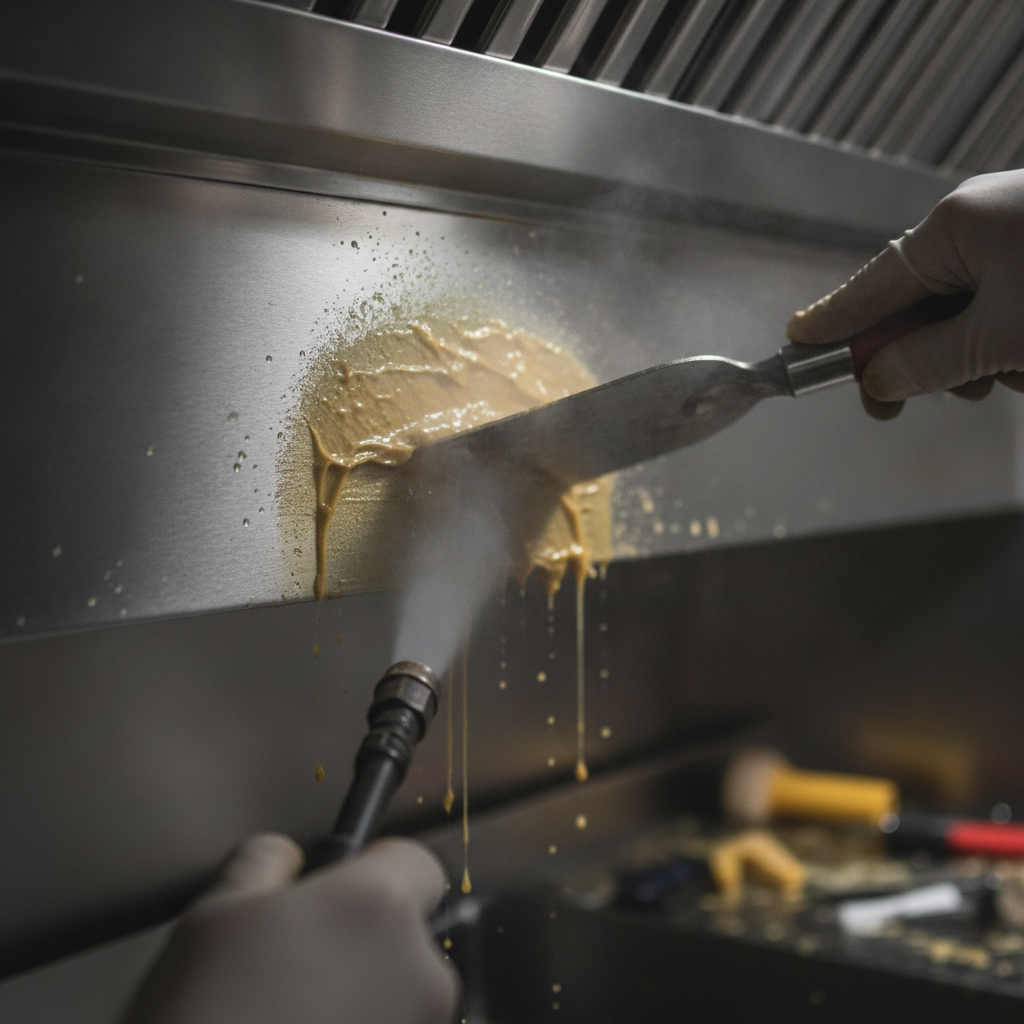
- Hood canopy degreasing: Apply foams/alkaline agents; agitate; rinse to recover residue safely.
- Duct cleaning: Open access panels; use scrapers, rotary brushes, and steam as needed.
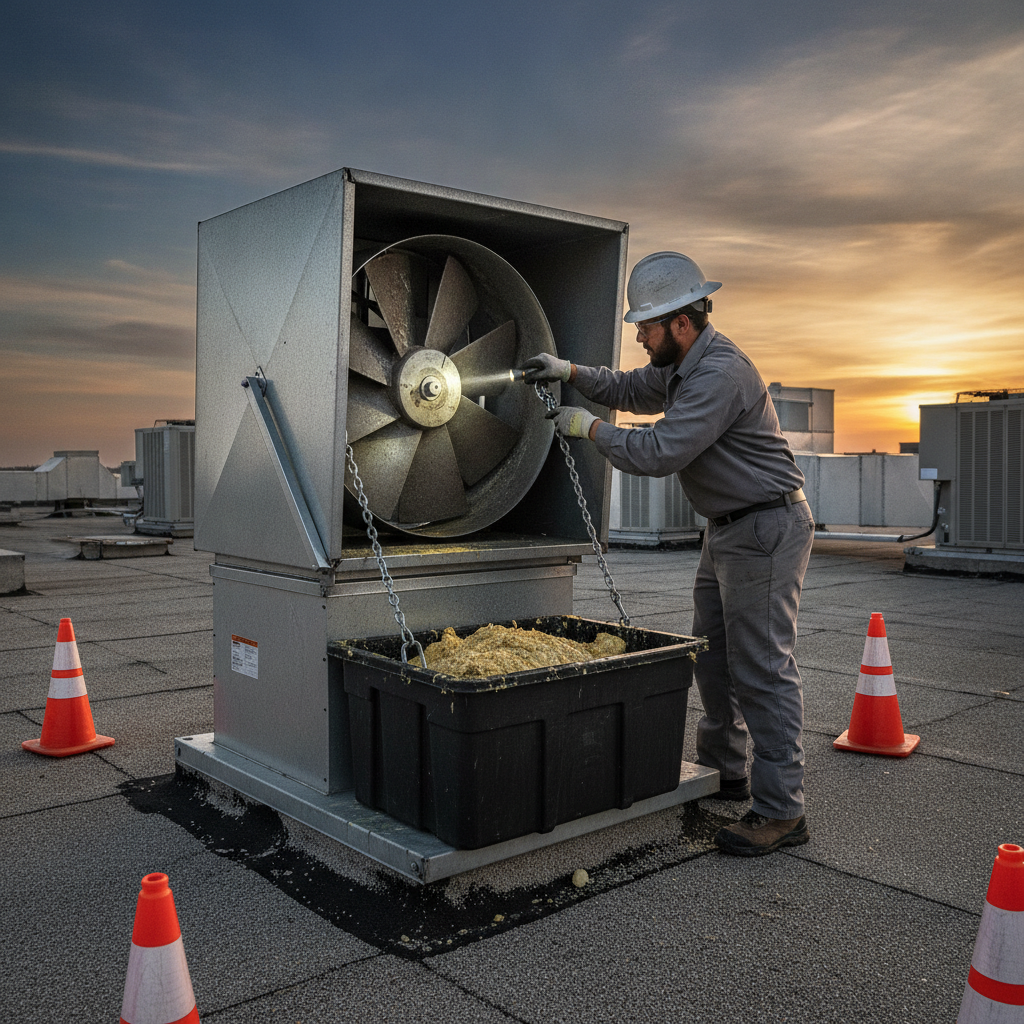
- Exhaust fan service: Lock out power; hinge, clean blades and housing; verify belt and bearings.
- Rooftop containment: Empty/replace absorbents; verify drainage and weatherproofing.
- Reassembly and polish: Reinstall filters; polish stainless; remove protection; verify startup.
- Documentation: Provide photos and a service report with noted defects and follow-ups.
Recommended intervals
Cleaning frequency is driven by cooking volume, fuel type, and menu. A practical range is monthly to semiannual with filter exchanges in between. Capturing usage in a simple log helps you right-size the interval as seasons shift.
| Kitchen type | Typical volume | Suggested system cleaning | Filter exchange cadence |
|---|---|---|---|
| High-heat fry/grill (QSR) | Heavy | Every 1–3 months | Weekly–biweekly |
| Full-service restaurant | Moderate–heavy | Every 3–4 months | Biweekly–monthly |
| Institutional kitchen | Moderate | Every 3–6 months | Monthly |
| Seasonal operation | Fluctuates | Before/after peak season | Adjust with demand |
For a kitchen-by-kitchen plan, our team aligns intervals with your inspection calendar and staffing realities. See how we scope service in our commercial exhaust cleaning overview.
Methods and approaches
Effective hood and duct cleaning blends methods: chemical foams to break down grease, manual scraping for thick deposits, steam for penetration, and rotary brushing inside ducts. The right mix depends on duct layout, grease load, and rooftop access.
Common cleaning methods explained
- Manual scraping: Fast removal of heavy, caked-on deposits before wet work begins.
- Alkaline foams/degreasers: Break bonds and emulsify residue on stainless surfaces.
- Hot-water/steam rinse: Drives detergents into seams and rivets where grease hides.
- Rotary brushing: Helps clean long horizontal runs and transitions.
- Hybrid approach: Scrape, foam, then steam for bare-metal results where required.
Method comparison at a glance
| Method | Best for | Advantages | Limitations |
|---|---|---|---|
| Manual scraping | Thick, carbonized grease | Immediate removal; exposes metal quickly | Labor-intensive; needs follow-up rinse |
| Alkaline foam | Large stainless surfaces | Covers evenly; lifts film; visual progress | Requires proper PPE and dwell time |
| Steam/hot water | Seams, rivets, rivulets | Penetrates; great final rinse | Needs recovery; may fog room if uncontained |
| Rotary brushing | Long duct runs | Consistent contact; reaches bends | Access panels required; takes setup time |
Want to see how this plays out on a real cook line? Our illustrated vent hood maintenance guide walks through filter handling, canopy polishing, and safe chemical dwell times.
Best practices and checklists
The best programs are predictable, documented, and integrated with daily operations. Standardize intervals, capture photos, track belt changes, and verify rooftop containment after every job. Keep a laminated pre-clean checklist on the line so staff can stage the area quickly before service.
Pre-clean staging checklist
- Protect appliances, food, and floors with covers and absorbents.
- Shut down cooking equipment and exhaust per your lockout procedure.
- Remove and tag filters; stage racks for drying.
- Confirm access to roof hatches and duct panels.
- Verify hot water, drainage, and waste recovery plan.
Post-clean verification checklist
- Reinstall dry filters; confirm correct orientation.
- Inspect fan belt tension and pulley alignment.
- Photograph hoods, ducts, and fans for the service record.
- Check rooftop grease containment pads and drainage paths.
- Restart and confirm capture efficiency at usual line load.
Local considerations for All Over Ontario
- Seasonal menu shifts change grease load; tighten intervals ahead of summer patios and holiday rushes.
- Cold snaps affect rooftop access and washdown; plan earlier starts and confirm de-icing.
- Busy weekend peaks in Southern Ontario QSR corridors favor Sunday–Monday overnight service windows.
Integrate these routines with your broader restaurant kitchen cleaning program so the line stays organized before, during, and after a visit.
Tools and resources
A professional hood and duct cleaning kit pairs high-foaming degreasers with scrapers, rotary brushes, steam capability, and rooftop safety gear. Equally important are documentation templates—logs, photo reports, and deficiency lists your manager can act on the next morning.
What a pro crew brings
- Access tools: hinge kits, safety chains, lift points, and roof protection mats.
- Mechanical aids: scrapers, rotary brush drives, flexible rods, and nozzles.
- Chemicals: food-service-safe alkaline foams and rinse agents.
- Washdown: heated pressure systems and steam for stubborn residues.
- Containment: spill berms, grease pads, and filtered recovery.
Your in-house toolkit
- Filter exchange rack and calendar reminders between deep cleans.
- Log for belt replacements and fan inspections.
- Pre/post clean checklists and photo documentation folder.
For region-specific guidance, this Ontario hood cleaning guide outlines how to align service windows with cooking schedules and local inspection cycles.
Integrated services that matter
Hood and duct cleaning works best alongside filter exchange, exhaust fan maintenance, grease trap service, and power washing. Coordinating these in one overnight window minimizes downtime and consolidates documentation for quick inspections.
- Filter Cleaning & Exchange: Keep capture efficient and reduce duct loading between deep cleans.
- Exhaust fan cleaning: Clean blades run truer and pull target CFM more consistently.
- Fan belt replacement: Proactive swaps prevent mid-shift failures and heat buildup.
- Grease trap cleaning: Reduces odors and backups; aligns with health expectations.
- Power washing: Exterior and rooftop areas stay safe and professional.
See how these pieces fit together in our commercial hood cleaning guide.
Case examples from Ontario kitchens
Across Ontario, we see fewer shutdowns when managers standardize intervals and document every visit. Kitchens that integrate filter exchange, belt checks, and rooftop containment with each cleaning cycle maintain steadier airflow and faster inspector sign-offs.
QSR grill line, Southern Ontario corridor
A high-heat grill and fryer line struggled with smoky peaks and belt squeal. We reset intervals from quarterly to every 8–10 weeks and swapped belts twice yearly. Capture improved, and the team reported cooler stations on busy nights.
Institutional kitchen with mixed menus
Grease loads varied by program. We implemented a before/after semester cleaning and monthly filter exchanges. Duct photos stabilized, and inspections moved faster thanks to consistent, labeled documentation.
Fine dining line with seasonal tasting menus
Long hours and sauté-heavy menus pushed duct film late fall through holidays. A pre-season cleaning plus a mid-season rinse kept the fan curve steady and reduced late-night odors in the dining room.
For illustrated process notes and defect logging, review our NFPA 96-focused service overview.
Documentation and compliance
Strong documentation proves diligence: interval plans, photo evidence to bare metal where required, belt change records, and rooftop containment checks. Keep a single folder with service reports so inspectors can verify history in minutes.
What to keep on file
- Service interval plan mapped to cooking volume and seasons.
- Before/after photos of hoods, access panels, duct runs, and fans.
- Deficiency list with dates closed (e.g., new belt installed, hinge added).
- Filter exchange log and chemical SDS sheets on site.
- Signed service reports with technician notes and recommendations.
If you’re formalizing a policy for multi-site operations, this Ontario-focused note on NFPA 96-certified cleaning shows how to standardize intervals across varying menus.
Service expectations: choosing a provider
Select a provider that’s certified for commercial hood systems, WSIB insured, and available 24/7. Ask for photo-backed reports, hinge kit installation, belt checks, and rooftop containment verification. The right partner plans around your rush—and leaves the line ready for the morning crew.
What best-in-class looks like
- Certified technicians trained for commercial kitchen exhaust systems.
- WSIB-insured operations and documented safety procedures.
- 24/7 availability with overnight windows to avoid service disruption.
- High-quality products and equipment staged for your site conditions.
- Attention to detail with guaranteed satisfaction and consistent crews.
These are the standards our clients expect and the baseline we deliver across Ontario.
Frequently Asked Questions
Common questions focus on frequency, scope, downtime, and documentation. In short: match intervals to volume, clean the whole path to the fan, plan overnight windows, and save photo-backed reports. A predictable routine keeps inspections quick and operations safe.
How often should a busy fryer line schedule hood and duct cleaning?
High-volume fry and grill stations typically run on 1–3 month intervals, with filter exchanges weekly to biweekly. If smoke lingers or capture drops during rush, tighten the interval and log results for the next cycle.
What parts are included in a complete system cleaning?
The scope covers hood canopies, baffle filters, access panels, vertical and horizontal ducts, the exhaust fan and housing, and rooftop grease containment. Crews also verify fan belts and hinges so the system restarts safely.
Can cleaning happen without interrupting service?
Yes—most restaurants book overnight windows. The team stages the area, cleans from canopy to fan, dries filters, and documents results so the line is ready before prep. For multi-site groups, we align with delivery and prep schedules.
What documentation should I keep for inspections?
Maintain interval plans, before/after photos, filter exchange logs, and signed service reports with technician notes. A single, labeled folder makes verification quick for any inspector or risk manager.
Next steps and a quick CTA
If your team wants fewer surprises and faster inspections, standardize your intervals, stage the line before service, and keep one folder for reports. When you’re ready, we’ll align a 24/7 window that fits your rush and seasonal menu shifts.
Soft CTA: Book a compliance-focused assessment with Robinhood Cleaners. We’ll review intervals, filters, belts, and rooftop containment—and design a plan for your exact menu and hours.
Key takeaways
- Hood and duct cleaning reduces ignition sources and stabilizes airflow.
- Intervals of 1–6 months work for most kitchens—tighten for heavy fry/grill lines.
- Combine filter exchange, belt checks, and rooftop containment with every visit.
- Photo-backed documentation speeds inspections and supports insurance reviews.
- Choose certified, WSIB-insured pros who plan around your actual rush.
Want a deeper dive into kitchen ventilation safety? Explore our commercial kitchen exhaust services to see how we coordinate hood and duct cleaning with filter exchange, fan maintenance, and grease trap service.