Appliance cleaning is the professional deep cleaning, sanitizing, and maintenance of commercial kitchen equipment to remove grease, scale, and biofilm. Done correctly, it lowers fire risk, safeguards food quality, and extends equipment life. For restaurants in All Over Ontario, Robinhood Cleaners delivers appliance cleaning aligned to health and fire safety standards.
By Robinhood Cleaners — Last updated: 2026-05-30
Above-Fold: Why this guide and what you’ll learn
Use this guide to design a safe, efficient, and compliant appliance cleaning program. We break down what appliance cleaning includes, why it matters, how pros do it, and practical schedules you can apply today. You’ll also see Ontario-focused examples and checklists your team can use between professional visits.
Here’s what you’ll get from this complete, service-led playbook:
- Clear definitions of commercial appliance cleaning and how it differs from surface wipe-downs.
- Safety-first rationale that ties cleaning to fire prevention, uptime, and food safety.
- Step-by-step workflow used by Robinhood Cleaners, from prep to documentation.
- Methods by equipment type: ovens, grills, refrigerators, dishwashers, ice machines, hood filters, exhaust fans, and grease systems.
- Scheduling templates and logs your team can implement now.
- Ontario-focused insights for busy restaurant and institutional kitchens.
At a glance (quick summary)
- Appliance cleaning reduces ignition sources by removing combustible grease and dust from heat-producing surfaces and ventilation paths.
- Clean equipment performs better, keeping temperatures stable, airflow strong, and sanitation standards visible to inspectors and staff.
- Pro service plus daily line checks is the winning combo; each supports the other to maintain compliance and uptime.
- What is appliance cleaning?
- Why appliance cleaning matters
- How professional cleaning works
- Types and methods by equipment
- Best practices and scheduling
- Tools and resources
- Case studies (Ontario)
- Appliance Cleaning FAQ
- Conclusion and next steps
Local considerations for All Over Ontario
- Seasonal ventilation swings: Winter air is drier and denser; kitchens may notice stronger draft and colder makeup air. Plan filter exchange and ventilation tune-ups ahead of the coldest weeks.
- Holiday surges: Q4 catering and holiday dining increase fryer and grill usage. Book pre- and post-rush appliance cleaning to keep temperatures consistent and reduce slip risks from grease mist.
- Night operations: Many Ontario restaurants prefer off-hours work. Our team offers 24/7 scheduling so service won’t interrupt peak periods.
What is appliance cleaning?
Commercial appliance cleaning is the deep cleaning, sanitizing, and performance reset of kitchen equipment and connected ventilation. It targets grease, scale, and debris in and around ovens, grills, refrigerators, dishwashers, ice machines, hood filters, ducts, and fans—restoring safe operation and preparing systems for inspection.
Commercial appliances collect grease aerosols, food soils, mineral scale, and dust in places staff can’t see during a shift. Over time, that buildup impairs heat transfer, blocks airflow, and creates ignition hazards near burners, elements, and motors.
In our experience across Ontario, organizations that pair professional service with daily wipe-downs see steadier cook temperatures, faster recovery times, and less odor carryover. It also streamlines inspections because panels, baffles, and fan housings are accessible and clean.
For regulated components such as hoods, ducts, and fans, we align appliance cleaning with fire-prevention standards and document work thoroughly. If you need a refresher on inspection expectations and schedules, see our practical overview of NFPA 96 kitchen hood guidance.
Why appliance cleaning matters
Routine appliance cleaning reduces fire risk, improves food safety, and prevents downtime. Removing grease and scale keeps heat transfer efficient, airflow steady, and sanitation visible for audits. Clean systems run quieter, last longer, and deliver the consistency guests expect during peak service.
Here’s why a structured program pays off for restaurants, food courts, caterers, and institutional kitchens:
- Fire hazard reduction: Grease accumulates on heating elements, inside ovens, and in hood filters. Stripping that fuel source lowers ignition risk and protects staff.
- Food safety: Scale, biofilm, and residue in dishwashers and ice machines undermine sanitation. Targeted descaling and sanitizing keeps pathogens and off-flavors at bay.
- Performance and uptime: Clean heat exchangers and unobstructed airflow stabilize temperatures and reduce nuisance shutdowns.
- Air quality: Degreased hoods, ducts, and fans reduce smoke, odor, and aerosol drift. Explore practical tactics in our kitchen air quality guide.
- Documentation and compliance: Clear before/after photos, service logs, and filter exchange records simplify audits and insurance queries.
Teams that embed line checks and weekly mini-cleans between professional service keep inspection scores higher and avoid last-minute scrambles before visits. As a bonus, cooks notice steadier sears, faster boil times, and less smoke under pressure.
How professional appliance cleaning works
A professional appliance cleaning service follows a documented workflow: assess equipment, protect surfaces, apply the right chemistry, agitate and rinse, verify performance, and record results. Done off-hours, the process returns your kitchen spotless, safer, and ready for morning prep.
Here’s the service playbook Robinhood Cleaners uses across commercial kitchens in Ontario. We adapt scope to your equipment list, operating hours, and inspection calendar.
- Site assessment: Confirm equipment models, utilities, drainage, rooftop access, and sensitive finishes. Identify quick wins and safety hazards.
- Protection and prep: Lockout/tagout as needed; cover electronics; shield floors and walls; set containment and wet/dry zones.
- Chemistry selection: Match degreasers, descalers, and sanitizers to soils and metals. Use food-contact safe products where required.
- Mechanical action: Foam, dwell, agitate, scrape, steam, or pressure-wash depending on surface and soil load.
- Rinse and neutralize: Controlled rinse, vacuum extraction, and pH verification on food-contact surfaces.
- Dry and reassemble: Replace gaskets and filters, lubricate hinges as specified, verify fan belt condition and tension.
- Performance checks: Test temperatures, recovery time, airflow draw, and noise profile.
- Documentation: Capture before/after photos, service logs, and filter exchange dates; note any repairs recommended.
| Stage | Goal | Typical Time Window |
|---|---|---|
| Assessment | Confirm scope, hazards, access | 15–45 minutes |
| Prep & Protection | Prevent splashes and damage | 20–40 minutes |
| Chemistry & Action | Break down grease/scale | 60–120 minutes |
| Rinse & Neutralize | Remove residues, verify pH | 30–60 minutes |
| Reassemble & Test | Restore function and safety | 20–40 minutes |
| Document | Photos, logs, next steps | 15–30 minutes |
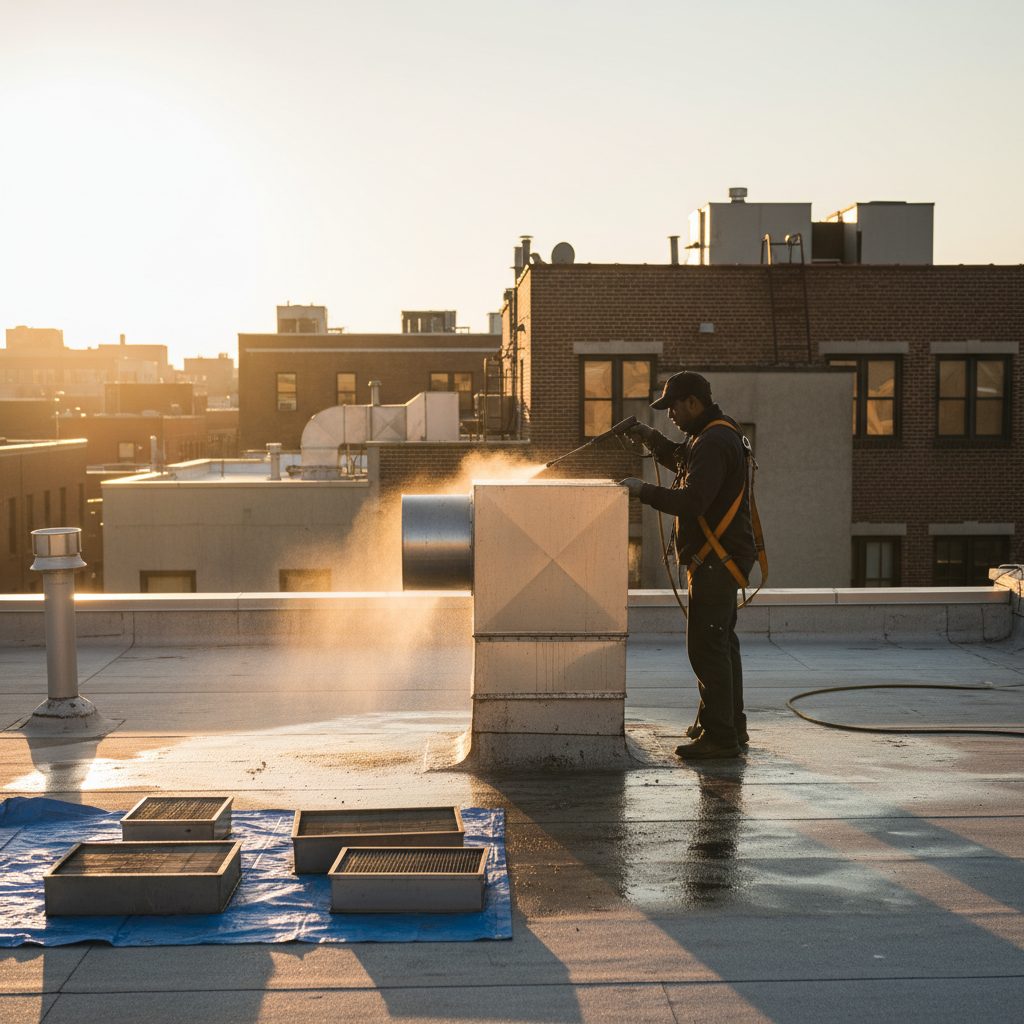
Need an after-hours service window? Our team works 24/7 around your rush periods. Explore our restaurant cleaning services in Ontario and request a no-obligation assessment.
Types, methods, and approaches by equipment
Different appliances demand different techniques. Use degreasing and steam on ovens and grills, descaling and sanitizing on dishwashers and ice machines, and thorough degreasing plus inspection on hood filters, ducts, and fans. Tailor chemistry and tools to the soil, metal, and safety constraints.
Ovens and combis
- Targets: Carbonized grease on walls/racks, fan housings, door gaskets, glass.
- Method: Alkaline foaming degreaser, dwell, non-scratch agitation, steam rinse, gasket inspection.
- Why it matters: Clean ovens hold setpoints and keep brown notes from turning acrid.
- Tip: Log glass visibility after cleaning; fogging often signals gasket wear.
Grills, griddles, and charbroilers
- Targets: Heavy polymerized fats on plates and burner boxes; crumb trays.
- Method: Heat-assisted degreasing, low-abrasion scraping, neutralizing rinse, season plates after service.
- Why it matters: Better heat transfer equals faster ticket times and fewer flare-ups.
- Tip: Schedule deep cleans before menu rollouts to baseline sear consistency.
Refrigeration and reach-ins
- Targets: Condenser coils, drain pans, door gaskets, fan blades, and interiors.
- Method: Vacuum and brush coils, sanitize interiors, clear drains, verify door seal compression.
- Why it matters: Clean coils lower compressor loads; gaskets keep moisture and energy use in check.
- Tip: Record coil delta-T before/after; big gaps often reveal airflow issues nearby.
Dishwashers and glasswashers
- Targets: Scale on elements and jets, biofilm in sumps and drains.
- Method: Descaler circulation, detail jets, sanitize chambers, verify rinse temperatures.
- Why it matters: Proper sanitization needs clean, scale-free heat exchange and unobstructed spray.
- Tip: Log sanitizing temperatures on your line checks for audit readiness.
Ice machines
- Targets: Biofilm on water-contact surfaces, scale in evaporators, mineral residue.
- Method: Food-safe descaler and sanitizer cycles, brush accessible surfaces, replace filters as scheduled.
- Why it matters: Clean ice has no off-odors; health inspectors scrutinize these units.
- Tip: Date-label ice machine filter changes to align with your filter exchange program.
Hood filters, ducts, and exhaust fans
- Targets: Baffle filters, plenum surfaces, horizontal ducts, fan housings, and belts.
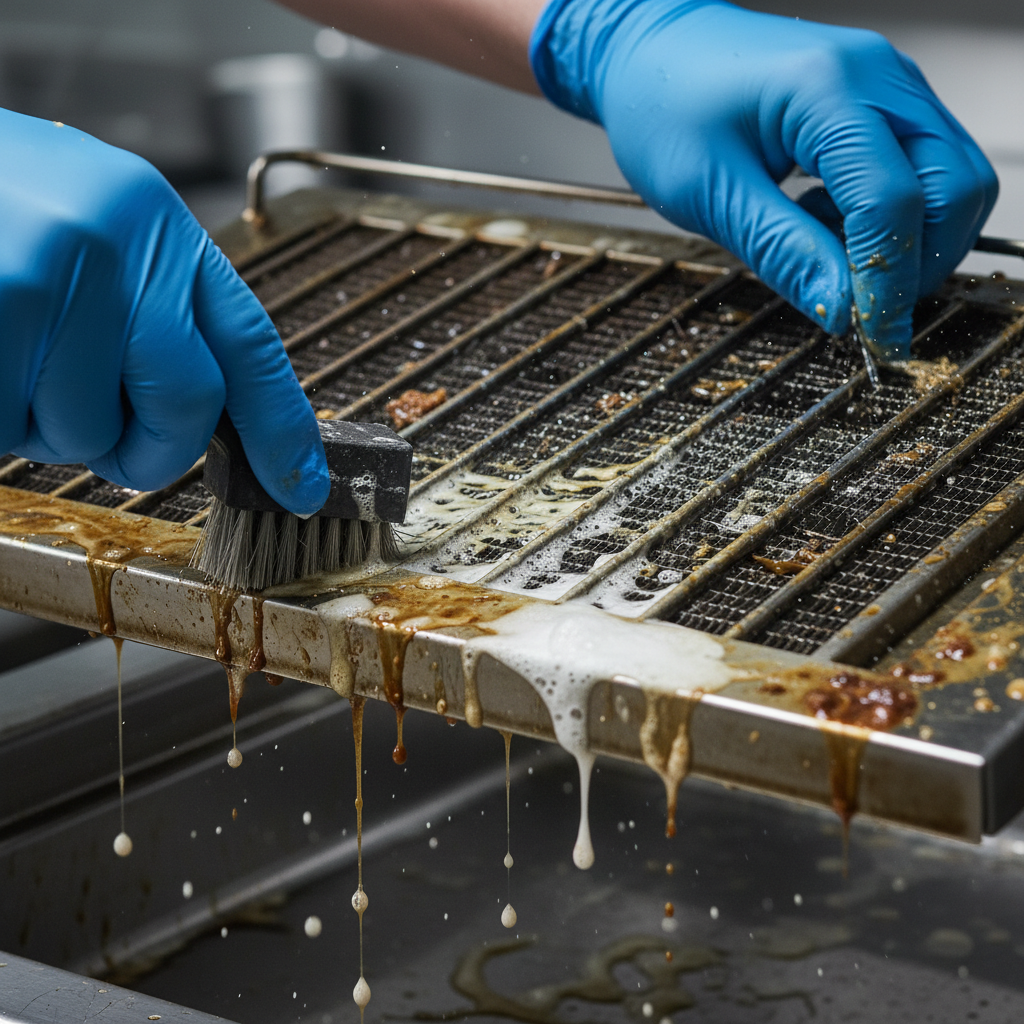
- Method: Hot-soak or foam-degrease filters, degrease and rinse accessible ductwork, clean fan blades and housings, check belts.
- Why it matters: Grease-laden ventilation is the common pathway for fire spread above the line.
- Tip: Align cleaning intervals with your NFPA 96 schedule for hoods and ducts.
Grease traps and adjacent plumbing zones
- Targets: FOG (fats, oils, grease) layers, baffles, inlet/outlet tees.
- Method: Pumping, scraping, detailed rinse of walls/baffles, odor control, waste manifest documentation.
- Why it matters: Prevents backups, odors, and compliance citations.
- Tip: Log FOG thickness at service; trending helps forecast intervals.
Best practices, schedules, and documentation
Pair professional service with simple daily, weekly, and monthly routines. Keep a written schedule, capture before/after photos, and record filter exchanges. Consistent logs make inspections smoother and reveal performance gains over time.
Use this baseline and adjust to your menu and volume:
- Daily: Wipe, scrape, and empty crumb trays; sanitize handles and touchpoints; quick coil dust check on reach-ins.
- Weekly: Degrease grills/griddles; delime dish/glasswashers; clean fryer surrounds; inspect oven gaskets.
- Monthly: Deep clean ovens; detail refrigeration coils; hot-soak hood filters; inspect exhaust fan belts.
- Quarterly or by volume: Duct and plenum degreasing; rooftop fan cleaning; grease trap service with manifests.
Document everything. A one-page log with date, task, signature, and notes builds your compliance trail. If you’re aligning with fire-prevention standards, this page on Ontario NFPA 96 guidance explains common inspection intervals in plain language.
We also recommend adding simple performance notes to each entry: coil cleanliness, oven glass clarity, hood filter loading, and any noise/vibration observed at the fan. Patterns here often predict downtime before it strikes a weekend rush.
Tools and resources we use
Professional results come from matching chemistry, tools, and verification. We use food-contact safe degreasers and descalers, low-abrasion pads, HEPA vacuums, steam, borescopes, airflow meters, and digital logs to prove outcomes and plan the next service.
- Chemistry: Alkaline foams for grease; acidic descalers for minerals; food-contact sanitizers for ice/dish zones.
- Agitation: Non-scratch pads, scrapers, soft-bristle brushes; careful use of steam where safe.
- Extraction & rinse: Controlled pressure rinsing, wet vacuums, floor squeegees for safe walkways.
- Inspection: Borescopes for ducts, light meters for hood canopies, airflow meters for draw verification.
- Safety: Lockout/tagout, PPE, fall protection for rooftop fans, and slip prevention around line equipment.
- Documentation: Photo sets, checklists, and digital logs aligned to your kitchen fire safety checks.
The right tools speed the job and preserve finishes. For instance, soft-bristle brushes prevent scratching on stainless interiors while still breaking down baked-on residues. Airflow meters confirm that clean ducts and fans are moving the volume your hood is rated for.
Case studies and real-world examples (All Over Ontario)
Ontario kitchens see diverse challenges: high-volume fry lines, seasonal menus, and overnight production. These snapshots show how targeted appliance cleaning restores safety and performance while fitting demanding schedules—without interrupting revenue hours.
Quick service restaurant (QSR) grill line
A QSR in Southern Ontario struggled with smoke alarms during lunch. We paired a deep degrease of the griddle, crumb trays, and under-hood plenum with an exhaust fan clean. The next day’s rush ran quieter, with steadier temperatures and clear sightlines across the line.
Fine dining oven and hood system
An upscale kitchen reported inconsistent browning in the combi and glass fogging mid-service. After detailing racks, fan housings, and door gaskets, we hot-soaked baffle filters and verified airflow at the rooftop. The chef noticed improved crust development and less odor drift.
Institutional cafeteria refrigeration bank
A campus facility saw increased energy draw. Coil cleaning and gasket checks restored door compression and airflow. Condensation issues dropped, and holding temperatures stabilized—reducing product loss during peak periods.
Need a consolidated service window that covers hoods, ducts, fans, and appliances? Explore our commercial hood cleaning service, which we often bundle with appliance and filter work for minimal downtime.
Appliance Cleaning FAQ
These quick answers cover schedules, scope, and responsibilities. Use them to brief your team or build a starter SOP. When your volume or equipment mix changes, we recalibrate the plan and document every update.
How often should commercial appliance cleaning be done?
Match intervals to volume and menu. Daily wipe-downs and line checks are essential. Plan monthly deep cleans for ovens and grills, quarterly duct and fan service, and scheduled descaling for dishwashers and ice machines. We fine-tune cadence after the first service cycle.
What’s included in professional appliance cleaning?
We clean ovens, grills, refrigeration coils, dish and ice equipment, hood filters, ducts, and exhaust fans. Service covers protection, degreasing/descaling, rinsing, reassembly, performance checks, and documentation. Repairs are noted when we spot wear like failing gaskets or loose fan belts.
How does appliance cleaning improve safety?
It removes combustible grease and debris around heat sources and clears ventilation pathways so smoke and hot vapors exit quickly. Clean hoods, ducts, and fans reduce ignition risk and odor carryover, which simplifies audits and supports staff safety.
Do you work after hours to avoid downtime?
Yes. We offer 24/7 scheduling across Ontario and often service between close and morning prep. This minimizes disruption and lets your team return to a clean, reassembled kitchen ready for the next shift.
Conclusion and next steps
The safest, most consistent kitchens combine professional appliance cleaning with simple daily routines. Document results, adjust frequency to volume, and align ventilation work with hood schedules. This rhythm protects people, uptime, and flavor—every single service.
Key takeaways
- Appliance cleaning removes fuel for fires, stabilizes temperatures, and improves air quality.
- Tailor methods to each appliance: degrease hot surfaces, descale water-contact zones, and verify airflow.
- Pair pro service with daily and weekly routines to keep performance gains between visits.
- Photograph, log, and trend results to predict issues before they affect service.
Action steps
- Print a one-page monthly schedule and hang it beside the line.
- Book an off-hours assessment for hoods, ducts, fans, and appliances together.
- Align filter exchanges with your hood schedule and date-label every changeout.
Serving restaurants and institutions All Over Ontario, our WSIB-insured, NFPA 96–aligned team is ready to help. Start with a quick assessment through our Ontario restaurant cleaning services page, and we’ll map an appliance cleaning rhythm that fits your hours.