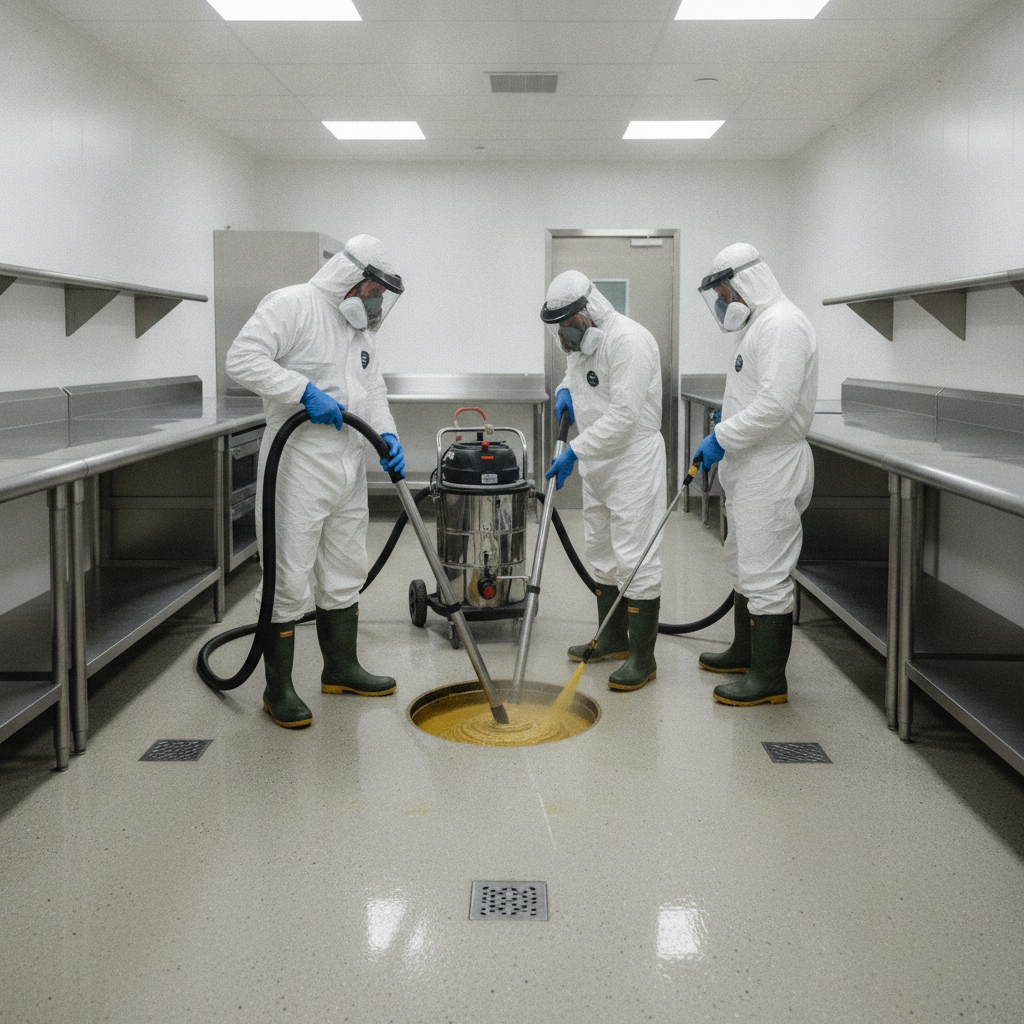
Grease trap cleaning is the professional removal of accumulated fats, oils, and grease (FOG) from a commercial kitchen’s interceptor to prevent sewer backups, odors, and code violations. The 25% rule triggers service when FOG reaches a quarter of the liquid depth. For restaurants in All Over Ontario, timely service protects uptime, food safety, and compliance.
By Robinhood Cleaners
Last updated: 2026-06-27
Quick Overview and Table of Contents
This complete guide explains what grease trap cleaning is, why it matters for safety and compliance, how traps work, and the best methods, tools, and schedules. It includes checklists, step-by-step processes, and local guidance for All Over Ontario kitchens, plus FAQs and practical examples from our commercial cleaning experience.
Running a busy kitchen leaves little room for plumbing surprises. This guide is designed for operators, chefs, and facilities managers who need clear steps, compliance confidence, and less downtime.
- What a grease trap is and how it works
- Why regular service prevents fires, clogs, and shutdowns
- Best practices, intervals, and the 25% rule
- Professional vs. in-house approaches (with pros/cons)
- Step-by-step cleaning workflow and documentation
- How service integrates with hood, duct, and exhaust maintenance
- Local considerations for All Over Ontario
What Is Grease Trap Cleaning?
Grease trap cleaning is the scheduled pumping, scraping, and safe disposal of fats, oils, grease, and food solids from a kitchen’s interceptor. It restores capacity, controls odors, and prevents sewer clogs. Proper service follows the 25% rule and includes waste manifesting, trap inspection, and sealing all access points after cleaning.
In plain terms, your trap captures FOG before it enters municipal lines. Over time, layers build up. When they hit 25% of the trap’s liquid depth, hydraulics degrade, solids migrate, and backups become likely. Proactive cleaning returns the system to design performance.
- Primary goal: Keep FOG out of drains to avoid clogs and fines.
- What’s removed: FOG layers, food sediment, and floating scum.
- Core steps: Pump, scrape, rinse, inspect baffles/inlets, reassemble, and document.
- Who benefits: Restaurants, institutional kitchens, food courts, and catering operations.
For All Over Ontario operators, combining grease trap service with exhaust, hood, and duct cleaning reduces total downtime and keeps your whole ventilation and drainage ecosystem healthy.
Why Grease Trap Cleaning Matters
Regular grease trap cleaning protects uptime, controls odors, and prevents costly sewer backups. It supports food safety, worker comfort, and compliance with local bylaws. When paired with exhaust and hood cleaning, it reduces fire risk and keeps ventilation balanced across high-demand service periods.
Here’s the thing: small problems compound fast in commercial kitchens. Blocked lines slow prep, create odors guests notice, and can trigger emergency closures. A well-maintained trap lowers that risk and keeps the line moving.
- Risk reduction: Backups and overflows drop dramatically with consistent intervals.
- Odor control: Removing anaerobic sludge prevents sulfur smells from entering the dining room.
- Compliance: Service logs and manifests show you’re following the 25% rule and local requirements.
- Fire safety link: Less FOG down drains means less aerosolized grease settling into hoods and ducts over time.
- Worker morale: Cleaner, odor-free back-of-house areas are safer and more productive.
In our experience serving restaurants across All Over Ontario, kitchens that schedule trap service alongside hood and duct cleaning report fewer mid-shift disruptions and smoother inspections.
How Grease Traps Work
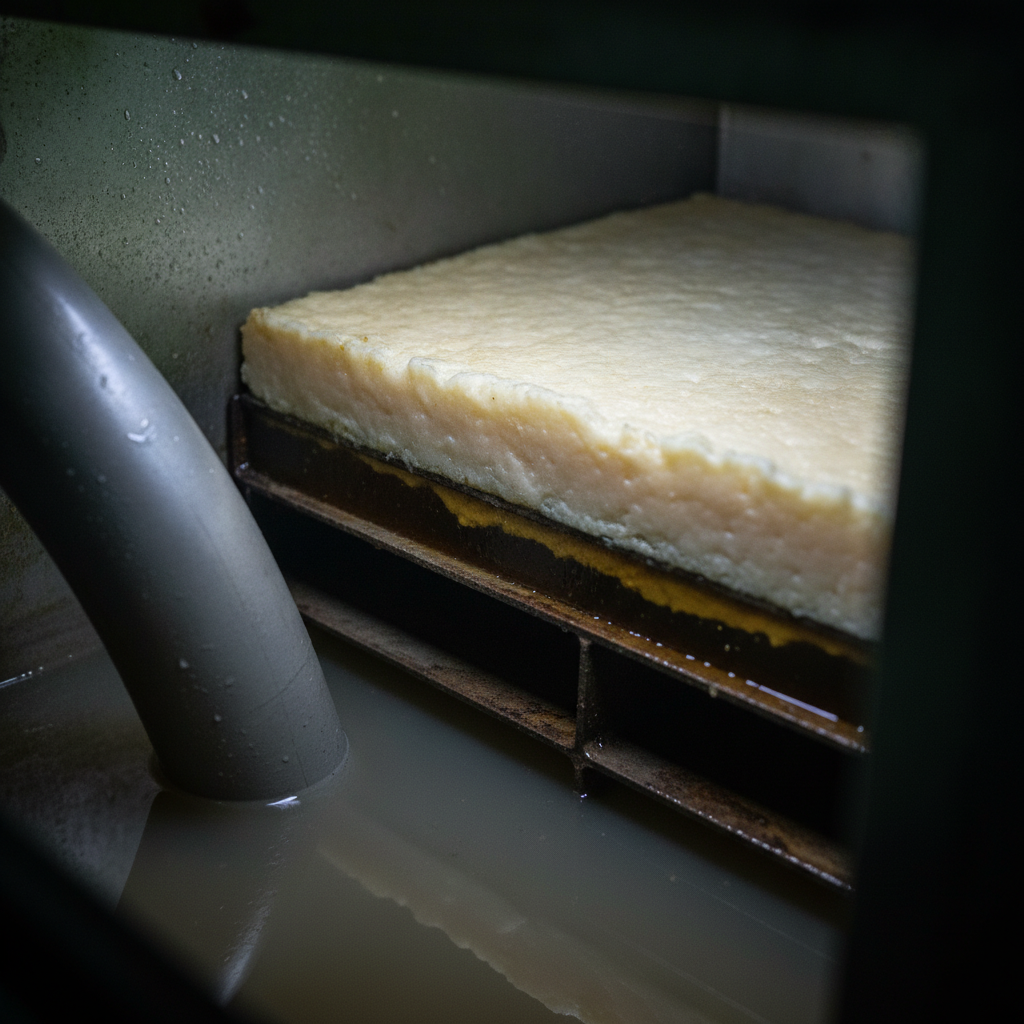
A grease trap slows kitchen wastewater so fats, oils, and grease float while food solids settle. Internal baffles direct flow, separating FOG before effluent exits to the sewer. When FOG reaches 25% of volume, hydraulic retention drops and carryover increases—making cleaning essential to restore efficiency.
Grease traps (and larger interceptors) rely on gravity and time. Hot, emulsified grease cools, rises, and forms layers. Solids fall to the bottom. Baffles and inlet/outlet tees keep the retained FOG from escaping. When layers thicken, the trap loses hold time and starts passing grease downstream.
- Key parts: Inlet tee, baffles, separation chamber, outlet tee, and access covers.
- FOG behavior: Grease solidifies as it cools, increasing buoyancy and forming a floating cap.
- Failure modes: Missing baffles, broken tees, stuck lids, and overfull traps.
Want a visual primer on interceptor internals? This illustrative overview of how grease traps and interceptors work breaks down flow path and separation principles in simple terms.
Types and Methods of Grease Trap Cleaning
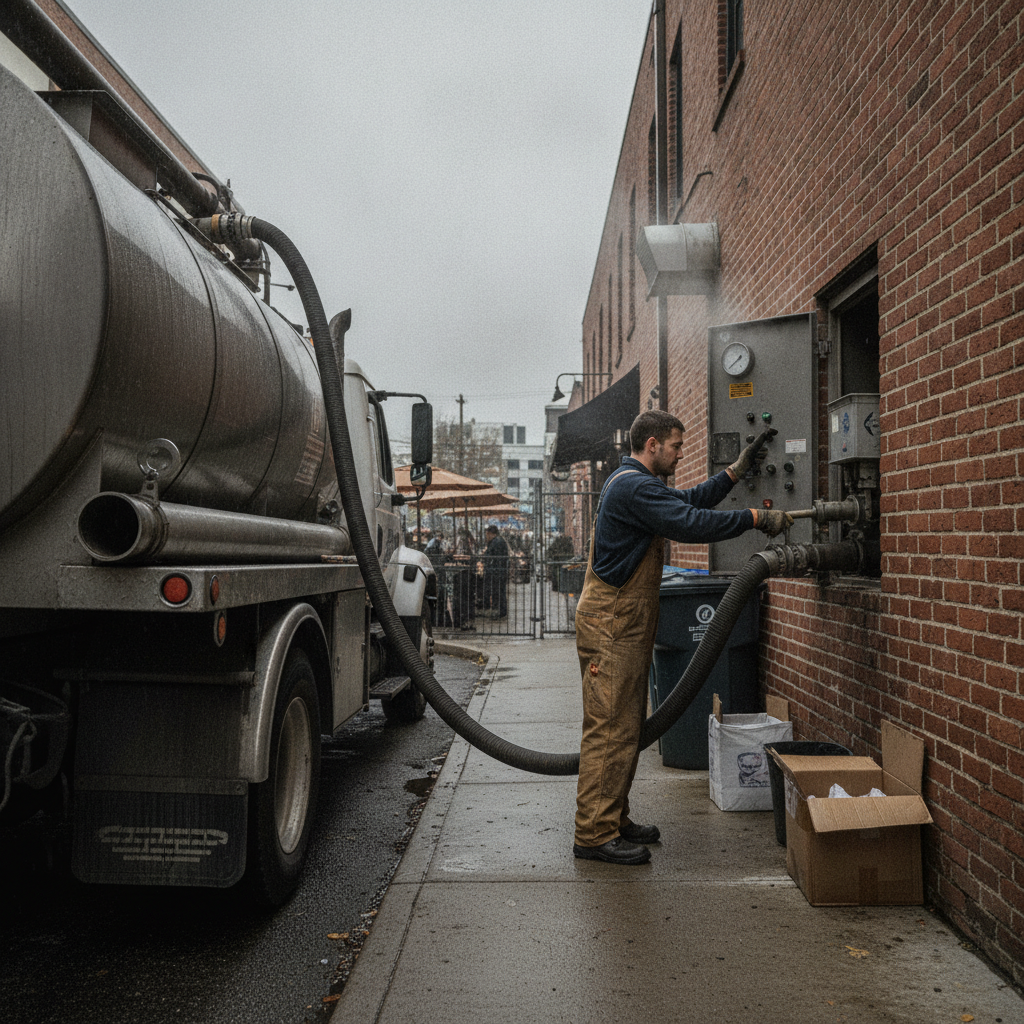
Grease traps are serviced using manual extraction for small under-sink units and vacuum pumping for large in-ground interceptors. Effective methods include full evacuation, scraping all surfaces, flushing inlet/outlet tees, and recharging with clean water. Biological dosing can supplement—not replace—routine pumping.
Different kitchens need different approaches. Quick service sites often use compact under-sink traps; banquet venues and food courts use larger in-ground interceptors. What matters is removing all FOG and solids, inspecting parts, and restoring water levels to design spec.
- Manual service: For small traps; scoop, wet-vac, scrape, rinse, and reassemble.
- Pump truck service: For large interceptors; vacuum, de-sludge, scrape walls, and jet lines if needed.
- Biological additives: Enzyme or bacteria dosing can help reduce film and odor between pump-outs.
- Do not rely on enzymes alone: They support hygiene but never replace physical removal.
For a refresher on handling kitchen grease upstream of the trap, this practical primer on managing grease in drains highlights habits that minimize buildup.
Best Practices and Service Schedules
Follow the 25% rule, inspect weekly, and schedule cleaning every 1–3 months for busy restaurants. Log all services, manifest waste, and combine trap cleaning with hood and duct maintenance. Train staff on pre-scraping and proper strainer use to cut FOG at the source.
We like simple rules that hold up under rush-hour pressure. These practices protect capacity and make inspections routine, not stressful.
- The 25% rule: When FOG + solids reach 25% of liquid depth, schedule cleaning.
- Typical intervals: 1–3 months in high-volume kitchens; quarterly at moderate volume.
- Daily habits: Pre-scrape plates, use sink strainers, cool and bin fryer oil, and keep wipes out of drains.
- Weekly checks: Pop the lid safely, gauge FOG thickness, ensure baffles and tees are intact.
- Documentation: Keep manifests and a visible service log for inspectors.
- Bundle services: Align trap, hood, and duct visits to reduce interruptions.
For All Over Ontario operators, syncing schedules with your busiest seasons (patio months, holidays, and festival weeks) prevents surprise clogs when guest counts spike.
Step-by-Step: The Professional Grease Trap Cleaning Process
A professional service isolates the area, evacuates the trap, removes solids, scrapes all interior surfaces, rinses and inspects baffles/tees, recharges with clean water, reseals covers, and documents waste disposal. The crew restores design flow and leaves clear logs for compliance checks.
- Set safety perimeter and ventilation; lock out nearby fixtures if needed.
- Open access covers; measure FOG and liquid levels.
- Vacuum all contents; collect and containerize solids.
- Scrape walls, baffles, and tees; remove hardened grease.
- Rinse and check for cracks, loose fittings, and missing components.
- Recharge with clean water to operating height.
- Seal covers; clean surrounding floor drains and splash zones.
- Complete manifest and service log; advise on next interval.
| Step | Why it matters | What to verify |
|---|---|---|
| Measure layers | Confirms 25% threshold and right interval | Record FOG and solids depth |
| Full evacuation | Restores capacity and retention time | All chambers fully emptied |
| Scrape & rinse | Removes adhered grease films | Surfaces visibly clean |
| Inspect parts | Prevents carryover and failures | Baffles/tees intact and secure |
| Recharge water | Ensures proper separation on restart | Operating level restored |
| Document & log | Proves compliance during inspections | Manifest + next due date |
Tools and Resources Kitchens Actually Use
For small traps: wet/dry vacs, scrapers, PPE, absorbents, and safe degreasers. For large interceptors: vacuum pump trucks, line jetters, gas monitors, and confined-space safety gear. Use labeled waste containers, spill kits, and inspection logs to keep cleanup safe and compliant.
We keep gear simple and durable, with a focus on safety and speed in tight back-of-house spaces.
- PPE: Gloves, goggles, splash aprons, and non-slip footwear.
- Extraction: Pump truck or wet/dry vac sized to your unit.
- Hand tools: Long-handle scrapers, scoops, baffle brushes.
- Testing: Flashlight, tape measure or sludge judge, gas monitor for in-ground units.
- Hygiene: Spill kits, absorbent pads, bio-enzymatic cleaners for surrounding areas.
- Records: Wall-mounted log sheet and digital service reports.
New to interceptor design? Revisit the visual walk-through on interceptor internals before your next staff training.
Compliance, Inspections, and Documentation
Maintain a visible service log, keep disposal manifests, and document the 25% measurements at each visit. While NFPA 96 governs hood and duct cleaning, local bylaws typically set grease trap standards. Organized records speed inspections and prove your FOG program is working.
Inspection time shouldn’t be stressful. Keep a binder or digital folder with your latest reports, manifests, photos of baffles/tees, and your schedule. For multi-unit operators, standardize forms so managers can swap in easily without missing a step.
- Logs: Date, provider, measured FOG/solids, next due date.
- Disposal: Retain manifests as proof of proper handling.
- Incidents: Note any odors, slow drains, or backups and corrective actions.
- Coordination: Align with hood and duct cleaning to show a complete safety program.
Our NFPA 96–certified team coordinates trap service with hood and duct cleaning so your file looks complete to inspectors and insurers.
Integrating Grease Trap Service with Kitchen Exhaust and Ventilation
Pair grease trap cleaning with hood, duct, and exhaust fan maintenance to reduce downtime and fire risk. One coordinated visit restores drainage capacity, clears grease from ventilation, and documents safety work for inspections—ideal for high-volume periods.
Robinhood Cleaners provides a comprehensive program across All Over Ontario that includes:
- Hood cleaning and degreasing to remove flammable residues from canopy to duct.
- Duct cleaning and fire hazard reduction to meet NFPA 96 expectations.
- Exhaust fan cleaning and maintenance with fan belt replacement when needed.
- Filter cleaning & exchange to keep airflow balanced and capture aerosols.
- Ventilation system maintenance and equipment cleaning for ovens, grills, and refrigeration.
- Power washing for loading areas and dumpster pads that attract grease spills.
When you consolidate visits, your team sets up once, we stage once, and inspectors see a clean, consistent program. It’s smoother for everyone.
Case Studies and Real-World Examples
Across All Over Ontario, kitchens that align trap service with hood and duct cleaning see fewer mid-shift slowdowns and cleaner inspections. These brief scenarios show how proactive scheduling, the 25% rule, and staff habits keep drains clear and guests happy.
Quick service restaurant
- Challenge: Under-sink trap hit 25% within four weeks, causing slight odors near prep.
- Action: Moved to a 4-week interval, added pre-scrape bins and strainers.
- Result: Odors resolved; drain flow stable through peak hours.
Fine dining venue
- Challenge: In-ground interceptor overflowed after a holiday weekend.
- Action: Bundled interceptor pump-out with hood and duct cleaning before peak season.
- Result: No backups; documented logs satisfied inspectors during the next visit.
Food court operator
- Challenge: Multiple tenants feeding a shared interceptor led to inconsistent maintenance.
- Action: Standardized a shared log and scheduled coordinated pump-outs.
- Result: Reduced emergency calls; consistent retention time across stalls.
Institutional kitchen
- Challenge: Staffing changes led to missed weekly checks.
- Action: Introduced a laminated one-page checklist in the dish area.
- Result: Restored weekly measurements; fewer surprises and smoother audits.
Choosing a Professional Provider in All Over Ontario
Select a provider with NFPA 96–certified techs, WSIB insurance, and 24/7 availability. Ensure they document the 25% rule, provide disposal manifests, and can bundle hood, duct, and fan services. A responsive team reduces downtime and keeps your compliance file inspection-ready.
- Certification & insurance: NFPA 96–certified professionals and WSIB insured crews.
- Scheduling: Overnight or off-peak options to avoid service disruptions.
- Documentation: Clear manifests and logs with photos on request.
- Full-service capability: Trap, hood, duct, fans, filters, and power washing under one roof.
- Local experience: Proven track record with restaurants and institutional kitchens across All Over Ontario.
Local considerations for All Over Ontario
- Plan intervals around seasonal spikes (summer patios, holiday events) so traps are clean before high volume.
- Bundle grease trap cleaning with hood and duct service to minimize overnight downtime and speed reopening.
- Train back-of-house teams on pre-scraping and strainer use; these habits reduce FOG loading between visits.
Request a Kitchen Compliance Assessment
Need a simple, bundled plan for grease traps, hoods, ducts, and ventilation? Our certified team works 24/7 across All Over Ontario. We’ll review your logs, set intervals around your busy periods, and align documentation for faster inspections.
Schedule an assessment to streamline your program.
Professional vs. In-House: What’s the Difference?
In-house teams can handle small checks, but professional services provide full evacuation, proper disposal, and documentation. Pros also inspect baffles and tees, jet lines when needed, and bundle ventilation cleaning—reducing risk and proving compliance during audits.
| Aspect | In-house | Professional |
|---|---|---|
| Scope | Basic checks, minor skimming | Full pump-out, scrape, rinse, inspection |
| Disposal | Often unclear handling | Manifested, compliant disposal |
| Documentation | Varies by manager | Standard logs and photos |
| Downtime | May disrupt service | Scheduled off-peak/overnight |
| Integration | Trap only | Trap + hood/duct/fans |
Frequently Asked Questions
These concise answers address the most common grease trap questions from restaurant managers and chefs. Each response is practical, inspection-friendly, and aligned with how busy kitchens operate across All Over Ontario.
How often should a grease trap be cleaned?
Use the 25% rule as your trigger and expect 1–3 month intervals for high-volume kitchens. Moderate-use operations can extend to quarterly. Weekly lid checks help you adjust the schedule based on real FOG accumulation.
Can enzymes replace pumping?
No. Biological additives can reduce film and odor between services, but they don’t remove accumulated FOG and solids. You still need full evacuation, scraping, and proper disposal to restore capacity and stay compliant.
What signs indicate my trap is overdue?
Watch for slow drains, sulfur odors, fruit flies near floor sinks, or visible FOG thickness when you open the lid. If you’ve hit the 25% threshold or notice carryover downstream, schedule cleaning immediately.
Why pair grease trap service with hood and duct cleaning?
Coordinating services reduces downtime and supports fire safety. You restore drainage capacity and remove flammable residues from hoods and ducts in one visit—leaving a complete paper trail for inspectors and insurers.
Key Takeaways
Stay ahead of clogs by following the 25% rule, logging every visit, and bundling grease trap cleaning with hood and duct maintenance. Train teams on pre-scraping and strainers. Choose a certified, insured provider with 24/7 availability across All Over Ontario to protect uptime and compliance.
- Use the 25% rule and weekly checks to set intervals.
- Document manifests and logs for inspections.
- Bundle trap, hood, duct, and fan services.
- Reinforce daily pre-scrape and strainer habits.
- Schedule ahead of peak seasons to avoid rush-hour surprises.
Conclusion: A Cleaner, Safer Kitchen Starts with the Trap
Grease trap cleaning safeguards your kitchen’s plumbing, air quality, and inspection readiness. When you align service with ventilation maintenance and staff habits, you prevent backups and keep operations smooth—especially during peak periods in All Over Ontario.
When working with clients across All Over Ontario, we’ve found the simplest programs are the most durable: a visible log, weekly lid checks, bundled visits, and clear manifests. Ready to simplify yours?
Book a service window with Robinhood Cleaners—NFPA 96–certified, WSIB insured, and available 24/7 to fit your schedule.