Your kitchen’s exhaust fan is the heartbeat of your line. When a belt slips, squeals, or snaps, airflow tanks, heat rises, and service slows. This complete guide on fan belt maintenance commercial exhaust systems gives Ontario restaurants and foodservice teams a practical, step-by-step playbook to keep air moving and compliance steady—without downtime.
- Understand what the belt does, why it fails, and how to prevent repeat issues
- Spot warning signs during a rush before they become a shutdown
- Follow clear, safe procedures for inspection, alignment, and tension
- Integrate belt care with hood, filter, duct, and exhaust fan cleaning
- Document maintenance to support NFPA 96–aligned fire safety practices
- Leverage Robinhood Cleaners’ Ontario-wide, 24/7 service for scheduled PMs
Quick Summary
- Primary goal: stable airflow so your hood reliably captures grease vapor and heat.
- Biggest risk: belt failure reduces CFM, increases smoke/heat, and raises fire hazard.
- Who this helps: restaurant managers, chefs, facilities leads, franchise owners.
- Applies to: rooftop upblast fans, wall-mount fans, and inline exhaust fans.
- Local context: fast, after-hours scheduling across Southern Ontario and beyond.
Table of Contents
- Quick Answer
- What Is Fan Belt Maintenance Commercial Exhaust?
- Why It Matters
- How It Works
- Types, Setups, and Materials
- Best Practices: Inspection, Tension, Alignment
- Maintenance Intervals & Symptoms
- Tools & Resources
- Step-by-Step Service Process
- Troubleshooting Table
- Program Integration: Hood, Filters, Ducts, Fans
- Pricing Drivers (No Dollar Amounts)
- Southern Ontario Case Studies
- 12 Practical Examples
- Downloadable Checklists (Text Version)
- FAQ
- Key Takeaways
- Related Topics
- Conclusion & Next Steps
Quick Answer
In All Over Ontario at All Over Ontario, fan belt maintenance commercial exhaust means routine inspection, alignment, tensioning, and timely replacement to keep airflow steady and NFPA 96 objectives on track. Robinhood Cleaners bundles belt care with hood, duct, and exhaust fan cleaning—WSIB insured, 24/7, Ontario-wide.
Local Tips
- Tip 1: Rooftop access around malls and food courts can bottleneck. Book inspections pre-opening to skip elevator and loading dock delays.
- Tip 2: Spring pollen and fall leaves affect intakes. Pair seasonal filter exchange with a belt tension/align check.
- Tip 3: Heat waves loosen belts faster. Add a mid-summer re-tension to your PM calendar to avoid lunch-rush squeals.
IMPORTANT: These tips reflect how Ontario kitchens operate—tight windows, high volume, and zero tolerance for downtime.
You might be wondering: is this really worth the attention? Here’s the thing—small belt issues quietly crush airflow. The sooner you find and fix them, the safer and cooler your kitchen runs.
What Is Fan Belt Maintenance Commercial Exhaust?
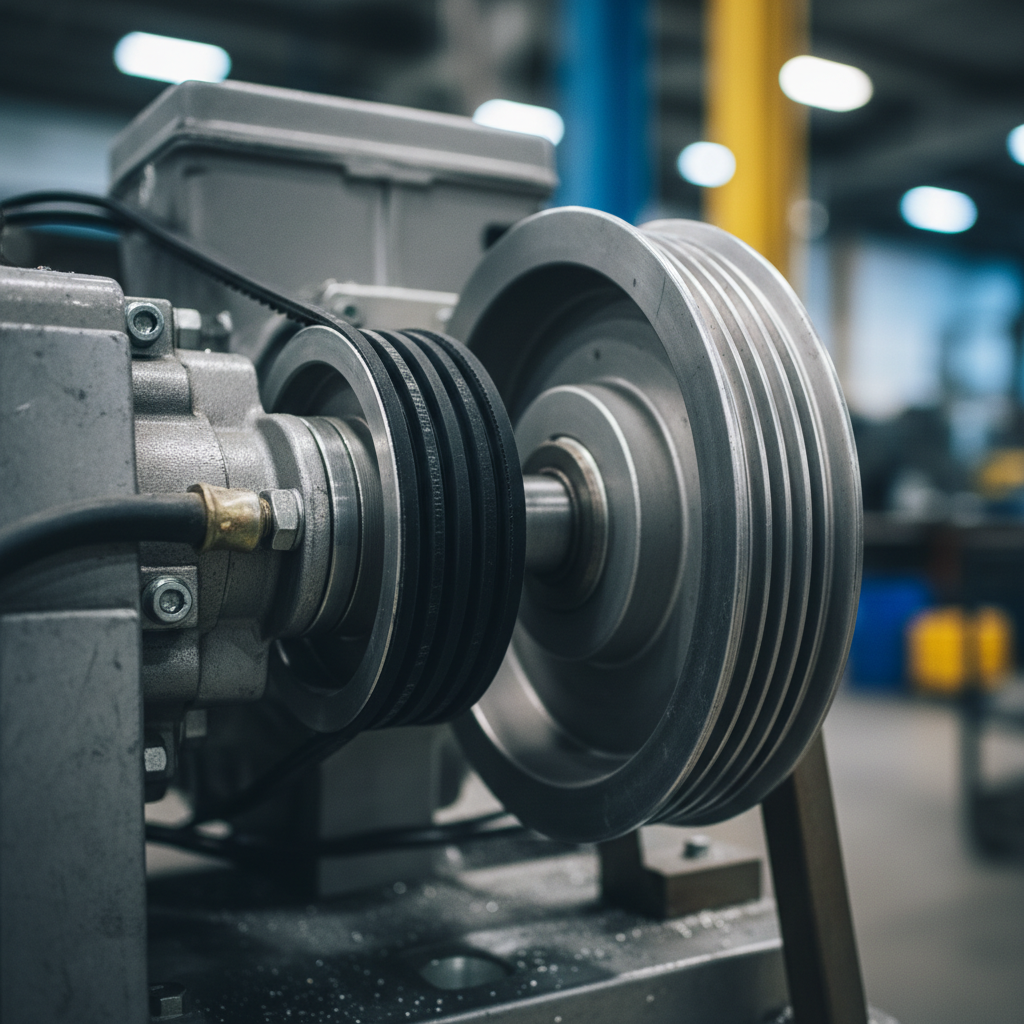
In a typical commercial hood system, the exhaust fan’s motor drives a pulley, which turns a second pulley on the fan shaft using a V-belt or multi-rib belt. Maintenance keeps that belt correctly sized, aligned, tensioned, and free from cracks or glazing—so airflow stays consistent service after service.
- Core tasks: inspect, clean, align sheaves, set tension, and replace worn belts.
- Primary outcomes: steady airflow, less heat/smoke in the kitchen, quieter operation, and longer motor/bearing life.
- Safety impact: reliable grease vapor capture supports NFPA 96 fire protection goals.
- Program fit: best paired with hood cleaning, filter exchange, duct degreasing, and exhaust fan cleaning for a complete system result.
Why It Matters
- Airflow and capture: A loose or worn belt reduces CFM, letting grease aerosol and heat escape the canopy.
- Food quality and crew comfort: Poor exhaust raises temps and smoke, stressing teams and impacting product consistency.
- Equipment protection: Slippage overheats motors, wears bearings, and scorches belts.
- Compliance confidence: Healthy belts support performance during NFPA 96–aligned cleanings and inspections.
- Uptime insurance: Proactive checks prevent mid-service breakdowns and emergency rooftop runs.
Want to see how this ties to overall hood hygiene? Our Ontario-focused hood cleaning frequency guide explains service cadences that also stabilize belt workload.
How Belt-Driven Exhaust Fans Work
- Motor and drive sheave: An electric motor spins a drive pulley that transmits torque.
- Driven sheave: Mounted on the fan shaft; belt motion turns the wheel to move air.
- V-belt or multi-rib: The wedge profile grips the sheaves; correct section and length are critical.
- Take-up adjustment: Shifts the motor base to set tension (some housings use sliding brackets).
- Guards and access panels: Protect staff and simplify service when installed and maintained properly.
Types, Setups, and Materials
- Classical V-belts (A, B, C): Most common on rooftop upblast fans in restaurants.
- Notched (cogged) belts: Bend around smaller sheaves with less heat build-up and lower energy loss.
- Multi-rib belts: Used on compact drives needing higher speed ratios in limited space.
- Matched sets: Twin-belts on wide sheaves must be replaced together to share load evenly.
- Common locations: Rooftop upblast fans, wall-mount fans, and some inline fans above ceilings.
- Materials: Neoprene and EPDM are typical; EPDM often resists heat and ozone better in rooftop environments.
Best Practices: Inspection, Tension, Alignment
- Lockout/Tagout (LOTO): De-energize and verify zero energy before touching the drive.
- Visual inspection: Look for cracks, fray, glazing, rubber dust, or oil/grease contamination.
- Deflection method: Use a tension gauge or the 1/64″ per inch of span rule-of-thumb for initial set.
- Alignment: Check sheave faces with a straightedge or laser; misalignment devours belts.
- Sheave wear: A worn groove bottoms belts and reduces grip; replace worn pulleys.
- Re-tension window: Belts “seat in” after 24–48 hours—recheck and adjust.
- Avoid belt dressing: It masks slippage, attracts contamination, and speeds wear—solve the cause.
- Guard integrity: Reinstall guards before power-up; never test with guards off.
Maintenance Intervals & Symptoms
- Monthly glance: Quick visual once a month in high-volume or high-heat kitchens.
- Quarterly PM: Tension/align and inspect sheaves during scheduled hood and duct service.
- Seasonal tune: Add checks in peak summer heat or heavy holiday volume.
What You’ll Notice First
- Squealing at startup: Belt is loose, glazed, or contaminated.
- Vibration or humming: Misalignment, worn bearings, or an out-of-balance wheel.
- Hot motor housing: Slippage or overload—investigate ASAP.
- Reduced capture: More smoke escaping the hood; check belt, filters, and duct restriction.
Tools & Resources
- Tension gauge: For precise belt deflection force—faster, repeatable settings.
- Straightedge or laser aligner: Confirms sheave parallelism across faces.
- Tachometer: Spot-check fan RPM after service and compare to data plate.
- OEM data plate: Lists correct belt section/length and target RPM.
- Documentation kit: Simple PM logs with date, RPM, tension notes, and photos.
Filters matter too. See our filter replacement guide for how cleaner airflow reduces belt load and slippage risk.
Step-by-Step Service Process
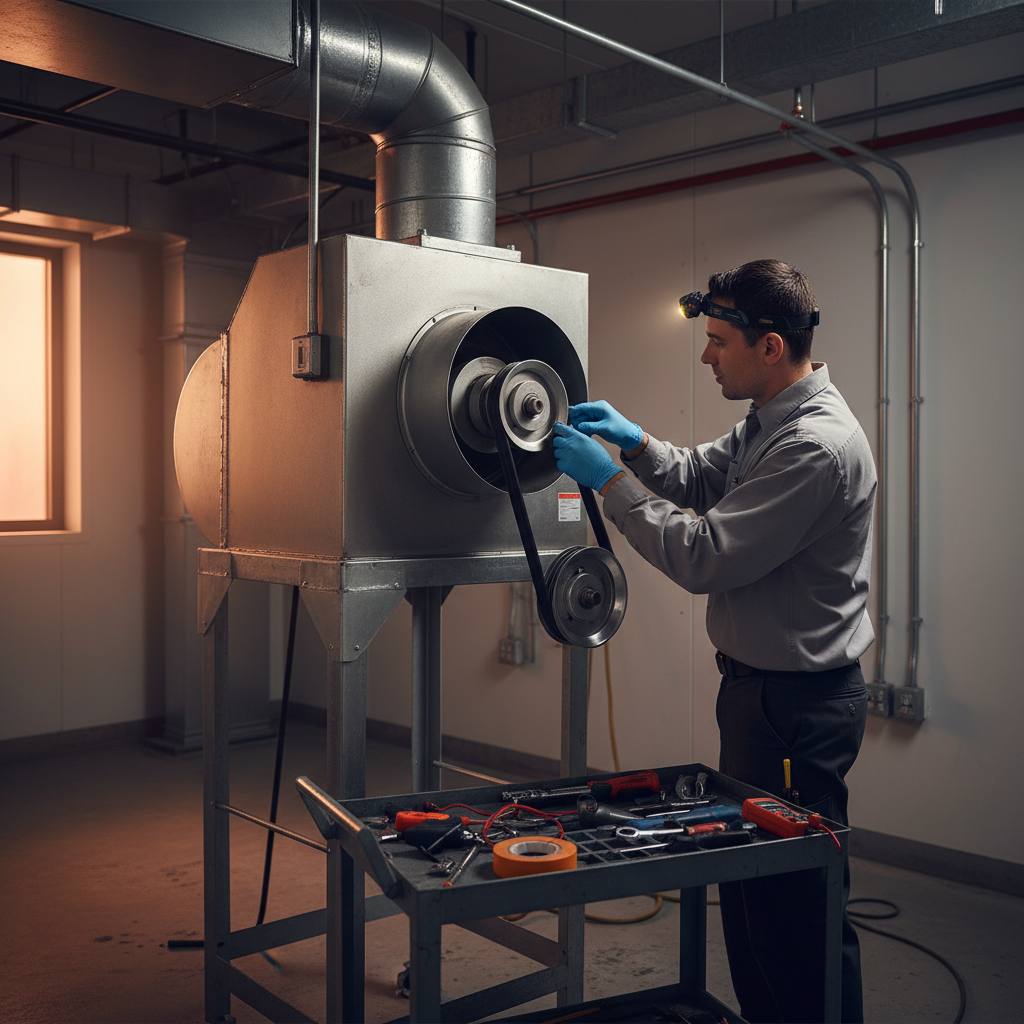
- Shut down and lock out power. Verify no movement and zero energy.
- Remove guards/panels and note belt routing with a quick photo.
- Inspect belt (cracks, glazing, fray) and sheaves (groove wear, wobble).
- Clean debris and grease from guards and housings to reduce contamination.
- Loosen motor base; remove belt. Check motor bearing play and mounting bolts.
- Install the correct-size belt. Hand-rotate to seat it fully into the sheaves.
- Align sheaves with a straightedge; adjust motor position as needed.
- Set tension using a gauge; avoid over-tension that shortens bearing life.
- Reinstall guards and panels securely; confirm nothing contacts the drive.
- Restore power; bump test, then run. Listen for squeal, vibration, or rubbing.
- Measure RPM and confirm capture at the hood canopy against prior readings.
- Recheck tension after 24–48 hours of normal operation; log readings.
Troubleshooting: Symptoms to Actions
| Symptom | Likely Cause | Action |
|---|---|---|
| Squeal at startup | Loose or glazed belt | Re-tension or replace; verify alignment and sheave condition |
| Persistent vibration | Misalignment or worn bearings | Align sheaves; inspect bearings and wheel balance; tighten mounts |
| Burning rubber smell | Belt slip or sheave wear | Replace belt; inspect/replace worn sheaves; clean contamination |
| Low airflow at hood | Loose belt, clogged filters, blocked duct | Set tension; exchange filters; schedule duct cleaning and fan wash |
Program Integration: Hood, Filters, Ducts, Fans
- Hood and filter cleaning: Lower restriction reduces belt load and slippage.
- Duct degreasing: Clean ducts keep fan wheels lighter and balanced.
- Exhaust fan cleaning: A degreased wheel needs less torque for the same CFM.
- Fan belt replacement: Swap aging belts before they fail mid-service to protect uptime.
- Documentation: Audit-ready logs support inspections and insurance requirements.
When belts cross from maintenance into full replacement, this keep exhaust safe overview and this expert 2026 guide walk through what a thorough change-out looks like.
Pricing Drivers (No Dollar Amounts)
While we don’t publish pricing, these factors typically shape the investment in belt service and integrated exhaust maintenance.
- System size and access: Rooftop height, guard design, and distance to service panels.
- Volume and hours: QSRs and late-night operations favor off-peak windows.
- Condition on arrival: Worn sheaves and heavy grease add service time.
- Documentation needs: Audit-ready reports and photos for compliance or insurers.
- Multi-location coordination: Route planning and standardized PM windows across sites.
- After-hours access: Overnight or early-morning appointments to protect sales.
Southern Ontario Case Studies
- Busy QSR cluster: Belts glazed every 6–8 weeks. Root cause: clogged baffle filters driving static pressure. After filter exchange and quarterly re-tensioning, belts lasted ~4x longer and smoke complaints dropped.
- Food court tenant: Intermittent squeal during lunch rush. Misaligned sheaves from a bumped motor base were the culprit. Realigned, set tension, and documented torque checks—issue resolved.
- Institutional kitchen: Low capture over combi ovens. Belt tension was fine; the wheel was loaded with grease. A deep fan cleaning and belt recheck restored airflow.
- Fine dining line: Heat spikes from a grill upgrade started belt slip. Switching to EPDM and adding a mid-summer re-tension eliminated squeal.
- Catering hub: Weekend-only usage caused flat-spot noise. A matched-set replacement and alignment fixed the start-up chatter.
12 Practical Examples You Can Apply
- Startup squeal: Add 1/8 turn on take-up bolts, then recheck RPM.
- Rubber dust inside guard: Inspect sheave grooves; replace worn pulleys.
- Hot motor casing: Verify belt tension and fan wheel cleanliness.
- Vibration near prep line: Check alignment and wheel balance; tighten mounts.
- Slow capture over fryers: Combine filter exchange with belt re-tension.
- Noise after cleaning: Confirm guards/panels aren’t contacting the belt.
- Frequent re-tensioning: Wrong belt section or length—confirm OEM specs.
- Belt cracks in winter: Cold rooftop starts—inspect monthly and warm-up fans.
- Driveline contamination: Clean guards; fix upstream leaks that mist the belt.
- Repeated twin-belt failures: Replace as a matched set to equalize load.
- Unexpected RPM drop: Check pulley set screws and motor base slippage.
- After remodel: Verify RPM/airflow against new equipment loads.
Downloadable Checklists (Text Version)
Monthly Visual (2–3 minutes)
- Power off and verify no movement
- Open guard/panel for quick sightline—cracks, glazing, fray
- Confirm belt sits proud in the sheave (not bottomed out)
- Spin by hand to feel for roughness or rubbing
- Log date and observations
Quarterly PM (15–30 minutes)
- Lockout/tagout and remove guards
- Inspect belt and sheaves; clean driveline area
- Align sheaves; set tension with a gauge
- Measure RPM and note capture performance
- Recheck after 24–48 hours; log values
Annual Review
- Replace aging belts (or sooner if wear appears)
- Evaluate sheave wear; replace if grooves are polished or widened
- Update PM schedule based on volume and seasonal factors
- Verify documentation for audit/insurance readiness
FAQ
- How often should we replace an exhaust fan belt?
There’s no one-size rule. In high-volume kitchens, inspect monthly and plan for annual replacement—sooner if you see cracks, glazing, or repeated re-tensioning. - Is belt dressing okay for a quick fix?
Skip it. Dressing only hides slippage, attracts contamination, and speeds wear. Fix tension, alignment, or components. - Do multi-belt drives need matched sets?
Yes. Replace twin or triple belts as a matched set so they share load evenly and last longer. - Can we run without a guard to “test”?
No. Always reinstall guards before running. Use proper lockout and follow safety protocols every time. - What if belts keep failing?
Look deeper: misalignment, worn sheaves, overloaded wheel from grease, or the wrong belt spec. A comprehensive exhaust inspection finds root causes.
Key Takeaways
- Fan belt maintenance commercial exhaust is small work that prevents big problems.
- Most repeat failures trace back to alignment, tension, filters, or dirty wheels.
- Integrated service beats one-off fixes—bundle with your hood and duct program.
- Ontario kitchens benefit from after-hours PM to preserve uptime and safety.
Related Topics
- How hood cleaning frequency supports stable airflow
- Filter exchange routines that cut static pressure
- Fan wheel cleaning to restore RPM and reduce torque
Conclusion & Next Steps
- Healthy belts keep airflow steady, kitchens cooler, and grease capture reliable.
- Pair tension/alignment with hood, filter, duct, and fan cleaning for best results.
- Document service to support inspections and insurance requirements.
- Schedule proactive PM to avoid disruptive service calls—and protect your team.
Ready to lock in uptime? Our Ontario team is WSIB insured, NFPA 96–aligned, and available 24/7. Let’s set a preventive maintenance window that fits your hours.