Commercial kitchen exhaust cleaning is the professional removal of grease from hoods, filters, ducts, and fans to reduce fire hazards and restore airflow. A proper visit includes containment, degreasing, safe rooftop access, and photo proof. In All Over Ontario, we schedule this as one coordinated window so your line reopens on time.
By Robinhood Cleaners | Last updated: 2026-07-09
Overview
A complete exhaust cleaning visit covers hoods, baffle filters, ducts, and rooftop fans, followed by a clean reset and documented proof. The objective is simple: remove flammable grease, restore ventilation performance, and hand you the records inspectors and insurers expect to see.
If you’re bracing for a health inspection or an insurance renewal, clarity matters. We hand you dated service stickers and pre/post photos so you’re never guessing. Busy operators in All Over Ontario often pair our commercial kitchen exhaust cleaning services with filter cleaning & exchange to keep the line consistent week to week.
What the Commercial Kitchen Exhaust Cleaning Process Actually Covers
The process removes grease from hood interiors and exteriors, baffle filters, vertical/horizontal ducts, and rooftop fans. It also includes surrounding cleanup, filter service or exchange, and basic hardware checks like fan hinges and belts—plus photo documentation so you can verify results.
Here’s the practical scope we deliver on a single coordinated visit:
- Hood degreasing: Plenum, seams, and stainless polished. Expect the sticky film and rancid-oil smell to be gone.
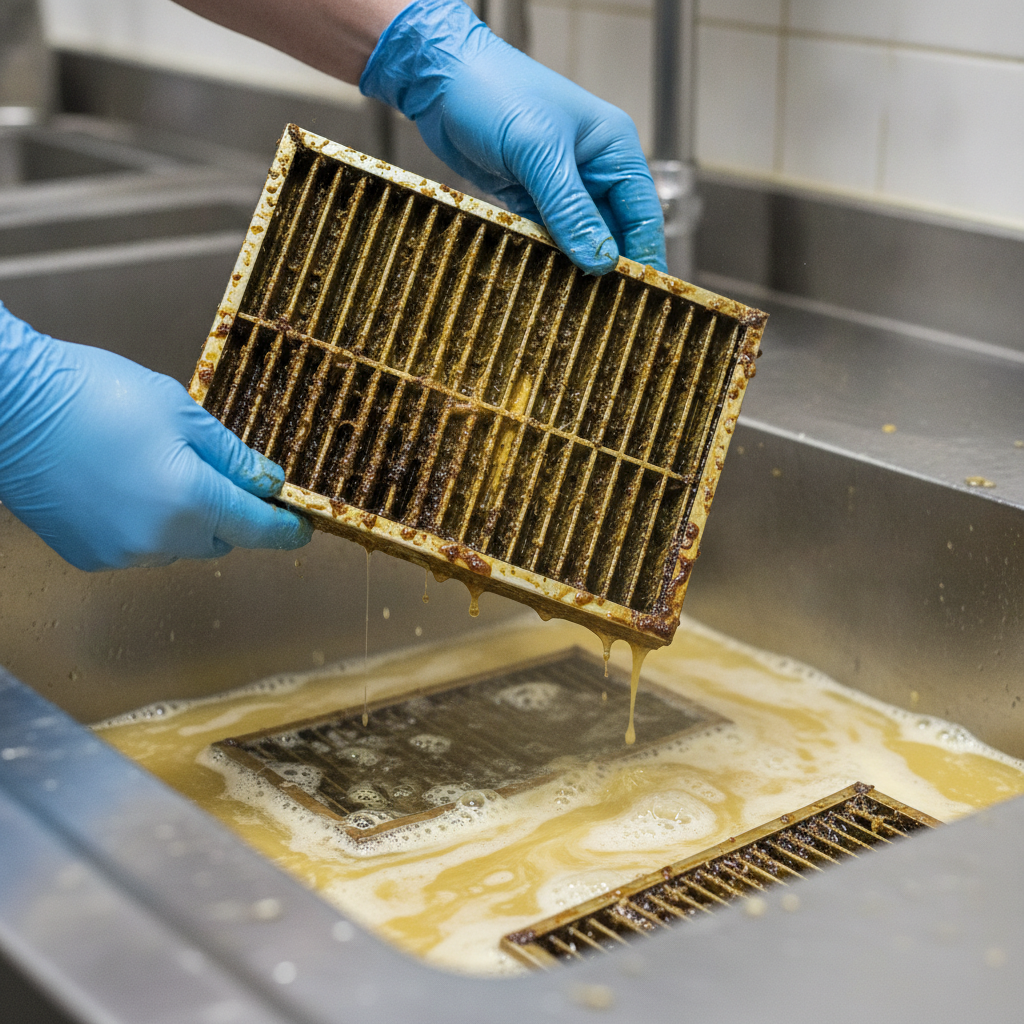
- Baffle filter service: Hot-soak and spray rinse—or swap with cleaned spares via our filter exchange program.
- Duct cleaning: Accessible vertical and horizontal runs scraped and rinsed to expose clean, reflective metal where reachable.
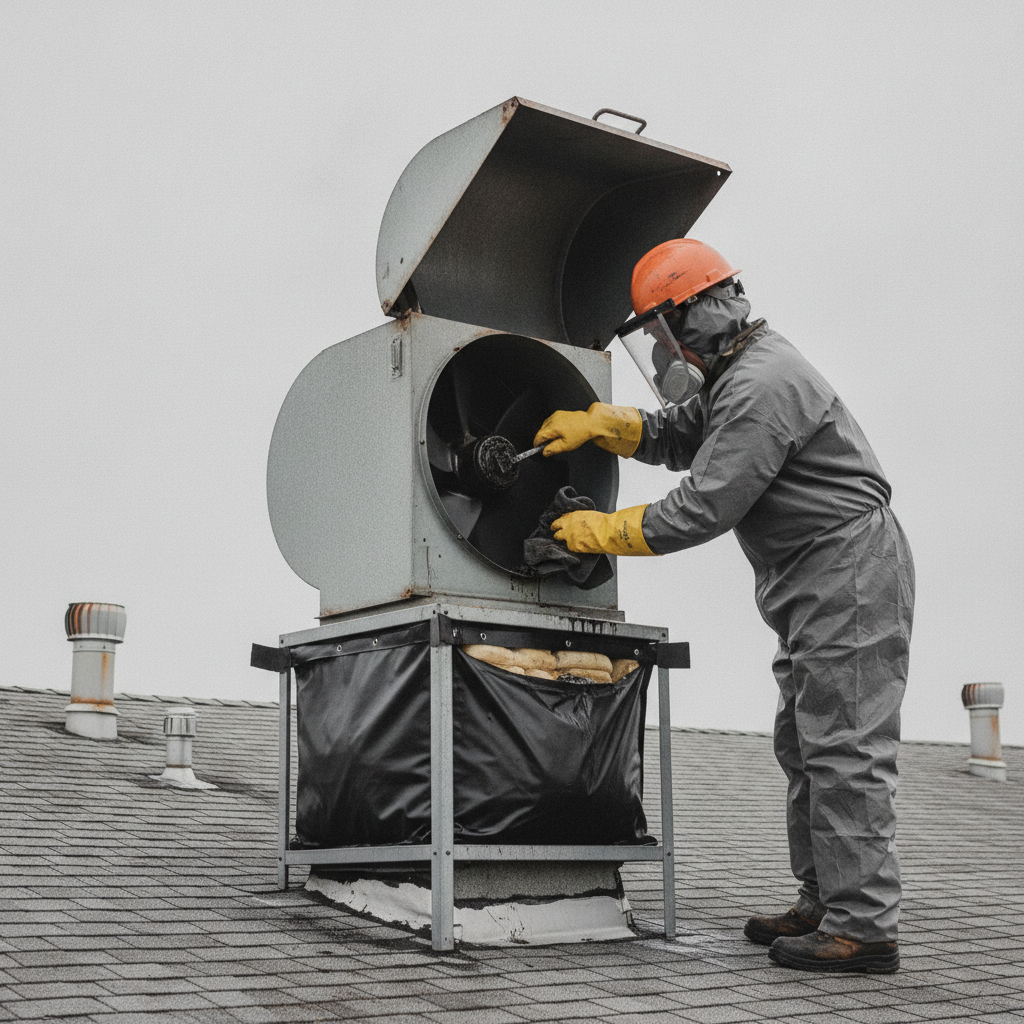
- Rooftop fan cleaning: Hinge kit opened, blades and housing scraped and wiped; grease containment checked so there’s no rooftop runoff.
- Adjacent surfaces: Splash areas and floors around the line are wiped and mopped so your opening crew isn’t stepping into residue.
- Inspection & photos: Clear before/after images and notes on any items that need follow-up (for example, a loose fan belt).
In our experience, you’ll hear a high, uneven whine from a worn fan belt before it snaps. We flag that during the visit so you can schedule a fan belt replacement instead of risking a surprise shutdown.
Step-by-Step: How Robinhood Cleaners Performs a Full Exhaust System Clean
We stage the line, protect equipment, degrease from hood to rooftop fan, and finish with a clean reset. Seven predictable steps keep crews safe, deliver bare-metal results where accessible, and give you photos and a dated sticker for compliance.
All Over Ontario scheduling insight
We book overnight or early-morning windows across All Over Ontario so breakfast and lunch service stay on schedule. Multi-site groups align midweek lulls to minimize manager juggling.
- Prep and protect: Cover cooking equipment, isolate electrical where needed, and set floor protection and containment.
- Remove and service filters: Pull baffles for hot-soak and high‑pressure rinse, or swap with cleaned spares from our filter cleaning & exchange program.
- Degrease the hood and plenum: Apply food-safe degreaser, scrape heavy buildup, and rinse until stainless shows a uniform sheen.
- Clean duct runs: Mechanically scrape and rinse accessible vertical and horizontal ducts with controlled runoff.
- Service rooftop fan: Open the hinge kit, clean blades and housing, verify grease containment, and check belt condition and tension.
- Reset and polish: Reinstall filters, wipe surrounding stainless, mop floors, and remove containment.
- Document and tag: Capture pre/post photos, note maintenance items, and place the service sticker for your logs.
Want everything in one window? Bundle hood, ducts, fan, filters, and grease trap with our commercial exhaust cleaning team. We coordinate around your rush windows in All Over Ontario.
NFPA 96 Compliance — What Gets Documented and Why It Matters
Compliance is about frequency, access safety, and proof. Inspectors and insurers look for dated stickers, photo evidence, and safe access hardware on fans. We provide a simple paper trail so your audit or renewal meeting is straightforward.
We include date of service, technician credentials, areas cleaned, and before/after photos. A dated service sticker goes on the hood; we also store a digital copy so managers can retrieve proof quickly. For a deeper dive into certified methods and inspection readiness, see our Ontario hood cleaning service overview and this context on exhaust cleaning services near you.
| Item | What we verify | Proof kept |
|---|---|---|
| Hood & plenum | Grease removed; seams clean | Pre/post photos; sticker |
| Ducts | Accessible runs to clean metal | Photos; technician notes |
| Rooftop fan | Blades, housing, and belt check | Photos; maintenance note if needed |
| Filters | Cleaned or exchanged | Work order entry |
| Grease containment | Pads present; no overflow | Photo; refill note |
From our crews’ vantage point, the biggest avoidable citation is a rooftop fan without a hinge kit. It makes proper cleaning risky and incomplete. We call that out and propose a safe-access fix.
How Often Each Component Needs Service (Hood, Duct, Fan, Filters, Grease Trap)
Our stance: fryer‑heavy quick‑service kitchens should plan quarterly hood and duct cleaning as a baseline; fine‑dining or light‑duty lines can stretch to semiannual with close monitoring. Filters cycle weekly to monthly, and grease traps follow a set pumping cadence.
- Hoods and ducts: Quarterly for QSR and fryer‑heavy menus; semiannual for moderate use; reassess after your first cycle based on buildup and photos.
- Rooftop fans: Match the hood/duct cadence; check belts and grease containment each visit to prevent surprise outages.
- Baffle filters: Clean or exchange weekly to monthly. Heavy frying warrants more frequent swaps.
- Grease traps: Keep on a fixed pumping schedule to avoid odors and backups; bundling with exhaust service saves downtime.
Keep our exhaust cleaning checklist handy for manager handoffs. If airflow or smoke capture feels weak, our vent cleaning guide outlines practical fixes you can request during your next visit.
What to Ask Any Exhaust Cleaning Company Before They Start
Ask for credentials, insurance, safe access practices, and photo proof. Clarify filter handling, runoff containment, and whether they document maintenance items like loose belts. Direct questions prevent missed areas, slippery floors, and schedule overrun.
- Are your technicians trained for commercial hood, duct, and fan cleaning with photo documentation?
- Do you carry WSIB insurance and use hinge kits and grease containment for safe rooftop access?
- Will you hot‑soak or exchange baffle filters the same night?
- How do you contain runoff and leave the line clean and ready for opening crew?
- Do you tag the hood, provide a concise report, and flag items like fan belt replacement?
For managers comparing options, this plain‑language explainer on ventilation optimization helps you frame service requests that actually improve capture and comfort.
Local Tip: Scheduling Around Your Kitchen’s Busiest Hours
Book cleaning during your natural slow periods—late night, early morning, or midweek. Combine exhaust and grease‑trap work to slash downtime. Our All Over Ontario crews coordinate timing to your breakfast, lunch, and dinner rush so you reopen on schedule.
We plan around deliveries, prep cycles, and closing times. One coordinated visit means a predictable shutdown and a smooth reopen. Multi‑site teams across All Over Ontario can stack visits week by week so managers aren’t spread thin.
Local considerations for All Over Ontario
- Choose overnight or early‑morning windows to avoid breakfast and lunch delays.
- Bundle exhaust cleaning with grease‑trap service during the same window to reduce closures.
- Adjust intervals seasonally; patio volume and fryer specials elevate grease load quickly.
FAQ
These concise answers reflect what Ontario operators ask us most. If you need a tailored plan, our team can align service frequency and documentation to your inspection schedule.
How long does a full exhaust cleaning visit take?
Most single‑line restaurants book a single overnight window. Duration varies by duct length, grease load, rooftop access, and whether you add grease‑trap work. We finish with a clean reset so your opening crew can start on time.
Do you clean to bare metal everywhere?
Where access is safe and practical, we remove grease to clean metal. Some hidden sections may need additional access panels. We document conditions with photos so you can see exactly what was completed and what may need modification.
Can you swap my filters instead of soaking them?
Yes. Our filter cleaning and exchange program brings cleaned spares sized for your hood. We install the clean set and take the dirty baffles for off‑site service to keep your dish area clear.
Will you check our rooftop fan belt?
During the visit we visually check the fan belt, hinge, and grease containment. If we see wear or slack, we document it and can schedule a dedicated belt replacement so you avoid downtime.
Key takeaways
- One coordinated visit cuts downtime and delivers the records inspectors expect.
- Quarterly hood/duct service is the baseline for fryer‑heavy QSRs; fine dining can go semiannual with monitoring.
- Photo documentation, safe access hardware, and filter programs separate reliable providers from risky ones.
Ready to coordinate service? Book a single-window visit in All Over Ontario. We’ll align timing to your rush periods and hand you clear documentation for your next inspection.