Grease, open flames, and a fast-paced line make commercial kitchens uniquely vulnerable to fire. If you operate a restaurant, hotel, food court, or institutional galley anywhere in Ontario, understanding fire safety standards commercial kitchens Ontario is mission-critical. This complete guide translates complex codes into a practical, step-by-step program you can implement today—backed by Robinhood Cleaners’ NFPA 96–aligned services across All Over Ontario.
Quick Answer
Ontario commercial kitchen fire safety relies on code-compliant exhaust systems, routine NFPA 96 hood/duct cleaning, functional suppression, and documentation. Robinhood Cleaners serves All Over Ontario at All Over Ontario with NFPA 96–aligned kitchen exhaust cleaning, filter exchange, duct and fan service, and 24/7 scheduling to minimize downtime—all aligned to fire safety standards commercial kitchens Ontario.
Quick Summary
- What you’ll learn: How Ontario’s Fire Code, NFPA 96, and local enforcement interlock; cleaning and inspection frequencies; what inspectors check; and how to pass every time.
- Why it matters: Fewer fires, safer staff, smoother insurance renewals, better air quality, and less downtime.
- Who it’s for: Restaurants, QSR chains, hotels, caterers, food courts, and institutional kitchens throughout Southern Ontario.
- How to use this guide: Skim the checklists, assign owners, follow the timelines, and document everything.
Fire safety standards commercial kitchens Ontario: What Inspectors Enforce
In practice, “fire safety standards commercial kitchens Ontario” means maintaining commercial cooking equipment and life safety systems to recognized standards so they perform when it counts. The Ontario Fire Code requires that fire protection systems and equipment be maintained in operable condition. NFPA 96 provides widely adopted minimum requirements for design, installation, operation, inspection, and maintenance of grease exhaust systems. Inspectors and insurers look for alignment with these expectations.
- Exhaust hood, duct, and fan: Capture and remove grease-laden vapors; must be cleaned to bare metal at defined intervals.
- Baffle filters (UL-listed): Slow flame spread; require routine removal, cleaning, or professional exchange.
- Fire suppression (wet chemical): K-Class systems with correctly aimed nozzles; semiannual inspection by licensed techs.
- Make-up air and balance: Proper capture and comfort; prevents smoke pushback.
- Rooftop grease containment: Required when discharge is to roof; prevents hazards and building damage.
- Access panels and hinge kits: Enable full-duct and fan cleaning; missing hardware is a compliance risk.
- Documentation: Service stickers, dated reports, and photo logs—proof you’re maintaining to standard.
Here’s the thing: when each of these elements is maintained correctly, ignition sources meet less fuel, ventilation works better, and audits are quick. That’s why Robinhood Cleaners centers services on NFPA 96 compliance and documentation—not just “cosmetic” shine.
What Are Fire Safety Standards for Commercial Kitchens in Ontario?
Let’s unpack the moving parts behind that phrase. Ontario’s Fire Code mandates performance—systems must work—while NFPA 96 provides the “how.” Local Authorities Having Jurisdiction (AHJs), property managers, and insurers align around NFPA 96 because it’s practical and proven.
Core standards and references
- Ontario Fire Code expectations: Maintain fire protection systems and cooking exhaust in operable condition; keep inspection and maintenance records.
- NFPA 96 framework: Minimum requirements for design, installation, operation, inspection, and maintenance of commercial cooking ventilation.
- UL/ULC listings: Baffle filters and suppression equipment must be listed for intended use and kept serviceable.
Who enforces and how
- Local fire departments (AHJ): Conduct inspections; verify documentation; can require corrective actions.
- Insurers: Expect NFPA 96–aligned cleaning and records; may adjust coverage based on compliance posture.
- Landlords/property managers: Often set minimum service frequencies and proof-of-service requirements in leases.
Bottom line: Fire safety standards commercial kitchens Ontario aren’t theoretical—they drive real inspection outcomes, insurance confidence, and operational resilience.
Why Fire Safety Standards Matter (Beyond “Because They’re Required”)
- Risk reduction you can measure: Grease removed to bare metal deprives fires of fuel; suppression stays unobstructed.
- Staff safety and comfort: Balanced airflow cuts smoke and heat stress, improving retention and morale.
- Operational uptime: Healthy fans and clean ducts prevent smoke pushback, emergency shutdowns, and customer complaints.
- Inspection speed: Dated stickers, clear photos, and tidy reports help inspectors confirm compliance fast.
- Insurance alignment: WSIB-insured, NFPA 96–trained providers make audits and renewals predictable.
For Robinhood Cleaners, this is everyday work: hood, duct, and fan cleaning; filter cleaning and exchange; fan belt replacement; grease trap cleaning; and ventilation system maintenance that keeps your kitchen safe and compliant.
How Compliance Works Day-to-Day
Compliance isn’t a one-off project—it’s a rhythm of tasks spread across days, weeks, and months. Assign owners, set reminders, and keep a simple paper trail.
Daily and weekly routines (your team)
- Degrease exterior hood surfaces daily: Prevents residues from migrating into filters and ducts.
- Clean or exchange baffle filters weekly: Twice per week for heavy fry lines; consider a professional exchange to avoid dish-area bottlenecks.
- Check suppression nozzles: Caps on, aim clear; never hang utensils on nozzle piping.
- Verify access to pull stations and K-Class extinguishers: Tags current and visible.
Quarterly to semiannual (professional cadence)
- Hood/duct/fan cleaning to bare metal: Frequency depends on volume and fuel type per NFPA 96.
- Rooftop fan service: Inspect hinge kits, replace worn belts, check bearings, and verify grease containment.
- Photo-documented reporting: Before/after images, service stickers, and a written report that matches what’s on the roof and above the ceiling.
- Filter exchange program: Keeps UL-listed baffles in rotation and your team focused on service.
Annual and semiannual (licensed inspections)
- Fire suppression inspection (licensed): Semiannual nozzle and function checks by a qualified technician.
- Full-duct access verification: Panels present and serviceable; add where needed to reach every surface.
- Ventilation balance check: Confirm make-up air and exhaust are tuned for capture and comfort.
Visual Proof: What Inspectors Expect
Show, don’t tell. Clear photos and labels often speed up inspections more than any conversation.
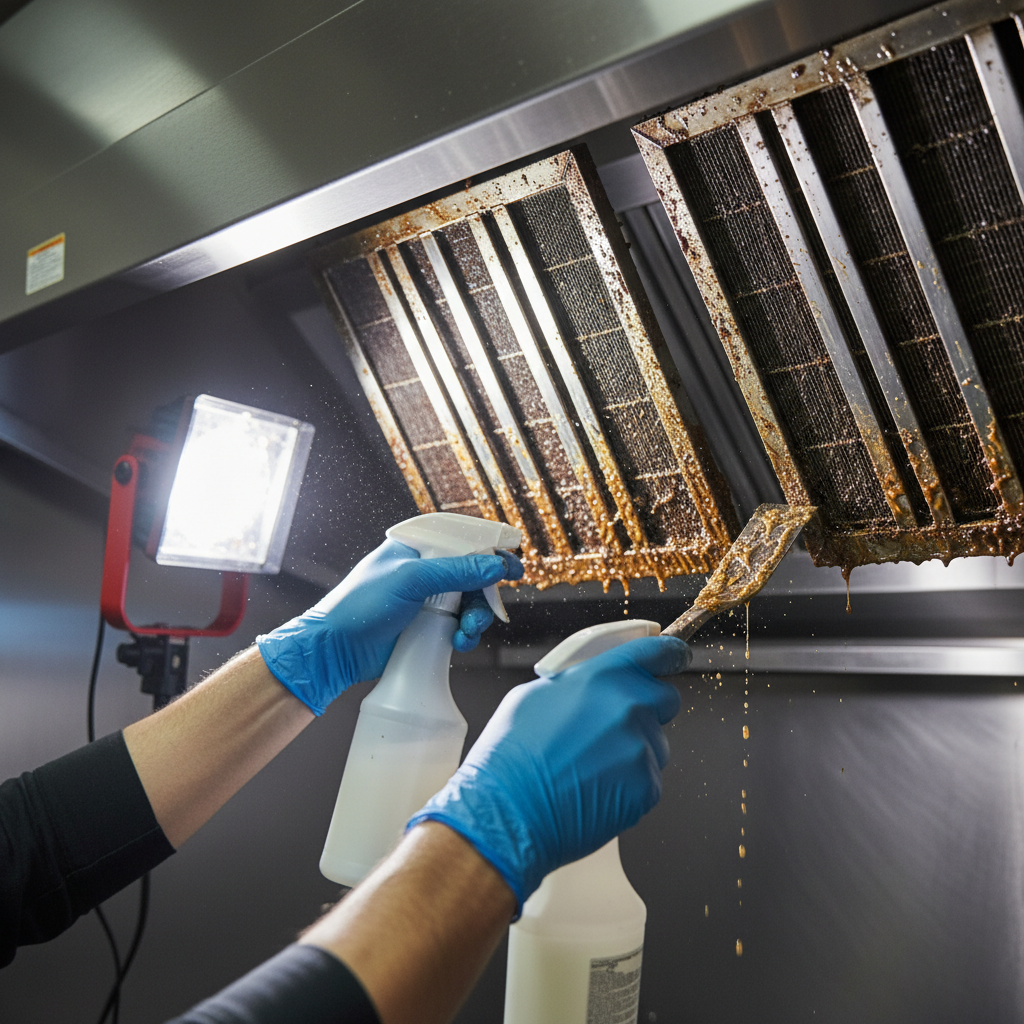
- Before/after clarity: Bare metal visible in hoods, ducts, and fan housings.
- Current labels: Service sticker with date and provider near the hood or control panel.
- Roof condition: Hinge kit installed, belts tensioned, and grease containment working.
Frequencies and Ownership: Practical Table
| Kitchen profile | Typical NFPA 96 cleaning cadence | In-house tasks | Service partner tasks |
|---|---|---|---|
| High-volume, solid fuel, late hours | Monthly to quarterly | Daily exterior degreasing; twice-weekly filter cleaning/exchange | Hood/duct/fan cleaning; belt checks; rooftop grease containment |
| Standard grill/fry line (QSR) | Quarterly | Nightly wipe-downs; weekly filter maintenance | System cleaning to bare metal; photos; labels |
| Moderate-volume, mixed menu | Semiannual | Weekly filter cleaning; nozzle cap checks | Semiannual cleaning; rooftop inspection |
| Low-volume or seasonal | Annual | Opening/closing checklists | Annual cleaning + pre-season tune |
Not sure where your kitchen lands? Our cleaning schedule guidance explains how volume, fuel type, and menu shape frequency—so you can right-size cadence without guesswork.
Standards, Methods, and Approaches
NFPA 96–aligned cleaning methodology
- Matched chemistry: Degreasers selected to your soil load reduce dwell time and improve bare-metal outcomes.
- Controlled rinsing: Heated, high-pressure rinse flushes ducts without spreading residues into dining or onto the roof.
- Access-first mindset: Install access panels and hinge kits so every surface is reachable and service is safer.
- Verification: White-glove swipe tests, photos, labels, and signed reports close the loop.
Operational tactics that lower fire risk
- Filter exchange services: Keep UL-listed baffles consistently clean without overloading your dish area.
- Fan belt replacement: Replace on schedule to prevent smoke pushback mid-rush.
- Grease trap cleaning: A set cadence improves air quality and reduces odors that draw complaints.
- Ventilation tuning: Optimize capture at the hood so less grease ever enters the ducts.
These aren’t “nice-to-haves.” They are core to meeting fire safety standards commercial kitchens Ontario—because they remove fuel, keep capture strong, and document the work.
Case Snapshots from Southern Ontario
- QSR on a highway rest stop: Smoke at peak traced to a slipping fan belt. Overnight belt replacement and hinge service during a quarterly cleaning restored capture before breakfast.
- Hotel kitchen near a sports venue: Filters saturated every five days during tournament season. Shifted to a filter exchange program and quarterly duct cleaning; inspector praised documentation and consistency.
- University commissary: Shared riser lacked access panels. Panels installed and full-duct cleaned to bare metal; insurance audit accepted without notes.
- Mall food court: Rooftop grease containment overflowed after a festival weekend. Containment upgraded and cadence tightened before the next event surge.
Mid-Article CTA: Free Compliance Check
Want a quick read on your current risk? Request a no-pressure walk-through focused on NFPA 96 alignment, access hardware, rooftop conditions, and filter cadence. We work 24/7 across Southern Ontario so you don’t lose service hours.
Tools and Resources You Can Rely On
- Cleaning logs and photo reports: Keep three years of records for inspectors and insurers.
- UL-listed baffle filters: Maintain or exchange on a set schedule; see our certified hood cleaning overview.
- Hinge kits and access panels: Small hardware that enables full cleaning and safe fan service.
- Grease containment systems: Protect roofs and reduce slip/fire hazards.
- WSIB-insured, NFPA 96–trained crews: Protect your team and your business with documented compliance.

Best Practices Checklist (Share with Your Team)
- Post your most recent hood cleaning certificate where inspectors can see it.
- Match cleaning cadence to volume; when in doubt, tighten frequency, not loosen it.
- Replace worn fan belts proactively—don’t wait for smoke in the dining room.
- Keep nozzle caps in place; never hang tools or towels on suppression piping.
- Document filter swaps and weekly cleanings in a simple log.
- Ensure every duct section is reachable via access panels; add panels where missing.
- Photograph roof conditions after each service—containment pads, hinges, and belt condition.
- Review capture at the hood after menu changes; tune ventilation if needed.
For deeper context on how exhaust cleaning prevents fires, see our overview of exhaust duct cleaning in Ontario, and reinforce day-to-day habits with this breakdown of hood cleaning frequency.
Inspector’s View: What Triggers a Fail
- No recent service sticker or mismatched dates versus your report binder.
- Grease drips on the roof, missing hinge kits, or squealing belts on start-up.
- Filters caked with grease or non-UL substitute mesh.
- Suppression nozzle obstructions or missing caps.
- Access panels painted shut or missing entirely.
Address these early. A short overnight service can fix most red flags before they become violations.
Ontario Nuances to Plan Around
- Seasonal weather: Ice on rooftops complicates fan access; schedule belt checks and hinge inspections before deep winter.
- Event surges: Sports, festivals, and holidays spike volume; consider interim filter exchanges to keep capture strong.
- Shared infrastructure: Multi-tenant ducts demand coordination and whole-riser cleaning for true compliance.
- Travel windows: Along the Highway 401 corridor, late-night or early-morning appointments reduce impact on service and traffic.
Process: Your 30/90/180-Day Compliance Roadmap
- Day 0–30: Audit hoods, ducts, fans, filters, access panels, and suppression tags; book NFPA 96–aligned cleaning; start a photo log and binder.
- Day 31–90: Confirm filter exchange cadence; verify rooftop grease containment; replace worn belts; install missing access hardware.
- Day 91–180: Perform the next scheduled cleaning (quarterly/semiannual); review inspection notes; adjust cadence for seasonality and volume shifts.
Need help mapping cadence to your operation? Our team details NFPA 96 frequencies and inspector expectations in this fire prevention overview and our deeper dive into grease buildup risks.
How Robinhood Cleaners Fits Your Compliance Strategy
- Kitchen Exhaust Cleaning: Full-system degreasing to bare metal with photo reports and labels.
- Filter Cleaning & Exchange: Keep UL-listed baffles in rotation without tying up dish space.
- Fan Belt Replacement: Prevent smoke events and maintain capture during peak service.
- Duct Cleaning & Ventilation Maintenance: Improve capture efficiency and air quality.
- Grease Trap Cleaning: Reduce odors and secondary fire risks around cooklines.
- 24/7 Scheduling: Service windows tailored to your rush periods across Southern Ontario.
- WSIB Insured & NFPA 96–Trained: Documentation that satisfies inspectors and insurers.
This integrated approach is designed to meet fire safety standards commercial kitchens Ontario with less friction and fewer surprises.
Local Tips
- Tip 1: If your kitchen is along the Highway 401 corridor, schedule hood cleanings after the late dinner rush; our 24/7 crews work around peak hours to keep the line moving.
- Tip 2: Winter roads and early sunsets in Southern Ontario make rooftop fan access tricky—plan hinge inspections and grease containment checks before the first freeze.
- Tip 3: Mall food court ventilation often ties multiple tenants into shared duct runs; coordinate service windows with property management to ensure full-duct access and proper post-clean verification.
IMPORTANT: These tips reflect conditions across All Over Ontario and the wider Southern Ontario region we service daily.
FAQs
How often should a commercial kitchen in Ontario clean hoods and ducts?
Match frequency to your volume and fuel type. High-volume or solid-fuel kitchens often need monthly to quarterly service. Most grill/fry operations run quarterly. Moderate-volume kitchens are typically semiannual, and low-volume or seasonal kitchens can be annual. Always align with NFPA 96 and AHJ guidance.
Does NFPA 96 really apply to my operation?
Insurers, landlords, and local fire officials in Ontario typically expect NFPA 96–aligned cleaning and documentation. Even if your local code references it indirectly, using NFPA 96 as your playbook keeps you aligned with industry practice and inspector expectations.
What documentation should I keep for inspections and insurance?
Maintain cleaning certificates, dated service stickers, before/after photos, written reports, and notes on access panels, hinge kits, and grease containment. Keep at least three years of records so audits move quickly.
Can we clean baffle filters in-house instead of exchanging them?
Yes, if they’re UL-listed and returned to service fully degreased and undamaged. Many Ontario kitchens prefer an exchange program to keep the dish area clear and ensure filters are ready on schedule.
What’s the fastest way to fix smoke pushback during dinner rush?
Check for a slipped/broken fan belt, saturated filters, or blocked make-up air. If belts are worn, replace them; if filters are saturated, swap them. If problems persist, schedule a ventilation assessment.
Related Articles (Topics We Can Help With)
- NFPA 96 cleaning versus “cosmetic” hood wipe-downs—why bare metal matters.
- How rooftop grease containment protects your building and brand.
- Designing a filter exchange cadence for seasonal menus.
- Access panels and hinge kits: small parts that unlock full compliance.
Key Takeaways
- Build your schedule around NFPA 96 and AHJ expectations, then document everything with photos and labels.
- Treat filters, belts, and rooftop hardware as compliance-critical—small parts with big impact.
- Use logs and reports to make inspections effortless and insurance renewals routine.
- Partner with a WSIB-insured, NFPA 96–trained team to reduce fire risk and downtime.
Ready to streamline compliance across All Over Ontario? Our hood, duct, and fan cleaning; filter exchange; belt replacement; and ventilation maintenance services are built for restaurants, hotels, caterers, food courts, and institutional kitchens.
Final CTA: Book a discovery session in All Over Ontario to align your NFPA 96 cleaning cadence, filter exchange program, and rooftop maintenance with your true volume and seasonality.