Grease moves fast in a busy kitchen. It coats grill plates, hides in corners, and quietly raises your fire risk hour by hour. If your team’s scraping routine isn’t removing that stubborn film, you don’t just lose heat transfer—you invite flare-ups, off-flavors, smoke, and failed inspections. This complete guide explains commercial grill cleaning and degreasing in practical steps you can apply today—built for Ontario food service teams and aligned with NFPA 96 and commercial kitchen safety best practices.
At a Glance
- What you’ll learn: A step-by-step commercial grill cleaning degreasing process, pro-grade tools, safety prerequisites, and an easy troubleshooting workflow.
- Why it matters: Better heat transfer, consistent sears, safer kitchens, happier inspectors, and longer-lasting equipment.
- Who this is for: Restaurants, QSRs, hotel kitchens, food courts, caterers, and institutional kitchens across Ontario.
- By whom: Robinhood Cleaners—NFPA 96–certified, WSIB insured, serving all of Ontario with quick service in Southern Ontario.
Quick Summary
- Primary focus: Commercial grill cleaning degreasing for flat-tops and charbroilers with a repeatable daily, weekly, and periodic deep-clean rhythm.
- Core outcome: Remove polymerized grease safely, restore even heat, reduce smoke, and maintain compliance documentation.
- Tools you’ll need: Grill scrapers, pumice blocks, foaming food-safe degreasers, non-scratch pads, oil absorbent pads, and PPE.
- Don’t skip: Prerequisites (lockout/tagout-lite, cool-down stages, chemical dwell time, rinsing protocol, and disposal steps).
- Bonus: Troubleshooting matrix, 11 real-world scenarios, and pro tips tailored to Ontario kitchens.
Quick Answer
For kitchens in All Over Ontario at All Over Ontario, commercial grill cleaning degreasing means scraping hot plates, applying a food-safe degreaser with proper dwell time, agitating residue, then rinsing and neutralizing to NFPA 96 standards. Robinhood Cleaners integrates this process with hood, duct, and exhaust fan maintenance so your line cooks get better sears and inspectors see safe, compliant equipment.
Local Tips
- Tip 1: If your location sits near major Southern Ontario corridors (e.g., Highway 401/403), schedule deep cleans after the dinner rush to avoid delivery congestion and keep back doors clear for ventilation.
- Tip 2: Winter doors stay shut—so plan extra ventilation during degreasing to prevent lingering vapors. In summer patio season, coordinate with the hood schedule to minimize smoke migration.
- Tip 3: Ontario inspectors expect NFPA 96 alignment. Pair your grill deep clean with a documented hood and duct service to show a single, coherent safety program.
IMPORTANT: Each site has unique airflow and menu variables—Robinhood Cleaners adapts the protocol to your equipment lineup and hours.
Table of Contents
- What Is Commercial Grill Cleaning & Degreasing?
- Why It Matters (Safety, Food Quality, Compliance)
- How It Works: Step-by-Step Process
- Prerequisites Before You Degrease
- Methods, Chemicals, and Approaches
- Best Practices from NFPA 96–Aligned Pros
- Tools, PPE, and Resources Checklist
- Case Scenarios: 11 Real-World Examples
- Troubleshooting: Smoke, Smells, Sticky Film & More
- FAQ
- Conclusion & Next Steps
- Related Articles
What Is Commercial Grill Cleaning & Degreasing?
Commercial grill cleaning and degreasing is the systematic removal of food residues, carbonized oils, and polymerized grease from flat-tops, charbroilers, and griddles. It restores clean metal, even heat, and safe surfaces that meet food-contact requirements.
- Targets: Burnt-on proteins, sugars, and oxidized fats that create uneven hot spots and smoke.
- Surfaces: Steel flat-tops, chrome-plated griddles, charbroiler grates, drip trays, splash guards, and grease troughs.
- Scope: Daily scraping; scheduled foaming degreaser cycles; periodic disassembly for deep carbon removal.
- Integration: Works best when paired with hood, duct, and exhaust fan cleaning to keep airflow stable and odors down.
Robinhood Cleaners treats grills as part of the whole exhaust ecosystem. When we degrease your line, we also look upstream to the hood baffles and downstream to ducts and the rooftop fan to reduce fire hazards across the entire chain.
Why It Matters (Safety, Food Quality, Compliance)
- Fire risk reduction: Grease films ignite quickly. Removing buildup lowers flashover risk and supports NFPA 96 compliance.
- Food quality: Clean metal sears evenly and prevents rancid notes from old oil residues.
- Less smoke: Degreased grills and clear exhaust pathways reduce haze and keep front-of-house air comfortable.
- Equipment longevity: Carbon layers insulate surfaces and strain burners. Clean plates last longer and run steadier.
- Inspection readiness: Consistent documentation and visible cleanliness help you pass without drama.
Ontario kitchens run hard—lunch to late night. A consistent degreasing rhythm makes your sear predictable, your lines safer, and your paperwork easy to defend during visits. That’s why we align grill work with pro hood cleaning standards and timed cycles for ducts and fans.
How Commercial Grill Cleaning Degreasing Works: Step-by-Step
The following procedure balances speed, safety, and food-contact compliance. Adapt the frequency based on volume and menu mix (burgers and marinated proteins deposit more residue).
- Cool-down to safe range: Bring the grill to warm-but-not-scorching (around 140–180°F) so degreasers can work without flashing off.
- Dry scrape: Use a sturdy scraper to remove loose carbon, collecting debris in the trough. Empty trays carefully into approved waste.
- Apply food-safe degreaser: Use a foaming, non-caustic degreaser suitable for food-contact surfaces. Cover corners, splash guards, and grease troughs.
- Dwell time: Let chemistry do the heavy lifting. Typical dwell: 3–7 minutes depending on soil load and product label.
- Agitate: Scrub with a non-scratch pad or grill brick. Focus on polymerized rings where proteins and sugars baked on.
- Rinse/neutralize: Wipe with hot water and clean towels until no residue remains. Follow product instructions for neutralization if required.
- Detail edges and accessories: Clean drip pans, gratings, and undershelves. Degrease knobs and handles.
- Re-season (if applicable): For steel griddles, apply a light, high-smoke-point oil film to prevent rust and stick.
- Document: Record date/time, staff initials, and observations. Attach to your NFPA 96–aligned maintenance binder.

Daily, Weekly, and Periodic Rhythm
- Daily: End-of-shift scrape, spot degrease, rinse, and wipe-down; empty trays.
- Weekly: Full-plate foaming degrease with dwell; remove and soak removable parts; check igniters and pilot orifices.
- Periodic deep clean: Disassemble grates, degrease undersides and heat deflectors, and coordinate with hood and duct cleaning for airflow integrity.
When grill degreasing syncs with your exhaust schedule, smoke drops and staff comfort improves. We often pair this work with exhaust duct cleaning for fire prevention to capture long-term safety gains.
Prerequisites Before You Degrease (Don’t Skip These)
These steps keep teams safe and chemicals effective.
- PPE: Heat-resistant gloves, eye protection, aprons, and closed-toe, slip-resistant footwear.
- Airflow check: Verify hood is running, baffles seated, and makeup air is balanced. Poor airflow traps vapors.
- Heat stage: Aim for warm metal. Too hot and the degreaser flashes; too cold and soils resist.
- Chemical selection: Use food-contact-safe degreasers designed for grills; avoid products that etch chrome-plated griddles.
- Label direction: Follow dwell and rinse instructions. Residual chemistry can affect food quality.
- Waste capture: Line troughs with absorbent pads and never pour oily wastewater into floor drains without your approved disposal protocol.
- Documentation: Keep SDS sheets available and log cleaning in your maintenance records.
Robinhood Cleaners brings NFPA 96–certified processes, WSIB-insured crews, and a full kit of compliant chemistries so your team can focus on service while we manage the risk and recordkeeping.
Methods, Chemicals, and Approaches
Different soils and surfaces respond best to specific approaches. Use this quick comparison to choose wisely.
| Method | Best For | Typical Dwell/Action | Notes |
|---|---|---|---|
| Foaming food-safe degreaser | General greasy films on flat-tops | 3–7 minutes dwell, then scrub | Great coverage; verify rinse/neutralize steps. |
| Grill brick/pumice | Stubborn polymerized carbon | Manual abrasion with oil or water | Avoid on chrome-plated griddles; test small area. |
| Heat-assisted scrape | End-of-shift rapid clears | While warm; no chemicals | Follow up with periodic chemical degrease. |
| Soak tanks for grates | Charbroiler grates and deflectors | 20–60 minutes, then rinse | Use appropriate dilution; protect soft metals. |
| Steam rinse assist | Flushing loosened residue | Short bursts; immediate wipe | Mind condensation and slip hazards. |
- Chrome caution: Chrome griddles need pH-balanced products and soft pads. Skip abrasives to avoid micro-scratches.
- Seasoning strategy: After deep cleans on steel plates, re-season with a thin oil film to restore nonstick performance.
- Menu-driven frequency: Heavy burger, bacon, and teriyaki lines need tighter cycles than light breakfast menus.
Best Practices from NFPA 96–Aligned Pros
- Sync with the hood: Degrease when the exhaust system is clean and functioning. You’ll trap fewer vapors and smoke.
- Document like an inspector: Date, time, initials, observed issues, and corrective actions. Photos help.
- Edge-to-edge coverage: Don’t forget splash guards, grease troughs, undershelves, and control knobs.
- Rinse until towels stay clean: If you see film on a white towel, keep rinsing and neutralizing.
- Train for dwell: Most missed soil is a dwell-time problem. Let chemistry work before scrubbing.
- Pair with filter care: Dirty baffles recirculate vapors. Review filter care using our exhaust filter replacement guide.
- Plan seasonal airflow: Ontario winters demand more make-up air checks; keep doors closed and balance fans.
- Use food-contact chemistries: Ensure the label specifically permits food-contact surfaces and follow rinse protocols.
For high-volume sites, we align grill deep cleans with your NFPA 96 compliance calendar and hood/duct schedule so nothing slips through the cracks.
Tools, PPE, and Resources Checklist
- Scrapers: Wide-blade and corner scrapers with heat-resistant handles.
- Non-scratch pads: Food-contact safe; color-coded to prevent cross-use with non-food areas.
- Grill brick/pumice: For carbon rings on steel plates only.
- Foaming degreaser: Food-contact-safe, non-caustic formula.
- Absorbent pads: Line troughs to capture oily runoff.
- Microfiber towels: Lint-free, high-temp capable.
- Buckets/spray bottles: Labeled for dilution control.
- PPE: Heat-resistant gloves, eye protection, aprons.
- Lighting: Portable, UL-rated work lights for night cleans.
- Records binder/app: Log service, photos, and inspector notes.
Robinhood Cleaners supplies professional-grade chemicals and tools and can train your closers to hit daily targets between our scheduled deep cleans.
Case Scenarios: 11 Real-World Examples
- 1) Burger QSR in Southern Ontario: Daily scrape + weekly foam degrease cut smoke complaints 60% and stabilized burger temps.
- 2) Teriyaki concept, mall food court: Sugary marinades required longer dwell (7–10 minutes) and soft-pad agitation to avoid scratching chrome.
- 3) Hotel brunch line: Weekend spike created carbon rings; adding a mid-shift scrape prevented Monday morning catch-up cleans.
- 4) Steakhouse charbroiler: Soak-tanked grates biweekly; improved grill marks and reduced flare-ups during ribeye rush.
- 5) Campus kitchen: Alternated two steel plates—one in service, one deep-cleaned—keeping service continuous during finals week.
- 6) Breakfast diner: Bacon fat overload needed absorbent pads in the trough and more frequent tray changes.
- 7) Ghost kitchen hub: Coordinated grill work with hood filter swaps to keep multi-brand odors from crossing.
- 8) Pizza restaurant flat-top: Pumice on steel only; chrome deck nearby was protected with barriers to avoid accidental abrasion.
- 9) Catering commissary: Quarterly deep cleans paired with grease buildup prevention for hoods kept seasonal staff on track.
- 10) Pub with patio: Summer airflow shifts required extra makeup air checks; smoke issues eased after duct service.
- 11) Quick-service tacos: Added re-season step after weekly deep clean; tortillas stopped sticking and browning became even.
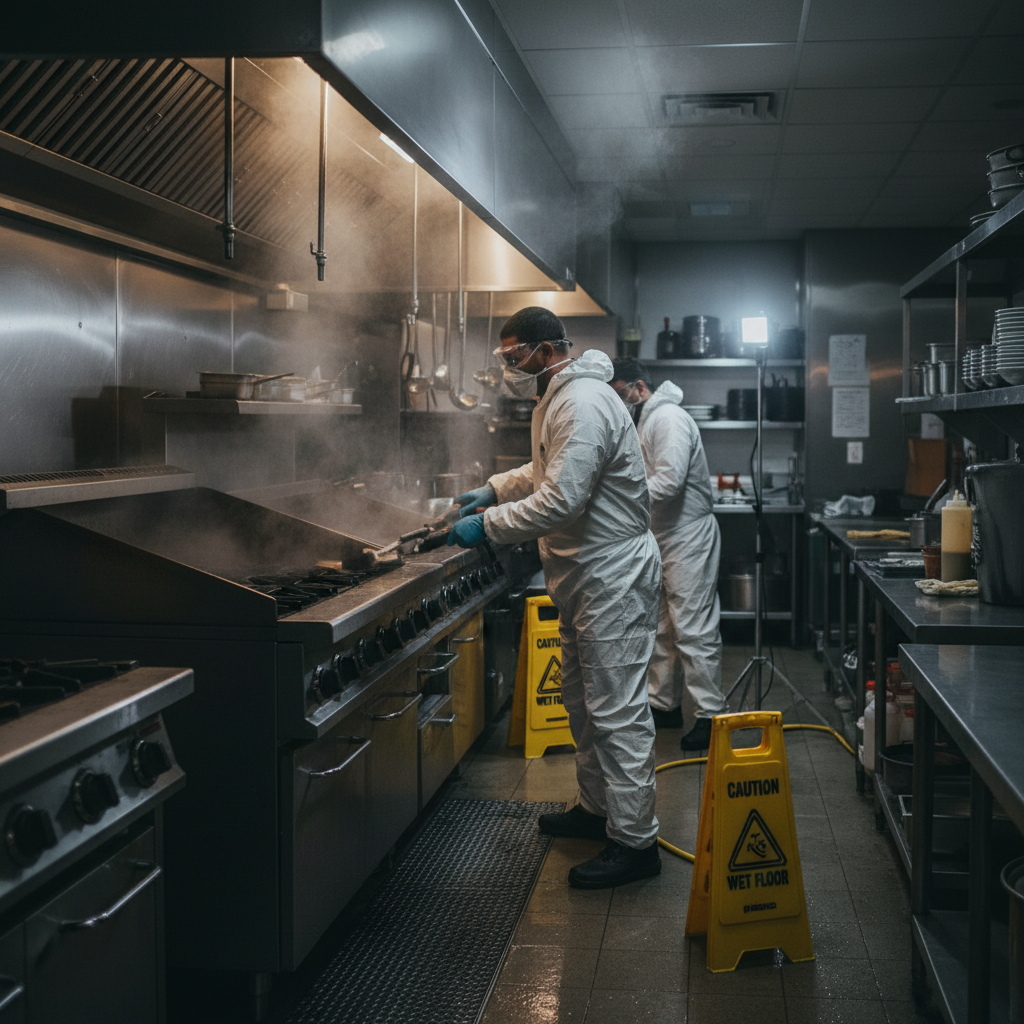
Troubleshooting: Smoke, Smells, Sticky Film & More
Persistent smoke after cleaning
- Likely causes: Residual film left on plate, saturated hood baffles, or restricted ducts.
- Fix: Repeat rinse/neutralize until towels wipe clean; inspect baffles; book duct service if smoke persists.
- Note: Cross-check with your last hood service—our duct cleaning guide explains airflow red flags.
Rancid or off-flavors
- Likely causes: Old oil film or degreaser residue.
- Fix: Deep degrease with correct dwell; thorough rinse/neutralize; re-season steel plates lightly.
Uneven heat or sticking
- Likely causes: Carbon build-up insulating spots or insufficient re-seasoning after deep clean.
- Fix: Target carbon rings with pumice on steel; avoid abrasives on chrome; re-season per SOP.
White haze on chrome
- Likely causes: Harsh chemicals or abrasive pads.
- Fix: Switch to chrome-safe products and non-scratch pads; stop abrasive tools immediately.
Grease runoff on floor
- Likely causes: Over-application or poor trough capture.
- Fix: Use absorbent pads and smaller application zones; deploy wet-floor signs and keep mopping tools ready.
FAQ
How often should we fully degrease our commercial grill?
Daily scraping with a weekly foaming degrease suits many Ontario kitchens. High-fat menus or heavy volumes may require twice-weekly deep cleans. Align with your hood and duct schedule to keep airflow efficient and inspectors satisfied.
What degreaser is safe for food-contact surfaces?
Choose a product labeled for food-contact surfaces and follow the rinse/neutralize directions exactly. Chrome-plated griddles need gentler, pH-balanced formulas and non-scratch pads to avoid micro-scratches and haze.
Can degreasing damage our grill?
Not when you match chemistry and tools to the surface. Avoid abrasive bricks on chrome, respect dwell times, and rinse thoroughly. On steel plates, re-season lightly after deep cleans to prevent rust and sticking.
How do grill cleans connect to NFPA 96?
Grease on cooking equipment contributes to hood and duct load. A strong grill-clean program reduces vaporized grease and helps your system meet NFPA 96. Pair line cleaning with documented hood and duct service for a complete safety story.
What if we have limited time between services?
Use a warm scrape, quick spot-degrease on trouble areas, and a tight weekly deep-clean window after the dinner rush. Robinhood Cleaners offers 24/7 scheduling across Ontario to fit your operation.
Conclusion & Next Steps
- Build a rhythm: Daily scrape, weekly foam degrease, periodic deep clean, and a documented log.
- Match tools to surfaces: Chrome needs gentle care; steel tolerates pumice—with light re-seasoning.
- Think system-wide: Grill work pairs with hoods, ducts, filters, and fans for real smoke reduction.
- Document for inspections: Keep SDS sheets, logs, and photos—make audits painless.
Need a hand? Robinhood Cleaners is NFPA 96–certified, WSIB insured, and available 24/7. We serve all of Ontario with quick service in Southern Ontario—coordinating grills, hoods, ducts, filters, exhaust fans, and grease traps into one safety-focused program.
Want a step-by-step on pairing grill degreasing with hood service? See our commercial hood cleaning guide and book a compliance walk-through with our team.
Key Takeaways
- Commercial grill cleaning degreasing protects food quality and lowers fire risk.
- Follow dwell, agitate, rinse/neutralize, and re-season (for steel) to close the loop.
- Integrate line cleans with hood, duct, and filter care for stable airflow and fewer odors.
- Train for dwell time and safe chemical handling; document every clean.
Related Articles
For a system-wide plan, pair this guide with our resources on airflow and filters. Start with duct cleaning for fire prevention and the commercial hood cleaning guide. If filters slow you down, our exhaust filter replacement guide breaks down quick swaps and safety checks.