Struggling with hot, smoky air on the line, inconsistent hood capture, or rising utility bills? Here’s the thing: ventilation system efficiency in your commercial kitchen dictates comfort, safety, and uptime. If you want fewer fire risks, happier staff, and consistent food quality, optimizing your hood, duct, exhaust fan, and make-up air is non-negotiable. This guide explains how to improve ventilation system efficiency in a commercial kitchen using NFPA 96-aligned methods and practical maintenance Robinhood Cleaners performs across All Over Ontario.
Quick Answer
For kitchens in All Over Ontario, improving ventilation system efficiency in a commercial kitchen starts with NFPA 96-aligned hood, duct, and exhaust fan cleaning; verified airflow; and balanced make-up air. Robinhood Cleaners provides Kitchen Exhaust Cleaning, Hood & Duct Cleaning, Filter Cleaning & Exchange, and Ventilation System Maintenance to keep your line cooler, safer, and compliant.
At a Glance
- What you’ll learn: How hoods, ducts, fans, and make-up air work together; how to spot inefficiencies; and how to fix them quickly.
- Why it matters: Better capture and airflow reduce fire hazards, heat stress, odors, smoke, and energy waste.
- Step-by-step: A practical, NFPA 96-aligned workflow you can run monthly, quarterly, and semi-annually.
- Local relevance: Tips tested in Southern Ontario’s climate with seasonal adjustments for humidity and winter air.
- Who this serves: Restaurants, QSR, fine dining, institutional kitchens, food courts, and caterers operating in Ontario.
Summary
- Core idea: Treat your ventilation as a closed-loop system: grease capture at the hood, friction-minimized ducts, tuned exhaust fans, and correctly tempered make-up air.
- Actions that move the needle: Deep-clean baffle filters; degrease hoods, plenum, and ducts; inspect/replace fan belts; document static pressure and CFM; rebalance make-up air.
- Compliance anchor: Align with NFPA 96 requirements and keep cleaning certificates accessible for inspectors and insurers.
- Results to expect: Stronger smoke capture, cooler line temperatures, fewer odor complaints, and more predictable energy use.
Table of Contents
- What Is Ventilation System Efficiency in a Commercial Kitchen?
- Why Ventilation Efficiency Matters for Safety, Staff, and Service
- How a Commercial Kitchen Ventilation System Works
- Types of Ventilation Approaches and Components
- Step-by-Step: The Practical Optimization Process
- Best Practices for Ongoing Efficiency
- Tools, Inspections, and Resources
- Case Studies & Ontario-Based Examples
- Budgeting & Planning (No Pricing)
- FAQ
- Key Takeaways & Next Steps
- Related Articles & Topics
What Is Ventilation System Efficiency in a Commercial Kitchen?
Ventilation system efficiency in a commercial kitchen is the degree to which your hood, ductwork, exhaust fan, and make-up air (MUA) remove heat, smoke, and grease-laden vapors while supplying fresh, tempered air at the right volume and direction.
- System perspective: Efficiency isn’t only about a powerful fan. It’s about capture at the source, low-impedance duct paths, right-sized fans, and balanced MUA.
- NFPA 96 alignment: Clean, accessible, and well-maintained components reduce ignition risks and ensure safer operation.
- Performance signals: Strong smoke capture at the hood, stable line temperatures, and minimal odor migration into dining spaces.
- Documentation: Photos, reports, and certificates that demonstrate compliance, maintenance history, and inspection readiness.
When we assess kitchens across Southern Ontario, we evaluate how well the system captures and removes contaminants at typical and peak loads. That’s why our services span Kitchen Exhaust Cleaning, Hood Cleaning, Duct Cleaning, Exhaust Fan Cleaning & Maintenance, and Filter Cleaning & Exchange—because a chain is only as strong as its weakest link.
Why Ventilation Efficiency Matters
Superior ventilation drives safety, staff well-being, and service consistency. If you get this right, you lower risk and improve guest experience.
- Fire hazard reduction: Grease deposits in hoods, ducts, and fans can ignite. Routine, NFPA 96-aligned cleaning dramatically reduces that risk.
- Staff health and retention: Cooler air, fewer fumes, and stable airflow decrease heat stress and improve shift stamina.
- Food quality consistency: Stable capture and tempered make-up air help maintain line-side temperatures, which keeps cook times and textures predictable.
- Odor and smoke control: Proper capture and pressure relationships stop kitchen odors from invading dining areas or back corridors.
- Energy predictability: Clean filters and ducts cut fan load; balanced MUA reduces conditioned air loss.
- Inspection readiness: Documented schedules and photo evidence speed up compliance checks.
We routinely see Ontario operators regain control of their environment by combining deep degreasing with small mechanical adjustments—like replacing a stretched fan belt or reseating a hood filter—that instantly improve draw and capture.
How a Commercial Kitchen Ventilation System Works
Think of your kitchen ventilation as a loop: the hood captures; the duct conveys; the fan expels; make-up air replaces what’s removed. Any weak point hurts the whole loop.
- Hood capture (Type I for grease, Type II for heat/steam): Baffle filters collect grease droplets and shape airflow into the duct inlet.
- Ductwork: Smooth, clean interiors reduce static pressure and maintain target velocity for grease-laden vapors.
- Exhaust fan: Fan wheel and motor create flow; belt tension and pulley ratios affect CFM and efficiency.
- Make-up air (MUA): Provides tempered air to keep the space neutral or slightly negative, preventing backdrafts and comfort issues.
- Controls: From simple switches to demand-controlled ventilation (DCV) that ramps fan speed with heat/smoke sensors.
Here’s what most teams don’t realize: capture is won or lost at the hood and first few feet of duct. If grease blocks this area, you’ll need far more fan energy to get inferior results.
Real-world indicators your system is underperforming
- Visible smoke escapes at the hood edge during heavy saute or charbroil loads.
- Odors linger in the dining room after rush periods.
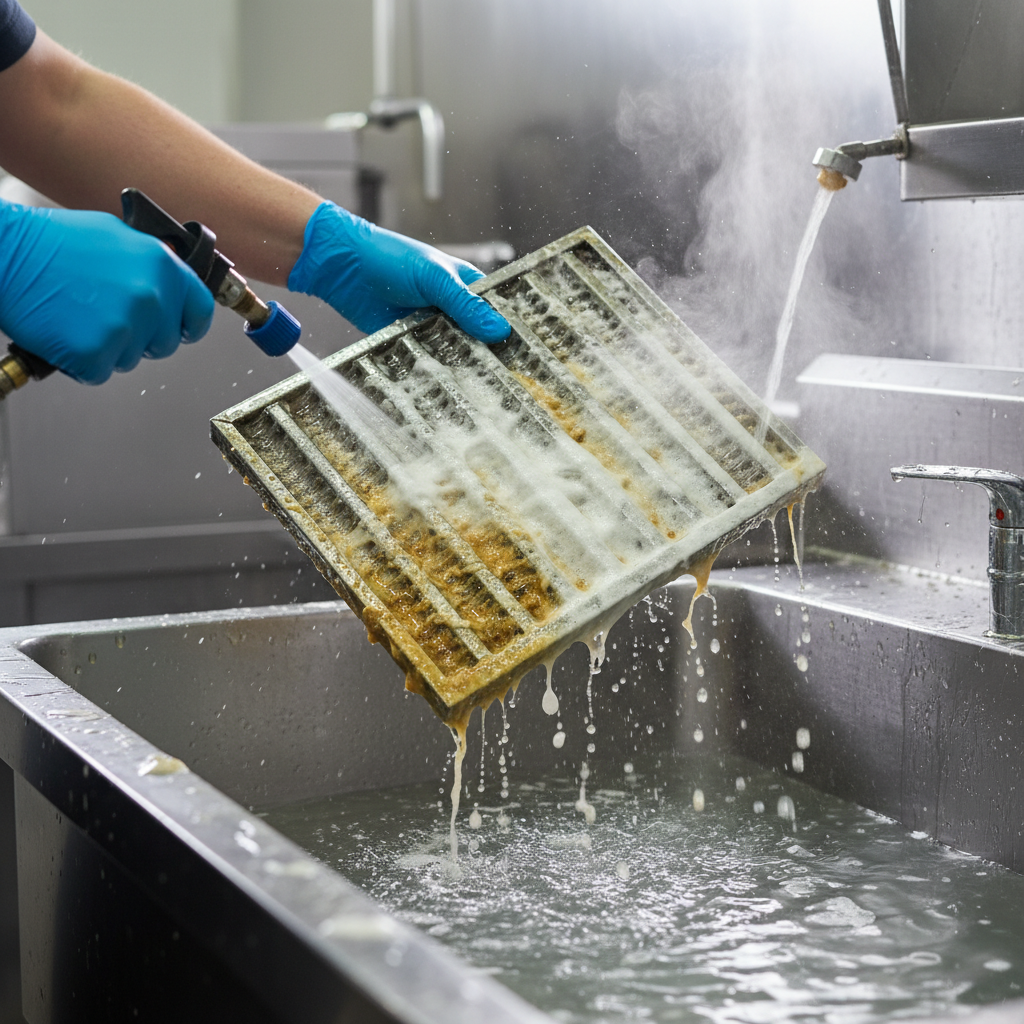
- Filters gum up quickly, drip, or feel unusually heavy.
- Uneven temperatures along the line—grill station roasting while the fry station freezes.
- Vibration or belt squeal from rooftop fans, indicating slippage or bearing issues.
If you’re seeing any of these, start with a focused clean and airflow check. Small wins stack fast.
Types of Ventilation Approaches and Components
Not all kitchens are built the same. Matching approach to load profile is essential for efficiency.
Hood and filter configurations
- Baffle filters: Standard for grease capture; easy to remove and deep-clean or exchange.
- Cartridge or high-efficiency filters: Greater capture for heavy grease loads; may reduce duct deposits when maintained.
- UV and water-wash systems: Reduce grease accumulation but still require inspection and maintenance.
Exhaust fans and drives
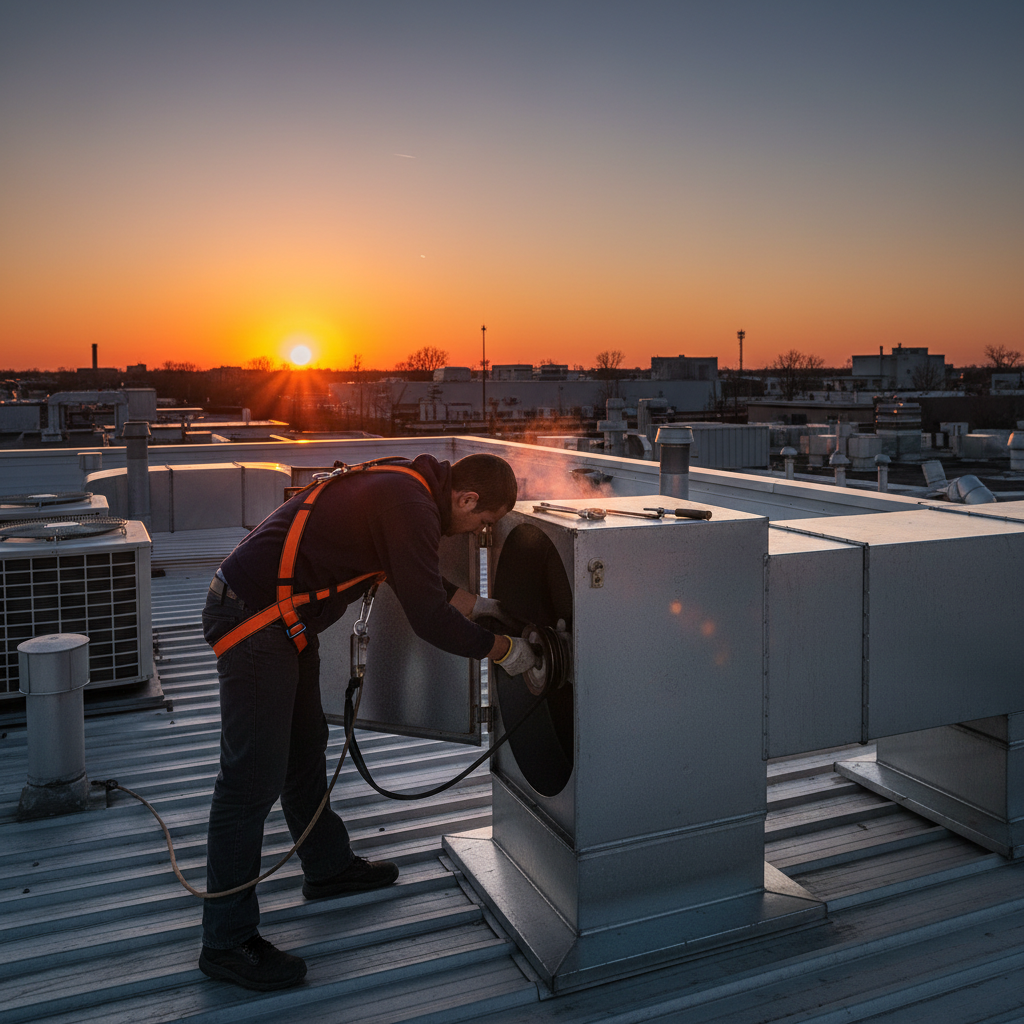
- Upblast fans (rooftop): Common in restaurants; hinge kits allow safe maintenance, and correct belt tension ensures target CFM.
- Direct-drive vs belt-drive: Belt drives allow pulley ratio tuning; direct-drive reduces belt wear issues.
- ECM and VFD-enabled fans: Variable speed reduces energy at partial loads and pairs well with DCV.
Duct layouts
- Short, straight runs: Preferable for lower static pressure and easier degreasing access.
- Multiple elbows or long verticals: Need rigorous cleaning to prevent hot spots for grease accumulation.
- Access panels: Critical for NFPA 96-compliant cleaning and inspection at changes in direction.
Make-up air strategies
- Ceiling diffusers or supply plenum: Distribute tempered air evenly to the cooking line.
- Face-velocity control: Keep capture velocity without overcooling staff.
- Seasonal adjustment: Ontario winters benefit from proper tempering to avoid drafts and cold spots.
Step-by-Step: The Practical Optimization Process
Use this NFPA 96-aligned, field-tested sequence to boost ventilation system efficiency in a commercial kitchen. We apply this routine during service calls across All Over Ontario.
- Document the baseline
- Record hood type(s), filter model(s), duct layout, fan make/model, drive type, and controls.
- Capture photos of grease deposits and wear points.
- Log perceived issues (smoke roll-out, heat pockets, odors).
- Deep-clean for true airflow
- Remove and degrease baffle filters; consider a Filter Cleaning & Exchange program for consistency.
- Degrease and rinse hood canopies, plenum, and accessible duct sections.
- Clean the exhaust fan wheel and housing; verify drain spouts and hinge kit integrity.
- Inspect and correct mechanics
- Check fan belt condition and tension; replace worn belts and align pulleys.
- Spin-test fan wheel for wobble; inspect bearings, set screws, and vibration isolators.
- Confirm access panels are secured and gaskets intact to prevent air leaks.
- Measure performance
- Spot-check face velocity at the hood and airflow at representative diffusers.
- Note static pressure at fan inlet/outlet if ports exist.
- Observe capture during peak load (smoke pencil or visible cooking test).
- Balance make-up air
- Adjust MUA volume/temperature to maintain slight negative kitchen pressure.
- Verify comfort at the line—no cold drafts or stagnant hot zones.
- Coordinate with building HVAC schedules to prevent after-hours pressure swings.
- Document and schedule
- Save before/after photos and findings for inspections and insurance.
- Set frequency by load: high-volume grill/charbroil requires more frequent service than light saute.
- Pin cleaning certificates where inspectors expect them.
Want a deeper dive into airflow tuning and demand-controlled strategies? Our Ontario-focused guide on kitchen ventilation optimization explains what to adjust and when.
Best Practices for Ongoing Efficiency
Keep gains locked in with these habits. They’re simple, repeatable, and proven in Ontario’s busiest kitchens.
Daily and weekly tasks
- Wipe hood interior surfaces at close; check for fresh drips or streaks.
- Rinse or swap baffle filters on a set cadence—don’t wait for visible blockage.
- Log any smoke escape, belt noise, or unusual odors for the manager’s weekly review.
Monthly to quarterly checks
- Open access panels and visually confirm duct cleanliness near elbows and hood collars.
- Inspect the exhaust fan belt and motor mounts; retension or replace as needed.
- Verify hinge kit function and weatherproofing for rooftop units.
- Check MUA temperature and distribution; adjust diffusers to avoid drafts.
Semi-annual and annual service
- Schedule NFPA 96-aligned hood, duct, and fan degreasing.
- Document airflow observations and any mechanical corrections.
- Reassess capture during worst-case cooking (e.g., multiple grills + fryer banks at once).
For a duct-specific checklist, review our Ontario-focused primer on exhaust duct cleaning and how clean ducts stabilize airflow.
Tools, Inspections, and Resources
Field-ready tools and simple measurements go a long way. You don’t need a lab—just discipline.
- Inspection aids: Bright flashlight, mirror, smoke pencil, and camera for documentation.
- Air indicators: Anemometer for spot velocity at hood face and diffusers.
- Maintenance basics: Belt tension gauge, food-safe degreaser, filter soak station, and hinge kit hardware.
- Records: Service log with dates, photos, belt part numbers, and filter exchange cadence.
- Training: Short toolbox talks for line staff on filter handling and signs of poor capture.
If you need help building your log and cadence, see the air quality perspective in this overview on why clean vents matter and how small habits reduce big risks.
Case Studies & Ontario-Based Examples
Here are real-world scenarios Robinhood Cleaners manages across All Over Ontario. Names omitted; outcomes are representative.
- QSR grill line, Southern Ontario: Smoke roll-out during lunch rush. Filters saturated by midweek. We implemented Filter Cleaning & Exchange twice weekly, degreased hood-to-fan, and replaced a slipping belt. Result: smoke capture restored; line temperature dropped several degrees; odor complaints ceased.
- Food court tenant, mall environment: Odor migration into seating area. We found a blocked elbow and missing access panel gasket. After degreasing and sealing, plus a small MUA increase, odors normalized and tenant passed follow-up inspection.
- Fine dining, high-heat saute and broil: Hot spots near broiler. We cleaned the plenum and optimized diffuser throws to the line. With minor hood adjustments, face velocity improved and staff reported less heat stress.
- Institutional kitchen, mixed load: Belt squeal and periodic vibration. A stretched belt and unbalanced wheel triggered fluctuating capture. Post-rebalance and new belt install, airflow steadied across production windows.
- Seasonal patio concept: Spring ramp-up caused sudden grease load increases. Pre-season deep clean, belt check, and diffuser tweak avoided the usual smoky first weeks.
- Catering commissary: Irregular production hours meant pressure swings after hours. We coordinated MUA schedules with building HVAC to stabilize conditions and eliminate morning smoke events.
- Busy fry bank operation: Frequent filter clogging. We introduced a soak station protocol and exchange cadence; fry odors and visible haze dropped significantly within one week.
- Charbroil-heavy menu: Sooty deposits in the first vertical rise. We added an access panel at the elbow, enabling complete degreasing and restoring expected static pressure.
- Multi-tenant kitchen: Shared duct with poor access. We scheduled staggered cleaning windows and installed additional access points; all tenants regained compliant airflow.
- Rooftop fan drainage issue: Rain intrusion corroded housings and diluted grease. New hinge kit, sealed spouts, and proper lids ended recurrent messes.
- High-humidity summer, Southern Ontario: Staff discomfort from sticky make-up air. We recalibrated MUA tempering and diffuser settings; perceived comfort and productivity improved.
- Pre-inspection rescue: Operator needed NFPA 96 proof. We performed comprehensive degreasing, corrected belt tension, photographed all surfaces, and issued certificates—inspection cleared without rework.
For a grease-risk lens on prevention, our concise reference on grease buildup risks and compliance shows where deposits concentrate and how to eliminate them.
Process Table: Maintenance Cadence vs. Kitchen Load
| Kitchen Profile | Primary Equipment | Suggested Filter Exchange | Hood/Duct/Fan Degreasing | Fan Belt Inspection | Notes |
|---|---|---|---|---|---|
| Light saute | Ranges, light fry | Weekly | Semi-annual | Quarterly | Spot-check capture after menu changes |
| Mixed line | Grill + fryers | Twice weekly | Quarterly | Monthly | Record belt tension and wheel balance |
| Heavy charbroil | Chargrill, broiler | 3x weekly | Quarterly (or more) | Monthly | Monitor first elbow and vertical rise |
| High-volume fry | Multiple fry banks | 3x weekly | Quarterly | Monthly | Grease trap maintenance impacts odors |
Local Tips
- Tip 1: If your rooftop fans sit near busy corridors in Southern Ontario, plan belt checks outside lunch/dinner peaks to avoid elevator or roof-access delays.
- Tip 2: Winter in Ontario demands tempered make-up air. Cold drafts at the line are a cue to rebalance MUA temperature and diffuser throws.
- Tip 3: Pre-holiday rush? Add one filter exchange the week before major events to keep capture strong during extended hours.
IMPORTANT: These tips align with Robinhood Cleaners’ NFPA 96-aligned services for kitchens across All Over Ontario.
Budgeting & Planning (No Pricing)
While we don’t discuss pricing here, planning the scope and cadence prevents emergencies and protects uptime.
- Scope by load: Charbroil- and grill-heavy menus require tighter filter exchanges and more frequent duct access checks.
- Bundle efficiencies: Combine Hood/Duct/Fan cleaning with Fan Belt Replacement, Filter Cleaning & Exchange, and Grease Trap Cleaning to streamline scheduling.
- Documentation value: Certificates and photo logs speed inspections and support insurance requirements.
- Downtime planning: Schedule 24/7 service windows around prep or between meal periods to minimize impact.
If your team needs a safe filter-handling refresher, this step-focused explainer on filter replacement best practices pairs well with exchange programs.
Compliance, Safety, and Risk Controls
Robinhood Cleaners fields NFPA 96-certified professionals and is WSIB insured—key trust markers for Ontario operators.
- Fire safety: Systematic degreasing, access panel integrity, and documented service reduce ignition risk.
- Worker safety: Hinge kits, proper fan lifts, and rooftop PPE keep maintenance safe and repeatable.
- Evidence trail: Certificates, photos, and logs live where inspectors expect to see them.
- Availability: 24/7 scheduling supports QSR, fine dining, and institutional calendars.
Troubleshooting: Fast Diagnostics You Can Run Today
Use these quick checks before service calls. They often reveal the fix.
- Napkin test at hood edge: If air doesn’t pull the napkin inward, you’re losing capture. Verify filters are seated and clean.
- Listen up top: Squeal or rattle at the rooftop fan hints at belt or bearing trouble.
- Look at diffusers: If one station is freezing and another is roasting, rebalance MUA or redirect throws.
- Smell migration: Odor in the dining room signals pressure imbalance or a capture deficit—log when it occurs.
Documentation You Should Keep Handy
These artifacts save time during inspections and help insurance reviews.
- Cleaning certificates and service dates (hood, duct, fan, filter exchange).
- Before/after photos by location (hood collar, first elbow, fan wheel).
- Fan model/serial, belt size, pulley details, and last replacement date.
- Notes on airflow observations and seasonal MUA adjustments.
Ontario Seasonality: Adjusting for Weather
Southern Ontario’s seasonal swings change how air behaves indoors.
- Winter: Increase MUA tempering to stop drafts; confirm doors aren’t being pulled open by negative pressure.
- Summer: Humid air makes kitchens feel heavier. Keep filters clean and ensure diffusers don’t blow directly on hot stations.
- Shoulder seasons: Re-check balance after major menu or volume changes; airflow needs often shift with staffing and hours.
Mid-Article CTA: Get a Ventilation Tune-Up
Operating anywhere in All Over Ontario? Our team can deep-clean your hood, ducts, and fans; exchange filters; and verify belt condition—then document airflow improvements. Let’s schedule a maintenance window that fits your service hours.
Frequently Asked Questions
-
How often should we clean our hood, ducts, and fans for efficiency?
Frequency depends on load. Light saute kitchens may be semi-annual. Mixed lines and heavy charbroil often need quarterly degreasing, plus filter exchanges multiple times per week. Always align with NFPA 96, your menu profile, and inspection history.
-
What’s the fastest way to improve capture without new equipment?
Start with clean, properly seated baffle filters; degrease the hood collar and first elbow; and correct fan belt tension. These actions quickly restore face velocity and reduce smoke roll-out in most kitchens.
-
Do we need demand-controlled ventilation (DCV) for efficiency?
DCV helps when your production varies widely throughout the day. Before upgrading, ensure the basics—clean ducts, tuned fans, balanced MUA—are dialed in. A clean, balanced system often delivers major gains without new hardware.
-
How does make-up air affect staff comfort and safety?
MUA replaces exhausted air to maintain neutral or slightly negative pressure. If MUA is too cold, untempered, or imbalanced, you’ll get drafts and hot/cold spots. Balanced, tempered MUA supports capture, comfort, and stable cooking conditions.
-
What records do inspectors typically ask for?
Cleaning certificates, photo documentation, service logs (including belt replacements and filter exchange cadence), and notes on airflow observations. Posting certificates near the hood and keeping a digital logbook speeds inspections.
Key Takeaways
- Ventilation system efficiency in a commercial kitchen starts with capture at the hood and clean, low-impedance ducts.
- Right belt tension and balanced MUA often resolve smoke, odor, and comfort complaints quickly.
- NFPA 96-aligned cleaning plus simple diagnostics keep you compliant and inspection-ready.
- Scheduling filter exchanges prevents midweek clogging and protects peak service windows.
Next Steps
- Run the step-by-step process above during your next slow period.
- Book an NFPA 96-aligned hood, duct, and fan service; verify belt condition.
- Set a repeatable filter exchange cadence aligned to your load profile.
- Document everything—photos, certificates, and airflow notes.
Related Articles & Topics
- Kitchen ventilation optimization methods for Ontario operators
- Grease buildup prevention strategies for fire risk reduction
- Filter exchange programs that stabilize airflow in high-volume kitchens
Book a Ventilation Assessment
Serving All Over Ontario with quick service in Southern regions, Robinhood Cleaners brings NFPA 96-certified, WSIB-insured professionals to your line—24/7. Let’s align your ventilation with safety, comfort, and consistency.