Grease moves fast in busy Brampton kitchens. Commercial kitchen exhaust filter replacement Brampton is the quiet safety control that keeps flames in check, air breathable, and inspections smooth. In this complete, NFPA 96–aligned guide from Robinhood Cleaners, you’ll learn what to replace, when to do it, how to do it right, and how to fit the work neatly around your rushes—without slowing service.
At a Glance
- Filters are your first line of defense against grease fires and smoky dining rooms.
- Start with a 1–4 week swap cadence; shorten intervals for fryers, charbroilers, and tandoor lines.
- Stainless baffle filters, installed vertically, fit most high-grease concepts.
- Pair filter exchange with hood wipe-downs, quick fan checks, and clear documentation.
- Robinhood Cleaners is NFPA 96 certified, WSIB insured, and available 24/7 All Over Ontario with rapid response in Southern Ontario.
Quick Answer
For Brampton operators, plan commercial kitchen exhaust filter replacement Brampton every 1–4 weeks based on grease load. Robinhood Cleaners (headquartered in All Over Ontario) provides NFPA 96–certified filter exchange, plus hood, duct, and exhaust fan cleaning—scheduled 24/7 to match your shifts.
Local Tips
- Tip 1: Around Queen Street and Bramalea City Centre, book swaps between lunch and dinner to avoid courier jams and lobby traffic.
- Tip 2: Southern Ontario winters thicken grease—tighten your cadence for fryers and charbroilers when temperatures drop.
- Tip 3: Sites near Highway 410/407 corridors collect more rooftop debris; pair exchanges with a quick fan and screen check.
IMPORTANT: These tips reflect Robinhood Cleaners’ real field experience supporting commercial kitchens across Ontario.
What Is Commercial Kitchen Exhaust Filter Replacement?
It’s the recurring removal and installation of the hood filters that trap grease-laden vapor right above your cooking line. Done right, filters:
- Reduce fire risk: Less grease on surfaces means fewer ignition points.
- Stabilize airflow: Reliable capture velocity over fryers, grills, and ovens keeps haze off the floor and out of the dining room.
- Protect equipment: Fans, belts, and ducts run cleaner and last longer with less grease load.
- Support compliance: Maintenance aligned with NFPA 96 helps you ace inspections.
Why It Matters in Brampton (and Southern Ontario)
- Diverse, high-output menus: South Asian, Caribbean, burger, and BBQ concepts create sustained heat and consistent grease generation.
- Seasonality effects: Cold months slow evaporation and thicken grease—filters clog faster in winter.
- Rooftop realities: Wind and debris along 410/407 corridors stress fan screens and housings.
- Inspection culture: Clean hoods, accessible filters, and clear logs make health checks faster and simpler.
How the Replacement Process Works (Step by Step)
Use this field-tested sequence to keep swaps safe, fast, and inspection-ready.
- 1) Cool and lock out: Power down nearby appliances if needed; let the hood area cool.
- 2) PPE on: Gloves, splash goggles, and non-slip footwear—grease is hot and slippery.
- 3) Stage the area: Lay absorbent mats; set bins/carts for dirty filters; bring clean replacements within reach.
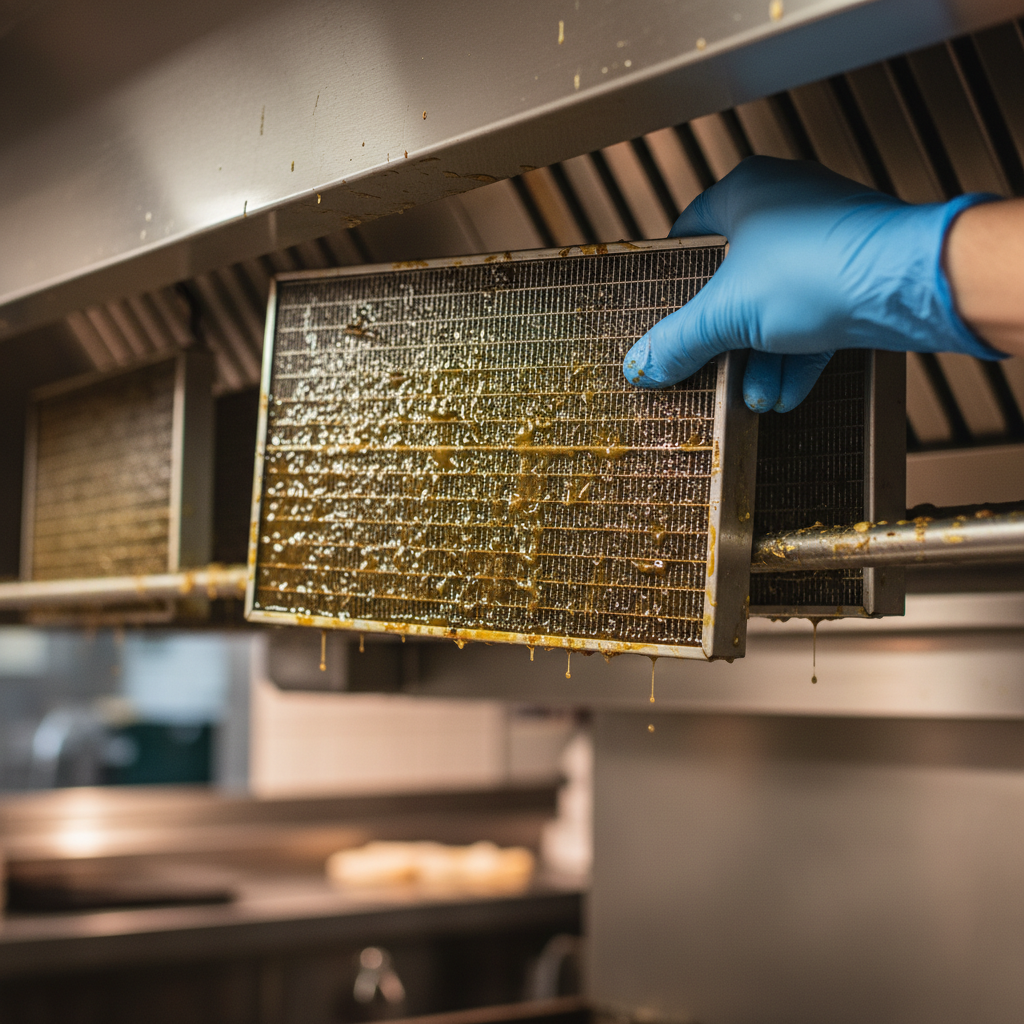
- 4) Remove carefully: Tilt baffles toward you to control drips; use two hands for steady control.
- 5) Inspect condition: Retire frames with dents, broken welds, or crushed baffles.
- 6) Wipe rails and plenum lip: Degrease contact surfaces so replacements seat flush and quiet.
- 7) Install correctly: Baffles vertical; if arrows exist, point up for drainage and proper capture.
- 8) Verify capture: Turn on the fan; confirm even draw with a smoke pen; listen for rattles or whine.
- 9) Document: Log date, time, staff/tech, condition, and notes—auditors appreciate clear records.
Filter Types, Pros/Cons, and Swap Cadence
Match filters to your cuisine, heat, and volume. Start here, then fine-tune by observation.
| Filter Type | Best For | Pros | Watch Outs | Typical Swap Cadence |
|---|---|---|---|---|
| Stainless baffle | High-grease fryers, charbroilers, tandoor/BBQ | Durable, dishwasher-safe, NFPA 96–friendly | Wrong orientation reduces drainage and capture | Every 1–4 weeks (volume-driven) |
| Aluminum baffle | Light-to-medium duty lines | Lightweight and easy to handle | Dents easier; avoid harsh caustics | Every 1–3 weeks |
| High-efficiency baffle | Smoke-forward or grill-heavy concepts | Better grease capture and reduced haze | Higher resistance—watch fan performance | Every 2–4 weeks |
| Mesh (legacy) | Older hoods with low grease | Low upfront cost | Clogs fast; not ideal for heavy grease | Every 1–2 weeks |
Process and Roles (Who Does What)
| Task | Kitchen Team | Robinhood Cleaners | Frequency |
|---|---|---|---|
| Visual check, quick wipe of rails | Yes | Optional | Nightly/Weekly |
| Filter swap (staged and logged) | Yes (trained staff) | Yes (on request) | 1–4 weeks |
| Hood degreasing + plenum clean | No | Yes | Scheduled with swaps |
| Duct cleaning + exhaust fan service | No | Yes | Per NFPA 96 usage |
| Grease trap service | No | Yes | Per load/odor |
When Should You Replace Filters?
Don’t wait for smoke or alarms. Use these signals to set—and adjust—your schedule.
- Visual grease: Baffles look wet or sticky after a shift? Shorten the interval.
- Smell or haze: Persistent odor or visible haze in the dining room points to weak capture.
- Fan strain: Belt squeal, bearing whine, or rattling suggests intake restriction.
- Hot line staff: Heat complaints from cooks often trace to clogged filters.
- Event spikes: Banquets and holidays justify ad-hoc swaps immediately after service.
Best Practices From Southern Ontario Kitchens
- Pair swaps with wipe-downs: Clean rails, plenum lips, and light lenses while filters are out.
- Label banks and slots: Left-to-right numbering speeds reassembly and avoids misfits.
- Protect floors: Use absorbent mats and bins to manage drips and prevent slips.
- Glance at fan belts: During swaps, check belt tension and visible cracking—simple prevention.
- Keep a spare set onsite: One full extra set eliminates last-minute scrambles.
- Document everything: Logs, photos, and technician names help inspections move quickly.
- Bundle services smartly: Coordinate filter exchange with hood/duct/fan cleaning to minimize downtime.
Tools and Supplies
- PPE: Cut-resistant or nitrile gloves; splash goggles; non-slip shoes.
- Cleaning: Food-safe degreaser and rinse; non-scratch pads; microfiber cloths.
- Staging: Absorbent mats; drip trays; labeled bins; rolling carts.
- Verification: Flashlight; smoke pen for quick airflow checks.
- Documentation: Swap log templates; photo snapshots by date.
How Robinhood Cleaners Helps (End-to-End Care)
We specialize in commercial kitchens—nothing else. That focus means faster, safer, and more consistent outcomes.
- NFPA 96 certified teams: Every visit follows the standard.
- WSIB insured: You’re protected while we’re onsite.
- 24/7 scheduling: Overnight, early a.m., or mid-shift windows—we match your hours.
- All-in-one service: Filters, hoods, ducts, exhaust fans, and grease traps—one vendor to manage.
- Rapid dispatch: Quick response in Southern Ontario, including Brampton and neighboring cities.
See how a complete hood service fits with your swap cadence in our Ontario exhaust cleaning guide. For a high-level overview of full-kitchen care from filters to grease traps, review our Ontario kitchen cleaning overview.
Mini Case Notes (Brampton Examples)
- Fast-casual burger line (Downtown): Switched from monthly to biweekly swaps; smoke complaints fell immediately; line temps stabilized.
- Tandoor-forward concept (East Brampton): Upgraded to stainless baffles and added quarterly duct checks—airflow improved and dining haze dropped.
- Hotel banquet kitchen (Airport corridor): Kept a spare filter set onsite; post-event Mondays ran smoothly without last-minute scrambling.
- Fryer-heavy ghost kitchen (Queen Street corridor): Adopted a 10-day cadence; fan belt noise disappeared as intake improved.
- BBQ operation (Hwy 410 area): Moved to high-efficiency baffles; visible dining room haze dropped quickly.
Integrating Filter Swaps With Full-System Cleaning
Filter replacement is one piece of a system. Pair it with scheduled hood, duct, and fan cleaning for lasting results.
- Hood degreasing: Prevents drip hazards and improves lighting clarity for safer prep.
- Duct cleaning: Reduces deep-grease risk and aligns with inspection expectations.
- Exhaust fan service: Belt and bearing checks keep airflow consistent.
- Grease trap care: Balanced schedules prevent odors and plumbing issues.
For a concise primer on commercial hood service statewide, skim commercial hood cleaning in Ontario and compare to your current maintenance logs.
Training Your Team (Light-Duty Tasks to Assign)
- Nightly wipe-downs: Rails, plenum lips, and light lenses.
- Weekly filter checks: Visual inspection and gentle rinse if policy allows.
- Log updates: Note swaps and conditions for audit readiness.
- Fan room peek: Basic observation for vibration, debris, or abnormal noise.
Safety and Compliance Alignment (NFPA 96)
- Accessible filters: Must be removable for cleaning and inspection.
- Grease control: Maintain capture and drainage; avoid pooling.
- Fire risk mitigation: Keep ignition sources away from grease-laden surfaces.
- Recordkeeping: Maintain service logs, photos, and technician details.
For additional context on safety programs in our region, see this short perspective on 24/7 Ontario kitchen safety and a Toronto-focused note on restaurant hood cleaning practices.
Planning Your Cadence by Concept
- Burger/fast casual: Every 1–2 weeks; consider high-efficiency baffles if haze persists.
- Tandoor/charbroil: About every 2 weeks; stainless baffles handle heat and durability.
- Fryer-heavy ghost kitchen: 7–14 days depending on volume and oil turnover.
- Breakfast diners/griddles: 2–3 weeks; monitor sugar-heavy aerosols from syrups.
- Light sauté/pasta: 3–4 weeks; shorten during peak seasons or events.
Documentation That Speeds Inspections
- Swap log: Date, time, staff/technician, condition, and notes.
- Service receipts: Keep NFPA 96 service documents organized by month.
- Photo snapshots: Before/after pictures demonstrate diligence.
- Spare inventory list: Track sizes and counts for painless reordering.
Frequently Overlooked Spots
- Hood light lenses: Grease film reduces brightness and adds heat load near lenses.
- Plenum corners: Thin layers accumulate fast; wipe during swaps.
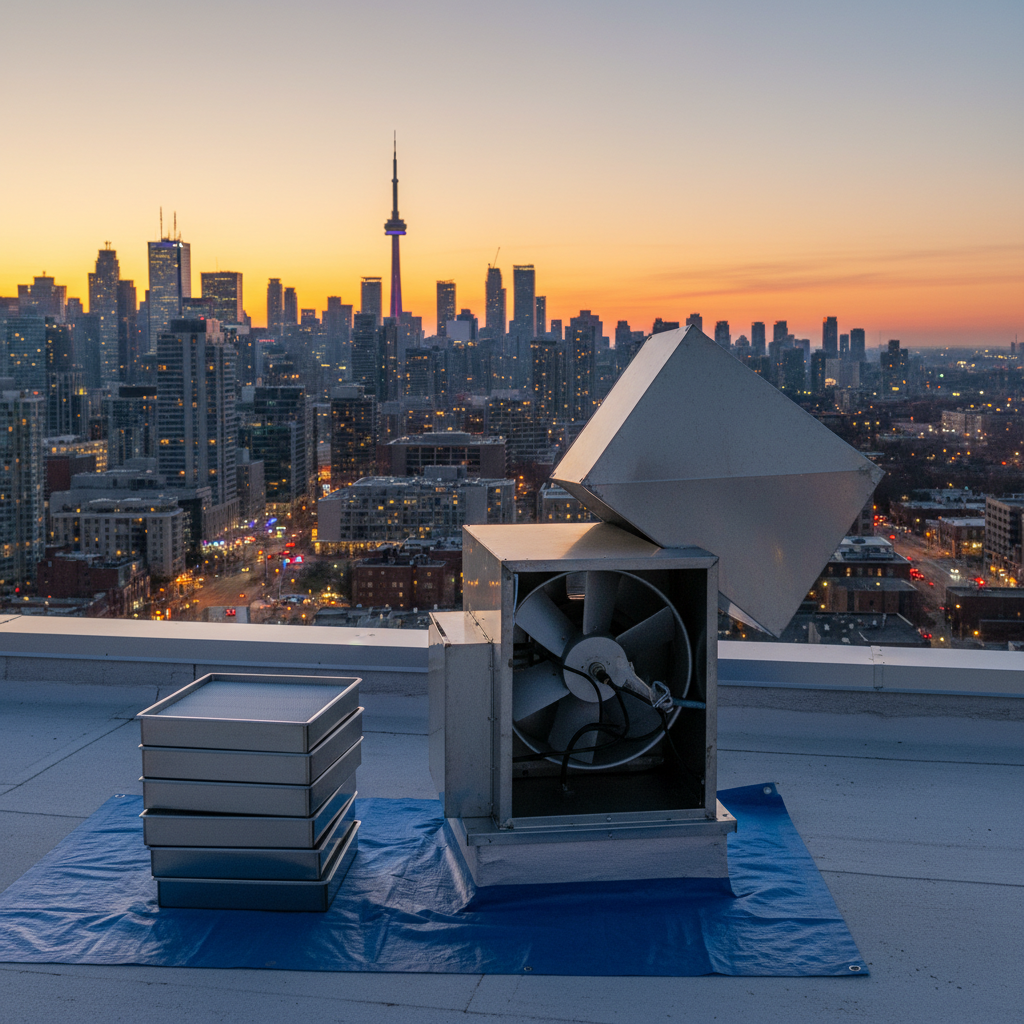
- Rooftop grease containment: Pads and trays saturate; check during fan service.
- Fan guards and screens: Debris limits airflow; include in visual checks.
Real-World Scheduling Tips (What Works)
- Stack services: Filter exchange + hood degrease + quick fan check in one window.
- Use micro-windows: 15–20 minute mid-shift gaps add up without hurting sales.
- Overnight plans: We clean while you sleep—open with clear air and quiet fans.
- After big events: Post-banquet or holiday swaps keep the next service smooth.
FAQ
How often should we replace hood filters in Brampton?
Start with every 1–4 weeks and adjust by menu and volume. Fryers, charbroilers, and tandoor lines usually need shorter intervals. Keep logs so you can tune the schedule precisely.
Can our staff replace filters, or should we call a certified team?
Trained staff can handle basic swaps with PPE and a clean staging area. Certified crews add inspection-ready documentation, airflow verification, and full-system cleaning that protects fans and ducts.
Do clean filters really reduce fire risk?
Yes. Clean baffles reduce ignition sources and maintain capture so hot vapors don’t linger over the line. This directly supports NFPA 96 goals and inspection success.
What else should we service during a filter change?
Wipe rails and plenum lips, glance at fan belt condition, and confirm grease trap schedules are on track. These small tasks keep your entire ventilation system balanced.
Will this help with health inspections?
Absolutely. Visible cleanliness, consistent logs, and certified documentation align with inspector expectations and reduce reinspection risk.
Key Takeaways
- Cadence first: Commercial kitchen exhaust filter replacement Brampton works best on a short, volume-based schedule.
- Orientation matters: Vertical baffles and clean rails keep capture steady.
- Bundle services: Coordinate filters with hood, duct, and fan care to cut downtime.
- Prove diligence: Logs and photos turn inspections into quick conversations.
- Lean on specialists: Robinhood Cleaners is NFPA 96 certified, WSIB insured, and available 24/7 across Ontario.
Related Articles
- How to Align Hood, Duct, and Fan Cleaning With Your Menu Mix
- Exhaust Fan Belt Checks: What Kitchen Managers Should Watch For
- Grease Trap Scheduling: Balancing Kitchen Flow and Odor Control
- Winter Ventilation Tips for Southern Ontario Kitchens