Grease doesn’t wait for a slow night. If your hood is pulling less air, your line is smoky, or filters feel heavier than usual, it’s time to act. This complete guide to commercial kitchen exhaust filter replacement Brampton operators can use explains what it is, why it matters, and exactly how to execute it safely—without disrupting service or running afoul of inspectors.
- Understand how baffle filters protect your kitchen from fires and poor air quality.
- Follow a clear, NFPA 96–aligned replacement process your team can perform.
- Set the right exchange cadence by menu type, volume, and grease load.
- Know when to DIY and when to call NFPA 96–certified, WSIB-insured pros.
- Use practical checklists, tools, and documentation tips built for Ontario kitchens.
Table of Contents
- At a Glance
- Quick Answer
- Local Tips
- What Is Exhaust Filter Replacement?
- Why Replacement Matters
- How It Works: Step-by-Step
- Filter Types & Triggers
- Best Practices for Brampton Kitchens
- Tools, PPE, and Resources
- Troubleshooting Smoke & Airflow
- Rooftop Fan, Belts, and Discharge
- Compliance Across Peel Region
- Staff Training & SOP
- Coordinating Hood, Duct, and Trap Work
- Mini Case Insights (Southern Ontario)
- FAQ
- Conclusion & Key Takeaways
At a Glance
- What: Swapping clogged or damaged baffle filters for clean, compliant ones.
- Why: Reduce fire risk, improve capture efficiency, protect equipment, and pass inspections.
- When: Based on volume, grease load, menu, and NFPA 96 expectations.
- Who: Trained staff for routine swaps; certified technicians for heavy grease, damage, airflow issues, or code concerns.
- Where: Line hoods, prep hoods, make-up air interfaces, and rooftop exhaust pathways.
Quick Answer
For commercial kitchen exhaust filter replacement Brampton restaurants can book same-day help. Robinhood Cleaners serves All Over Ontario at All Over Ontario with 24/7 availability, NFPA 96 certification, and WSIB-insured crews to keep your line safe, compliant, and inspection-ready.
Local Tips
- Plan around traffic: Near Queen Street or Main Street in Brampton? Schedule filter swaps right after lunch rush to avoid loading zone limits and back-of-house congestion.
- Winter handling: In colder months, exchange filters in the evening while they’re still warm from service; grease is easier to manage before rooftop checks in cold wind.
- Multi-unit consistency: For chains across Southern Ontario, standardize filter sizes and labeling by location to streamline exchanges and documentation.
Note: Align swaps with your inspection calendar and hood cleaning intervals for smoother passes.
What Is Commercial Kitchen Exhaust Filter Replacement?
- Definition: Removing grease-laden baffle filters from the hood plenum and installing clean, undamaged, properly sized filters with correct orientation.
- Scope: Includes inspection for warping, loose rivets, bent frames, missing drain holes, and misalignment (baffles vertical, drain holes down, airflow arrows correct).
- Brampton reality: High-volume South Asian, Caribbean, and quick-service menus load filters fast—especially with fryers, tandoors, grills, and woks—requiring tighter cadences.
- Compliance anchor: Aligns with NFPA 96 expectations for grease removal devices in commercial cooking operations.
- Outcome: Safer airflow, clearer line of sight, and less grease migration into ducts and fans.
Why Exhaust Filter Replacement Matters
- Fire hazard reduction: Clean, tight-fitting baffles slow flame spread and block embers from entering ducts.
- Air quality and comfort: Restores airflow to cut smoke, heat, and odor—improving staff comfort and visibility.
- Equipment protection: Limits grease migration into ducts and fans, reducing failures and unplanned downtime.
- Inspector readiness: Dated logs and photos support health and fire code compliance.
- Energy efficiency: Unclogged filters reduce fan strain and stabilize capture velocity.
- Fewer surprises: Consistent exchanges reveal early damage before peak service.
Commercial Kitchen Exhaust Filter Replacement in Brampton: How It Works
Use this field-tested workflow during a lull. If you see heavy grease, damage, or airflow problems, pause and call certified technicians.
- Prep the area: Clear hot pans; lay a mat; power up task lights; wear cut-resistant gloves, goggles, sleeves, and non-slip footwear.
- Cool and lockout if needed: Let surfaces cool. Follow your hood interlock SOPs where installed.
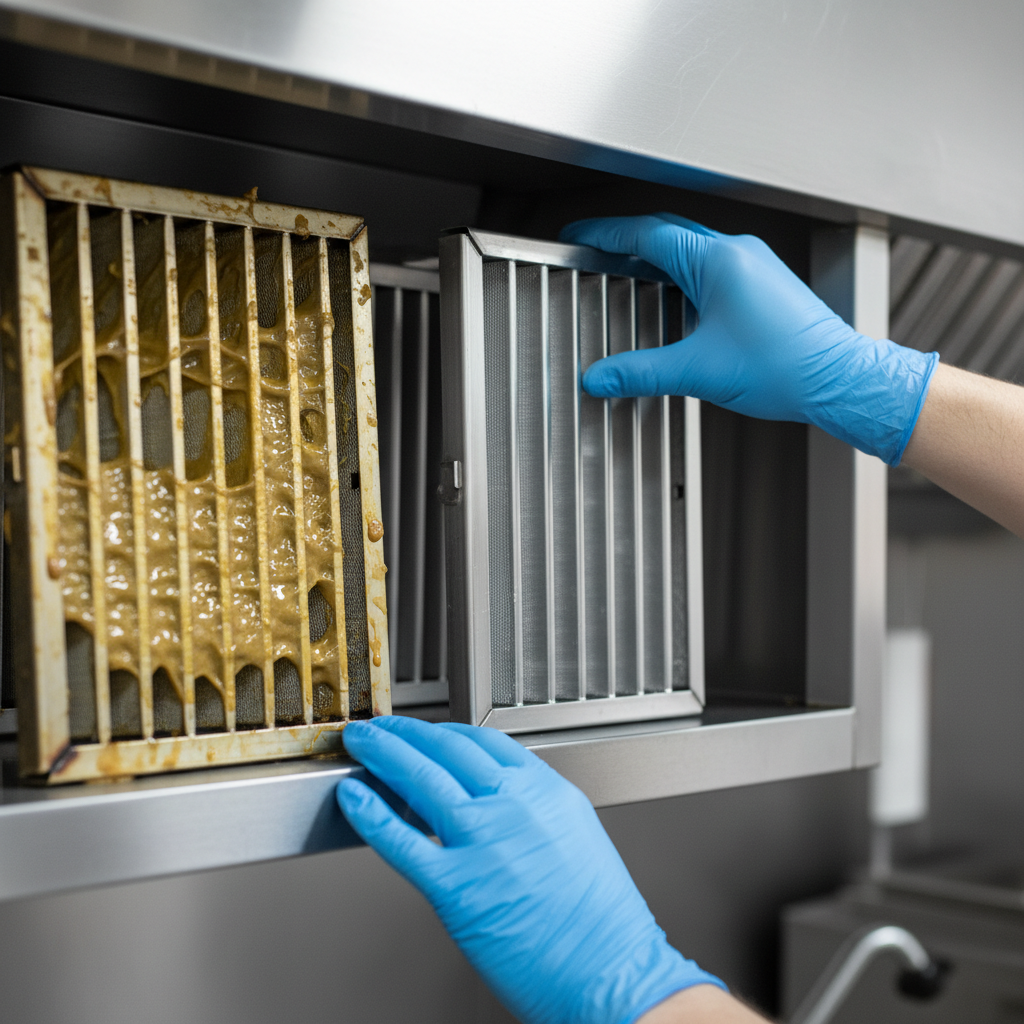
- Inspect before removal: Confirm orientation; check for warping, dents, broken rivets, and excessive grease.
- Remove baffles: Slide toward you; angle down carefully into a bus bin designated for dirty filters.
- Clean the track and plenum edge: Apply degreaser; scrub; wipe dry to prevent slip hazards.
- Install clean filters: Baffles vertical; drain holes down; arrows with airflow; fully seated—no bypass gaps.
- Test capture: Start fan and perform a safe smoke test to verify draw along the hood face.
- Document: Log date, time, initials, condition notes, and next target exchange date; snap quick photos.
Pre-Swap Checks
- Heat status: Avoid hot-surface burn risks; aim for warm, not hot.
- Orientation markers: Note airflow arrows and vertical baffles before removal.
- Mats and signage: Place non-slip mats and wet-floor signs if degreasing.
- Bin labeling: Keep “dirty” and “clean” bins separate to prevent re-soiling.
Post-Swap Validation
- Edge gaps: Shine a light along the bottom lip; reseat any misaligned filter.
- Uniform draw: Use incense or a smoke pen—air should pull evenly across the hood face.
- Noise check: Listen for new rattles or fan strain that might indicate a seating issue.
- Log entry: Record details and add quick photos; inspectors love clear records.
When to Stop and Call Pros
- Filters are deformed, rivets loose, or frames split.
- Grease drips from the plenum or you see buildup near duct inlets.
- Fan shuddering, belt squeal, or rooftop discharge pooling grease.
- Signs of past flare-ups or heat discoloration in the hood.
If you’re facing any of the above, align your exchange with a professional hood-and-duct service. For a deeper overview of system-wide maintenance, see our complete Ontario guide on coordinating exhaust cleaning tasks and our snapshot on Ontario hood cleaning service timing.
Filter Types & Replacement Triggers
- Stainless baffle filters: Durable and code-preferred for most lines. Replace when warped, cracked, or if baffles are clogged beyond cleaning.
- Mesh filters: Higher initial capture but clog faster; common in light-duty setups. Replace more frequently near fryers or high-splash stations.
- Make-up air screens: Not grease filters but affect airflow balance; inspect and clean during exchanges.
- Combination setups: Some kitchens mix sizes across zones; standardize SKUs to prevent mismatches.
- Triggers to replace: Persistent smoke roll-out, grease dripping, burn marks, or filters that won’t seat flush.
Right-Sizing and Orientation
- Match the exact height and width to avoid bypass gaps.
- Keep baffles vertical with drain holes down to encourage grease drainage.
- Stagger seams so there’s no straight path for flame or grease.
- Label top/face to speed up installs during rush prep.
Cleaning Methods Between Exchanges
- Soak-and-brush: Degreaser bath followed by bristle scrubbing; rinse and fully dry.
- Low-temp washer: Only with manufacturer-approved racks and cycles to prevent warping.
- Hand wash station: Dedicated sink with oil interceptor to reduce plumbing issues.
- Air dry racks: Avoid stacking; allow full drainage to prevent slips and re-soiling.
Best Practices for Brampton Operators
- Keep two full sets: One in use, one cleaned and ready to swap.
- Pair with hood cleaning: Sync exchanges with scheduled hood and duct work. Our Ontario hood cleaning service overview explains timing for inspection day.
- Protect staff: Use gloves, goggles, sleeves, and non-slip shoes; post wet-floor signs after degreasing.
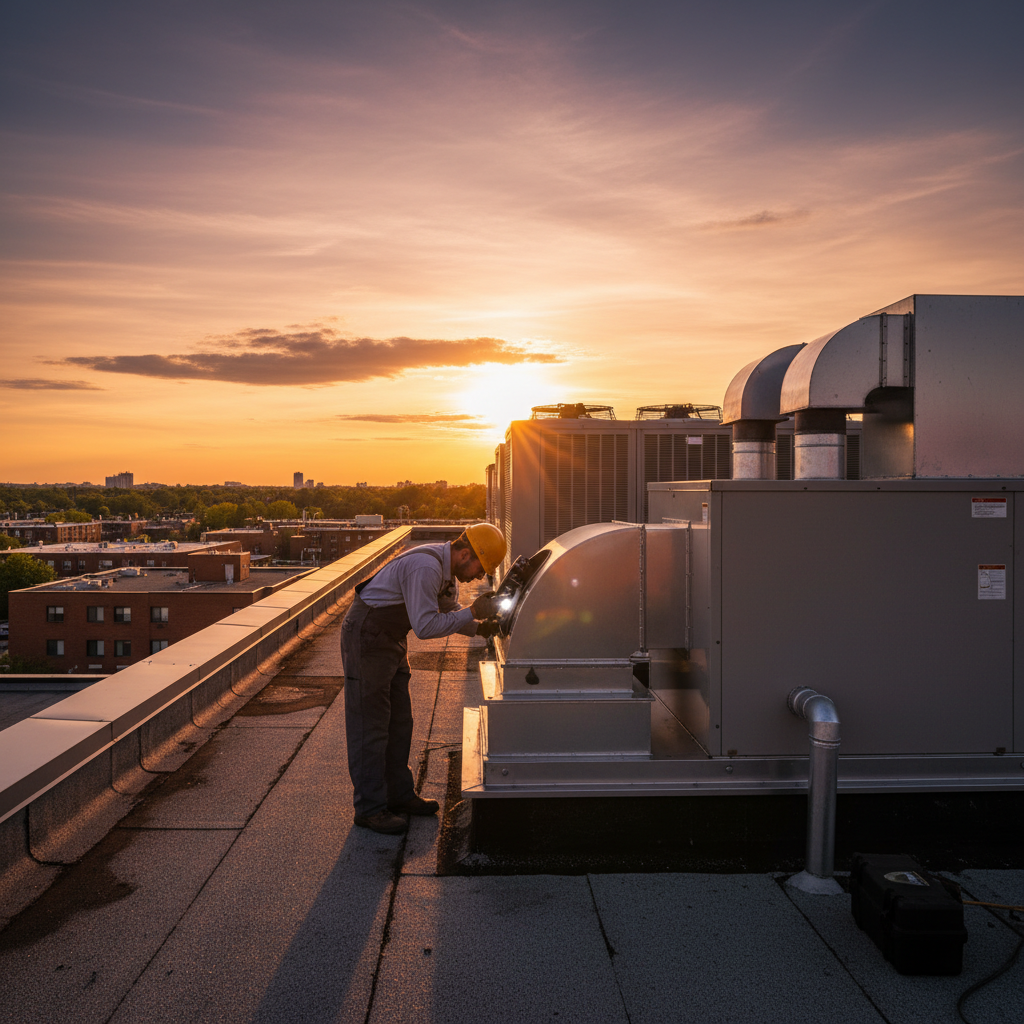
- Rooftop checks: Inspect fan bowl, hinge kit, and discharge; look for pooling grease or vibration.
- Log everything: Keep a binder with dates, initials, serials, and photos to show inspectors.
- Standardize SKUs: For multi-unit teams, label sets by store and size to prevent mismatches.
- Avoid dishwasher warping: If you machine-wash, verify cycles and racks won’t deform frames.
- Integrate with deliveries: Time exchanges around delivery windows to reduce clutter on the line.
- Spot checks: Add a 30-second smoke test at shift start on peak nights.
Suggested Exchange Frequency (Guideline)
| Cooking Volume | Menu Type | Typical Exchange Cadence | Notes |
|---|---|---|---|
| High | Fryers, grills, tandoor, woks | Daily to every 2–3 days | Spot-check mid-shift on weekends |
| Medium | Mixed grill, sauté, ovens | Twice weekly | Align with delivery days |
| Low | Light sauté, baking | Weekly | Verify after events or holidays |
Need help dialing in your exact cadence? Our filter replacement schedule guide breaks it down by station and grease load.
DIY vs. Professional Exchange: Quick Comparison
| Scenario | DIY Team | Certified Pros |
|---|---|---|
| Routine, light grease | Safe with SOPs and PPE | Optional |
| Heavy grease or damage | Pause—risk of duct contamination | Recommended (inspection + deep clean) |
| Airflow or smoke issues | Basic checks only | Recommended (fan, belt, rooftop review) |
| Pre-inspection readiness | Limited documentation | Preferred (NFPA 96–aligned logs and photos) |
Want hands-off compliance? Robinhood Cleaners—NFPA 96 certified and WSIB insured—can align filter exchanges with hood, duct, and fan cleaning, plus documentation. 24/7 service with rapid response across Southern Ontario.
Explore our approach to safer teams in this brief keep staff safe overview.
Tools, PPE, and Helpful Resources
- Tools: Bus bins, degreaser, scrub brushes, microfiber cloths, labeler, flashlight, smoke pen, step stool, non-slip mats.
- PPE: Cut-resistant gloves, goggles, sleeves, aprons, and non-slip footwear.
- Replacements: Correct-size stainless baffle filters; keep at least one spare set on-site.
- Documentation: Log sheets, photo checklist, serial number list by hood section.
- Standards: Review NFPA 96 guidance for grease removal devices and inspection intervals.
Troubleshooting Smoke & Airflow
- Smoke roll-out at edges: Check for gaps, wrong filter size, or reversed orientation.
- Uneven draw across hood: Look for mixed filter sizes or missing drain holes blocking flow.
- Fan strain noise: Filters may be over-clogged or seated poorly; re-check installation.
- Odor lingering after swap: Duct or fan may already be saturated—schedule hood and duct cleaning.
- Grease near makeup air: Balance may be off; inspect screens and ensure adequate supply airflow.
Rooftop Fan, Belts, and Discharge
- Fan bowl: Pooling grease signals upstream bypass or infrequent exchanges.
- Hinge kit: Required for safe service; damaged hinges risk fan and roof damage.
- Fan belt: Squeal or slippage reduces draw; align exchange cadence with belt inspections.
- Discharge path: Check for staining down the stack—evidence of carryover and buildup.
Compliance Across Peel Region
- NFPA 96 alignment: Use clean, undamaged filters; keep logs; maintain hood, duct, and fan access for inspection.
- Documentation bundle: Date-stamped photos, initials, and filter serials prove diligence.
- Pre-inspection checklist: Filters seated, no gaps; hood edges wiped; rooftop bowl checked; logbook accessible.
- Emergency readiness: Keep spares on hand; train two people per shift to execute safe swaps.
Staff Training & SOP (Simple)
- Who: Two-person team—one handles filters; one manages mats, bins, and wipe-downs.
- When: After lunch rush or during prep; avoid peak service windows.
- How: Follow an 8-step SOP (prep, cool, inspect, remove, clean track, install, test, document).
- Measurable: Time the swap; target 10–15 minutes per hood section for routine exchanges.
- Safety: PPE required; never force warped filters into place.
Coordinating Hood, Duct, and Trap Work
- Bundle tasks: Pair filter exchanges with hood and duct cleaning to catch deeper grease before inspections. See our complete Ontario guide.
- Grease trap plan: Align kitchen-side grease removal with trap service to limit odors and backups.
- Fan and belt checks: Add a quick rooftop look to spot wear, bowl pooling, or vibration.
- Scheduling: Rotate heavy-duty hoods earlier in the week; keep documentation centralized.
Mini Case Insights from Southern Ontario Kitchens
- Brampton quick-service grill: Weekend smoke roll-out traced to mismatched filter sizes; standardizing sets eliminated gaps and restored capture.
- Mississauga banquet hall: Filters deformed by high-heat dishwasher cycles; switching to soak-and-brush methods stopped recurring warping.
- Hamilton ghost kitchen: Heavy fryer lineup required daily exchanges and weekly hood wipes to satisfy inspectors and maintain airflow.
- Downtown Brampton café: Seasonal events drove a temporary uptick in exchange cadence during summer weekends; logging prevented missed swaps.
- GTA fast-casual chain: Location-by-location SKU standardization cut install time by 40% and reduced smoke complaints.
- Brampton catering commissary: Implemented two-bin system and photo logs; passed surprise inspection with zero notes.
- Peel Region hotel kitchen: Added pre-shift smoke checks on high-volume days; early detection prevented service delays.
- Milton pizza shop: Light sauté line moved from weekly to twice-weekly swaps after holiday events increased grease load.
- Oakville bistro: Balanced makeup air screens during filter exchange restored even capture, solving edge roll-out.
- Mississauga food court vendor: Coordinated filter rotation with late-night hood cleaning to minimize downtime.
- Etobicoke QSR: Replaced warped baffles discovered during routine swap; avoided duct contamination and fan strain.
- Brampton bakery-café: Low-grease line still benefited from weekly visual checks to confirm seating and prevent dust accumulation.
- Kitchener multi-concept kitchen: Zone labeling across concepts eliminated cross-placing filters during rush.
- Guelph campus kitchen: Student staff trained on an 8-step SOP; supervisor verified logs before inspections.
FAQ: Exhaust Filter Replacement
How often should restaurant filters be replaced?
Cadence depends on grease load and volume. High-fry or grill kitchens may swap daily or every few days. Mixed menus often target twice weekly. Light-duty hoods can run weekly. Always adjust based on smoke capture, inspector feedback, and NFPA 96 expectations.
Can we run the dishwasher for filter cleaning?
Only if filters and cycles are suitable. High-heat cycles can warp frames and loosen rivets. Use degreaser soaks and brush cleaning when in doubt, and fully dry before reinstalling to reduce slip hazards.
What signs mean it’s time to replace, not just clean?
Warped frames, damaged baffles, persistent smoke roll-out after cleaning, or filters that won’t seat flush. If you see burn marks or heavy grease beyond safe handling, bring in certified technicians to inspect ducts and fans too.
Do filters impact fire suppression systems?
Yes. Properly seated, clean baffles help contain flame and improve hood capture, supporting suppression performance. Gaps or clogged filters can allow flame travel and reduce effectiveness.
Is professional service necessary for exchanges?
Routine swaps can be trained in-house. But heavy grease, damage, airflow issues, or compliance questions call for NFPA 96–certified pros who can inspect the whole system—hood, ducts, fan, and rooftop discharge—and document work for inspections.
Conclusion
- Proactive exchanges cut fire risk and keep inspectors happy.
- Match cadence to your actual grease load and menu—not a generic calendar.
- Document every swap and sync with hood, duct, and fan cleaning.
- When in doubt, call certified technicians—especially before inspections.
Key Takeaways
- Commercial kitchen exhaust filter replacement Brampton operators rely on hinges on real grease load and volume.
- Clean, correctly oriented baffles improve capture and protect equipment.
- Certified, WSIB-insured service aligns with NFPA 96 and keeps you inspection-ready, 24/7.
Book a filter exchange and system check with Robinhood Cleaners. We serve All Over Ontario with quick response in Southern Ontario—24/7, NFPA 96 certified, WSIB insured.