Is Your Kitchen a Fire Hazard? Restaurant Hood Cleaning Toronto
For Toronto restaurants and food service teams across Ontario, restaurant hood cleaning Toronto isn’t just another task — it’s a fire safety essential and a compliance requirement. This complete guide (optimized for American English spelling and clear, scannable reading) shows you exactly what to do, why it matters, and how Robinhood Cleaners supports safe, compliant kitchens 24/7.
Summary
- What you’ll learn: NFPA 96 basics, exhaust system anatomy, cleaning methods, schedules, and documentation tips.
- Why it matters: Lower fire risk, better air quality, fewer breakdowns, and smoother inspections.
- Who this helps: QSRs, fine dining, cafeterias, and multi-unit operators in the GTA and Southern Ontario.
- What we cover: Filters, hoods, ducts, fans, fan belts, grease traps, power washing, and appliance deep cleans.
- How Robinhood Cleaners fits: NFPA 96 certified, WSIB insured, 24/7, fast response in Southern Ontario, guaranteed satisfaction.
Quick Answer
For reliable restaurant hood cleaning Toronto, Robinhood Cleaners serves commercial kitchens All Over Ontario at All Over Ontario with NFPA 96 certified, WSIB-insured teams. We reduce fire risk, improve air quality, and handle filters, ducts, fans, and grease traps with 24/7 scheduling and quick service across Southern Ontario.
What Is Restaurant Hood Cleaning?
In simple terms, hood cleaning removes grease from the entire kitchen exhaust system so it’s safe, efficient, and compliant. It’s more than wiping the hood canopy — it’s a system-wide procedure.
- System coverage: Hood canopy, plenum, baffle filters, horizontal/vertical ducts, rooftop fans, and fan belts.
- Core goal: Eliminate combustible grease to reduce the chance of a flash fire and keep airflow strong.
- Standards-led: Per NFPA 96, exhaust systems must be inspected and cleaned by qualified personnel at proper intervals.
- Evidence of service: Professional cleaning includes before/after photos and a service sticker for inspection proof.
- Beyond aesthetics: A shiny hood is nice; a degreased duct and fan are what protect your team and your building.
Robinhood Cleaners specializes in Kitchen Exhaust Cleaning, Filter Cleaning & Exchange, Fan Belt Replacement, Equipment Cleaning, Grease Trap Service, Power Washing, and Commercial Appliance Cleaning — the full stack your kitchen relies on.
Why Hood Cleaning Matters in Toronto
The Greater Toronto Area has dense foot traffic, mixed-use buildings, and busy service windows. That combination demands disciplined fire prevention and ventilation hygiene.
- Fire hazard reduction: Grease accumulates quickly and is highly combustible; flash fires spread through ducts fast.
- Compliance and insurance: NFPA 96 aligned cleanings help satisfy inspectors and insurers (and reduce liability exposure).
- Air quality and comfort: Properly degreased systems vent smoke and heat effectively, improving line productivity.
- Equipment life: Cleaned fans and replaced belts reduce strain, vibration, and unplanned downtime.
- Operational continuity: 24/7 service windows mean you can schedule work without losing covers or prep hours.
Need a deeper compliance primer? See our internal overview of NFPA 96 certified hood cleaning and how it maps to real inspections in the GTA.
How Professional Hood Cleaning Works
The process is thorough, documented, and standardized. Here’s a high-level view of a qualified service visit.
- Pre-inspection and prep
- Walkthrough of hoods, filters, duct runs, and roof fans; note access points and grease load.
- Protect cooking lines, appliances, and floors with plastic and drip trays.
- Shut down gas/electric where needed; isolate alarms if required by building policy.
- Filter cleaning & exchange
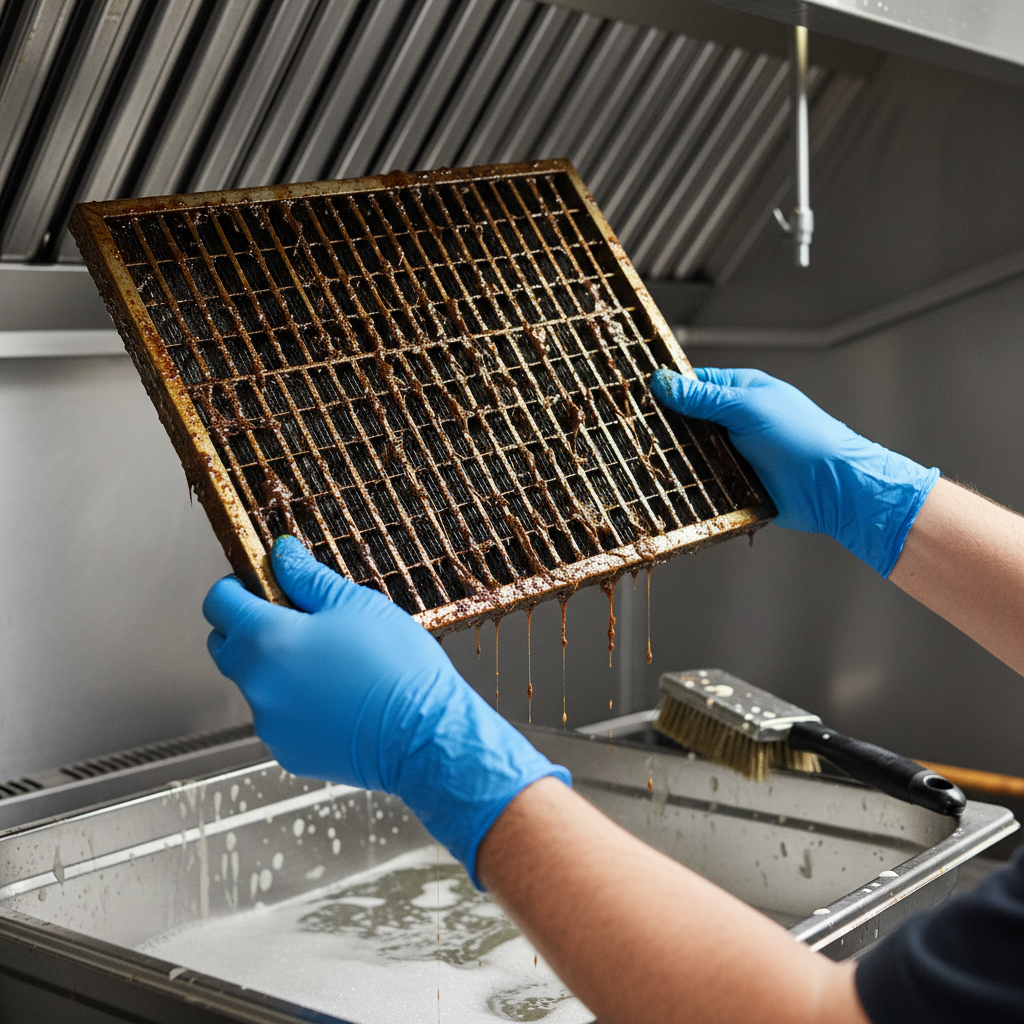
- Remove, soak, degrease, rinse, and dry baffle filters.
- Swap damaged or clogged filters with the correct size and rating.
- Hood canopy and plenum degreasing
- Apply food-safe degreasers; agitate and hot-water rinse to bare metal.
- Detail edges, seams, and hard-to-reach corners (common ignition points).
- Duct degreasing (horizontal and vertical)
- Open access panels; scrape and chemically degrease to bare metal.
- Use hot-pressure washing where permitted and safe for the site.
- Rooftop fan service
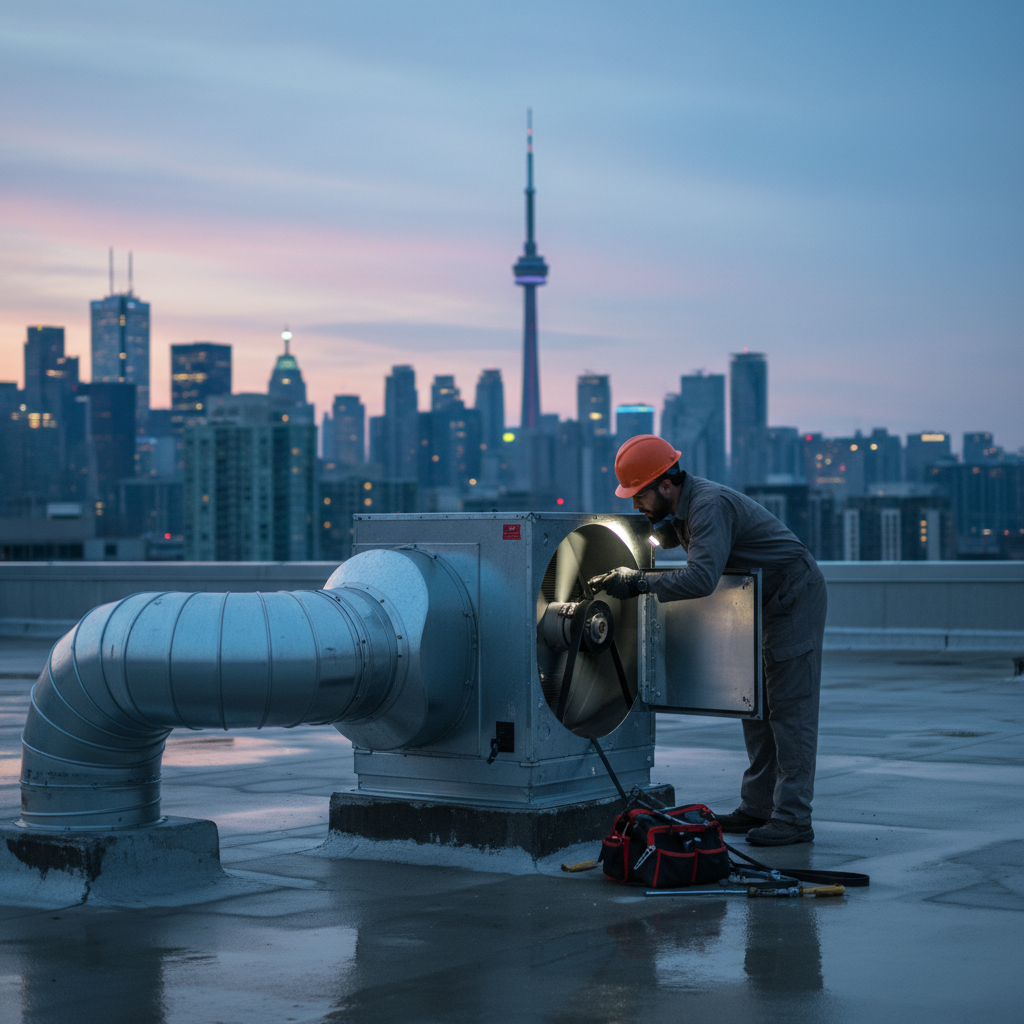
- Degrease fan blades, housings, and curb areas; clear grease containment.
- Inspect and replace fan belts when worn; verify correct tension and alignment.
- Grease trap service (if scheduled)
- Pump, clean, and reset traps to reduce odors and prevent drain issues.
- Document findings and any plumbing maintenance risks.
- Final rinse, polish, and reassembly
- Reinstall filters; dry and shine exterior stainless to professional finish.
- Restore utilities; confirm fan operation and airflow.
- Documentation and compliance
- Before/after photos stored; service sticker with date and next due interval.
- Recommendations for intervals, repairs, and coordinated kitchen cleaning.
Robinhood Cleaners performs the complete sequence with NFPA 96 certified technicians and WSIB insurance for peace of mind.
Methods and Components
Different kitchens, menus, and volumes demand different approaches. Here’s what’s typically involved.
Core Methods You’ll See
- Manual scraping: Effective for heavy deposits prior to chemical or hot-water cleaning.
- Chemical degreasing: Food-safe degreasers break down stubborn grease on metal surfaces.
- Hot-pressure washing: When safe, high-temp water blasting removes loosened residues efficiently.
- Steam-assisted cleaning: Useful for delicate areas or when water volume must be minimized.
Key Components to Include
- Baffle filters: Clean or exchange for airflow and fire barrier integrity.
- Hood canopies and plenums: Degrease to bare metal; residue here ignites quickly.
- Ductwork: Don’t skip vertical risers and elbows — these trap the most grease.
- Rooftop fans: Clean blades/housings; confirm hinge kits and grease containment.
- Fan belts and pulleys: Inspect wear; replace to prevent noisy, low-airflow nights.
- Grease traps: Service on schedule to protect drains and health inspections.
- Adjacent equipment: Coordinate deep cleans for ovens, grills, and refrigeration when needed.
Warning Signs You’re Overdue
- Lingering smoke or heat at the line during rush.
- Grease drips at filter edges or hood seams.
- Fan noise or vibration suggesting belt wear or imbalance.
- Strong odors near the dish pit or traps.
- Failed sticker checks during surprise visits.
See more early indicators in our internal guide to hood fire risk warning signs.
Best Practices and Schedules
Consistency beats intensity. Set the right cadence and stick to it with documented proof.
Common NFPA 96–Aligned Intervals
- Monthly: High-volume, solid-fuel, or heavy frying operations.
- Quarterly: Typical busy restaurants and QSRs.
- Semi-annual: Low-volume or seasonal operations.
- Annual: Non-grease producing kitchens (rare in restaurants).
Scheduling Tips for Toronto Kitchens
- Book off-hours: Use 24/7 availability to protect service windows and prep time.
- Bundle services: Pair hood cleaning with filter exchanges, fan belt replacement, and grease trap service.
- Plan for seasons: Summer patios and winter ventilation loads demand proactive maintenance.
- Standardize across units: Multi-site operators should lock in unified intervals and photo documentation.
- Keep records handy: Store photos, reports, and stickers where inspectors can find them quickly.
Process Snapshot (At a Glance)
| Step | What Happens | Who Owns It | Proof/Output |
|---|---|---|---|
| Pre-Inspection | Assess grease load, access points, safety | Robinhood technician | Checklist + photos |
| Filter Service | Degrease or exchange baffle filters | Robinhood technician | Clean/dry filters installed |
| Hood/Plenum | Degrease to bare metal | Robinhood technician | Before/after images |
| Ducts | Scrape + hot-water rinse | Robinhood technician | Access panel photos |
| Fan & Belt | Clean blades; replace belt as needed | Robinhood technician | Fan test + notes |
| Grease Trap | Pump and clean (if scheduled) | Robinhood technician | Service report |
| Sticker & Report | Apply sticker; store docs/photos | Robinhood + manager | Compliance evidence |
Tools, Documentation, and Resources
The right tools and records protect your team and your business.
- Professional equipment: Hot-water pressure washers, food-safe degreasers, access tools, and rooftop fan hinge kits.
- Photo logs: Keep a dated album per site; include ducts and fan internals.
- Service stickers: Post at the hood with the date and next due interval.
- Inspector-ready folder: Keep NFPA 96 references, service reports, and insurance certificates handy.
- Ontario-specific guidance: Our broader Ontario hood cleaning guide covers province-wide nuances for multi-location operators.
Need an Inspection-Ready Plan?
- 24/7 scheduling that works around service hours.
- NFA 96 certified + WSIB insured technicians for compliance and peace of mind.
- Unified documentation for single-site and multi-unit portfolios.
Explore our restaurant exhaust cleaning in the GTA to align service cadence and reporting.
Toronto Case Examples
Names omitted, lessons kept. Here are real patterns we see across the GTA and Southern Ontario.
1) High-Volume QSR on Queen Street West
- Problem: Rush-hour smoke and heat; belt squeal during dinner service.
- Findings: Heavy duct deposits; stretched fan belt; clogged filters.
- Actions: Manual scrape + hot wash; fan belt replacement; filter exchange; rooftop grease containment cleanup.
- Result: Stronger draw, lower line temps, and quieter fan operation.
2) Yorkville Fine Dining
- Problem: Surprise inspector flagged outdated sticker and residue at seams.
- Findings: Plenum grease; vertical riser buildup at elbow.
- Actions: Chemical degreasing to bare metal; access panel photo proof; polished stainless finish.
- Result: Passed follow-up, with a quarterly cadence set for seasonality.
3) Mississauga Multi-Unit Operator
- Problem: Inconsistent records across five stores created audit friction.
- Findings: Mixed sticker dates; missing photos; no shared folder.
- Actions: Standardized schedules; centralized photo logs; combined grease trap service with hood work.
- Result: Faster audits, fewer emergency calls, and easier staff onboarding.
4) Scarborough Campus Cafeteria
- Problem: Odors near dish line and periodic drain issues.
- Findings: Grease trap overdue; filters saturated; duct elbows loaded.
- Actions: Trap pumping/cleaning; filter exchange; duct elbow access and degreasing.
- Result: Odors resolved and ventilation stabilized during peak hours.
For a service blueprint that mirrors these wins, see our commercial hood cleaning service overview.
Local Tips
- Tip 1: If your restaurant sits near entertainment corridors (e.g., King Street or the Scotiabank Arena area), plan hood service after late events to avoid traffic and keep prep on schedule.
- Tip 2: Winter in Southern Ontario can bring strong rooftop winds. Ask techs to verify fan hinge kits and grease containment before freezes and thaws.
- Tip 3: Multi-location operators across the 401/403/407 corridors benefit from unified calendars and a shared photo archive to satisfy audits quickly.
IMPORTANT: Robinhood Cleaners services commercial kitchens All Over Ontario with fast response in Southern Ontario — ideal for sites spread across the GTA and beyond.
In-House vs. Certified Provider (Quick Comparison)
| Approach | Pros | Cons | Best For |
|---|---|---|---|
| In-House Only | Flexible timing; basic surface cleaning | No duct/fan access; compliance risk; limited documentation | Tiny operations with non-grease cooking |
| Certified Provider | NFPA 96 alignment; full system clean; photo proof | Requires scheduling; specialty crew coordination | Most restaurants and food service sites |
| Hybrid | Daily wipe-downs + scheduled deep cleans | Needs clear roles and a shared calendar | Multi-unit operators wanting consistency |
FAQ
- How often should a restaurant in Toronto schedule hood cleaning?
- Intervals depend on volume and fuel type. High-volume or solid-fuel lines often need monthly service, busy restaurants quarterly, and low-volume sites semi-annually. Inspections should set the exact cadence. We document intervals on the service sticker and report so inspections go smoothly.
- What’s included in professional restaurant hood cleaning?
- A complete service covers the hood canopy, plenum, baffle filters, ductwork, and rooftop fan assemblies. It typically includes filter cleaning/exchange, degreasing to bare metal, fan belt checks, and before/after photos for proof of compliance.
- Is scraping enough, or do we need hot-water cleaning?
- Scraping removes heavy deposits but rarely reaches a compliance-level finish on its own. The usual approach is scrape first, then chemical and hot-water cleaning to reach bare metal in ducts and the plenum, followed by reassembly and testing.
- Can hood cleaning happen overnight without disrupting service?
- Yes. Robinhood Cleaners operates 24/7 across Ontario. Most Toronto kitchens schedule late nights or early mornings to minimize impact on prep and service. We protect equipment, isolate alarms as needed, and leave the line ready to open.
- What documentation do inspectors want to see?
- Expect a dated service sticker at the hood, a report listing serviced components, and before/after photos — especially of ducts and the rooftop fan. Keep these records in a central folder so managers can produce them quickly during inspections.
Key Takeaways and Next Steps
- Full-system focus: Hood, ducts, fans, belts, filters, and traps work as one safety system.
- Schedule matters: Set intervals aligned to NFPA 96 and your volume profile.
- Proof wins: Stickers, photo logs, and standardized reports speed up inspections.
- Bundle smart: Pair hood cleaning with grease trap, filter exchange, and rooftop fan maintenance.
- 24/7 advantage: Use off-hours to protect revenue and kitchen rhythm.
Ready to standardize restaurant hood cleaning Toronto across your sites? Review our fire risk checklist and align your cadence with our GTA service framework. Province-wide details are in the broader Ontario kitchen protection guide.