A practical commercial-kitchen routine for operators and managers
9 Kitchen Fire Hazard Reduction Tips for Every Shift
Short answer. Reduce avoidable kitchen fire hazards by assigning nine shift habits: attend active cooking, clear combustibles, manage visible grease, verify normal exhaust status, protect fire-system access, keep trained response ready, report abnormal conditions, document open-and-close checks, and escalate technical work to qualified providers and authorities. A checklist supports—not replaces—code, manufacturer, insurer, fire-authority or site-specific requirements.
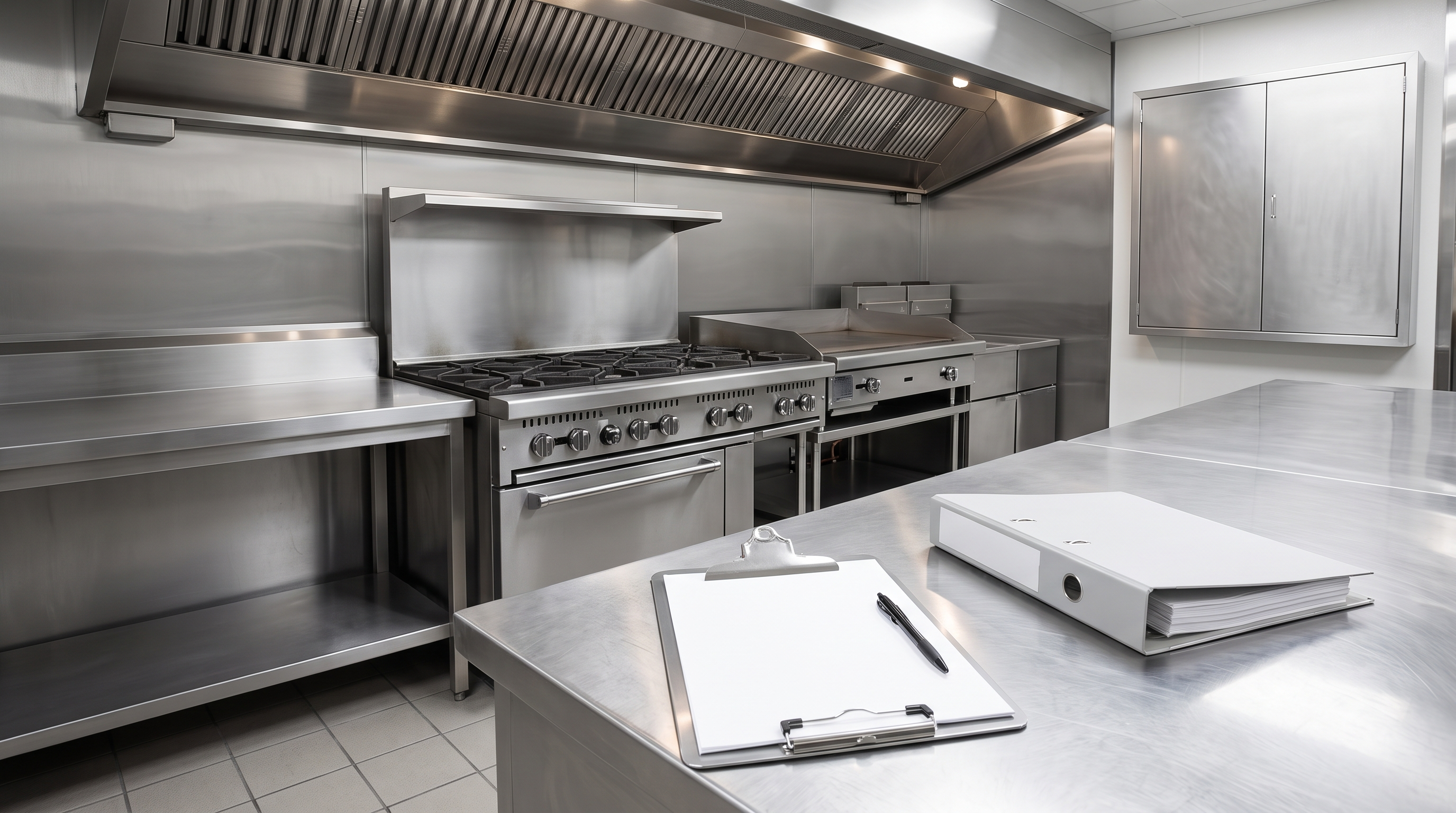
Daily habits work best when each check has an owner, a stop condition and a record.
Separate every-shift controls from qualified technical work
Kitchen staff can control immediate conditions they are trained and authorized to manage: attendance, housekeeping, storage, basic visual checks, reporting and emergency actions. They should not enter ducts, alter exhaust or suppression equipment, bypass interlocks, reset an impaired system, interpret code compliance or perform work outside training.
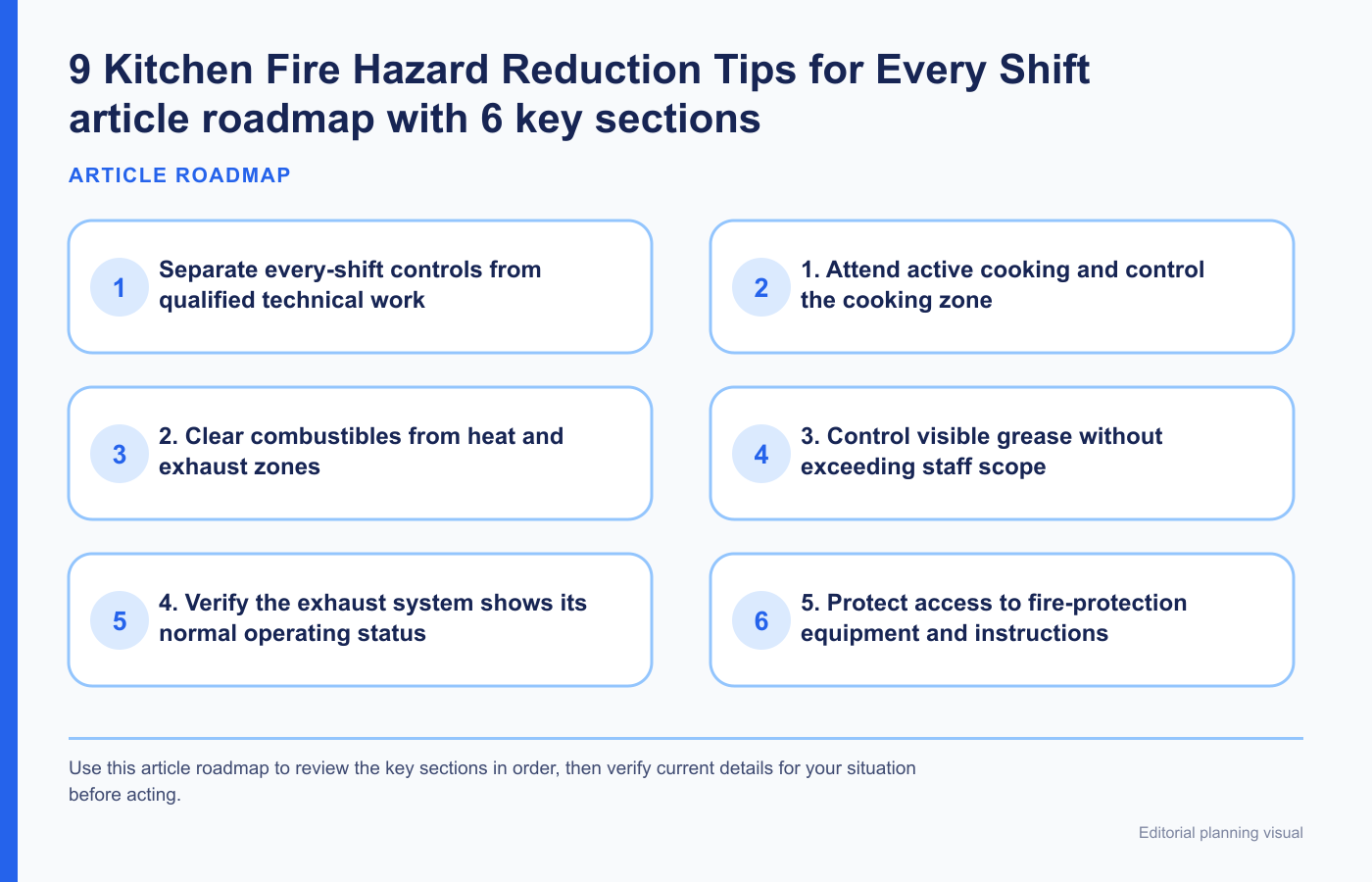
Use this article roadmap to review the key sections in order, then verify current details for your situation before acting.
| Every shift | Qualified service or responsible professional | Authority or emergency response |
|---|---|---|
| Attend cooking, clear combustibles, follow approved cleaning, check visible status and record exceptions | Inspect, test, clean, maintain or repair systems within verified scope and current requirements | Interpret and enforce applicable requirements; respond to fire and emergency conditions |
Ontario’s Fire Code contains requirements for commercial cooking exhaust and fire-protection systems. The actual installation, cooking operation and local authority determine how those requirements apply. A generic article cannot declare a kitchen compliant or safe.
1. Attend active cooking and control the cooking zone
Unattended heat can turn a small problem into a fire before staff notice. Assign an operator to each active cooking station and make coverage explicit during breaks, deliveries, changeover and rush periods. A person who is stocking another room is not attending the appliance.
Use equipment only as approved and within the site’s operating procedure. Watch oil temperature, food condition, ignition, unusual flame and smoke. Keep pan handles and working routes controlled to reduce spills. Do not leave heating oil, grills, ranges or fryers operating merely because service will resume soon.
Toronto Fire Services’ kitchen and cooking guidance emphasizes staying in the kitchen while cooking and keeping watch. Commercial kitchens need their own equipment-specific controls, but attention remains the first line of detection.
2. Clear combustibles from heat and exhaust zones
Packaging, towels, paper, cardboard, decorations, cleaning products and employee belongings can migrate toward heat during a busy shift. Mark approved storage and no-storage zones based on current equipment, manufacturer, fire-code and site requirements. Keep exits, aisles, shutoffs and fire equipment unobstructed.
Add a visual sweep to opening, changeover and closing. Look above, behind and beside appliances where temporary items are easily missed. Do not store anything on equipment or within a required clearance because it “will only be there for a minute.”
Control flammable or combustible liquids through the site’s approved storage and handling process. If staff do not know whether a product belongs near the line, stop and ask the responsible supervisor rather than improvising a location.
3. Control visible grease without exceeding staff scope
Follow the facility’s approved cleaning procedure for accessible cooking and nearby surfaces. Remove visible accumulation at the required point in the shift using the specified tools and chemicals, and protect food and clean equipment. Deal with cloths, pads, residue and waste through the approved disposal route.
Grease on filters, hood surfaces or floors can also signal a larger maintenance or operating issue. Staff should record the location and condition, then escalate according to the site plan. They should not remove components, enter ducts or choose an unapproved chemical simply to make the visible surface look clean.
Cleaning frequency is not universal. Cooking volume, fuel, equipment, food, system design, manufacturer instructions, insurer conditions, inspection evidence and authority requirements can change the need. “Monthly” or “quarterly” is not a safe substitute for a site-specific program.
4. Verify the exhaust system shows its normal operating status
Before cooking, use only the observations and indicators the facility has authorized staff to check. Confirm the required filters or grease-removal components appear installed in their designated position, the system shows its expected status, and there are no obvious missing parts, damage, unusual noise, smoke capture problems or warning indicators.
If the normal condition is not present, follow the stop-work and escalation procedure. Do not bypass an interlock, cover a warning, alter a fan control, substitute a similar-looking filter or operate a hood with required components missing. Record what was observed without declaring the cause.
The public-access edition of NFPA 96 provides the commercial cooking ventilation and fire-protection standard context. Application belongs with current adopted requirements, the authority having jurisdiction and qualified parties for the actual system.
5. Protect access to fire-protection equipment and instructions
Keep pull stations, extinguishers, shutoffs, alarm points, exits and emergency instructions visible and accessible according to the approved plan. Do not hang utensils, aprons, menus or delivery bags on fire equipment. Make sure temporary staging does not block the route during the busiest service window.
A quick visual status check does not replace required inspection, testing or maintenance. Staff should know which tags, seals or indicators they are authorized to observe and whom to contact when something looks disturbed, missing, overdue or impaired. They should not reset, repair or test a suppression system unless qualified and authorized.
When a system is impaired, the facility’s responsible person must follow applicable notification, fire-watch, shutdown and restoration requirements. A blog cannot tell a site to continue operating.
6. Prepare staff to respond without creating a second hazard
Train staff on the site’s alarm, evacuation, 911, shutoff and fire-equipment procedures, including their limits. People need a clear escape route and authority to leave. Assigning someone an extinguisher does not make it appropriate to fight every fire.
For a pan fire, Toronto Fire Services says to slide a lid over the pan, turn off the stove and leave the pan in place until cooled—only when that action can be performed safely. It also says never to use water on a grease fire. Commercial equipment and suppression systems require the facility’s own approved emergency procedures, so do not generalize a pan instruction to a fryer, duct or spreading fire.
After any fire-system discharge, fire or suspected damage, keep equipment out of service until the appropriate authority and qualified responsible parties complete their work and authorize restoration.
7. Report abnormal conditions before they become routine
“It always does that” is not an assessment. Create a short exception list that staff can use without diagnosing: smoke not being captured as expected, unusual heat or odour, damaged or missing filter, grease appearing where it normally does not, abnormal fan sound, warning light, repeated equipment shutdown, blocked access or fire equipment that looks disturbed.
For each condition, define the safe immediate action, who receives the report, whether cooking stops, and who can authorize restart. Use photos only if site policy permits and taking them does not delay a safety action. Record time, equipment and observation; leave cause and repair to qualified parties.
Review repeated exceptions at management meetings. Closing the same symptom each shift without addressing the underlying issue defeats the record.
8. Close every shift with a useful evidence trail
A checklist should prove what was actually checked, not create a page of automatic ticks. Use named equipment or hood identifiers, date and shift, assigned person, observable condition, cleaning completed within authorized scope, exception number, escalation, and the person who decided the next action.
- Confirm cooking has ended through the approved shutdown process.
- Complete accessible surface and housekeeping work.
- Check required access routes and visible system status.
- Record missing, damaged or unusual conditions.
- Escalate unresolved exceptions before handing over the area.
- Sign with the real time and responsible person.
Keep staff checklists connected to provider work orders, authority reports and repair records. An invoice alone may not identify which hood, component or exception was addressed.
9. Escalate inspection, cleaning and maintenance to verified scope
Build an asset register for each cooking line: equipment served, hood and exhaust identifiers, filters, fan, fire-protection components, manufacturer information, responsible owner, applicable requirements, service records and open exceptions. Let current code, authority, manufacturer, insurer and actual inspection evidence set the technical program.
When comparing a provider, ask exactly which components are included, who performs and supervises work, which qualifications and insurance apply, how access and shutdown are controlled, what method is used, what remains excluded, what evidence is delivered, and how deficiencies are reported. Confirm credentials through current authoritative records.
Robinhood Cleaners publishes several categories on its services page. A published category does not prove site eligibility, territory, qualifications, inspection authority, frequency, price, availability or that a particular system will be made compliant. Verify the exact proposal before relying on it.
Use one action sequence when a hazard is found
| Step | Question | Output |
|---|---|---|
| 1. Protect | Is there immediate fire, smoke, breathing or escape danger? | Emergency plan, evacuation and 911 as required |
| 2. Stop | Does the approved procedure require cooking or equipment shutdown? | Safe stop without bypass or improvised repair |
| 3. Identify | Which station, hood or component shows the observable condition? | Clear asset and condition record |
| 4. Escalate | Who is authorized to assess and decide? | Supervisor, qualified provider or authority notification |
| 5. Control | How is the area kept unavailable pending the decision? | Tag, barrier, handoff or other approved control |
| 6. Verify | What evidence and authorization permit return to service? | Completed record and named approval |
Pre-assign these decisions. A checklist that says “tell manager” is incomplete when it does not name the role, backup contact, stop condition and after-hours route.
Kitchen fire hazard reduction mistakes to avoid
- Leaving active cooking unattended during deliveries or breaks
- Using required clearances as temporary storage
- Cleaning only what guests can see while ignoring recorded system exceptions
- Applying one generic maintenance frequency to every cooking operation
- Operating with missing filters, warnings or impaired protection without authorized review
- Asking untrained staff to enter ducts, alter controls or reset fire systems
- Using water on a grease fire
- Fighting a fire when evacuation and 911 are the safe actions
- Calling a provider visit a certification or compliance guarantee
- Closing repeated checklist exceptions without root-cause follow-up
Frequently asked questions
How often should a commercial kitchen exhaust system be cleaned?
There is no single frequency for every kitchen. Use current adopted code, local authority direction, manufacturer instructions, insurer conditions, cooking load, system design and qualified inspection findings to establish the program.
Can kitchen staff clean hood filters themselves?
Only within the facility’s approved procedure, their training and the component instructions. Removal, chemicals, food protection, wastewater, drying, compatibility and reinstallation all matter. Staff should not enter ducts or perform technical work outside authorization.
Does hood cleaning make a kitchen fire-safe?
No single service proves the entire kitchen is safe or compliant. Cooking controls, housekeeping, exhaust condition, fire protection, equipment, training, inspections, maintenance and authority requirements all interact.
What should staff do when they see unusual smoke?
Follow the site’s stop-work and emergency procedure. If there is a fire or immediate danger, evacuate as directed and call 911. Do not bypass controls or keep cooking while guessing at the cause.
Request a site-specific scope discussion
Collect the equipment and hood inventory, current authority requirements, service records, cooking profile, open exceptions and available service window. Contact Robinhood Cleaners through its current official website to ask whether it supports the exact location and required scope. Verify territory, qualifications, insurance, worker coverage, methods, exclusions, evidence, price and emergency terms before authorizing work. Keep code interpretation and return-to-service decisions with the appropriate authority and qualified responsible parties.