Ontario commercial kitchen inspection guide
How to Prepare for an Ontario Commercial Kitchen Inspection
Short answer: First identify which authority and inspection applies: public health, fire, building, occupational safety, licensing or an insurer may examine different issues. Obtain the current checklist or requirements from that authority, assign an owner to every item, correct immediate hazards and organize records. A cleaning company can help with cleaning scope, but only the responsible authority can determine compliance or issue an approval.
“Get ready for an inspection” is too vague to be useful because a restaurant can face several kinds of review. A public health inspector may focus on food handling, temperatures, sanitation and pest control. A fire official may examine commercial cooking and suppression-related conditions. Another visit may concern building, occupational or licensing requirements. The first preparation decision is therefore identifying the authority, legal scope and current records.
This guide does not repeat Robinhood Cleaners’ exhaust-cleaning, grease-trap or generic health-code articles. It builds an inspection file, a risk-based walk-through and stop conditions that tell an operator when cleaning is not enough and a qualified trade or authority must be called.
Identify the inspection authority and current scope
Start with the notice, application, complaint, renewal or event that triggered the review. Record the authority’s name, contact person, inspection type, site areas, documents requested and appointment details. If the visit is unannounced or no checklist was supplied, use the authority’s current official guidance and contact it for clarification rather than relying on an old template.
Ontario Regulation 493/17, Food Premises, sets provincial requirements touching food sources and protection, equipment, cleaning and sanitizing, employee hygiene, pest control and records. Local boards of health administer food-premises oversight. WDG Public Health’s official restaurant and food-premises page, for example, describes inspection attention to temperatures, preparation and storage, hygiene, sanitation, food sources and pests. Use your own local public health unit’s current direction.
A health inspection is not a fire inspection. A fire visit is not a building approval. A private audit is not a government approval. Keep separate columns for each authority and never mark an item “not applicable” without confirming why.
Build one inspection file with owners and dates
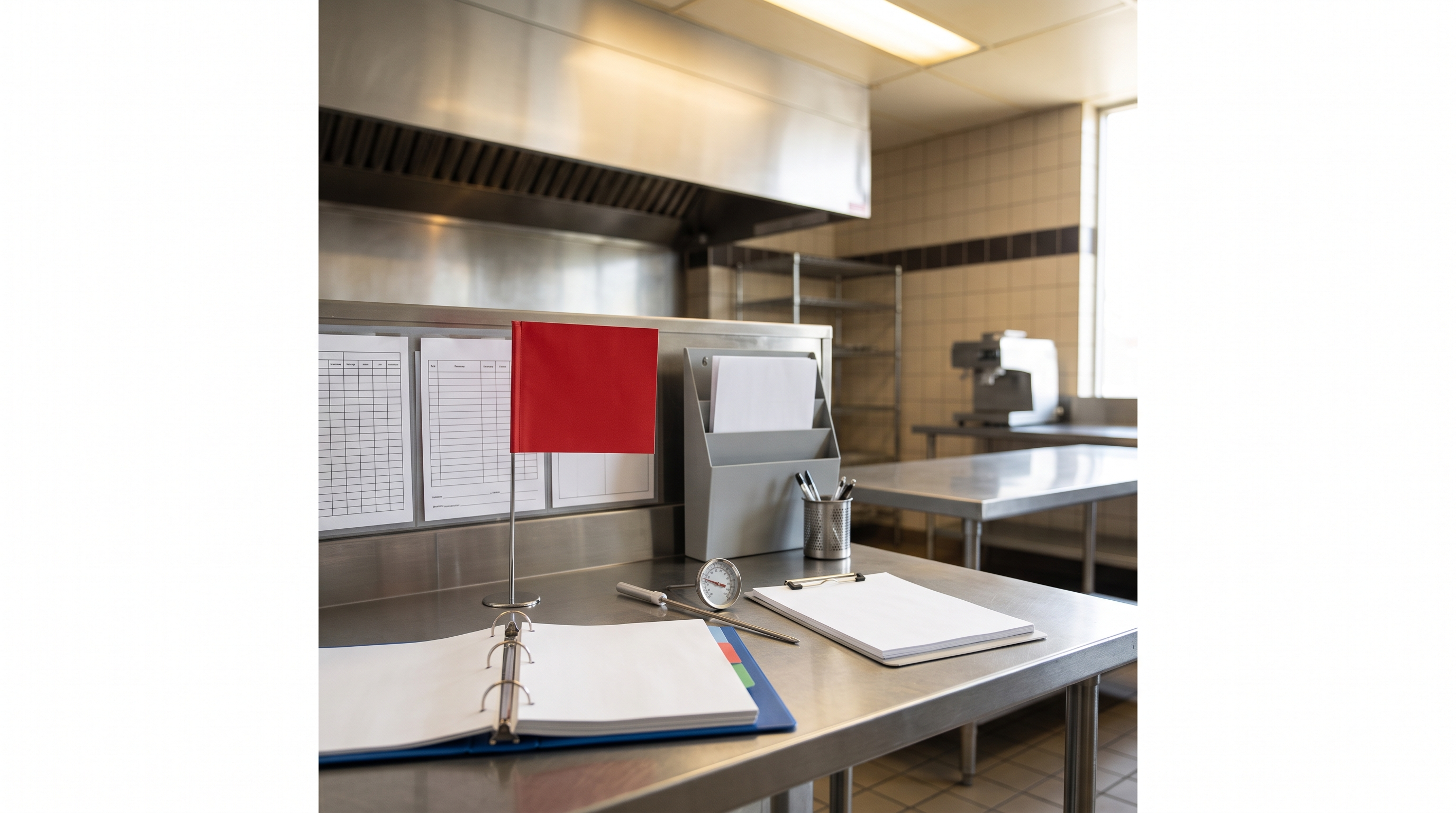
Create an index, whether digital or printed, so a manager can retrieve a record without searching through messages. Include current permits or approvals relevant to the operation, prior inspection reports, corrective-action evidence, temperature logs, sanitation schedules, pest-control records, equipment service records, staff training records and supplier information where required. Do not manufacture missing logs after the fact. Identify the gap, start accurate records and ask the authority how to handle prior missing information.
- List every requirement from the current official scope.
- Assign one accountable person and a completion date.
- Link the evidence: photograph, invoice, service report, log or written response.
- Record open gaps and the professional or authority contacted.
- Recheck corrected items before the inspection.
Records should match real conditions. A signed cleaning sheet does not help if food-contact surfaces are visibly soiled or sanitizer is not used correctly. Conversely, a clean-looking hood is not proof that a fire-protection system has received any required inspection or service. Appearance and documentation support each other but are not interchangeable.
Walk the food flow from receiving to service
Follow ingredients through receiving, storage, preparation, cooking, holding, service and disposal. At each stage, ask whether food is protected from contamination, temperatures can be measured, raw and ready-to-eat items are separated, approved sources can be identified and staff can explain the actual procedure. Verify that thermometers and test methods are available and appropriate. Use the current requirements and public-health guidance for numeric temperatures rather than copying values from an undated blog.
Inspect food-contact equipment and utensils for cleanliness, condition and suitability. Regulation 493/17 addresses equipment kept in good repair and cleaning and sanitizing requirements. Cracked surfaces, damaged seals, corroded components or equipment that cannot be cleaned may need repair or replacement; more scrubbing does not make damaged equipment compliant.
Observe handwashing access, employee practices, storage of personal items and cleaning-chemical control during a real service period. A staged empty-kitchen walk can miss blocked sinks, improvised storage and cross-traffic that emerge when staff are busy. Ask employees to demonstrate the procedure rather than simply answer yes.
Separate exhaust cleaning from fire-system decisions
Commercial cooking can involve hoods, ducts, filters, fans, fuel or electrical equipment, portable extinguishers and fire-suppression systems. The condition and required inspection of each component should be assessed against the current applicable code and the authority having jurisdiction. Ottawa Fire Services publishes an official Ontario Fire Code pre-inspection guide that identifies commercial cooking systems among common review areas, but an Ottawa guide does not replace direction from the local fire department or the current law for another municipality.
Look for visible grease accumulation, missing or damaged filters, obstructed access, unusual fan performance, disconnected components, overdue or missing service documentation and unapproved changes. Stop using affected equipment when there is an immediate fire, electrical, gas, suppression or ventilation concern and follow emergency and authority instructions. Do not open, test, reset or modify systems unless qualified and authorized.
Robinhood Cleaners publishes pages about commercial kitchen hood cleaning and commercial cooking safety context. Those pages can help define a cleaning conversation, but this package does not verify certifications, insurance, coverage, availability or code authority. Confirm those details directly before hiring.
Check facility, waste, pest and chemical controls
Inspect floors, walls, ceilings, drains, lighting, ventilation and equipment clearances for damage, residue, standing water, inaccessible soil or conditions that support pests. Confirm garbage and grease waste are contained and removed without contaminating food areas. Verify doors, screens and penetrations do not provide obvious pest entry. Keep pest-control records required by the current rules and resolve the root condition rather than relying only on treatment.
Label and store cleaning chemicals to prevent contamination and unauthorized mixing. Ensure safety information and protective equipment are available where occupational requirements demand them. If staff encounter an unknown product, damaged container, strong reaction, gas odour, electrical fault, sewage backup or other acute hazard, stop work, isolate the area if safe and contact the appropriate emergency service, authority or qualified professional.
For a new or altered operation, contact the local public health unit before opening or changing the premises. Eastern Ontario Health Unit’s official opening-a-food-premises guidance illustrates the value of notifying public health and reviewing plans. Requirements and contacts differ by area, so use the health unit serving the actual address.
Use a triage table instead of treating every gap as cleaning
| Finding | Likely next action | Stop condition |
|---|---|---|
| Removable soil on sound, cleanable surface | Clean and sanitize using the approved procedure; document verification | Surface is damaged, porous or cannot be safely accessed |
| Broken seal, cracked surface or failed equipment | Qualified repair or replacement; update maintenance record | Food safety, electrical, gas or mechanical hazard exists |
| Grease in hood or accessible components | Assess cleaning scope with a competent provider | Duct, fan, suppression or fire-system issue requires qualified service |
| Missing inspection or service record | Contact provider or authority; document the gap honestly | Operation is prohibited until required approval or service occurs |
| Pest evidence | Protect food, investigate entry and harbourage, contact pest professional | Contamination or infestation requires closure or authority direction |
| Unknown code interpretation | Ask the authority having jurisdiction in writing | Do not self-certify or guess at a safety-critical requirement |
Rank findings by immediate risk, legal dependency and time to correct. A missing label may be fixed quickly; a damaged ventilation component or construction change may require design, parts, permits or reinspection. Escalating early is faster than hiding the issue until inspection day.
Run inspection day as a factual walk-through
Designate a knowledgeable person who can access all relevant areas and records. Keep keys, ladders or access equipment available only where safe and authorized. Brief staff to answer honestly, continue safe practices and direct questions to the responsible manager. Do not coach anyone to conceal a condition or produce a false response.
Take notes on observations, requested documents, deadlines and corrective actions. Ask for clarification when an instruction is unclear and confirm how evidence of correction should be submitted. If there is a dispute, remain professional and use the authority’s review or appeal process. A cleaning contractor cannot overrule an inspector or issue approval.
After the visit, assign every action, preserve the report, record completion evidence and update the recurring maintenance system. The most valuable outcome is not merely getting through one date; it is a control process that makes safe conditions visible every day.
Common inspection-preparation mistakes to avoid
- Using one generic checklist for health, fire, building and private audits.
- Quoting frequencies or code clauses from an undated commercial blog.
- Filling in missing records retroactively instead of disclosing the gap.
- Cleaning damaged equipment instead of repairing or replacing it.
- Assuming a hood-cleaning invoice proves a suppression or fire-system approval.
- Staging the kitchen while ignoring practices during a busy service period.
- Waiting until inspection day to contact a qualified trade or authority.
- Asking a cleaning company to guarantee a pass or interpret law conclusively.
Frequently asked questions
Can a commercial cleaner certify that my kitchen will pass?
No. A cleaner can define and document contracted cleaning work. Only the responsible authority can determine compliance or issue its approval, and other qualified providers may be required.
Which Ontario commercial kitchen checklist should I use?
Use the current checklist or guidance from the authority inspecting the actual premises, plus current applicable law. Separate health, fire, building, occupational and licensing scopes.
What if an inspection record is missing?
Do not fabricate it. Contact the service provider or authority, record what is missing, arrange required work and ask how the gap should be addressed.
Does visible cleanliness prove compliance?
No. Cleanliness is important, but equipment condition, procedures, records, food handling and specialized systems may require separate verification.
Define cleaning scope only after the compliance gaps are mapped
Review Robinhood Cleaners’ current service context and its hood-cleaning page, then request a written cleaning scope tied to the surfaces and access conditions you identified. Confirm current credentials, insurance, service area, availability and documentation directly. Send code, approval and inspection questions to the local authority having jurisdiction.
This guide is general Ontario safety and preparation information, not legal, engineering, fire-code or public-health approval. Requirements vary by premises, equipment, municipality and authority. Stop work and contact emergency services or qualified professionals for immediate hazards.