Grease builds up faster than most managers expect. One busy weekend, and your hood, filters, and ducts can go from “fine” to a fire risk. This commercial kitchen hood cleaning guide is written for Ontario restaurants, QSRs, hospitality groups, food courts, and institutional kitchens that need a practical, inspection-ready plan—and a certified partner when it matters most.
- Understand your hood system from canopy to rooftop fan
- Follow a step-by-step workflow aligned to NFPA 96
- Know what staff can handle safely—and what needs certified pros
- Set service frequency by cooking volume and fuel type
- Document cleaning to satisfy inspectors and insurers
Overview
- Hood cleaning removes flammable grease from the canopy, filters, ducts, and exhaust fan.
- Clean systems reduce fire hazards, improve airflow, and protect staff comfort.
- Pair daily wipe-downs with scheduled NFPA 96–compliant professional service.
- Keep photo reports, service stickers, and logs ready for inspections.
Table of Contents
- What Is Commercial Kitchen Hood Cleaning?
- Why Hood Cleaning Matters
- Commercial Kitchen Hood Cleaning Guide: Step-by-Step
- Methods, Frequencies, and Approaches
- Best Practices That Pass Inspections
- Tools, Supplies, and Helpful Resources
- Local Tips (Ontario Operations)
- Case Studies: 11 Ontario Kitchen Scenarios
- Who Does What? Staff vs. Pros
- FAQ
- Key Takeaways
- Next Steps
Quick Answer
Serving kitchens across All Over Ontario at All Over Ontario, Robinhood Cleaners delivers NFPA 96–aligned hood, duct, and exhaust fan cleaning that reduces fire risk and clears inspections. Use this commercial kitchen hood cleaning guide to organize daily filter care and schedule certified service for ducts, fans, and hard-to-reach grease.
What Is Commercial Kitchen Hood Cleaning?
Hood cleaning is the full removal of grease from the hood canopy, baffle filters, plenum, horizontal and vertical ducts, and the rooftop exhaust fan assembly. Done right, technicians restore surfaces to bare metal without damaging equipment.
- System components: canopy, baffle filters, grease troughs, plenum, duct risers, access panels, fan housing, fan belt, motor, and grease containment.
- Scope split:
- Line-level hygiene: exterior wipe-downs and regular filter soaks (staff task).
- Deep technical clean: ductwork, plenum interiors, and rooftop fan (certified professional task).
- Standards: Service should align with NFPA 96 and local fire and public health authorities.
- Documentation: Service stickers, photo logs, and recommendations form your inspection record.
Why Hood Cleaning Matters
- Fire hazard reduction: Grease is fuel. Removing it breaks the fire triangle and reduces flashover risk.
- Compliance: Inspectors expect visible stickers, dated logs, and photographic proof of bare-metal results.
- Airflow and comfort: Clean ducts and blades move more air, cool the line, and capture smoke and steam.
- Equipment life: Clean fans draw fewer amps, belts last longer, and bearings run cooler.
- Business continuity: Planned service prevents surprise shutdowns from citations or insurance flags.
Commercial Kitchen Hood Cleaning Guide: Step-by-Step
Use this workflow to evaluate your current program. Staff own the first and last mile; certified, WSIB-insured professionals handle ducts, fans, and rooftop work.
1) Preparation and Protection
- Cool appliances to safe handling temperatures.
- Cover ranges, fryers, and electrical panels with plastic sheeting; protect floors.
- Set up splash guards and grease containment; isolate fan power (lock-out/tag-out where required).
- Verify make-up air operation to avoid negative pressure after restart.
2) Filters and Canopy
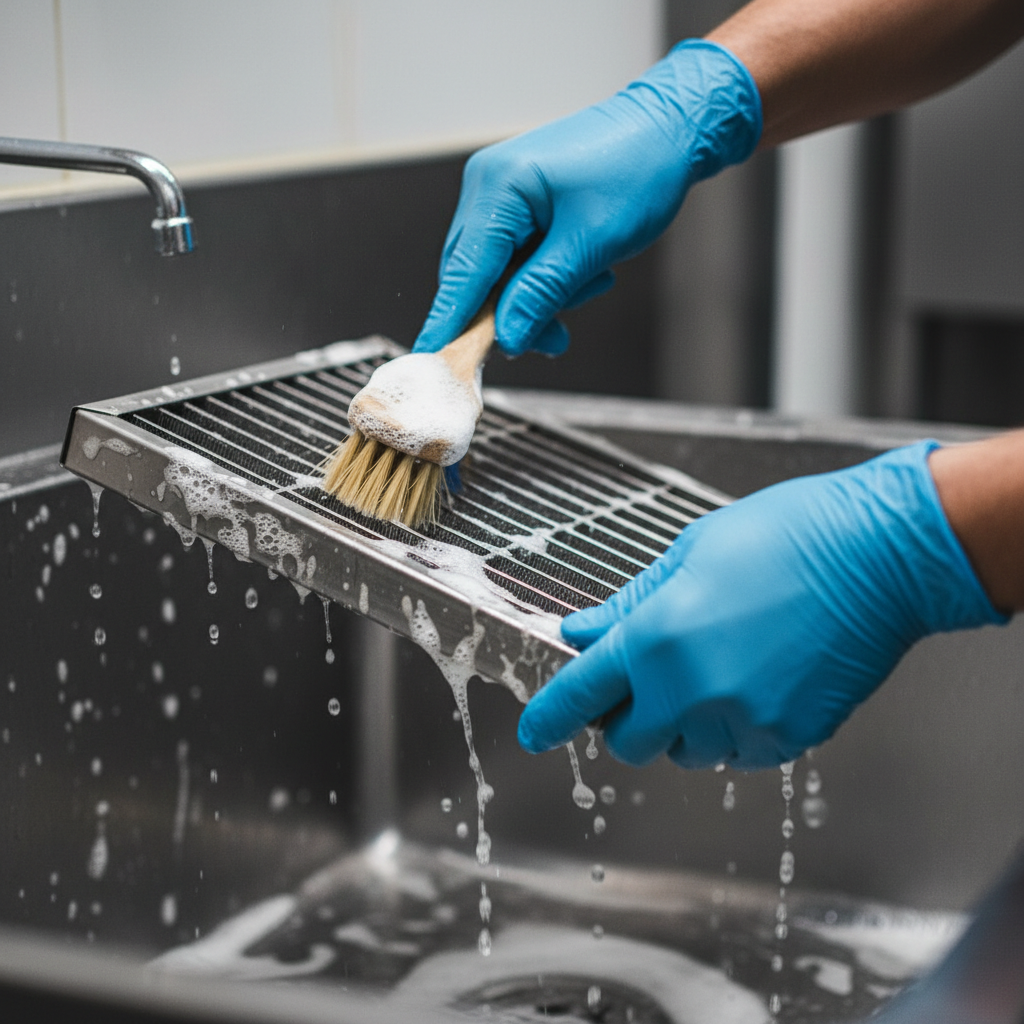
- Remove baffle filters and soak in hot, food-contact-safe degreaser; brush to bright metal.
- Scrape heavy deposits on canopy and plenum; apply foam degreaser for dwell; rinse under control.
- Recover wastewater to approved containers; avoid roof and drain contamination.
3) Ducts, Access, and Exhaust Fan
- Open access panels; clean horizontal and vertical ducts to bare metal using hot water/steam and scraping.
- On the roof, open the hinge kit; protect the membrane; degrease fan blades, housing, and discharge.
- Inspect fan belt and bearings; replace worn belts; verify pulley alignment and rotation direction.
- Install or service rooftop grease containment to protect membranes and drains.

4) Verification, Reset, and Reporting
- Reinstall dry filters; polish exteriors for inspection-ready appearance.
- Restore power; verify capture and airflow at the line; remove protections.
- Apply the service sticker; deliver a photo report with any corrective recommendations.
Want detailed frequency guidance? See our hood cleaning frequency guide for cooking types and operational risk profiles.
Methods, Frequencies, and Approaches
Different kitchens, fuels, and menus create different risks. Match methods and cadence to your operation.
Core Methods
- Hot water pressure/steam: Rapid removal of heavy deposits; requires strong containment and trained handling.
- Hand scraping: Precise around gaskets, sensors, and tight duct geometry; typically paired with degreasers.
- Foaming chemistry: Clings to verticals, increases dwell time, and improves rinse results when used correctly.
Frequency Guidance (align to NFPA 96 and local requirements)
| Operation Type | Typical Cadence | Notes |
|---|---|---|
| Solid fuel (wood/charcoal) | Most frequent | High soot and grease; strict inspection focus |
| High-volume fry lines | Very frequent | Oil aerosol loads filters and ducts quickly |
| Mixed grill/saute | Regular intervals | Adjust by hours and menu fat content |
| Low-volume or seasonal | Extended intervals | Perform monthly visual checks |
For Ontario operators, our NFPA 96 certified hood cleaning guidance explains how inspectors evaluate risk and documentation on site.
Best Practices That Pass Inspections
- Install hinge kits on rooftop fans and access panels on long duct runs for safe, thorough cleaning.
- Use rooftop grease containment to protect membranes and keep drains clear.
- Keep photo documentation from each service tied to the current sticker.
- Train staff in daily wipe-downs and regular filter soaks between pro services.
- Schedule after-hours service to minimize disruption and allow adequate dry time.
- Log fan belt inspections and keep one labeled spare on site.
- Ensure WSIB-insured vendors and certified techs handle roof and duct work.
- Coordinate hood service with grease trap maintenance to avoid surprise backups after deep cleans.
Not sure whether your current setup is a hazard? Review telltale signs in our kitchen hood fire hazard checklist and close gaps before your next inspection.
Tools, Supplies, and Helpful Resources
Build a simple kit and workflow your team can repeat. Then let certified pros handle the technical deep clean.
On-Site Tools
- Hot-water or steam unit with variable nozzles
- Scrapers, nylon/SS brushes, scouring pads
- PPE: gloves, goggles, face shields, aprons
- Wet/dry vac, splash guards, containment dams
- Rooftop pads and grease containment
Chemistry (Food-Contact Safe)
- High-performance degreaser and foaming applicator
- Stainless steel polish and microfiber cloths
- Follow SDS; never mix chemicals; label spray bottles
Downloadable Checklists (What to Track)
- Daily: exterior wipe-down, spill response, quick visual of filters
- Weekly: filter soaks, trough clean-out, polish
- Monthly: visual duct/fan checks (from access points), belt glance
- Quarterly/Scheduled: certified duct/fan service with photos and sticker
- Event-based: post-solid-fuel events, menu changes, or extended hours
Local Tips (Ontario Operations)
Local Tips
- Tip 1: If your site sits along the Highway 401 corridor, schedule after-hours service to avoid traffic delays for rooftop access and disposal runs.
- Tip 2: Winter roof work needs extra planning. Ice and freeze–thaw cycles make membranes slick—build in time for safe setup and fan hinge handling.
- Tip 3: Many Ontario malls and campuses restrict water discharge. Confirm containment and disposal procedures with facilities before service night.
IMPORTANT: These tips reflect common conditions we see across All Over Ontario and are tailored to restaurant and institutional kitchens.
Case Studies: 11 Ontario Kitchen Scenarios
- 1) High-volume QSR, Southern Ontario: Fryers loaded filters in days. We added a weekly filter exchange plus quarterly duct/fan service. Result: stronger capture and a cooler line.
- 2) Institutional kitchen, Ontario campus: Long horizontal ducts trapped grease. We installed extra access panels and a fan hinge. Result: safer rooftop work and faster future cleans.
- 3) Food court tenant, regional mall: Irregular service led to a citation. We shifted to after-hours, documented NFPA 96 service. Result: citation cleared and zero downtime.
- 4) Fine dining with char grill: Solid-fuel soot migrated into risers. We increased cadence and introduced foaming dwell steps. Result: bare-metal verification and happier inspectors.
- 5) Catering commissary (ghost kitchen hub): Multiple menus spiked aerosolized grease. We created a shared calendar for filters and ducts. Result: consistent airflow across bays.
- 6) Hotel kitchen with rooftop access limits: Tight roof rules slowed service. We staged gear via service elevator off-peak. Result: full clean without disrupting guests.
- 7) Campus food hall with extended hours: Late closes limited dry time. We split service over two nights. Result: safe restart and no morning smoke alarms.
- 8) Bakery–cafe line with light saute: Low volume, but sugar residues baked on. We used gentler chemistry and hand scraping. Result: gleaming canopy and no sensor damage.
- 9) Sports venue concessions: Event surges overwhelmed filters. We added mid-event filter swaps and rooftop containment. Result: controlled grease and stable capture.
- 10) Quick-service chicken concept: Oil-rich vapor coated the fan. We paired belt replacement with deep fan housing cleans. Result: quieter motor and better draw.
- 11) Hospital kitchen with strict hygiene: Discharge protocols were tight. We used sealed containment and documented disposal. Result: compliance passed on first review.
Who Does What? Staff vs. Pros
| Task | Staff (Daily/Weekly) | Certified Pros (Scheduled) |
|---|---|---|
| Exterior wipe-downs | Yes | Optional polish |
| Filter soaks and swaps | Yes | Deep clean if needed |
| Duct interior to bare metal | No | Yes |
| Rooftop fan cleaning | No | Yes (hinge + containment) |
| Fan belt inspection/replacement | Visual only | Yes (tension + alignment) |
| Photo reports and stickers | Keep on file | Produce/attach |
FAQ
- How often should our hood and ducts be cleaned?
- Match cadence to risk. Solid fuel and high-volume fryers require the most frequent service; mixed grill kitchens follow regular intervals; low-volume or seasonal sites can extend intervals but should perform monthly visual checks. Align with NFPA 96 and your local fire authority.
- Can our staff clean ducts and the rooftop fan?
- Staff should handle exterior wipe-downs and filter soaks. Interior ducts and rooftop fans require trained, insured technicians with proper access, containment, and documentation to achieve bare-metal results safely.
- What will inspectors want to see?
- Current service stickers, photo documentation of bare-metal cleaning, signed work orders, and logs for filter care and any corrective actions. Keeping these organized speeds inspections.
- Does professional hood cleaning improve kitchen comfort?
- Yes. Clean ducts and fans increase capture and move more air, which reduces heat on the line and helps balance make-up air and HVAC. Teams notice the difference on busy nights.
- What services can Robinhood Cleaners coordinate?
- Kitchen Exhaust and Hood Cleaning, Filter Cleaning & Exchange, Exhaust Fan Cleaning and Belt Replacement, Duct Cleaning, Grease Trap Service, Commercial Appliance Cleaning, Power Washing, and Ventilation System Maintenance—delivered by certified, WSIB-insured professionals.
Key Takeaways
- Pair daily staff care with scheduled, certified hood, duct, and fan service.
- Document everything: stickers, photo reports, and logs are your inspection toolkit.
- Install access panels, hinge kits, and rooftop containment to simplify service.
- Set frequency by menu, fuel, and hours—then review after menu or hour changes.
- Choose WSIB-insured, NFPA 96–aligned partners for safety and compliance.
Next Steps
- Review your current stickers, logs, and photo records.
- Walk the duct path to confirm access panels and rooftop hinge kits.
- Align your plan to our Ontario hood cleaning service overview.
- Book an after-hours assessment anywhere in Southern Ontario—24/7 scheduling available.