Slips, shocks, and chemical burns aren’t “part of the job.” They’re preventable. In fast-paced restaurants and institutional kitchens across Southern Ontario, commercial kitchen power washing safety is what separates a smooth overnight reset from next-day accidents, shutdowns, and insurance headaches. This complete, practical guide (built from Robinhood Cleaners’ field experience across Ontario) shows you how to power wash safely without slowing service or risking compliance.
At a Glance
- What commercial kitchen power washing safety means and where it applies.
- Step-by-step workflow from pre-job planning to final sign-off and drying.
- PPE, pressure/temperature settings, detergents, and wastewater containment.
- Indoor vs. outdoor applications: floors, stainless walls, under-equipment, docks, dumpsters.
- Documentation you’ll want for inspectors, landlords, and insurers.
- Downloadable-style checklists you can apply on your next overnight reset.
Quick Answer
In All Over Ontario, commercial kitchen power washing safety means controlling pressure and heat, wearing PPE, using food-safe degreasers, and containing wastewater to prevent slips, shocks, and grease migration. Robinhood Cleaners performs certified, after-hours cleaning across Southern Ontario so your team returns to a dry, safe line by opening.
What Is Commercial Kitchen Power Washing Safety?
It’s the system of controls, training, and procedures that keep crews, cooks, and facilities safe when using high-pressure, often hot water and detergents to remove grease, soils, and biofilm on floors, walls, equipment legs, and exterior service areas.
Core hazards to control
- Slip-and-fall: Wet floors mixed with grease drastically reduce traction.
- Electrical shock: Water near panels, outlets, and equipment connections raises risk.
- Thermal and chemical burns: Hot water/steam and alkaline degreasers can injure unprotected skin.
- Grease migration: Aerosolized grease can redeposit on hoods, ducts, and cooking lines, increasing fire risk.
- Air quality: Steam and aerosols can reduce visibility and irritate respiratory pathways without ventilation.
- Wastewater violations: Unfiltered grease and solids can clog floor drains and cause plumbing issues.
Where safety procedures apply most
- Back-of-house floors and coved base near ranges, fryers, and dish lines.
- Stainless walls, kick plates, and equipment legs that accumulate splash-back grease.
- Under-equipment footprints where mop heads can’t reach and grease cakes hard.
- Walk-in thresholds and drains that can become slip zones during washdown.
- Exterior loading docks, dumpsters, and pads that track grease back into BOH if ignored.
Why Commercial Kitchen Power Washing Safety Matters
- Protect your people: Slip injuries, scalds, and chemical burns sideline staff and increase turnover.
- Protect your business: Poor containment and greasy runoff risk failed inspections and insurance issues.
- Meet standards: Safe practices complement NFPA 96 expectations for grease control and fire hazard reduction.
- Extend equipment life: Controlled PSI and nozzle choice prevent seal damage, bearing intrusion, and finish abrasion.
- Preserve uptime: Overnight cleaning, full drying, and documentation keep openings on schedule.
If you’re building a compliance binder, align your washdown logs with your hood and duct documentation. For context on grease fire risk and standards, see our practical take on NFPA 96 compliance requirements.
How Safe Power Washing Works
Great results come from a structured, repeatable workflow. Here’s the sequence Robinhood Cleaners’ certified crews follow in Southern Ontario kitchens.
1) Pre-job planning and isolation
- Walkthrough and hazard map: Identify power panels, outlets, floor slopes, drains, thresholds, and guest-adjacent areas.
- Equipment isolation: Power down line equipment; bag or cover electrical controls, pilot assemblies, and sensors.
- Move what you can: Roll out light equipment and mats to expose under-footprints.
- Containment first: Place spill berms, drain screens/filters, and color-coded wet floor signage.
- PPE check: Slip-resistant boots, chemical gloves, face shields or goggles, hearing protection.
2) Pressure, heat, and chemistry that won’t damage surfaces
- Nozzle choice: Use 25°–40° fan tips for floors and walls; 15° for compact, stubborn spots from a safe distance.
- Stand-off distance: Maintain 12–18 inches to protect grout, epoxy, and stainless finishes.
- Water temperature: Hot water accelerates grease breakdown; use cooler water near gaskets and sealants.
- Food-safe degreasers: Apply with a foamer for even coverage, allow dwell time, then agitate before rinse.
3) Run-and-contain method
- Top to bottom: Clean walls before floors so contaminants move in one controlled direction.
- Work clean to dirty: Start at the farthest, cleanest area and move toward the drain or exit.
- Capture runoff: Use wet vacs and berms; filter and properly dispose of collected wastewater.
- Ventilate: Keep air moving to reduce steam, improve visibility, and speed dry times.
4) Post-wash recovery and documentation
- Final rinse to remove residue and neutralize detergent films.
- Squeegee to drains and deploy air movers for thorough overnight drying.
- Remove covers, recheck electrical enclosures, and verify pilots/sensors are dry.
- Document the service: Photos, PSI/temperature logs, detergents used, and sign-off checklist.
Types, Methods, and Approaches
Different zones demand different techniques. Use these practical settings and sequences to stay safe and effective.
Indoor applications
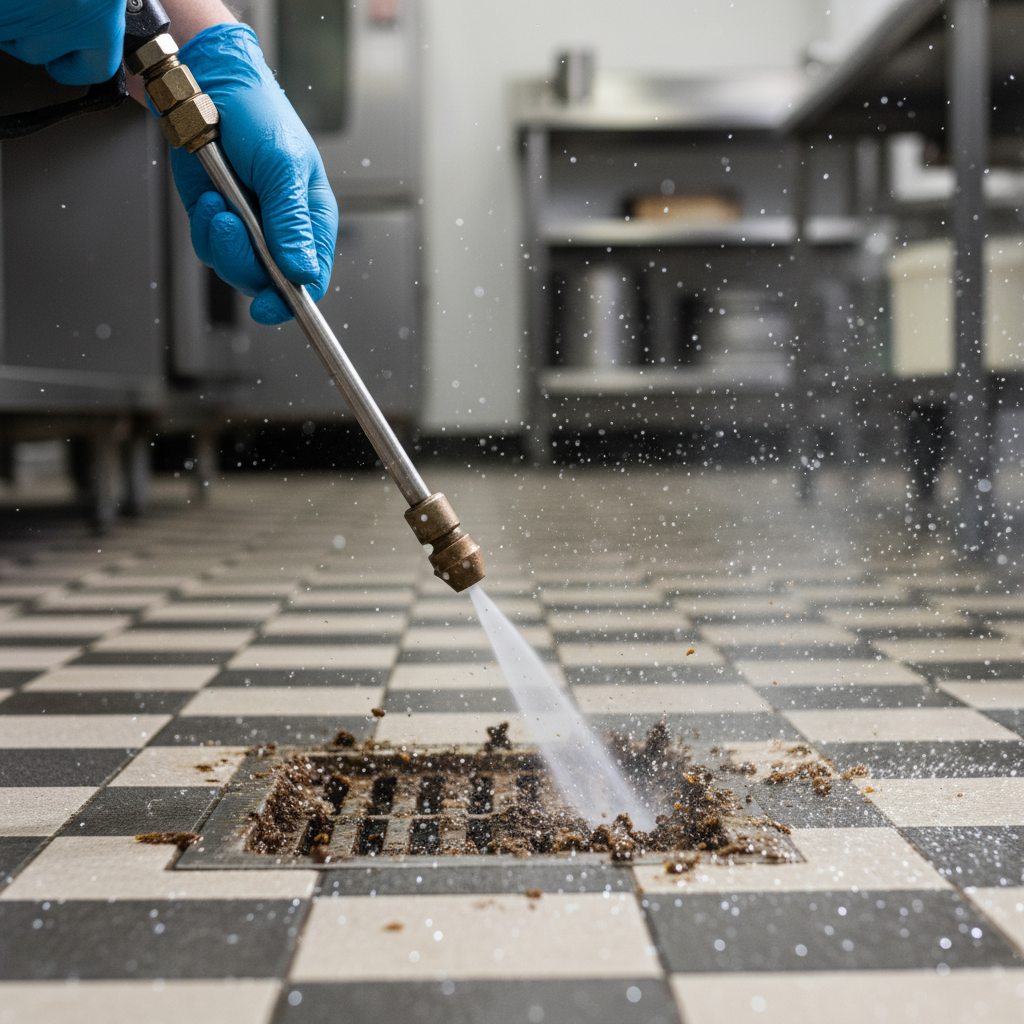
- Epoxy and quarry tile floors: Wider fan tips (25°–40°), moderate PSI, and standing 12–18 inches away avoid grout damage.
- Stainless walls and kick plates: Shallow angles and lighter pressure prevent finish streaking and gasket intrusion.
- Under-equipment zones: Foam degreaser, allow dwell, agitate, then controlled rinse to avoid driving water into bearings.
- Dish areas: Mind electrical undercounters; cover panels and run shallow passes toward the drain.
- Walk-in thresholds: Treat as a slip hotspot—degrease thoroughly and dry completely.
Outdoor applications
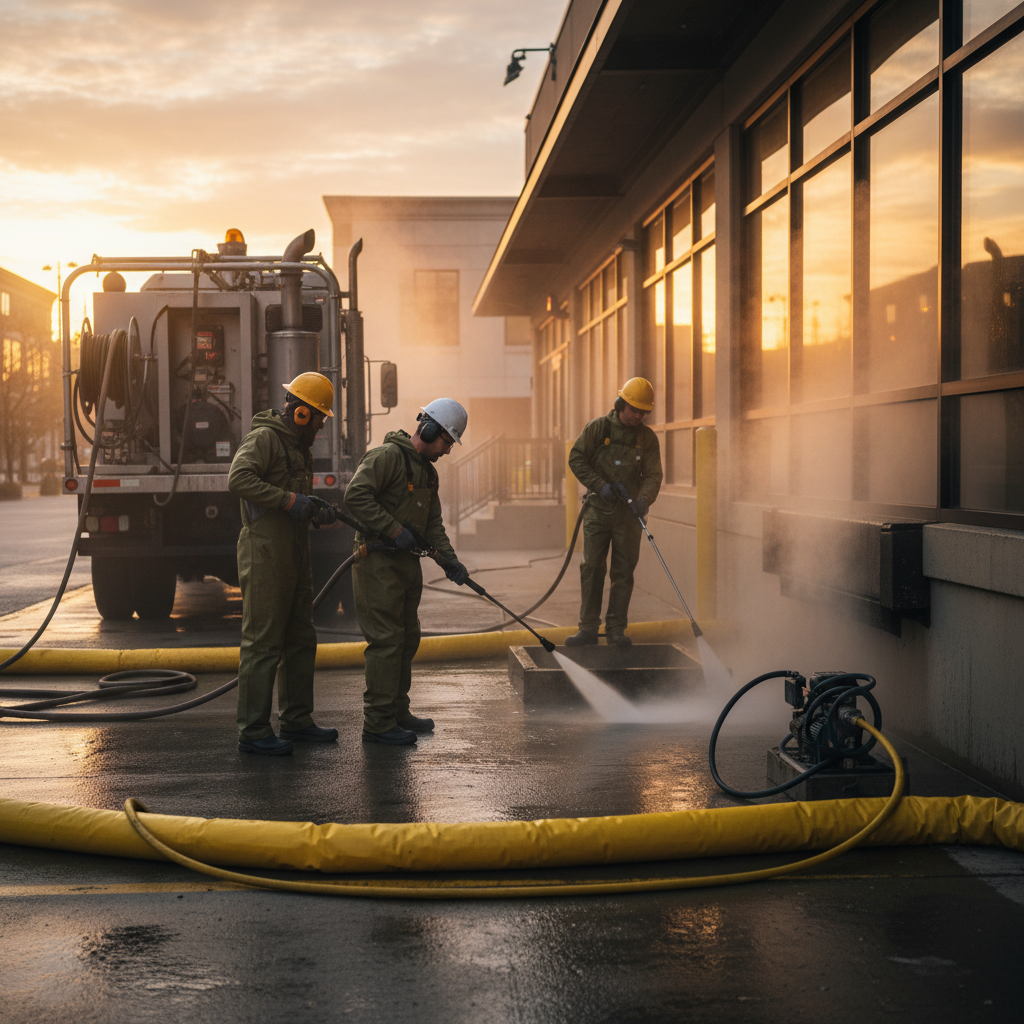
- Loading docks and dumpsters: Use hot water for cooked-on grease; keep berms and oil-absorbent socks in place.
- Grease containment pads: Scrub first, then rinse; vacuum runoff so it doesn’t track into BOH.
- Service alleys: Broom debris before washing; post-wash, lay down anti-slip mats at active doors.
Complementary services that multiply safety
- Hood and exhaust cleaning reduces aerosolized grease and fire load above the line. For practical guidance, see our power washing and degreasing guide.
- Duct and fan maintenance improves airflow and reduces odor, helping steam clear faster during washdowns.
- Grease trap service prevents backups that complicate wash nights and attract pests.
Best Practices (Field-Tested in Southern Ontario)
- Schedule after close and block a cool-down window; hot fryers and steam don’t mix with washdown.
- Define wet zones with cones and color-coded barriers; reroute any overnight staff away from the area.
- Never spray directly into open electrical, pilots, controls, or bearings—use covers and maintain stand-off distance.
- Label chemistry and store safely; keep an eyewash bottle on the cart and SDS in your binder.
- Log PSI, temperature, and detergents each service; pair logs with before/after photos for inspections.
- Dry, then verify: Use air movers, then walk the entire area to spot slick spots before sign-off.
- Integrate with hood schedules so grease removal below the line complements removal above the line.
Tools and Resources You’ll Need
- Hot-water pressure washer with adjustable PSI/GPM and temperature control.
- Nozzles: 15°, 25°, 40° fan tips; turbo tips for exterior concrete only.
- Food-contact-safe degreasers and foamers for even dwell coverage.
- Agitation tools: deck brushes, scrapers for caked grease.
- Wet/dry vacs, squeegees, and air movers for recovery and drying.
- PPE: slip-resistant boots, chemical-resistant gloves, face shields or goggles, hearing protection.
- Containment: spill berms, drain filters, absorbent socks and pads.
Need a broader deep-cleaning framework for equipment surfaces before or after washdown? Our internal checklist for teams builds on the same principles in this equipment deep cleaning checklist.
Process Settings Table (Quick Reference)
| Zone | Recommended Nozzle | Stand-off | Water Temp | Notes |
|---|---|---|---|---|
| Epoxy/tile floors | 25°–40° | 12–18 in | Hot | Protect grout, work to drains |
| Stainless walls | 25°–40° | 12–18 in | Warm | Shallow angles; avoid seams |
| Under-equipment | 25° | 18 in | Hot | Foam, agitate, controlled rinse |
| Loading docks | 15°–25° | 12–24 in | Hot | Berms and vac recovery |
Case Studies and Examples (Ontario Operations)
1) Quick-service line reset, Highway 401 corridor
- Challenge: Grease cakes under fryers created recurring slip hotspots at shift change.
- Approach: Foam degreaser, agitation, controlled rinse, and aggressive drying with air movers.
- Result: Eliminated morning slick spots; managers added a weekly log to their safety board.
2) Loading dock degrease at a hospitality venue
- Challenge: Grease trails from dumpsters tracked into BOH, creating persistent slip hazards.
- Approach: Hot-water degreasing, containment berms, and wet vac recovery; post-wash mats at doors.
- Result: Reduced tracking into BOH and fewer slip near-misses reported on incident logs.
3) Compliance-driven refresh before inspection
- Challenge: Inspector flagged greasy thresholds and poor documentation.
- Approach: Documented wash with PSI/temp logs, labeled chemistry, and photo evidence.
- Result: Clean re-inspection. The binder now includes hood/duct reports and wash logs side-by-side.
For deeper context on addressing grease loads above the line while you manage floors and walls below, see our practical note on exhaust duct cleaning in Ontario.
Comparison: Indoor vs. Outdoor Safety Priorities
| Focus | Indoor BOH | Outdoor Docks/Pads |
|---|---|---|
| Primary risk | Slips, electrical exposure, chemical contact | Tracking grease inside; runoff control |
| Containment | Drain screens, berms, wet vac recovery | Berms, absorbent socks, vacuum pickup |
| Settings | Wider fan tips; lower PSI near grout/gaskets | Hot water; tighter fan for concrete build-up |
| Recovery | Air movers for dry-by-opening | Mats at doors; broom finish for traction |
Mid-Article Checklist (Use Tonight)
- Walk the space and mark hazards; isolate power and bag controls.
- Place berms and drain screens; set up wet signage and reroute staff.
- Check PPE and chemistry; confirm eyewash and SDS availability.
- Foam degreaser wall-to-floor; agitate and set stand-off distance.
- Rinse top-down; capture runoff with wet vac and filters.
- Dry aggressively; verify traction; complete logs with photos.
Need a certified partner?
Robinhood Cleaners is NFPA 96–aware, WSIB insured, and available 24/7 across Southern Ontario. We integrate power washing with hood, duct, filter exchange, grease trap service, and equipment cleaning to deliver a safe, dry-by-opening reset.
See how we approach degreasing the right way in our short primer on power washing and degreasing commercial kitchens.
Local Operations Tips (Southern Ontario)
- Coordinate with property teams: Downtown sites often limit after-hours water access and disposal points. Get written approval before wash night.
- Watch winter thresholds: When exterior doors open during washdown, water can freeze at the sill. Use absorbents and mats, and close doors promptly.
- Traffic timing: Along the Highway 401 corridor and busy arterial roads, plan crew arrival and load-in to avoid late-night dock congestion.
FAQ
How often should we power wash commercial kitchen floors?
Frequency depends on volume, menu, and grease load. Many quick-service and high-volume kitchens schedule weekly or bi-weekly washdowns, paired with nightly spot cleaning. Align power washing with hood and filter cycles to keep grease control consistent above and below the line.
Can we power wash around electrical equipment safely?
Yes—if you isolate and protect first. Power down, cover panels and controls, maintain stand-off distance, and avoid direct spray into pilots, sensors, and connections. After washing, remove covers and verify everything is dry before relighting or restoring power.
What water temperature and PSI are best for grease?
Hot water breaks down grease faster, but use controlled PSI and wider fan tips on indoor finishes to protect grout, gaskets, and stainless. For exterior concrete, a tighter fan and higher PSI can help with heavy buildup—always paired with containment and runoff recovery.
Do we need special detergents?
Use food-contact-safe degreasers suitable for commercial kitchens. Apply as foam for even dwell time, agitate, then rinse thoroughly. Keep Safety Data Sheets accessible and provide eyewash on the cart during service.
How do we document power washing for inspections?
Capture date/time, PSI and temperature ranges, nozzles used, chemistry, crew names, and before/after photos. File these with your hood and duct cleaning reports. Inspectors and insurers appreciate consistent, legible logs paired with visual evidence.
Related Guides to Explore
Building a complete safety program means coordinating below-the-line cleaning with exhaust and ventilation work. For a broader strategy, read how we approach grease buildup prevention in restaurant hoods and how documented restaurant fire safety standards apply across Ontario kitchens.
Key Takeaways
- Safety is a workflow: isolate, contain, clean, recover, dry, and document.
- Control pressure, heat, and chemistry to protect surfaces and staff.
- Pair floor and wall washdowns with hood/duct programs for full-spectrum grease control.
- Use checklists and photos—documentation protects your team and your business.
Next Steps
- Audit your current washdown routine against the checklists above.
- Sync power washing with hood/duct and filter exchange schedules.
- Standardize logs and photos to streamline inspections and insurance requests.
Ready for a safer, faster reset? Book an after-hours assessment with Robinhood Cleaners—WSIB insured, NFPA 96–aware, and available 24/7 across Southern Ontario.