Your cooks hear the hood rattling. The line smells smoky even with the fan at full speed. Grease streaks are visible on the baffle fins. If this sounds familiar, your team likely needs commercial kitchen exhaust filter replacement Brampton support—fast. This complete, practical guide from Robinhood Cleaners walks you through what to replace, when to clean or exchange, and how to stay NFPA 96 compliant without disrupting service.
Overview
- What exhaust filters do and how they protect kitchens from fire spread
- Clear rules to decide: clean, exchange, or replace
- Step-by-step replacement and documentation aligned with NFPA 96
- Local realities in Brampton and Southern Ontario (rooftops, winter access, inspections)
- Maintenance calendars, checklists, and tools you can use today
- How Robinhood Cleaners (NFPA 96 certified, WSIB insured, 24/7) supports operators across Ontario
Quick Answer
For Brampton restaurants, replace exhaust filters when baffles are warped, frames are bent, or grease saturation returns immediately after cleaning. Robinhood Cleaners services All Over Ontario at All Over Ontario with 24/7 filter cleaning and exchange aligned to NFPA 96, keeping your kitchen inspection‑ready and safe.
Table of Contents
- What Is a Commercial Hood Filter?
- Why Exhaust Filter Replacement Matters
- How Replacement Works (Step by Step)
- Filter Types, Materials, and Approaches
- Schedules, Best Practices, and Checklists
- Tools, Safety, and Documentation
- Clean vs Exchange vs Replace (Comparison)
- Brampton & Southern Ontario Considerations
- Ontario Case Snapshots
- FAQ
- Key Takeaways
- Next Steps
- Related Articles
What Is a Commercial Hood Filter?
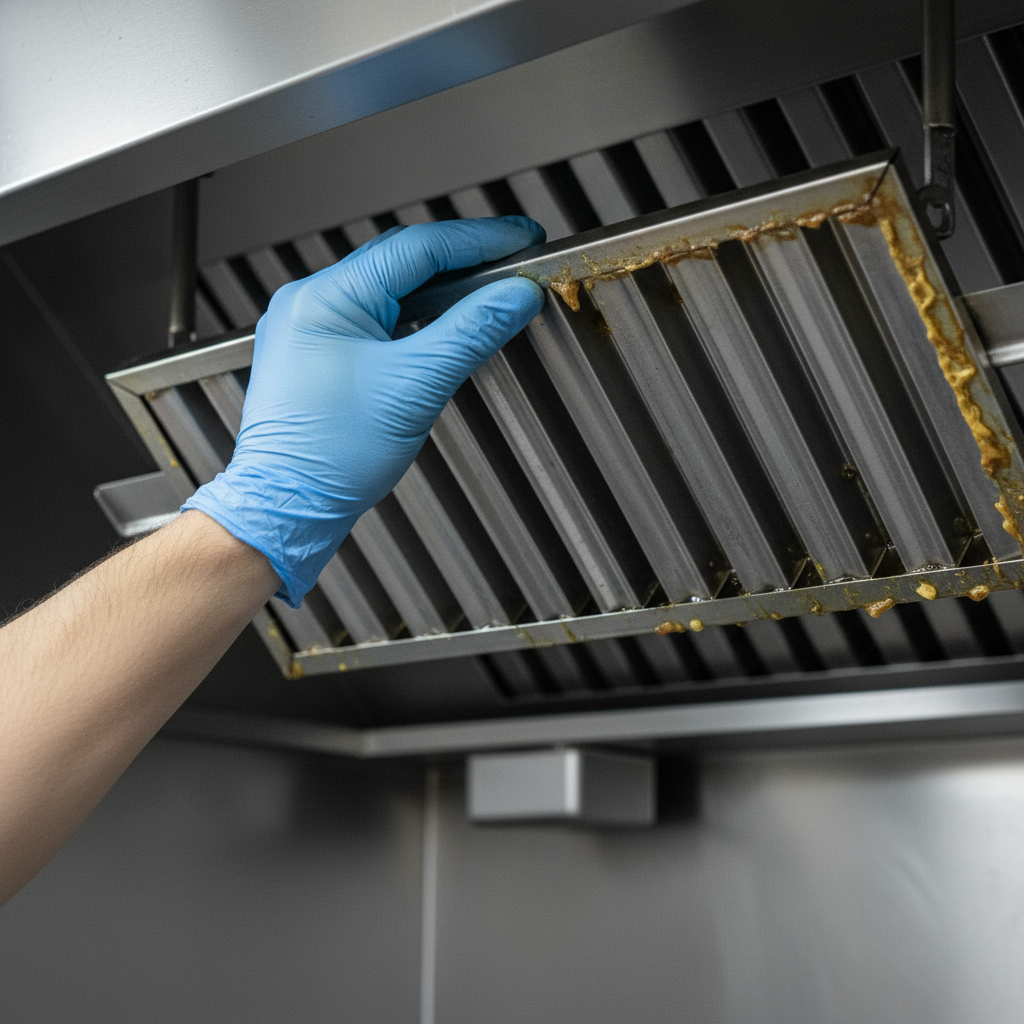
Think of the baffle filter as your first line of defense. It captures grease‑laden vapors before they race into ducts and the rooftop fan.
- Primary job: trap grease aerosols and let air continue through the hood safely.
- Safety function: baffle channels cause hot vapors to change direction, shedding grease and reducing flame travel.
- Compliance note: UL 1046 stainless baffle filters are the industry standard for commercial hoods.
- Placement: seated at the hood opening, angled to drain into a grease trough (keeps drips off the cookline).
- Drainage design: internal passages allow collected grease to flow into cups or troughs, not onto surfaces.
- Service connection: part of the larger system that includes the hood plenum, ductwork, and exhaust fan.
Why Exhaust Filter Replacement Matters
Filters don’t last forever. Cleaning restores performance, but only up to the point where integrity and safety remain intact.
- Fire hazard reduction: intact baffles slow flame progression and reduce ignition sources.
- Better air quality: efficient capture means less smoke and odor on the line.
- Lower wear on fans/ducts: less grease load upstream extends equipment life.
- Inspection readiness: visible saturation, warped fins, or make‑do mesh pads draw violations.
- Insurance and liability: documented, NFPA 96–aligned maintenance demonstrates due diligence.
- Operational uptime: predictable exchange schedules avoid surprise shutdowns for emergency cleaning.
How Replacement Works (Step by Step)
Here’s the practical way our NFPA 96–certified techs handle commercial kitchen exhaust filter replacement Brampton operators rely on—safely and quickly.
- Assess condition: check baffle straightness, frame corners, fasteners, and saturation level.
- Confirm specs: measure exact dimensions, verify UL rating, and match material (stainless vs aluminum).
- Stage safely: protect the cookline with shields, shut off appliances if needed, and set PPE.
- Remove & contain: slide out carefully; bag saturated filters to prevent drips on floors.
- Clean tracks & troughs: wipe rails and troughs so new filters seat and drain correctly.
- Install new/exchange filters: correct pitch (baffles vertical), no gaps, handles accessible.
- Airflow check: perform a light test; confirm even draw and absence of rattling.
- Document: log sizes, materials, and service date; add photos if requested.
- Brief the team: show staff how to remove/replace a single filter safely for interim cleaning.
Filter Types, Materials, and Approaches
Not all hood filters are equal. Selecting the right type affects capture efficiency, cleaning frequency, and longevity.
Common Filter Types
- Stainless baffle filters (UL 1046): durable, high heat tolerance, consistent drainage. Preferred in high‑grease lines.
- Aluminum baffle filters: lighter, cost‑effective, but soften faster under heat and harsh degreasers.
- Spark arrestor designs: employed for solid‑fuel equipment; verify manufacturer approvals.
Approaches to Keeping Filters Effective
- Daily wipe‑downs: remove surface grease at close; slows saturation.
- In‑house soak & rinse: hot water and hood‑safe alkaline detergent in a designated sink.
- Professional cleaning: scheduled deep cleans ensure full internal passage clearance.
- Exchange programs: swap in precleaned sets on a fixed cadence; zero downtime on the line.
- Replace on damage: warped fins, bent frames, or stripped handles call for immediate replacement.
Schedules, Best Practices, and Checklists
Frequency depends on menu, volume, and hours. Use these ranges as a starting point, then adjust from inspection data.
Suggested Inspection & Service Cadence
- High‑grease cooking (fryers, grills, woks): inspect daily; clean or exchange multiple times weekly.
- Moderate volume: weekly cleaning; monthly exchange check.
- Low volume/baking: biweekly to monthly inspection; quarterly replacement review.
When to Replace Immediately
- Fins no longer align; visible warping or crushed corners.
- Grease saturation returns right after cleaning (internal passages blocked).
- Non‑UL mesh pads are installed to “get by.” Replace with UL 1046 baffles.
- Handles missing or loose; risk of accidental drops on the cookline.
Simple Daily Checklist for the Line
- Check that each filter sits snugly in the track—no rattling.
- Confirm proper pitch and that grease drains to the trough/cups.
- Wipe front faces with a degreaser‑damp cloth at close.
- Empty grease cups; note overflow streaks as a service flag.
- Log any damage or heat discoloration on a kitchen maintenance sheet.
Tools, Safety, and Documentation
Reliable service takes the right kit and clean paperwork. That’s how you pass inspections calmly—every time.
- PPE: cut‑resistant gloves, eye protection, non‑slip footwear.
- Cleaning products: hood‑safe alkaline degreasers, hot water rinse, and rinse buckets.
- Protection: splash shields for appliances, absorbent floor mats, and ladder stabilizers.
- Measurement: tape, calipers for thickness checks, and a simple light for airflow tests.
- Documentation: service logs, filter inventory (sizes, materials), and photo records on request.
- Compliance: align records with NFPA 96 expectations and landlord/insurer requirements.
See our NFPA 96 certified hood cleaning overview for broader compliance context.
Clean vs Exchange vs Replace (Comparison)
| Option | Use When | Pros | Watch Outs |
|---|---|---|---|
| Clean (in‑house or pro) | Filters are intact; normal saturation | Lowest disruption; restores capture efficiency | Labor intensive; may not clear blocked passages fully |
| Exchange (precleaned swap) | Busy lines; predictable heavy grease | No downtime; consistent performance; easy scheduling | Requires accurate inventory of sizes and counts |
| Replace (new units) | Warped, bent, non‑UL, or repeatedly re‑saturating | Restores safety margin; improves airflow and fit | Match UL rating and dimensions precisely before ordering |
Brampton & Southern Ontario Considerations
Local conditions matter. Small planning tweaks save time and keep your team safe.
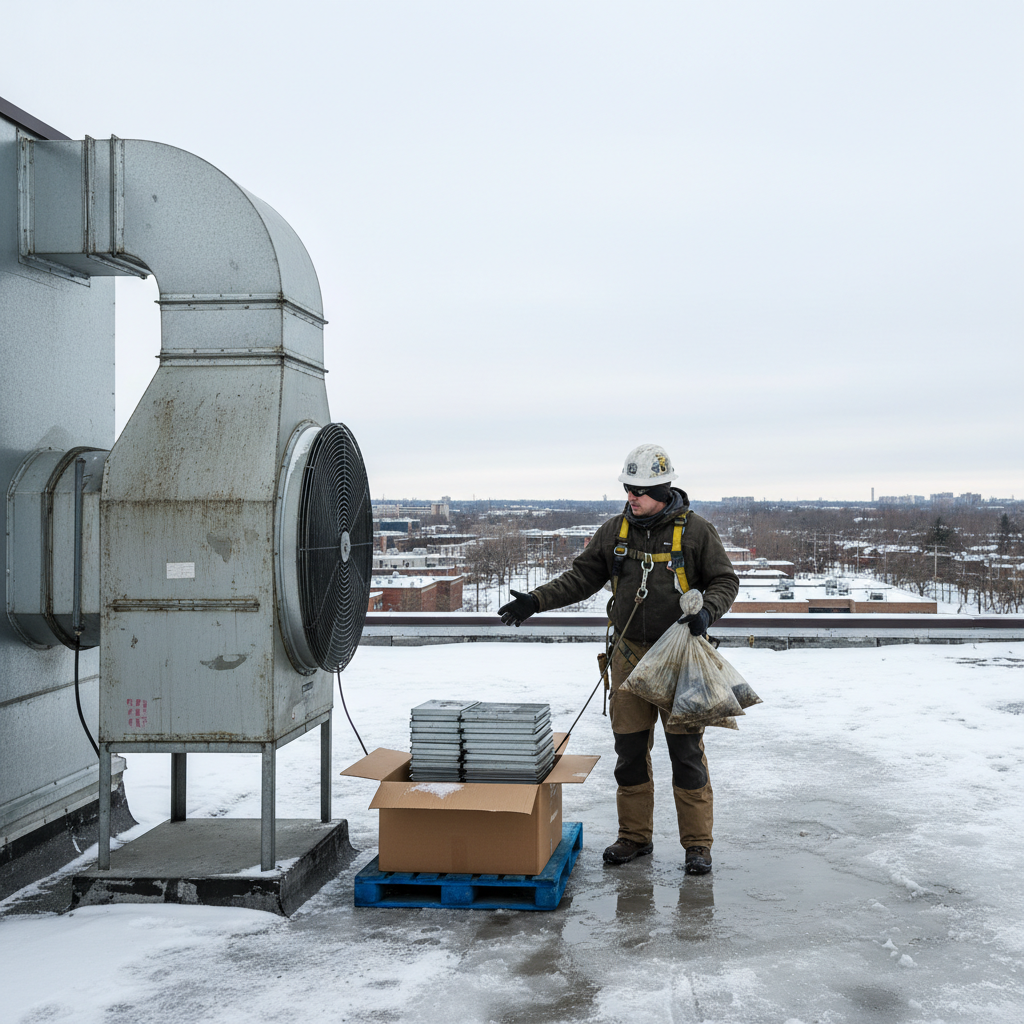
- Rooftop access in winter: plan safe routes, harness points, and de‑icing time. Many Brampton sites share roofs with retail plazas—coordination avoids delays.
- Ventilation differentials: cold air and stack effect change draw; filters that look fine in summer may saturate faster in January.
- After‑hours: schedule overnight exchange to prevent service interruptions. We provide true 24/7 coverage across Southern Ontario.
- Documentation norms: municipal fire inspectors and landlords often ask for recent photos; we can append these to your service logs.
- Neighbor impacts: plaza neighbors may complain about odor; tight filter schedules reduce complaints and keep peace with property managers.
Ontario Case Snapshots (Real‑World, Actionable)
Here are quick, practical examples drawn from common scenarios we service across Ontario. Use these to benchmark your own kitchen’s cadence.
- Brampton quick‑service line: moved from weekly cleaning to twice‑weekly exchange during a limited‑time fried menu; nuisance smoke alarms dropped to zero.
- Brampton banquet hall: standardized three filter sizes and labeled tracks; staff turnover no longer caused mis‑seating and rattling.
- Mississauga hotel kitchen: replaced a mixed set (aluminum + stainless) with matched UL 1046 stainless; improved fan balance and reduced vibration.
- Milton franchise location: paired exchanges with quarterly hood/duct cleaning; passed landlord audit on first visit—see our Milton exhaust filter replacement guide for playbook details.
- Hamilton diner: immediate replacement of crushed‑corner filters; grease streaking stopped and airflow evened out.
- Toronto bistro: installed spark arrestor baffles for solid‑fuel station; documented approvals in inspection binder.
- Oakville seafood kitchen: seasonal spike management with exchange sets ready for summer patios.
- Vaughan multi‑concept food hall: color‑coded inventory bins by tenant; swap times cut in half.
- Guelph campus kitchen: biweekly exchange during semester; shifted to monthly in summer recess.
- Kitchener casual grill: daily end‑of‑night wipe‑down added; cleaning frequency reduced by 25% without performance loss.
- Waterloo commissary: built a shared spare set inventory; zero downtime even when sets go for deep cleaning.
- Burlington cafe: addressed odor complaints from neighbors by tightening filter and grease cup maintenance.
- Niagara winery restaurant: documented rooftop access plan; winter service windows stayed on time.
- London quick‑serve: replaced non‑UL mesh pads with stainless baffles; removed a key inspection risk immediately.
Commercial Kitchen Exhaust Filter Replacement Brampton: What to Know
- Primary trigger: visible damage or recurring saturation after proper cleaning.
- Fit matters: measure correctly; even small gaps reduce capture and increase fire risk.
- Team training: show staff safe removal techniques to avoid burns and drops.
- Bundle services: combine filter work with hood, duct, and fan cleaning for best outcomes. Our Ontario filter replacement guide explains sequencing.
- Keep records: inspectors appreciate organized logs; we can provide photos on request.
Best Practices That Hold Up in Inspections
- Use UL 1046 stainless baffle filters for high‑grease stations.
- Standardize sizes and label tracks to speed swaps and avoid gaps.
- Adopt an exchange calendar; treat it like a menu cycle.
- Wipe filter faces at close; empty and clean grease cups daily.
- Bundle quarterly hood, duct, and fan cleaning with exchanges for a single inspection window—see our Ontario fire‑prevention guide.
- Log every touch: inspections, exchanges, replacements, and photos.
- Plan rooftop access, especially in winter; pre‑clear ladders and tie‑off points.
FAQ
- How often should we replace filters?
There’s no one answer. Replace immediately if fins warp, frames bend, or saturation returns right after cleaning. Otherwise, most kitchens combine regular cleaning with periodic exchanges until wear or compliance issues appear. - Can we clean instead of replacing?
Yes—until structural integrity or compliance is compromised. If cleaning no longer restores airflow or the unit isn’t UL 1046, replace. - Do you work overnight or on weekends?
Yes. Robinhood Cleaners offers true 24/7 scheduling across Ontario, including overnight, weekend, and holiday service windows to avoid downtime. - Can you document for inspections?
Absolutely. We can provide dated service logs and photos to support NFPA 96 alignment and landlord or insurer requirements. - What else should we service with filters?
Pair filters with hood, duct, exhaust fan, and grease trap cleaning. Coordinating these services reduces fire risk and helps keep air quality high on the line. See our filter cleaning checklist for daily staff routines.
Local Tips
- Tip 1: For plaza kitchens along Queen Street or near Bramalea City Centre, confirm rooftop access hours with property management so late‑night exchanges don’t trigger security calls.
- Tip 2: In winter, plan a slightly tighter exchange cadence. Cold air and stack effect can change draw and saturate filters sooner during peak dinner rushes.
- Tip 3: Ask our team to label filter tracks by size during the first visit. In high‑turnover kitchens, this small step prevents mis‑seating that causes rattling and gaps.
IMPORTANT: These tips are tuned to Southern Ontario operations and Robinhood Cleaners’ NFPA 96–aligned service model.
Key Takeaways
- Filters are a front‑line fire‑prevention component; replace when integrity or compliance fails.
- Exchange calendars prevent downtime and keep air quality high, especially on high‑grease lines.
- Accurate sizing and UL 1046 compliance are non‑negotiable for safety and inspections.
- Bundle filters with hood, duct, fan, and grease trap services for best results.
- Robinhood Cleaners covers all of Ontario with fast Southern Ontario response—24/7.
Next Steps
- Walk your line and note visible damage, rattling, or overflow streaks today.
- Count filter panels by size; create or update your inventory sheet.
- Decide your cadence: cleaning, exchange, or replacement for each station.
- Bundle an exchange with a full hood/duct/fan service window to reset the system.
- Contact Robinhood Cleaners to schedule a 24/7 service slot that fits your hours.
Related Articles
- Ontario Hood and Duct Cleaning: What Inspectors Check
- Kitchen Exhaust Fan Cleaning: Rooftop Safety Basics
- Grease Trap Care: Avoiding Odor and Plumbing Issues
- NFPA 96 Alignment: How to Organize Your Inspection Binder