Restaurant Exhaust System Fire Risk: Complete Guide for Ontario Kitchens (2026)
- Restaurant exhaust system fire risk rises with grease, heat, and airflow imbalances.
- NFPA 96 compliance, routine hood and duct cleaning, and trained staff reduce ignition points.
- Robinhood Cleaners is NFPA 96 certified and WSIB insured, serving all of Ontario with rapid response in Southern Ontario.
- Use our step-by-step checklists, risk tables, and best practices to prevent fires and downtime.
Quick Answer
Restaurant exhaust system fire risk stems from grease buildup, high heat, and poor ventilation. In All Over Ontario at All Over Ontario, NFPA 96 certified cleaning and 24/7 scheduling from Robinhood Cleaners help you prevent flare-ups, stay compliant, and protect staff and guests.
Local Tips
- Tip 1: If your locations sit along the 401 corridor or near busy event venues, book hood cleaning during off-peak travel times to avoid loading dock delays.
- Tip 2: Ontario’s winter season increases rooftop fan strain; schedule belt checks and grease removal before snow and ice arrive to avoid shutdowns.
- Tip 3: For multi-site operators across Southern Ontario, align NFPA 96 cleaning cycles with your corporate food safety audits to minimize interruptions.
IMPORTANT: Robinhood Cleaners operates 24/7 across Ontario with quick service in Southern Ontario—ideal for after-hours work without disrupting service.
Why This Guide Matters (Above the Fold)
- For Ontario operators: You balance health inspections, rush periods, and staffing—fire prevention can’t wait for a quiet week.
- For safety and compliance: NFPA 96 requires maintained hoods, ducts, and fans; enforcement and insurers increasingly ask for documentation.
- For practical action: You’ll get a clear plan to cut restaurant exhaust system fire risk with checklists, schedules, and service pointers.
Table of Contents
- What Is Restaurant Exhaust System Fire Risk?
- Why Fire Risk Matters for Ontario Kitchens
- How Exhaust Systems Work—and Where Fires Start
- Risk Types, Cleaning Methods, and Approaches
- Best Practices That Actually Reduce Fires
- Tools, Resources, and Templates
- Mini Case Studies and Real-World Examples
- FAQ
- Conclusion and Next Steps
- Related Articles
What Is Restaurant Exhaust System Fire Risk?
In plain terms, it’s the likelihood that grease-laden vapor and heat from cooking ignite inside your hood, filters, ducts, or rooftop fan. Your goal is to lower that probability through cleaning, inspection, and airflow control.
- Main sources of ignition: open flames, electrical faults, and overheated surfaces near grease deposits.
- Fuel that feeds fires: grease buildup on baffle filters, inside horizontal ducts, at elbows, and in rooftop fan housings.
- Conditions that accelerate spread: strong draft pulling flames into ductwork, missing access panels, and worn fan belts causing poor ventilation.
- Compliance anchor: NFPA 96 sets the standard for ventilation control and fire protection of commercial cooking operations.
Here’s the thing: a clean system is hard to ignite. A dirty one turns a small flare-up into a duct fire that can race to the roof in seconds.
Why Restaurant Exhaust System Fire Risk Matters in Ontario
- Safety: Reduces injuries, evacuations, and property damage.
- Compliance: Satisfies inspectors and insurers who expect NFPA 96 documentation and visible cleanliness.
- Operations: Avoids forced closures during peak seasons (patio months, hockey nights, holiday parties).
- Air quality: Cleaner hoods and ducts cut smoke and odors, improving staff comfort and guest experience.
- Equipment life: Proper cleaning and fan belt replacement prevent strain on motors and bearings.
Ontario kitchens—from quick service to fine dining—need a plan that works around busy service. That’s why our NFPA 96 certified hood cleaning is offered 24/7 across the province.
How Exhaust Systems Work—and Where Fires Start
Understanding flow helps you pinpoint risk. Hot, grease-laden vapor rises from cooking surfaces, passes through baffle filters, moves into ducts, and exits through a rooftop upblast fan. Any point with sticky residue can ignite.
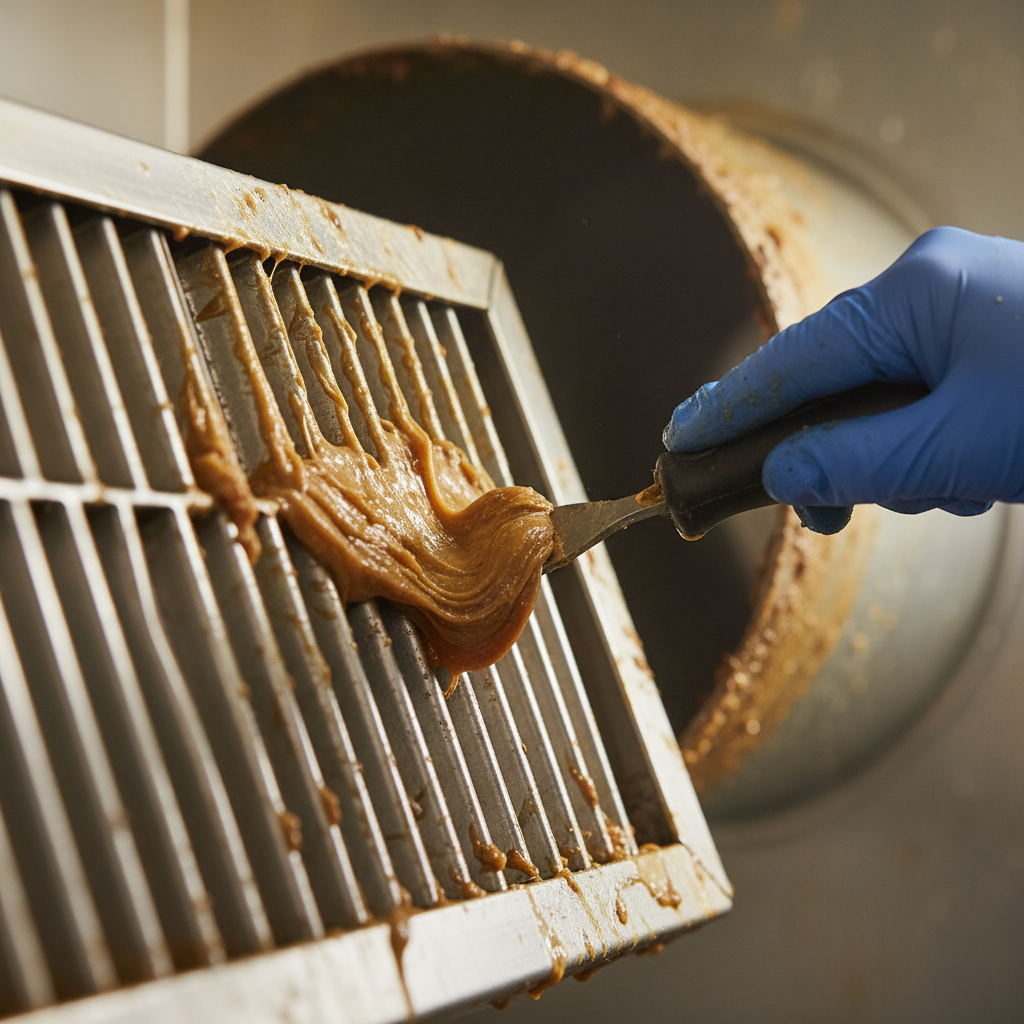
Common ignition points
- Hood plenum: Grease pools behind filters and along seams.
- Baffle filters: Residue bridges ignite from flare-ups or high heat.
- Horizontal duct runs: Low-velocity segments collect heavy deposits.
- Duct elbows and access points: Edges trap thick layers, often missed during DIY cleanings.
- Rooftop upblast fans: Fan bowls and blades accumulate grease; wind can feed flames with oxygen.
Early warning signs
- Yellow/orange flames that “follow” smoke up the hood.
- Persistent smoke or odors even after service ends.
- Rattling or slippage in the fan (often a stretched belt).
- Grease drips from filters or seams.
- Staining on the roof membrane near the fan curb.
Process overview
- Capture: Hood and filters capture grease aerosols.
- Contain: Ductwork conveys the residue to the fan bowl.
- Exhaust: Upblast fan removes contaminated air to the exterior.
- Control: Cleaning, belt maintenance, and airflow balance prevent ignition.
Risk Types, Cleaning Methods, and Approaches
Different kitchens face different risks. Matching the method and frequency to your menu and volume is key.
Risk types you’ll see
- High-load frying and grilling: Fast grease accumulation, frequent filter exchanges, monthly duct cleaning.
- Solid-fuel cooking (wood/charcoal): Sparks and embers add ignition risk; more frequent hood and flue service per NFPA 96 guidance.
- Combi/ovens and smokers: Hidden grease in vent paths; scheduled inspection is critical.
- Low-volume operations: Risk still exists; quarterly thorough cleaning remains prudent.
Core cleaning methods
- Hood cleaning and degreasing: Food-safe degreasers, hot water rinse, full plenum wipe-down.
- Baffle filter cleaning and exchange: Swap saturated filters; ultrasonic or hot tank cleaning restores efficiency.
- Duct cleaning: Scrape-heavy deposits first, then hot-pressure wash to bare metal.
- Rooftop fan servicing: Bowl degreasing, blade cleaning, and fan belt replacement if worn.
- Grease containment systems: Prevent roof damage, reduce ignition and slip hazards.
Scheduling approaches that work
- Menu-based frequency: Fry-heavy menus need more frequent cycles than bake-focused kitchens.
- Proof-based scheduling: Use deposit thickness and photo documentation to adjust intervals.
- After-hours service: 24/7 availability lets you schedule overnights to avoid downtime.
- Multi-site alignment: Bundle locations along Southern Ontario routes for predictable rotations.
For a service partner, choose one that documents work with before/after photos and tags. Our commercial kitchen hood cleaning service includes NFPA 96 documentation you can hand to inspectors or insurers.
Best Practices That Actually Reduce Fires
Use these practices to cut restaurant exhaust system fire risk right away.
Daily and weekly actions (staff)
- Wipe hood interiors and ledges at close.
- Empty grease cups before they overflow.
- Hot-rinse baffle filters or exchange for clean spares.
- Log anomalies: smoke, odors, belt squeal, or fan vibration.
- Confirm fire suppression pull stations are unobstructed.
Monthly actions (management)
- Confirm filter exchange cadence matches volume.
- Check duct access panels and gaskets for leaks.
- Inspect rooftop grease containment pads; replace saturated media.
- Visually inspect the fan belt; look for fray, glazing, or cracking.
- Review cleaning photos and tags; adjust frequency accordingly.
Per service visit (professional)
- Scrape heavy deposits to bare metal; never leave a thin film that can reignite.
- Clean to fan blades, bowls, and under the fan curb.
- Replace worn belts and balance tension to restore airflow.
- Confirm baffle orientation and capture velocity.
- Provide photo documentation and NFPA 96 compliance tag.
Table: Recommended cleaning frequency by cooking load
| Cooking load/menu | Filters | Hood & plenum | Ducts & fan |
|---|---|---|---|
| High grease (fried chicken, burgers) | Daily rinse / weekly exchange | Monthly | Monthly |
| Mixed grill/saute | Weekly exchange | Every 2 months | Every 2 months |
| Baking/low grease | Biweekly/monthly | Quarterly | Quarterly |
| Solid-fuel (wood/charcoal) | Daily | Monthly or more | Monthly or more |
Need a ready-made plan? Our team can map a schedule across your locations and tag every system for easy recall. See our restaurant exhaust cleaning in the GTA for regional service details.
Tools, Resources, and Templates
These help you standardize safety and prove compliance.
- Daily close checklist: Wipe hood ledges, empty cups, rinse or swap filters.
- Weekly supervisor audit: Photo-check filters, cups, and grease containment pads.
- Service log template: Date, tech initials, photo set, tag number, next due.
- Fan belt inspection guide: Signs of wear (glazing, cracking, fray), tension test.
- Access panel inventory: Note locations and gasket condition to ensure full-duct reach.
- Grease trap maintenance: Pair hood cleaning with grease trap service to reduce plumbing risk.
- Incident response steps: Pull suppression, cut fuel, evacuate, call fire department, document.
Want our printable NFPA 96-aligned checklists and a photo-documented cleaning plan? Book a no-obligation assessment with Robinhood Cleaners. We work 24/7 and coordinate around your rush periods.
Mini Case Studies and Real-World Examples
Here are condensed examples based on common scenarios we service across Ontario.
- Quick-service burger line (Mississauga): Filters saturated mid-shift, smoke alarms trip. Solution: weekly filter exchange, monthly duct and fan service; result: odor reduction and stable airflow.
- High-volume wings concept (Hamilton): Roof stains and fan wobble. Fix: belt replacement, bowl degreasing, grease containment pads; result: quieter fan, no roof runoff.
- Downtown bistro (Toronto): Horizontal duct elbow repeatedly missed. Access panel added and documented; result: bare-metal clean, lower ignition risk.
- Food court operator (Scarborough): Multiple small hoods across stalls. Consolidated after-hours route; result: consistent NFPA 96 tags and less disruption.
- Solid-fuel grill (Waterloo): Ember risk and heavy soot. Increased frequency and specialized soot removal; result: reduced flare events.
- University cafeteria (London): Staff turnover impacted daily wipe-downs. Training refresh and simple checklist; result: cleaner hood ledges, fewer odors.
- Family diner (Niagara): Suppression nozzle overspray left residue on filters. Thorough degrease and reorientation; result: better capture and airflow.
- Rooftop access challenge (Barrie): Steep pitch limited service reach. Safety harness plan and extended wands; result: full fan bowl cleaning.
- New franchise opening (Kitchener): Pre-opening deep clean and tag. Baseline photos stored; result: smooth inspection and insurer approval.
- Mall restaurant (Burlington): Odors drifting to common areas. Duct degrease plus fan belt tensioning; result: improved capture and guest comfort.
- BBQ concept (Guelph): Heavy smoke led to repetitive complaints. Added more frequent filter exchanges; result: reduced haze on line.
- Resort kitchen (Muskoka): Seasonal surge, long hours. Pre-season service and mid-season touch-up; result: steady operations.
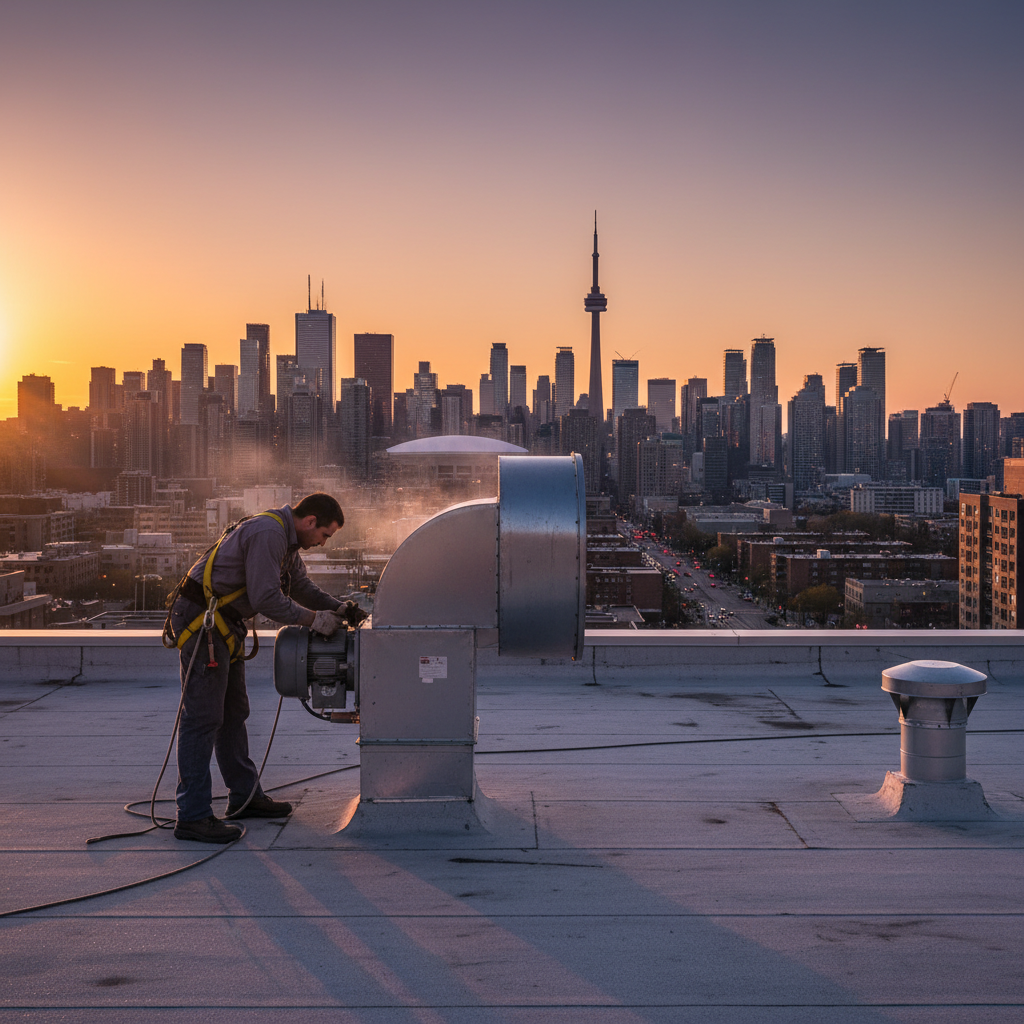
For multi-site routes, we coordinate visits to minimize downtime and align with corporate audit calendars. If you need a deeper dive, explore our nearby kitchen exhaust cleaning services for options.
Inspection and Cleaning Process (Step-by-Step)
- Site prep: Protect equipment, cover surfaces, isolate electrical as needed.
- Filter removal: Bag and stage for tank cleaning or exchange.
- Scrape to bare metal: Hood, plenum, duct access points, elbows.
- Hot-pressure wash: Flush residues to containment safely.
- Fan service: Clean blades and bowl; inspect and replace belt if worn.
- Grease containment: Replace pads/media; verify roof integrity.
- Final rinse and polish: Restore stainless finish; remove protection.
- Tag and document: Photos, NFPA 96 tag, service log, next due date.
Process table (who does what)
| Task | Staff | Pro Team | Frequency |
|---|---|---|---|
| Wipe hood ledges and change grease cups | Yes | Assist as needed | Daily |
| Rinse/exchange baffle filters | Yes | Yes (deep) | Daily/Weekly |
| Scrape and degrease hood & ducts to bare metal | No | Yes | Monthly–Quarterly |
| Rooftop fan bowl and blade cleaning | No | Yes | Per service |
| Fan belt inspection/replacement | No | Yes | Per service |
| Grease containment pad replacement | Monitor | Replace | Monthly–Quarterly |
Compliance and Documentation
- NFPA 96 alignment: Cleaning to bare metal where accessible; documentation and tag placement.
- Photo records: Before/after shots per hood, duct, and fan; time-stamped for audits.
- Service logs: Track dates, techs, systems, and next due windows.
- Inspector-ready: Keep logs near the hood or with the manager’s safety binder.
You can hand inspectors and insurers the same documentation we provide on every visit. Learn more about our NFPA 96 certified cleaning approach.
FAQ
- How do I know my restaurant exhaust system fire risk is rising?
- Watch for more smoke, greasy odors, drips from filters, roof stains near the fan, and belt squeal or vibration. If your filters feel sticky even after rinsing, it’s time to schedule professional cleaning and likely a filter exchange cadence.
- What is the fastest way to reduce ignition risk?
- Clean to bare metal in the hood and ducts, exchange saturated filters, and replace a worn fan belt to restore airflow. Align the frequency with your cooking load—monthly for heavy fryers and quarterly for lighter menus.
- Is professional hood cleaning better than DIY?
- DIY wipe-downs help, but they miss duct elbows, plenum interiors, and fan bowls. Professionals access and clean the entire system, provide NFPA 96 documentation, and verify airflow and belt condition.
- When should I schedule service to avoid downtime?
- Book after-hours or overnight. Our team works 24/7 across Ontario with quick response in Southern Ontario, so your line can open on time the next day.
- What else should I pair with hood cleaning?
- Grease trap service, equipment deep cleaning (ovens, grills, refrigerators), and a supervisor checklist. This combination improves air quality and reduces plumbing and hygiene issues.
Conclusion and Next Steps
- Grease + heat + airflow issues create restaurant exhaust system fire risk.
- Daily wipe-downs, frequent filter exchanges, and scheduled duct/fan service reduce ignition points.
- NFPA 96 documentation protects you in inspections and with insurers.
Ready to put a compliant, photo-documented plan in place? Our Ontario hood cleaning team services kitchens All Over Ontario with rapid response in Southern Ontario.
- Match cleaning frequency to menu and volume; verify with photos.
- Replace worn fan belts to restore capture and cut smoke.
- Use logs, tags, and images to stay inspection-ready year-round.
- Schedule 24/7 service windows to avoid lost revenue hours.
Book a discovery session in All Over Ontario—Robinhood Cleaners is NFPA 96 certified, WSIB insured, and available 24/7 to keep your kitchen safe.