Restaurant Exhaust System Grease Buildup: Complete Guide
Grease buildup inside a restaurant exhaust system is the single most common hidden fire hazard in commercial kitchens. If you operate one or more locations in Ontario, you need a clear, repeatable plan to find it, remove it, and keep it from coming back—without disrupting service.
- Understand what causes grease accumulation and how quickly it forms.
- Spot risk signs before they become violations or shutdowns.
- Follow step-by-step inspection and cleaning practices aligned to NFPA 96.
- Decide when DIY is safe and when certified pros are required.
- Adopt a prevention schedule that fits your menu, volume, and hours.
Quick Summary
- The phrase restaurant exhaust system grease buildup describes the sticky, combustible residue that accumulates in hoods, baffle filters, ducts, and rooftop fans.
- NFPA 96 requires exhaust systems be maintained to minimize fire risk; frequency depends on cooking volume and type (frying, charbroiling, woks, solid fuel).
- Certified, documented cleaning of the entire system—not just visible parts—is essential for safety and compliance.
- Ontario operators benefit from partners who can work 24/7, produce service reports, and respond fast in Southern Ontario.
Quick Answer
Restaurant exhaust system grease buildup is a major fire hazard that requires certified, end-to-end cleaning. Serving All Over Ontario at All Over Ontario, Robinhood Cleaners provides NFPA 96–aligned, 24/7 kitchen exhaust cleaning so multi-unit operators and single-location restaurants stay compliant and safe.
Local Tips
- Tip 1: Schedule overnight cleanings to avoid Highway 401 and QEW traffic windows and keep morning prep on time.
- Tip 2: Ontario winters thicken grease; add one extra hood-and-duct inspection per month from December through March.
- Tip 3: If rooftop fans sit near snow loads or lake-effect winds, confirm grease containment is secured and, where necessary, insulated to prevent overflow.
IMPORTANT: Align inspection cadence to your menu (fryers and charbroilers need more frequent service) and document each visit for health and insurance audits.
What Is Restaurant Exhaust System Grease Buildup?
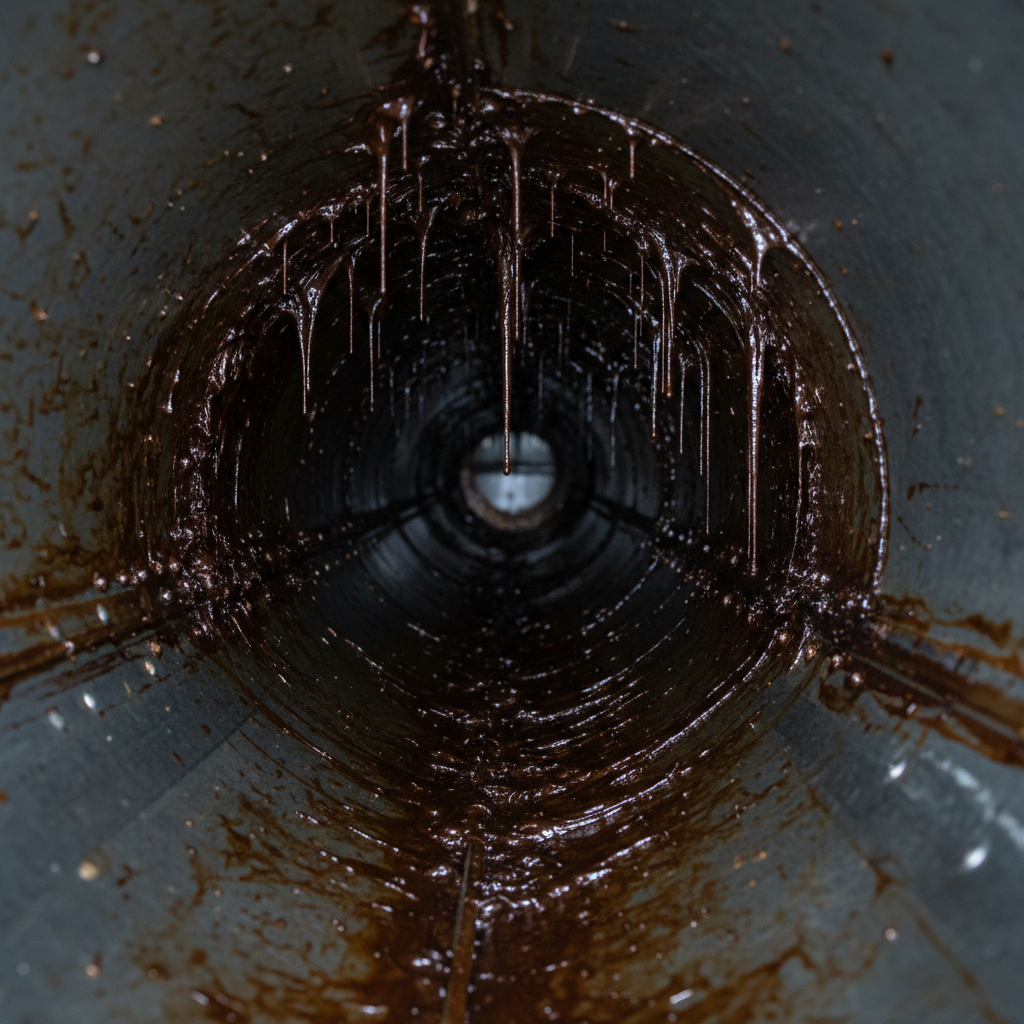
It’s the flammable film of oils, fats, and vapors that condense on metal surfaces inside the hood, baffle filters, ductwork, and rooftop fan. Left alone, it hardens, spreads, and turns minor flare-ups into full-duct fires.
- Where it forms: Hood canopies, seams, behind light lenses, filter channels, vertical risers, elbows, fan blades, and housings.
- Why it accelerates: High-volume frying, solid-fuel cooking, and long hours keep exhaust streams saturated with aerosolized grease.
- What it looks like: Amber to dark-brown layers; tacky when fresh, brittle and crusted as it ages.
- Hidden hotspots: Elbows above the ceiling line, long horizontal duct runs, and fan plenums under upblast caps.
- Inspection rule of thumb: If residue can be scraped with a fingernail, you’re past safe levels and due for a full-system cleaning.
Why Restaurant Exhaust System Grease Buildup Matters
- Fire propagation: Grease ignites at lower temperatures than most realize, carrying flame through ducts to the roof.
- Air quality and comfort: Odors linger, makeup air imbalances increase heat on the line, and workers fatigue faster.
- Health and safety compliance: Inspectors cite residue on filters, hoods, and fans; repeat issues trigger penalties and interruptions.
- Equipment strain: Fans run harder, belts slip, and bearings fail when coated in residue.
- Insurance posture: Carriers increasingly require documented, NFPA 96–aligned exhaust cleaning with service stickers and reports.
If you need a deeper dive on standards and documentation, see our overview of NFPA 96 certified hood cleaning in Ontario.
How a Commercial Kitchen Exhaust System Works
Knowing the airflow path helps you locate grease and clean it correctly.
Key Components
- Hood and baffle filters: First capture point; channels carry runoff to removable trays.
- Ductwork: Vertical risers plus horizontal runs to the roof; elbows trap the most residue.
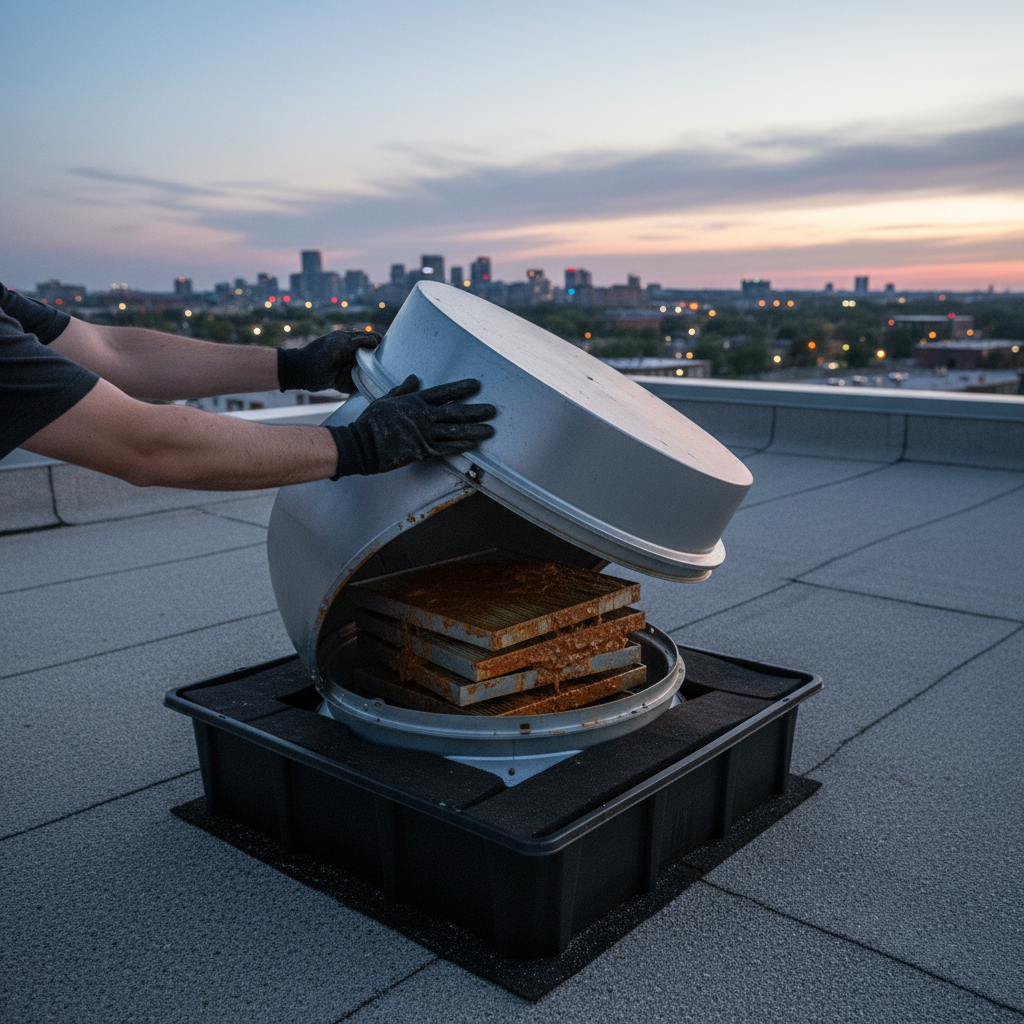
- Upblast exhaust fan: Pulls air out; blades, housing, and curb can accumulate thick deposits.
- Makeup air unit: Supplies tempered air; balance is critical to hood capture efficiency.
Where Grease Migrates
- High-heat appliances: Fryers, charbroilers, woks, and solid-fuel ovens emit dense grease aerosols.
- Cold surfaces: Cooler metal (ducts and fan housings) accelerates condensation and layering.
- Turbulence zones: Transitions, bends, and joints create eddies that collect residue.
Need the full end-to-end service? Explore our commercial kitchen hood cleaning service in Ontario.
Grease Removal Types and Methods
Safe removal is more than wiping the hood face. A compliant service treats the entire system end to end.
Common Methods
- Heated alkaline foam (caustic degreasers): Breaks down polymerized fats on metal surfaces.
- Hot-water pressure washing: Flushes dissolved residue from ducts and fan housings without damaging metal.
- Manual scraping: Dislodges heavy layers before chemical and rinse steps.
- Filter cleaning and exchange: Rotates clean baffle filters while soiled filters are deep-cleaned.
- Fan belt replacement and service: Ensures proper fan speed and capture performance post-cleaning.
- Grease containment for fans: Captures runoff on the roof and reduces environmental risks.
- Power washing around the line: Clears splash zones and floors to reduce slip risk (when appropriate barriers are used).
Process Table: End-to-End Cleaning
| Stage | What Happens | Why It Matters |
|---|---|---|
| Protect & Prep | Cover equipment, set plastic containments, isolate power | Prevents water and chemical intrusion into appliances |
| Scrape Heavy Deposits | Manual scraping of hood plenum, ducts, fan housing | Removes bulk residue so degreasers work efficiently |
| Apply Degreaser | Heated alkaline foams applied top-down | Chemically breaks down polymerized grease layers |
| Hot-Water Rinse | Pressure wash at controlled PSI and temperature | Flushes dissolved fats without damaging metal |
| Fan Service | Inspect blades, bearings, belts; replace if needed | Restores airflow and reduces motor strain |
| Polish & Reassemble | Final wipe of hood, reinstall filters, shine exteriors | Improves inspection outcomes and staff morale |
| Report & Stickers | Provide NFPA 96 documentation and service sticker | Proof for inspectors and insurance carriers |
For GTA operators needing fast turnarounds, our team provides restaurant exhaust cleaning in the GTA with 24/7 scheduling.
Best Practices to Prevent Grease Buildup
Inspection Rhythm
- Weekly line checks: Pull one baffle filter, inspect the channel, and look up the riser with a flashlight.
- Monthly roof checks: Open the upblast fan, check blades, hinges, and grease containment buckets.
- Quarterly duct photos: Capture inside elbows and risers to monitor trend lines.
- Service sticker review: Confirm dates and notes; schedule ahead of due dates to avoid rush periods.
- Shared duct coordination: In plazas or food courts, align cleaning windows across tenants.
Cleaning Frequency (Typical Ranges)
- Solid-fuel or high-volume frying: Every 1 month or per inspector guidance.
- Moderate volume operations: Every 2–3 months based on residue rate.
- Light-duty equipment only: Every 3–6 months with documented checks in between.
Operational Habits
- Hot-swap filters: Keep a spare set of clean baffles to rotate instantly on busy lines.
- Keep drip trays empty: Overflowing trays are an early warning of upstream buildup.
- Balance makeup air: Negative kitchens pull smoke past the hood edge, depositing grease on ceilings.
- Train close-down crews: A 5-minute filter and hood face wipe prevents crusting overnight.
- Protect the roof: Use containment on upblast fans to prevent staining and deterioration.
When you’re ready to go beyond daily habits, choose an NFPA 96–aligned partner that documents every step. See our grease trap cleaning services in Ontario to complete your back-of-house hygiene program.
Tools and Resources
- Flashlight + mirror for elbow inspections above the ceiling line.
- Non-caustic degreaser for daily wipe-downs of hood faces and trays.
- Grease containment for rooftop fans to protect roofs and drains.
- Maintenance log to track photos, dates, findings, and corrective actions.
- Certified service partner for full-system, NFPA 96–aligned cleanings and documentation.
- Filter exchange set to rotate baffles without downtime during service hours.
- Hinge kits for safe rooftop fan access that protects wiring and curb.
How Robinhood Cleaners Aligns With Your Kitchen
- NFPA 96 certified and WSIB insured: You get compliance and worker safety protection in one partner.
- 24/7 availability: Overnight, off-day, or split shifts—scheduled around your rush periods.
- Southern Ontario quick response: Faster turnarounds for GTA and nearby corridors.
- Specialized services: Kitchen exhaust cleaning, filter cleaning and exchange, fan belt replacement, equipment cleaning, grease trap service, power washing, and commercial appliance cleaning.
- Documentation you can use: Photo reports, service stickers, and notes geared to health inspections and insurance.
Mini Case Studies From Ontario Kitchens
- QSR fryer line: Filters were cleaned nightly, but elbows above a long horizontal run held 1/8″ of residue after 30 days. Adjusted to 30-day full-system cleanings.
- Charbroiler-heavy steakhouse: Roof fan blades showed thick tar after 60 days. Added grease containment and hinge kit; blades now clean at 45-day checks.
- Wok line: Makeup air imbalance caused visible smoke outside hood capture. After rebalancing, residue rate dropped, extending cleaning interval by 2 weeks.
- University cafeteria: Multiple hoods on shared duct; only the visible canopy was cleaned. Post-audit cleaning removed large scrapable deposits from risers.
- Pizza operation: Light-duty ovens still produced sticky film on cool duct sections. Quarterly cleaning plus monthly inspections solved it.
- Bakery café: Syrup and butter aerosols created varnish-like layers on lights and seams. Switched to targeted degreaser for nightly wipe-downs.
- Food court cluster: One noncompliant tenant contaminated a shared fan. Coordinated building-wide schedule to reset baseline cleanliness.
- Seasonal resort: Off-season moisture mixed with residue and corroded fan housing. Winterized unit and added pre-season deep clean.
- Multi-unit group: Adopted standardized photo log. Trend data helped defend inspection results across locations.
- Drive-thru concept: Extended hours increased aerosol load. Moved to 6-week interval to avoid overflow in drip trays.
- Hospital kitchen: Required overnight service with infection control barriers. Full-system cleaning completed with zero disruption.
- Pub with solid fuel: Soot mixed with grease created stubborn deposits. Manual scrape plus hot-water rinse restored surfaces.
Step-by-Step: Your On-Site Grease Risk Check (10 Minutes)
Use this quick routine before service or during close-down to decide whether to call in certified help.
- Check the baffle filters: Pull one, run your finger across the channel. If it’s sticky or leaves residue, rotate filters and plan a deep clean.
- Look up the riser: Use a flashlight and mirror; note any amber or dark streaks.
- Open the drip tray: If it’s filling fast or overflowing, buildup upstream is likely.
- Walk the ceiling line: Greasy film around hood edges or ceiling tiles signals capture issues.
- Go to the roof: Open the upblast fan if hinged. Check blades, housing, and grease containment buckets.
- Listen to the fan: Squeals, belt slip, or vibration suggest worn belts or bearings—clean and service together.
- Document with photos: Take shots of elbows, risers, and fan blades for trend tracking.
- Review the sticker: If the due date is near—or residue is visible—book a full-system cleaning.
Do’s and Don’ts for Lasting Results
Do
- Rotate spare filter sets weekly during peak season.
- Use hinge kits for safe, repeatable rooftop access.
- Balance makeup air after menu or equipment changes.
- Combine exhaust cleaning with fan belt checks.
- Maintain a simple photo log by date and location.
Don’t
- Rely on hood-face polishing—it hides deeper risks.
- Ignore shared-duct tenants; coordinate schedules.
- Skip grease containment—roof stains become costly repairs.
- Use harsh chemicals without proper PPE and ventilation.
- Wait for visible smoke; by then, ducts often hold heavy deposits.
Free Exhaust System Assessment (Ontario)
- NFPA 96 certified and WSIB insured technicians.
- 24/7 scheduling with fast response across Southern Ontario.
- Photo-documented, end-to-end cleaning and service stickers.
Ready to reduce fire risk and improve air quality? Book a no-obligation assessment with Robinhood Cleaners and get a clear plan for your locations.
FAQ
How do I tell if my restaurant exhaust system has dangerous grease buildup?
Check baffle filters for sticky residue, look for dark streaks around seams, and inspect drip trays for frequent overflow. If you can scrape a layer with a fingernail inside the plenum or duct, you’re past safe levels. Photos from elbow sections and the rooftop fan are the best indicator of hidden buildup.
Is DIY hood cleaning enough for compliance?
Daily wipe-downs and filter washing help, but NFPA 96 requires the entire system—hood, ducts, and fan—be cleaned to bare metal at set intervals. That typically requires professional equipment, chemicals, and documentation to satisfy inspectors and insurers.
How often should a busy fryer line be cleaned?
High-volume frying often warrants monthly full-system service, with weekly filter rotations and rooftop checks. Your actual interval should be set after monitoring residue trends and aligning with local inspector guidance.
What if my rooftop fan has no hinge kit or grease containment?
Add both. Hinge kits allow safe opening without damaging wiring. Grease containment protects the roof and prevents environmental violations. Both upgrades make cleaning faster and reduce long-term damage.
Can I schedule exhaust cleaning without disrupting operations?
Yes. Overnight or off-day service windows avoid rush periods. A prepared kitchen (cleared line, covered equipment) cuts downtime and keeps morning prep on schedule.
Key Takeaways
- Risk: Restaurant exhaust system grease buildup is predictable—and preventable—with the right cadence.
- Standard: Full-system cleaning to bare metal, documented to NFPA 96, is the safest path.
- Practice: Pair daily habits with certified service to reduce fire risk and protect uptime.
- Support: Robinhood Cleaners offers 24/7 service, NFPA 96 certification, and quick response across Southern Ontario.
Conclusion
- Grease accumulates where airflow slows and metal stays cool—elbows, risers, and fan housings.
- Short, consistent checks prevent long shutdowns and inspection headaches.
- When in doubt, document with photos and call in certified help before the next rush.
Want expert support that fits your schedule? Our team cleans hoods, ducts, and fans end to end—then backs it with NFPA 96 documentation you can hand to inspectors.